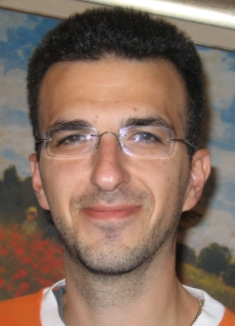
Iraklis Varlamis is a Professor in Data Management at Harokopio University of Athens (HUA). He contributes to Data Science and Artificial Intelligence Cloud and Edge Systems Information Systems Management Digital Transformation and teaches courses in these domains. His research interests span AI applications across healthcare, security, and education, with a focus on Digital Twin technologies Federated Learning Educational Robotics Anomaly Detection . Recent work integrates LLMs for fake news detection and robotics task execution. Key publication trends highlight interdisciplinary efforts in Medical data analysis Edge AI Secure data systems Continual learning .
Nikos Komodakis is a Professor in the Computer Science Department at the University of Crete, Greece, where he develops efficient, scalable and mathematically well-grounded algorithms for analyzing visual data including static natural images, video, and medical image data. His research spans deep learning, computer vision, machine learning, and artificial intelligence with significant contributions to self-supervised learning, few-shot learning, and knowledge distillation techniques. His work demonstrates a strong theoretical foundation combined with practical applications, particularly in medical imaging. Komodakis has published extensively in top-tier computer vision venues including CVPR, ICCV, ECCV, and IEEE Transactions on Image Processing. His recent publications (2022-2025) show a growing emphasis on medical image analysis applications while maintaining strong contributions to fundamental computer vision problems. Notable contributions include novel approaches for unsupervised representation learning that surpass state-of-the-art methods, effective techniques for knowledge distillation (such as the QUEST framework), and innovative frameworks for few-shot visual learning. Komodakis serves on the editorial boards of prestigious journals including the International Journal of Computer Vision, Computer Vision and Image Understanding Journal, and Computational Intelligence Journal. He has been a frequent area chair for major computer vision conferences including CVPR, ICCV, ECCV, and BMVC. Spyros Gidaris received the Ponts Foundation Best Thesis Prize and the University Paris-Est Best Thesis prize under Komodakis' supervision Sergey Zagoruyko received the AFRIF 2018 Thesis Prize for his PhD work supervised by Komodakis His research group has developed influential techniques including Online Bag-of-Visual-Words Generation for Unsupervised Representation Learning, which surpassed previous state-of-the-art methods. The group maintains active GitHub repositories for many of their publications, demonstrating commitment to reproducible research. Current research directions include advancing medical image analysis through deep learning, improving self-supervised learning frameworks, and developing more efficient neural network architectures.
Dimitrios Kosmopoulos serves as Professor in the Computer Engineering and Informatics Department at the University of Patras, Greece, with extensive experience across multiple academic institutions including National Technical University of Athens (NTUA), Rutgers University, and University of Texas at Arlington. His research bridges theoretical computer science with practical applications in accessibility, agriculture, and cultural heritage preservation. Education: B.Eng. in Electrical and Computer Engineering, National Technical University of Athens (1997) PhD in Electrical and Computer Engineering, National Technical University of Athens (2002) Professor Kosmopoulos' research integrates computer vision, machine learning, and signal processing to solve real-world problems. His primary focus areas include sign language recognition systems for museum accessibility, precision agriculture applications for crop monitoring and disease detection, and digital restoration of ancient scripts like Mycenaean Linear B. His methodological innovations frequently involve geometric analysis, time-series modeling, and multimodal data fusion techniques that advance both theoretical frameworks and practical implementations. Analysis of his recent publications (2023-2025) reveals three dominant research thrusts: accessibility technologies for deaf communities (particularly museum navigation systems), agricultural automation using computer vision (olive grading, tomato disease detection), and computational archaeology (Linear B tablet restoration). His work consistently employs cutting-edge approaches including geometric knowledge distillation, coupled learning architectures, and 3D motion analysis, demonstrating strong interdisciplinary connections between computer science, agriculture, and humanities. No scientific awards were documented in the provided source materials. While specific advising details and grant information were not explicitly stated, his leadership in projects like HealthSign (sign language healthcare systems) and MuseLearn (museum accessibility platforms) indicates substantial research funding and collaborative supervision activities spanning computer vision, robotics, and assistive technology domains. Professor Kosmopoulos operates within the Division of Hardware and Computer Architecture at the University of Patras, collaborating with the Computer Technology and Architecture Laboratory, VLSI Microelectronics Laboratory, Signals and Telecommunications Laboratory, and Computer Communications Networks Laboratory. His current research integrates these facilities to develop systems like the SignGuide project for museum tours and frameworks for early pest detection in greenhouse crops, emphasizing practical implementations of machine learning in constrained environments.
Evaggelos Kaselouris is an Assistant Professor at the Hellenic Mediterranean University's Department of Music Technology and Acoustics and a Researcher at the Institute of Plasma Physics and Lasers (IPPL). His affiliations include prior roles as a PostDoc at IPPL (2016–2023) and a Scientific Collaborator at the Technological Educational Institute of Crete (2011–2016). He holds a PhD from the Technical University of Crete and a degree in Applied Physics and Mathematics from the National Technical University of Athens. Dr. Kaselouris's research integrates multiphysics simulations across applied physics, plasma dynamics, and vibro-acoustics. Key areas include: Laser-generated acoustic waves and their applications in material characterization and musical instrument analysis. Finite element modeling of thermo-mechanical processes in laser machining and plasma instabilities. Development of crystalline undulators for narrowband gamma-ray radiation and optically shaped gas targets for ion acceleration. His computational work employs FEM/BEM to simulate phenomena ranging from nanostructured surface modifications to violin bridge dynamics. Recent studies emphasize laser-based interferometry for instrument diagnostics and ultrafast photoacoustic transduction in thin films. He actively collaborates on European projects (e.g., TECHNO-CLS) and contributes to the ESFRI infrastructure HiPER. No awards or supervised students are documented, but his lab leverages IPPL's high-power laser systems and advanced simulation tools for experimental validation.