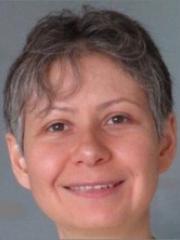
Dr. Chang Xu is an Associate Professor in Machine Learning and Computer Vision at the University of Sydney's School of Computer Science. He holds a Bachelor of Engineering from Tianjin University and a PhD from Peking University. His research focuses on machine learning, data mining, and their applications in AI and computer vision, including multi-view learning, visual search, and face recognition. He is an ARC Future Fellow and a member of the Sydney Southeast Asia Centre and The Net Zero Institute. Education: B.E. in Engineering (Tianjin University), Ph.D. in Computer Science (Peking University). His research interests emphasize handling heterogeneous data, exploring data variety, and developing algorithms for robust AI systems. His work includes adversarial robustness, neural architecture search, and efficient deep learning models. Research trends in his articles include adversarial robustness in neural architectures, efficient vision transformers, multimodal 3D style transfer, and underwater image restoration. Key contributions span image restoration, video super-resolution, and lightweight network design. He has advised multiple PhD and master's students on topics like diffusion models, radar image synthesis, and graph similarity. Awards: ARC Future Fellow. Collaborations focus on cross-domain data integration and AI applications. His labs and teams explore generative models, robust learning, and scalable robotics policies. Recent work includes diffusion models for action segmentation and robust vision-language systems.
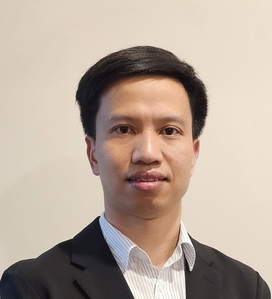
Tien Tsin Wong is a Professor in the Department of Data Science & AI at Monash University, Australia. Previously, he served as a Professor at the Chinese University of Hong Kong (1999–2024) and held a Visiting Assistant Professor position at the Hong Kong University of Science and Technology (1998–1999). His research focuses on Generative AI, Computer Graphics, Computer Vision, and Computational Manga, with significant contributions to GPU techniques, image-based rendering, and multimedia compression. Education: He earned a B.Sc. (1992), MPhil (1994), and PhD (1998) in Computer Science from the Chinese University of Hong Kong. Research Interests: His work bridges computational techniques with artistic applications, particularly in manga and animation. Notable areas include generative models, diffusion-based video synthesis, and physically plausible scene generation. His research aligns with UN Sustainable Development Goals through innovations in education and digital accessibility. Awards : He has received the 2004 Young Researcher Award, 2005 IEEE Transactions on Multimedia Prize Paper Award, and two international invention medals (Geneva 2018, Asia Hong Kong 2019). Editorial Roles : He serves as an Associate Editor for Computer Graphics Forum , IEEE Transactions on Visualization and Computer Graphics , and Computational Visual Media . His editorial work underscores his influence in advancing visualization and graphics research. Labs/Teams : While not explicitly named, his collaborations span global institutions, focusing on computational manga, generative AI, and GPU-optimized techniques. His work often involves interdisciplinary teams addressing challenges in digital media and AI.
Dr. Owen Dillon is a Research Fellow in the Discipline of Medical Imaging Sciences at the University of Sydney's Faculty of Medicine and Health. He holds affiliations with the ACRF Image X Institute and the Dodd-Walls Centre for Photonic and Quantum Technologies. His work focuses on advanced imaging techniques for medical applications, particularly computed tomography (CT) and motion compensation in radiation therapy. He completed his PhD in Mathematics at the University of Auckland, specializing in probabilistic compression algorithms for inverse problems. Education: B.Sc. Physics & Applied Mathematics (2013, University of Auckland), First Class Honours in Mathematics (2015), PhD Mathematics (2018). Research interests include inverse problems, Bayesian statistics, CT image reconstruction, and real-time imaging systems. Current projects involve optimizing CT acquisition geometries, motion-compensated 4D imaging, and anatomical motion estimation. His contributions have led to clinical trials reducing radiation dose and scan times. He advises two PhD students and collaborates on grants like the Quantum CT project. Grants: 'Quantum CT for Cancer Diagnosis' (2024), 'Functional Imaging in Lung Cancer' (2024). His work bridges mathematical theory with clinical applications in oncology and interventional radiology.
Craig Jin is an Associate Professor at the University of Sydney, leading the CARlab (Computing and Audio Research Laboratory) and Spatial Audio Research initiatives within the School of Electrical and Computer Engineering. He holds a BS from Stanford University, an MS from Caltech, and a PhD from the University of Sydney. His work focuses on immersive audio technologies, biomedical signal processing, and assistive technologies for sensory augmentation. Research interests include spatial audio reproduction, binaural processing, acoustic sensing for accessibility, and machine learning applications in signal processing. Key contributions span HRTF interpolation, noise reduction algorithms, and acoustic touch systems for the visually impaired. Recent projects include real-time MRI analysis of vocal tract dynamics and sparse recovery techniques for sound field reconstruction. His publications span over 150 peer-reviewed articles in journals like IEEE Transactions on Audio, Speech, and Language Processing, and conferences such as ICASSP. He advises four current PhD/Master’s students on projects like predictive gesture tracking, voice disorder classification, and magnetic resonance imaging techniques.
Prof. Xiaojing Huang is a Professor of Information and Communications Technology at the University of Technology Sydney (UTS), serving as Head of Discipline for SEDE Communications and Electronics within the School of Electrical and Data Engineering. He leads the Mobile Sensing and Communications program at the Global Big Data Technologies Centre. With over 30 years of experience, he has authored over 300 publications and 31 patents, focusing on wireless communications, signal processing, and antenna technologies. Education: PhD (Electrical Engineering, Shanghai Jiao Tong University, 1989). Previous roles include Principal Research Scientist at CSIRO (2009-2014), Associate Professor at University of Wollongong (2004-2009), and key industry roles at Motorola and Shanghai Yang Tian Science and Technology Corporation. Research interests include full-duplex wireless systems, millimeter-wave and terahertz communications, massive antenna arrays, and mixed-signal processing platforms. His work on the CSIRO Ngara backhaul system earned multiple awards, including the 2012 CSIRO Chairman's Medal and Australian Engineering Innovation Award. Recent grants include $4.2M (AUD) for projects like 'Radio Frequency Camera for Radar Imaging' (ARC DP220101158) and 'Terabit mm-Wave Backbones for Integrated Space Networks' (ARC DP200101532). He has supervised numerous students in high-speed communication systems and full-duplex technologies. Awards include: 2013 CSIRO Leadership Achievement Award, 2012 Australian Engineering Innovation Award, and IEEE Sumner Award (nominee). Active in IEEE standards (802.11/802.15) and collaborations with institutions like Tsinghua University.
Dr. Thanh Nho Do is a Scientia Senior Lecturer at the Graduate School of Biomedical Engineering (GSBmE), UNSW Sydney, and Director of the UNSW Medical Robotics Lab. He holds a PhD in Mechanical Engineering (Surgical Robotics) from Nanyang Technological University (NTU), Singapore, and a B.Eng. in Manufacturing Engineering from Ho Chi Minh City University of Technology, Vietnam. His research focuses on soft robotics, wearable technologies, and biomedical devices, including flexible surgical systems, soft actuators, and haptic interfaces. Education PhD in Mechanical Engineering (Surgical Robotics), NTU Singapore, 2015 B.Eng. in Manufacturing Engineering, Ho Chi Minh City University of Technology, Vietnam Research Interests Soft robotics for medical applications (e.g., NOTES systems, wearable haptics) Functional materials for biomedical devices Cardiovascular engineering and assistive devices Advanced control algorithms for medical robotics Key Contributions His work spans bioprinting, motor-free robotic systems, and soft wearable technologies. Recent studies include self-deploying cardiac compression devices and bioinspired artificial muscles. Awards 2025: CINSW Career Development Fellow 2024: NSW Young Tall Poppy Science Award 2023: Best Poster Awards at EMBC and ICRA Grants & Funding Includes NHMRC Ideas Grant (Lead CI), Cancer Institute NSW Fellowship, and UNSW Scientia Grant. Active projects address cardiovascular interventions and wearable robotics. Labs & Teams Leads the UNSW Medical Robotics Lab, collaborating on devices like soft robotic catheters and textile-driven exosuits.
Dr. Bo Liu is an Associate Professor in the School of Computer Science at the University of Technology Sydney (UTS), where he serves as a core member and director of the AI Security and Privacy (AISP) Research Lab at the Australian Artificial Intelligence Institute (AAII). With expertise spanning cybersecurity, privacy protection, AI and machine learning, and wireless communications, Dr. Liu has established himself as a leading researcher in the field of AI security and privacy. Dr. Liu earned his PhD from the Department of Electronic Engineering at Shanghai Jiao Tong University in 2010. His academic journey at UTS has progressed from Senior Lecturer (November 2019-December 2022) to his current position as Associate Professor (January 2023-present). Dr. Liu's research focuses on the critical intersection of artificial intelligence and security, particularly addressing emerging threats in the age of advanced AI systems. His work spans multiple dimensions of security and privacy, including deepfake detection, privacy-preserving data synthesis, AI model security, and fair machine learning. He has pioneered approaches to detect AI-generated content, protect visual privacy through de-identification techniques, and address the complex relationship between algorithmic fairness and privacy preservation. His publication record demonstrates significant contributions across multiple cutting-edge research areas, with particular emphasis on detecting and mitigating threats from generative AI systems. His recent work reveals a strong focus on deepfake detection across multiple modalities (images, video, and audio), privacy-preserving techniques for sensitive data, and the security implications of emerging AI architectures like Retrieval-Augmented Generation systems. Dr. Liu has secured substantial research funding, including as Lead Chief Investigator on multiple ARC Discovery and Linkage Projects, totaling over $3.5 million AUD. His industry collaborations include partnerships with the NSW Department of Planning and the Reserve Bank of Australia, demonstrating the practical applicability of his research. As an academic leader, Dr. Liu serves as Associate Editor for IEEE Transactions on Broadcasting and actively contributes to the academic community through conference organization, peer review for top-tier venues, and assessment for ARC grant schemes. He also teaches courses including Penetration Testing, Ethical Hacking and Offensive Security, and supervises Masters and PhD students in cybersecurity and privacy research.
Chee-Ming Ting is an Associate Professor in the School of Information Technology at Monash University Malaysia. His expertise lies in machine learning, data science, and biomedical engineering, with a focus on signal processing, computational neuroimaging, and computer-aided detection. Previously, he held positions at King Abdullah University of Science and Technology (Research Scientist) and Universiti Teknologi Malaysia (Senior Lecturer). He has authored over 26 journal papers and 43 conference papers, and has secured research grants totaling RM2.5 million as PI/Co-PI. Education: PhD in Mathematics - Statistics, Master of Engineering in Electrical Engineering, and Bachelor of Engineering (Hons.) in Electrical & Electronics Engineering. Research interests include biomedical signal/image analysis, deep learning, spatio-temporal modeling, and neuroimaging applications for disease prediction and patient monitoring. He has supervised 9 graduate students (4 PhD, 5 Masters) and currently oversees 10 PhD candidates. Awards include the IEEE Signal Processing Society Malaysia's Research Excellence Award (2019, 2022) and several national/international innovation awards. His work contributes to UN Sustainable Development Goals related to health and technological advancement. Key projects include frameworks for neurological disease prediction using brain networks and generative adversarial networks for medical imaging enhancement.
Associate Professor Mahsa Baktashmotlagh is an ARC Future Fellow at the School of Electrical Engineering and Computer Science, University of Queensland. Her research focuses on machine learning techniques applied to visual data analysis, biomedical data (e.g., antibacterial activity prediction), and cybersecurity. She holds a PhD from the University of Queensland (2014) and has contributed to over 50 peer-reviewed publications. Her research interests include domain adaptation, deep learning, and robust generalization across domains. Notable contributions include the development of DI-NIDS (a domain-invariant network intrusion detection system) and advancements in open-set domain adaptation. Her work bridges theoretical machine learning with practical applications in healthcare and computer vision. Education: PhD in Machine Learning, The University of Queensland (2014) Awards: ARC Future Fellowship (202X) Research Themes: Domain Adaptation, Cybersecurity, Biomedical AI Her recent work explores challenges in cross-domain generalization, adversarial machine learning, and scalable 3D object detection. She is actively involved in supervising graduate students and collaborates on interdisciplinary projects involving robotics and medical imaging.
Associate Professor Sonny Pham leads research in artificial intelligence at Curtin University's School of EECMS. His work balances theoretical foundations with practical applications in computer vision, data mining, and deep learning. As head of the IAMAI research group, he collaborates with industry partners on security systems, healthcare AI, and sustainable technologies. His research explores: Computationally efficient deep learning architectures Compressed sensing for high-dimensional data Robust statistical methods for real-world problems Applications in computer vision and industrial automation Recent publications demonstrate a focus on medical imaging interpretation and efficient neural networks, with applications spanning radiology report generation, semantic segmentation for autonomous systems, and cybersecurity. His team's work consistently bridges theoretical AI advancements with industrial applications. Honors include: Multiple WANMA Awards (2021-2024) for industry-impactful research INCITE Award for social impact technology (2024) IEEE Young Author Best Paper Award (2010) Over $5M in competitive research funding including MRFF and DFAT grants He leads the IAMAI research group with 12+ graduate students and coordinates Curtin's Master of Artificial Intelligence program. Industry collaborations include Alcoa Australia, iCetana, and HyprFire.
Mehrtash Tafazzoli Harandi is an Associate Professor in the Department of Electrical and Computer Systems Engineering at Monash University, part of the Faculty of Engineering. His research focuses on machine learning and computer vision, particularly visual data analysis, with contributions to geometric deep learning, continual learning, and medical imaging. He holds editorial roles at IET Computer Vision , Frontiers in Imaging , and Journal of Imaging . Education & Previous Affiliations: Prior to Monash, he worked at NICTA (Canberra & Queensland Research Labs) and CSIRO-Data61. His Erdős number is 4 via a collaboration path through Richard Hartley. Research Interests: His work spans geometric learning, diffusion models, medical image analysis, and sustainable AI applications. Key areas include unlearning mechanisms in AI, 3D reconstruction compression, and robust MRI reconstruction using contrastive learning. Grants & Projects: He leads projects funded by ARC, US Air Force, and industry collaborations, including 'Can Machines Unlearn?' (ARC, A$790k) and 'Exploiting Geometries of Learning' (ARC, A$420k). His work addresses challenges in lifelong learning, model adaptation, and trustworthy AI from limited data. Awards: Recipient of Best Recognition Paper (IEEE DICTA 2013), NICTA Impact Award (2015), and multiple outstanding reviewer recognitions at top conferences. Teaching: Teaches courses on neural networks, computer vision, and advanced data analysis at Monash University. Supervises PhD students with a focus on mathematical and computational proficiency. Labs/Teams: Collaborates with the Australian Center for Robotic Vision (ACRV) and contributes to interdisciplinary projects at CSIRO-Data61. His research group explores cutting-edge AI applications in healthcare, manufacturing, and environmental sustainability.
Professor David Taubman is a distinguished academic serving as Professor and Deputy Head of School (Research) at the School of Electrical Engineering and Telecommunications (EE&T) at the University of New South Wales (UNSW) in Sydney, Australia. He is also co-director of Kakadu Software Pty. Ltd. and its affiliates Kakadu R&D and Kakadu GPU. With a career spanning over three decades, Professor Taubman has made significant contributions to the field of image and video compression, most notably as the author of the EBCOT coding algorithm adopted in the JPEG2000 international standard. Professor Taubman earned his B.Sc. in Mathematics and Computer Science (1986) and B.E. (Medal) in Electrical Engineering (1988) from the University of Sydney, followed by an M.Sc. (1992) and Ph.D. (1994) in Electrical Engineering from the University of California at Berkeley. His professional journey includes engineering work at the Electricity Commission of N.S.W. (1988-1990), research positions at Hewlett-Packard Laboratories in Palo Alto (1994-1998), and an academic career at UNSW where he progressed from Senior Lecturer (1998-2003) to Associate Professor (2004-2009) and finally to Professor (2009-present). He has held various leadership roles including Head of the EE&T Telecommunications Research Group (2003-2014), Head of the EE&T Signal Processing Research Group (2014-present), Director of Research for the School of EE&T (2011-2016), and Deputy Head of School (Research) since 2017. Professor Taubman's research interests center on image and video compression, with particular expertise in JPEG2000 standards and implementations. His work spans signal processing, wavelet transforms, scalable video coding, motion modeling, and multimedia systems. He has pioneered numerous compression algorithms and frameworks, including the EBCOT coding algorithm that became central to the JPEG2000 standard. His recent research focuses on efficient motion modeling with cuboidal partitioning, learned lifting-based transform structures, and high-throughput implementations of JPEG2000 for video applications. His work bridges theoretical foundations with practical implementations, as evidenced by the commercially successful Kakadu Software tools that have garnered around 500 commercial licensees. Analysis of Professor Taubman's recent publications reveals a consistent focus on advancing compression technologies with particular emphasis on scalability, efficiency, and adaptability. His work spans traditional image compression (JPEG2000 extensions), video coding (cuboid-based partitioning for UHD/360-degree video), and emerging applications (nanopore sequencing data compression). A notable trend is the integration of machine learning techniques with traditional compression frameworks, as seen in his work on learned lifting-based transform structures. His research maintains strong connections to real-world applications across diverse domains including medical imaging, astronomical data processing, and genomic sequencing. IEEE Fellow Engineers Australia Fellow (by invitation) Professor Taubman has served as Associate Editor for the IEEE Transactions on Image Processing for two four-year appointments (2003-2005 and 2010-2013). He has been actively involved in numerous research grants focused on image and video compression technologies, particularly those related to the JPEG2000 standard and its extensions. His work has received significant industry support, reflected in his consultancy with various U.S., Japanese, and Australian corporations. He has also contributed to international standards development as a member of Standards Australia Technical Committee MS-065 (mirroring ISO TC42 on Digital Photography) and as a constitutional member of Standards Australia Technical Committee IT-029 (Coded Representation of Picture, Audio and Multimedia/Hypermedia Information). Professor Taubman co-directs Kakadu Software Pty. Ltd. and its research affiliates Kakadu R&D and Kakadu GPU, which have developed the commercially successful Kakadu Software tools for JPEG2000. His research group at UNSW focuses on advanced image and video compression techniques, with particular expertise in wavelet-based methods, scalable coding, and motion modeling. The group maintains strong industry connections and has contributed significantly to the development and standardization of image compression technologies worldwide.
Professor Daniel Catchpoole serves as Deputy Head of School (Research) at the School of Computer Science, University of Technology Sydney (UTS), holding dual appointments at UTS and The Children's Hospital at Westmead. With over 20 years of research experience, he bridges computational sciences and pediatric cancer research through the Biomedical Data Science Lab in the Australian Artificial Intelligence Institute. His work integrates data analytics, artificial intelligence, and software development with molecular cancer biology to transform pediatric cancer treatment pathways. PhD in Cancer Cell Biology, University of New South Wales (1991-1995) Founding Fellow, Royal College of Pathologists Australasia (2010-present) Head, Children's Hospital at Westmead Tumour Bank (2001-present) Professor Catchpoole's research focuses on translational applications of genomics in childhood cancers, particularly acute lymphoblastic leukemia and neuroblastoma. His work combines high-throughput genomic technologies with advanced computational analysis to develop systems biology approaches for cancer patient assessment. Recent projects explore virtual reality applications for complex genomic data visualization and copper chelation therapies to enhance neuroblastoma immunotherapy. His research has received significant funding from Cancer Institute NSW, Sony Foundation, ARC, and NHMRC. His publication record spans biomedical data science, cancer genomics, and virtual reality applications in oncology. Recent work demonstrates leadership in 3D latent diffusion models for tumor segmentation, biobank economics, and innovative immunotherapies. His research consistently addresses the critical need for actionable knowledge from complex multidimensional biomedical data. Editorial Board Member, Cancers (2023) Associate Editor, Innovations in Digital Health, Diagnostics and Biomarkers (2019) Founding member and first President, Australasian Biospecimens Network Association Professor Catchpoole has supervised 17 Honours students (including 6 First Class Honours), 3 MSc students, and 12 PhD candidates across multiple institutions, with 6 current PhD students. His collaborative research bridges UTS's Faculty of Engineering and IT with The Children's Cancer Research Unit at The Children's Hospital at Westmead. Significant research funding includes Cancer Institute NSW grants, Sony Foundation VR projects, and ARC Discovery Projects focused on genomic data analysis and clinical decision support systems. His leadership extends to building frameworks for translational research, managing biobanks and clinical data linkages, and navigating governance requirements for cancer research. The Tumour Bank at Kids Research, CCRU, represents his long-standing commitment to pediatric cancer infrastructure development.
Kok Sheik Wong is a Professor and Deputy Head (Research) at the School of Information Technology, Monash University Malaysia. He holds a Doctor of Engineering from Shinshu University, Japan, and Master’s and Bachelor’s degrees in Computer Science and Mathematics from Utah State University, USA. His academic leadership and research excellence are central to his role at Monash. B.S. Computational Mathematics, Utah State University (2002) M.S. Computer Science, Utah State University (2006) M.S. Mathematics, Utah State University (2004) Doctor of Engineering, Shinshu University, Japan (2009) His research focuses on multimedia signal processing and cybersecurity , particularly in data hiding , reversible data hiding , coverless steganography , and multimedia encryption . He is also expanding into digital health , applying AI to mental health in workplace environments. His work aligns with UN SDGs, particularly in health and education. The recent publication trends show a strong emphasis on reversible data hiding , image watermarking , and AI-driven health applications . His interdisciplinary work spans computer science, engineering, and public health, with increasing focus on real-world impact through EU and national grants. He has received several honors, including: Academic of Science Malaysia - Young Scientist Network (2020) Best Paper Award, IWDW 2019 ITEX 2021 Gold Medal for BAITRADAR School of IT Excellence in Research Award (2022) Dr. Wong actively supervises PhD students and leads major research projects, including the EU-funded WAge project. He has served as an associate editor for IEEE Signal Processing Letters and the Journal of Information Security and Applications, and is a member of IEEE IFS and APSIPA technical committees. His grants reflect strong external collaboration and funding in cybersecurity and digital health. He is involved in key research labs and teams through Monash University and international consortia, particularly in the areas of multimedia security and digital health innovation. His leadership in the WAge project connects him with European and Asia-Pacific research networks, enhancing global impact.
Dr. Siqi Ma is a Senior Lecturer at the UNSW Institute for Cyber Security (IFCYBER) within the School of Systems & Computing at the University of New South Wales (UNSW). He previously served as a Lecturer at the University of Queensland's School of Information Technology and Electrical Engineering (ITEE). He holds a Ph.D. in Information Systems from Singapore Management University (2018) and was a Postdoctoral Research Fellow at Data61, CSIRO. He also visited Carnegie Mellon University (CMU) in 2015. Current Role: Senior Lecturer, UNSW Institute for Cyber Security Former Role: Lecturer, University of Queensland Education: Ph.D. (Singapore Management University), Postdoc (Data61, CSIRO) His research spans automated vulnerability detection, mobile security, IoT security, network authentication, and graph-based adversarial robustness. Recent work focuses on drone configuration bugs, Android malware analysis via GNNs, federated learning privacy, and credential leakage in open-source projects. Key trends in his 2024-2025 publications include automated security analysis for embedded systems, deepfake detection in multimedia, and privacy-preserving mechanisms for distributed networks. He collaborates with institutions like Purdue University, Singapore Management University, and CSIRO Data61.