Joanna Delekta is a Researcher at the Department of Cardiology, Faculty of Medicine, Aalborg University, and serves as a Consultant Physician (Overlæge) at Aalborg University Hospital. Her work bridges clinical practice and academic research, focusing on cardiovascular epidemiology, anticoagulant therapies, and diagnostic validation in large-scale medical registries. Her research interests span: Clinical cardiology with emphasis on heart failure, atrial fibrillation, and stroke prevention Pharmacology of novel anticoagulants like Asundexian and Apixaban Validation methodologies for cardiac diagnoses in national health registries Cardiovascular complications of pharmacological agents and transplantation Recent publications demonstrate her involvement in high-impact clinical trials (e.g., OCEANIC-AF study), epidemiological validation studies using Danish national registries, and case analyses of rare cardiovascular events. Her work consistently addresses gaps in cardiovascular diagnosis accuracy and therapeutic safety. Dr. Delekta actively collaborates in international research consortia, including the OCEANIC-AF Steering Committee and Investigators network, reflecting her role in multicenter clinical research initiatives.
Maciej Plocharski is an Associate Professor in the Department of Health Science and Technology at Aalborg University’s Faculty of Medicine, Denmark. His work bridges biomedical engineering, medical image analysis, and neurodegenerative disease research. He is actively involved in teaching and research, with affiliations extending to the Sino-Danish Center for Education and Research in Beijing. His educational background includes a PhD in Biomedical Science and Engineering focused on sulcal morphology analysis for Alzheimer’s classification, and an MSc in Biomedical Engineering and Informatics. He also completed a University Pedagogical Programme at Aalborg University, reflecting his commitment to teaching excellence. Dr. Plocharski's research centers on biomedical engineering and medical image analysis , particularly in developing imaging biomarkers for Alzheimer’s and Parkinson’s diseases . His work leverages deep learning , convolutional neural networks , and ultra-high field MRI to analyze hippocampal subfields and cervical spine motion. He applies these techniques to early diagnosis, disease progression modeling, and biomechanical assessment. His recent publications show a strong trend in AI-driven neuroimaging, with a focus on automating detection and segmentation tasks in both neurological and musculoskeletal systems. The integration of machine learning with clinical imaging data underscores a shift toward precision medicine and data-driven diagnostics. Teacher of the Year at The Faculty of Medicine (2023) Teacher of the Year at the Study Board of Health and Technology (2023) Teacher of the Year at The Faculty of Medicine (2021) Teacher of the Year at the Study Board of Health and Technology (2020) Dr. Plocharski has been a dedicated educator, teaching core courses such as Probability and Statistics , Image Analysis and Computer Vision , and Theory of Science and Methods at both bachelor’s and master’s levels. He has supervised various educational programs including Biomedical Engineering, Medicine, and Clinical Science and Technology. He has also contributed to problem-based learning frameworks and pedagogical innovation. Although specific grants are not listed, his long-standing project Modelling and quantification of the cerebral cortex (active since 2003) indicates sustained research funding and collaboration. He is part of a robust research network in neuroscience and medical imaging, collaborating with experts in MRI, neural networks, and biomechanics. His work contributes to UN Sustainable Development Goals related to health and education, particularly through technological innovation in disease detection and medical training.
Elzbieta Pastucha is an Associate Professor at the Maersk Mc-Kinney Moller Institute, University of Southern Denmark (SDU), where she is affiliated with the SDU UAS Center and SDU Climate Cluster. Her research focuses on UAV-based photogrammetry, remote sensing, and geospatial data analysis, with applications in environmental monitoring, urban mapping, and precision agriculture. Education: Ph.D. in Surveying, Photogrammetry, and Remote Sensing, AGH University of Science and Technology (Awarded: January 21, 2016) Research Interests: Her work spans advanced photogrammetric techniques, including smartphone-based 3D modeling, radiometric correction of UAV imagery, and classification of urban environments using neural networks. She applies these methods to solve real-world problems in infrastructure monitoring, geological displacement, and agricultural yield estimation. Her research integrates computer vision, geospatial engineering, and machine learning to enhance data accuracy and usability. Publication Trends: Recent publications (2022–2024) demonstrate a strong focus on UAV photogrammetry, with emphasis on image normalization, deformation correction, and environmental classification. Her work frequently involves interdisciplinary collaboration and appears in high-impact journals such as Remote Sensing , Sensors , and Engineering Geology . Scientific Awards: No awards or fellowships explicitly mentioned in the text. Advising and Grants: While no formal advisees are listed, she is actively teaching courses in statistics, data analysis, and robotics for UAS. She leads and participates in externally funded projects, including the EU-supported 'WildDrone' project as project manager and 'Præcisionsfrøavl' as a project participant, both running from 2023 to 2026. Labs and Teams: She is a key member of the SDU UAS Center and contributes to the SDU Climate Cluster. Her work is conducted within collaborative teams involving researchers from engineering, computer science, and environmental disciplines. She collaborates with researchers across institutions, particularly in UAV-based environmental and agricultural monitoring.
Anne Lerberg Nielsen is a Visiting Researcher at the Department of Clinical Research, University of Southern Denmark, with strong affiliations to KI, OUH, and the Research unit of Clinical Physiology and Nuclear Medicine in Odense. Her academic work focuses on nuclear medicine applications in oncology and endocrinology, with particular expertise in PET/CT imaging techniques. Her research interests span Nuclear Medicine, Positron Emission Tomography, Computed Tomography, Oncology, Lung Cancer Research, Medical Imaging, Molecular Imaging, and Endocrinology . Nielsen's work demonstrates a strong focus on the clinical applications of PET/CT imaging, particularly in lung cancer, lymphoma, and head and neck cancers, as well as in endocrine disorders like congenital hyperinsulinism. Analysis of her recent publications (2021-2025) reveals a consistent pattern of research in FDG-PET/CT applications in cancer diagnosis and treatment monitoring Development and validation of imaging response criteria Multi-center clinical trials in nuclear medicine Applications of molecular imaging in endocrine disorders Scientific Awards: Årets scintillator (2016) Nielsen has been actively involved in academic dissemination through numerous conference presentations, workshops, and lectures. Her activities include 11 talks and presentations in private or public companies, 9 conference organization or participation events, 4 organization or participation in workshops and seminars, and 3 conference presentations. This demonstrates her active role in the nuclear medicine community and her commitment to knowledge sharing. Her research collaborations extend internationally, with recent work involving multiple centers across Europe, reflecting her position within a robust research network focused on advancing nuclear medicine applications in clinical practice.
Malene Grubbe Hildebrandt is an Associate Professor at the Department of Clinical Research, Faculty of Health Sciences, University of Southern Denmark (SDU), and a Consultant at Odense University Hospital (OUH). She is affiliated with the Research Unit of Clinical Physiology and Nuclear Medicine and the Centre for Innovative Medical Technology (CIMT), both at OUH. Her work bridges clinical practice and academic research in nuclear medicine and oncology. Education: Master in Programme Management, Patient-Reported Outcome Measures, Region of Southern Denmark (2016) PhD, Gender and Depression, University of Southern Denmark (2003) MD, Medicine, University of Southern Denmark (2004) MSc, Clinical Epidemiology, Erasmus University Medical Center, Rotterdam (2001) Her research focuses on PET-CT imaging in cancer diagnostics and therapy monitoring, particularly in breast cancer, lymphoma, and melanoma. She investigates diagnostic accuracy, response assessment, and emerging theranostic applications. Her work integrates clinical epidemiology, translational research, and patient-centered outcomes. Key topics include bone metastasis detection, FDG-PET/CT response criteria, and GRPR-targeted theranostics in breast cancer. The recent publications show a strong trend toward systematic reviews and meta-analyses in diagnostic imaging, with growing emphasis on theranostics and preclinical models. Her work spans nuclear medicine, oncology, and clinical methodology, reflecting a multidisciplinary approach to improving cancer care through advanced imaging. Scientific Awards: Det Regionale Strategiske Forskningsråd: MTV pulje (2016) Dr. Hildebrandt leads and participates in significant research projects such as MONITOR and MESTAR, focusing on PET/CT in metastatic breast cancer, and GATEBA, exploring novel theranostic targets. She collaborates widely with national and international researchers, particularly in nuclear medicine and oncology. While no formal students are listed, she mentors through co-authorship and project involvement. Her work is supported by regional research funding and disseminated through high-impact journals and conferences. She is actively involved in research networks and expert groups, contributes to peer review, and engages in public communication of science through media appearances and conference presentations. Her dual clinical-academic role enables direct translation of research into practice.
Emil Mejlhede Kinslev is a Postdoctoral Researcher (Research Fellow) in the Department of Environmental and Resource Engineering at the Technical University of Denmark (DTU), specializing in Geotechnics and Geology. His research integrates advanced Nuclear Magnetic Resonance techniques with soil mechanics to address critical challenges in sustainable infrastructure and subsurface engineering. His educational background includes an Industrial PhD in Geotechnical Engineering completed in 2022 at DTU through the project Efficient performance of large infrastructure: a geomechanical approach towards sustainable design . This work established his expertise in geomechanical modeling and sustainable infrastructure design. Kinslev's research focuses on the microstructural behavior of fine-grained soils, particularly Paleogene clays and smectitic formations. He employs low-field NMR spectroscopy and imaging to investigate porosity distribution, swelling mechanisms, creep deformation, and porewater interactions under varying stress conditions. His work bridges fundamental soil mechanics with practical applications in CO 2 sequestration, pipeline trench design, and waste soil reuse. Analysis of his 2024-2025 publications reveals a cohesive research trajectory centered on NMR-based soil characterization. Key themes include quantifying sample homogeneity in resedimented soils, modeling microstructural hysteresis in clay during loading cycles, evaluating critical porosity variations with pore fluid chemistry, and developing entropy-based predictors for shale swelling. These studies collectively advance predictive capabilities for soil behavior in energy infrastructure and geoenvironmental applications. Kinslev actively contributes to research supervision and project leadership. He currently serves as Supervisor in the GREENPIPE project (2025-2028), developing sensor-integrated pipe construction methods, and supervised the 2024 classification study on waste soil reuse in district heating trenches. His grant portfolio includes both industry-collaborative and fundamental research initiatives focused on sustainable geomechanics. As a core member of DTU's Geotechnics & Geology research group, he collaborates internationally on projects involving soil characterization, infrastructure resilience, and subsurface energy systems. His laboratory work emphasizes advanced NMR applications for non-destructive soil analysis and microstructural modeling under controlled stress-path conditions.
Daniel Haugård Olesen is an Associate Professor at DTU Space, Technical University of Denmark, within the Department of Space Research and Technology, specializing in Geodesy and Earth Observation. He leads the GNSS research group, which focuses on advanced navigation technologies, including interference detection, precise positioning, and sensor fusion for drones and robots. Institution: Technical University of Denmark (DTU) School: DTU Space Department: Department of Space Research and Technology Research Division: Geodesy and Earth Observation (GEO) Role: Associate Professor and Head of GNSS Research Group His research interests span GNSS signal integrity, space weather impacts, RTK/PPP positioning, multi-sensor fusion, and applications in environmental monitoring using unmanned systems. He actively contributes to hydrological studies through drone-based river monitoring, leveraging LiDAR, sonar, radar, and GNSS-R techniques. The recent publication trends reflect a strong focus on applying UAS and GNSS technologies to solve real-world environmental challenges, particularly in river hydraulics, surface water dynamics, and soil moisture sensing. His work integrates space-based observation with autonomous platforms, emphasizing reliability, precision, and scalability. Keywords across articles include Earth Observation, Remote Sensing, Hydrology, Navigation, and Signal Processing, with specific subfields such as GNSS interference mitigation, Doppler radar velocimetry, and ionospheric scintillation analysis. Daniel Olesen supervises several PhD projects, indicating an active mentoring role in training next-generation researchers. Notable projects include GNSS-R from UAS, semi-autonomous navigation for river monitoring, and ionospheric effects on GNSS signals. While no specific scientific awards are listed in the provided text, his sustained research output and leadership in key projects suggest recognition within the scientific community. GNSS Reflectometry (GNSS-R) from Unmanned Aerial Systems (2024–2027) Semi-autonomous navigation of UAS for river monitoring (2023–2026) Ionospheric effects on GNSS signals (2020–2024) GNSS Jamming Detection and Localization (2019–2024) Relative positioning and attitude from UAVs (2017–2021) He leads the GNSS research group at DTU Space, which operates multiple state-of-the-art GNSS CORS networks and develops cutting-edge methods for reliable positioning in challenging environments. The team works at the intersection of geodesy, space science, and robotics, fostering interdisciplinary collaboration to advance autonomous navigation and Earth observation capabilities.
Lenka Tetková is a Postdoctoral Research Fellow at the Technical University of Denmark , affiliated with the School of Computing and the Cognitive Systems department. Her work focuses on Artificial Intelligence , Machine Learning , and their applications in Speech Recognition , Image Classification , and Biological Data Analysis . Her research explores Transformer stacks in speech models, convex decision regions in deep networks, and explainable AI for biological systems. She also investigates model pruning to reduce computational effort while maintaining performance. Her recent publications highlight trends in speech representation models , neural network convexity , and hybrid symbolic-AI approaches for resource-constrained environments. These works span computer science , engineering , and biological data analysis . Lenka collaborates with researchers like Dr. Lars Kai Hansen and contributes to interdisciplinary projects at the intersection of AI , signal processing , and life sciences .
Pawel Tomasz Pieta is a Postdoctoral Researcher in the Department of Applied Mathematics and Computer Science at Technical University of Denmark (DTU), specializing in visual computing and computational imaging. His work bridges computer vision, food science, and optical measurement systems with applications in agricultural and dairy product analysis. His primary research focuses on anisotropy quantification , hyperspectral imaging , and polarization-based measurement techniques . Key methodologies include tensor scale-space analysis, first-order structure detection, and feature-centered image processing algorithms. His work demonstrates strong interdisciplinary connections between computer vision and food quality assessment, particularly in dairy and agricultural domains. Notable research trends show consistent development of quantitative measurement frameworks for structural analysis, with recent publications emphasizing practical applications in food science (mozzarella cheese microstructure) and agriculture (wheat leaf classification). His 2025 publications reveal increasing focus on translating theoretical image processing techniques into industrial quality control solutions. As a recently completed PhD graduate (2022-2025 project), he actively collaborates with cross-disciplinary teams including food scientists, optical engineers, and agricultural researchers. His work on the HyperLeaf2024 dataset demonstrates commitment to open science through publicly available research resources. He operates within DTU's Visual Computing research group, contributing to projects that integrate advanced image analysis with real-world industrial applications, particularly in food quality assessment systems and agricultural monitoring technologies.
Maja Thiele is a Clinical Professor at the University of Southern Denmark , affiliated with the Department of Clinical Research and the Research unit of Medical Gastroenterology (Odense) . She is a practicing Medical Doctor at Odense University Hospital and an active radio host on Danmarks Radio P1's Sygt Nok show, covering health topics for public audiences. Education : PhD (2016), University of Southern Denmark Medical Doctor (2007), University of Copenhagen Research Interests focus on steatotic liver disease related to alcohol and metabolic dysfunction, emphasizing liver fibrosis , non-invasive biomarkers , elastography , and omics technologies . She employs meta-analysis , proteomics , and lipidomics to improve early detection, diagnosis, and prognosis of liver diseases. Scientific Trends in her recent peer-reviewed articles and editorials show a strong emphasis on transient elastography , biomarker validation (e.g., PRO-C3 , sTREM2 ), public health screening (e.g., LiverScreen project ), and policy research addressing alcohol-related harm. Her work bridges clinical hepatology and population-level interventions . Scientific Awards : Syddansk Universitets Innovationspris (2023) UEG Rising Star (2022) Klinisk Instituts Forskningskommunikationspris (2022) Research Communication prize (2019) Advising and Grants include coordinating major EU-funded projects like LIVERAIM (2024-2030) and DECIDE (2020-2025), with supervised research work (n=3). She has contributed to clinical guidelines referenced in 6 policy sources and 4 clinical guideline sources , while maintaining an active role in peer review and public science communication via 140+ media contributions and Twitter (45k followers).
Assistant Professor at the Maersk Mc-Kinney Moller Institute, University of Southern Denmark, specializing in SDU Robotics. Active in medical robotics and deep learning applications for ophthalmology and inflammatory disease monitoring. Primary affiliation: University of Southern Denmark (SDU) Research hub: SDU Robotics/Maersk Institute Key collaborations: Steno Diabetes Center, Danish Ophthalmology units Research focuses on automated medical imaging analysis using neural networks, particularly for: Diabetic retinopathy lesion detection Retinal blood vessel classification Inflammatory arthritis activity scoring Integration of AI in clinical workflows Recent work includes 15+ publications (2024-2025) on deep learning models for retinal disease classification and treatment outcome prediction. Notably involved in: IMPRESS project (automated DR screening) AVID project (socioeconomic disparities in visual impairment) Teaching Medical Robotics courses Key partnerships with: Grauslund Lab (diabetes eye research) University of Southern Denmark robotics teams Steno Diabetes Center Odense
Stavros Chrysidis is a Clinical Assistant Professor in the Department of Regional Health Research at the University of Southern Denmark, specializing in rheumatology with a primary focus on giant cell arteritis and vascular ultrasound diagnostics. His work bridges clinical practice and imaging technology to improve diagnostic accuracy for inflammatory rheumatic conditions. His research fingerprint reveals dominant activity in: Giant-Cell Arteritis (100%) Vasculitis (49%) Inflammatory Arthritis (42%) Rheumatoid Arthritis (39%) Biosimilar therapies (33%) Polymyalgia Rheumatica (25%) Vascular Ultrasound applications (25%) Echography techniques (24%) Recent publications (2024-2025) emphasize standardizing ultrasound diagnostics through projects like the OMERACT GCA phantom validation and OGUS reliability studies. His research explores AI-assisted image classification, prevalence of musculoskeletal disorders in vascular referrals, and differential diagnosis of infectious arthritis, highlighting translational work from imaging technology to clinical decision-making. No scientific awards were documented in the provided text. Student supervision and grant details are absent from the source material, though his 50 research outputs indicate active collaboration across international teams. His work with the OMERACT group involves multi-country networks focused on vasculitis diagnostics. Dr. Chrysidis leads projects within the OMERACT GCA Working Group, including the GCA-US-AI initiative for AI-driven ultrasound analysis and the 3D-printed phantom development for training standardization. His collaborations span European rheumatology centers with emphasis on vascular imaging reproducibility.
Jasleen Kaur Matharu is a Postdoctoral Researcher at the Cosmic Dawn Center (DAWN), which is part of the Niels Bohr Institute at the University of Copenhagen. She is actively contributing to cutting-edge research on galaxy formation and evolution during the Cosmic Dawn period using data from the James Webb Space Telescope. Dr. Matharu's research focuses on observational cosmology, particularly studying high-redshift galaxies (z > 4) to understand galaxy formation in the early universe. Her work encompasses galaxy morphology evolution, spatially resolved star formation, UV luminosity functions, and the physical properties of galaxies during the first 1-2 billion years after the Big Bang. She is a key contributor to major JWST projects including CANUCS, FRESCO, and the DAWN JWST Archive. Her publication record shows consistent output in top astronomy journals, with multiple papers published in 2024-2025 that have already garnered significant citations. Her research leverages advanced data analysis techniques on JWST observations to probe the physical processes driving galaxy evolution in the early universe. As a researcher at the Cosmic Dawn Center, Dr. Matharu collaborates with an international team of astronomers working at the forefront of observational cosmology. The center provides a vibrant research environment focused on understanding the formation of the first stars, galaxies, and black holes. Her work involves extensive analysis of multi-wavelength JWST data, particularly using NIRCam imaging and grism spectroscopy to study galaxy properties across cosmic time. This research is crucial for testing theoretical models of galaxy formation and understanding how the universe evolved from its early stages to its current state.
Radoslaw Jan Wojtak is an Associate Professor at the Niels Bohr Institute , University of Copenhagen, affiliated with the DARK Cosmology Centre. His research focuses on cosmological applications of supernovae and gravitational lensing, particularly addressing the Hubble constant tension through multi-messenger observations and statistical modeling. Institution: University of Copenhagen Research Unit: Niels Bohr Institute / DARK Email: radek.wojtak@nbi.ku.dk As a leading researcher in transient astrophysics, he develops Bayesian hierarchical models for Type Ia supernovae and investigates kilonovae as alternative distance indicators. His work leverages LSST and Hubble Space Telescope data to constrain cosmological parameters through strongly lensed supernova systems. His recent publications analyze: γ-ray attenuation methods for H₀ measurement Extinction models in Cepheid calibration galaxies LSST lensing detection techniques Expanding photosphere method for kilonovae Current collaborations span institutions in 15+ countries, with research outputs generating media coverage and social media engagement. No formal awards or student advisement details are publicly documented in the scraped materials.
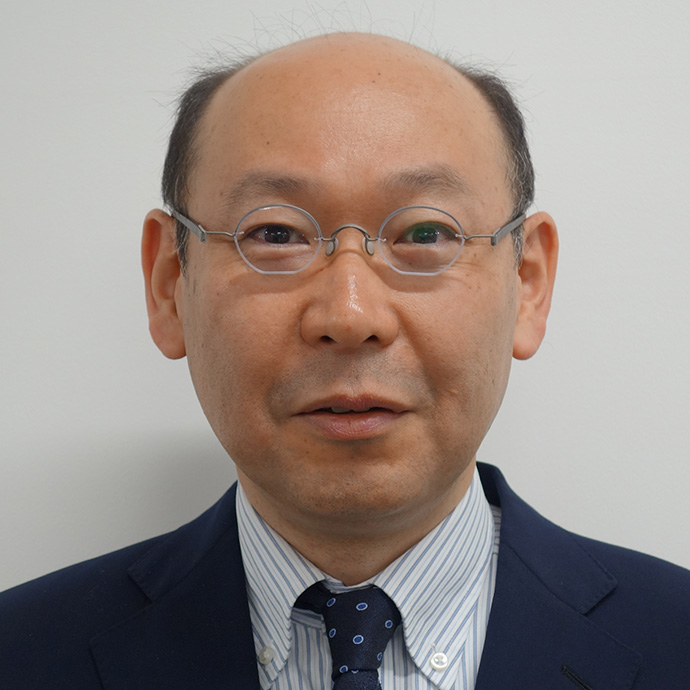
Satoru Kondo is a Project Associate Professor in the Department of Integrative Physiology at The University of Tokyo's Graduate School of Medicine and a Specially Appointed Associate Professor at the International Research Center for Neurointelligence (IRCN). He also serves as Core Manager of the Imaging Core facility. His academic journey includes a PhD in Medicine from The University of Tokyo (1995), preceded by graduate studies at Tokyo Institute of Technology and undergraduate training at Kanazawa University. His research focuses on understanding neural circuits for visual information processing using advanced imaging techniques. Key interests include: Synaptic organization in visual cortical pathways Neuronal integration mechanisms via two-photon microscopy Functional microarchitecture of orientation selectivity In vivo analysis of synapse dynamics and glial interactions Kondo's publications demonstrate consistent focus on visual neurophysiology, with recent work emphasizing synaptic input architecture and large-scale neural imaging. His 25+ articles show progression from molecular neuroscience to systems-level circuit analysis. Awards & Recognition: Human Frontier Science Program Long-Term Fellowship (1995) Research Leadership: He leads multiple funded projects including AMED-supported development of novel bio-optical imaging techniques (2021-2024) and JSPS-funded work on synaptic input mechanisms (2020-2023). As Imaging Core Manager, he oversees advanced microscopy resources for neuroscience research.