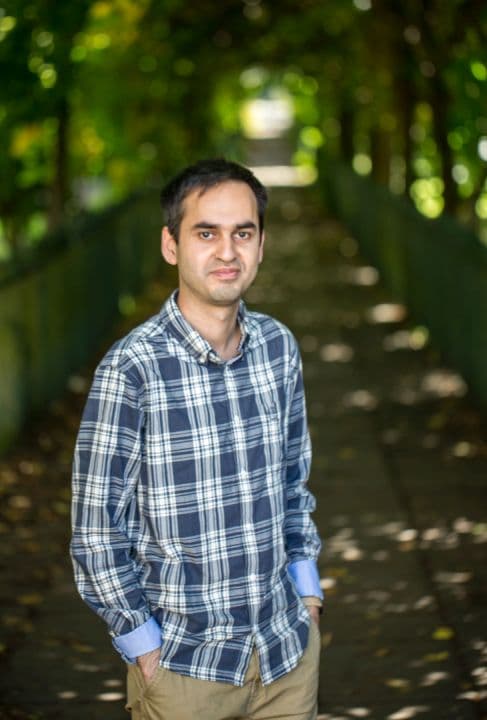
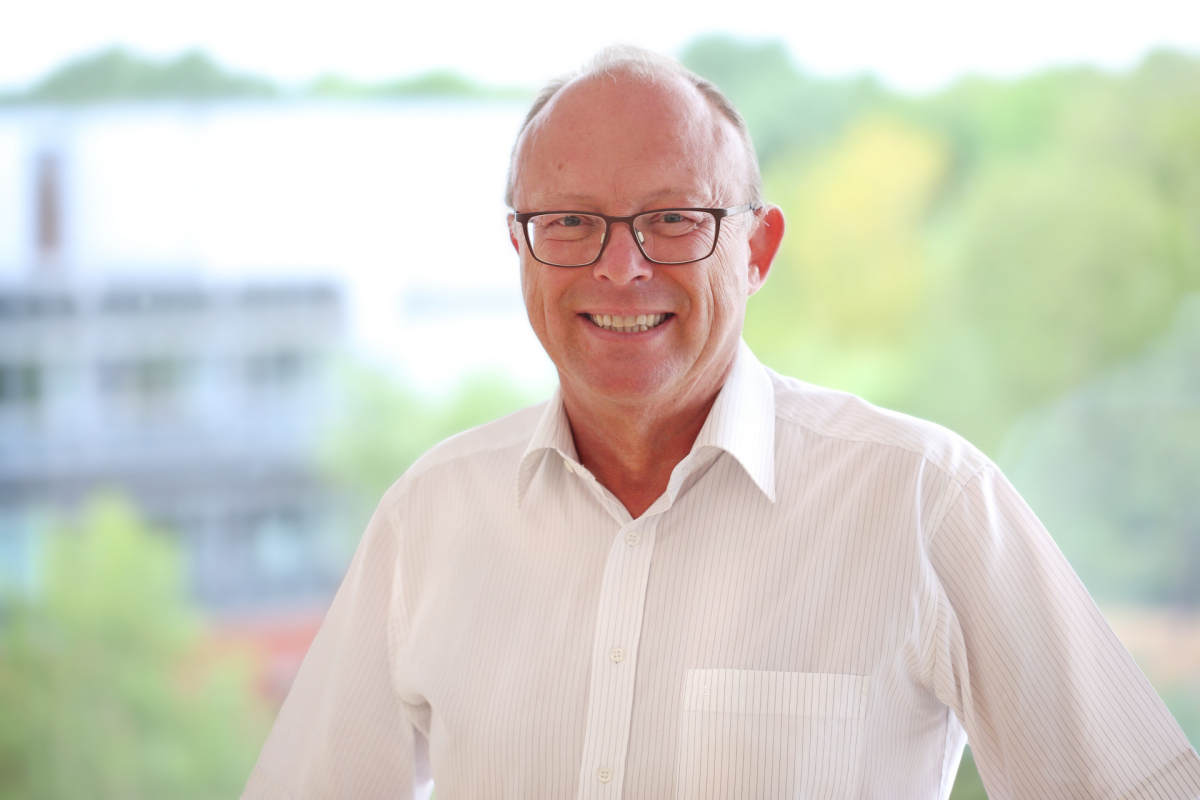
Dr. Danial Chitnis is a Chancellor's Fellow and Lecturer in Electronics at the School of Engineering, University of Edinburgh. He holds a DPhil in Engineering Science from the University of Oxford (2013) and has expertise in microelectronics, biomedical engineering, and quantum imaging. His research focuses on SPAD arrays, time-of-flight sensors, and wearable optical systems for biomedical applications. Education: BSc in Electronics Engineering, Chamran University of Ahvaz (2002–2007) MSc in Advanced Microelectronics Systems Engineering, University of Bristol (2007–2008) DPhil in Engineering Science, University of Oxford (2009–2013) Research Interests: Single-Photon Avalanche Diode (SPAD) arrays for optical communications and biomedical imaging Quantum-enhanced imaging via QuantIC Hub Wearable sensors for near-infrared spectroscopy (NIRS) AI-driven automation in test and measurement systems Articles Trends: Recent work emphasizes AI integration in electronics design, photon-counting receivers for 6G networks, and portable biomedical devices. Notable contributions include SYCL-based acceleration of circuit simulations and FPGA-driven time-to-digital converters. Grants & Collaborations: Principal Investigator of multiple grants, including EPSRC-funded projects on AI-enhanced human-machine interfaces and quantum technology applications. Collaborates with UCL, QuantIC, and industry partners like Keysight Technologies. Labs/Teams: Co-investigator at QuantIC, the UK Quantum Technology Hub in Quantum Enhanced Imaging. Leads interdisciplinary research on detector arrays and systems for quantum physics and consumer cameras.
Iro Laina is a Departmental Lecturer in Computer Vision at the University of Oxford's Visual Geometry Group. She holds a PhD (Dr. rer. nat.) from the Technical University of Munich (TUM), where her dissertation earned the ECVA PhD Award. Her research focuses on unsupervised and language-supervised learning for 3D scene understanding, image/video perception systems, and geometric reconstruction. Education: PhD in Computer Science (TUM), MSc in Biomedical Computing (TUM), Diploma in Electrical & Computer Engineering (NTUA). Research Interests: 3D Reconstruction and Generation Unsupervised Learning Multi-View and Video Analysis Generative Diffusion Models Geometry-Aware Networks Her recent work emphasizes scalable 3D scene synthesis, training-free methods, and cross-modal fusion with LLMs. Over 15+ publications since 2021 reflect her leadership in geometric deep learning. Awards: ECVA PhD Award (2020), Recognized in multiple international conferences. Advising: Mentors DPhil students in creative AI applications (e.g., gameplay design). Active in Oxford's Robotics and Biomedical Engineering networks. Labs/Tech: Core member of the Visual Geometry Group, collaborating on projects like IMAD2025 with the ZERO Institute.
Eleonora Vacca is a PhD student and Research Fellow in the Department of Automatic Control and Computer Science (DAUIN) at the Polytechnic University of Turin. She holds a B.S. in Electronic Engineering from the University of Palermo (2018) and an M.S. in Electronic Engineering-Embedded Systems from Politecnico di Torino (2021). Her research focuses on digital hardware design, reliability engineering, reconfigurable devices, and AI applications in aerospace and safety-critical systems. She is a member of the Aerospace and Safety Computing Lab and the CAD - Electronic CAD & Reliability Group (DAUIN). Her work addresses challenges such as radiation effects mitigation in space missions, fault-tolerant AI accelerators, and real-time anomaly detection in satellite telemetry. She has contributed to projects like the RAMSES CubeSat-1 Development (2025-2026), funded by commercial contracts. In 2024, she won the Best Student Paper Award at the NEWCAS Conference for her research on radiation effects in space missions. Vacca collaborates on teaching, including assisting in the course 'Electronic Calculators' for Computer Engineering students. Her recent publications explore AI resilience in RISC-V ecosystems, radiation environment analysis for space missions, and gesture recognition systems for smart cities. She actively contributes to conferences such as the ACM International Conference on Computing Frontiers and the IEEE International Smart Cities Conference.
Abdulkadir C. Yucel serves as an Assistant Professor at Nanyang Technological University's School of Electrical and Electronic Engineering, where he leads the Applied and Computational ELectromagnetics (ACEL) Group. His research spans applied electromagnetics, radar imaging, and AI-driven electromagnetic analysis with applications in smart cities, neurotechnology, and quantum systems. Education: Ph.D. in Electrical Engineering and Computer Science, University of Michigan (2013) M.S. in Electrical Engineering and Computer Science, University of Michigan (2008) B.S. in Electronics Engineering, Gebze Institute of Technology (2005, Summa Cum Laude) Yucel's research focuses on developing advanced computational techniques for electromagnetic analysis, particularly through machine learning applications in radar detection, uncertainty quantification, and integral equation solvers. His team pioneers innovations in tree radar systems for root imaging, through-wall sensing, and bio-electromagnetic analysis for MRI/TMS applications. Recent work integrates deep learning with tensor decomposition to accelerate EM simulations. Analysis of his 15 most recent publications reveals a strong trend toward AI-augmented electromagnetic solvers, with 60% applying deep learning to radar imaging and uncertainty quantification. Key domains include tree defect detection (24%), bio-electromagnetic dosimetry (16%), and accelerated computational methods (28%), demonstrating cross-cutting applications from forest health monitoring to medical safety. Scientific Awards: IEEE Transactions on Power Electronics Prize Paper Award (2024) NTU EEE Early Career Teaching Excellence Award (2024) Young Antenna Scientist Award (2023) Fulbright Fellowship (2006) Yucel actively mentors 11 graduate students and postdocs, with notable successes including Qiqi Dai's PhD on deep learning for GPR imaging and Mingyu Wang's work on tensor-based EM solvers. His research is supported by Singapore's National Research Foundation and industry partnerships, with recent grants focusing on standoff tree radar systems and neural network-accelerated EM analysis. The ACEL Group maintains collaborations with MIT, KAUST, and National Supercomputing Center Singapore. The ACEL Group operates advanced radar testbeds including custom tree radar systems and MRI safety validation platforms, with recent deployments highlighted in NTU's social media and National Supercomputing Center newsletters. Current projects focus on real-time tree health monitoring and AI-driven electromagnetic compatibility analysis for next-generation wireless systems.
Dr. Lin Wang is a Lecturer in Applied Data Science and Signal Processing at Queen Mary University of London (QMUL), affiliated with the School of Electronic Engineering and Computer Science. He leads the Machine Listening Lab and is a member of the Centre for Multimodal AI, Centre for Intelligent Sensing (CIS), and Institute of Coding (IoC). His research focuses on audio-visual signal processing, robotic perception, and machine learning, with applications in healthcare, drone-based sensing, and human activity recognition. Dr. Wang holds a PhD from Dalian University of Technology and has held postdoctoral positions at QMUL, the University of Sussex, and the Alexander von Humboldt Foundation in Germany. Education and Roles: PhD in Signal Processing, Dalian University of Technology (2010) Postdoc at Queen Mary University of London (2014–2017) Postdoc at University of Sussex (2017–2018) Alexander von Humboldt Fellow at University of Oldenburg (2011–2013) Fellow of the Higher Education Academy (UK) Research Interests: Audio-visual signal processing for drones and wearable devices Machine listening and robotic perception Machine learning for healthcare and environmental monitoring Human activity recognition using multimodal sensors Awards and Grants: Early Career Champion on AI&Data, UK Acoustics Network Outstanding Article Award, Frontiers in Computer Science (2022) EPSRC grant: Bioacoustic Monitoring Using Drones (£46,821, 2022–2023) Innovate UK grant: Music Source Separation (£48,144, 2024–2025) Teaching and Students: Dr. Wang teaches Applied Statistics , Website Design and Authoring , and Machine Learning for Visual Data Analysis . He supervises PhD students including Ashish Alex (speech separation), Michael Clayton (drone audition), and Dmitrii Mukhutdinov (audio-visual processing). Labs and Teams: He co-leads the Machine Listening Lab and is part of the Centre for Multimodal AI, focusing on interdisciplinary projects in robotics, acoustics, and AI.
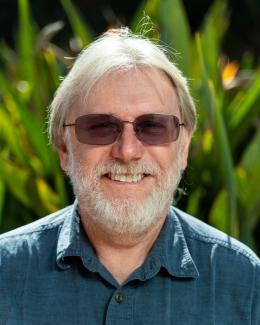
Dar Roberts is a Professor in the Department of Geography at the University of California, Santa Barbara, where he directs the Visualization & Image Processing for Environmental Research (VIPER) Lab. His research focuses on advanced remote sensing applications including: Imaging spectrometry for ecosystem analysis Wildfire fuel mapping and fire emissions modeling Drought impact assessment on vegetation Land use/land cover change detection Integration of remote sensing with climate modeling Roberts leads the Southern California Wildfire Hazard Center and has pioneered techniques for mapping wildfire fuels using remote sensing technologies. His work combines field measurements with satellite, airborne, and drone-based sensors to monitor environmental changes.
Truong Q. Nguyen is a Professor in the Electrical and Computer Engineering (ECE) Department at the University of California San Diego (UCSD), affiliated with the Jacobs School of Engineering. He holds positions at the Center for Wireless Communications and the California Institute for Telecommunications and Information Technology. His research focuses on image/video processing, wavelets, 3D video technology, and applications in healthcare and robotics. He has authored influential textbooks like Wavelets & Filter Banks and pioneered low-power video processing algorithms for mobile devices. Nguyen earned his B.S., M.S., and Ph.D. in Electrical Engineering from the California Institute of Technology (1985–1989). He held roles at MIT Lincoln Laboratory and Boston University before joining UCSD in 1998. His honors include the IEEE Signal Processing Paper Award (1992), NSF Career Award (1995), IEEE Fellow (2005), and UCSD’s Distinguished Teaching Award (2019). His research interests span 3D video processing, machine learning for health monitoring, and biomedical imaging. Notable contributions include wavelet-based compression techniques and AI-driven medical image analysis. He leads the UCSD Video Processing Lab, exploring computer vision, robotics, and generative AI applications. Nguyen is committed to educational innovation, co-creating programs like the Hands-on Curriculum, Summer Research Internship Program (SRIP), and Project-in-a-Box (PIB) for K-12 students. Nguyen’s work bridges academia and industry, with patents in wavelet design and signal analysis. Recent projects include NSF-funded initiatives to develop inclusive engineering curricula and collaborate on graduate pathways programs through the Inclusive Engineering Consortium (IEC).
Prof. Dr.-Ing. Weihan Li is a Junior Professor at RWTH Aachen University, specializing in Artificial Intelligence and Digitalization for Batteries. He is affiliated with the Institute for Power Electronics and Electrical Drives (ISEA) and the Center for Ageing, Reliability, and Lifetime Prediction of Electrochemical and Power Electronic Systems (CARL). His research bridges informatics, electrochemistry, and power electronics to advance battery technology through AI. B.Sc. in Automotive Engineering (Tongji University, 2014) M.Sc. in Automotive Engineering and Transport (RWTH Aachen, 2017) Ph.D. in Electrical Engineering and Information Technology (RWTH Aachen, 2021, summa cum laude) Prof. Li’s research focuses on AI-driven battery modeling, diagnostics, and optimization. Key areas include digital twin technology, electrochemical parameterization, and lifetime prediction using field data. He explores multi-scale kinetic processes, thermal management, and mechanical-electrochemical coupling effects in battery systems. The articles listed reflect his leadership in AI-powered battery analytics, spanning degradation prediction, fast charging, failure mode analysis, and grid-scale storage. His work emphasizes both theoretical innovation (e.g., diffusion models, physics-informed neural networks) and practical applications (e.g., second-life battery screening, automotive integration). Clarivate Highly Cited Researcher 2024 BMBF BattFutur Research Group (€2M+) German Thesis Award (Körber Foundation) Reichart Prize vgbe Innovation Prize Battery Young Research Award Umbrella Award RWTH Innovation Award Prof. Li leads an interdisciplinary research group with over €6 million in grants from BMBF, BMWK, BMDV, European Commission, and industry partners. His teams focus on battery informatics, AI-driven diagnostics, and digitalization of testing processes at CARL and ISEA.
Professor Christian F. Doeller is a leading cognitive neuroscientist serving as Director of the Department of Psychology at the Max Planck Institute for Human Cognitive and Brain Sciences (MPI CBS) in Leipzig and Vice President of the Max Planck Society (since 2023). His roles include honorary professorships at the University of Leipzig (2019) and TU Dresden (Cognitive Neuroscience of Learning and Memory). He holds a PhD in Psychology from Saarland University (2005) and has held positions at institutions such as UCL (London), Radboud University (Nijmegen), and NTNU (Trondheim). His research focuses on spatial navigation, memory systems, and cognitive mapping in the human brain, leveraging neuroimaging (fMRI, EEG) and computational modeling. Key areas include hippocampal/entorhinal cortical function, grid cells, and the neural basis of spatial and conceptual representations. Recent work explores non-Euclidean spatial cognition, value-based decision making using grid-like maps, and hormonal influences on navigation. His lab combines experimental psychology, neuroimaging, and theoretical neuroscience to understand how brains build predictive models of environments and concepts. Publications emphasize cognitive maps, neural representations of space/value, and memory formation mechanisms. Over 100 journal articles span high-impact journals like Nature Neuroscience , Neuron , and Current Biology . His work bridges basic research and translational applications in neurodegenerative disorders and spatial cognition deficits.
Dr. David Sewell is a Senior Lecturer and Deputy Head of School (Teaching & Learning) at the School of Psychology, The University of Queensland. His research focuses on attention, learning, memory, and decision-making, with a strong emphasis on formal mathematical models of human cognition. He is affiliated with the Centre for Perception and Cognitive Neuroscience within the Faculty of Health, Medicine and Behavioural Sciences. Education: Bachelor (Honours) of Arts and Doctor of Philosophy, both from the University of Western Australia. David's research explores the intersection of cognitive psychology and computational modeling. Key areas include perceptual decision-making, attentional mechanisms, and the application of diffusion models to understand cognitive processes. His work also extends to sustainability and collective self-regulation through cognitive frameworks. The 15 most recent articles highlight his contributions to modeling decision thresholds in memory prioritization, analyzing gaze cueing effects, and investigating neural correlates of confidence in multisensory decisions. Collaborative projects frequently involve interdisciplinary approaches, combining neuroscience, psychology, and computational methods. He has supervised multiple PhD candidates, serving as Principal or Associate Advisor, with research topics ranging from visual categorization to metacognition in children. Current and past funding includes ARC Discovery Projects on collective self-regulation and category learning constraints.
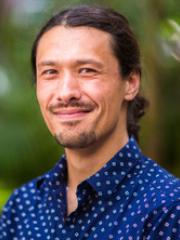
Chao Liu is a Research Scientist at CNRS (French National Center for Scientific Research) since 2008, affiliated with the DEXTER team and the Department of Robotics, LIRMM at University of Montpellier, France. He earned his Ph.D. in Electrical & Electronic Engineering from Nanyang Technological University, Singapore (2006). Current research focuses on surgical robotics , haptics , teleoperation , and nonlinear control theory with applications in computer vision. His work addresses challenges in robotic-assisted telesurgery, including: Stable and transparent human-robot interaction through wave variable compensators and passivity filters Physiological motion compensation using spatio-temporal LSTM and dual Kalman filters EMG-based motion recognition for surgical skill assessment 3D soft-tissue reconstruction with stereo-endoscopes and deep learning Dr. Liu leads European and French projects like: TS2RT (CNRS-funded): Safer teleoperation with motion compensation ROBACUS (ANR-funded): Needle positioning with MPC control HaTUMoCo (CNRS-funded): Haptic teleoperation with uncertainty handling ARAKNES (EU-funded): Microrobotic systems for endoluminal surgery Scientific honors include Senior Member of IEEE and Member of Sigma Xi . He supervises Ph.D. and Master's students working on topics such as concentric tube robot optimization, haptic teleoperation, and EMG-based force estimation. Dr. Liu serves on IEEE Technical Committees for Telerobotics and Haptics , and as Technical Editor of IEEE/ASME Transactions on Mechatronics.
Dr. Kezhi (Ken) Li is an Associate Professor of AI in Healthcare at the Institute of Health Informatics, University College London (UCL). He leads the AI for Health research group and has established himself as a leading expert in applying artificial intelligence to solve complex problems in healthcare, with over 130 publications in leading journals (total impact factor greater than 400). Dr. Li earned his Doctor of Philosophy from Imperial College of Science, Technology and Medicine in 2013, followed by research positions at the Medical Research Council (2015-2017), University of Cambridge (2014-2015), and Royal Institute of Technology (KTH) (2013-2014). His academic journey reflects a consistent trajectory from technical AI research toward increasingly healthcare-focused applications. Dr. Li's research focuses on solving physiological, medical, clinical, and operational problems in healthcare using AI techniques. His specific expertise includes AI in healthcare using electronic health records (EHR), biomedical time series analysis using monitors/wearables, diabetes management, large language models (LLM) in healthcare (especially mental health), patient flow optimization, and digital health with federated learning. His work bridges the gap between cutting-edge AI methodologies and practical healthcare applications, with a strong focus on improving patient outcomes and healthcare system efficiency. Analysis of Dr. Li's publication history reveals a strong emphasis on diabetes management technologies, particularly blood glucose prediction systems using advanced neural network architectures. More recently, his work has expanded into mental health applications of large language models, blockchain-based federated learning for healthcare data, and mortality prediction in critical care settings. His research demonstrates a clear evolution from purely technical AI development toward increasingly clinically impactful applications, with growing emphasis on explainability, privacy preservation, and real-world implementation challenges. Dr. Li has received numerous prestigious awards recognizing his contributions to healthcare AI: Best Application Award of IEEE Global Blockchain Conference (2025) Fellow of British Computer Society (2025) Fellow of the Royal Society for Public Health (2024) Healthcare Partnership of the Year category at the London Higher Awards (2024) ECR Promising Project Award (2023) Gallivan Award finalists (2022) Stylianos Kalaitzis PhD Award Winner (2022) HDR UK Team of the Year (COVID-19) Award (2021) As an educator, Dr. Li serves as the Director of MRes study (AI-enabled Healthcare Systems) at UCL. He leads multiple key modules including Healthcare Artificial Intelligence Journal Club, Dissertation in Artificial Intelligence Enabled Healthcare, and Advanced Machine Learning for Healthcare. His supervision extends across dissertation projects and junior researchers in his AI for Health group. His research has been supported by various grants, including those from HDR UK, focusing on translating AI innovations into practical healthcare solutions. Dr. Li leads the AI for Health research group (https://ai4hucl.github.io/ai4h_webs/), which comprises researchers with diverse expertise in machine learning, healthcare systems, and clinical domains. The group maintains strong collaborations with healthcare providers and industry partners to ensure their research addresses real-world healthcare challenges and can be effectively translated into clinical practice.
Prof. Dr. Rudolf Amann serves as Managing Director at the Max Planck Institute for Marine Microbiology in Bremen, Germany, and leads the Department of Molecular Ecology. His work pioneers molecular methods for studying marine microorganisms, with a focus on fluorescence in situ hybridization (FISH) to identify and quantify microbial cells. Managing Director, Max Planck Institute for Marine Microbiology (since 2018) Department Head, Molecular Ecology Research Center, Bremen, Germany Research Interests: Marine microbial diversity and ecology Carbon cycle dynamics in coastal and deep-sea environments Phytoplankton-bacterioplankton interactions Microbial taxonomy and phylogenetics Single-cell identification techniques (FISH, CARD-FISH) Integration of metagenomics and proteomics Publication Trends: Recent work focuses on microbial interactions in extreme environments (hydrothermal vents, Arctic waters), carbohydrate cycling in oceanic systems, and ecological differentiation of bacterial populations through advanced imaging and omics technologies. Contact: ramann@mpi-bremen.de
Olga Fernández López is an Associate Professor at the Department of History and Theory of Art, Universidad Autónoma de Madrid, and holds a PhD in Geography and History (History of Art) from Universidad Complutense de Madrid (UCM). She collaborates with institutions including Intermediae (Matadero Madrid), CA2M Madrid, and Andalusian Center for Contemporary Art Seville. PhD Curating Contemporary Art, Royal College of Art (2017) PhD in History of Art, UCM Master’s in Cultural Management, Fundación Ortega y Gasset Her research focuses on: History of exhibition models and curatorial practice Contemporary art in Spain and Latin America Visual culture and political philosophy Museum decolonization Recent publications explore: Urban curatorial practices (2016-2021) Postwar European visual culture (2019) Decolonial exhibition strategies (2020) Scientific awards include: Salvador de Madariaga grant (2020) for research at Columbia University Key projects: PUBLISHERS: Publics of Contemporary Art (2019-2021) European Forum for Advanced Practices (2019-2022) Decentralized Modernities: Cold War Art (2018-2020)
Sara Green is an Associate Professor at the Department of Science Education, University of Copenhagen, specializing in the Section for History and Philosophy of Science . Her work bridges philosophy, biology, and biomedical ethics, focusing on the epistemic and social implications of datafication in healthcare and the ethical challenges of precision medicine and consumer health technologies. Green holds a PhD in Science Studies from Aarhus University and was a postdoctoral fellow at the University of Pittsburgh’s Center for Philosophy of Science. She leads the PROMISE and COPE projects and contributes to EU-funded initiatives like DataSpace , TRANSCEND , and REDESIGN . Research Themes: Philosophy of precision medicine and data-driven healthcare Ethics of patient-derived organoids and organ-on-chip technologies Epistemic standards in consumer medicine Interdisciplinary integration in systems biology Article Trends: Recent publications explore organoid ethics , datafication in medicine , and philosophical frameworks for emerging health technologies . Key sub-fields include biobanking, cross-border data governance, and temporal dimensions of personalized medicine. Scientific Recognition: DFF Research Project 1 (2020) Semper Ardens Accellerate Grant (2023) Silver Medal, Royal Danish Society of Science and Letters (2024) Werner Callebaut Prize (2015) EU SwafS-Horizon stipend (2020) Teaching & Supervision: She teaches philosophy of science to students in biology, chemistry, and sports science, supervising projects on philosophy of biology and medicine and co-supervising science communication research. Collaborative Networks: Green collaborates across Denmark, the EU, and the U.S., particularly on cross-border health data infrastructure and reduction of animal models through organoid technologies.