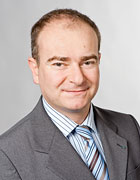
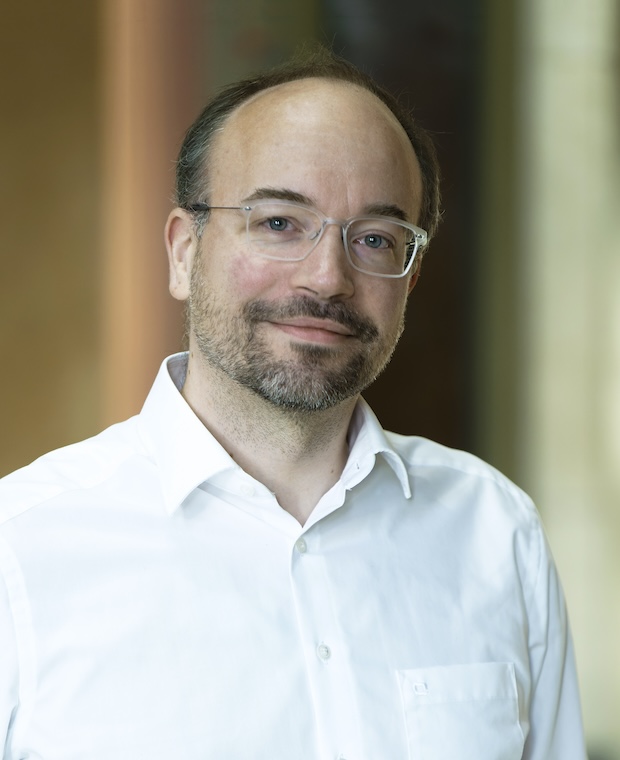
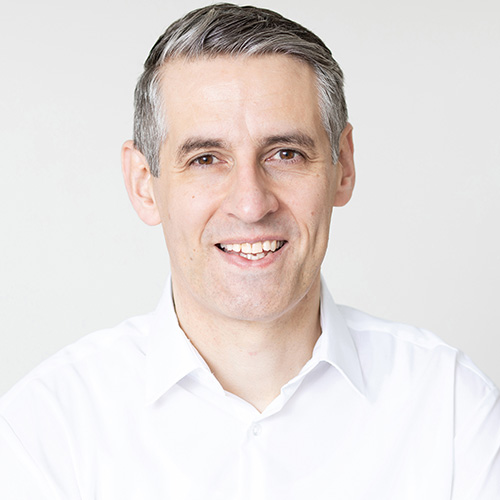
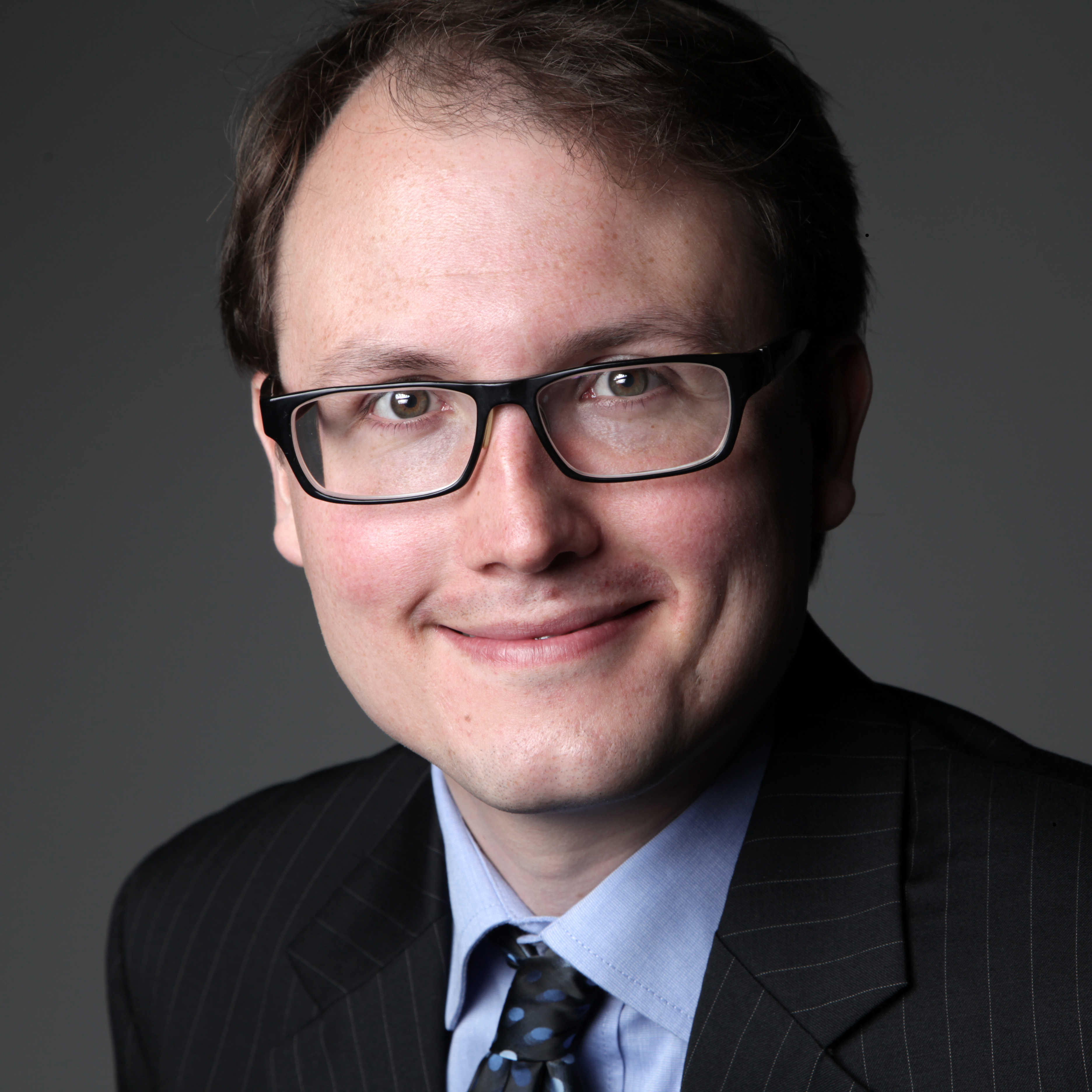
Holger Fröning is a full professor at Heidelberg University’s Institute of Computer Engineering (ZITI), where he leads the Hardware and Artificial Intelligence (HAWAII) Lab. His research focuses on embedded machine learning , high-performance computing , and hardware-software co-design , with emphasis on resource efficiency, power optimization, and emerging architectures like analog , photonic , and resistive memory systems. He has held leadership roles including Managing Director of ZITI (2023–present) and Dean of Studies for Computer Science (2019–2022) , and has collaborated with institutions such as NVIDIA Research, Chinese Academy of Sciences, and Graz University of Technology. Research Trends : His recent publications explore Bayesian neural networks , green machine learning , analog computing noise mitigation , and GPU/FPGA optimization . Articles highlight photonic computing for AI , memory-efficient training , and hardware-aware DNN compression . Scientific Awards : 2025 HiPEAC Paper Award (Nature Computational Science) 2014 Google Faculty Research Award Multiple Best Paper Awards (IPDPS, ICPP, ECML-PKDD workshops) Leadership & Service : Organized workshops (WEML, ITEM, F4HD), chaired tracks at EuroPar and ISC, and served on program committees for ICPR, ECAI, and FPL. Education & Affiliations : PhD and MSc from University of Mannheim (2007/2001). Sponsors include DFG, FWF, FFG, NVIDIA, SAP, and XILINX.
Vladimir Spokoiny is a Professor at the Departments of Mathematics and Economics of the Humboldt University of Berlin and Head of the Research Group "Stochastic Algorithms and Nonparametric Statistics" at the Weierstrass Institute for Applied Analysis and Stochastics (WIAS) in Berlin, Germany. His research spans multiple areas of statistics, machine learning, and financial mathematics, with significant contributions to nonparametric statistics, high-dimensional data analysis, and statistical methods in finance. Spokoiny received his M.Sc. in applied mathematics from the Moscow Institute of Railway Engineering in 1981 and his Ph.D. in mathematics from Lomonosov Moscow State University in 1988. He completed his Habilitation at Humboldt University in 1996. His academic career includes positions at the All-Union Institute of Railway Transport in Moscow, the Institute for Information Transmission Problems in Moscow, and the Institute for Applied Analysis and Statistics in Berlin before joining the Weierstrass Institute and Humboldt University where he has been a professor since 2002. Spokoiny's research focuses on adaptive nonparametric smoothing and hypothesis testing, high dimensional data analysis, statistical methods in finance, image analysis with applications to medicine, classification, and nonlinear time series. His work often addresses the challenges of nonstationarity in time series data and develops innovative methods for volatility estimation and risk management. He has made significant contributions to the development of adaptive weights smoothing procedures, which have applications in image processing, community detection, and manifold learning. His recent work has expanded into high-dimensional statistics, Bayesian inference, and optimization methods for machine learning, with publications demonstrating novel approaches to Gaussian approximation, Laplace methods, and statistical inference in non-Euclidean spaces. Spokoiny has supervised numerous PhD students including Oliver Reiss, Danilo Mercurio, Ying Chen, Elmar Diederichs, and Mstislav Elagin, whose research has focused on mathematical finance, time series analysis, and statistical methods. He serves as an Associate Editor for The Annals of Statistics (since 2004) and Statistics and Decisions (since 2002), and has previously served on the editorial board of the Journal of Statistical Planning and Inference. His professional activities include reviewing for major statistical journals including Annals of Statistics, Bernoulli, Econometrica, and Journal of American Statistical Association, as well as reviewing grant proposals for the National Science Foundation (USA), German Research Foundation, and Netherlands Organisation for Scientific Research. Spokoiny is a member of several professional societies including the International Statistical Institute, American Statistical Association, Institute of Mathematical Statistics, and Bernoulli Society. He is fluent in Russian (mother tongue), English, and German, and has good knowledge of French. His research group at WIAS focuses on developing novel statistical methodologies with applications across various scientific domains, particularly emphasizing adaptivity and robustness in complex data environments. The group's work has significant implications for financial risk management, medical imaging, and machine learning applications, with recent publications addressing fundamental questions in high-dimensional statistics and nonparametric inference.
Prof. Massimo Fornasier holds the Chair of Applied Numerical Analysis at the Technical University of Munich (TUM), within the School of Computation, Information and Technology and the Department of Mathematics. His research focuses on mathematical modeling, numerical analysis, and data-driven methods, particularly in areas like compression, sparse recovery, and optimization. He has made significant contributions to consensus-based optimization, control of multiagent systems, and applications in image/signal processing. Education: PhD in Computational Mathematics, University of Padua (2003) Postdoctoral fellowships at University of Vienna, Sapienza University of Rome, and Princeton University Awards: ERC Starting Grant (2012) START Prize (2011) Prix de Boelpaepe (2009) His work bridges theoretical analysis and computational methods, with applications ranging from compressive sensing to machine learning. Recent research emphasizes consensus-based optimization frameworks and their global convergence properties. Editorial roles include journals like Networks and Heterogeneous Media and Calcolo . He leads research groups in areas such as Data Science and Numerical Analysis at TUM.
Prof. Dr. Markus Bachmayr is a full professor at the Institute for Geometry and Practical Mathematics, RWTH Aachen University, holding the chair for Applied Mathematics. His research focuses on nonlinear approximation, high-dimensional partial differential equations (PDEs), uncertainty quantification, and numerical methods in quantum chemistry. He leads the ERC Consolidator Grant project Computational Complexity of Highly Nonlinear Approximations (COCOA) and contributes to CRC 1481 Sparsity and Singular Structures, and RTG 2326 Energy, Entropy, and Dissipative Dynamics. His recent work emphasizes adaptive low-rank and sparse approximation techniques for parametric and stochastic PDEs, including applications in radiative transfer and poroviscoelastic flow modeling. He serves as Editor-in-Chief of Foundations of Computational Mathematics and Associate Editor for multiple journals. Scientific Awards: John Todd Award 2013 Borchers Plakette 2014 Erwin Wenzl Preis 2007 He has taught courses such as Numerische Analysis I/II, Numerische Mathematik für Elektrotechniker, and seminars on numerical methods and approximation theory.
Luigi Acerbi is an Associate Professor in the Department of Computer Science at the University of Helsinki, where he leads the Machine and Human Intelligence research group. He is also an active member of the Finnish Center for Artificial Intelligence (FCAI) and ELLIS (European Laboratory for Learning and Intelligent Systems). His research focuses on probabilistic machine learning and computational neuroscience, particularly on developing efficient methods for statistical inference, Bayesian models of perception, and resource-constrained rationality. His work bridges machine learning and cognitive science, with applications in Bayesian optimization, simulation-based inference, and image completion. The recent publications highlight a strong trend toward unifying probabilistic conditioning across diverse tasks using transformer-based meta-learning frameworks like the Amortized Conditioning Engine (ACE). These works emphasize amortized inference, flexible latent variable modeling, and the integration of prior knowledge at runtime, enabling efficient and scalable Bayesian methods for complex problems. Scientific Affiliations: University of Helsinki, Department of Computer Science Finnish Center for Artificial Intelligence (FCAI) ELLIS (European Laboratory for Learning and Intelligent Systems) Education: PhD in Computational Neuroscience, Doctoral Training Centre, Edinburgh, UK Advisor: Sethu Vijayakumar and Daniel Wolpert Visiting work at Computational and Biological Learning Lab, Cambridge Postdoctoral Experience: Alex Pouget’s lab, University of Geneva, Switzerland Wei Ji Ma, New York University, USA Collaboration with the International Brain Laboratory Luigi Acerbi mentors PhD students including Daolang Huang and Nasrulloh Loka, and collaborates widely with researchers such as Samuel Kaski. He has contributed to open-source tools like PyVBMC and is involved in community initiatives such as the EurIPS conference. His work is supported by grants from the Research Council of Finland, Business Finland, and the UKRI Turing AI World-Leading Researcher Fellowship. He leads a research lab focused on amortized probabilistic inference, with ongoing projects including PriorGuide and Stacked VBMC, aiming to make Bayesian methods more practical and accessible for real-world scientific and engineering applications.
Prof. Dr. Martin Burger is a leading scientist at DESY and a Full Professor in the Department of Mathematics at Universität Hamburg, where he leads the Computational Imaging Group. His research bridges applied mathematics, imaging sciences, and machine learning, with a focus on inverse problems, mathematical modeling, and partial differential equations. He has held professorial positions at Universität Münster and FAU Erlangen-Nürnberg prior to his current dual appointment. Full Professor, Universität Hamburg (2023–present) Leading Scientist, DESY, Hamburg (2023–present) Full Professor, FAU Erlangen-Nürnberg (2018–2023) Full Professor, Universität Münster (2006–2018) His research interests include inverse problems, variational regularization, optimal transport, kinetic models, and mathematical modeling in biology and social sciences. He has made significant contributions to imaging reconstruction, sparse neural networks, and the analysis of transformer architectures. His work often integrates theoretical analysis with computational methods, influencing both pure and applied mathematics. The most recent articles reflect a strong trend toward interdisciplinary applications, combining deep learning with PDE-based modeling, analyzing social and biological systems via kinetic and mean-field models, and advancing mathematical imaging through graph-based and optimal transport methods. His publications span high-impact venues in applied mathematics and computational science. Calderon Prize, Inverse Problems International Association (IPIA) ERC Consolidator Grant (2014) Invited speaker at ECM (2021), ICM (2022), and ICIAM (2023) Editor-in-Chief, European Journal of Applied Mathematics (since 2017) Prof. Burger has supervised numerous PhD students and postdoctoral researchers, many of whom appear as co-authors in his publications. His research is supported by major grants, including funding from the German Federal Ministry of Education and Research (BMBF). He is actively involved in collaborative projects across mathematics, physics, and engineering disciplines. He leads the Computational Imaging Group at DESY, fostering a collaborative environment for developing novel mathematical tools in imaging science. The group works on both theoretical foundations and practical implementations, contributing to advancements in tomography, machine learning, and data analysis.
Prof. Felix Krahmer is a TUM Tenure Track Assistant Professor of Optimization and Data Analysis at the Department of Mathematics, Technische Universität München (TUM), part of the School of Computation, Information and Technology. Previously, he held a Junior Professorship (W1) for Mathematical Data Analysis at the University of Göttingen (2012–2015). His research focuses on mathematical foundations of data science, including compressed sensing, signal quantization, uncertainty quantification, and optimization algorithms. He has led an Emmy Noether research group and contributed to the ZeMat interdisciplinary project. Education : PhD in Mathematics (2009), New York University, advisors: Percy Deift & Sinan Güntürk MSc in Mathematics (2007), New York University BSc in Mathematics (2004), Jacobs University Bremen Research Interests : Krahmer’s work bridges theoretical mathematics and applied data science. Key areas include compressed sensing algorithms, high-dimensional signal reconstruction, quantization theory for analog-to-digital conversion, and optimization methods for inverse problems. He also explores applications in imaging (e.g., MRI reconstruction) and stochastic processes. Key Contributions : His research on phase retrieval, sigma-delta quantization, and compressed sensing recovery has advanced signal processing techniques. Recent efforts focus on uncertainty quantification for high-dimensional inverse problems and the mathematical analysis of consensus-based optimization. Grants & Awards : Emmy Noether Research Group Grant (DFG) Funding from BMBF (ZeMat project) Teaching & Outreach : Krahmer has taught advanced courses on compressed sensing, functional analysis, and random matrix theory. He co-organized workshops on probabilistic techniques and clinical risk prediction, emphasizing interdisciplinary collaboration. Labs/Teams : Member of the TUM Data Science Research Group, focusing on optimization, imaging, and uncertainty quantification. Active in the Munich Center for Quantum Science and Technology (MCQST).
Dr. Jing Wang is a Professor in the Department of Bioinformatics at Southern Medical University's School of Medicine, with extensive research at the intersection of artificial intelligence and biomedical applications. Her work demonstrates strong cross-disciplinary collaboration across medical institutions, engineering departments, and computer science research groups. Her primary research interests include Artificial Intelligence in Healthcare , Biomedical Engineering , and Traditional Chinese Medicine Informatics , with recent publications showing particular expertise in medical imaging analysis, diagnostic assistance systems, and clinical decision support. Her work spans both theoretical algorithm development and practical clinical implementations. Analysis of her 15 most recent publications (2025-2026) reveals a strong trend toward clinically applicable AI systems, with approximately 60% of publications focused on medical diagnostics and treatment support systems. The remaining publications demonstrate expertise in industrial applications of computer vision and fundamental AI research. Her work shows consistent collaboration with both domestic Chinese institutions and international research groups. Notable scientific contributions include: Development of 'Tianyi', a traditional Chinese medicine language model for clinical practice Innovations in bionic soft robotics for rehabilitation assistance Novel approaches to medical image analysis for cancer diagnostics Her research program appears well-funded with consistent publication output across high-impact journals in biomedical engineering, AI, and medical informatics. Current work suggests strong emphasis on translating AI research into clinical practice, particularly in diagnostic support systems and rehabilitation technology.
Christian Wald is a Post-doctoral researcher at Technical University Berlin working under Professor Gabriele Steidl, focusing on generative modeling, flow matching, and stochastic processes in machine learning. His research bridges theoretical probability with practical medical imaging applications, particularly in MRI reconstruction and analysis. He completed his PhD at Humboldt University of Berlin in 2017 with a thesis on p-adic quantum groups. His academic journey transitioned from pure mathematics to interdisciplinary machine learning research, reflecting his versatile expertise. Wald's primary research explores generative models through the lens of optimal transport and flow matching, with significant contributions to Wasserstein geometry and conditional distance metrics. His work frequently integrates stochastic processes to enhance medical image reconstruction, demonstrating strong cross-disciplinary impact in both theoretical machine learning and clinical applications. Recent publications highlight innovations in sliced MMD flows, Bayesian OT methods, and uncertainty-aware medical image analysis. Analysis of his 15 most recent publications (2019-2025) reveals a consistent trajectory toward unifying geometric probability with deep learning. Key themes include flow-based generative modeling for medical time-series data, optimal transport applications in image reconstruction, and novel kernel methods for distribution matching. His work spans both foundational theory (e.g., Fisher-Rao curves) and high-impact medical applications (e.g., coronary calcium scoring). No specific scientific awards are documented in the provided text, though his publications appear in prestigious venues including ICLR, IEEE TMI, and Physics in Medicine & Biology. Wald maintains extensive collaborations with the medical imaging group at Technical University Berlin, particularly with Andreas Kofler and Gabriele Steidl. His co-authored works demonstrate consistent contributions to MRI reconstruction pipelines and segmentation frameworks, though no formal advising roles or grant leadership are indicated. Current projects focus on uncertainty quantification in active learning for medical image segmentation. He operates within Gabriele Steidl's research group at Technical University Berlin, which specializes in mathematical imaging and machine learning. The team combines expertise in optimization, probability theory, and deep learning to solve medical imaging challenges, with Wald contributing core algorithmic innovations in generative modeling and stochastic reconstruction.
Sergiusz Michalski is a Professor at the Institute of Art History within the Faculty of Philosophy at the University of Tübingen, where he has held his position since 2001. Previously, he served as Managing Director of the Art History Institute at TU Braunschweig from 1996-2001 and completed his Habilitation at Goethe University Frankfurt in 1995. His distinguished academic career spans multiple European institutions including universities in Munich, Leipzig, Frankfurt, Kiel, Fribourg, Zurich, and Torun. Michalski's research focuses encompass Reformation and Art, Mannerism, 16th and 17th century Dutch and Flemish painting, Art theory, 18th century French painting, 20th century art, Public monuments, and Methodological questions in art history. His scholarly output includes approximately 270 publications with notable books such as 'The Reformation and the Visual Arts' (1992), 'Public Monuments' (1998), 'L'art de l'Europe Centrale' (2008), and 'Einführung in die Kunstgeschichte' (2015). His recent publications demonstrate continued engagement with contemporary issues in art history, particularly in public monument discourse, digital methodologies, and Central European art traditions. Michalski has edited several prominent art history journals including Ars Artibus et Historiae, Folia Historiae Artium, and Ikonotheka. Member of Royal Swedish Academy for Literature and Humanities Member of Polish Academy for Sciences and Arts Member of Göttingen Academy of Sciences Member of Academia Europaea / The Academy of Europe London Member of Latvian Academy of Sciences Member of Council of Experts of European Science Foundation Michalski maintains an active research profile with recent publications addressing digital methodologies in art history, contemporary monument discourse, and Central European art traditions. His international scholarly network is reflected in his editorial roles and academy memberships across Europe.
Prof. Vladimir Spokoiny is a leading figure in stochastic algorithms and nonparametric statistics at the Weierstrass Institute for Applied Analysis and Stochastics (WIAS) and Humboldt University of Berlin . His work bridges mathematical statistics with practical applications in finance, medicine, and machine learning. Born in 1959 in Moscow, USSR PhD from Lomonosov Moscow State University (1988) Habilitation from Humboldt University (1996) Head of WIAS research group since 2000 Professor at Humboldt University since 2002 Spokoiny's research focuses on adaptive nonparametric methods, high-dimensional data analysis, and statistical finance. His innovations in local homogeneity testing and propagation-separation methods have advanced volatility modeling, image analysis, and manifold learning. He employs Bayesian optimization frameworks and stochastic control techniques for financial instrument pricing. Recent scientific contributions include generalized bootstrap procedures for Bures-Wasserstein barycenters (2024), dimension-free Laplace approximation bounds (2023), and structure-adaptive manifold estimation (2022). His 19+ PhD students and editorial roles in top journals like The Annals of Statistics demonstrate sustained academic impact. International Statistical Institute member American Statistical Association fellow Institute of Mathematical Statistics member Bernoulli Society member
Prof. Dr.-Ing. Jürgen Teich is a full Professor and Chair for Hardware-Software Co-Design at the Department of Computer Science, Friedrich Alexander University Erlangen-Nuremberg (FAU). He serves as Head of Department Computer Science and Vice Dean of the Technical Faculty since August 2024, and has been Speaker of the FAU Research Center Embedded System Initiative (FAU ESI) since 2023. His educational background includes: Diploma degree in Electrical Engineering, University of Kaiserslautern (1989) Dr.-Ing. degree in Electrical Engineering, University of Saarland (1993) Habilitation (PD Dr.-Ing.) entitled "Synthesis and Optimization of Digital Hardware/Software Systems" (1996) Prof. Teich's research focuses on Embedded Systems , Invasive Computing , Hardware-Software Co-Design , and Reconfigurable Computing . His work spans from theoretical foundations to practical implementations, with particular emphasis on resource-constrained systems, many-core architectures, and energy-efficient computing. He has pioneered research in invasive computing paradigms that enable more efficient use of many-core processors by allowing applications to dynamically claim resources. His recent publications reveal a strong trend toward energy-efficient AI deployment on embedded devices , security of embedded systems , and novel memory technologies . There's a clear focus on practical implementations of machine learning on microcontrollers (TinyML), hardware acceleration for data processing, and innovative approaches to power management in self-powered systems. Among his notable scientific awards are: IEEE Fellow (since 2018) Member of Academia Europaea, Section Informatics (since 2011) Member of the National Academy of Science and Engineering (acatech) (since 2018) Member of the German Society of Humboldtians (since 2021) Prof. Teich has been Principal Investigator for numerous DFG-funded projects including SFB/Transregio 89 "Invasive Computing" (2010-2022), SFB 694, and multiple priority programs. He has coordinated large collaborative research efforts across Germany and internationally, with significant funding from DFG and other sources. His research group has produced influential work in embedded systems design and co-design methodologies. He leads the Hardware-Software Co-Design research group at FAU, which focuses on innovative approaches to embedded system design, invasive computing architectures, and efficient implementation of machine learning on resource-constrained devices. The group maintains strong collaborations with industry partners including Intel, Xilinx, and automotive companies.
Prof. Dr. Bart Jan Ravoo is a Professor of Organic Chemistry at the University of Münster, Germany, where he leads the "Synthesis of Nanoscale Systems" research group. He is also co-director of the Center for Soft Nanoscience (SoN) and spokesperson of the Collaborative Research Center (CRC 1459) "Intelligent Matter". His research focuses on creating novel nanoscale materials through supramolecular chemistry and molecular self-assembly. Prof. Ravoo received his PhD from the University of Groningen in 1998 and completed postdoctoral work at University College Dublin. He joined the University of Münster in 2007 as a professor, after serving as an assistant professor at the University of Twente. From 2012-2014, he served as Dean of the Department of Chemistry and Pharmacy. His research spans three main areas: biomimetic supramolecular chemistry, surface functionalization by molecular self-organization, and responsive materials. Prof. Ravoo's group is particularly known for developing photoresponsive materials using arylazopyrazoles and cyclodextrin-based systems for applications ranging from drug delivery to smart adhesives. His work often bridges the gap between fundamental molecular design and practical applications in biomedicine and materials science. Prof. Ravoo's recent publications demonstrate a strong focus on light-responsive materials, with particular emphasis on arylazopyrazole and arylazoisoxazole photoswitches. His research shows how molecular photoswitches can be integrated into various material systems including hydrogels, nanoparticles, and surface coatings to create materials with tunable properties that respond to specific wavelengths of light. This work has important implications for drug delivery, sensing, and adaptive materials. Recipient of the Schering-Plough Newman Scholarship in Organic Chemistry Member of the "Cells in Motion" research cluster Supervisor in the CiM-IMPRS Graduate Programme Prof. Ravoo has supervised over 40 PhD students and has been instrumental in establishing interdisciplinary research collaborations at the University of Münster. His group, consisting of approximately 25 researchers, is supported by multiple funding agencies including the Deutsche Forschungsgemeinschaft (DFG), European Union, and Volkswagen Foundation.
Prof. Dr. Matthias Weidlich is a faculty member at Humboldt University of Berlin within the Institute of Computer Science under the Faculty of Mathematics and Natural Sciences . His research focuses on Process Mining , Complex Event Processing , and Data Privacy with applications in Business Process Management and Scientific Workflows . Research Interests: Business Process Management and Process Mining Complex Event Processing and Stream Data Analysis Data Privacy and Security in Process Systems Scientific Workflow Systems and User Behavior Heterogeneous Network Embeddings Algorithm Design and Optimization Recent Publications (2023-2025) demonstrate expertise in: Efficient stream processing techniques Privacy-preserving process mining frameworks Scientific workflow analysis tools Graph neural network applications Multi-modal data integration Adaptive querying systems Contact: Office: Unter den Linden 6, 10099 Berlin Phone: 030 2093-41277 Email: matthias.weidlich@hu-berlin.de Web: hu.berlin/data
James Urquhart Allingham is a Research Scientist at Google DeepMind , working on the Gemini project. He completed his PhD in the Machine Learning Group at the University of Cambridge under the supervision of José Miguel Hernández-Lobato, with funding from EPSRC, the Michael E. Fisher Studentship in Machine Learning, and the Qualcomm Innovation Fellowship. He was also part of the ELLIS PhD program, advised by Eric Nalisnick at AMLab UvA. Current affiliation: Google DeepMind (Research Scientist) PhD: University of Cambridge (Machine Learning Group) Academic networks: ELLIS PhD program, Darwin College His research focuses on the intersection of Bayesian deep learning and probabilistic methods in deep learning. Key areas include deep generative models , zero-shot classification , prompt engineering , Monte Carlo gradient estimation , and applications to sustainability and climate change . His work has explored energy-based models , neural architecture search , and equivariance in convolutional networks . Selected scientific awards and grants include the Michael E. Fisher Studentship , Qualcomm Innovation Fellowship , and MPhil in Advanced Computer Science with Distinction . He has collaborated with institutions such as the Amsterdam Machine Learning Group (AMLAB) and University of the Witwatersrand .