James Urquhart Allingham is a Research Scientist at Google DeepMind , working on the Gemini project. He completed his PhD in the Machine Learning Group at the University of Cambridge under the supervision of José Miguel Hernández-Lobato, with funding from EPSRC, the Michael E. Fisher Studentship in Machine Learning, and the Qualcomm Innovation Fellowship. He was also part of the ELLIS PhD program, advised by Eric Nalisnick at AMLab UvA. Current affiliation: Google DeepMind (Research Scientist) PhD: University of Cambridge (Machine Learning Group) Academic networks: ELLIS PhD program, Darwin College His research focuses on the intersection of Bayesian deep learning and probabilistic methods in deep learning. Key areas include deep generative models , zero-shot classification , prompt engineering , Monte Carlo gradient estimation , and applications to sustainability and climate change . His work has explored energy-based models , neural architecture search , and equivariance in convolutional networks . Selected scientific awards and grants include the Michael E. Fisher Studentship , Qualcomm Innovation Fellowship , and MPhil in Advanced Computer Science with Distinction . He has collaborated with institutions such as the Amsterdam Machine Learning Group (AMLAB) and University of the Witwatersrand .
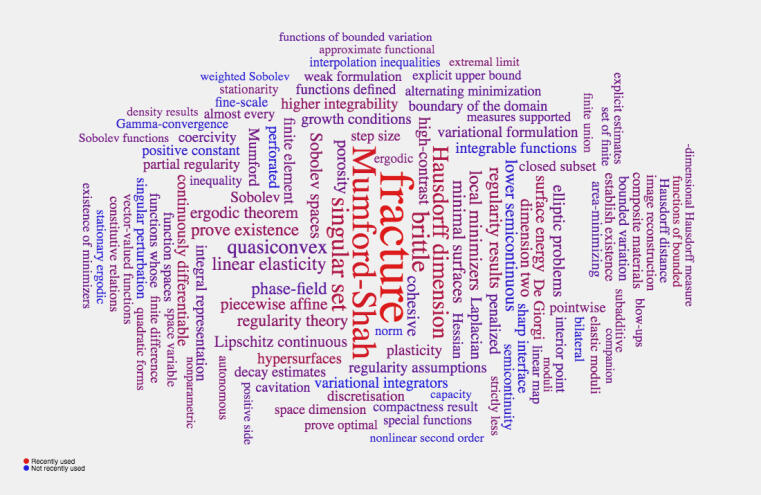
Professor Caterina Ida Zeppieri is a distinguished mathematician at the Westfälische Wilhelms-University Münster (University of Münster) in Germany, where she leads the Research Group 'Analysis and Modelling' within the Institute for Analysis and Numerics. She has maintained a continuous academic presence since at least the Winter semester 2012/13 through to upcoming semesters in 2025/26, consistently teaching advanced mathematics courses and supervising research activities. Her research focuses on fundamental aspects of mathematical analysis with significant applications to materials science. She specializes in Calculus of Variations, Elliptic PDEs, Gamma-convergence, Homogenization theory, Free-discontinuity problems, Nonlinear elasticity, and Plasticity. Her work bridges theoretical mathematics with practical applications in understanding material behavior, particularly fracture mechanics and composite materials. Professor Zeppieri's publication record demonstrates a consistent and impactful research trajectory from 2007 through forthcoming publications in 2025. Her recent work shows a strong emphasis on stochastic homogenization techniques applied to free-discontinuity problems and singularly-perturbed functionals, revealing sophisticated mathematical approaches to modeling complex material behaviors across multiple scales. She regularly collaborates with leading researchers including Filippo Cagnetti, Gianni Dal Maso, and Lucia Scardia, contributing to significant advances in the mathematical understanding of material science phenomena. Her research has been published in top-tier mathematics journals including Calculus of Variations and Partial Differential Equations, Archive for Rational Mechanics and Analysis, and SIAM Journal on Mathematical Analysis. Within the department, Professor Zeppieri plays an active role in teaching advanced courses such as Partial Differential Equations, Calculus of Variations, and Advanced Topics in the Calculus of Variation, while participating in the department's Advanced Seminar in Applied Mathematics and Colloquium on Applied Mathematics.
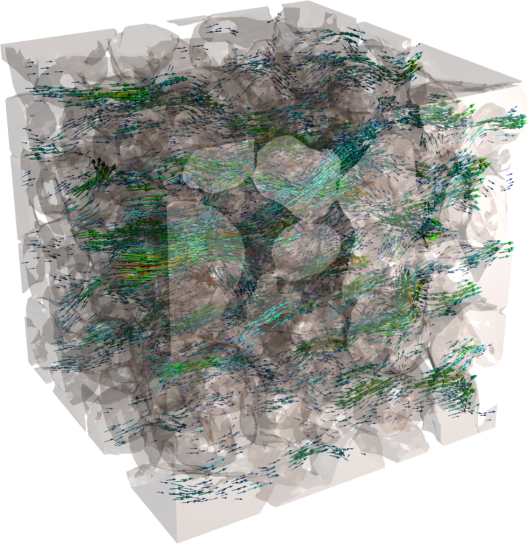
Christian Engwer is a full Professor at the University of Muenster in the Institute for Applied Mathematics, specializing in Analysis and Numerics. He leads the Engwer Group focused on Applications of Partial Differential Equations and is actively involved in the Cells in Motion initiative as a supervisor in the CiM-IMPRS Graduate Programme. His research centers on developing numerical methods for partial differential equations, particularly addressing challenges in complex geometries and multi-physics applications. He specializes in Unfitted Discontinuous Galerkin methods, which allow simulations on complex geometries without requiring domain-fitted meshes. His work spans porous media modeling, biological systems, and bioelectromagnetism applications, with significant contributions to EEG/MEG forward modeling in neuroscience. Analysis of his recent publications reveals a strong focus on model order reduction techniques, stabilized numerical schemes for cut-cell meshes, and applications in bioelectromagnetism. His work demonstrates a consistent trajectory toward developing robust, efficient numerical methods applicable to real-world problems in medical imaging and biological modeling, with increasing emphasis on high-performance computing implementations. Professor Engwer actively supervises doctoral students, with recent completions including Lukas Renelt (2025), Michael Wenske (2021), and Maria Carla Piastra (2019), among others working on topics related to numerical methods and biomedical applications. He leads several major research projects including BrainStorm: Highly Extensible Software for Advanced Electrophysiology and MEG/EEG Imaging (NIH-funded since 2019), multiple EXC 2044 Cluster of Excellence projects through 2025, and the InterKI interdisciplinary teaching program on machine learning and artificial intelligence. His group develops several important software packages including DUNE (Distributed and Unified Numerics Environment), duneuro (for bioelectromagnetism applications), and TPMC (Topology Preserving Marching Cubes). These tools support research in numerical methods and their applications to complex scientific problems.
Professor Caterina Zeppieri is a faculty member at the Institute for Analysis and Numerics within the Faculty of Mathematics and Computer Science at the University of Münster, Germany. She serves as an investigator in Mathematics Münster and specializes in optimization and calculus of variations. Her research spans multiple collaborative projects within the Excellence Cluster EXC 2044. Her primary research interests focus on Calculus of Variations , Homogenization Theory , and Free-Discontinuity Problems , with significant contributions to the mathematical understanding of material science phenomena. Her work bridges theoretical mathematics with practical applications in material modeling, fracture mechanics, and multi-scale analysis. She has developed sophisticated mathematical frameworks for understanding stochastic homogenization, phase-field approximations, and gradient damage models in heterogeneous materials. Analysis of her recent publications reveals a consistent trajectory toward increasingly complex multi-scale problems involving randomness and discontinuities. Her work demonstrates deep connections between Γ-convergence theory, stochastic processes, and applications to material science, particularly in modeling fracture phenomena and composite materials. A notable trend is her development of global methods that unify deterministic and stochastic approaches to homogenization problems. Zeppieri actively contributes to teaching at the University of Münster, regularly offering courses on Partial Differential Equations, Calculus of Variations, and Advanced Topics in Mathematical Modeling. Her teaching spans both undergraduate and graduate levels, including specialized seminars on cutting-edge research topics in her field. She is deeply involved in the EXC 2044 collaborative research center, particularly in project units C1 (Evolution and asymptotics), C2 (Multi-scale phenomena and macroscopic structures), and C3 (Interacting particle systems and phase transitions), where she contributes her expertise in variational methods and homogenization to multi-disciplinary research efforts.
Prof. Dr. Ferdinand Evers is a Chair of Computational Condensed Matter Theory at the Institute of Theoretical Physics , University of Regensburg. His research spans quantum transport , spintronics , molecular electronics , and many-body localization , with a focus on ab initio and DFT-based modeling of nanostructures and low-dimensional systems . Key Research Areas: Quantum transport in molecular junctions Spin-orbit coupling and chiral effects Multifractality at quantum phase transitions Electronic structure of topological materials Ultrafast laser-driven electron dynamics Anderson localization and disorder Recent Article Trends (2021–2024): High-harmonic generation in topological insulators Spin-selective transport in chiral systems Mechanical torque in molecular rotors Self-consistent GW methods for molecular electronics Quantum interference in graphene nanoribbons Teaching: Lecturer for Theoretical Physics I-IV , Advanced Quantum Mechanics , and Scientific Perspectives courses at the University of Regensburg Focus on statistical mechanics , quantum transport , and computational nanoscience
Cornelius Faber is a University Professor in the Department of Radiology at the University of Münster, Germany, where he leads the Experimental Nuclear Magnetic Resonance research group. His work focuses on developing and implementing novel MRI techniques that extend the boundaries of magnetic resonance imaging in terms of spatial and temporal resolution, sensitivity, and specificity for physiological, structural, and molecular changes. He actively participates in the "Cells in Motion" interdisciplinary research initiative at the university. Professor Faber's research spans multiple critical areas in medical imaging and biomedical science. His primary expertise lies in MRI cell tracking , enabling visualization of cellular dynamics in vivo. He has made significant contributions to infection imaging , developing methods to detect and characterize microbial infections using MRI. His work on MR methodology development has advanced quantitative imaging techniques, while his research on multimodal integration in MR and MRI contrast mechanisms has provided deeper insights into molecular and cellular processes. His research bridges physics, engineering, and biomedical applications, with particular relevance to inflammation, cancer, neurological disorders, and cardiovascular disease. Analysis of Professor Faber's extensive publication record reveals a clear evolution from fundamental MRI technique development toward increasingly sophisticated applications in disease models. His recent work demonstrates a strong trend toward multimodal imaging approaches that combine MRI with complementary techniques such as mass spectrometry, optical imaging, and PET. This integration creates comprehensive diagnostic platforms that provide both anatomical and molecular information. A notable pattern is the focus on cellular dynamics, particularly immune cell behavior in inflammatory conditions and tumor microenvironments, with applications spanning neuroscience, oncology, and cardiology. Professor Faber leads a multidisciplinary research team of approximately 15 members, including scientists, doctoral students, technicians, and medical students. His laboratory is deeply integrated with the University of Münster's research infrastructure, particularly the Multiscale Imaging Centre. The group's work contributes significantly to advancing preclinical MRI methodologies while maintaining strong clinical relevance, with numerous publications in high-impact journals across medical imaging, neuroscience, and biomedical engineering disciplines.
Markus Lange-Hegermann serves as Professor of Mathematics and Data Science at Ostwestfalen-Lippe University of Applied Sciences (TH OWL) since 2018 and holds a board position at the Institute for Industrial Information Technology (inIT). His career bridges academic research and industrial applications, with expertise in translating machine learning theory into practical engineering solutions for automation and manufacturing sectors. His educational foundation includes a Diplom (Master equivalent) in Computer Mathematics from RWTH Aachen University (2004-2008) followed by a Dr. rer. nat. (PhD equivalent) in algorithmic differential algebra (2008-2014). Prior to academia, he gained industry experience at FEV GmbH as an R&D engineer (2014-2017) and P3 automotive GmbH as a Data Science Consultant (2017-2018). Lange-Hegermann's research centers on probabilistic machine learning with distinctive emphasis on physics-informed approaches. He develops Gaussian process methodologies that incorporate differential equations to model time dependencies, uncertainties, and physical constraints in industrial systems. His work enables robust data-based modeling and optimization for cyber-physical systems, with applications spanning predictive maintenance, process control, and quality assurance in manufacturing. Analysis of his 15 most recent publications (2024-2025) reveals consistent innovation in physics-integrated machine learning, particularly using Gaussian processes to solve partial differential equations and optimal control problems. The research demonstrates strong industrial applicability across domains including medical imaging, material science, automotive engineering, and brewing processes, with recurring themes of anomaly detection in time-series data and uncertainty-aware decision making. His scientific contributions have earned significant recognition: Forschungspreis TH OWL (2024) Top reviewer award at NeurIPS (2023) Outstanding reviewer award at NeurIPS (2021) Best poster award at Bosch AI CON (2019) Borchers Plakette for outstanding dissertation (2014) Springorum Denkmünze for outstanding diploma (2009) As chairman of the Data Science study program and vice chairman of undergraduate examination boards, Lange-Hegermann actively shapes academic curricula while supervising graduate theses. His governance roles include serving on professorship search committees at multiple institutions and contributing to examination regulations. He maintains active research funding through collaborations with industrial partners and reviews proposals for initiatives like It's OWL and 3IA Côte d’Azur. Lange-Hegermann leads the Mathematics and Data Sciences research group within inIT, fostering collaboration between theoretical machine learning and industrial automation. He co-founded AICOmmunityOWL and the Informatics Europe working group on Data Analysis and Reporting, while organizing machine learning reading groups and data science hackathons to bridge academic research with industrial problem-solving.
Prof. Dr. Irwin Yousept is a Full Professor of Mathematics at Universität Duisburg-Essen, leading the research group AG Optimal Control of Partial Differential Equations. His work focuses on the mathematical analysis and numerical solutions of electromagnetic problems, particularly in superconductivity and inverse problems. He holds a PhD from TU Berlin (2008) and has held academic positions at TU Darmstadt and TU Berlin. His research includes PDE-constrained optimization, numerical analysis, and applications in high-temperature superconductivity and electromagnetic shielding. Affiliations: Universität Duisburg-Essen, Fakultät für Mathematik Education: Diplom (2005), PhD (2008) in Mathematics from TU Berlin Research interests span Maxwell's equations, numerical methods for PDEs, and optimal control, with applications in superconductivity, electromagnetic shielding, and induction heating. He has authored over 40 publications and received awards including the Richard-von-Mises-Preis GAMM (2014). Current grants include DFG-funded projects on inverse problems and superconductivity.
Yong Zhang is affiliated with Tsinghua University's Research Institute of Information Technology in Beijing, China. His research focuses on machine learning, optimization algorithms, edge computing, and their applications in areas like time series analysis, federated learning, and sensor networks. He has collaborated on projects involving neural networks, scheduling problems, and privacy-preserving techniques. Education: Yong Zhang earned a PhD in Computer Science and Engineering from Fudan University in 2007. His academic career includes roles at institutions like the Chinese Academy of Sciences and the University of Hong Kong, reflecting a strong interdisciplinary background. Research Contributions: His work spans theoretical computer science, algorithm design, and applied machine learning. Notable areas include developing efficient scheduling algorithms for energy systems, creating robust federated learning frameworks for industrial demand forecasting, and advancing methods for sentiment analysis using multimodal data. He has also contributed to biomedical engineering through smartphone-based health monitoring systems. Collaborations: He frequently collaborates with researchers at institutions like the University of Electronic Science and Technology of China, Nanyang Technological University, and The Hong Kong Polytechnic University. Key projects involve data caching optimization in edge computing, distributed algorithms for dynamic networks, and combinatorial optimization problems. Labs & Future Work: His team explores cutting-edge topics in AI-driven systems, including trust-aware machine learning, distributed resource allocation, and real-time data processing for IoT applications. Current research emphasizes scalable solutions for complex optimization challenges in both academic and industrial settings.
Leif Kobbelt serves as a University Professor at RWTH Aachen University, leading the Computer Graphics Group within the Department of Computer Science (Informatik 8). His research focuses on advancing geometry processing, interactive visualization, and computer graphics through innovative algorithmic solutions and interdisciplinary collaborations. Professor Kobbelt's research program centers on geometry acquisition and processing, with significant contributions to mesh generation, surface reconstruction, and neural rendering techniques. His work bridges theoretical geometry with practical applications in computer vision, photo-realistic image synthesis, and multimedia data transmission, often involving collaborations with industry partners and international research teams funded by DFG and EU sources. Recent publications (2023-2025) reveal a strategic integration of deep learning with traditional geometry processing, particularly in Gaussian splatting for real-time rendering, NeRF-based 4D content generation, and robust mesh Boolean operations. His group maintains leadership in quad mesh optimization and surface mapping while expanding into immersive visualization techniques for complex data analysis. The group has earned recognition through prestigious awards: Günter Enderle Best Paper Award at Eurographics 2023 Best Paper Award (1st place) at Symposium on Geometry Processing 2022 Honorable Mention for Best Paper at ACM Symposium on Virtual Reality Software and Technology Funding from Deutsche Forschungsgemeinschaft and European Union programs supports the group's research infrastructure and international collaborations. The team actively supervises graduate theses while developing open-source software tools that translate theoretical advances into practical industry applications, particularly in digital fabrication and immersive visualization systems. The Computer Graphics Group operates as a central hub for visual computing research at RWTH Aachen, maintaining strong ties with both academic institutions and technology companies. Their recent work on virtual reality educational tools and high-fidelity 3D reconstruction systems demonstrates commitment to knowledge transfer and real-world impact beyond traditional publication venues.
Nele Mentens is a full professor at both KU Leuven and Leiden University, where she leads cutting-edge research in applied cryptography, hardware security, and secure embedded systems. At KU Leuven, she is affiliated with the Faculty of Engineering Technology and the Electrical Engineering Department (ESAT), leading the Emerging Technologies, Systems & Security (ES&S) research group at the Diepenbeek campus. Simultaneously, she holds a full professorship at Leiden University’s Leiden Institute of Advanced Computer Science (LIACS), focusing on applied cryptography and security. She has been instrumental in numerous national and international research initiatives, including Horizon Europe and NWO-funded projects. Full Professor, KU Leuven (since 2023) Full Professor, Leiden University (since 2020) Associate Professor, KU Leuven (2014–2023) Post-doctoral Researcher & Lecturer, KHLim / KU Leuven (2007–2014) Ph.D. in Engineering Science, KU Leuven (2007) M.Sc. in Electrical Engineering, KU Leuven (2003) Her research focuses on secure and efficient hardware design, particularly for cryptographic applications on FPGAs, reconfigurable architectures, IoT security, and neuromorphic computing. She explores physical attack resistance, side-channel analysis protection, and trusted computing architectures, with applications in healthcare, industrial monitoring, and endpoint AI. Her work bridges theoretical cryptography with practical hardware implementations, emphasizing energy efficiency and real-time performance. The 15 most recent publications reflect a strong trend toward secure, energy-efficient, and intelligent embedded systems. Topics include neuromorphic AI accelerators, trusted IoT architectures, dynamic reconfiguration for side-channel protection, and secure medical data processing. These works span disciplines such as computer architecture, cybersecurity, digital design, and embedded systems, with a focus on hardware-software co-design and real-world deployment. Nele Mentens has received recognition for her contributions, including: Best Paper Award, DATE'16 Best Paper Nomination, AsianHOST'17 Best Paper Award, CHES'19 She has supervised over 15 Ph.D. students and post-docs, both current and former, and has served as principal investigator in approximately 25 funded research projects. Her work has attracted significant grants from Horizon Europe, NWO, FWO, and national innovation programs. She actively contributes to the academic community through editorial roles in top journals and leadership in major conferences. Nele Mentens leads the ES&S research group at KU Leuven and collaborates closely with LIACS at Leiden University. Her team includes Ph.D. students, post-docs, and research experts working on projects like NimbleAI, NeuroSoC, and TrustedIoT. She has also established secure electronics labs through infrastructure grants and maintains strong international ties with institutions such as EPFL, Ruhr University Bochum, and ETH Zurich.
James F. Peters is a faculty member in the Department of Electrical and Computer Engineering at the University of Manitoba, Winnipeg, Canada. His research lies at the intersection of computational topology, proximity theory, rough sets, and digital image analysis, with applications in computer vision, pattern recognition, and biologically-inspired computing. He has made foundational contributions to the theory of near sets and computational proximity, publishing extensively in journals and book series by Springer. His research interests include computational proximity, near sets, rough sets, digital image analysis, pattern recognition, and topological models of perception. These are evident from his numerous publications in theoretical and applied computer science, often in collaboration with researchers such as Andrzej Skowron, Sheela Ramanna, and Arturo Tozzi. His work spans mathematical foundations, computational models, and real-world applications in biomedical imaging and rehabilitation systems. The recent articles (2017–2025) show a strong trend toward integrating topology, physics, and neuroscience in the analysis of digital images and brain activity. Topics include proximal nerves, optical vortices, thermodynamics of emotions, and entropy in cosmology, indicating a broad interdisciplinary approach. His publications frequently appear in journals such as Entropy , Information Sciences , and Transactions on Rough Sets , as well as in Springer’s Lecture Notes in Computer Science and Intelligent Systems Reference Library series. He has authored or co-authored several books and special issues, notably in the Transactions on Rough Sets series, and has contributed to encyclopedic works on rough sets and computational intelligence. His editorial and collaborative roles highlight his leadership in the rough and near sets research community. Dr. Peters has advised or collaborated with several researchers, though specific student names are not listed in the provided text. He has been involved in projects related to adaptive learning, telerehabilitation gaming systems, and image classification using tolerance near sets. His work often involves grants and interdisciplinary teams, especially in computational intelligence and biomedical applications. He is associated with research groups and labs focused on computational intelligence, rough sets, and digital image analysis, often in collaboration with the University of Warsaw and other international institutions. His ongoing work continues to explore the mathematical foundations of perception and proximity in both artificial and biological systems.
Prof. Dr. Rolf Wanka is a Professor at the Department of Computer Science, Friedrich-Alexander-Universität Erlangen-Nürnberg (FAU), specializing in efficient algorithms and combinatorial optimization. His research focuses on swarm intelligence, discrete optimization algorithms, and scheduling problems, particularly in timetabling and robotics applications. Education : Sc.D. (Dr. rer. nat.) in Computer Science His work includes theoretical and experimental analyses of particle swarm optimization (PSO) algorithms, addressing runtime complexity, stagnation behavior, and convergence properties. He has developed novel heuristics for timetabling and sorting problems, with applications in multi-robot systems and medical imaging. Notable collaborations include studies on Markov chain-based PSO and fairness in academic scheduling. Key trends in his recent publications span swarm intelligence , discrete optimization , and scheduling heuristics , with a focus on robust timetabling , runtime analysis , and stochastic algorithm behavior . While no explicit scientific awards are listed, his mentorship in the Max Weber-Programm highlights his advisory role in academia. His publications demonstrate interdisciplinary applications of algorithms in robotics , medical imaging , and parallel computing , leveraging both theoretical rigor and practical experimentation. The full description below provides exhaustive details on his academic contributions and affiliations.
Currently a Research Fellow at Harvard University & MIT , Fangneng Zhan specializes in Neural Rendering and Generative AI . His research focuses on developing evolutive rendering frameworks, 3D-aware generative models, and multimodal synthesis techniques. Previously, he was a postdoctoral researcher at the Max Planck Institute for Informatics under Prof. Christian Theobalt. He earned his Ph.D. in Computer Science & Engineering from Nanyang Technological University, Singapore and a Bachelor's in Communication Engineering from the University of Electronic Science and Technology of China . His work spans 3D reconstruction, robotics applications , and lighting estimation , with significant contributions to SIGGRAPH , NeurIPS , and CVPR conferences. Recent research highlights include evolutive gauge transformations for neural fields, generalizable 3D style transfer via Gaussian splatting, and multimodal synthesis frameworks leveraging pre-trained models like CLIP and Stable Diffusion. He has co-authored Top50 Popular Paper in TPAMI 2023 and organized workshops at CVPR 2024 on generative models. Scientific Awards: Top50 Popular Paper, IEEE Transactions on Pattern Analysis and Machine Intelligence (TPAMI) 2023 Collaborative Network: Mentored students at institutions like Harvard, NTU, and ETH Zurich. His projects include datasets for lighting estimation and real-time scene text detection systems.
Peter Massopust is a Privatdozent at the Technical University of Munich (TUM), where he is affiliated with the School of Computation, Information and Technology and the Department of Mathematics. His research spans multiple areas of mathematical analysis with a focus on fractal geometry, wavelet theory, and approximation methods. His educational background includes: Habilitation in 2011 from Technical University of Munich Ph.D. in Applied Mathematics from Georgia Institute of Technology (1986) MS in Mathematics from Georgia Institute of Technology (1985) MS in Physics from Georgia Institute of Technology (1981) Dr. Massopust's research interests primarily focus on Wavelets and Frames, Harmonic and Functional Analysis, Fractal Geometry and Fractal Interpolation Theory, and Splines and Approximation Theory. His work bridges theoretical mathematics with practical applications in signal processing, image analysis, and computational methods. His approach often combines classical mathematical techniques with innovative fractal-based methods to solve complex problems in approximation theory and functional analysis. His research has significantly contributed to the development of fractal interpolation functions, complex splines, and wavelet theory, with applications spanning from pure mathematics to engineering problems. His publication record demonstrates a consistent focus on fractal-based mathematical methods, with recent work expanding into quaternionic analysis, complex B-splines, and applications in signal processing. His research shows a clear trajectory from foundational work in fractal geometry to increasingly sophisticated applications in multidimensional signal analysis and computational mathematics. His scientific achievements have been recognized through several prestigious awards: Fulbright Scholarship (1980-1981) GIAN (Global Initiative for Academic Network) Award from the Republic of India (2016, 2017) Dr. Massopust has secured substantial research funding from various national and international sources, including the German Research Foundation (DFG), Bayerische Forschungsallianz, VolkswagenStiftung, and collaborations with Sandia National Laboratories and the National Science Foundation. His research program has consistently focused on advancing mathematical methods for signal and image processing, with particular emphasis on fractal-based approaches and wavelet theory. He has also been instrumental in fostering international collaborations, particularly through the EuroTech network and with institutions in Australia and India. Among his notable contributions is the GHM (Geronimo-Hardin-Massopust) Scaling Vector and DGHM (Donovan-Geronimo-Hardin-Massopust) Multiwavelet, developed at the Georgia Tech Research Institute in 1995. This work has had significant impact in the field of wavelet analysis and its applications.