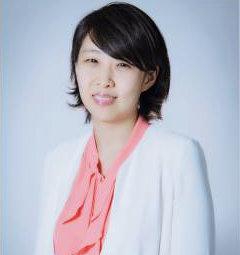
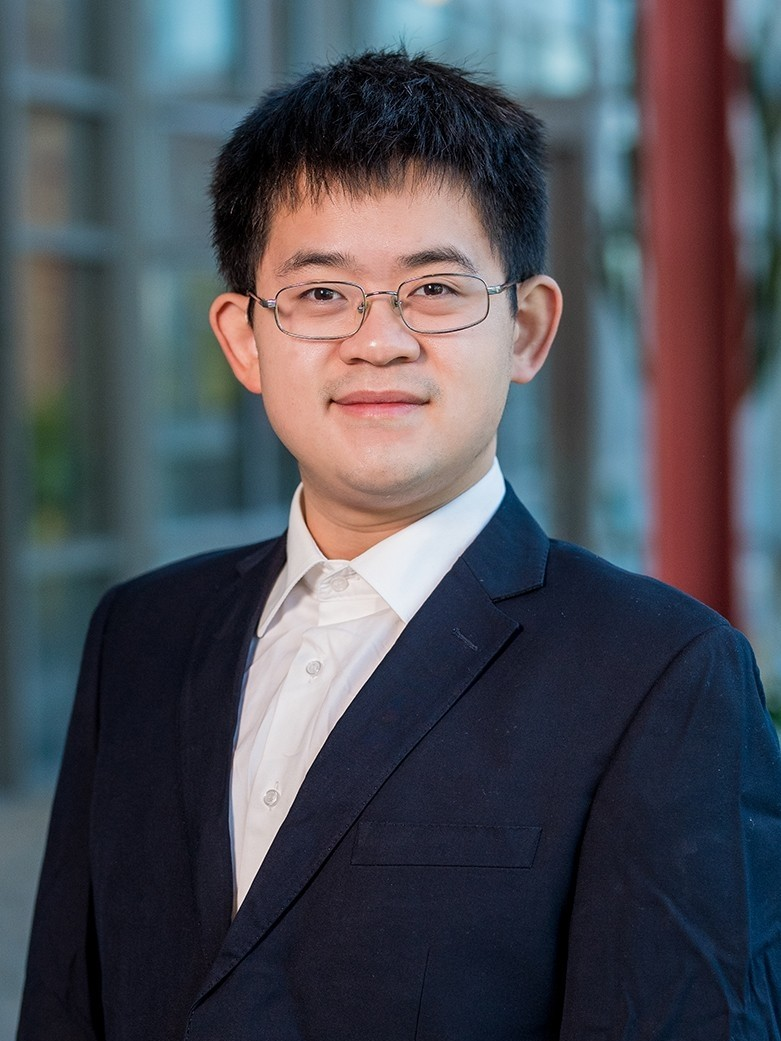
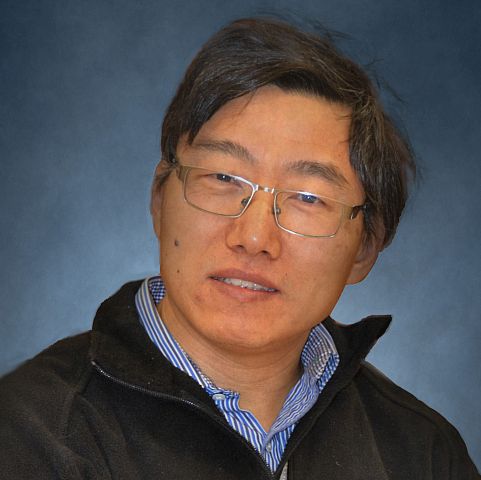
Dr. Euijin (Alley) Choo is an Assistant Professor in the Department of Computer Science at the University of Alberta, specializing in data-driven cybersecurity and big data analytics. Her research focuses on AI-based cybersecurity solutions, anomaly detection in network traffic, and adversarial attacks on federated learning systems. She holds a Ph.D. from North Carolina State University and has held roles at Qatar Computing Research Institute, Korea University, and the University of Missouri-Rolla. Education: Ph.D., Computer Science, North Carolina State University (2015) M.S., Computer Science & Engineering, Korea University (2008) B.S. Dual Degree in Computer Science & Mathematics, Korea University (2006) Research Interests: Security and big data analysis intersections Federated learning security and privacy Anomaly detection in network logs and enterprise systems Malware/phishing detection using graph inference AI-driven threat intelligence aggregation Recent Grants: Mitacs Accelerate Program Grant: Fraud Detection in Financial Graphs ($60,000, 2025) National CyberSecurity Consortium Grant: IntruderInsight ($2M, 2025-2027) NSERC Discovery Grant: Threat Detection Framework ($180,000, 2025-2031) Awards: Best Paper Award at DBSEC 2015 NSERC Early Career Researcher Award (2025) Provost Fellowship (NC State, 2009-2010) Labs/Teams: Leads the Data-driven Network and Cyber Security (DANS) Lab, focusing on federated learning defenses, compromised entity detection, and malicious domain analysis.
Wenhu Chen is an Assistant Professor at the University of Waterloo's Computer Science Department and a CIFAR AI Chair at the Vector Institute. He also holds a part-time role as a Senior Research Scientist at Google DeepMind (20% allocation). His research focuses on natural language processing, deep learning, and multimodal reasoning, with contributions to models like MAmmoTH, OpenCoderInterpreter, and VISTA. He received awards including the Canada CIFAR AI Chair (2022) and the UCSB CS Outstanding Dissertation Award (2021). Education: PhD in Computer Science from the University of California, Santa Barbara (under William Wang and Xifeng Yan). Research interests include complex reasoning, controllable GenAI, and multimodal benchmarks like MEGABench and MMMU. Grants include CIFAR AI Chair Funding (2022-2027), NSERC Discovery Fund (2023-2028), and multiple NRC Canada grants. He directs the TIGER Lab, advancing generative models in text, images, videos, and music. Recent talks include presentations on multimodal reasoning at Apple and NeurIPS workshops.
Linyi Li is an Assistant Professor in the School of Computing Science at Simon Fraser University (SFU), leading the Trustworthy Artificial Intelligence (TAI) Lab. His research focuses on certifiably trustworthy deep learning systems, combining machine learning and computer security. He holds a PhD from the University of Illinois Urbana-Champaign (UIUC) and a B.Eng. from Tsinghua University. Affiliations: Simon Fraser University, TAI Lab Education: PhD in Computer Science, UIUC, 2023 B.Eng (Cum Laude), Tsinghua University, 2018 His research interests include deep learning , trustworthy machine learning , large language models , and software engineering . He emphasizes rigorous certification of robustness, fairness, and numerical reliability in AI systems. Recent work includes the InfiBench benchmark for evaluating code LLMs and advancements in neural network verification. Recent Research Trends: His publications span certified robustness, fairness guarantees, and scalable verification techniques for deep learning models. He also explores scientific evaluation of foundation models and adversarial defense mechanisms. Awards: Rising Stars in Data Science AdvML Rising Star Award Wing Kai Cheng Fellowship Finalist: Qualcomm Innovation Fellowship (2022) Winner: VNN-COMP'23 Competition (Team α, β-CROWN) Advising & Grants: As a PI, he oversees the TAI Lab's research. Though no specific grants are listed, his work is funded through competitive awards and university resources. Labs/Teams: Leads the TAI Lab at SFU, focusing on foundational and applied research in trustworthy AI.
Arash Arami is an Associate Professor in the Department of Mechanical and Mechatronics Engineering at the University of Waterloo, cross-appointed in Systems Design Engineering. He directs the Neuromechanics and Assistive Robotics Laboratory and maintains affiliations with Waterloo Robohub, the Centre for Bioengineering and Biotechnology, Waterloo AI institute, and KITE institute at Toronto Rehab Institute. He earned his Doctorate in Electrical Engineering from EPFL (2014), Master of Science from University of Tehran (2009), and Bachelor of Science from University of Tabriz (2006), all in Control Engineering. His research in Assistive Robotics and Rehabilitation Engineering integrates Machine Learning with Neuromechanics to develop intelligent systems for human movement analysis. Key focus areas include exoskeleton control algorithms, wearable sensor systems, and neural control modeling for rehabilitation applications. Recent publications demonstrate interdisciplinary work spanning robotics, biomedical engineering, and materials science, with emphasis on real-time human locomotion prediction, exoskeleton-human interaction, and data-driven health monitoring solutions. Dr. Arami serves as Chair of the NSERC Scholarship Committee (2021-2023) and mentors graduate students through the Mechatronics Exchange Study program. His teaching includes core courses in control systems, robot manipulators, and biomechanical engineering. The Neuromechanics and Assistive Robotics Laboratory fosters collaborations with clinical partners at Toronto Rehab Institute, focusing on translating robotic innovations into practical rehabilitation tools through interdisciplinary teamwork.
Professor Hassan Rivaz is a Full Professor and Concordia University Research Chair in Medical Imaging with Deep Learning at Concordia University's Gina Cody School of Engineering and Computer Science. He holds appointments in the Department of Electrical and Computer Engineering and is cross-appointed to the Department of Computer Science & Software Engineering. Dr. Rivaz serves as the Founding Director of the IMPACT Lab and actively supervises PhD students in Electrical and Computer Engineering and Computer Science programs. Dr. Rivaz received his PhD from Johns Hopkins University in 2011, Master's degree from the University of British Columbia, and Bachelor's degree from Sharif University, followed by postdoctoral training at McGill University. His academic journey includes prestigious awards such as the NSERC Post-Doctoral Fellowship and Jeanne Timmins Costello Post-Doctoral Award. His research focuses on advancing medical image analysis through deep learning techniques, particularly in ultrasound imaging applications. Dr. Rivaz has made significant contributions to quantitative ultrasound, cancer detection, lymphedema assessment, and ultrasound elastography. His work bridges theoretical algorithm development with practical clinical applications, addressing challenges in medical image denoising, segmentation, registration, and tissue characterization. The IMPACT Lab under his direction develops innovative solutions for medical imaging problems with direct clinical relevance. Analysis of his recent publications reveals a strong emphasis on deep learning applications for ultrasound image processing, with particular focus on denoising techniques, elastography improvements, and segmentation algorithms. His work consistently addresses the challenge of working with real clinical data rather than simulated environments, contributing to more practical medical imaging solutions. Dr. Rivaz has received numerous prestigious awards including: Concordia University Research Chair in Medical Imaging with Deep Learning (2023–2028) QBIN/RBIQ Rising Star in Bio-Imaging in Quebec (2022) Concordia University Research Chair in Medical Image Analysis (2018-2023) Petro-Canada Young Innovator Award (2016–2018) He actively mentors graduate students, with many recipients of competitive scholarships including NSERC CGS, FRQNT, and FRQS awards. Dr. Rivaz serves on editorial boards for top journals including IEEE Transactions on Medical Imaging (since 2017), Medical Image Analysis (since 2025), and IEEE Transactions on Ultrasonics, Ferroelectrics and Frequency Control (since 2018). He has organized major conferences including IEEE EMBC 2020, ISBI 2021, and IEEE IUS 2023, and served as Area Chair for MICCAI from 2017 to 2024. As Founding Director of the IMPACT Lab, Dr. Rivaz leads a multidisciplinary research team focused on innovative medical imaging solutions. The lab maintains strong collaborations with hospitals and research institutions to translate imaging technologies into clinical practice. Current projects include developing AI-powered ultrasound analysis tools, quantitative imaging biomarkers for cancer diagnosis, and advanced techniques for ultrasound elastography with applications in tissue characterization and disease detection.
Qingguo Li is a Professor and Associate Head at the Department of Mechanical and Materials Engineering , Queen's University , and a member of the Ingenuity Labs Research Institute . He specializes in biomechanical system design, energy harvesting, wearable sensors, gait analysis, and load carriage systems. His research integrates robotics, biomedical engineering, and sensor technology to develop human-centric devices and mobility aids. Current Roles : Professor, Associate Head, Queen's University Research Institute : Ingenuity Labs Research Institute Lab : Bio-Mechatronics and Robotics Laboratory His work focuses on biomechanical energy harvesting , IMU-based motion analysis , and assistive device development . Key applications include stroke rehabilitation, gait monitoring, and wearable power generation systems. Articles span cable-driven robots , smart walkers , and 3D printing mechanisms , emphasizing human-robot interaction and dynamic modeling . The lab explores sensor calibration , adaptive control algorithms , and human movement optimization . Areas of impact include rehabilitation engineering , load carriage stability , wearable sensor accuracy , and assistive robotics . His team develops solutions for gait asymmetry detection , post-stroke mobility , and low-cost energy systems , leveraging machine learning and kinetic modeling .
Magdy M. A. Salama is a Professor and University Research Chair at the University of Waterloo's Department of Electrical and Computer Engineering, Faculty of Engineering. He holds a P.Eng. license and is a Fellow of the IEEE. His research spans Energy Systems (Power Quality, Smart Grids, Renewable Energy) and Biomedical Engineering (Medical Imaging, Sleep Analysis). He has authored/co-authored over 460 publications and supervised numerous graduate students. Education: PhD (University of Waterloo), M.Sc. and B.Sc. (Cairo University). Awards include the IEEE Fellow distinction, University Research Chair, and multiple teaching/research awards from the University of Waterloo. Research trends in his articles focus on Smart Grid resiliency, renewable integration, cyber-physical security, and biomedical applications of AI. Notable projects include voltage sag mitigation, EV fleet electrification, and blockchain-based energy trading platforms. Scientific Awards: IEEE Fellow, University Research Chair, Teaching Excellence Award (2000) Grants/Consultation: Extensive industry and institutional collaborations on power systems and biomedical tech. Labs/Teams: Active in High Voltage Lab, Smart Grids Research Group, and Medical Image Processing Lab.
Professor Peter F. Driessen is a faculty member in the Department of Electrical and Computer Engineering at the University of Victoria, with a cross-appointment in the School of Music. He holds a BSc and PhD from the University of Victoria and is a Professional Engineer (PEng). His research focuses on communication systems, signal processing, control, and interdisciplinary projects in computer music and wireless technologies. Key areas include audio/video signal processing, radio propagation, sound recording, and multimedia systems. He leads the University of Victoria Propagation Laboratory, which explores radio wave propagation and Amateur radio integration with engineering education. His work spans theoretical research and applied projects like ECOSat satellite systems, software-defined radio (SDR), and innovative musical instruments such as the Radio Drum. He supervises undergraduate and graduate projects in these domains through ELEC 499 courses. Notable contributions include the APEGBC Editorial Board Award for Best Paper (2002) and patents in wireless networking and signal processing. His teaching includes courses in signal analysis and electromagnetics, and he collaborates on interdisciplinary programs like the Music/Computer Science degree. Education: BSc in Electrical Engineering, University of Victoria PhD in Electrical Engineering, University of Victoria Research Interests: Audio and video signal processing for music and media Software-defined radio and Amateur radio technologies Satellite communication and ground station development Gesture-based interfaces and musical instrument design Error mitigation in streaming audio/video Optical and microwave-photonic systems Labs & Collaborations: Propagation Laboratory (radio wave research) UVic Experimental Radio Group (Amateur radio club) UVic Satellite Design Team (ECOSat projects) UVic Centre for Aerospace Research Grants & Awards: APEGBC Editorial Board Award (2002) Multiple US patents in wireless systems and signal processing
Alex Mariakakis is an Assistant Professor in the Department of Computer Science at the University of Toronto, leading the Computational Health and Interaction (CHAI) lab. His research focuses on leveraging ubiquitous and wearable technologies for healthcare applications, including smartphone-based health sensing for conditions like traumatic brain injury, jaundice, and inebriation. He holds affiliations with KITE@UHN and AXL venture studio, emphasizing translational research. Education: PhD in Computer Science (University of Washington, advised by Shwetak Patel and Jacob O. Wobbrock), B.S. in Electrical and Computer Engineering and Computer Science (Duke University). Prior roles include postdoctoral work at Sage Bionetworks and academic advising roles at UW. Key research interests include mobile health (mHealth), human-computer interaction, and machine learning applied to sensor data. His work has received Best Paper Awards at ACM CHI and COMPASS, and media attention from BBC and National Geographic. Recent activities include talks on embracing ubiquitous tech for healthcare (KITE Research Rounds, June 2025) and contributions to courses like 'Advanced Topics in Mobile Health.'
John Zelek is an Associate Professor in the Department of Systems Design Engineering at the University of Waterloo. He co-directs the VIP (Vision & Image Processing) lab and previously served as Associate Graduate Chair (2013-2017). He co-founded two startups: Tactile Sight (haptic navigation for disabled individuals) and Sweep3D (3D modeling technology). His research focuses on autonomous robotics, 3D scene understanding, infrastructure assessment, medical imaging, and sports analytics using AI/deep learning techniques. Education includes a BASc from Waterloo (1985), MASc from Ottawa (1989), and PhD from McGill (1996). He teaches courses like SYDE 283 (Physics), SYDE 572 (Pattern Recognition), and SYDE 675 (Pattern Recognition). Research interests span robotics, computer vision, anomaly detection, and SLAM. His work applies to infrastructure monitoring, sports analytics (hockey/pitcher analysis), medical imaging (OCT/fundus), and assistive technologies. Recent publications emphasize 3D modeling, SLAM enhancements, and sports tracking algorithms. Zelek advises graduate students (SSPS status) and collaborates with companies like Intelligent Health Solutions and EyeCheck through advisory roles. Key innovations include hybrid SLAM systems, puck localization algorithms, and medical robotic swab systems demonstrated on moving phantoms.
Aviad Levis is an Assistant Professor at the University of Toronto's Department of Computer Science, starting July 2024. He is affiliated with the Dunlap Astronomical Data Science and Technology Group (DADDAA) and collaborates with the Toronto Computational Imaging Group alongside Kyros Kutulakos and David Lindell. Previously, he was a postdoctoral researcher at Caltech's Computing + Mathematical Sciences department under Katherine Bouman, working with the Event Horizon Telescope (EHT) collaboration. PhD in Electrical Engineering from the Technion (supervised by Yoav Schechner) Research focuses on computational imaging tools at the intersection of AI and physics Develops algorithms for 3D tomography in both cloud physics and black hole imaging Recipient of ERC Synergy grant for CloudCT space mission His research spans two major domains: Computational Climate Imaging through cloud tomography to improve climate models, and Black Hole Imaging with the EHT collaboration. He pioneered methodologies for 3D cloud structure recovery using scattered sunlight and contributes to dynamic 3D reconstructions of black hole environments. Current interests include non-linear inverse problems, equation discovery from data, and ML-accelerated scientific simulations. Recent publications highlight advancements in atmospheric tomography and black hole emission modeling. His work on CloudCT involves coordinated nano-satellites for 3D cloud imaging, while EHT contributions include first images of Sagittarius A* (2022) and ongoing development of algorithms for 3D structure recovery. The ERC Synergy grant underscores his impact on climate imaging technology. Personal Website Work Email
Dr. Ian Stavness is a Professor and Department Head in the Department of Computer Science at the University of Saskatchewan. His research focuses on interdisciplinary applications of computer science, including deep learning in agriculture, biomedical computation, and 3D display technologies. He leads the Biological Imaging & Graphics (BIGLAB) laboratory, which develops tools for plant phenotyping and musculoskeletal modeling. Education: Ph.D. in Computer Engineering, University of British Columbia, 2010 M.A.Sc. in Computer Engineering, University of British Columbia, 2006 B.Sc. in Computer Science & B.Eng. in Electrical Engineering, University of Saskatchewan, 2004 Research Interests: Deep Learning for Plant Phenomics & Agriculture 3D Displays and VR/AR Technologies Musculoskeletal Biomechanical Simulation (OpenSim, ArtiSynth) Computer Vision and Image Analysis Awards: ACM CHI 2019 Honourable Mention ACM VRST 2018 Polyphony Digital Award Key Projects: Deep Plant Phenomics Platform Parametric Human Project (Digital Human Modeling) P2IRC (Plant Phenotyping & Imaging Research Center)
Professor Diana Inkpen is a faculty member at the School of Electrical Engineering and Computer Science, University of Ottawa. She holds a Ph.D. from the University of Toronto's Department of Computer Science and degrees from the Technical University of Cluj-Napoca, Romania (M.Sc. and B.Eng.). Her research focuses on computational linguistics, natural language processing (NLP), and artificial intelligence, with specialties in natural language understanding/generation, lexical semantics, and semantic web agents. Education: Ph.D., Computer Science, University of Toronto M.Sc., Computer Science and Engineering, Technical University of Cluj-Napoca B.Eng., Computer Science and Engineering, Technical University of Cluj-Napoca Affiliations: Director, NLP Lab Editor-in-Chief, Computational Intelligence journal Associate Editor, Natural Language Engineering journal Her research has led to roles such as program co-chair for AI 2012 and leadership in organizing international workshops. She has received funding from NSERC, SSHRC, and OCE, and was honored with a Visiting Professor title at the University of Wolverhampton, UK. Her teaching spans courses like Information Retrieval, Natural Language Processing, and Prolog programming. Professor Inkpen's work bridges NLP innovations with societal challenges, including mental health surveillance via social media analysis and bias mitigation in AI systems. She actively contributes to interdisciplinary projects, such as detecting hate speech and legal text entailment, while maintaining a global research network through collaborations and international conference involvement.
Kwang Moo Yi is an Assistant Professor in the Department of Computer Science at the University of British Columbia (UBC), where he conducts research in computer vision and machine learning. He is affiliated with the Computer Vision Lab, CAIDA (Centre for Artificial Intelligence Decision-making and Action), and ICICS (Institute for Computing, Information and Cognitive Systems) at UBC. Education: B.Sc. from Seoul National University Ph.D. from Seoul National University under Prof. Jin Young Choi Post-doctoral researcher at École Polytechnique Fédérale de Lausanne (EPFL) with Prof. Pascal Fua and Prof. Vincent Lepetit Dr. Yi's research focuses on Visual Geometry with the goal of understanding local environments, adapting to them, and acting within them. His work spans applications in autonomous vehicles, drones, robots, and Augmented/Mixed Reality systems. He employs machine learning, particularly deep learning, as the primary tool for advancing computer vision capabilities. His recent publications demonstrate a strong focus on neural rendering techniques, especially 3D Gaussian Splatting and Neural Radiance Fields (NeRF). The research trends show increasing sophistication in handling occlusions, improving rendering quality, and developing more efficient training methods for neural fields. There's also significant work connecting computer vision with practical applications in industrial settings and energy systems. Dr. Yi serves as an area chair for top computer vision and machine learning conferences including CVPR, ICCV, ECCV, NeurIPS, ICML, and AAAI. He was part of the organizing committee for CVPR 2023. He supervises graduate students including Eric (who recently completed his PhD), Gopal (now at Samsung Research), and Jeong-Gi (joining as a postdoctoral fellow). His teaching includes CPSC 425: Computer Vision and CPSC 533Y: 3D Computer Vision with Deep Learning. Dr. Yi is actively involved with the Computer Vision Lab at UBC, collaborating with researchers across CAIDA and ICICS. His work bridges theoretical computer vision with practical applications in various domains including astronomy, industrial automation, and energy systems.
Dr. Thomas E. Doyle is an Associate Professor at the McMaster School of Biomedical Engineering and the Department of Electrical & Computer Engineering at McMaster University. His research focuses on biomedical signal processing, human-computer interfacing (HCI), and machine learning applications for healthcare augmentation, rehabilitation, and enhancement. He holds a Ph.D. from Western Ontario, Canada, and teaches courses like COMPENG 2DI4 (Logic Design). His work bridges cybernetics and clinical applications, emphasizing AI-driven solutions for medical diagnostics, patient monitoring, and space exploration. Education: B.E.Sc, B.Sc, M.E.Sc, Ph.D. from Western Ontario, Canada Recent Projects: Developed AI systems for remote healthcare diagnostics (2023) Collaborated with NASA on medical emergency simulators for deep space missions (2017–2023) Led ventilator development efforts for local hospitals during the pandemic (2020) His research interests span machine learning for mental health diagnostics, trust quantification in medical AI, and extended reality (XR) for medical training. He emphasizes interdisciplinary approaches, integrating computational methods with healthcare challenges. Recent publications highlight applications in pediatric emergency care, chronic pain management, and reliable medical device design. Dr. Doyle actively engages in educational initiatives, including first-year engineering pedagogy and experiential learning programs. He has received funding for projects such as the Educating the Engineer of 2025 (EtE-25) awards and contributes to initiatives like the Digital & Smart Systems and Health & Bio-innovation research clusters at McMaster.