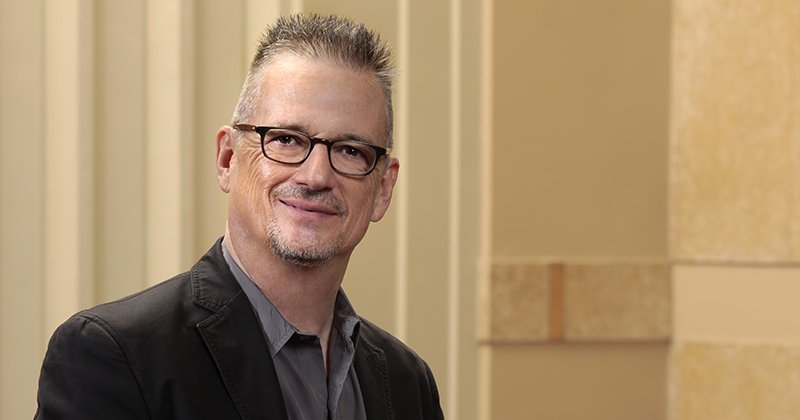
Jordan Blair Woods is a Professor of Law and Interim Associate Dean for Academic Affairs at the University of Arizona College of Law. He specializes in criminal law, law & sexuality, family law, and legal ethics. Woods co-directs the Family and Juvenile Law Certificate Program, focusing on LGBTQ+ populations and youth legal regulation. His research critiques policing practices, LGBTQ+ legal protections, and child welfare policies. Education: Ph.D. and M.Phil. in Criminology, University of Cambridge (Gates Scholar) J.D., UCLA School of Law A.B., Harvard College Research Focus: Woods examines the intersection of law enforcement, LGBTQ+ rights, and youth justice. He challenges systemic biases in criminal justice and advocates for equitable policies. Notable works include critiques of traffic policing, religious exemptions in child welfare, and LGBTQ+ visibility in legal systems. Awards & Recognition: Two-time Dukeminier Award (2017, 2018) American Bar Foundation Fellow (2021) Harry Krause Emerging Family Law Scholar (2019) Leadership & Grants: Woods previously directed the Richard B. Atkinson LGBTQ Law & Policy Program at the University of Arkansas School of Law and held a fellowship at UCLA’s Williams Institute. His work has been featured in major media outlets like The New York Times and NPR . Labs/Teams: Active in interdisciplinary collaborations on policing reform, LGBTQ+ legal advocacy, and child welfare policy through his academic and leadership roles.
Linda Shields is a distinguished Professor in the School of Nursing and Midwifery at James Cook University's College of Medicine and Dentistry. With over 100 publications spanning two decades, she has established herself as a leading academic in pediatric nursing and family-centered care. James Cook University, College of Medicine and Dentistry (current) Extensive research collaborations across Australian healthcare institutions International recognition for work in nursing history and ethics Professor Shields' research primarily focuses on family-centered care models in pediatric settings, with significant contributions to understanding how healthcare systems can better serve children and their families. Her work spans rural healthcare challenges, cystic fibrosis care, injury prevention in children, and the historical aspects of nursing practice. She has conducted numerous systematic reviews that have shaped evidence-based approaches to family-centered care in hospital settings. Analysis of Professor Shields' recent publications reveals a strong emphasis on vulnerable populations, including rural communities, Indigenous children, and families dealing with chronic illnesses like cystic fibrosis. Her research demonstrates consistent methodological rigor across qualitative, quantitative, and mixed-methods approaches. A distinctive thread throughout her work is the historical perspective she brings to contemporary nursing practice, particularly her investigations into nursing during the Holocaust and World War periods. Co-authored the book 'Nurses and Midwives in Nazi Germany: the "euthanasia programs"' Developed and validated questionnaires for measuring family-centered care perceptions Conducted landmark studies on low-speed vehicle run-over incidents in children Published influential critiques on the implementation gap in family-centered care Professor Shields has supervised numerous research projects examining the interactions between healthcare providers and families, with particular attention to how cultural factors, geographical isolation, and chronic conditions affect care delivery. Her work with interdisciplinary teams has produced valuable insights into improving healthcare experiences for children and their families across various settings, from tertiary hospitals to community services.
Sarah Ishmael is a Lecturer at the Thompson Writing Program, part of Trinity College of Arts & Sciences at Duke University, where she has served since 2024. Her work focuses on education policy, curriculum development, and social justice in academic contexts. Education: M.Ed. in Curriculum and Instruction from the University of Texas at Austin (2015). Her research explores the intersection of identity-based discrimination and pedagogical practices, including analyses of systemic inequities in teacher recruitment (e.g., Teach For America’s practices) and the erasure of marginalized narratives in institutional curricula, such as the case of Breonna Taylor. She teaches courses like Academic Writing and seminars on ethics and independent research. Her publications highlight critical perspectives on conviviality in education and the socio-political dimensions of teaching. While no formal awards are documented in the provided texts, her work underscores a commitment to equity in educational systems and policies.
ArCasia D. James-Gallaway is an Assistant Professor in the Department of Teaching, Learning and Culture at Texas A&M University and a faculty affiliate in the Gender and Women’s Studies Program. As a first-generation scholar and former social studies teacher, her work bridges historical analysis and contemporary educational justice, focusing on African American struggles for equity in education. Education: PhD in History of Education, University of Illinois, Urbana-Champaign (2020) Master’s degree, University of Pennsylvania Bachelor’s degree, University of Texas, Austin Her research explores three overlapping areas: Race, gender, and class intersections in school desegregation Black feminist pedagogy and critical geographies Historical resistance to educational oppression Recent publications examine critical race theory applications, Black spatial agency, and hair discrimination policies in schools. Scientific Awards: Ford Foundation Dissertation Fellowship Claude A. Eggertsen Dissertation Prize Honorable Mention National Council for Social Studies CUFA Early Career Award Emerging Gender Researcher Award
Maria Villares-Varela is an Associate Professor in Sociology and Admissions Tutor at the University of Southampton's Department of Sociology, Social Policy, and Criminology. She is a Fellow of the Higher Education Academy (FHEA). Her research focuses on migrant entrepreneurship, work in small firms, gendered experiences of work, and Latin American migration. She previously held roles at the University of Birmingham’s CREME and the University of Oxford’s International Migration Institute. She teaches modules such as 'Theorising the Social World', 'Social Challenges: Global and Local Action', and 'Race and Ethnicity in Society'. Maria chairs the Gender and Enterprise Network and serves on editorial boards for journals like the International Journal of Entrepreneurial Behavior & Research . She has received a 2018 Highly Commended Award for her work on Latin American immigrant entrepreneurs. She currently supervises three PhD students and accepts applications for further research. Her external roles include membership in the International Migration Institute and editorial roles across multiple journals. She has been a visiting scholar at institutions like COMPAS (Oxford) and IMES (University of Amsterdam). Her research bridges migration studies, gender theory, and entrepreneurship, emphasizing intersectional and decolonial perspectives.
Claudia Buengeler is a Professor at the Faculty of Economics and Business of Kiel University , Germany. She specializes in HRM and Organization with a focus on leadership, diversity management, and team dynamics. Her research explores intersections of gender, age, and nationality in organizational settings. Current Affiliation: Kiel University Academic Role: Professor of HRM and Organization Research Themes: Leadership, Diversity, Team Performance Her recent publications emphasize leadership behavior in crises , inclusive leadership , and gender dynamics in management . While her work spans theoretical development and empirical studies, no specific scientific awards are listed in the provided data. She collaborates with researchers across Europe on topics like high-reliability organizations and met expectation theory . Editorial Roles: Associate Editor (Organizational Psychology Review), Editorial Board Member (Journal of Business and Psychology) Interdisciplinary Work: Combines organizational psychology with computer science for team dynamics research
Dr. Marissa Olsen is a Lecturer in Nutrition and Dietetics at Charles Sturt University, where she serves as discipline lead for the Interdisciplinary Health Team. An Accredited Practising Dietitian with extensive clinical experience, her research critically examines weight stigma and diet culture in healthcare. Her scholarly work focuses on inclusive approaches to nutrition education, physical activity promotion in rural communities, and experiences of marginalized groups in sports. Current projects investigate barriers to physical activity participation across regional Australia using qualitative methodologies. Dr. Olsen teaches courses in nutrition science, health communication, and evidence-based practice to students across health professions.
Steff Du Bois, PhD , is an Associate Professor of Psychology in the Lewis College of Science and Letters at Illinois Institute of Technology . He is a Licensed Clinical Psychologist in Illinois and maintains a small private practice. He is also a Fellow of the Family Institute at Northwestern University and has served on the editorial boards of numerous journals in psychology and public health. Dr. Du Bois earned his BA in Psychology from the University of Michigan (2005), followed by an MA (2009) and PhD (2013) in Clinical Psychology from the University of Illinois at Chicago. He completed a Postdoctoral Fellowship in Couple Therapy at The Family Institute at Northwestern University in 2015. His research focuses on health behavior change , health equity , and health in romantic and sexual partnerships , with a particular emphasis on LGBTQ+ populations , racial and ethnic minorities , and long-distance relationships . He employs community-based participatory research methods to address systemic inequities in health outcomes. Across his 39 peer-reviewed publications , his work spans topics such as: HIV prevention and care among marginalized populations Mental and physical health of sex workers Romantic relationship quality and its impact on health Structural stigma and policy effects on transgender health Sleep, attachment, and relationship satisfaction Substance use and cardiovascular health in LGBTQ+ individuals Dr. Du Bois has received multiple grants, including from the American Psychological Foundation , Chicago Health Disparities Center , and Lewis College Faculty Research Support Grant , totaling over $24,000 in funding for community-based and intervention research. Scientific Awards: Midwestern Association of Graduate Schools Excellence in Teaching Award Harry S. Upshaw Award for Excellence in Teaching (UIC) LGBT Summer Institute Fellow (University of Michigan) He is affiliated with several professional organizations, including the American Psychological Association , Society of Behavioral Medicine , and Association for Behavioral and Cognitive Therapies . He has served on the editorial boards of journals such as LGBT Health , Journal of Homosexuality , and Couple and Family Psychology: Research and Practice .
J. Kelly Strader is a Professor at Southwestern Law School, appointed to the faculty in 1991. He has served as faculty advisor to the Trial Advocacy Honors Program and OUTLaw (LGBT law students association) and has been recognized with the Irving D. and Florence Rosenberg Professor of Law (2004) and the Excellence in Teaching Award (2005). Education: B.A., high honors, Government and History, College of William and Mary (1978) M.I.A., International Affairs (Economics), Columbia University (1980) J.D., University of Virginia (1983) Professor Strader's research focuses on criminal law, white collar crime, and LGBT rights, with notable publications on topics including insider trading, gay shield laws, and the intersection of HIV/AIDS with legal issues. He has authored and co-authored widely used white collar crime textbooks and contributed to discussions on prosecutorial discretion and constitutional law. His work spans legal pedagogy, interdisciplinary activism, and advocacy for marginalized communities. He has spoken at national conferences and collaborated with organizations like Lambda Legal Defense and Education Fund. Scientific Awards: Irving D. and Florence Rosenberg Professor of Law (2004) Excellence in Teaching Award (2005) Past Chair, AALS Sexual Orientation and Gender Identity Issues Committee Past Chair, LSAC Subcommittee on GLBT Issues Professor Strader's publications reflect trends in white collar crime, criminal law reform, and the integration of social justice into legal scholarship. His advising roles and community engagement highlight his commitment to student development and LGBTQ+ advocacy.
Selena E. Ortiz is an Associate Professor of Health Policy and Administration and Demography at The Pennsylvania State University's College of Health and Human Development. She holds affiliations with the Center for Health Care and Policy Research (CHCPR), the Population Research Institute (PRI), the Rock Ethics Institute, and the School of Public Policy at Penn State. Additionally, she serves as a research fellow at the FrameWorks Institute in Washington, D.C., and is an active member of AcademyHealth, the Interdisciplinary Association of Population Health Science (IAPHS), and the American Public Health Association (APHA), where she currently chairs the Ethics Section. Dr. Ortiz received her academic training from prestigious institutions: B.A. in Sociology from The University of California, Berkeley M.P.H. from The University of Arizona's Mel & Enid Zuckerman College of Public Health Ph.D. from The University of California, Los Angeles (UCLA) Jonathan & Karin Fielding School of Public Health (2013) Her research program addresses health disparities and improves health equity within the context of chronic disease and the social determinants of health. Dr. Ortiz examines health and social policy formation while investigating access to health services and outcomes through diverse methodologies including semi-structured interviews, qualitative and quantitative content analysis, topic modeling, population-based online survey experiments, and econometric methods. Her work has been published in leading journals such as Public Health Reports, Preventive Medicine, the American Journal of Public Health, Medical Care, Social Science & Medicine, and JAMA. Analysis of Dr. Ortiz's recent publications reveals a strong focus on addressing systemic health inequities through policy interventions. Her research spans several interconnected domains including racial/ethnic disparities in kidney donation, housing policy as a social determinant of health, digital health communication strategies to reduce disparities, and the influence of religious identity on health policy preferences. A distinctive feature of her scholarship is the theoretical focus on identifying processes of health inequity from policy formation to implementation. Dr. Ortiz has received significant recognition for her work: Robert Wood Johnson Foundation Health and Society Scholar at the Harvard Center for Population and Development Studies Member of the Alpha Nu Chapter of Delta Omega, the National Public Health Honor Society Current chair of APHA's Ethics Section Dr. Ortiz has secured substantial research funding, most notably as Co-Principal Investigator on the Robert Wood Johnson Foundation project 'Studying the impact of Pittsburgh's mobility voucher and counseling programs on low-income racial minority's access to opportunity-rich neighborhoods' (2017-2023). Her research program demonstrates a strong commitment to translating scholarship into practical interventions that address health disparities. As a Graduate Faculty member, she mentors students in health policy and administration, focusing on research methods and health equity frameworks. Her current projects examine housing voucher participation, social network interventions for kidney donation equity, and the impact of digital media on health disparities. Dr. Ortiz is actively involved with several research centers and networks including the Center for Health Care and Policy Research, the Population Research Institute, and the FrameWorks Institute. Her collaborative work spans multiple disciplines, connecting public health, policy analysis, sociology, and behavioral economics to address complex health equity challenges. Her current research team includes collaborators from various institutions working on housing policy experiments, kidney donation disparity interventions, and digital health communication analyses.
Ulrika Schmauch Associate Professor in the Department of Sociology at Umeå University, serving as Assistant Head of Department. Her research focuses on social inequality intersecting with race, place, and gender. Key affiliations include the 'Critical studies of Race and Gender,' 'Racism, Nationalism, Ethnicity and Migration,' and 'Sociology of education' research groups. Current research projects include analyzing gender equality integration in Swedish schools (2017-2020) and labor market ethnic relations (2002-2004). Research Interests Social inequality mechanisms in education and urban contexts Racialized spatial practices and migrant inclusion/exclusion Gender equity work in organizational settings Critical analyses of refugee integration policies Urban cultural policy and participatory governance Grants & Projects Interwoven Practices? Linking gender equality and diversity with systematic quality work in Swedish compulsory schools (2017-2020) Labor Market and Ethnic Relations (2002-2004) Affiliations Member of Umeå University's Department of Sociology faculty Participates in multiple interdisciplinary research groups addressing systemic inequality Labs/Teams Active contributor to university-based research clusters focusing on migration, gender, and urban studies. Coordinates collaborative projects involving participatory methodologies with marginalized communities.
Mona Mittal, Ph.D., is an Associate Professor in the Department of Family Science at the University of Maryland's School of Public Health. Her work focuses on prevention and intervention strategies to improve health outcomes for women affected by intimate partner violence (IPV), with a global perspective on psychological trauma and intergenerational violence cycles. She holds a K01 award from NIMH for developing integrated HIV-IPV interventions. Her research spans physiological mechanisms linking IPV to health, cultural contexts of violence, and healthcare responses in marginalized populations. Education includes a Ph.D. in Marriage and Family Therapy from Texas Tech University (2002), an M.A. in Clinical Investigation from the University of Rochester (2014), and prior degrees from institutions in India. She has authored over 40 peer-reviewed articles and chapters, with a focus on IPV's impact on women's sexual health, mental health disparities, and translational public health interventions. Key contributions include meta-analyses of IPV interventions in India, studies on HIV risk reduction among Black women, and exploration of systemic trauma in family therapy. Her work frequently addresses intersectional factors like race, class, and gender in health equity frameworks. Mittal collaborates with global health organizations and has advised multiple research initiatives funded by NIH institutes. Her lab focuses on adapting evidence-based interventions for under-resourced communities, particularly around IPV and HIV co-occurring risks.
Anna L. Weissman is a political scientist and feminist scholar with a PhD from the University of Florida. Her research focuses on the intersections of gender, sexuality, and nation-state formation, examining how these shape political subjectivities and everyday life. She holds academic appointments as an Instructor at the University of Florida and Santa Fe College, where she designed courses on Eastern Europe, American Politics, and Global Politics, emphasizing pedagogical innovation and learning management systems. Her scholarship critiques reproductive politics, maternalism, and queer theory through publications with Oxford University Press and Routledge. She co-edited Troubling Motherhood: Interrogations of Maternity in Global Politics (2020), exploring how motherhood intersects with global power structures. Her work challenges normative frameworks of gender, sexuality, and state control. Publications trends reveal a focus on queer theory, reproductive rights, and feminist critiques of state policies. She has analyzed cases from Poland, France, and Sweden to critique pronormativity. Her writing in security studies highlights how gender and reproduction intersect with international security frameworks. Teaching: Course design for upper-level and general education modules. Public History: Experience in museum curation at institutions like the Smithsonian and Historic Barker Mansion. While no specific grants or advising data is listed, her activism and academic work are deeply intertwined, advocating intersectional feminist principles. She has no listed scientific awards but has contributed significantly to critical feminist scholarship.
Dr Jasmine McGowan is a Lecturer in Criminology at Monash University, specializing in gendered violence, feminist theory, and critical sexuality studies. Her research focuses on intimate and family violence in LGBTQA+ communities, disability and violence, and perpetrator interventions. She is a member of the Victorian Government LGBTIQA+ Justice Working Group (2023–2025). Current roles: Lecturer, Criminology; Victorian Government Working Group member Research areas: Gendered violence, perpetrator interventions, disability and violence Affiliations: Monash University, ANROWS, Victorian Women's Trust Education/Background: While formal education details are not explicitly stated, her academic rank and prolific research output imply advanced qualifications in Criminology or Gender Studies. Research Interests: Jasmine’s work intersects with UN Sustainable Development Goals, particularly gender equality and reduced inequalities. Her recent projects include evaluations for the Department of Social Services, Family Safety Victoria, and the ARC-funded 'Securing Women’s Lives' initiative. Key themes include: Coercive control in LGBTQA+ communities Economic abuse among women with disability Perpetrator program efficacy and attrition Awards: 2020 Division of Critical Criminology and Social Justice Best Journal Article Award for collaborative work on femicide sentencing patterns. Grants/Projects: Over 17 projects since 2017, including: Australian Government-funded evaluations of domestic violence interventions Development of disability-inclusive economic abuse toolkits Labs/Teams: Collaborates extensively with Monash University researchers, including Professors Cowlishaw and Fitz-Gibbon, on family violence and perpetrator intervention projects.
Jan Georg Friesinger is an Associate Professor in the Department of Psychosocial Health at the University of Agder, Norway. He is actively engaged in teaching sociology, health geography, and qualitative social research, and serves as the study programme coordinator for the Master's programme in Psychosocial Health. His research focuses on the sociological, spatial, and material dimensions of mental health and illness, particularly in community and supported housing contexts. He explores how place attachment, built environments, and everyday materialities influence recovery, inclusion, and well-being among individuals with mental health challenges. His recent publications demonstrate a strong trend in interdisciplinary research at the intersection of public health, sociology, and environmental psychology. He frequently investigates how social and spatial factors—such as discrimination, financial strain, housing design, and nature access—impact mental health outcomes, using qualitative and mixed-method approaches. His work contributes to both academic discourse and public policy discussions on mental health and housing. Associations between perceived discrimination and health Place attachment and immigrant integration Materiality in supported housing Fire safety regulations and autonomy Human-animal bonds in recovery Therapeutic landscapes Jan Georg Friesinger has received no explicitly mentioned scientific awards in the provided text. However, he is actively involved in knowledge dissemination through public media and policy engagement, contributing to outlets like forskning.no , Agderposten , and Morgenbladet . He has also contributed to educational development, including curriculum design for specialized master’s programs in mental health and substance use. He is a key member of the research group Society, Space, Psychosocial Health (SSPH), which fosters interdisciplinary collaboration on the spatial and social aspects of mental well-being. His work emphasizes participatory and critical perspectives, challenging institutional norms and advocating for more inclusive and human-centered mental health environments.