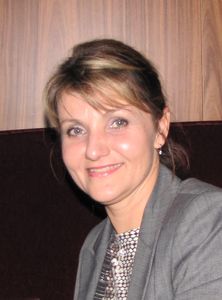
Assoc. Prof. Tatyana Yordanova is affiliated with the National Academy of Sports in Bulgaria, where she serves in the Faculty of Sports and Department of Technical and Ice Sports . She holds the academic rank of Associate Professor and has been leading the department since 2024. Education: Master's from State Central Institute of Physical Culture (1987); Doctorate in Sports Science (2019) Languages: English, Italian, Russian Her research focuses on technical elements in figure skating , speed-power abilities , balance stability , and judging systems . She has extensively studied jump mechanics and anthropometric factors in skaters. Her publications from 2018-2024 include studies on judging systems, jump techniques, and sports management. Key themes in her work involve training methodology, competition analytics, and biomechanics of skating. Since 2002, she has worked as an international figure skating judge, including at the Sochi 2014 Olympics . She chaired the Bulgarian Skating Federation (2011-2023) and participated in projects like Erasmus+ mobility (2022, 2024). Her pedagogical career includes roles as scientific assistant (1988), senior assistant (2006), and associate professor (2023).
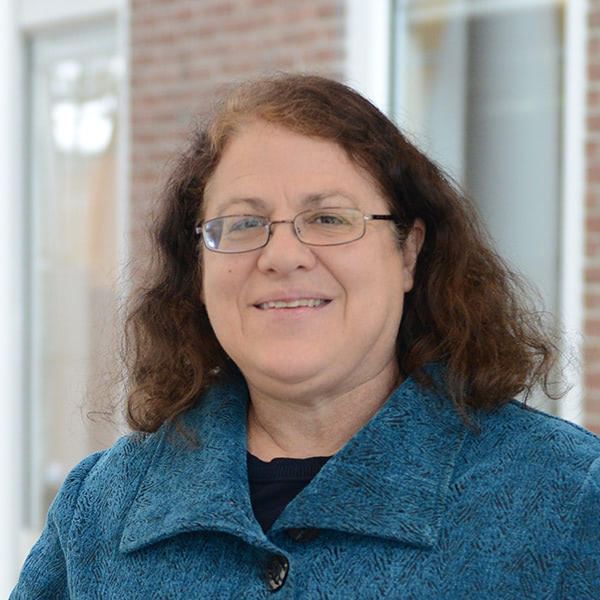
Laura Ray is the Myron Tribus Professor of Engineering Innovation and Senior Associate Dean for Faculty Development at the Thayer School of Engineering, Dartmouth College. Her research focuses on autonomous robotics, system dynamics, and machine intelligence with applications in polar exploration and agriculture. She leads NSF- and NASA-funded projects, including the development of robots like Yeti and Cool Robot for remote terrain analysis. Education: BSE in Mechanical and Aerospace Engineering from Princeton University (1984), MSE in Mechanical Engineering from Stanford University (1985), and PhD in Mechanical and Aerospace Engineering from Princeton University (1991). Research Interests: Her work spans robotics navigation, cooperative multi-robot systems, and acoustic signal processing. Recent projects include tactile sensing for agricultural robotics and terrain identification algorithms for autonomous vehicles. Awards: Honored with the 2022 Outstanding Service Award, National Academy of Inventors Senior Membership (2020), and multiple fellowships in engineering. Notable contributions include patents for noise-canceling devices and adaptive filtering technologies. Leadership: Served as Interim Dean of Thayer School (2018–2021) and co-leads initiatives like the NSF-funded PhD Innovation Program. Teaches courses in control theory (ENGS 26) and systems engineering (ENGS 22). Key Achievements: Developed robots that reduce risks in polar regions, supported NASA missions, and pioneered precision agriculture technologies. Her lab's innovations have been highlighted in Science, National Geographic, and IEEE Spectrum.
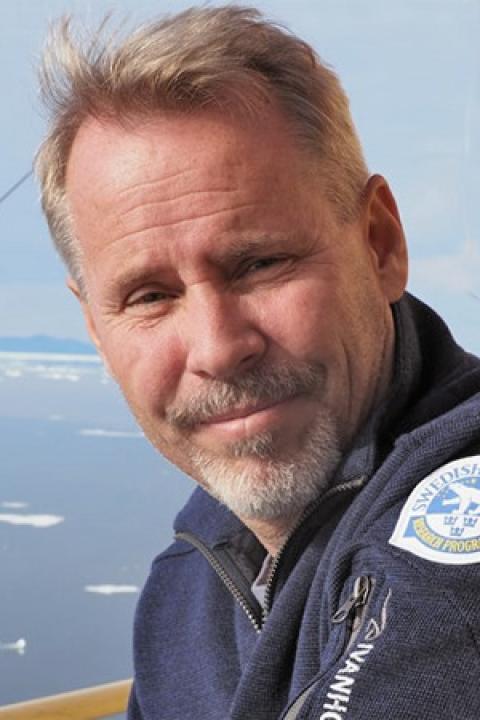
Martin Jakobsson is Professor of Marine Geology and Geophysics and Head of the Department of Geological Sciences at Stockholm University, with an affiliate Research Professor appointment at the Center for Coastal and Ocean Mapping (CCOM), University of New Hampshire. Education: Ph.D. in Geological Sciences, Stockholm University (2000). Thesis: "Mapping the Arctic Ocean: Bathymetry and Pleistocene Paleoceanography." His research spans Arctic Ocean glacial history, West Antarctic Ice Sheet dynamics, submarine glacial landforms, and acoustic geophysical seafloor mapping. With over one year of cumulative ship time, he has served as Co-Chief Scientist on eight international ocean expeditions, advancing methodologies in marine geophysical data acquisition and paleoenvironmental reconstruction. Honors: Academy Fellow of the Royal Swedish Academy of Sciences (2004-2009), funded by Knut and Alice Wallenberg Foundation Member of Royal Swedish Academy of Sciences (Class V for Geoscience, 2012) His research program is sustained through major fellowships including the Wallenberg Academy Fellowship, supporting extensive field campaigns in polar regions. As department head and Academy Vice President, he shapes institutional strategy while maintaining active oceanographic fieldwork. He leads multidisciplinary research teams conducting international expeditions, integrating geophysical mapping with paleoclimate analysis to investigate ice-sheet history and seafloor processes.
Dawn Y. Sumner is a Professor in the Department of Earth and Planetary Sciences at the University of California, Davis. Her research focuses on geobiology, paleobiology, and planetary science, particularly reconstructing ancient environments on Earth and Mars. She is a key member of NASA’s Mars Science Laboratory team, contributing to the Curiosity rover’s exploration of Gale Crater on Mars. Sumner’s work integrates field studies, lab analyses, and interdisciplinary approaches to understand microbial life’s role in shaping Earth’s history and potential habitability on other planets. Education: Ph.D., Massachusetts Institute of Technology (1995). Research interests include microbialite formation, Antarctic lake ecosystems, and the evolution of oxygenic photosynthesis. She investigates modern microbial communities in ice-covered lakes (e.g., Lake Vanda) to understand ancient environments and their biosignatures. Her scientific awards include the California Academy of Sciences Academy Fellow (2020) and Geological Society of America Fellow (2014). Sumner emphasizes inclusive education and supports student success in STEM through feminist research practices. Labs/Teams: W.M. Keck Center for Active Visualization in the Earth Sciences (KeckCAVES), Antarctic Lake Research Group.
Roberto Berjón Gallinas is a Professor at the School of Computer Science, Deusto University. His research focuses on semantic technologies, internet of things, and data integration, with a strong emphasis on mobile applications and open data. He leads two research groups: ICS (Innovación en Ciencias Sociales) MARATON (Mobile applications, internet of things, data processing, semantic technologies, open data) His recent work includes developing smart tracking frameworks for IoT workflows and digital twins, event-driven architectures for IoT systems, and semantic integration solutions for university research. His projects often bridge technical innovation with practical applications in collaborative e-learning and spatial analytics. Key trends in his publications highlight advancements in IoT frameworks , semantic technologies for data integration, and real-time systems using BLE and open data. These works frequently intersect with collaborative e-learning , university transparency , and adaptive mobile platforms .
Giovanni De Micheli is a Full Professor at École Polytechnique Fédérale de Lausanne (EPFL), holding appointments in both the School of Computer and Communication Sciences (IC) and the School of Engineering (STI). He is affiliated with the Integrated Systems Laboratory (LSI) and serves as Scientific Director of EcoCloud. His primary office is located in INF 341 building at EPFL's Lausanne campus where he conducts research and teaching activities. Professor De Micheli's research spans multiple domains in electronic design automation and integrated circuit design. His primary interests include: Integrated Circuit Design and Hardware Synthesis Logic Optimization and Boolean Methods Nanoelectronics and 2D Electronics Quantum Computing and Emerging Technologies Low-Power Electronics and Energy-Efficient Systems Electronic Design Automation for Novel Computing Paradigms His recent publications demonstrate a strong focus on advancing logic synthesis techniques for both conventional and emerging technologies. Professor De Micheli's work bridges theoretical foundations with practical applications, particularly in adapting traditional EDA methods to novel computing paradigms like quantum computing and superconducting electronics. His research group has made significant contributions to the development of efficient algorithms for circuit optimization across multiple technology domains, with particular emphasis on area, power, and delay optimization while maintaining functional correctness. Professor De Micheli has supervised numerous doctoral students throughout his career at EPFL, mentoring over 40 PhD candidates whose research spans various aspects of electronic design automation, circuit design, and emerging technologies. His students have gone on to make significant contributions in both academia and industry. As Scientific Director of EcoCloud, Professor De Micheli leads research initiatives focused on energy-efficient computing systems and sustainable cloud infrastructure. His laboratory, the Integrated Systems Laboratory, serves as a hub for interdisciplinary research connecting computer science, electrical engineering, and materials science, with particular focus on next-generation computing technologies.
Subhasish Mitra is the William E. Ayer Professor of Electrical Engineering and Computer Science at Stanford University, holding dual appointments in both departments. He leads the Stanford Robust Systems Group and serves on the leadership team of the Microelectronics Commons AI Hardware Hub under the US CHIPS and Science Act. His research spans Robust Computing, NanoSystems, Electronic Design Automation (EDA), and Neurosciences, with breakthroughs in X-Compact test compression, carbon nanotube computing, and 3D integration. He has held international roles like the Carnot Chair at CEA-LETI and Visiting Professorships globally. Education & Honors: Recipient of over 40 awards including the IEEE Computer Society’s Harry H. Goode Memorial Award, ACM/IEEE’s A. Richard Newton Technical Impact Award, and the Intel Achievement Award. He earned top academic accolades from IIT Kharagpur and Jadavpur University, and is a Fellow of ACM and IEEE. Research Impact: Pioneered first-of-their-kind systems like the carbon nanotube computer and monolithic 3D integration. His work on robust computing techniques like QED validation and X-Compact compression has industry-wide adoption, saving billions in manufacturing costs. Collaborates with industry leaders like Intel, Google, and Samsung. Publications & Grants: Over 400 publications, including award-winning papers in DAC, ISSCC, and IEEE journals. Leads grants from NSF, DoE, and industry partnerships. His lab explores cutting-edge topics like neuromorphic computing, 3D thermal scaffolding, and AI hardware acceleration. Administration & Outreach: Serves as Associate Chair (Faculty Affairs) for Stanford’s Computer Science Department. Recognized by students for mentorship, and frequently invited to global forums like the World Economic Forum and National Academy of Engineering.
James K. Russell is a Full Professor in Earth, Ocean and Atmospheric Sciences at The University of British Columbia, where he has been faculty since 1999. He directs the Volcanology and Petrology Laboratory and maintains an active research program in volcanology and petrology with significant international collaborations including appointments at LMU Munich, University of Torino, and Monash University. His educational background includes a Ph.D. (1984) and M.Sc. (1980) from the University of Calgary, and a B.Sc.(H) (1976) from the University of Manitoba. He previously worked at Cominco Exploration Ltd in Vernon, British Columbia before joining UBC. Russell's research focuses on understanding magmatic processes through multiple approaches. His primary interests include glaciovolcanism as a tool for paleoclimate reconstruction, predictive modeling of magma transport properties, and high-temperature rock mechanics experiments. His work bridges theoretical modeling with field observations, particularly in the Canadian Cordillera. He has developed influential models for magma viscosity that are widely cited in the volcanology community. His publication record shows consistent high-impact research over several decades, with recent work focusing on ultramafic melt viscosity, kimberlite transport mechanisms, and glaciovolcanic interactions. The research demonstrates a strong emphasis on quantitative approaches combining thermodynamics, rheology, and field-based observations to solve fundamental problems in volcanology. Scientific Awards: 2024 Research Award of the Alexander von Humboldt Foundation, LMU, Munich, Germany 2022 DAAD Research Stay for Visiting Academics Scholarship (3 months) 2019 Visiting Professorship, University Roma Tre 2019 Visiting Fellow at Centre for Advanced Studies, University of Munich 2016 Fellow of Mineralogical Society of America 2013 NSERC Discovery Accelerator Supplement Award 2010 Career Achievement Medal, Volcanology Division, Geological Association of Canada 2008 Peacock Medal, Mineralogical Association of Canada Russell has served in numerous editorial and professional capacities, including as Co-Editor-in-Chief for Journal of Volcanology & Geothermal Research (2016-2022), Associate Editor for multiple prominent journals, and as evaluator for research grants including ERC Consolidator grants and NSERC competitions. He has provided media consultation for National Geographic and Nova/Pioneer Productions. He maintains active laboratory facilities for volcanology and petrology research at UBC, with equipment for high-temperature experiments and magma rheology studies. His research group collaborates internationally with institutions in Germany, Italy, and Australia, reflecting his extensive network built through sabbatical visits and visiting professorships.
Maksym Andriushchenko is an incoming faculty member at the ELLIS Institute Tübingen and Max Planck Institute for Intelligent Systems , where he will lead the AI Safety and Alignment group as a principal investigator. Currently, he is a Doctoral Assistant at the Theory of Machine Learning Laboratory (TML) within the Department of Computer Science (IINFCOM) at Swiss Federal Institute of Technology in Lausanne (EPFL) . His work focuses on AI safety, adversarial robustness, and alignment of large language models (LLMs) with societal values.
David Means is a Visiting Associate Professor of English at Vassar College, where he has taught since 2001. He holds a BA from The College of Wooster and an MFA in poetry from Columbia University. His academic work centers on creative writing, modern and contemporary fiction and poetry, and American culture. Education: BA, The College of Wooster MFA, Columbia University in the City of New York Means is a celebrated author of short fiction and novels, known for his lyrical prose, experimental narrative structures, and deep exploration of trauma, memory, and redemption. His work frequently appears in The New Yorker , Harper’s , The Paris Review , and other prestigious literary journals. His writing often returns to themes of violence, loss, and the quiet grace that emerges in their aftermath, drawing comparisons to Flannery O’Connor and Denis Johnson. His stories are marked by a nonlinear sense of time and a profound empathy for marginalized or broken characters. His recent publications include the story collection Instructions for a Funeral (2019) and Two Nurses, Smoking , with his novel Hystopia longlisted for the Man Booker Prize. His forthcoming non-fiction book, Pivot: Ruminations in the Shadow of Death , reflects on mortality and personal reflection. Selected Awards and Honors: Guggenheim Fellowship (2013) Three O. Henry Prizes Three Pushcart Prizes Los Angeles Book Prize for Fiction Finalist, National Book Critics Circle Award Finalist, Frank O’Connor International Short Story Prize Longlisted, Man Booker Prize Means has advised and influenced many emerging writers through his teaching and public readings. While specific students are not named in the sources, his role as a mentor is evident in his sustained presence in creative writing programs. He has no known research grants or lab affiliations, as his work is primarily literary and individual. He continues to publish and engage in public discourse on the nature of storytelling, including critiques of AI-generated fiction.
Professor Martin Schrimpf is a Tenure Track Assistant Professor at EPFL, holding dual appointments in the School of Life Sciences (SV) and the School of Computer and Communication Sciences (IC). His research bridges computational neuroscience, deep learning, and cognitive science to model human natural intelligence in vision and language. He leads the NeuroAI Lab, focusing on aligning artificial neural networks with brain mechanisms and human behavior. Education: PhD in Brain and Cognitive Sciences from MIT (2017–2022), MSc in Software Engineering from TUM/LMU/UNA (2014–2017), and BSc in Information Systems from TUM (2011–2014). His work has been recognized with awards including the Neuro-Irv Open Science Prize, McGovern Fellowship, and Takeda AI+Health Fellowship. He co-founded Integreat, a social impact startup recognized with Google.org’s Impact Challenge and TUM’s Social Impact Award. Research interests include neuroAI, brain-like models, and clinical translation (e.g., visual prosthetics). He has published in top venues like Neuron, Nature Human Behavior, NeurIPS, and ICLR. Current projects involve developing topographic language models (TopoLM) and investigating causal language network interactions using LLMs. Teaching: Courses include Neuroscience Foundations for Engineers and Brain-like Computation and Intelligence . Supervised over 26 students, including PhD candidates Badr Alkhamissi, Ben Lönnqvist, and Yingtian Tang. Active in grants from SNSF, NeuroX, and EPFL’s AI Center. Labs/Teams: NeuroAI Lab at EPFL Neuro-X Institute. Future directions include advancing brain-inspired models for clinical applications and expanding interdisciplinary collaborations between neuroscience and AI.
Professor Hanumant Singh leads the Electrical and Computer Engineering department at Northeastern University, with a joint appointment in Mechanical and Industrial Engineering , and serves as Program Director for the Master of Science in Robotics. He earned his Ph.D. from MIT/WHOI Joint Program in 1995 and has conducted over 60 expeditions globally, focusing on marine geology, polar studies, and coral reef ecology. His research emphasizes field robotics , including SLAM, underwater manipulation, and imaging in extreme environments. He developed the Seabed AUV and Jetyak ASV , widely used in scientific research. His labs include the Field Robotics Lab and the Institute for Experiential Robotics . Research Interests: Machine Learning for Fisheries SLAM with dynamic objects Underwater imaging and manipulation Autonomous surface and aerial systems Polar and marine robotics Awards: ICRA Best Student Paper Award, IEEE Oceanic Engineering Society Distinguished Faculty Award (2025), Lifetime Achievement Award (2022), and IEEE Fellow status. His work has been featured in Nature Geoscience , Polar Biology , and media outlets like WGBH. Students & Collaborations: Advises students like Srinidhi Pattala (MS Robotics) and Dennis Giaya (PhD Computer Engineering). Collaborates with institutions on projects such as Antarctic sea ice thickness estimation and deep-sea submersible missions.
Muhannad S. Bakir is the Dan Fielder Professor in the School of Electrical and Computer Engineering at Georgia Institute of Technology and serves as the Director of the 3D Systems Packaging Research Center. His research focuses on heterogeneous integration of microsystems, including 2.5D and 3D ICs and packaging technologies, with significant contributions to advanced cooling systems, electrical and photonic interconnects, and biosensor integration with CMOS. Dr. Bakir's research interests span heterogeneous microsystem design and integration, advanced cooling and power delivery for emerging architectures, electrical and photonic interconnect technologies, biosensor technologies, and nanofabrication. His work addresses critical challenges in next-generation electronics, enabling polylithic integration that concatenates heterogeneous ICs of various functionalities while mimicking monolithic-like densities. His research particularly focuses on co-design of thermal technologies, power delivery networks, and signaling networks for silicon nanoelectronic systems. His recent publications demonstrate strong trends in fused-silica stitch-chip technology for heterogeneous integration, with particular emphasis on RF and mm-wave applications, power delivery for AI accelerators, and thermal management solutions. His work bridges electrical engineering, materials science, and thermal management to solve critical bottlenecks in computing performance and efficiency. 2013 Intel Early Career Faculty Honor Award 2012 DARPA Young Faculty Award 2011 IEEE CPMT Society Outstanding Young Engineer Award 2012 National Academy of Engineering Frontiers of Engineering Symposium Invited Participant 2015 IEEE CPMT Society Distinguished Lecturer 2014 Best Paper of the IEEE Transactions on Components Packaging and Manufacturing Technology More than 25 conference and student paper awards Twelve issued US Patents Dr. Bakir leads the Integrated 3D Systems Lab (I3DS) at Georgia Tech, which is actively researching advanced packaging, interconnects, electrical and thermal design, and system integration. His team has received significant recognition for their work, including multiple best paper awards from major conferences like ECTC, IITC, and CICC. The lab is currently seeking postdoctoral researchers and research faculty to advance next-generation electronics through collaborative research. His lab focuses on enabling the next phase of Moore's Law through polylithic integration, which concatenates heterogeneous ICs of various functionalities (digital, analog, photonic, and mm-wave) using advanced off-chip '2.5D' and '3D' heterogeneous interconnects and packaging. This work impacts applications in high-performance computing, machine learning, edge intelligence, autonomous vehicles, augmented/virtual reality, and healthcare.
Hrvoje Jasak is a Professor of Continuum Physics at the Department of Physics (Cavendish Laboratory), University of Cambridge. He holds a fellowship at Christ’s College. His academic journey includes a BSc in Mechanical Engineering from the University of Zagreb (1992) and a PhD in CFD from Imperial College London (1996). Prior to academia, he held engineering roles at CD-adapco (now Siemens PLM), Nabla Ltd, and Ansys-Fluent Inc., contributing to CFD software development. His research focuses on numerical simulation methods, continuum physics, multiphase flows, naval hydrodynamics, and software development. He co-created OpenFOAM, chairs its Numerics Technical Committee, and leads the Computational Continuum Mechanics (CCM) research group within the Laboratory for Scientific Computing. His work integrates advanced numerical techniques like the partially rotating grid method, finite volume algorithms, and multiphysics coupling frameworks. Jasak is a seasoned developer with 25+ years of C++ expertise, having authored ~1 million lines of code. His group’s projects include the Naval Hydro Pack , fluid-structure interaction solvers, and the Eulerian multi-fluid model for dense sprays. He actively collaborates on international initiatives like the NUMAP-FOAM Summer School and the OpenFOAM community. His teaching spans MPhil programs, PhD supervision, and specialized CFD courses. Current research explores wave-ice interaction, lubricated contact modeling, and open-source software innovation. The CCM group’s work bridges academia and industry, addressing challenges in marine engineering, energy systems, and computational mechanics.
Martin Jakobsson is a Professor of Marine Geology and Geophysics at Stockholm University's Department of Geological Sciences. His career spans international research expeditions and leadership roles, including Dean of Earth Science (2021) and Head of Department (2012-2018). A key member of the Marine Geology group, he studies Arctic and Antarctic glacial history through sediment analysis and seafloor mapping. PhD from Stockholm University (2000) Academy Fellow, Royal Swedish Academy of Sciences (2004-2009) Professor II position at University Centre of Svalbard (2011-) His research focuses on marine geological archives to reconstruct glacial cycles, ice-ocean interactions, and bathymetric mapping. As GEBCO Vice-Chair (2013-2020), he led initiatives for global seabed mapping through the Seabed 2030 project. Recent publications reveal expertise in: Arctic Ocean paleocirculation Methane release from thawing permafrost Ice sheet sensitivity to oceanic warming High-resolution bathymetric analysis Scientific recognition includes: Election to Royal Swedish Academy of Sciences (2012) 1st Vice President, Royal Swedish Academy of Sciences (2016-2019) Membership in Norwegian Scientific Academy for Polar Research (2016) He leads international collaborations on polar research vessels, with over a year of cumulative ship time and multiple Co-Chief Scientist roles on Arctic expeditions.