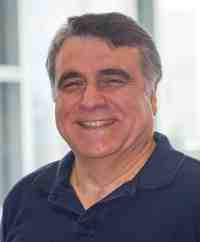
Christos Faloutsos is the Fredkin Professor of Computer Science at Carnegie Mellon University, with a courtesy appointment in Electrical and Computer Engineering. He holds a B.Sc. from the National Technical University of Athens and M.Sc./Ph.D. from the University of Toronto. His research focuses on data mining, graph analysis, fractals, and database systems. Notable contributions include foundational work on R-trees, graph mining laws (e.g., Kronecker graphs), and applications in medical imaging, network security, and fraud detection. Key projects include PEGASUS (petascale graph mining), fraud detection in online auctions (NetProbe), and tools for human trafficking analysis (TrafficVis). He has led NSF-funded projects on tensor mining, network anomaly detection, and bioinformatics. Over 300 refereed publications highlight his contributions across databases, data mining, and networks. Awards include the KDD Best Paper (2005, 2016), SIGMOD Test-of-Time Award, and recognition as a top nurturer in IT. His lab collaborations span the Parallel Data Lab (PDL), Machine Learning Department, and Computational Biology.
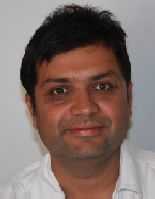
Suhas Diggavi is a Professor in the Department of Electrical and Computer Engineering at the University of California, Los Angeles, within the Henry Samueli School of Engineering and Applied Science. His primary research area is Signals and Systems, with a strong focus on information theory and its interdisciplinary applications. His research interests span Information Theory , Machine Learning , Differential Privacy , Federated Learning , Cyber-Physical Systems , and Bio-informatics . He investigates fundamental limits and practical algorithms for secure, efficient, and robust data processing in distributed and networked environments. The recent publications highlight a strong trend in privacy-preserving machine learning, particularly in the shuffled model of differential privacy , communication-efficient distributed SGD , and robust optimization . His work bridges theoretical information-theoretic foundations with real-world applications in federated learning, wireless networks, and genomic data analysis. Notable scientific awards include: Guggenheim Foundation Fellow (2021) ACM CCS Best Paper Award (2021) IEEE Fellow (2013) IEEE Donald G. Fink Prize Paper Award (2006) Multiple Google, Amazon, and Facebook Research Awards Suhas Diggavi actively advises graduate students and leads a research group focused on learning, information, and optimization. His work is supported by major industry grants and collaborations, particularly in privacy and distributed learning. He has made significant contributions to information-theoretic models in bio-sequencing and wireless security. He leads the LIOS (Learning, Information, Optimization, and Stochastic Systems) research group at UCLA, where his team develops theoretical frameworks and practical algorithms for next-generation data-driven systems.
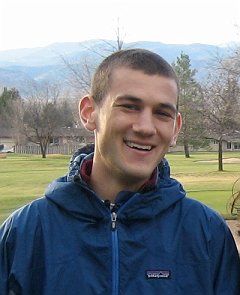
Charles M. Jones is a Professor of Finance at Columbia Business School, Columbia University, with an extensive publication record spanning several decades. His research focuses on market microstructure, high-frequency trading, short selling, retail investor behavior, and stock market liquidity. His work has appeared in top finance journals including the Journal of Finance, with his most recent publication "Nonstandard Errors" appearing in the June 2024 issue. Professor Jones's research interests center on understanding how financial markets function at a granular level. His work on market microstructure examines the mechanics of price formation, liquidity provision, and the impact of trading technologies on market quality. His research on short selling has been particularly influential, investigating when short sellers trade, what information they possess, and how regulatory interventions like short sale bans affect market functioning. His more recent work has explored the rise of retail trading through platforms like Reddit and its implications for price discovery, particularly during events like the GameStop phenomenon and the COVID-19 pandemic. Analysis of his publication trends reveals a consistent focus on market efficiency and price discovery mechanisms, with increasing attention to retail investor behavior in recent years. His work spans both theoretical modeling and empirical analysis of market data, often utilizing high-frequency datasets to examine intraday trading patterns. The interdisciplinary nature of his research bridges finance, economics, and information science, contributing to both academic understanding and practical market regulation. Professor Jones has collaborated extensively with researchers across the globe, as evidenced by his numerous co-authored papers with scholars from institutions worldwide. His work has significant implications for market regulators seeking to understand the impact of technological changes and regulatory interventions on market quality and efficiency.
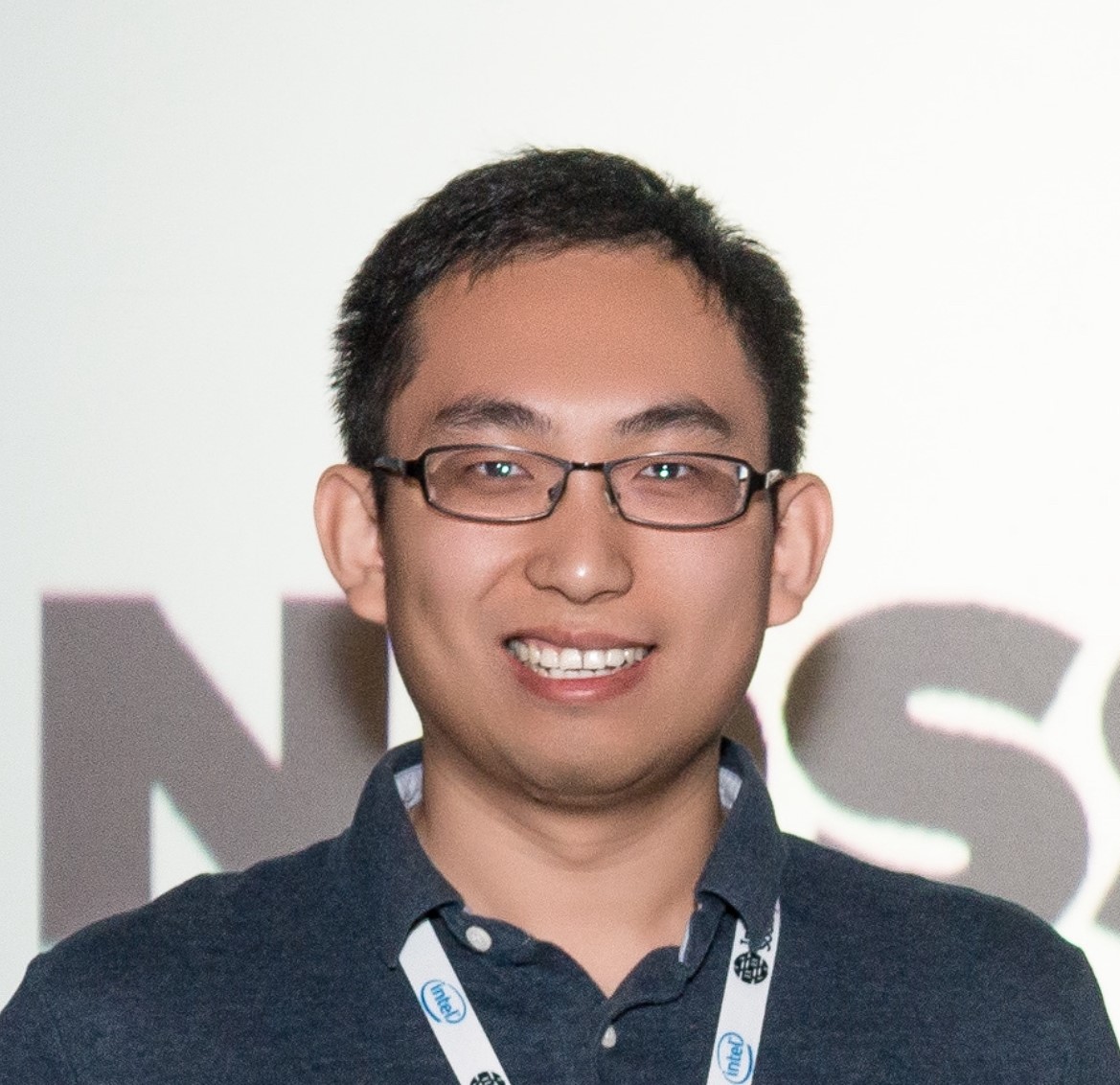
Nate Foster is a Professor of Computer Science at Cornell University and currently serves as the Associate Dean for Research in the Ann S. Bowers College of Computing and Information Science. He is also a Visiting Researcher at Jane Street and served as a Visiting Professor at École Polytechnique Fédérale de Lausanne during the 2023-24 academic year. His research uses ideas from programming languages to solve problems in networking, databases, and security. BA in Computer Science, Williams College (2001) MPhil in History and Philosophy of Science, University of Cambridge (2008, all work completed in 2003) PhD in Computer and Information Science, University of Pennsylvania (2009) Foster's research focuses on developing languages and tools that make it easy for programmers to build secure and reliable systems. His current work centers on the design and implementation of languages and tools for programmable networks, particularly using the P4 language. His past work includes bidirectional languages (also known as 'lenses'), database query languages, data provenance, type systems, mechanized proof, and formal semantics. His research group at Cornell has made significant contributions to network verification, software-defined networking, and formal foundations for programmable data planes. Analysis of Foster's recent publications reveals a strong focus on network verification and programming language foundations for networking. His work consistently applies formal methods to practical networking problems, with a particular emphasis on the NetKAT and P4 languages. Over the past five years, his research has evolved toward more complex network verification techniques, including infinite state verification, active learning of network models, and dependently-typed approaches to network programming. His work bridges theoretical computer science with practical networking systems, making formal methods accessible to network engineers. ACM Fellow (2025) ACM SIGPLAN Robin Milner Award (2023) ACM SIGCOMM Rising Star Award (2018) NSF CAREER Award (2013) Alfred P. Sloan Fellowship (2012) Multiple distinguished paper awards across top conferences including POPL, PLDI, and SIGCOMM Foster has advised numerous PhD and Master's students who have gone on to prominent positions in both industry and academia, with many continuing work in programming languages and networking. He has led multiple significant research grants including an NSF CAREER Award and has been involved in the P4 Language Consortium, serving as Chair of the P4 Language Governing Board. His work has been supported by various organizations including NSF, DARPA, and industry partners like Intel and Jane Street. Foster is also active in the programming languages research community, serving on numerous program committees and as Vice Chair of DARPA's Information Science and Technology (ISAT) study group. Foster leads a vibrant research group at Cornell focused on programming languages for networks, with collaborators from academia and industry. His group has developed several influential tools and frameworks including NetKAT, Petr4, and KATch. They maintain strong connections with the P4 community and work closely with industry partners to ensure their research has practical impact on real-world networking systems.
Seth Lloyd is a Professor of Mechanical Engineering at the Massachusetts Institute of Technology (MIT), where he directs the Center for Extreme Quantum Information Theory (xQIT). His work bridges theoretical physics, quantum information science, and complex systems theory. He has made significant contributions to the foundations of quantum computing and quantum information processing. Lloyd received his education from prestigious institutions: B.A. from Harvard College (1982) M.Phil from Cambridge University (1984) as a Marshall Scholar Ph.D. in Physics from Rockefeller University (1988) Lloyd's research focuses on quantum information science, particularly quantum computation and quantum communications. He has pioneered work in quantum analog computation, quantum error correction, and quantum metrology. His research explores how quantum mechanics can be harnessed for information processing tasks, with applications ranging from quantum computing to understanding biological processes like photosynthesis. Lloyd is also known for his work on complex systems and the relationship between information and physical systems, arguing that the universe itself can be viewed as a quantum computer. His publication record shows a clear progression from foundational quantum computing work to applications in quantum machine learning and quantum biology. The most recent articles reveal a strong focus on quantum algorithms for machine learning, quantum metrology, and the intersection of quantum mechanics with biological systems. His work on the HHL algorithm for solving linear systems has been particularly influential in quantum machine learning, though its practical advantages have been debated following Ewin Tang's classical algorithms. Lloyd has received numerous scientific honors: Lindbergh Fellow (1994) Finmeccanica Professorship (1996) Edgerton Prize (2001) Fellow of the American Physical Society (2007) Quantum Communication Award (2012) International Quantum Communication Award (2012) Throughout his career, Lloyd has mentored numerous students and researchers in quantum information science. He has secured significant research funding for his work in quantum computing and complex systems. His research has been supported by various foundations and government agencies interested in advancing quantum technologies. Lloyd has also been involved in interdisciplinary collaborations, particularly with biologists studying quantum effects in photosynthesis. Lloyd directs the Center for Extreme Quantum Information Theory (xQIT) at MIT, which brings together researchers from physics, computer science, and engineering to tackle fundamental challenges in quantum information processing. His lab has been at the forefront of developing theoretical frameworks for quantum computing and exploring practical implementations of quantum information protocols.
Dr. Stan Ahalt serves as the inaugural Dean of the UNC School of Data Science and Society (SDSS) and holds a professorship in the Department of Computer Science at UNC-Chapel Hill. He previously directed the Renaissance Computing Institute (RENCI) and currently acts as its executive advisor. Additionally, he is the associate director of informatics and data science at NC TraCS, the translational research institute at UNC. His academic journey includes a 22-year tenure as professor of electrical and computer engineering at Ohio State University and leadership roles at the Ohio Supercomputer Center. Ahalt’s research focuses on applying data science to societal challenges such as healthcare, climate, and judicial reform. Key initiatives include the National Consortium for Data Science and the iRODS project, which advanced enterprise data management systems. Ahalt has secured over $34.5M in grants to lead high-impact projects like the NHLBI BioData Catalyst (unifying biomedical data), the NCATS Translator (accelerating clinical discovery), and the NIH HEAL Initiative (ensuring FAIR data standards). He mentors students across doctoral and master’s programs, teaching data science fundamentals in courses like COMP 116: Introduction to Scientific Programming. His work emphasizes interdisciplinary collaboration, evidenced by roles in RENCI, NC TraCS, and the SDSS. Ahalt’s contributions span cyberinfrastructure development, educational innovation, and translational research, positioning UNC as a national leader in data science.
Andy Pavlo is an Associate Professor with Indefinite Tenure in the Computer Science Department at Carnegie Mellon University's School of Computer Science. He is an active member of the CMU Database Group and the Parallel Data Laboratory, where he leads research in database management systems with a focus on self-driving architectures, transaction processing, and large-scale analytics. His work bridges academic research and industry applications through projects like NoisePage, OtterTune (which he co-founded and served as CEO before it ceased operations), and Peloton. Dr. Pavlo's research interests span database management systems with particular emphasis on autonomous database architectures that can self-tune and optimize without human intervention. His work explores transaction processing systems that can handle high-throughput workloads while maintaining consistency, and large-scale data analytics techniques that efficiently process massive datasets. He has made significant contributions to query optimization, database extensibility, and automatic database tuning using machine learning techniques. His recent work on database extensibility revealed critical issues in PostgreSQL's extension ecosystem, showing that approximately 16% of extensions are incompatible with at least one other extension due to API violations and memory errors. His research output demonstrates a consistent focus on practical database systems challenges, with recent publications examining database extensibility, user-defined function optimization, and the cyclical nature of database research. The articles show a strong trend toward making database systems more autonomous, with increasing integration of machine learning techniques for automatic tuning and optimization. His work often combines deep theoretical analysis with practical implementation in open-source systems. Dijkstra Award 2024 for contributions to database systems research Dr. Pavlo actively mentors graduate students, with current advisees including Wan Shen Lim, William Zhang, and Sam Arch (co-advised with Todd Mowry). His former students have gone on to successful careers in both industry and academia. He has secured significant research funding through CMU's affiliate program with major database companies including ClickHouse, DataStax, dbt, Firebolt, MotherDuck, RelationalAI, SingleStore, Spiral, PingCAP/TiDB, Yellowbrick, and Yugabyte. His research is supported by these industry partnerships and likely includes NSF funding given his active participation in the database research community. At CMU, Dr. Pavlo leads the Database Group and organizes several seminar series including "SQL or Death," "Database Building Blocks," and "ML⇄DB Technical Talks." These seminars bring together researchers and practitioners to discuss cutting-edge developments in database systems. He also runs a summer research internship program that has attracted students for multiple consecutive years, indicating a strong research group with ongoing projects and funding.
Qi Alfred Chen is an Assistant Professor in the Department of Computer Science at the University of California, Irvine (UCI), within the Donald Bren School of Information and Computer Sciences. He also holds affiliations with the Department of Electrical Engineering and Computer Science (EECS), the Institute of Transportation Studies at UC Irvine (ITS-Irvine), the Center for Embedded and Cyber-physical Systems (CECS), the Institute for Software Research (ISR), and the UC Irvine Cybersecurity Policy & Research Institute (CPRI). His research focuses on network and systems security, with particular emphasis on autonomous vehicle and IoT security. Dr. Chen received his Ph.D. from the University of Michigan in 2018. His educational background has prepared him for his current research in security of critical computer systems. His work bridges theoretical security principles with practical implementations in real-world systems. Chen's research interests center on network and systems security , with a major focus on smart systems and IoT security , particularly in transportation and autonomous vehicle systems . His work addresses security challenges through systematic problem analysis and mitigation, discovering and mitigating security problems in next-generation transportation systems, smartphone OSes, network protocols, DNS, GUI systems, and access control systems. His research has high impact in both academic and industry contexts, with over 10 top-tier conference papers, a DHS US-CERT alert, multiple CVEs, and coverage in major news media like Fortune and BBC News. His publication record shows a clear evolution from foundational work on network protocols and smartphone security toward increasingly sophisticated security analyses of autonomous vehicle systems and AI-powered transportation technologies. The research trajectory demonstrates growing technical sophistication and real-world impact, with recent work focusing on physical-world adversarial attacks against autonomous driving perception systems, LiDAR spoofing, and security of multi-sensor fusion in autonomous vehicles. NSF CAREER Award (2022) on securing the AI stack in emerging autonomous and connected CPSs Chancellor's Award for Excellence in Undergraduate Research Mentorship, UC Irvine (2021) 5th place nation-wide at National CCDC competition (2021, as faculty advisor) 1st place (Gold Medal) at CCDC Western Regional competition (2021) ProQuest Distinguished Dissertation Award, University of Michigan (2019) Dr. Chen has mentored numerous successful students, including PhD candidates and undergraduates who have gone on to positions at major tech companies like Meta, Uber, Amazon, and Intel. His research group has secured significant funding, including an NSF CAREER award, and has made substantial contributions to the field through high-impact publications and vulnerability disclosures. He is also the co-founder of the ISOC VehicleSec Symposium and has organized the AutoDriving CTF contest at DEF CON. Chen leads the AV & IoAT Security Research Group at UCI, focusing on security challenges in autonomous vehicles and the broader Internet of Autonomous Things. His team has developed numerous attack demonstrations and security analyses that have received significant media attention and influenced industry practices. The group maintains an active YouTube channel showcasing their security research.
Nicole Koschate-Fischer is Professor and holds the GfK Chair for Marketing Intelligence at Friedrich-Alexander University Erlangen-Nuremberg (FAU), where she currently serves as Dean of Research at the Faculty of Business, Economics and Social Sciences. She is spokesperson for the interdisciplinary research focus "Customer Insights" and founding director of the Experimental Lab for Business Insights Nuremberg (ELAN). Previously, until September 30, 2024, she served as spokesperson for the Institute of Marketing and head of the Master's in Marketing program. Professor Koschate-Fischer earned her doctorate and habilitation from the University of Mannheim after completing a degree in business administration and psychology. Her academic journey includes membership in the interdisciplinary Collaborative Research Center "Concepts of Rationality, Decision Behavior, and Economic Modeling" at Mannheim, along with research stays as visiting scholar at University of Florida and University of Texas at Austin. She has held professorships at Technical University of Kaiserslautern and HEC Paris, and served as visiting professor at University of Vienna and Central University of Finance and Economics in Beijing. Research Interests Professor Koschate-Fischer's research spans customer insights , digital marketing , pricing and product management , and marketing analytics . Her work investigates consumer behavior in digital contexts, brand partnerships, life event impacts on purchasing decisions, and the psychological aspects of pricing. She employs experimental research methods and mediation analysis to understand causal relationships in consumer decision-making processes. Her publication record demonstrates consistent high-impact research in leading journals including Journal of Marketing, Journal of Marketing Research, and Journal of the Academy of Marketing Science. Recent work focuses on digital communication phenomena like emoji usage in electronic word-of-mouth, conversational agent interactions, and the application of behavioral pricing principles in charitable contexts. Professional Recognition Full member of the Bavarian Academy of Sciences and Humanities Member of the Board of Academic Trustees of the Center for Advanced International Marketing Knowledge (AiMark) Editorial board member of Journal of International Marketing Professor Koschate-Fischer regularly serves as reviewer for leading international academic journals and presents her research at both academic and practitioner-oriented conferences. Her work receives funding from organizations including the German Research Foundation (DFG), and she maintains active collaborations with renowned companies across various industries. She has directed the Experimental Lab for Business Insights Nuremberg (ELAN) since its founding, creating a hub for interdisciplinary customer insights research that bridges academic rigor with practical business applications.
Prof. Sanjam Garg is an Associate Professor at the University of California, Berkeley in the Computer Science Division under the College of Engineering. His work focuses on cryptography and its applications to security and privacy , with affiliations to the Berkeley Center for Responsible, Decentralized Intelligence (RDI) and the Simons Institute for the Theory of Computing (SITC). Education: Ph.D., Computer Science, University of California, Los Angeles (2013) B.Tech, Computer Science and Engineering, Indian Institute of Technology, Delhi (2008) His research spans cryptography , secure computation , and zero-knowledge proofs , with recent publications on threshold encryption , zkSNARKs , and private set intersection . Trends in his work emphasize blockchain security , obfuscation , and secure multiparty computation . Scientific Honors: ACM Doctoral Dissertation Award (2013) Sloan Research Fellowship (2020) Okawa Research Grant (2016) IACR EUROCRYPT Best Paper Award (2013) FOCS Test of Time Award (2023) Bakar Fellows Spark Award (2023) Prof. Garg has advised researchers like James Bartusek (2024), Akshayaram Srinivasan (2020), and Peihan Miao (2019), who are now at institutions such as Microsoft Research and University of Toronto. He teaches CS 170 on algorithms at Berkeley.
Christof Paar is a Professor of Embedded Security at Ruhr University Bochum's Faculty of Computer Science. His work focuses on hardware security, cryptography, and embedded systems security. He leads the Embedded Security Group within the CASE Cluster of Excellence (Cyber Security in the Age of Large-Scale Attacks), addressing cutting-edge challenges in hardware Trojans, side-channel attacks, and cryptographic engineering. His research spans FPGA and IoT security, with contributions to physical-layer security, wireless jamming defenses, and tamper-resistant systems. Research Interests: Paar's expertise lies in hardware-software co-design for security, with a focus on embedded systems. His work includes analyzing vulnerabilities in FPGAs, developing countermeasures against side-channel attacks, and exploring physical-layer security mechanisms. He also investigates the human factors in hardware reverse engineering and the implications of adversarial machine learning on security systems. Notable Work: Recent publications highlight breakthroughs in detecting hardware Trojans across CMOS generations, breaking industry-standard IP protection mechanisms (IEEE 1735), and proposing novel defenses like IRShield against adversarial wireless sensing. His group actively contributes to standards for secure embedded systems and IoT devices, emphasizing practical implementations.
Dr. Feng Cheng is a Senior Researcher and head of the IT Security Engineering (Sec-Eng) Team at the Hasso Plattner Institute (HPI), Germany, and serves as the Representative of the Chair "Internet Technologies and Systems" at the Digital Engineering Faculty, University of Potsdam. He holds a PhD from the University of Potsdam, an MEng from Beijing University of Technology, and a BEng from Beijing University of Aeronautics and Astronautics. His research is centered on data-driven security engineering, security analytics, network security, cloud security, firewall, IDS/IPS, attack modeling, and penetration testing. Dr. Cheng's research interests span a broad range of cybersecurity domains, with a strong emphasis on security analytics , data-driven threat detection , cloud and network security , and authentication . His work integrates advanced data engineering and machine learning techniques to enhance security operations, including intrusion detection, threat intelligence, and security information and event management (SIEM). Key application areas include IoT security, mobile security, and web security. The recent publications of Dr. Cheng and his team reflect a significant trend towards leveraging big data analytics , machine learning , and graph-based methods for cybersecurity. Their work focuses on developing frameworks for blockchain-based public key infrastructures, advanced SIEM analytics, malware detection using NLP, and chaos engineering for cloud security. This demonstrates a strong commitment to creating practical, scalable, and intelligent solutions for modern security challenges in complex, distributed environments. Dr. Cheng is actively involved in the academic community as a member of ACM and IEEE, a program committee member for numerous international conferences, and an organizer of workshops on cloud computing and cybersecurity. He has also served on editorial boards for international journals. He supervises a large group of PhD, master's, and bachelor's students, guiding research on topics such as security analytics, cyber threat intelligence, digital credentials, and behavioral authentication. He leads the Sec-Eng team, which conducts research on a diverse portfolio including the Security Analytics Lab, HPI-VDB (vulnerability database), Lock-Keeper (physical separation technology), and the Security Lab Generator for scenario-driven security training.
Professor Khin Than Win is a leading academic in health informatics and digital health at the University of Wollongong (UOW), holding appointments as Professor in the School of Computing and Information Technology, Head of Postgraduate Studies, and Deputy Head (Research). She also serves as Academic Program Director for UOW's Master of Health Informatics and Graduate Certificate in Health Analytics programs. Her research focuses on applying information technology to healthcare, particularly in behavior change support systems, persuasive technology, and ethical AI applications. She has supervised over 20 PhD students and holds leadership roles including Deputy Chair of UOW's Health and Medical Research Ethics Committee, and membership in international committees like the Persuasive Technology Steering Committee. Education: MBBS from Rangoon University, Master's and PhD in IT from Assumption University (Bangkok) and UOW (Australia) Research Interests: Health data analytics, AI in healthcare, privacy/security of health systems Leadership: Program/General Chair roles at ACIS and Persuasive Technology conferences Awards: Best Paper Awards (2023, 2018) Her extensive funding portfolio includes ARC grants and NHMRC projects, totaling over 24 funded initiatives. Current research explores blockchain in medical passports, AI ethics, and culturally tailored health interventions.
Wolfgang Kunz is a Full Professor (C4, W3) and Chair of Electronic Design Automation at the Technische Universität Kaiserslautern since 2001. His academic career spans multiple prestigious institutions, including Goethe-University Frankfurt/Main and the University of Massachusetts, Amherst. He has held leadership roles such as Dean (2005-2007) and Vice-Dean (2007-2009) at TU Kaiserslautern. Habilitation (Dr. rer. nat. habil.), Computer Science, University of Potsdam (1996) Doctoral degree (Dr.-Ing.), Electrical Engineering, University of Hannover (1992) Dipl.-Ing. degree, Karlsruhe Institute of Technology (1989) His research focuses on hardware verification, security, and optimization, particularly in embedded systems and processors. His work on formal verification methods has been commercialized by companies like Synopsys, Mentor Graphics, and Siemens EDA. His 2016-2021 publications address critical security issues such as Spectre/Meltdown and introduce innovative verification frameworks adopted by industry leaders like Infineon and OneSpin Solutions. Scientific awards include the IEEE Fellow (2006), German IT Society Award (2005), and TU Kaiserslautern Distinguished Teaching Award (2016). He has served on editorial boards of major journals and coordinated the Erasmus Mundus European Master Program in Embedded Computing Systems since 2010. Key students: Jörg Bormann, Raik Brinkmann, Tobias Ludwig Collaborations: Siemens EDA, Infineon, AbsInt, Intel SCAP Spin-offs: LUBIS EDA, OneSpin Solutions
Dalibor Radovanović is a researcher at Singidunum University , affiliated with the Faculty of Business Informatics . His work spans cybersecurity, blockchain technologies, and their applications in business and IoT systems. Education: Doctoral Dissertation (2016, Singidunum University) Master's & Basic Studies (Faculty of Business Informatics) Secondary Education: ETŠ Nikola Tesla Research Interests include: Security frameworks for IoT and blockchain integration Smart card and wireless network vulnerabilities E-governance and corporate IT audit methodologies Machine learning applications in cybersecurity Environmental performance optimization in agribusiness Publication Trends reveal a focus on blockchain (2022), cybersecurity (2009-2022), and IT governance (2010-2017). His work bridges theoretical analysis with practical implementations in Serbia's digital economy. Collaborations with scholars like Marko Šarac and Saša Adamović highlight interdisciplinary approaches to securing financial systems, educational institutions, and industrial IoT applications.