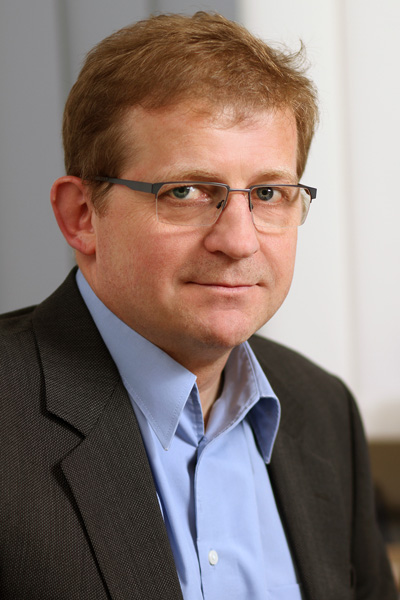
Wolfgang Kunz is a Full Professor (C4, W3) and Chair of Electronic Design Automation at the Technische Universität Kaiserslautern since 2001. His academic career spans multiple prestigious institutions, including Goethe-University Frankfurt/Main and the University of Massachusetts, Amherst. He has held leadership roles such as Dean (2005-2007) and Vice-Dean (2007-2009) at TU Kaiserslautern. Habilitation (Dr. rer. nat. habil.), Computer Science, University of Potsdam (1996) Doctoral degree (Dr.-Ing.), Electrical Engineering, University of Hannover (1992) Dipl.-Ing. degree, Karlsruhe Institute of Technology (1989) His research focuses on hardware verification, security, and optimization, particularly in embedded systems and processors. His work on formal verification methods has been commercialized by companies like Synopsys, Mentor Graphics, and Siemens EDA. His 2016-2021 publications address critical security issues such as Spectre/Meltdown and introduce innovative verification frameworks adopted by industry leaders like Infineon and OneSpin Solutions. Scientific awards include the IEEE Fellow (2006), German IT Society Award (2005), and TU Kaiserslautern Distinguished Teaching Award (2016). He has served on editorial boards of major journals and coordinated the Erasmus Mundus European Master Program in Embedded Computing Systems since 2010. Key students: Jörg Bormann, Raik Brinkmann, Tobias Ludwig Collaborations: Siemens EDA, Infineon, AbsInt, Intel SCAP Spin-offs: LUBIS EDA, OneSpin Solutions
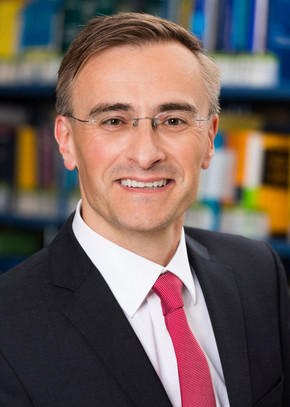
Univ.-Prof. Dr. Martin Spitzer holds the Chair of Civil Law and Civil Procedure at the Vienna University of Economics and Business (WU Wien), where he has been a full professor since 2011. He serves as Program Director for Business Law and Institute Director at WU. Professor Spitzer is Editor-in-Chief of the Austrian Jurists' Journal (ÖJZ) and the Austrian Legal Archives (ÖJA), and co-editor of prominent legal commentaries including the ABGB commentary ("KBB"). His academic work spans both traditional civil law topics and modern commercial legal challenges. Professor Spitzer's research interests focus on the intersection of substantive and procedural civil law, with particular emphasis on banking law, inheritance law, insolvency law, collective legal protection, credit security law, tort law, and contract law. His work often takes comparative and historical perspectives, examining how civil law principles apply in contemporary commercial contexts. He has published extensively across all fields of civil and civil procedure law, with recent work exploring digitalization of legal processes, climate change liability, and human rights violations in global supply chains. His recent scholarly output demonstrates a clear trend toward addressing contemporary legal challenges through traditional civil law frameworks. Many publications examine how digital transformation impacts civil procedure, with particular focus on video hearings and electronic evidence. Other significant themes include banking regulation in times of crisis, consumer protection in financial services, and the evolving relationship between administrative decisions and civil proceedings. His work consistently bridges theoretical legal scholarship with practical applications for legal professionals. Excellent Teaching Award (2021, 2020, 2016) Innovative Teaching Award (2017) Insolvency Law Prize (Main Prize, 2014) Cardinal Innitzer Promotion Prize (2012) Walther Kastner Main Prize (2012) Capital Markets Prize (2012) Professor Spitzer plays a significant role in legal education through his position as Program Director for Business Law at WU Vienna. He co-founded Austria's best-selling legal textbook series (PSK, Bürgerliches Recht) with Stefan Perner, now in its 7th edition. He has supervised numerous doctoral students and research assistants who contribute to the chair's publication projects. Beyond academia, he maintains strong connections with legal practitioners through continuing education events for the judiciary and legal profession, including the Vienna Civil Court Day and Austrian Lawyers' Civil Law Day. His work extends to media commentary, expert opinions for public and private clients, and projects addressing social responsibility such as pharmaceutical supply chain resilience. The chair under Professor Spitzer organizes several major scientific events including the Banking Law Forum (since 2019), Forum for Civil Law (since 2016), Private Law Course including Civil Procedure (since 2014), Insurance Law Day (since 2021), Vienna Civil Court Day (since 2019), and Vienna Civil Law Day (since 2023). These events bring together academics, practitioners, and judges to discuss current developments in civil law. The chair also houses the editorial team for the Austrian Jurists' Journal and oversees publication of standard commentaries on key Austrian legal codes.
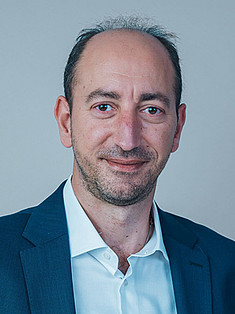
Thomas Henzinger is a Professor at the Institute of Science and Technology Austria (IST Austria) since 2009, serving as its President from 2009 to 2022. He holds honorary doctorates from Fourier University and Masaryk University. His research focuses on formal methods for improving software reliability in concurrent and embedded systems, with contributions to quantitative verification, quantum computing, and algorithmic fairness. He leads the Henzinger Group , which addresses challenges in software correctness, safety-critical systems, and AI ethics. Education: PhD from Stanford University (1991), followed by postdoctoral work at Université Joseph Fourier (1991). Research Interests: Concurrent and embedded systems, formal methods, quantum algorithms, fairness in AI, and runtime verification. His team develops mathematical foundations and tools to ensure software robustness in complex systems. Recent Trends in Publications: Focus on advancing formal verification techniques for neural networks, quantum computing, and ethical AI. Key contributions include fairness shields for decision systems and middleware for third-party monitoring (VAMOS). Awards: Royal Society Fellow (2024), US National Academy of Sciences Member (2020), Wittgenstein Award (2012), and numerous test-of-time awards. Advising & Grants: Advised over 20 PhD students. Secured ERC Advanced Grants (VAMOS, QUAREM) and FWF grants (Wittgenstein Award). Labs/Teams: Leads the Henzinger Group , collaborating on projects like SPyCoDe (semantic security) and VAMOS (third-party monitoring middleware).
Kathrin Figl is a Full Professor (Tenured) for Human-centric Information Systems Design at the Department of Information Systems, Production and Logistics Management at the University of Innsbruck. Previously, she held positions as an Assistant Professor at WU Vienna University of Economics and Business and as a research associate at the University of Vienna. Her educational background includes a doctoral degree in Information Systems (2008, with honors, awarded the Dr. Maria Schaumayer Prize) and dual master's degrees in Information Systems (2004) and Psychology (2006), all from the University of Vienna. This interdisciplinary foundation bridges technical and psychological perspectives in her research approach. Professor Figl's research centers on human-centered information systems with particular emphasis on cognitive aspects of digital interaction: Human-AI interaction and algorithmic management systems Digital nudging techniques and online manipulation Eye-tracking methodologies in user research Cognitive biases and heuristics in digital environments Fake news perception and detection mechanisms Webpage prototypicality and its effects on user attitudes Business process modeling as cognitive tools Her publication trajectory demonstrates a sophisticated evolution from foundational work on business process modeling to cutting-edge research on device-specific cognitive effects and misinformation perception. A hallmark of her methodology is the rigorous application of empirical approaches, particularly eye-tracking studies, to investigate how screen design, device type, and interface elements influence human cognition and decision-making across digital platforms. Professor Figl has earned significant recognition for her scholarly contributions: Dr. Maria Schaumayer Prize for doctoral excellence Three Best Paper Awards at major international conferences Excellent Teaching Award from WU Vienna Recognition as a top reviewer for Software & Systems Modeling journal Outstanding service awards as associate editor and track chair She has secured substantial research funding including an FWF Lisa Meitner Programme grant (€145,260) on Web Design Prototypicality and an Austrian Nationalbank Research Grant (€55,000) on Cognitive Effectiveness in Business Process Modeling. While specific advisees aren't documented in the provided materials, her extensive publication record with numerous co-authors indicates active mentorship of graduate researchers. Her work with eye-tracking technology suggests leadership of a specialized laboratory environment for studying human-computer interaction, with established collaborations including the Technical University of Denmark and Queensland University of Technology.
Ruth Breu is a Full Professor and Dean of the Faculty of Mathematics, Computer Science and Physics at the Universität Innsbruck, where she also leads the Quality Engineering research group. She has been a key figure in the Department of Computer Science since 2002 and served as its Head from 2013 to 2024. Her academic journey began with a PhD summa cum laude from the University of Passau in 1991, followed by a habilitation at the Technical University of Munich in 1999. Her research interests include: Quality Engineering Model and Security Engineering Requirements and Software Development Processes Enterprise Architecture Management Threat Intelligence and Digital Twins Her recent publications reflect a strong focus on model-based systems, automated programming assessment, security engineering, and digital twins in construction and energy systems. She frequently collaborates with researchers such as Michael Felderer, Clemens Sauerwein, and Philipp Zech, contributing to advancements in software testing, threat intelligence sharing, and cyber-physical systems. Notable awards include her PhD awarded summa cum laude. She has also been actively involved in national research governance, serving on the board of the Austrian Science Fund (FWF) from 2011 to 2020. She co-founded Txture GmbH in 2017 and holds advisory roles at Universität Passau and FH OST. Ruth Breu advises several students and leads a vibrant research group. Her leadership extends to organizing workshops and contributing to major conferences in software engineering and enterprise modeling. She is deeply engaged in both academic and applied research, bridging theory and practice in IT quality and security.
Karin Elisabeth Siebenhandl is affiliated with the University for Continuing Education Krems, holding a Researcher position in the Office for Research Services. She holds engineering and doctoral degrees (Dipl.-Ing., Dr.) and specializes in interdisciplinary research areas including human-computer interaction, accessibility technologies, and gender equality in academia. Her work focuses on improving public infrastructure usability, particularly in transportation systems, and advancing gender equity initiatives in scientific organizations. Her research projects include EU-funded GenderTime (2013-2016), which evaluated strategies to support women in science, and the FFG-supported INNOMAT (2010-2011) developing barrier-free ticket vending machines. She has also led projects on road safety signage (Infrastructure and Safety, 2006-2008) and user-centered design for public information systems. Key research interests span: 1) Inclusive technology design for diverse user groups, 2) Gender equality policies in academic institutions, 3) Human factors in transportation infrastructure, and 4) Open access publishing strategies. Recent publications (2013-2017) emphasize user-centered approaches to public service technologies and institutional change processes. She has secured funding from EU Framework Programs (FP6/FP7), Austrian Research Promotion Agency (FFG), and industry partners. Her work has been presented at conferences like CeDEM, womENcourage, and ITS World Congress, demonstrating commitment to both technical innovation and societal impact.
Andreas Manfred Pointner is an Assistant Professor at FH Hagenberg , specializing in interdisciplinary research at the intersection of computer science, healthcare informatics, and software engineering. He leads research in graph databases, process mining, and attribute grammars with applications in healthcare IT and automated data systems. His affiliations include the Web Intelligence and Innovation Laboratory , AIST Center of Excellence , and Medical Engineering/TIMed Center . He has contributed to projects such as RiskAI (risk management in enterprises), PASS (plan analysis automation), and REPO (radiology e-health platforms). Research Interests: Graph database optimization, interoperability in healthcare systems (HL7 standards), fuzzing techniques for software testing, and process mining for audit event analysis. His work bridges theoretical formal methods with practical applications in clinical workflows and automated data cleansing. Notable Contribution: Developed a graph transformation framework for complex data structures Recipient of the Best Paper Award 2022 for contributions to intelligent systems Collaborative Projects: Focus on AI-driven solutions for enterprise risk management and healthcare interoperability He actively participates in international conferences and has supervised projects involving 3D model analysis, contour extraction, and global disease monitoring systems.
Sebastian Eresheim serves as a Researcher at the Institute of IT Security Research within the Department of Computer Science and Security at St. Pölten University of Applied Sciences. His work focuses on developing innovative approaches to cybersecurity education and defense mechanisms through gamification, machine learning, and reinforcement learning techniques. He contributes to academic programs including Data Intelligence (MA) and Data Science and Artificial Intelligence (BA). Eresheim's research interests span across cybersecurity, artificial intelligence, and machine learning applications in security contexts. His work particularly emphasizes practical security solutions through gamification of security concepts, reinforcement learning for malware containment, and threat intelligence systems. He has developed cyber defense games like PenQuest that provide hands-on security training experiences. His research bridges theoretical security concepts with practical implementations, especially in the areas of process classification for anomaly detection and modeling real-world threat scenarios. Analysis of Eresheim's recent publications reveals a strong focus on applying artificial intelligence to cybersecurity challenges. His work demonstrates a progression from theoretical security modeling toward practical implementations, with increasing emphasis on gamification techniques for security education and reinforcement learning environments for cyber defense training. His research spans multiple domains including IT/OT infrastructure security, threat modeling, and security awareness training, showing interdisciplinary connections between computer science, game theory, and security engineering. Eresheim actively participates in various research projects including KliWaSim, the Webinar Series "Secure Home Office," and the Josef Ressel Center for Unified Threat Intelligence on Targeted Attacks (TARGET). He regularly presents at conferences and delivers workshops on AI and security topics, including events like the ACTA TECH DAY 2024 where he presented "Artificial Intelligence 101." His outreach extends to media appearances on ORF NÖ heute discussing practical AI applications.
Henri Ruotsalainen is a Researcher at the University of Applied Sciences St. Pölten (FH St. Pölten) , affiliated with the Institute of IT Security Research and the Department of Computer Science and Security . His work focuses on IoT security , wireless network protection , and sensor system resilience , with particular emphasis on LoRaWAN and critical infrastructure security . PhD in Technical Sciences (Dr. Techn.) from Vienna University of Technology (2011–2015) Diploma in Engineering (Dipl.-Ing.) from Helsinki University of Technology (2002–2010) Prior roles as University Assistant (Helsinki, 2007–2008) and Project Assistant (Vienna, 2011–2015) Ruotsalainen's research explores physical layer security for IoT, including radio-based key generation , supply voltage watermarking , and reactive jamming detection . His projects like LoRaKey and Substation Security aim to strengthen wireless communication integrity in industrial environments. Recent publications highlight trends in sensor network security and smart home vulnerabilities , with a focus on metadata differencing and attack countermeasures . Scientific contributions include: 15+ peer-reviewed articles in journals like Sensors and IEEE Transactions Participation in conferences including IEEE ETFA , ARES , and IT-SECX Development of security testbeds for LoRaWAN and critical infrastructure systems
Jonas Olofsson is a Professor in the Department of Psychology at Stockholm University, where he has been employed since 2009, progressing from Assistant Professor to his current position. He also holds an Adjunct Associate Professor position at the Child and Adolescent Psychiatry Department, New York University since 2016. Olofsson is a Wallenberg Academy Fellow (since 2018) and has received numerous prestigious fellowships including Pro Futura Scientia (2012-2017). His educational background includes: PhD in Psychology from Umeå University (2008) Postdoctoral research at Northwestern University (2009-2011) and Stockholm Brain Institute (2008-2009) Research fellowship at The Scripps Research Institute (2005-2006) Professor Olofsson's research focuses on perception, memory and emotion , with a specialized focus on olfaction (the sense of smell) and how it interacts with these cognitive processes. His work investigates whether olfaction can serve as an early marker for dementia, why smell naming is particularly challenging, if smell-based video games can be used for brain training, and how odors influence social processes. He employs a variety of behavioral and brain activity methods in his research, bridging cognitive psychology with neuroscience. His recent publications demonstrate a strong focus on the intersection of olfaction with broader cognitive and neurological processes. Key trends include examining olfactory deficits as predictors of cognitive decline (particularly related to Alzheimer's disease), the relationship between smell loss and COVID-19, cross-modal effects between olfaction and visual processing, and the development of smell-based interventions for cognitive training. His work spans multiple disciplines including cognitive neuroscience, clinical psychology, and social psychology. Among his notable scientific achievements: Wallenberg Academy Fellow (since 2016), a career program providing long-term funding for promising researchers Fellow of the Young Academy of Sweden (since 2015), an independent cross-disciplinary forum for promising young researchers Fellow of Pro Futura Scientia (since 2012), a research program for promising researchers in humanities and social sciences Recipient of the 2010 prize for young researchers in Psychology by the Swedish National Committee for Psychological Sciences The Fulker award (2009) for best article in the journal Behavior Genetics Elected member of The Swedish National Committee for Psychological Sciences (2020) Olofsson has secured substantial research funding totaling 74 million Swedish Krona (9 million USD), with 44 million SEK as principal investigator. His major grants include the Wallenberg Academy Fellowship (2016, with a 5-year prolongation in 2021), a Consolidator grant from the Swedish Research Council (2020), and several project grants focused on smell-based brain training, the relationship between olfaction and dementia, and social aspects of odor perception. He leads a research team investigating various aspects of olfactory cognition and has collaborated extensively with researchers at Stockholm University, Karolinska Institute, and international institutions. His research group operates within the Department of Psychology at Stockholm University, utilizing behavioral testing and brain imaging methods to investigate olfactory cognition. They have developed innovative approaches including "NoseWise," a video game platform for smell-based brain training, and have established connections with the Stockholm University Brain Imaging Center (SUBIC).
Josef Schuch is a Professor at the Vienna University of Economics and Business (WU), holding a chair in tax law with special emphasis on international tax law at the Institute for Austrian and International Tax Law. He is part of the leadership team of a research group consisting of over 60 researchers, alongside Georg Kofler, Michael Lang, Alexander Rust, Karoline Spies, and Claus Staringer. His academic career spans several decades with continuous scholarly contributions in the field of tax law. Professor Schuch's research focuses primarily on international tax law, tax treaty law, and European Community tax law. His work examines ECJ case law and tax treaty law in depth, with significant contributions to understanding the intersection of EU law and international tax agreements. He has led projects on Tax Compliance Costs within the SFB International Tax Coordination framework and serves as a supervisor for doctoral students in his areas of expertise. His extensive publication record demonstrates consistent scholarly output across multiple dimensions of tax law. Recent works focus on emerging issues including crypto assets taxation, minimum taxation frameworks, and the evolving jurisprudence of the Court of Justice of the European Union. His publications follow clear trends toward addressing contemporary challenges in international tax coordination, reflecting the dynamic nature of global tax policy development. Professor Schuch has been actively involved with the European Association of Tax Law Professors (EATLP), serving on its Academic Committee. His collaborative work extends across numerous edited volumes and co-authored publications that have shaped tax law scholarship in Austria and internationally. As an academic supervisor, he encourages and supports doctoral research in tax treaty law and EC tax law. His teaching activities have covered fundamental and advanced topics in tax law, including international tax principles, double taxation agreements, and EU tax law. His extensive lecture history demonstrates deep engagement with both academic and professional tax communities. The Institute for Austrian and International Tax Law, where Professor Schuch is based, represents a significant research hub for tax law scholarship. His collaborative work with colleagues has produced numerous influential publications that contribute to both academic discourse and practical tax administration.
Dimitrios Simos serves as Senior Lecturer and Joint Professor of Cybersecurity in the Department of Information Technologies and Digitalisation at Salzburg University of Applied Sciences (FH Salzburg), with an additional appointment as University Professor for Cybersecurity at the University of Salzburg where he teaches Introduction to Cryptography and IT Security. His research expertise includes: Resilient Security Testing and Web Technologies Security via Interaction Testing Protocol Security Testing for Internet and Industrial Systems Hardware Security with focus on Trojan Detection in Chips Quantum Software Security Implementations Combinatorial Mathematics for Secure Systems Engineering Dynamics Modeling of Natural and Cyber-Disasters Prof. Simos supervises Bachelor and Master students in cybersecurity and software/systems testing, cyberattacks, and mathematical security modeling. His teaching portfolio encompasses Cryptology, IT Security Engineering, Advanced Networking/Security/Privacy topics, and Attack-Defense Simulation labs across multiple degree programs.
Dipl.-Ing. Oliver Eigner BSc is a Researcher in IT Security and Coordinator for AI & Digital Transformation at St. Pölten University of Applied Sciences' Department of Computer Science and Security. He holds a Master's degree in Information Security and Bachelor's degree in IT Security from the same institution. Master Information Security (2014-2016), St. Pölten University of Applied Sciences Bachelor IT Security (2011-2014), St. Pölten University of Applied Sciences HTL Ybbs a.d. Donau, Network Technology (2011) His research focuses on Trustworthy AI , Cyber-Physical Systems Security , and Resilient Artificial Intelligence . He leads projects like TrustAI (2026), FAIRAI, and Secure Supply Chains for Critical Systems (SSCCS). His work bridges AI ethics , security in multimodal logistics , and cybersecurity education . Recent publications demonstrate his expertise in AI security frameworks (2024), active learning applications (2024), and environmental monitoring via microwave links (2022). He contributes to conferences like Machine Learning Prague and IEEE COINS. Contact: oliver.eigner@fhstp.ac.at
Peter Kieseberg is a Lecturer and Senior Researcher at the St. Pölten University of Applied Sciences , affiliated with the Institute for IT Security Research and Department of Computer Science and Security . He has held his lecturer position since November 2017 and contributes to research in Cybersecurity , Artificial Intelligence , and Blockchain Technologies . His research spans AI Security , Cyber Resilience , Data Privacy , and Explainable AI . He has co-authored numerous publications on topics such as Secure Drone Integration , AI Procurement Guidelines , and Blockchain-based Auditing . His work often bridges technical and legal domains, emphasizing Ethics and Transparency . Key Trends: Recent articles focus on Cyber Resilience Fundamentals , Controllable AI , and Risk Factors in AI Applications . Projects: Active in initiatives like A3 (AI Act for Austria) , Dataskop , and Josef Ressel Center for Blockchain Technologies . Education: Studied Technical Mathematics in Computer Science at TU Wien (2001–2007).
Hans Platzer is a faculty member at the University of Applied Sciences Wiener Neustadt, specifically affiliated with the Institute for Languages. His work focuses on language acquisition, testing, and the integration of technology in language education. Dr. Platzer's research interests span multiple areas of language education and assessment. He has conducted significant research on vocabulary acquisition, particularly examining the role of digital tools like Quizlet in language learning. His work also encompasses language testing methodology, with a focus on the Vocabulary Levels Test and its validation for different word frequency bands. Additionally, he has investigated English proficiency among business students and the challenges of language testing in specific professional contexts. His recent publications demonstrate a consistent focus on practical applications of language research. The 2024 presentations on standardized school-leaving exams reflect his interest in educational policy impacts on language competence. The 2020 article on Quizlet's role in vocabulary acquisition shows his engagement with technology-enhanced language learning. His 2018 work on the Vocabulary Levels Test demonstrates methodological rigor in language assessment, while his 2014 publication addresses the complex balance between test security and validity in Language for Specific Purposes contexts. Dr. Platzer has been actively engaged in academic discourse, presenting on topics such as the impact of standardized school-leaving exams on English competence in 2024. He has also served as an expert reviewer for the Electronic Journal of Foreign Language Teaching in 2019 and 2021, contributing to the scholarly community in his field. His research shows a clear trajectory from foundational work on business students' English proficiency in 2006 to contemporary investigations of digital learning tools and standardized testing impacts.