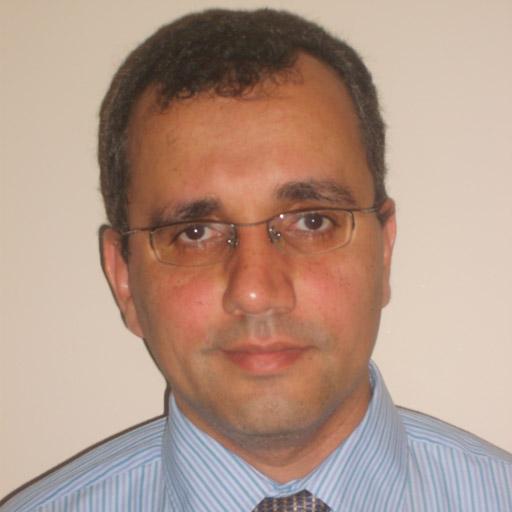
Amr Youssef is a Professor at the Concordia Institute for Information Systems Engineering, Concordia University. His research focuses on applied cryptography, network security, cyber-physical systems security, blockchain, and privacy. He has contributed extensively to securing smart grids, IoT devices, and web applications through cryptographic protocols and machine learning-driven solutions. His work addresses critical challenges in cybersecurity, including e-voting systems, fault-tolerant differential protection, and privacy-preserving communication protocols. He explores vulnerabilities in modern systems such as SSO permissions, JavaScript exploits, and stalkerware tools, while developing frameworks like MEGR-APT for APT detection and TEE-Receipt for non-repudiation. Youssef’s research integrates interdisciplinary approaches, combining cryptography with AI (e.g., vision transformers for power quality analysis) and leveraging trusted execution environments (TEE) for secure computing. His projects often involve collaboration with industrial standards (e.g., IEC 61850), emphasizing practical implementations in real-world systems.
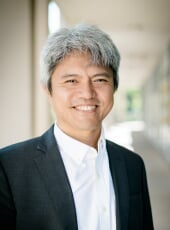
Chee-Wooi Ten is a tenured Professor in the Department of Electrical and Computer Engineering at Michigan Technological University, where he has served since 2010 and achieved tenure in 2016. He concurrently holds an Affiliated Professor appointment in Applied Computing and directs both the PSERC Site and ICC CPS Center. His institutional roles emphasize cyber-physical security integration within power infrastructure. His educational background includes: PhD in Electrical Engineering from University College Dublin (2009) MSc in Electrical Engineering from Iowa State University (2001) BSc in Electrical Engineering from Iowa State University (1999) Ten's research pioneers cyber-informed security engineering strategies for bulk power systems, focusing on quantifying rare events through system risk models and data science. His work bridges power grid interactions with robotics and transportation systems to advance decarbonization and electrification. Key methodologies include validating cyber-physical security frameworks against steady-state and dynamic grid approaches, with emphasis on attack/defense combinatorics and smart home technologies. This transdisciplinary approach supports the fourth industrial revolution's resilience requirements. His publication trends reveal strong focus on risk-aggregated substation testbeds using generative adversarial networks, cyber insurance models for power systems, and cascading failure analysis from switching attacks. Recent works increasingly integrate machine learning with physics-based modeling to address cybersecurity threats in inverter-based resource integration and distribution emergency operations. Ten has secured over $6.5M in active funding including: $2M DOE grant (MTU portion $105,000) for CyDERMS Center on DERs/Microgrids cybersecurity $704,409 CyManII award for secure digitalization in smart manufacturing $1.05M DOE ARPA-E grant for decarbonized freight transportation modeling NSF CyberCorps Scholarship for Service program ($3.38M) His grants consistently address risk management through data-driven and physics-based modeling, with industry partnerships through PSERC and utility collaborations. As ICC CPS Center Director, he leads research on cyber-physical security testbeds and coordinates the PSERC Summer Transformation School. His team develops validation frameworks for NERC CIP compliance while addressing practical pain points in OT cybersecurity for grid operators.
Dr. Julián Proenza Arenas is an Associate Professor at the University of the Balearic Islands (UIB) within the Mathematics and Informatics Department of the Higher Polytechnic School. As Secretary of the Politechnical School, he contributes to the management of all engineering bachelor degrees and serves as Academic Coordinator for the EU EMJMD Programme on Engineering of Data-Intensive Intelligent Software Systems (EDISS) since 2021. Ph.D. in Informatics (2007), University of the Balearic Islands Licenciatura in Physics (1989), University of the Balearic Islands His research focuses on Dependable and Real-Time Systems , particularly fault tolerance in distributed environments, Clock Synchronization , and Fieldbus Networks . Recent work emphasizes Time-Sensitive Networking (TSN) and adaptive mechanisms for industrial automation. He has co-authored over 100 publications and three patents, with multiple best paper awards at IEEE conferences (2004–2023). IEEE Workshop on Factory Communication Systems Best Paper (2004) IEEE ETFA Best Work-in-Progress Paper (2012, 2014, 2016) IEEE ETFA Factory Automation Best Paper (2023) Dr. Proenza supervises 6 completed and 2 ongoing Ph.D. theses and leads national research projects like FT4TSNgrid (2022–2025) and DFT4FTT (2016–2019). He is Principal Investigator of the Sistemas Empotrados Inteligentes y Robótica (SRV-INTER) R&D group and actively collaborates with international institutions including Mälardalen University and Universidade do Porto.
Dr. David Laverty is a Reader at Queen’s University Belfast in the School of Electronics, Electrical Engineering and Computer Science. His research focuses on Smart Grids, Cyber Security of Critical Infrastructure, and Power System Instrumentation. He is the founder of the OpenPMU project, an open-source Phasor Measurement Unit, and has contributed to advancements in precision time transfer and software-defined networking in power systems. Dr. Laverty has secured over £3M in research funding and holds an h-index of 22 with over 100 publications. He actively supervises PhD students in areas such as smart grid telecommunications, distributed energy resources, and secure information systems. His work aligns with UN Sustainable Development Goals, particularly in clean energy and infrastructure. Awards include the 2017 Premium Award for Best Paper in IET Generation, Transmission & Distribution and the 2022 BEST PAPER AWARD. His research projects, such as the Fusion/Electricity Exchange DAC, address challenges in smart grid infrastructure and cyber-physical systems. Dr. Laverty also engages in public outreach through initiatives like the Electric DeLorean project.
Professor Gareth Taylor is a Professor of Power Systems and Director of the Brunel Interdisciplinary Power Systems (BIPS) Research Centre at Brunel University London's College of Engineering, Design and Physical Sciences. He serves as Module Leader for the MSc Sustainable Electrical Power program and has been actively involved with the university since May 2000, progressing from National Grid Post-doctoral Scholar to his current position as Professor (appointed in 2012). He previously served as Head of the Department of Electronic and Electrical Engineering from May 2019 to June 2023 and holds a Visiting Professor position at Imperial College London (2023-2026). Professor Taylor earned his BSc in Applied Physics from Royal Holloway College, University of London (1987), followed by an MSc in Scientific and Engineering Software Technology from the University of Greenwich (1992), and completed his PhD in Computational Solid Mechanics at the University of Greenwich in March 1997. His doctoral research focused on finite volume methods for material non-linearity within multi-physics frameworks. His research spans power systems engineering with particular emphasis on smart grid technologies, renewable energy integration, and advanced computational methods. Professor Taylor has contributed to over 250 research publications in areas including power system operation and management, reactive power control, voltage regulation, and high-performance computing applications in electrical power systems. His work addresses critical challenges in modern power systems, particularly those related to the integration of renewable energy sources and the development of more resilient grid infrastructure. Analysis of his recent publications reveals a strong focus on addressing contemporary power system challenges, particularly the integration of renewable energy sources, smart grid technologies, and advanced computational methods. His work spans from fundamental power system analysis to practical applications in grid operation, with increasing emphasis on cybersecurity aspects of power system monitoring and the challenges posed by reduced system inertia in grids with high renewable penetration. Senior Member of IEEE Fellow of the Institute of Engineering and Technology (FIET) Chartered Engineer Fellow of the Higher Education Academy (FHEA) UK Regular Member for CIGRE Study Committee D2 (2016-2022) Member of Strategic Advisory Group for CIGRE Study Committee D2 (2023) Professor Taylor has led numerous significant research projects including TDX-ASSIST (€5.2M), e-HIGHWAY2050 (€8.2M), and HiPerDNO (€5.4M), with funding from EPSRC, European Commission, National Grid, and other major organizations. His current research portfolio includes projects on novel decoupled active/reactive power oscillation response, digitalization of power systems operation, and examining net zero policy in European energy markets. He also directs the BIPS Research Centre, which focuses on interdisciplinary power systems research with strong industry connections.
Dr. Manuel Alejandro Barranco González is an Associate Professor in the Department of Mathematics and Informatics at the University of the Balearic Islands (UIB). His research focuses on Dependable Real-Time Fault-Tolerant Distributed Systems, Adaptive Systems, and Industrial Networks like Fieldbuses and TSN Ethernet Standards. Ph.D. in Informatics (UIB, 2010) Specialized in fault-tolerant architectures for Distributed Critical Embedded Systems Co-author of 50+ publications and 3 patents in CAN reliability His research spans rigorous modeling of system reliability, collaboration with institutions like the University of Aveiro and FEUP, and contributions to IEEE conferences (Technical Program Committee member since 2014, Financial Chair at WFCS 2015). He has supervised 4 Ph.D. theses and numerous master’s projects, all rated 'excellent.' Best Paper Award at IEEE WFCS 2004 Best Paper Award at IEEE ETFA 2022 Best Work-in-Progress Awards at IEEE ETFA 2012, WFCS 2014, and WFCS 2016 His recent work explores TSN networks, node replication, and fault tolerance mechanisms in adaptive systems. He actively contributes to academic governance as a member of the Comissió de Direcció at UIB and technical committees in IEEE conferences.
Laszlo Tibor Erdodi is an Associate Professor at the Norwegian University of Science and Technology (NTNU), affiliated with the Department of Information Security and Communication Technology within the Faculty of Information Technology and Electrical Engineering . His research focuses on cybersecurity in critical infrastructure, reinforcement learning for penetration testing, and vulnerability exploitation in power grid systems. Erdodi collaborates with institutions like CIGRE and IEEE on projects evaluating security of wide-area monitoring systems and industrial control systems. Key research areas include advanced persistent threats (APT) targeting power grid substations, stealthy data integrity attacks on critical infrastructure, and the application of reinforcement learning to simulate cyber-attacks (e.g., SQL injection and CTF challenges). His work often involves hardware-in-the-loop testbeds to assess vulnerability mitigation strategies in real-world scenarios. Publications emphasize cybersecurity for industrial control systems, penetration testing methodologies, and ethical hacking frameworks. Notable contributions include studies on IEC 61850/60870-5-104 protocol vulnerabilities, PTP timing attacks in substations, and lightweight IoT security solutions (e.g., LIST framework). Erdodi’s work bridges theoretical cybersecurity models with practical implementation, addressing challenges in both academic and industrial sectors. He contributes to conferences like IEEE PES ISGT Europe and CIGRE symposiums, focusing on resilient critical infrastructure design and automated threat detection systems.
Ibrahim Faiek Abdulhadi is affiliated with the Power Networks Demonstration Centre at the University of Strathclyde. His roles include Co-investigator and Principal Investigator in 16 active and completed projects focusing on smart grid technologies and power system protection. His research interests span power system protection, smart grid interoperability, wide area measurement systems, real-time simulation, and experimental validation of controls. He has contributed to major initiatives like the System Frequency Response (SFR) Demonstrator dataset (2017). Recent research outputs include studies on EV charging infrastructure deployment and cybersecurity protocols for IEC 61850-90-5 standards. His work aligns with UN Sustainable Development Goals related to affordable and clean energy. Abdulhadi has organized the PNDC Knowledge Exchange Forum (2025) and delivered invited talks on wide area monitoring systems (2020). His expertise combines theoretical research with practical implementation through collaborative industry projects.
John O'Raw is a Lecturer in the Department of Computing at Donegal Letterkenny. His academic focus spans network security, time synchronization, and critical infrastructure protection, with emphasis on power systems, GNSS spoofing detection, and industrial IoT security. His research explores Precision Time Protocol (PTP) optimization in distributed networks Threat mitigation for GNSS-based timing systems Secure data communications in energy infrastructure Human behavior modeling for emergency evacuation planning His publications analyze cybersecurity frameworks for electrical substations, industrial IoT vulnerabilities, and practical implementations of standards like IEC 61850 and OAuth 2.0, with recent work on microwave IP networks and LinuxPTP for time synchronization.
Mateu Jover Mulet is a Researcher in the Mathematical Sciences and Computer Science school at the University of the Balearic Islands (UIB), specializing in Time-Sensitive Networking (TSN) and fault-tolerant control systems for electrical substations and microgrids. He is currently pursuing a doctoral degree under a FPU-CAIB scholarship after completing a SOIB Research and Innovation Program contract (2022–2023) funded by the EU’s Resilience and Recovery Plan. Education Bachelor’s in Industrial Electronics and Automation Engineering (UIB, 2020) Master’s in Intelligent Systems with IoT and AI specialization (UIB, 2022) His research focuses on enhancing reliability in TSN communication networks through fault tolerance mechanisms, particularly for power grid control systems. His publications address topics like redundancy tradeoffs, TSN migration strategies, and legacy Ethernet integration. Notable achievements include the Factory Automation Best Paper Award at ETFA'22 for collaborative work on distributed control systems. He contributes to the Systems, Robotics, and Vision (SRV) research group and participates in the FT4TSNgrid project (2022–2025). Mateu teaches courses like Industrial Communication Networks, Final Degree Projects in Computer Engineering, and Integrated Manufacturing Systems at UIB. His work bridges theoretical advancements in TSN with practical applications in industrial automation and electrical grid control.
Harald Wehrend is a Professor at the Institute of Electrical Energy Technologies at the University of Applied Science Kiel. His expertise lies in power systems, smart grids, and simulation technologies like ATP-EMTP and DigSilent Power Factory. Research Interests Smart Grid Development and Grid Integration Renewable Energy Systems (Wind, Solar, Biomass, Hydro) Network Automation and Communication Standards (IEC 61850) Transient Analysis and Protective Device Testing Energy Storage and Load Management Phasor Measurement Units and Power Quality Monitoring Collaborations include partnerships with Prof. Schümann, Prof. Hinrichs, and industry engagements with companies like Woodward Kempen GmbH, Amprion, and OMICRON.
Dr. Diego Casado Mansilla is a Researcher at the MORElab group within the Department of Computing, Electronics and Communication Technologies at the College of Engineering, University of Deusto. His work bridges Sustainable Human-Computer Interaction (HCI), Persuasive Technologies, and Internet of Things (IoT) systems to drive behavior change in energy consumption, urban sustainability, and STEM education accessibility. Education: PhD in Persuasive Technologies for Sustainability and Behavior Change (2016), University of Deusto His research spans two decades, focusing on Sustainable Design , Physical Interaction with Everyday Objects , and Human-Centric IoT Systems . He has led projects like Suggestive Autonomy (2016) and co-led GreenSoul (2017, 2019), which employ IoT for energy awareness in public buildings. Current projects include AmIAire (air quality monitoring) and Urban Adaptation and Alert Solutions (climate resilience, 2024-2028). Key trends in his 20+ publications (2012-2025) include: Energy efficiency in tertiary buildings and smart cities IoT protocols (CoAP, IEC 61850) for industrial and urban systems Behavioral economics and nudging for sustainable decisions Rural STEM education via remote experiments Privacy-preserving smart workplace systems Climate change perception studies across generations His supervised theses and projects address User Diversity , Edge Computing , and Industry 4.0 Adoption . He collaborates with European institutions on grants from the Ministry of Science and Innovation and European Commission , contributing to citizen science initiatives like SOCIO-BEE and educational tools such as EngageMate and Computario .
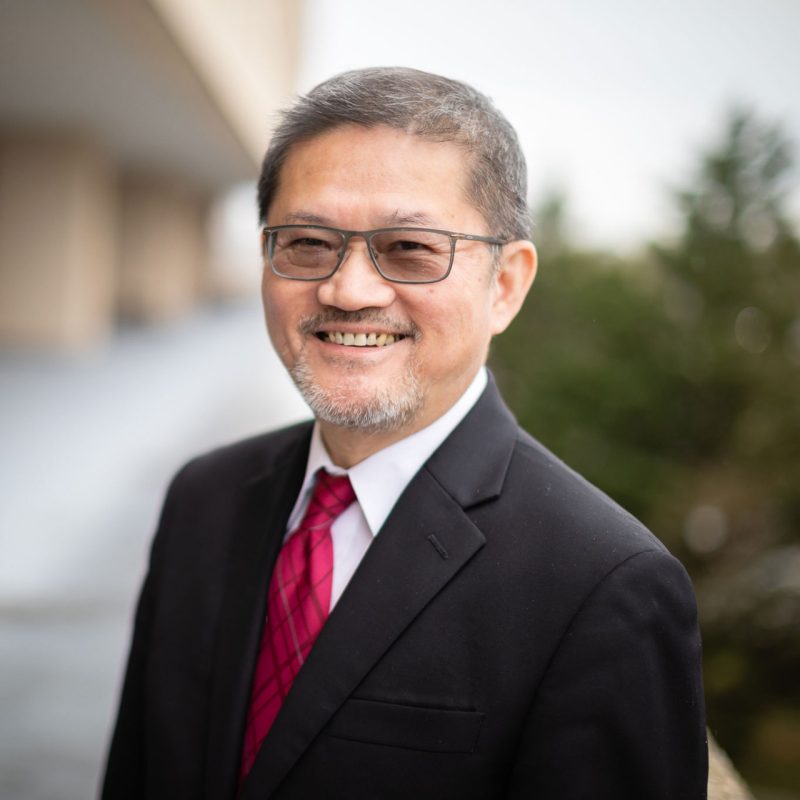
Chen-Ching Liu is the American Electric Power Professor and Director of the Power and Energy Center at Virginia Tech's Bradley Department of Electrical and Computer Engineering. He holds a Ph.D. from UC Berkeley and has held academic roles at institutions such as Washington State University (2011-2017), University of Washington (1983-2005), and University College Dublin (2008-2015). His research focuses on power systems, cybersecurity, resilience engineering, and renewable energy integration. Education : Ph.D., Electrical Engineering, UC Berkeley (1983) M.S., National Taiwan University (1978) B.S., National Taiwan University (1976) Research Interests : Cybersecurity of power systems Smart grid resilience and restoration Electricity market mechanisms Renewable energy integration Advanced control systems for microgrids Key Awards : Member, National Academy of Engineering (2020) IEEE Fellow (1993) Outstanding Power Engineering Educator Award (2004) Doctor Honoris Causa, Polytechnic University of Bucharest (2013) Grants & Projects : Directed the WSU Energy Systems Innovation Center (2012–2017) Lead researcher on cyber-physical system security and microgrid resilience Contributed to CIGRE defense plans against extreme contingencies Labs & Teams : Director of Virginia Tech’s Power and Energy Center Developed cyber-distribution system testbeds for education and research Collaborates with industry partners on smart grid and cybersecurity initiatives
Dr. Muhammad Musthafa Roomi Sheik Fareed is a Research Fellow with expertise in Cyber-physical Systems and Cyber-security for Smart Grids. His work focuses on Digital Twin technology, Power Electronic Converters, and Power System Automation. He holds a Ph.D. in Electrical and Electronic Engineering from Nanyang Technological University, Singapore. Education Ph.D. in Electrical and Electronic Engineering, Nanyang Technological University, Singapore His research emphasizes enhancing security in smart grid systems through IEC 61850 standards and open-source tools like OpenPLC. Recent studies include analyzing false data injection attacks and developing robust control mechanisms for parallel generators in smart grids. His publications highlight contributions to both theoretical frameworks and practical case studies in industrial cyber-security. No scientific awards or grants are listed. He has not disclosed advising roles for students or affiliations with specific labs/teams in the provided text.
Dhananjay Anand is an associate research scientist in the Department of Electrical and Computer Engineering at Johns Hopkins University. He also serves as the lead research scientist for the National Institute of Standards and Technology's Smart Grid and Cyber-Physical Systems Program, focusing on the integration of physical and information systems in power grid applications. His educational background includes: Bachelor's in Mechanical Engineering from Visvesvaraya Technological University (2004) Master's from the University of Michigan (2008) Doctorate from the University of Michigan (2013), where he helped design their manufacturing testbed for information-driven reconfiguration Anand's research interests center around metrology, control systems, and dynamics in electrical power grid applications. He investigates system integration, diagnosis, and reasoning challenges in networks of interdependent information technology and physical components. His work bridges theoretical control systems with practical power grid applications, with particular focus on smart grid technologies, cyber-physical systems, and precise timing solutions for grid operations. His research has significant implications for electric vehicle integration, grid stability, and next-generation power infrastructure. His recent publications demonstrate a strong focus on electric vehicle charging infrastructure, quantum network synchronization, smart grid standards, and control systems for distributed energy resources. The research spans from theoretical control frameworks to practical grid applications, with particular emphasis on timing precision, system stability, and grid-edge integration of new technologies. His work shows a clear progression toward more complex cyber-physical integration challenges, with increasing attention to quantum technologies and advanced control methodologies for modern power systems. His notable scientific achievement includes: NIST Distinguished Associate Award (2018) As a reviewer for IEEE and ASME publications, Anand contributes to the academic community through peer review. His work with NIST involves developing critical testbeds and validation capabilities for smart grid technologies, representing significant grant-funded research activity in power systems and cyber-physical integration. He has also contributed to manufacturing testbed design during his doctoral work at the University of Michigan. Anand is associated with multiple advanced research testbeds including the NIST Campus Power System and the Assistive Clock Fusion Testbed, focusing on precision timing solutions for power grid applications. His work bridges the gap between theoretical control systems and practical implementation in real-world power systems, with particular expertise in time synchronization challenges within cyber-physical power systems.