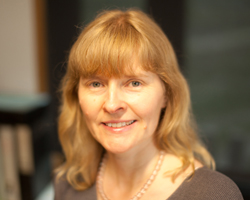
Professor Nancy W. Y. Law is a leading scholar in Learning Sciences and Technology at the University of Hong Kong's Faculty of Education . She has served as Founding Director of the Centre for Information Technology in Education (CITE) (1998-2013) and currently holds the Chair of Learning Sciences and Technology . Her career spans over 25 years of international comparative studies, policy analysis, and large-scale educational innovation. Current roles: Associate Dean (Strategic Development), HKU Key affiliations: Sciences of Learning Strategic Research Theme (co-convener) Research Expertise Her work focuses on technology-enhanced learning , digital literacy , knowledge building communities , and multilevel educational change . She pioneered network models of teacher innovation and socio-technical frameworks for sustainable pedagogical transformation, particularly in STEM education and Cyberbullying prevention . Scientific Leadership With over 25 major research grants (2000-2023) exceeding HK$50 million, she leads projects like: Learning and Assessment for Digital Citizenship Jockey Club Self-directed Learning in STEM Design-Aware Learning Analytics A Fellow of the International Society of Learning Sciences and recipient of the HKSAR Humanities and Social Sciences Prestigious Fellowship , she has supervised numerous international comparative studies including SITES 2006, ICILS 2013, and longitudinal digital citizenship research (2019-2021).
Prof. Dr. Timothy Roscoe is a Full Professor in the Department of Computer Science at ETH Zurich. His research focuses on operating systems, networking, and distributed systems. He was inducted as an ACM Fellow in 2014 for contributions to these fields. Previously, he worked at Intel Research Berkeley, UC Berkeley (Adjunct Professor), and Sprint Labs. His work includes foundational contributions to systems like PlanetLab, P2 Declarative Networking, and the Nemesis OS. Roscoe holds a PhD from the University of Cambridge and has led projects in cloud computing, wide-area network measurement, and secure systems design. His current research emphasizes hardware-software co-design, formal verification of systems, and scalable memory architectures. Education: PhD in Computer Science, University of Cambridge (1995) Key Roles: Principal Researcher at Intel Berkeley Lab, Visiting Researcher at National ICT Australia Research Highlights: Contributions to distributed systems (PlanetLab), declarative networking (P2), and secure microkernels (seL4 integration). Current projects address challenges in disaggregated memory systems, coherent interconnects, and trustworthy embedded systems. Awards: ACM Fellow (2014), numerous grants and industry collaborations. Labs/Teams: Systems Group at ETH Zurich, focusing on OS design, hardware architectures, and formal methods.
Judith Driscoll is Professor of Materials Science at the University of Cambridge in the Department of Materials Science & Metallurgy. She holds the prestigious Royal Academy of Engineering Chair in Emerging Technologies and serves as a Visiting Staff Member at Los Alamos National Laboratory. As the founding Editor-in-Chief of APL Materials, she has significantly contributed to the materials science community. Dr. Driscoll's research focuses on Energy Efficient Oxide Materials for Information and Communications Technologies and energy devices. Her work spans the development of non-volatile memory, resistive switching devices, and ferroelectric materials for neuromorphic computing applications. She investigates oxide thin films for applications ranging from data storage to energy generation and conversion, with particular emphasis on creating more energy-efficient device technologies to handle the exponential growth of data-centric applications. Her recent publications demonstrate strong trends in developing novel oxide-based memory devices with improved energy efficiency, particularly for AI applications. The work shows significant progress in hafnium-zirconium oxide ferroelectrics, resistive switching mechanisms, and vertically aligned nanocomposite structures for enhanced device performance. These innovations address critical challenges in reducing the unsustainable energy demands of modern computing, particularly for artificial intelligence systems. Fellow of the Royal Academy of Engineering Fellow of the Materials Research Society Fellow of the American Physical Society Fellow of IOM3, IOP, and Women Engineers Society Fellow of the American Academy of Arts and Sciences Recipient of ERC Advanced Grant Editor-in-Chief of APL Materials Dr. Driscoll leads a vibrant research group that has secured significant funding including her Royal Academy of Engineering Research Chair, an ERC Advanced Grant, and an ECCS-EPSRC grant in collaboration with researchers from the USA. She has founded the Cambridge Centre for Neuromorphic Computing (Neucam) in 2023. Her group operates world-leading growth equipment including pulsed laser deposition with RHEED control, high temperature oxide sputtering, and spatial ALD systems. She collaborates extensively across the University of Cambridge and with international partners to solve complex materials challenges, with her group's role often being to identify optimal materials for functional goals, predict fabrication methods, and then create and characterize these materials.
Lorrie Faith Cranor is the Director and Bosch Distinguished Professor in Security and Privacy Technologies at the CyLab Security and Privacy Institute, and the FORE Systems University Professor of Computer Science and Engineering and Public Policy at Carnegie Mellon University. She also directs the CyLab Usable Privacy and Security Laboratory (CUPS) and co-directs the MSIT-Privacy Engineering master’s program. She previously served as Chief Technologist at the U.S. Federal Trade Commission and is a co-founder of Wombat Security Technologies. Carnegie Mellon University – CyLab Security and Privacy Institute School of Computer Science – Department of Computer Science College of Engineering – Department of Engineering and Public Policy PhD Program in Societal Computing Human-Computer Interaction Institute (affiliate) Heinz College (affiliate) Dr. Cranor’s research centers on usable privacy and security, privacy engineering, and technology policy. Her work spans authentication systems, privacy policies, IoT security, and human behavior in digital environments. She has pioneered research on password usability, privacy labels (e.g., 'nutrition labels' for privacy), and privacy decision-making. Her interdisciplinary approach integrates computer science, public policy, and behavioral science to create systems that are both secure and user-friendly. Her recent publications reflect a strong focus on privacy interfaces, consent mechanisms, IoT security labels, and user comprehension of digital privacy. Trends include evaluating the usability of privacy controls across platforms, designing tools for developers to generate accurate privacy disclosures, and understanding user behavior in online tracking and advertising contexts. Her work frequently appears in top venues such as CHI, SOUPS, and PETS. ACM CHI Academy inductee ACM Fellow IEEE Fellow 2018 ACM CHI Social Impact Award 2018 International Association of Privacy Professionals Privacy Leadership Award 2018 IEEE Cybersecurity Award for Practice Alumni Achievement Award, McKelvey School of Engineering Top 100 Innovator under 35, Technology Review Dr. Cranor has advised numerous PhD students in interdisciplinary programs including Societal Computing, Engineering and Public Policy, and Human-Computer Interaction. Her research has been supported by grants from the National Science Foundation, DARPA, and industry partners. She serves on the boards of the Computing Research Association, Center for Democracy and Technology, and Electronic Privacy Information Center. She is a frequent media commentator on privacy and security issues. She leads the CyLab Usable Privacy and Security Laboratory (CUPS), a multidisciplinary research group that includes faculty and students from computer science, policy, and HCI. The lab focuses on making privacy and security systems more intuitive, effective, and user-controlled. Key projects include the Usable Privacy Policy Project, privacy nutrition labels, and the Personalized Privacy Assistant Project.
Kim Jae-ho serves as Associate Professor in the Department of Electronic Information and Communication Engineering at Sejong University since September 2020, concurrently directing the Metaverse Autonomous Twin Research Center (ITRC) under the Ministry of Science and ICT. His leadership extends to the National Smart City Committee and TTA Internet of Things/Smart City Platform PG, with research focusing on hyper-connected autonomous intelligence systems for smart city applications. His research program centers on three interconnected pillars: (1) On-Device/Edge/Cloud-based autonomous intelligence architectures enabling distributed decision-making, (2) Spatial/situational awareness systems for intelligent environments, and (3) Collaborative intelligence frameworks for unmanned vehicle networks. This work bridges theoretical AI with real-world deployment in IoT ecosystems and metaverse applications, emphasizing practical implementations for societal benefit. Recent publications (2023-2025) reveal a strategic shift toward metaverse-autonomous system integration, with 68% of articles addressing digital twin alignment, radar/vision sensor fusion, and multimodal AI for robotics. Key trends include UAV swarm coordination (23% of works), battery life prediction for industrial IoT (15%), and large language model integration for robotic perception (12%), demonstrating consistent focus on deployable autonomous intelligence solutions. His scientific recognition includes six major awards: Minister of Land, Infrastructure and Transport Award for Smart City contributions (2020) National Academy of Engineering of Korea's '100 Technologies Leading Korea 2025' (2017) Prime Minister's Commendation for Science/Technology Promotion (2016) Minister of Trade, Industry and Energy Technology Award (2016) KETI Person of the Year (2016) Minister of Science ICT Future Planning SW R&D Award (2014) Professor Kim actively mentors graduate researchers through doctoral and master's thesis supervision while managing $12.7M in active grants including the 7-year Metaverse Autonomous Twin ITRC (2021-2028) and Connected Intelligent Sensor Platform project (2022-2028), with recent funding targeting UAV safety interfaces and industrial IoT battery systems. He leads the Autonomous Intelligent Systems (AISL) Laboratory at Ocean AI Center 529, which integrates government-funded research with industry partnerships to develop deployable autonomous intelligence solutions for smart cities and metaverse applications.
Prof Lee Kwan Min is a Professor and the inaugural Korea Foundation Professor in Contemporary Korean Society and New Media at Nanyang Technological University’s Wee Kim Wee School of Communication and Information (WKWSCI), where he directs the UX Lab. He holds a Ph.D. from Stanford University and has held leadership roles, including founding director of Interaction Science Research Center at Sungkyunkwan University and Vice President at Samsung Electronics, overseeing UX strategy and innovation. His research focuses on user experience (UX), human-machine interaction (HCI/HRI/HAI), digital culture, and Korean society’s technological evolution. He has secured over $12M in research grants and holds patents in display interfaces and gesture control. Notable awards include ICA Fellowship and USC Mellon Teaching Award. Education: Ph.D. (Stanford University), M.A./B.A. (implied from career timeline). Previous affiliations include Sungkyunkwan University (SKKU) and the University of Southern California (USC), where he was tenured at 40. His work bridges academia and industry, advising startups in fintech, smart mobility, and UX design. Research Interests: UX design and evaluation Social/psychological impacts of ICT Human-robot/vehicle interaction Smart cities and disruptive technologies Korean digital society studies Recent work trends emphasize conversational interfaces in vehicles, metaverse analysis, and Fintech agents. His articles explore topics like autonomous vehicle trust, cross-cultural gaming psychology, and VR advertising. Awards include ICA Fellow status and multiple top-paper recognitions. Grants and Patents: Over $12M funding from NSF, Samsung, and Korean/US governments. Patents span smart displays, gesture control, and multimedia systems. Advises global firms on UX strategies and innovation. Labs/Teams: Director of UX Lab at NTU, leading interdisciplinary research. Collaborates with MIT Cognet and editorial boards of top journals like Journal of Communication and Human Communication Research .
Teemu Roos is a Professor at the Department of Computer Science , University of Helsinki , and a Principal Investigator for the Complex Systems Computation Group under the Helsinki Institute for Information Technology. He serves as a Supervisor for the Doctoral Programme in Computer Science and leads multiple research initiatives, including Distributed AI in Supercomputing , AI & Kids , and Generation AI . Dr. Roos also holds a Docent title in Computer Science. His research spans Artificial Intelligence , Machine Learning , and Data Science , with a focus on AI education , graph neural networks , Bayesian modeling , and health informatics . He has pioneered tools like Elements of AI , a free online course now translated into 22 EU languages, and explores the ethical implications of AI-generated content in authorship and inventorship. The 15 most recent publications highlight applications in environmental forecasting (e.g., Mediterranean Sea via graph-based deep learning), healthcare (e.g., skin cancer detection with transfer learning), and social media analysis (e.g., explainable AI platforms for K-12 education). Methodologically, his work advances clustering algorithms , dimensionality reduction , and approximate nearest neighbor search . Scientific Awards: Cor Baayen Award (2009) Nokia Foundation Recognition Award (2019) Best Paper Honorable Mention Award (2013) ICT Influencer of the Year 2019 (Vuoden TiVi-vaikuttaja 2019) World Summit AI's Top-50 Innovators in 2020 Dr. Roos has supervised 2 doctoral students and contributed to 163 academic activities , including invited talks at MIT, University of Cambridge, and the Finnish Institute in Rome. He has secured funding from the Academy of Finland and the Strategic Research Council, focusing on projects like Fast AI-assisted Space Environment Prediction and Urban Exerciser .
Jon M. Peha is a Full Professor in the Department of Engineering and Public Policy and the Department of Electrical and Computer Engineering at Carnegie Mellon University's College of Engineering. He serves as Founder and Director of the Center for Executive Education in Technology Policy (CEE-TP) and maintains affiliations with the CyLab Security and Privacy Institute and the Information Networking Institute. His career uniquely bridges government service (as FCC Chief Technologist, White House OSTP Assistant Director, and congressional advisor), industry leadership (as CTO for three tech startups), and academic research. Education: Ph.D. in Electrical Engineering, Stanford University (1991) M.S. in Electrical Engineering, Stanford University (1986) B.S. in Electrical Engineering and Computer Science, Brown University (1984) Peha's research spans the technical and policy dimensions of information networks, with particular focus on spectrum management, broadband Internet architecture, wireless communications, cybersecurity, and communications for emergency response. His work integrates engineering principles with economic and regulatory analysis to address real-world challenges in telecommunications infrastructure. Current projects examine connected vehicle communications, spectrum sharing models, and consumer-centric broadband labeling systems that emerged from his large-scale user studies. His research publications demonstrate consistent leadership in both technical innovation and policy analysis, with recent work addressing satellite interference mitigation, V2X communications, and pandemic-era internet performance. The breadth of his scholarship reflects his unique position at the intersection of engineering practice and policy formulation. Scientific Awards: IEEE Fellow AAAS Fellow FCC Excellence in Engineering Award IEEE Communications Society TCCN Publication Award Brown Engineering Medal AAAS Featured Science and Technology Policy Fellow (40@40) Peha actively engages with policymakers through congressional testimony, FCC consultation, and White House advisory roles. His government service has directly informed his academic work on spectrum policy, network neutrality, and public safety communications. He has supervised numerous graduate students across EPP, ECE, and INI programs, with research spanning vehicular networks, spectrum sharing, and emergency communications systems. As Director of CEE-TP, he leads executive education initiatives that bridge technical expertise and policy decision-making. His work with CyLab focuses on cybersecurity and privacy challenges in broadband systems and connected vehicles. Current projects include developing cost-effective spectrum sharing models for intelligent transportation systems and analyzing the economic implications of multi-network access architectures in 5G networks.
Lars Nordström is a Professor at the Division of Electric Power and Energy Systems within KTH Royal Institute of Technology, Stockholm, Sweden. His work bridges control systems , communication networks , and power systems , with a focus on future architectures, functionality, and quality aspects of ICT for power grid operations. He has led initiatives such as the Swedish Centre of Electric Power Engineering and served as Thematic Leader for Smartgrids in KIC InnoEnergy. In 2014, he was a Visiting Professor at Washington State University. Education : Ph.D., MSc.EE Nordström's research explores the intersection of smart grids , machine learning , and cybersecurity for power systems. Key areas include: Wide-Area Monitoring and Control (WAMC) systems Decentralized control strategies for DC microgrids Impedance modeling using neural networks Data-driven methods for islanding detection ICT reliability and protocol design for grid operations His recent publications emphasize machine learning applications in power systems, including LSTM networks for EV charging management, graph attention networks for stability monitoring, and digital twin approaches for cyber-attack mitigation. These works span disciplines such as Smart Grids, Power Electronics, and Data Science. Scientific Recognitions : Senior Member, IEEE Senior Member, CIRED Senior Member, Cigre Past Chairman, Swedish IEC TC57 Mirror Committee Nordström actively teaches and examines graduate courses like Communication and Control in Electric Power Systems and Computer Applications and Machine Learning in Electric Power Systems . His work influences industry practices through collaborations on digital substations, energy market analysis, and resilience strategies.
Karl Henrik Johansson is a Professor at the School of Electrical Engineering and Computer Science, KTH Royal Institute of Technology in Stockholm, Sweden, where he also serves as the Founding Director of Digital Futures. He is a Fellow of both IEEE and the Royal Swedish Academy of Engineering Sciences, and has held leadership positions including Immediate Past President of the European Control Association and IEEE Control Systems Society Vice President Diversity, Outreach & Development. Dr. Johansson earned his MSc in Electrical Engineering and PhD in Automatic Control from Lund University. His academic journey includes visiting positions at prestigious institutions such as UC Berkeley, Caltech, and NTU. His research focuses on networked control systems and cyber-physical systems with applications in transportation, energy, and automation networks. His work investigates fundamental challenges in connecting physical world systems through communication networks, exploring how wireless communication and sensor technology can enhance system robustness, reliability, energy efficiency, and safety. Current research directions include security of cyber-physical systems, distributed optimization, multi-agent systems, and applications to intelligent transportation and energy networks. Analysis of his recent publications reveals a strong focus on distributed optimization algorithms, secure networked control, multi-agent systems, and applications to transportation and energy networks. His work increasingly integrates machine learning techniques with traditional control theory, addressing challenges in privacy-preserving distributed computation, resilient state estimation, and resource allocation in complex networked systems. IEEE Control Systems Society Hendrik W. Bode Lecture Prize (2024) Swedish Research Council Distinguished Professor (2018-2027) Wallenberg Scholar (2009-2026) IFAC Young Author Prize IEEE CSS Distinguished Lecturer (2017-2019) IFAC Outstanding Service Award IEEE Fellow Dr. Johansson has supervised over 100 postdocs and PhD students, with many now holding prominent positions at institutions worldwide. His research has been supported by significant grants including the Swedish Research Council Distinguished Professor Grant (2018-2027), multiple Wallenberg Foundation grants, and numerous EU and national research projects. He has directed major research centers including ACCESS Linnaeus Centre (2009-2016) and Strategic Research Area ICT TNG (2013-2020). His research group operates within the Digital Futures initiative and maintains strong connections with industry partners through projects like the Integrated Transport Research Lab (supported by Scania and Ericsson) and Smart Mobility Lab. The group actively collaborates with international institutions and participates in major EU-funded projects addressing challenges in cyber-physical systems, transportation, and energy networks.
Associate Professor Ken Chung is affiliated with the University of Sydney's School of Project Management, serving as Associate Head of Education. He holds a PhD (University of Sydney) and dual undergraduate degrees (B.Sc (Hons I), B.Com). His research focuses on social network theory applied to stakeholder engagement in projects, healthcare coordination, and complex systems. Notable awards include the 2021 Faculty of Engineering Dean's Award for Excellence in Teaching and a PMI grant for infrastructure stakeholder engagement research. He has collaborated with organizations like NSW Department of Planning, Google, and Western Sydney Airport. Teaching includes courses like ENGG1850 and PMGT5871. Current projects explore stakeholder analysis, community engagement in infrastructure, and healthcare networks. His expertise spans 20+ years, with international partnerships at Webster Vienna and University of Southern Denmark. Professional activities include editorial roles, ARC grant reviewing, and industry advisory roles. Education highlights: PhD in Information Technologies (2009, Sydney), prior lectureship at University of Wollongong. Industry experience includes Telstra Messaging Group and DoubleClick Australia. Research integrates social physics principles, examining network structures' impact on project success, healthcare outcomes, and organizational behavior. Grants include ARC DP-funded health research and PMI-funded infrastructure studies. Key themes include network-based models for stakeholder engagement, project management innovation, and social capital utilization.
Alfredo Capozucca is a full permanent Researcher at the Department of Computer Science (DCS) within the Faculty of Science, Technology and Medicine (FSTM) at the University of Luxembourg. He holds a PhD in Computer Science from the University of Luxembourg (2010) and an M.S. from the National University of Rosario, Argentina (2003). His research focuses on modern software engineering methods, dependable systems, and computing education, with an emphasis on formal verification and sustainable computing practices. Capozucca has contributed to the design of courses at undergraduate and master's levels, including serving as Deputy Programme Director for the BSc in Computer Science from 2021-2024. His work bridges theoretical foundations with practical applications in education and industry. Research interests prominently include AI in education (e.g., ChatGPT's role in formal specification writing), formal verification techniques, and the integration of DevOps philosophies into academic curricula. He has authored numerous papers on topics ranging from security policy analysis to energy-efficient transactional models. Capozucca's contributions extend to open-source projects and tool development, such as the Messir UML requirements engineering tool. His teaching spans software engineering fundamentals, dependability, and modern DevOps practices, reflecting a commitment to aligning education with industry needs. Key professional roles include R&D engineer positions (2004-2006) and leadership in educational program design. His research infrastructure is based at the Maison du Nombre facility in Luxembourg. While no specific grants or awards are listed, his extensive publication record and teaching contributions highlight sustained academic engagement.
Imad L. Al-Qadi is the Grainger Distinguished Chair in Engineering and Director of the Illinois Center for Transportation (ICT) at the University of Illinois at Urbana-Champaign (UIUC). He holds a Ph.D. in Civil Engineering from Penn State and has held faculty positions at Virginia Tech and Penn State. His research focuses on sustainable transportation infrastructure, pavement mechanics, and advanced materials. Al-Qadi leads initiatives like the Illinois Autonomous and Connected Track (I-ACT), a high-speed test facility for autonomous vehicles and energy harvesting systems. Key roles include: Director of ICT, advancing multimodal transportation infrastructure Pioneer of the Smart Road and full-scale pavement testing Founder of the Academy of Pavement Science and Engineering Research interests span: Highway/airfield sustainability Tire-pavement interaction Energy harvesting Electric vehicles' infrastructure impact Leadership roles include past presidency of ASCE's Transportation and Development Institute and editorship of the International Journal of Pavement Engineering. He has authored over 1,000 publications, including 390 refereed papers, and secured over 180 research grants from federal agencies and industry. Awards include NSF Young Investigator Award (1994), TRB Crum Award (2023), and 2024 Executive Leadership Fellow. His work is internationally recognized, with honorary professorships at institutions in China, Sweden, and the UK.
Anders Åkerman is a Professor in the Department of Economics and Finance at the UiS School of Business and Law, University of Stavanger. He is an active researcher in applied economics with a focus on labor, trade, technology, and environmental policy. His research interests span applied microeconomics , international trade , labor economics , and environmental economics . He investigates how technological change, market structure, and global shocks affect firms, workers, and policy outcomes. His work often combines empirical methods with policy relevance. The recent articles reflect a strong trend in analyzing digital transformation (e.g., broadband and trade), environmental impacts of trade and production , and economic resilience during crises such as the pandemic. His publications appear in leading journals like the Quarterly Journal of Economics and American Economic Journal: Applied Economics . He has contributed to public discourse through op-eds in Dagens Nyheter and Svenska Dagbladet , and has been involved in policy commissions like Sweden's Coronakommissionen. He regularly presents research at seminars and international conferences, including the Nordic International Trade Seminar and Stockholm Institute of Transition Economics. Anders Åkerman has advised or collaborated with several researchers and policy experts, including Torsten Persson, Magne Mogstad, and Karolina Ekholm. While formal student advisees are not listed, his collaborative work suggests active mentorship and team leadership. He is affiliated with research networks and institutes such as IFN (Research Institute of Industrial Economics) and participates in interdisciplinary teams focused on economic policy and transition. His upcoming work continues to explore the intersection of technology, environment, and labor markets.
Mikko Kurimo is a Full Professor at Aalto University's Department of Information and Communications Engineering, School of Electrical Engineering. He earned his M.Sc., Lic.Tech., and D.Sc.(Tech.) from Helsinki University of Technology (1992, 1994, 1997) and pioneered neural networks for automatic speech recognition (ASR) in his PhD thesis. After research roles at IDIAP (Swiss AI center) and visiting positions at University of Colorado, Edinburgh, SRI, ICSI, and Nitech, he leads Aalto's ASR group since 2000. His work focuses on unsupervised subword modeling for morphologically complex languages (Finnish, Estonian, Turkish, Arabic) and large speech foundation models. PhD in Neural ASR (Helsinki University of Technology, 1997) Research Scientist at IDIAP (Switzerland) Visiting Fellow at University of Colorado, Edinburgh, SRI, ICSI, Nitech Head of Aalto ASR Group (2000-present) His research spans deep learning for ASR, spoken language modeling , and low-resource language solutions . Recent work explores continued pre-training of self-supervised models, multimodal emotion recognition, and pronunciation assessment using LLMs. He led the winning team in the 2017 Multi-Genre Broadcast challenge and secured competitive funding in Tekes Challenge Finland and EC's H2020-ICT-2017. Key article trends include: Advancements in children's speech recognition and dysarthric speech processing Integration of generative AI for language learning feedback Specialization in low-resource Uralic languages (Finnish, Northern Sámi) Development of robust ASR systems for complex phonetic environments Scientific Awards ACM Multimedia 2023 Computational Paralinguistics Challenge Prize First place in MGB3 2017 Arabic ASR Challenge ISCA Best Student Paper Award (2011) Professeur Invité at Université de Saint-Etienne (2005-2006) Royal Society International Short Visit Fellowship (2004) Professor Kurimo leads the Speech Recognition Group at Aalto, collaborating with COIN (Centre of Excellence in Computational Inference) and AIRC (Adaptive Informatics Research Centre). His projects like CaptainA mobile app demonstrate practical applications of ASR in language education. He has supervised numerous publications with co-authors in domains spanning bandwidth extension, stuttering detection, and speech sound disorder assessment.