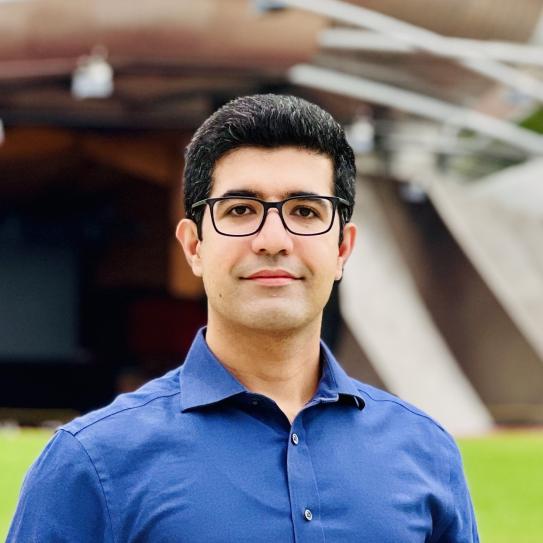
Hamed Rahmani is an Assistant Professor of Electrical and Computer Engineering at New York University (NYU Tandon School of Engineering). He is affiliated with NYU WIRELESS and the Center for Advanced Technology in Telecommunications (CATT), leading the Research in Advanced Integrated Systems and Electronics (RAISE) Lab. His research focuses on integrated circuits and systems for biomedical applications, IoT, and 5G/6G communication. Education: Ph.D., Electrical and Computer Engineering, UCLA (2020) M.Sc., Electrical and Computer Engineering, Rice University (2017) B.Sc., Electrical Engineering, Sharif University of Technology (2014) Research Interests: RF/mm-Wave circuits, low-power biomedical sensors, energy-efficient IoT systems, and wireless power transfer. His work emphasizes miniaturized implants, smart healthcare, and sustainable electronics. Awards: Recipient of the NSF CAREER Award (2025), IEEE MTT-S Graduate Fellowship (2019), and the 2023 Best Paper Award in the Journal of Microwave. He serves on technical committees for major conferences like CICC and IMS. Labs & Groups: Directs the RAISE Lab, collaborating with NYU WIRELESS on 6G research and CATT for technology transfer.
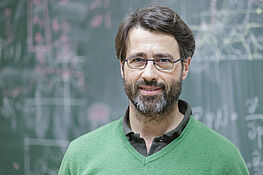
Christoph Dellago is a full Professor of Computational Physics at the Faculty of Physics of the University of Vienna, where he has been a faculty member since 2003. He currently serves as Director of the Erwin Schrödinger Institute for Mathematics and Physics, Head of the Computational and Soft Matter Physics Group, and Project lead of EuroCC Austria - National Competence Centre for Supercomputing. Previously, he served as Dean of the Faculty of Physics (2009-2012) and Coordinator of the Doctoral College Advanced Functional Materials (DCAFM). Full Professor, Faculty of Physics, University of Vienna (2003-present) Director, Erwin Schrödinger Institute for Mathematics and Physics (2017-present) Head, Computational Physics and Soft Matter Group (2024-present) Coordinator, Doctoral College Advanced Functional Materials (DCAFM) Austrian Representative, Council of CECAM Dellago received his PhD in Physics from the University of Vienna in 1996, followed by postdoctoral research at UC Berkeley as a Schrödinger Fellow of the Austrian Science Foundation. His research focuses on developing computational methods to study rare events in condensed matter systems, particularly transition path sampling methodology for simulating nucleation, chemical reactions, and biomolecular reorganizations. He has pioneered the application of machine learning to molecular structure recognition and potential energy surfaces. Recent work examines self-assembly of nanocrystals, biopolymer folding, aqueous interfaces, phase separation in alloys, thermo-polarization, cavitation, and freezing phenomena. Analysis of Dellago's recent publications (2023-2025) reveals a strong emphasis on machine learning applications in computational physics, particularly neural network potentials for simulating water interfaces, crystal defects, and phase transitions. His work bridges traditional statistical mechanics with modern computational techniques, creating powerful tools for studying complex dynamical processes that occur on timescales far beyond conventional molecular dynamics simulations. The publications demonstrate increasing integration of machine learning with rare event sampling methods, reflecting the cutting-edge direction of computational statistical mechanics. Förderpreis der Stiftung Futura zur Förderung junger Südtiroler im Ausland (1997) The Raymond and Beverly Sackler Prize in the Physical Sciences (2005) UNIVIE Teaching Award of the University of Vienna (2014) Dellago leads an active research group with multiple PhD students and postdocs, focusing on computational statistical mechanics. His group develops trajectory-based sampling methods and machine learning approaches for molecular simulation. He has secured significant funding through EuroCC Austria and various research platforms including the Research Platform Accelerating Photoreaction Discovery and the Research Platform Erwin Schrödinger International Institute for Mathematics and Physics. His research has been supported by numerous grants enabling advanced computational infrastructure for high-performance simulations. The Dellago Group operates within the Computational and Soft Matter Physics division at the University of Vienna, with strong connections to the Research Network Data Science. The group collaborates extensively with international research institutions and maintains close ties with the Erwin Schrödinger Institute, which Dellago directs. Their research environment combines theoretical physics, computational chemistry, and machine learning expertise to tackle fundamental questions in condensed matter physics and soft matter systems.
Paolo Manfredi is a Full Professor at the Department of Electronics and Telecommunications (DET) of Politecnico di Torino, Italy. He actively contributes to the EMC Group (Electromagnetic Compatibility) and serves as an Associate Editor for journals including IEEE Journal on Multiscale and Multiphysics Computational Techniques and International Journal of Circuit Theory and Applications. His research focuses on uncertainty quantification in circuits, surrogate modeling , machine learning applications, and signal integrity analysis . He leads projects on compact dynamical modeling of complex systems and stochastic analysis of interconnects. Recent publications highlight advancements in active learning for PCB line uncertainty quantification, connector degradation impacts on microwave signals , and SPICE-compliant IC model compression , reflecting his expertise at the intersection of electrical engineering and data science . Scientific Awards: Best Paper Award EPEPS (2010, 2013) Premio Optime (2010) URSI Young Scientist Award (2011) Honorable Mention - IMS (2011) He supervises PhD students in projects spanning 5G/6G metasurfaces , power cable corrosion assessment , and neural network applications in circuit design.
Dr. Wei Jin is a Lecturer (Teaching and Research) at the School of Computing and Engineering, Bangor University. He holds a Ph.D. in Optical Engineering from the University of Electronic Science and Technology of China (2017). Previously, he served as a lecturer at Southwest Petroleum University (2017–2018) and a postdoctoral researcher in the Optical Communications Research group at Bangor (2019–2021), before securing his current lectureship. His research focuses on high-speed optical transmission systems, low-cost optical access networks, and advanced digital signal processing (DSP) algorithms. He has authored/co-authored over 75 peer-reviewed publications. Dr. Jin teaches courses including ICE-2601 Data Systems, Management & Eth and ICE-4414 RF & Optical MEMS , and supervises undergraduate, MSc, and PhD projects. His work emphasizes seamless network convergence, reconfigurable optical components, and security in optical communication systems. Key contributions include experimental demonstrations of advanced transceiver designs and network architectures for 5G and beyond. He is affiliated with the Digital Signal Processing Centre of Excellence (DSP Centre) at Bangor University. Recent research trends in his publications highlight innovations in physical layer security using chaotic digital filters, seamless fiber-wireless access networks, and dynamic sub-wavelength switching. These advancements address challenges in next-generation optical networks, including low-cost scalability and robust security measures. His work bridges theoretical DSP algorithms with practical implementations in real-world communication systems. Awards: None explicitly mentioned in the provided texts. Grants: Not detailed in the current text excerpts. Labs/Teams: Member of the Optical Communications Research group and the Digital Signal Processing Centre of Excellence (DSP Centre).
Payam Heydari is the Henry Samueli Faculty Excellence Professor and University Chancellor’s Professor at the University of California, Irvine (UCI), holding joint appointments in Electrical Engineering and Computer Science (EECS) and Biomedical Engineering. He leads the Nanoscale Communication IC (NCIC) Labs, focusing on advanced RFIC, millimeter-wave, and biomedical circuit designs. His academic career includes distinguished roles such as IEEE SSCS and MTT-S Distinguished Lecturer (2014-2016 and 2019-2022). Education: B.S. and M.S. (Honors) from Sharif University of Technology (1992, 1995), Ph.D. from University of Southern California (2001). Professional experience includes research internships at Nokia Bell Labs and IBM T.J. Watson Research Center. Research Interests: Design of high-frequency integrated circuits for communication and biomedical applications, low-power RF front-ends, and brain-machine interfaces. Over 190 publications, including co-authoring two books and multiple invited keynotes at IEEE conferences like ISSCC and IMS. Awards: 2024 IEEE Darlington Award, 2023 MTT-S Distinguished Educator Award, 2021 SSCS Innovative Education Award, and NSF CAREER Award. Recognized as a Fellow of the National Academy of Inventors and IEEE. Service: Editor roles at IEEE JSSC, OJ-SSCS, and SSC-L. Member of ISSCC Technical Program Committee (2014-2019), ESSCIRC, and IMS 2021 committees. Director of NCIC Labs.
Tarik Dickens is an Assistant Professor in the Department of Industrial and Manufacturing Engineering at the Florida A&M University-Florida State University College of Engineering, Florida State University. He serves as Interim Associate Chair of Materials Science and Engineering, Department Graduate Director for IME, and Associate Director of CREST CoMand. He leads the SMART-CIIM Labs and Industrial Composite Engineering (ICE) lab at the High-Performance Materials Institute. His educational background includes: Ph.D. in Industrial and Manufacturing Engineering, Florida State University (2013) M.S.I.E., Florida State University (2007) B.S.I.E., Florida State University (2005) Dr. Dickens' research pioneers integrative composite manufacturing for online prognosis of composite structures, with emphasis on triboluminescent damage detection systems. His work spans multifunctional composites, additive manufacturing automation, failure prognosis, and Industry 4.0 integration, targeting aerospace, military, and commercial applications through novel sensor-embedded composites and co-additive processing techniques. Recent publications reveal dominant trends in advanced additive manufacturing, particularly field-assisted techniques, vitrimer materials, and in-situ structural health monitoring systems. His research integrates mechanoluminescent composites with real-time damage detection, focusing on robotic additive manufacturing, multi-material systems, and Industry 4.0 connectivity for next-generation composite structures. Scientific recognition includes: InNOLEvation Challenge award ($55,000) for entrepreneurial innovation in composite technology commercialization Dr. Dickens has secured approximately $1.3 million in research funding from NSF and DOD. He has graduated 4 master's students and currently mentors 3 PhD and 1 master's student. His research bridges fundamental material science with industrial applications, emphasizing scalable manufacturing solutions and commercialization pathways. The SMART-CIIM Labs (1.0 and 2.0) and ICE lab at HPMI drive experimental research in additive manufacturing, non-destructive testing, and composite material development, featuring robotic systems for co-additive processing and triboluminescent sensor integration for real-time structural health monitoring.
Filipe Nunes is an Associate Professor at the Department of Political Science and Public Policy (ESPP) at ISCTE - Instituto Universitário de Lisboa. He is also an Associate Researcher at CEI-Iscte - Center for International Studies. His academic background includes a Sociology degree from ISCTE and a PhD in Social Sciences from the University of Lisbon (ICS-UL). He has held roles such as Chief Technical Advisor at Portugal's Permanent Mission to the UN in Geneva (2019-2023) and visiting professorships at ISCTE, NOVA-IMS, and FCSH-UNL. His research focuses on administrative elites, political change, electoral behavior, and public policy, with a particular emphasis on Portugal and European contexts. Key professional experiences include advisory roles in the Portuguese government and parliament, as well as research at the Portuguese Institute of International Relations (IPRI). He currently serves as Vice-President of IPPS-Iscte. His work bridges academic research with policy analysis, addressing topics like defense policy, EU integration, and inclusive urban development. His publications explore themes such as elite recruitment dynamics, the impact of CRESAP reforms on administrative elites, and the silent revolution in French governance. He has also written on accessible tourism in Guimarães and Portugal’s role in European defense frameworks. Nunes’ contributions span teaching, policy advising, and international collaboration, reflecting his interdisciplinary approach to political science and public policy.
Edoardo S. Biagioni is an Associate Professor at the University of Hawaii in the Department of Information and Computer Sciences , where he has been since 1997. His primary research focuses on decentralized networking , wireless security , and systems programming , with long-term projects including the Allnet project (since 2011) and earlier PODS micro-sensor networks (2000-2003). Current research since 2024 includes formal verification of file systems and correctness properties in systems programming Technical interests span protocol decomposition , language-based OS design , and congestion control Teaching emphasizes Java fluency , data structures , and algorithm complexity in courses like ICS 211 Prior roles included directing the Advanced Network Computing Laboratory (1997-2005) and contributions to the Fedora Core project. Students under his supervision have worked on projects ranging from network measurement to ATM transport protocols . His work bridges theoretical concerns like IP fragmentation theory with practical implementations in SML database systems and IPv6 transitions .
Dr. Atta ul Quddus is a Lecturer in Wireless Communications at the University of Surrey's Institute for Communication Systems (ICS), part of the School of Computer Science and Electronic Engineering. He holds an MSc (2000) and PhD (2005) in Satellite and Mobile Cellular Communications from the University of Surrey. His research focuses on 5G/6G networks, including Machine Type Communication, Full Duplex systems, and Cloud Radio Access Networks. He leads UK/EU projects like BeFEMTO and iJOIN and developed a widely used PHY simulator for industry. Research interests: Machine-to-Machine (M2M) communication, Full Duplex systems, Cloud RAN, Device-to-Device (D2D) communications, and Cell-Sweeping techniques. Notable contributions include enhancing cell-edge throughput via Cell-Sweeping and developing novel modulation schemes like C-GQSM and GAM-FSM. Publications span 2025-2021, emphasizing advances in MIMO, NOMA, and RIS (Reconfigurable Intelligent Surfaces). Key achievements include the 2004 Vodafone-sponsored Research Excellence Prize for adaptive filtering work. Current projects explore integrated communication-sensing systems, haptic feedback, and low-complexity decoders for Polar/LDPC codes. Awards: CCSR Research Excellence Prize (2004) Grants: EU FP7 BeFEMTO, iJOIN; 5GIC research program Collaborations: Industry partnerships with network operators and chip manufacturers Labs/Teams: Active contributor to ICS's 5G Innovation Centre (5GIC), focusing on future wireless systems.
Dr. Jörg Lippold is a prominent researcher at the Institute of Geosciences at the University of Heidelberg, where he maintains his office at Im Neuenheimer Feld 234, Raum 503 in Heidelberg, Germany. His work focuses on understanding Earth's past climate systems through the analysis of deep-sea sediments and the application of radiogenic tracers, particularly in the context of Atlantic ocean circulation dynamics across glacial-interglacial timescales. Dr. Lippold's research interests center on paleooceanography and paleoclimatology, with specific expertise in ocean circulation patterns and climate dynamics across glacial and interglacial periods. His work investigates the stability of the Atlantic thermohaline circulation, mechanisms behind rapid climate changes, and the application of radiogenic tracers like protactinium-231 and thorium-230 to reconstruct past ocean circulation patterns. His methodological approach combines deep-sea sediment analysis with geochemical proxy measurements to understand how ocean circulation has influenced global climate systems throughout Earth's history. An analysis of Dr. Lippold's publication record reveals a strong focus on using the 231Pa/230Th ratio as a paleocirculation proxy, particularly for studying the Atlantic Meridional Overturning Circulation (AMOC) during key climate transitions. His research spans multiple ocean basins including the Atlantic, Pacific, and Arctic, with particular attention to how ice sheet dynamics, meltwater discharge, and deep-water formation have influenced global climate patterns. His collaborative work often involves international teams analyzing sediment cores from key locations to reconstruct past ocean circulation changes. Dr. Lippold maintains an active research program with numerous ongoing collaborations across Europe and internationally. His work bridges paleoceanography with contemporary climate science, providing critical historical context for understanding potential future changes in ocean circulation and their climate impacts. His laboratory work at Heidelberg University involves advanced geochemical analyses of marine sediment cores, contributing significantly to our understanding of how Earth's climate system has operated during previous glacial cycles.
Hélène Fremont is a Professor at the University of Bordeaux, affiliated with the Laboratoire de l'intégration, du matériau au système (IMS Bordeaux) . She leads research in the RELIABILITY group, focusing on the RIAD and WBG teams. Her work addresses critical challenges in microelectronics and electronic packaging reliability.
Olga Borić-Lubecke is a Professor in the Department of Electrical Engineering at the University of Hawaiʻi at Mānoa, where she has served since 2003 after prior roles at Bell Laboratories, Lucent Technologies, RIKEN Japan, and NASA Jet Propulsion Laboratory. Her educational background includes a B.Sc. from the University of Belgrade (1989), M.S. from Caltech (1990), and Ph.D. from UCLA (1995), all in electrical engineering. Her research focuses on silicon RF integrated circuits, high-frequency IC design, biomedical wireless sensing (including non-contact vital sign detection and wearable biosensors), and renewable energy systems, with work cited over 2700 times and featured in major media outlets. She has received significant recognition including: Distinguished Member of the National Academy of Inventors, UH Chapter Emerging Technology Award at TechConnect 2007 IEEE Fellow designation Foreign Membership in the Academy of Engineering of Serbia Prof. Borić-Lubecke has advised 9 PhD students, 8 MS students, and 60+ undergraduate projects while co-founding Kai Medical (as Chief Technical Advisor) and Adnoviv, LLC (as President). Her service includes editorial roles for IEEE Transactions on Microwave Theory and Techniques and leadership positions in IEEE IMS conferences. She leads an active research group developing non-contact physiological monitoring technologies and wearable biosensors, with current projects centered on heart/respiration detection systems.
Matthias Kempe is an Assistant Professor of Data Analytics in Sports at the University of Vienna, where he holds a tenure track position in the Department of Sport and Human Movement Science within the Centre for Sport Science and University Sports. He is also a member of the PI Panel/Supervisors for the Vienna Doctoral School of Pharmaceutical, Nutritional and Sport Sciences (VDS PhaNuSpo). Dr. Kempe received his PhD in Sport Science from the German Sport University Cologne, specifically from the Faculty of Exercise Training and Sport Informatics, and previously served as an Assistant Professor at the University of Groningen. His office is located at Auf der Schmelz 6a (USZ II), Room 4.24, 1150 Wien. His primary research focuses on performance optimization in sports through advanced data analytics and machine learning applications. Dr. Kempe has established significant collaborations with various sports federations across multiple countries, particularly in Handball, Ice-Skating, Tennis, and Football, resulting in several publicly funded projects implementing analytic tools directly into sports practice. He also maintains strong industry connections with data analytics companies and regularly mentors hackathon participants. Analysis of his publication portfolio reveals a strong emphasis on football/soccer analytics, biomechanics, and practical applications of machine learning in sports contexts. His recent work demonstrates expertise in developing standardized data formats (Common Data Format for Football), analyzing defensive tactics, and exploring how data-driven approaches can enhance athlete development and performance understanding. Specializes in tracking data analysis and machine learning applications in sports Focuses on practical implementation of research findings in real-world sports environments Active contributor to sports informatics standards development Dr. Kempe teaches courses including StEOP 1 - Einführung in die Sport- und Bewegungswissenschaft, BA3I - Bachelorarbeit, and MOD.1.IV - Angewandte Biomechanik und Sportinformatik im Breiten- und Spitzensport for the winter term 2025, and various Sportinformatik und Statistik courses for the summer term 2025. He supervises PhD students including Tom Höltke and contributes to doctoral education through the VDS PhaNuSpo program.
Charles Coluzzi is a microbial evolution researcher at Institut Pasteur specializing in mobile genetic elements and antibiotic resistance mechanisms. His work bridges computational biology and experimental microbiology through development of genomic analysis tools including MacSyFinder and ICEscreen. His primary research focuses on microbial evolution , particularly the dynamics of horizontal gene transfer involving plasmids, ICEs (Integrative Conjugative Elements), and IMEs (Integrative Mobilizable Elements). He employs comparative genomics , bioinformatics , and phylogenetic approaches to investigate how these mobile elements drive antibiotic resistance development. His methodology papers demonstrate significant technical leadership in genomic analysis tool development. Analysis of his recent publications reveals consistent focus on bacterial conjugation mechanisms, plasmid evolution, and resistance gene dissemination across diverse pathogens including Streptococcus suis , Salmonella , and Yersinia . His 2022 NAR Breakthrough Article highlights his contributions to understanding plasmid transfer networks. NAR Breakthrough Article Award (2022) Coluzzi actively contributes to science outreach, particularly through primary school visits introducing children to microbial worlds. His collaborative network includes prominent researchers like Eduardo P.C. Rocha at Institut Pasteur, with whom he has co-developed multiple genomic analysis frameworks. Current research directions emphasize the evolutionary interplay between chromosomal elements and mobile genetic systems in resistance development.
Jeongdae Im is an Associate Professor in the Department of Civil and Environmental Engineering at Kansas State University (KSU), holding the Fornelli Keystone Research Scholar title. He earned his B.S., M.S., and Ph.D. in Civil and Environmental Engineering from Seoul National University (2006) and the University of Michigan (2011). His research focuses on sustainable biotechnologies addressing the Water-Energy-Health-Climate nexus, emphasizing microbial catabolic activities for environmental engineering applications. Key areas include greenhouse gas mitigation, plant-microbe interactions, and contaminant fate analysis. He has secured over $3M in grants, including a prestigious NSF-CAREER Award for studying nitrous oxide emissions in forage conservation. Im leads the Environmental Biotechnology Lab (EBL), collaborates with industry partners like Pioneer/Corteva, and has authored/co-authored 27 journal articles, 29 conference papers, and holds two patents applied in over 44 wastewater facilities in Korea. Recent milestones include a $2M NSF Global Center grant (2023) for sustainable agriculture innovations and a GRIP Award ($950K, 2023). His academic highlights include the 2023 Outstanding Assistant Professor Award from the Carl R. Ice College of Engineering and the 2022 NSF-CAREER Award, the largest such award in KSU Engineering history. Im actively reviews for journals like Environmental Science & Technology and Applied and Environmental Microbiology. His lab facilities integrate molecular biology, chemical analysis, and engineering approaches to develop scalable biotechnological solutions.