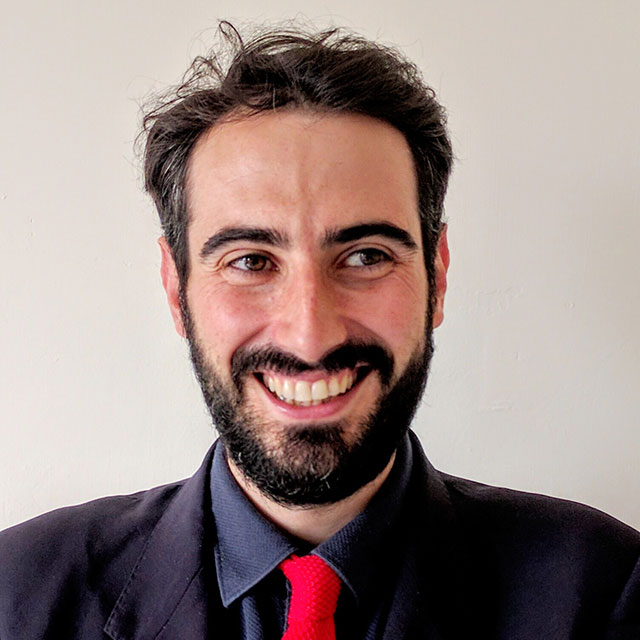
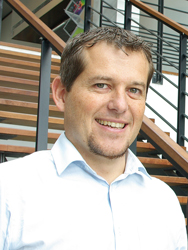
Ruben Verborgh is a Professor of Decentralized Web Technology at the Ghent University – imec and a Visiting Fellow at the Oxford Martin School (University of Oxford). He leads the Internet Technology and Data Science Lab (IDLab) and co-founded the Solid platform with Tim Berners-Lee to re-decentralize the Web. His research focuses on Linked Data Fragments , a paradigm for Web-scale query execution, and explores decentralized data governance , user-controlled data ownership , and rule-based Web agents for policy enforcement. He has co-authored two books on Linked Data and contributed to over 250 publications. Recent articles highlight trends in decentralized data ecosystems , including ODRL policy interoperability , event notification systems , and personal data vaults . His work bridges Linked Data , hypermedia APIs , and privacy-preserving technologies . Verborgh collaborates with institutions like MIT, Oxford, and the European Commission, and advises companies through Inrupt . His labs ( IDLab , Solid Ecosystem ) focus on sustainable data-driven societies.
State University of New York at OswegoUnited States
Dr. Roseli Rojo is an Assistant Professor at the State University of New York at Oswego in the Department of Modern Languages and Literatures, specializing in Caribbean Studies and Spanish. Her research examines the agency of women and Afro-descendants in colonial Latin America and the Spanish Caribbean, with a focus on historical narratives, cultural production, and intersectional analysis. Education: Ph.D. in Spanish Literature and Culture, Rutgers University (2021); M.A. in Latin American Studies, National Autonomous University of Mexico (2016); B.A. in Hispanic and Classical Literature, University of Havana (2013) Her scholarly work spans colonial Havana urbanization, gendered representations in Caribbean literature, and environmental intersections with race and power. Recent publications analyze topics like 19th-century Cuban railroads, hysteria as a culture-bound syndrome, and Afro-Caribbean resilience narratives. Dr. Rojo’s research has earned recognition through fellowships such as the PRODiG Postdoctoral Fellowship (2022-2024) and the Goizueta Foundation Graduate Fellowship (2018). She has contributed to journals like Hispanic Review , Latin American Theatre Review , and Decimonónica , alongside book chapters published by Routledge and Hypermedia Press. Professional Experience: Assistant Professor at Jacksonville State University (2021-2022), Instructor at Rutgers University (2016-2021), Assistant Professor at University of Arts, Cuba (2013-2014)
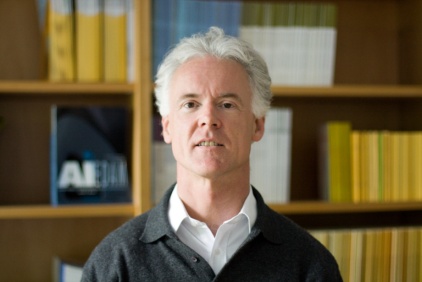
Professor David Taubman is a distinguished academic serving as Professor and Deputy Head of School (Research) at the School of Electrical Engineering and Telecommunications (EE&T) at the University of New South Wales (UNSW) in Sydney, Australia. He is also co-director of Kakadu Software Pty. Ltd. and its affiliates Kakadu R&D and Kakadu GPU. With a career spanning over three decades, Professor Taubman has made significant contributions to the field of image and video compression, most notably as the author of the EBCOT coding algorithm adopted in the JPEG2000 international standard. Professor Taubman earned his B.Sc. in Mathematics and Computer Science (1986) and B.E. (Medal) in Electrical Engineering (1988) from the University of Sydney, followed by an M.Sc. (1992) and Ph.D. (1994) in Electrical Engineering from the University of California at Berkeley. His professional journey includes engineering work at the Electricity Commission of N.S.W. (1988-1990), research positions at Hewlett-Packard Laboratories in Palo Alto (1994-1998), and an academic career at UNSW where he progressed from Senior Lecturer (1998-2003) to Associate Professor (2004-2009) and finally to Professor (2009-present). He has held various leadership roles including Head of the EE&T Telecommunications Research Group (2003-2014), Head of the EE&T Signal Processing Research Group (2014-present), Director of Research for the School of EE&T (2011-2016), and Deputy Head of School (Research) since 2017. Professor Taubman's research interests center on image and video compression, with particular expertise in JPEG2000 standards and implementations. His work spans signal processing, wavelet transforms, scalable video coding, motion modeling, and multimedia systems. He has pioneered numerous compression algorithms and frameworks, including the EBCOT coding algorithm that became central to the JPEG2000 standard. His recent research focuses on efficient motion modeling with cuboidal partitioning, learned lifting-based transform structures, and high-throughput implementations of JPEG2000 for video applications. His work bridges theoretical foundations with practical implementations, as evidenced by the commercially successful Kakadu Software tools that have garnered around 500 commercial licensees. Analysis of Professor Taubman's recent publications reveals a consistent focus on advancing compression technologies with particular emphasis on scalability, efficiency, and adaptability. His work spans traditional image compression (JPEG2000 extensions), video coding (cuboid-based partitioning for UHD/360-degree video), and emerging applications (nanopore sequencing data compression). A notable trend is the integration of machine learning techniques with traditional compression frameworks, as seen in his work on learned lifting-based transform structures. His research maintains strong connections to real-world applications across diverse domains including medical imaging, astronomical data processing, and genomic sequencing. IEEE Fellow Engineers Australia Fellow (by invitation) Professor Taubman has served as Associate Editor for the IEEE Transactions on Image Processing for two four-year appointments (2003-2005 and 2010-2013). He has been actively involved in numerous research grants focused on image and video compression technologies, particularly those related to the JPEG2000 standard and its extensions. His work has received significant industry support, reflected in his consultancy with various U.S., Japanese, and Australian corporations. He has also contributed to international standards development as a member of Standards Australia Technical Committee MS-065 (mirroring ISO TC42 on Digital Photography) and as a constitutional member of Standards Australia Technical Committee IT-029 (Coded Representation of Picture, Audio and Multimedia/Hypermedia Information). Professor Taubman co-directs Kakadu Software Pty. Ltd. and its research affiliates Kakadu R&D and Kakadu GPU, which have developed the commercially successful Kakadu Software tools for JPEG2000. His research group at UNSW focuses on advanced image and video compression techniques, with particular expertise in wavelet-based methods, scalable coding, and motion modeling. The group maintains strong industry connections and has contributed significantly to the development and standardization of image compression technologies worldwide.
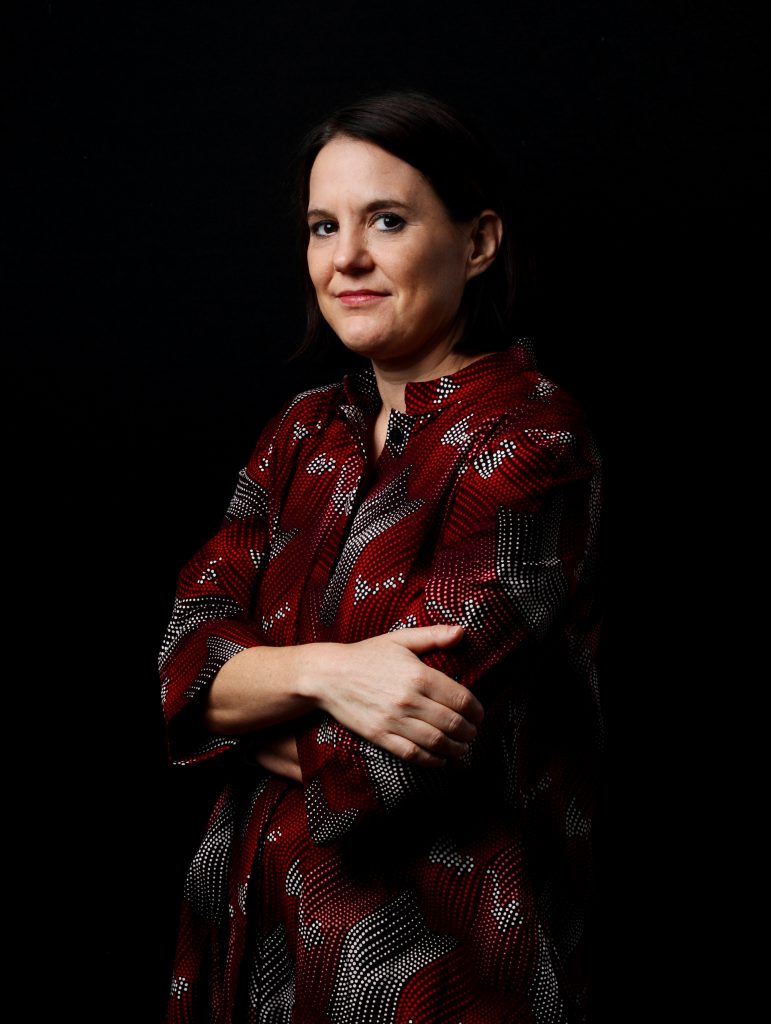
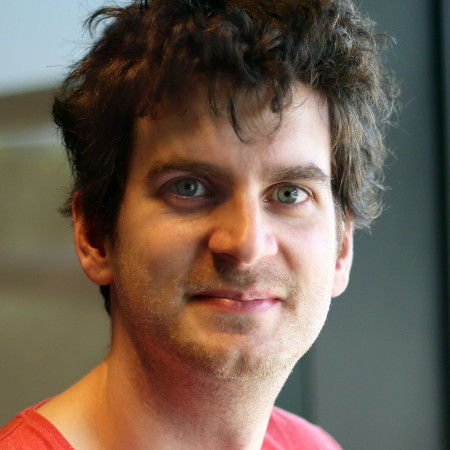
Gaye Stephens serves as Assistant Professor in the School of Computer Science and Statistics at Trinity College Dublin, where she is a core member of the Centre for Health Informatics alongside Dr. Lucy Hederman and Prof. Mary Sharp. She actively contributes to institutional governance as a board member of the Irish Platform for Patient Organisations, Science and Industry (IPPOSI) and serves on the school's research ethics committee. Her research centers on patient-centered health informatics with focus areas including Electronic Health Record design , citizen engagement methodologies (such as Citizen Juries and Think-ins), and scalable information models for healthcare integration. She pioneers approaches that position patients as central stakeholders in health data governance, addressing critical challenges in digital health literacy, informed consent frameworks, and interoperability between legacy and emerging health technologies. Analysis of her recent publications reveals consistent focus on knowledge engineering for healthcare , with particular emphasis on temporal data modeling in knowledge graphs (2024-2025), nurse knowledge elicitation through serious games (2023-2024), and novel methodologies like the WICKED framework for capturing clinical wisdom (2022-2023). Her work consistently bridges technical informatics with human-centered design principles. Stephens actively contributes to national health informatics infrastructure through memberships in: Royal Academy of Medicine of Ireland Council of Clinical Information Officers National Standards Authority of Ireland Health Informatics Group Health Informatics Society of Ireland (including Nursing and Midwifery group) e-Health Ireland ECOSYSTEM working group She supervises across undergraduate, MSc (Health Informatics and Global Health), and PhD programs while leading client-based final year projects. Her teaching portfolio includes Introduction to Health Informatics, Information Modeling, Connected Health, and Electronic Health Record Architectures, with research advising spanning health data governance and patient engagement projects. Stephens co-leads the Knowledge and Data Engineering Group's Health Informatics research stream, focusing on semantic interoperability, adaptive hypermedia systems, and novel engagement models for health data governance. Her current projects emphasize citizen-centered EHR architectures and interdisciplinary approaches to healthcare data integration.
Prof. Jacco van Ossenbruggen is a Full Professor in Intelligent Information Systems at Vrije Universiteit Amsterdam (VU), affiliated with the Network Institute. He serves on the Management Board of ODISSEI, a national research infrastructure for social sciences and economics. His academic background includes a PhD in Computer Science (2001) from VU’s Faculty of Science, focusing on hypermedia processing. Research Interests: His work centers on cultural AI, FAIR data principles, ontology engineering, and semantic web technologies. Key areas include inclusive cultural heritage metadata, bias mitigation in AI systems, and knowledge discovery via linked data. Recent projects involve leveraging large language models (LLMs) for metadata enrichment and ontology construction. Key Contributions: He leads initiatives like the Cultural AI Lab, exploring AI applications for cultural heritage. His research bridges technical innovations (e.g., semantic integration of restricted-access data) with societal impacts (e.g., ethical AI frameworks for public-sector applications). Developed frameworks for evaluating entity alignment in knowledge graphs Pioneered FAIR-aligned data management plans for scientific communities Designed tools like Alter Heritage for collaborative metadata curation Grants & Projects: Principal Investigator of the ODISSEI Portal project (2020–2024), advancing open data infrastructures. Active in funding initiatives promoting reproducible research and ethical data practices. Labs/Teams: Cultural AI Lab at VU, focusing on AI-driven solutions for cultural heritage preservation and accessibility.
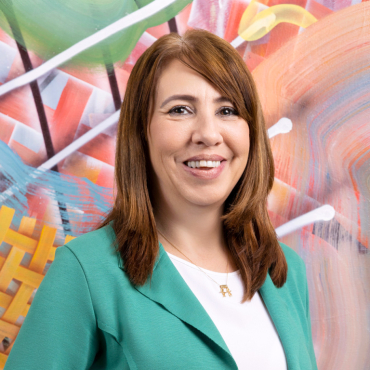
Denise Ranghetti do Pilar is a Professor of UX Design at Savannah College of Art and Design (SCAD) in Savannah, GA, since 2022. Her academic background includes a Postgraduate Certificate in Applied Positive Psychology and a Ph.D. in Psychology from Pontificia Universidade Catolica do Rio Grande do Sul, and a B.S. in Computer Science from Catholic University of Louvain. Her research focuses on User Experience Design and User Experience Research , with specific interests in UX strategy, design thinking, UX metrics, and user research methodologies. She has taught at multiple institutions including Product Arena, UFRGS, UniRitter, and Feevale. Professionally, she has served as Staff User Experience Researcher at Nubank and User Experience Lead at SAP Labs Latin America. She is affiliated with professional organizations BayCHI and AnthtroDesign.
Professor David Millard is a Professor of Computer Science at the University of Southampton's Electronics and Computer Science department. He serves as Head of the ECS Education Group, leading a team of 15 Teaching Fellows and Senior Fellows to improve teaching and learning across the department. Previously, he was Director of Admissions for ECS from 2012 to 2022. David is a founding member of the Web and Internet Science research group and has been active in the international hypermedia community for over twenty-five years. His professional affiliations include: Chair of the ACM Hypertext steering committee SIGWEB Liaison for ACM Web Science Former vice-chair of ACM SIGWEB (2015-2019) Editorial board member of the New Review of Hypermedia David Millard's research focuses on the intersection of hypertext, digital narratives, and mixed reality games, with particular emphasis on locative literature. His work has helped define 'Sculptural Hypertext' - hypertext governed by rules and constraints rather than navigational links - which is highly suitable for designing narrative structures within digital games. He has been a pioneer in locative narratives, interactive digital narrative games experienced on location-aware smart devices, with work dating back to 2002 at Chawton House. His recent research focuses on understanding the locative narrative design space and proposing the 'Balance of Attention' as the primary poetic of locative narrative. His research has been recognized with multiple awards including the Engelbart Award in 2013 and 2016 for his work on location-based storytelling and sculptural hypertext. His interdisciplinary StoryPlaces project explores the poetics of location-based narratives through digital storytelling deployments in Southampton, Bournemouth, and Crystal Palace. David has authored more than 230 peer-reviewed articles across Technology Enhanced Learning, Web Science, and Hypertext and Narrative, with over 4800 citations and an h-index of 35. His work has been published in prestigious journals including Springer Multimedia Tools and Applications, Elsevier Computers in Education, IEEE Intelligent Systems, PloS one, ACM Transactions on Information Systems, and ACM Transactions on Learning Technologies. He leads a team of PhD students focused on Interactive Narratives and Mixed Reality Spaces and has graduated 34 postgraduate students. His students have pursued careers in academia at institutions like Oxford, Winchester, Bournemouth, and East Anglia, as well as in industry at major technology firms including IBM and Google. David has been instrumental in Open Educational Resources development, creating EdShare in 2010 - an OER platform based on EPrints that now hosts over 20,000 learning items. He has also developed innovative teaching approaches, including modules on Multimedia Systems (which won the Vice-Chancellor's Teaching award), Programming 1, Social Media and Network Science, and Games Design and Development.
Kaj Grønbæk is a Professor and Head of Department at Aarhus University's Department of Computer Science. His research focuses on Augmented Reality , Human-Robot Interaction , and Interaction Design , with specific interest in hybrid user interfaces and immersive authoring systems. Academic Rank: Professor Department: Department of Computer Science Email: kgronbak@cs.au.dk Research Interests : Combines Augmented Reality with Pervasive Computing to create novel Interactive Rooms and Urban Environments . Specializes in Experimental Systems Development and Mobile Interfaces . Article Trends : Recent publications focus on Virtual Reality applications in industrial settings, Augmented Reality for robotics, and Haptic Feedback mechanisms. The work spans Human-Computer Interaction , Immersive Technologies , and Collaborative Systems . Scientific Awards : Best Student Paper Award (2017) CHI 2021 Best Paper Award ISS 2019 Best Paper Award Red Dot Design Award for 'Wisdom Well' (2007) Grants & Projects : Leads DIGITAL RESEARCH CENTRE DENMARK (2020-2025) and MADE FAST WS5 project (2020-2024). Participates in CoronaLytics and HealthD360 initiatives.
Valentino Catricalà is a scholar and contemporary art curator specializing in the relationship between artists and new technologies and media. He serves as a Lecturer in Curating at Manchester Metropolitan University's School of Digital Arts (SODA) and is the curator of the SODA gallery (Modal) in Manchester. His professional affiliations include director of the Art Section of the Maker Faire – The European Edition (the largest creativity and innovation event in Europe) and Art Consultant at Paris Sony CS Lab. Dr. Catricalà received his PhD from Roma Tre University and has been a visiting lecturer at prestigious institutions including ZKM (Karlsruhe), Tate Modern (London), University of Dundee, and LIMA (Amsterdam). His early career included founding and serving as artistic director of the Rome Media Art Festival at MAXXI Museum in Rome, promoted by Fondazione Mondo Digitale. His research focuses on media art, contemporary art practices involving emerging technologies, virtual reality, artificial intelligence, and the historical relationship between art and technology. Catricalà examines how technological developments reshape artistic practices and human perception, with particular attention to the critical perspectives artists bring to technological innovation. His work often explores themes of posthumanism, media archaeology, and the ethical dimensions of digital culture. His recent publications reveal a clear trajectory toward increasingly sophisticated examinations of AI and VR in artistic contexts. The 2022 article 'HyperInterfaces - HyperMedia' represents his most current thinking on AI beyond anthropocentrism, while his 2021 book 'The Artist as Inventor' reframes artists as active participants in technological innovation rather than passive recipients. His work consistently bridges historical perspectives with cutting-edge technological developments. Member of the advisory board of the Media Art History Conference As an independent curator, Catricalà has worked with major institutions including the Hermitage (St. Petersburg), Minnesota Street Project (San Francisco), New York Media Center, Fondazione Stelline (Milan), MAXXI Museum (Rome), Palazzo delle Esposizioni (Rome), Ca' Foscari (Venice), and international venues in India and Romania. His curatorial practice is deeply integrated with his academic research, creating a feedback loop between theoretical investigation and practical artistic engagement.
Adrienne Massanari is an Associate Professor in the Communication Studies division at American University's School of Communication. She previously held positions as Associate Professor in the Department of Communication and affiliate faculty in Gender and Women's Studies at the University of Illinois at Chicago, and as a faculty member in the School of Communication at Loyola University-Chicago where she also served as Director for the Center for Digital Ethics and Policy. Her educational background includes a PhD and MA from the Department of Communication at the University of Washington, Seattle, and a BA from Guilford College. She brings over ten years of professional experience as a user-interface designer, usability consultant, and information architect in corporate and educational settings to her academic work. Dr. Massanari's research focuses on digital culture, online communities, platform politics, game studies, pop culture, and gender and race online. Her work examines how digital platforms shape political discourse, community formation, and identity expression, with particular attention to toxic technocultures and marginalized communities. She has published extensively in top communication and media studies journals including New Media & Society , Feminist Media Studies , Social Media + Society , Journal of Communication , and First Monday . Her publication record demonstrates a consistent focus on platform politics, with particular attention to Reddit as a case study for understanding online communities. Her work traces the evolution of toxic technocultures, particularly examining how gaming communities and platform architectures contribute to the mainstreaming of far-right ideologies. This trajectory culminated in her 2024 MIT Press book Gaming Democracy: How Silicon Valley Leveled Up the Far Right , which explores how play and gaming culture have mainstreamed far-right ideology through social media platforms. Dr. Massanari serves on the editorial boards for the Journal of Sociotechnical Critique (open-access) and New Review of Hypermedia & Multimedia . She is also a CTRL Faculty Fellow in Inclusive Pedagogy for academic years 2024-25 and 2025-26 at American University. She teaches courses including COMM-396 Selected Topics: Introduction to Game Studies, COMM-365 Digital Media and Culture, and COMM-480 Popular Culture/Communication. Her professional background in user experience design and information architecture informs her research on digital platforms and their social implications.
Emilia Mendes is a Full Professor in the Department of Electrical and Computer Engineering at Aarhus University . Her research focuses on Empirical Software Engineering , particularly human-centric approaches, evidence-based decision-making, and the application of machine learning and statistical techniques in software development. Current research themes: Human-Centric Software Engineering, Evidence-Based Research, Statistical/Machine-Learning Techniques, and Value-Based Software Engineering. Developed tools for team climate forecasting, capability measurement, and value-based decision-making. Research Trends: Her work bridges software engineering with psychology (personality traits, team dynamics), machine learning (effort estimation, dementia prognosis), and value-based frameworks for decision-making. She emphasizes industrial applications, including agile methodologies, cross-company predictions, and Bayesian network modeling. Scientific Impact & Awards: 10,018 citations, h-index 58. Ranked #32 in Empirical Software Engineering Scholars (Google Scholar). Ranked #20 in Top Computer Science Scientists in Sweden (2023). Top 2% scientist in the world (2019, 2020, 2022; only female in Sweden for SE in 2022. Nine best paper awards at international conferences. Editorial board member: Information and Software Technology , ACM Computing Surveys , former roles at IEEE Transactions on Software Engineering and others. Grants & Leadership: Awarded €11.921.603 in research grants. Held leadership roles as General Chair (EASE 2017), PC Co-Chair (EASE 2012, ESEM 2012), and active participant in 200+ academic events.
Yacine Atif is a Professor of Information Technology at the University of Skövde, affiliated with the School of Informatics and Department of Information Technology. He maintains an active research profile with numerous publications spanning from 2002 to the present, demonstrating sustained academic contribution in his field. His research interests focus on Internet of Things (IoT), Cybersecurity, Cyber-Physical Systems, Digital Transformation, Cloud Computing, and Educational Technologies. Professor Atif's work bridges theoretical research with practical applications, particularly in smart city technologies, critical infrastructure protection, and educational innovations. His research has evolved from early work in e-commerce trust (2002) to contemporary work on metaverse learning experiences (2023) and vehicle collision prediction (2025). Analysis of his recent publications (2018-2025) reveals a strong focus on cybersecurity applications for cyber-physical systems, particularly in critical infrastructure protection. His work demonstrates a progression from foundational IoT concepts toward sophisticated integration of machine learning and cognitive approaches in security analysis. The research portfolio shows consistent collaboration with both academic and industry partners across multiple countries. Professor Atif leads or contributes to significant research projects including the ongoing 'Intelligent Driver Support Systems and Safety Enhancement' (I2Connect) project (2023-2026) focused on developing next-generation Advanced Driver Assistance Systems for trucks, and previously led the 'Infrastructure Resilience – ELVIRA' project (2017-2020) which developed time-based infrastructure dependency analysis for power-grid risk assessment. His teaching responsibilities include multiple courses at both bachelor's and master's levels, with course credits ranging from 3 to 7.5 credits across various technology domains. His office is located in room PA420K at the University of Skövde, and he can be contacted at yacine.atif@his.se or by phone at 0500-448312.
Wolfgang Nejdl is a Full Professor of Computer Science at Leibniz Universität Hannover since 1995 and the Head of the L3S Research Center since 2001. His research focuses on Web Science, search and information retrieval, semantic web technologies, peer-to-peer infrastructures, databases, technology-enhanced learning, and artificial intelligence. Education: M.Sc. (1984) and Ph.D. (1988) in Computer Science from Vienna University of Technology. Previous Positions: Assistant Professor in Vienna (1988–1992), Associate Professor at RWTH Aachen (1992–1995), and visiting professor/researcher at Xerox PARC, Stanford, University of Illinois at Urbana-Champaign, EPFL Lausanne, and PUC Rio. His research spans foundational and applied Web technologies, including social networks, trust and reputation, Web infrastructure, digital libraries, semantic web, collaborative filtering, and privacy-preserving systems. Recent projects like PHAROS, OKKAM, LiWA, and LivingKnowledge highlight his work in audio-visual search, web entities, web archive management, and diversity bias algorithms. Wolfgang Nejdl published over 230 scientific articles and held leadership roles as General Chair for AH'08 and PC Chair for WWW'09. He co-founded iSearch IT Solutions in 2006 to commercialize digital library and web engineering research from L3S projects. Scientific Awards: Founding member and head of the L3S Research Center The L3S Research Center, with a 2009 budget of €6 million (75% third-party funding), focuses on connecting the Web to real-world entities through research in Web Science, service computing, and security. Funding comes equally from the European Union and national/industry sources.
Raphaël Troncy is an Assistant Professor at EURECOM's Data Science Department, specializing in Semantic Web technologies, Knowledge Graphs, and Natural Language Understanding. He teaches courses like 'Human-computer interaction for the Web' and 'Semantic Web technologies.' His research focuses on semantic data integration, knowledge graph applications, and recommender systems. Notable projects include DOREMUS (musical work graph), entity2rec (knowledge graph-based recommendations), and 3cixty (city exploration knowledge bases). He actively contributes to semantic web challenges and conferences, winning multiple awards including the 2018 Best Poster Award at ESWC and 2015 First Prize in the Semantic Web Challenge. Troncy's work spans cultural heritage digitization (e.g., Odeuropa olfactory data modeling), cybersecurity anomaly detection (NORIA-O ontology), and interdisciplinary projects like SILKNOW's silk textile knowledge graph. He leads development of tools like DAGOBAH for semantic table interpretation and KG Explorer for knowledge graph exploration. Education: Not explicitly stated in text Labs/Teams: Active in EURECOM's Data Science group, collaborating on projects involving knowledge graphs, AI, and semantic technologies
Raquel Gómez-Díaz is Professor at the University of Salamanca's Department of Library Science and Documentation within the Faculty of Translation and Documentation. She holds qualifications including a Diploma in Library Science and Documentation, Graduate degree in Documentation, and PhD from the University of Salamanca. She teaches across multiple programs including the Bachelor's in Information and Documentation, Master's in Digital Information Systems, Master's in Textual Heritage and Digital Humanities, and Doctoral program in the Knowledge Society. Her research explores digital reading technologies (devices, applications, social reading), information sources , and library science . Key focus areas include reading behavior analysis, digital literacy development, educational technology implementation, and knowledge dissemination frameworks. Her work bridges library sciences with digital humanities and educational innovation. Publications demonstrate strong emphasis on digital reading ecosystems , educational technology evaluation , and scholarly communication . Research consistently examines technology adoption in educational contexts, digital resource management, and reading community development across academic, public, and youth settings. She has supervised 11 doctoral students to completion with research spanning library science, digital humanities, and educational technology. Since joining the faculty in June 2013, she has completed three recognized research periods (sexenios), the most recent in 2023.


/prod01/channel_3/media/tcd/scss/headshots/Gaye-Stephens-BW.jpg)