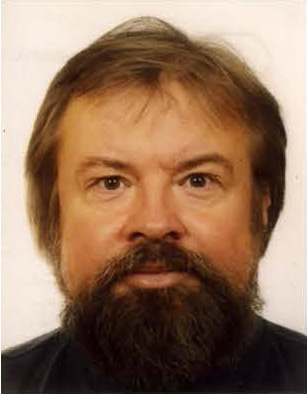
Lev Stambler is a PhD student and Adjunct Assistant Professor at the University of Maryland. His primary advisor is Matthew Coudron. Stambler's research focuses on cryptography, quantum computing, and information theory, with notable contributions to quantum memory security, cryptographic protocols, and adversarial AI model analysis. His work bridges theoretical foundations and practical applications, including quantum one-time memories, stateless hardware security, and transformer model vulnerabilities. Recent publications explore geometric adversary models for one-time programs, blockchain-secured cryptographic primitives, and hypergraph product codes for quantum error correction. Stambler's research trends emphasize cross-disciplinary integration of quantum computing with classical cryptography, as well as formal verification of machine learning systems. No scientific awards are explicitly mentioned in the provided texts. He collaborates on projects addressing decoding failures in hypergraph product codes and weighted secret sharing mechanisms derived from wiretap channels.
Anurag Sahay is a Golomb Visiting Assistant Professor of Mathematics at Purdue University, affiliated with the Department of Mathematics within the College of Science. His contact information includes the phone number 765-494-0481 and office MATH 402. He holds the academic rank of Visiting Assistant Professor and is not part-time. His research interests span a broad range of mathematical disciplines, with a focus on analytic number theory, mathematical analysis, and combinatorics. Sahay explores topics such as zeta functions (Riemann and Hurwitz), function fields, quadratic residues, hypergraph Turán problems, and geometric configurations. His work combines theoretical insights with computational methods, addressing questions related to moments of zeta functions, paucity problems in number theory, and distinct distances in combinatorial geometry. Recent publications (2023–2025) highlight his contributions to understanding zeta function moments, shifted convolution problems, and VC dimension applications. These articles reflect a consistent theme of advancing knowledge in analytic number theory and its intersections with algebra, combinatorics, and geometry. No scientific awards or grants are explicitly mentioned in the provided texts. Sahay has no listed advisees or master’s/PhD students at this time. While no specific laboratories or research teams are detailed, his affiliations with Purdue University’s Department of Mathematics suggest involvement in collaborative research environments typical of such institutions.
Catherine Plaisant is a Research Scientist Emerita at the University of Maryland's Institute for Advanced Computer Studies (UMIACS) and a member of the Human-Computer Interaction Lab (HCIL). She holds a Doctorat d’Ingénieur from Université Pierre et Marie Curie and has been affiliated with HCIL since 1988. Her work focuses on user interface design, information visualization, and healthcare informatics, emphasizing usability, accessibility, and interdisciplinary collaboration. Education: PhD (Doctorat d’Ingénieur), Université Pierre et Marie Curie. Research Interests: User interface design/evaluation, information visualization, medical informatics, digital libraries, and temporal data analysis. Key projects include EventAction, Twinlist, and PAOHVIS. Articles Trends: Recent work emphasizes visual analytics for temporal event sequences, healthcare decision-making tools, and historical HCI preservation. Key themes include explainable AI, cohort comparison, and user-centered design. Scientific Awards: IEEE VIS Career Award (2020), ACM SIGCHI Lifetime Service Award (2020), ACM SIGCHI Academy membership (2015), and multiple Test of Time Awards for influential papers. Grants & Advising: Collaborations with INRIA and industry sponsors. Advised on projects like SHARP-C and EventFlow. Retired from direct student mentoring but remains active in research. Labs/Teams: HCIL and UMIACS. Collaborates internationally with institutions like INRIA (France) on projects such as PKclustering and Dynamic Hypergraph visualization.
Dr. Mark R. Budden is a Professor in the Department of Mathematics and Computer Science at Western Carolina University (WCU), located within the College of Arts and Sciences. His contact details include an office at 430 Stillwell Building and a phone number: 828.227.3946. He maintains a personal website at https://agora.cs.wcu.edu/~mbudden/ . Education: PhD in Mathematics, University of Missouri-Columbia MA in Mathematics, University of Missouri-Columbia BS in Mathematics, Louisiana State University, Baton Rouge Research Interests: Dr. Budden specializes in combinatorics and number theory, focusing on Ramsey theory , hypergraphs , extremal combinatorics , and algebraic number theory . His work bridges theoretical foundations with applications in discrete mathematics. While no specific articles, awards, or active grants are listed, his academic contributions align with his expertise in these research areas. His role as a Professor emphasizes teaching and scholarly activity within the department.
Adam D. Groce is a Professor of Computer Science at Reed College , specializing in cryptography, differential privacy, and rational cryptography. He obtained his PhD in Computer Science from the University of Maryland in 2014 under the supervision of Jonathan Katz, after completing bachelor’s degrees in mathematics and political science at MIT . Research Interests Database privacy and differential privacy, with a focus on practical hypothesis testing under privacy constraints. Rational cryptography, exploring the intersection of cryptography and game theory by modeling adversaries as rational actors. General theoretical computer science, especially secure multi-party computation, zero-knowledge proofs, and oblivious RAM. Scientific Awards & Recognition No specific awards listed in the provided text. Teaching & Mentorship Regularly teaches core undergraduate courses: Introduction to Computing (CSCI 121), Algorithms and Data Structures (MATH/CSCI 382), Computability and Complexity (MATH/CSCI 387), and Cryptography (MATH/CSCI 388). Offers advanced topics courses such as Advanced Algorithms and specialized seminars in theoretical computer science. Has advised over a dozen senior theses at Reed, many co-advised and several resulting in peer-reviewed publications. Actively invites Reed undergraduates to join research projects in privacy and cryptography. Contact & Location Office: Library 313, Reed College, 3203 SE Woodstock Blvd, Portland, OR 97202 Phone: 503-517-5155 Email: agroce@reed.edu
Anna Ritz is an Associate Professor of Biology at Reed College, part of the Division of Mathematical and Natural Sciences. Her research integrates computational methods with biological systems, focusing on signaling pathways, cancer genomics, and network biology. She earned her B.A. from Carleton College, M.A. and Ph.D. in Computer Science from Brown University, and conducted postdoctoral work at Virginia Tech. Ritz develops algorithms for analyzing biological networks, including tools like PathLinker and GraphSpace. Her work bridges computer science and biology, emphasizing interdisciplinary education and mentoring undergraduates in computational research. She holds an NSF CAREER Award and an NCWIT Undergraduate Research Mentor Award. Ritz advises numerous students on projects spanning signaling pathway reconstruction, drug repurposing, and network topology analysis. Her lab also focuses on creating accessible tools for computational biology education and conference participation. Education: B.A., Carleton College (2006) M.A. and Ph.D., Brown University Computer Science (2008, 2012) Research Interests: Her interdisciplinary work includes computational modeling of biological systems, structural variant analysis in genomes, and network-based disease gene prediction. She explores hypergraphs to better represent signaling pathways and develops methods for drug repurposing using tensor completion (FiT). Recent projects involve undergraduate conference travel grants and tools like Graphery for teaching network algorithms. Publications and Grants: Ritz has authored over 30 peer-reviewed articles, including work on tumor evolutionary trees, differentially private ANOVA testing, and metabolic reprogramming in cancer. She leads NSF-funded projects on signaling pathway analysis and collaborates with institutions like OHSU and Virginia Tech. Her grants support undergraduate research in computational biology and systems biology. Awards and Mentoring: In addition to her NSF and NCWIT awards, Ritz’s lab hosts travel awards for ACM-BCB conference attendance and manages outreach programs for underrepresented students. She mentors postdocs (e.g., Pramesh Singh) and advises on thesis projects in computational systems biology. Labs/Teams: Ritz directs the CompBio Lab at Reed, focusing on algorithm development for biological networks and interdisciplinary collaboration. The lab emphasizes undergraduate research, with projects often leading to conference presentations and publications.
Francesco Lo Iudice is an Assistant Professor of Automatic Control at the University of Naples Federico II, Italy. His research focuses on control theory applied to complex networks, including network dynamics, opinion formation, power systems, and multi-agent systems. He explores topics such as synchronization, consensus protocols, pinning control strategies, and optimal control in renewable energy communities. His work bridges theoretical advancements with practical applications in smart grids, autonomous systems, and social network analysis. Key research themes include: Controllability and observability of complex networks Opinion dynamics in social-technical systems Design of distributed control algorithms for power systems Analysis of temporal and hypergraph networks His recent publications emphasize: Explosive synchronization phenomena Optimal recharge scheduling in automated systems Strategies for parallel power system restoration Modeling vaccine hesitancy via opinion dynamics Dr. Lo Iudice collaborates internationally on interdisciplinary projects combining control engineering with network science. His work has been applied to pandemic response modeling and smart energy management systems.
Sebastian Philipp Adam is a PreDoc Researcher at the Department of Knowledge-Based Systems within the Faculty of Informatics at TU Wien. His research focuses on advanced visualization techniques, particularly hypergraph representation using dynamic and spatial methods. Education: Bachelor of Science (BSc) His work emphasizes improving the clarity and interactivity of complex data visualizations through innovative approaches such as 'fat edges' and dynamic object positioning. His 2023 thesis explores elastic set visualization methodologies. Grants & Advising: No grants or advising roles explicitly stated in available information. Labs/Teams: Affiliated with the Knowledge-Based Systems research group at TU Wien, contributing to interdisciplinary projects in computational logic and information systems.
Alexander Dobler is a PreDoc Researcher at the Algorithms and Complexity Department of Technische Universität Wien. His research focuses on algorithmic visualization, graph drawing, and combinatorial optimization. He contributes to optimizing layout algorithms for diagrams, treemaps, and storylines, with a particular emphasis on minimizing crossings and corners in geometric representations. Key projects include 'Engineering Linear Ordering Algorithms' (2020–2025) and participation in the PACE competition with solver 'Touiouidth'. His work bridges theoretical computer science with practical visualization challenges, addressing both discrete mathematics and computational geometry. Education: BSc, Dipl.-Ing. (engineering degree) Labs/Teams: Part of the Algorithms and Complexity group at TU Wien Grants: Involved in HumAlgo (2018–2023) and REVEAL-AI (2020–2024) His recent publications (2023–2025) address topics like cluster vertex splitting complexity, hoop diagrams for set visualization, and optimizing linear diagrams. He has supervised Marcel Holzmüller’s 2025 diploma thesis on expanding planar storyplan problems.
Markus Kirchweger is a PreDoc Researcher at the Department of Algorithms and Complexity, Faculty of Informatics, Technische Universität Wien. His work spans Satisfiability (SAT) solving, graph theory, and combinatorial optimization, with a focus on symmetry breaking and SAT modulo theories. Research Interests: Developing SAT-based frameworks for graph generation and enumeration Dynamic symmetry breaking in combinatorial problem encodings Integrating user propagators into CDCL solvers Applying SAT techniques to conjectures like Erdős-Faber-Lovász and Rota’s Basis Co-certificate learning and shortest common supersequence optimization Projects: INCR (2021–2024), REVEAL-AI (2020–2024), SLIM (2019–2024), ASK-SAT (2024–2027).
Edwin van Dam is a Full Professor in the Department of Econometrics and OR at Tilburg University, affiliated with the TS Economics and Management faculty and CentER. His research focuses on Combinatorics, Discrete Mathematics, and Operations Research, with contributions to eigenvalue studies, hypergraphs, and graph theory. He earned his PhD from CentER (1992–1996) and held academic roles since 1996, including postdoctoral fellowships at Queen’s University (1997–1998) and assistant/associate professorships at Tilburg. He co-authored textbooks like Linear and Dynamical Systems, Optimization and Games (2006, 2010). Recent research emphasizes spectral graph theory, hypergraphs, and combinatorial designs. He supervised four PhD students and contributed to projects on distance-regular graphs and black-box function approximation. Collaborations span global institutions, and he leads the Operations Research research group at Tilburg.
Prof. Daniel Merkle is a Professor in the Department of Mathematics and Computer Science at the University of Southern Denmark. His research focuses on computational systems chemistry, algorithmic methods for chemical reaction networks, and graph-based approaches in computational biology. He is actively involved in interdisciplinary projects addressing microbiome-driven diseases and computational systems chemistry. Merkle has held leadership roles in EU-funded initiatives and international research networks, including the COST Actions on complex chemical systems and origins of life. He contributes to teaching committees and organizes international conferences like the Dagstuhl Seminar on Algorithmic Cheminformatics. His research interests span chemical graph rewriting, pathway realizability, reaction database curation, and algorithmic design for biochemical systems. Recent work includes advancements in synthetic chemistry frameworks (e.g., ChemReservoir), efficient extraction of reaction rules (SynTemp), and formal modeling of unbalanced chemical reactions using ITS Graphs. Merkle’s projects, such as MATOMIC and TACsy, address microbial community metabolism and train computational systems chemists. He has published over 110 research outputs and actively engages in peer review and editorial roles. Key collaborations include work with Flamm, Stadler, and international research teams on computational methods for chemical systems. His contributions to open-source tools and algorithmic frameworks have advanced both theoretical and applied aspects of systems chemistry.
Marek M. Karpinski is a Chair Professor of Computer Science at the University of Bonn and a founding member of the Hausdorff Center for Mathematics . He has held visiting or professorial positions at institutions such as Princeton University, Carnegie-Mellon University, and the University of Edinburgh. His affiliations also include the B-IT Research School on Applied Informatics and the Lab for Foundations of Computing . His research spans efficient algorithms , combinatorial optimization , computational complexity , randomized approximation techniques , and applications in network design , quantum computation , and molecular biology . Recent work focuses on approximation hardness for NP-hard problems, graph algorithms , and algebraic computational complexity . His scientific contributions include polynomial time approximation schemes for dense NP-hard problems and key publications in randomized algorithms , VC dimension , and network optimization . He has advised numerous researchers and received honors such as the Humboldt Research Award and the Max Planck Research Prize .
Hiroshi Mamitsuka is a Professor at Kyoto University, holding positions in the Graduate School of Pharmaceutical Sciences and the Institute for Chemical Research's Bioinformatics Center. He also serves as a Visiting Professor at the Helsinki Institute for Information Technology (HIIT) and the Department of Computer Science. His expertise spans machine learning, bioinformatics, and systems biology, with a focus on applications in drug discovery and precision medicine. He has led the project 'Intelligent Crop Production: Data-integrative, Multi-task Learning Meets Crop Simulator' from 2018–2022. His research has been recognized through awards such as the IEEE Kansai Section Medal and the 'Certificate of Appreciation' from the IEEE Computer Society. Mamitsuka actively contributes to academic communities through editorial roles (e.g., Systems Medicine ) and invited talks on topics like graph-based machine learning and bioinformatics. His work addresses global challenges in health and agriculture, aligning with UN Sustainable Development Goals.
Michael Small is a Professor and the CSIRO-UWA Chair of Complex Systems at the University of Western Australia (UWA), holding dual appointments with UWA’s Faculty of Engineering and Mathematical Sciences and CSIRO’s Mineral Resources division. As Director of the UWA Data Institute, he leads research in complex systems theory and dynamical systems, with applications to health, mining, and energy infrastructure. His academic roles include Deputy Editor-in-Chief of Chaos and Editor of Physica A . He holds a PhD in Applied Mathematics (UWA, 1998) and a BSc(Hons) in Pure Mathematics (UWA, 1994). His research focuses on mathematical modeling of complex systems, including disease transmission networks, mental health dynamics, and industrial process optimization. Notable projects include the Transforming Indigenous Mental Health & Wellbeing initiative and collaborations with mining giants like BHP and Rio Tinto. His awards include the V. Afraimovich Award (2022) and UWA Senior Research Award (2016). Recent work spans reservoir computing, network science, and epidemic modeling, with 354 publications and leadership in 18 grants. His interdisciplinary approach bridges academia and industry, addressing challenges in data-driven decision-making and sustainability.