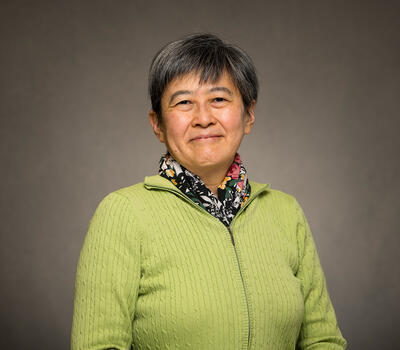
Çiçek Güven is an Assistant Professor at the Department of Cognitive Science and Artificial Intelligence, Tilburg School of Humanities and Digital Sciences, Tilburg University. With a mathematical background in discrete algebra and geometry, she holds a PhD from Eindhoven University of Technology (2012) and has academic affiliations spanning academia and industry. Education: PhD in Mathematics, Eindhoven University of Technology Master's in Mathematics, Koç University Bachelor's in Mathematics, Koç University Her research focuses on network analysis , learning on graph-structured data , and explainable AI . She investigates how graph topology and spectral properties influence machine learning outcomes, with applications to brain networks, electrical grids, and social systems. She emphasizes socially impactful AI , contributing to projects like Child Growth Monitor (malnutrition detection) and Ilustre (Caribbean energy transition). Recent publications highlight her work in graph neural networks , higher-order network analysis , and ethical data practices . She serves as Lab Manager for the ICAI Ilustre Lab and sits on the Scientific Advisory Board for Informatics at the Lorentz Center. Scientific Awards and Grants are not explicitly mentioned in the provided texts. However, her contributions to AI ethics, interdisciplinary research, and open datasets like ARAN demonstrate significant scholarly impact.
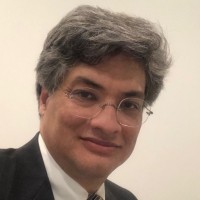
Jaume Baixeries i Juvillà is a Professor in the Department of Computer Science at the Universitat Politècnica de Catalunya (UPC), affiliated with the Escola Politècnica Superior d'Enginyeria de Vilanova i la Geltrú (EPSEVG). He is a core member of the LQMC research group (Lingüística Quantitativa, Matemàtica i Computacional) and has been involved in over 70 academic activities since 2000. His work bridges formal concept analysis, computational linguistics, and data mining, with a focus on dependency structures, quantitative linguistics, and algorithmic methods. Affiliations: LQMC Group, Department of Computer Science (UPC), EPSEVG. Education: PhD in Computer Science (2005, UPC thesis on lattice representations of dependencies). His research interests include formal concept analysis (FCA), dependency modeling, computational linguistics, and applications in quantitative linguistics such as semantic analysis, polysemy studies, and bilingual aphasia analysis. His recent work explores semanticity measures, statistical learning, and clinical applications in language disorders. He has led or participated in projects funded by Spanish and Catalan research programs, including grants focusing on linguistic complexity and interdisciplinary data analysis. He actively contributes to conferences like Formal Concept Analysis (FCA) and International Quantitative Linguistics Conferences, serving on program committees. His publications span journals in computer science (e.g., International Journal of Approximate Reasoning ), linguistics ( Languages ), and interdisciplinary fields ( Computers in Biology and Medicine ). His work on dependency covers, FCA-based algorithms, and language universals (e.g., Zipf’s laws) demonstrates cross-disciplinary impact. Grants & Projects: Includes leadership in projects like ‘Lingüística Quantitativa, Matemàtica i Computacional’ and ‘Semàntica de les paraules del català: teoria i aplicacions clíniques,’ focusing on Catalan language studies and clinical applications. Collaborates with researchers in linguistics, computer science, and medicine. Labs/Teams: Co-leads the LQMC group, which integrates quantitative methods, formal mathematics, and computational tools to study language and data patterns.
Dr. Yue Zhang is an Associate Professor in the School of Electrical Engineering and Computer Science at Oregon State University. She holds appointments in both academic research and teaching roles, with a focus on computer graphics and data visualization. Her work bridges theoretical mathematics and practical applications in material science and ecological modeling. Ph.D. in Applied Mathematics, North Carolina State University B.S. in Mathematics and Physics, University of Tennessee at Knoxville Research interests span scientific visualization , tensor field analysis , and topology-driven modeling of physical and biological systems. She has pioneered techniques for hypergraph simplification, non-Euclidean geometry visualization, and coupled acoustic-structural simulations. Recent publications demonstrate trends in hypergraph visualization (2024), 3D tensor topology (2024-2022), and environmental stressor modeling (2022). Collaborative works with Eugene Zhang and Peter Oliver dominate her publication record. Students under her advisement include: PhD candidates: Shih-Hsuan Kevin Hung MS/MEng students: Kyle Hiebel, Josiah Blaisdell, Avery Stauber Co-advised projects: Peter Oliver, Xiaofei Gao
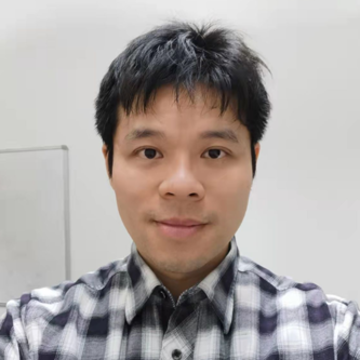
Holger Dell is a Lecturer in Theoretical Computer Science and Algorithms at the IT University of Copenhagen. His research focuses on computational complexity, graph theory, and algorithmic efficiency. Active in polynomial-time algorithms and oracle-based methods Contributions to edge estimation in hypergraphs and fairness in node embeddings Key collaborations with BARC (Basic Algorithms Research Copenhagen) project Research trends show expertise in causal modeling, finite field polynomial solving, and graph embedding techniques. Recent work emphasizes algorithmic fairness and abstract causal relationships. Participated in a major project funded by the Villum Foundation (2017-2024) as a collaborator.
Andrew Lumsdaine is the Chief Scientist at the Northwest Institute for Advanced Computing , a dual appointee between the University of Washington and the Pacific Northwest National Laboratory (PNNL). He holds the title of Affiliate Professor in the Paul G. Allen School of Computer Science and Engineering at UW and serves as a Laboratory Fellow in PNNL's Applied Mathematics, Computing, and Data Division. His research spans foundational and applied aspects of High Performance Computing , focusing on scalable graph algorithms, computational photography, and runtime systems for distributed-memory architectures. Education : Not explicitly stated in the provided text. Lumsdaine's work addresses critical challenges in parallel and distributed computing , including synchronization avoidance, communication optimization, and domain-specific language design for graph analytics. He has led projects like GraphPack (NSF-sponsored) and contributed to DARPA's HIVE program through the HAGGLE software development kit. His publications highlight innovations in light field imaging , GPU programming models , and graph algorithm abstractions . Notable collaborations include the GraphBLAS standardization effort and development of tools for checkpoint/restart fault tolerance. His research has been presented at leading conferences like SC , IPDPS , and Eurographics . Lumsdaine actively seeks collaborators and advises students/postdocs through projects listed on his research page.
Dr. LIU Quanying is an Associate Professor in the Department of Biomedical Engineering at the Southern University of Science and Technology (SUSTech), where she has been a faculty member since September 2019. She serves as the Principal Investigator of the Neural Computing and Control Laboratory (NCC lab) and is a doctoral supervisor. Prior to joining SUSTech, she earned her PhD in Biomedical Engineering from ETH Zurich and conducted postdoctoral research at Caltech. Education: PhD in Biomedical Engineering, ETH Zurich (2013-2017) Master in Computer Science, Lanzhou University (2010-2013) Bachelor in Electrical Engineering, Lanzhou University (2006-2010) Research Interests: Dr. Liu’s research integrates neuroscience, machine learning, and control theory. Her work focuses on multi-modal neural signal processing (EEG, sEEG, fMRI, DTI), explainable AI for neuroscience, and optimization techniques for neuromodulation (tES, TMS). She has developed high-density EEG source localization algorithms and data-driven brain network modeling frameworks, aiming to enhance precision in neural stimulation and control. Scientific Awards: The New Brain 30 (2023) AAIC Travel Award (2019) Estes Stars Award (2018) 深圳市孔雀人才计划C类 Laboratory and Team: As the PI of the NCC lab, Dr. Liu leads a team focused on machine learning algorithms, neurocomputational modeling, and neurofeedback control. The lab actively recruits graduate students, postdocs, and visiting researchers, emphasizing interdisciplinary collaboration in neuroscience and AI.
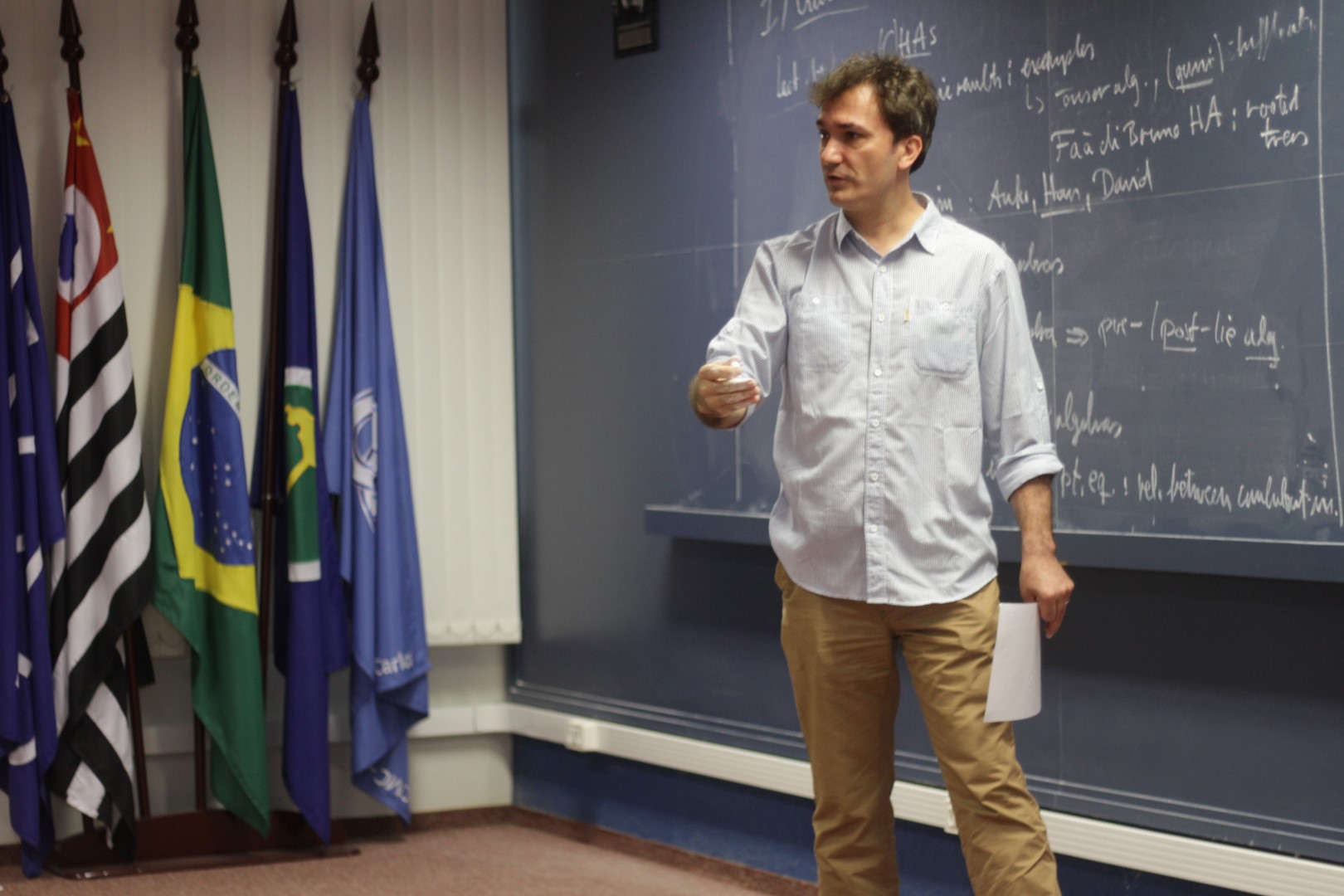
Kurusch Ebrahimi-Fard is a Professor in the Department of Mathematical Sciences at the Norwegian University of Science and Technology (NTNU) in Trondheim, Norway. He is an active member of the Differential Equations and Numerical Analysis (DNA) group at IMF-NTNU, with extensive international collaborations across Europe and North America. His research spans a remarkable breadth of mathematical disciplines, focusing on the surprising convergence of algebraic and combinatorial structures across seemingly disparate fields. His work bridges geometric integration methods, nonlinear control theory, rough paths theory, free probability theory, and perturbative quantum field theory. The common thread throughout his research is the central role of algebraic and combinatorial structures on graphs, partitions, and other combinatorial objects. Dr. Ebrahimi-Fard's recent publications reveal strong trends in the application of Hopf algebraic structures to probability theory and stochastic analysis, with significant contributions to understanding signatures in rough path theory and their applications to image analysis. His work consistently demonstrates how abstract algebraic structures can provide powerful tools for concrete problems in numerical analysis and mathematical physics. Juan de la Cierva fellowship Ramón y Cajal fellowship Fellow of the Studienstiftung des Deutschen Volkes Fellow of the Evangelisches Studienwerk e.V. Fellow of the German Academic Exchange Service (DAAD) Fellow of the European Post-Doctoral Institute (EPDI) Throughout his career, Dr. Ebrahimi-Fard has organized numerous international conferences and workshops, including the 18th Santaló Summer School on Algebraic and Combinatorial Methods in Stochastic Calculus. His editorial work includes special issues on theoretical and computational aspects of dynamical systems, non-commutative algebra, and algebraic structures in perturbative quantum field theory. He has also secured research funding through various grants including the BBVA Foundation Research Grants. Dr. Ebrahimi-Fard maintains active collaborations with researchers worldwide and participates in several research networks focused on the intersection of algebra, combinatorics, and mathematical physics. His work with the DNA group at NTNU continues to explore fundamental mathematical structures with applications across scientific disciplines.
Sebastian Dalleiger is an Assistant Professor at the Division of Theoretical Computer Science, Kungliga Tekniska Högskolan (KTH Royal Institute of Technology). His research focuses on theoretical foundations of machine learning, data mining, and graph theory, with particular expertise in matrix factorization, pattern discovery, and hypergraph analysis. Current affiliation: KTH Royal Institute of Technology Department: Theoretical Computer Science Email: sdall@kth.se His recent work explores federated learning architectures, non-negative matrix factorization, and structural analysis of stochastic block models across multiple graphs. He develops algorithms combining proximal optimization with privacy-preserving techniques, addressing challenges in distributed data analysis. Publications demonstrate interdisciplinary applications in network science, information theory, and computational geometry. Key contributions include novel frameworks for Ollivier-Ricci curvature in hypergraphs and sequential false discovery control for pattern mining.
Tina Eliassi-Rad is the Inaugural Joseph E. Aoun Professor at Northeastern University . She is also an external faculty member at the Santa Fe Institute and the Vermont Complex Systems Center . Her research lies at the intersection of Artificial Intelligence , Network Science , and their societal implications . Research Interests Data Mining & Machine Learning Network Science & Complex Systems Artificial Intelligence & Society Trustworthy Network Science Just Machine Learning Recent Article Trends Her recent work focuses on Graph Neural Networks , Hypergraph Mining , Adversarial Attacks , Algorithmic Fairness , and Human-AI Coevolution . Publications explore topics like Information Inequality , Network Resilience , and Explainable AI . Scientific Awards Inaugural Joseph E. Aoun Professor at Northeastern University Advising & Grants Current Students : Wan He (Network Science PhD), David Liu (CS PhD), Zohair Shafi (CS PhD), Samantha Dies (CS PhD) Major Funders : Defense Advanced Research Projects Agency (DARPA), National Science Foundation (NSF), Army Research Lab (ARL), Defense Threat Reduction Agency (DTRA), Lawrence Livermore National Laboratory (LLNL), MIT Lincoln Laboratory (MITLL), Volkswagen Foundation, PricewaterhouseCoopers (PwC), Washington Post Labs Labs & Teams She leads the RADLAB at Northeastern University and collaborates with the Network Science Institute . Her team includes postdoctoral researchers and PhD candidates working on AI, network science, and cybersecurity.
Dr. Ernestas Filatovas is a Senior Researcher and Chief Researcher in the Project at Vilnius University's Institute of Data Science and Digital Technologies (formerly Institute of Mathematics and Informatics), where he has been affiliated since 2013. He leads the Blockchain and Quantum Technologies Group, focusing on cutting-edge research at the intersection of quantum computing, blockchain, and artificial intelligence. Previously, he served as an Associate Professor and Lecturer at Vilnius Gediminas Technical University's Faculty of Fundamental Sciences from 2013 to 2019. Dr. Filatovas earned his Doctor of Technology in Computer Science Engineering from Vilnius University Institute of Mathematics and Informatics in 2012. His dissertation, supervised by Prof. Dr. Olga Kurasova, focused on the interactive solution of multi-criteria optimization problems. His research spans multiple high-impact domains, with particular expertise in blockchain technologies, quantum computing, artificial intelligence, and machine learning. He has pioneered work in quantum blockchain implementations, reproducibility of AI research through blockchain verification, and quantum machine learning applications. His research bridges theoretical computer science with practical applications in financial markets, healthcare, and distributed systems. His extensive publication record—over 50 scientific papers, with more than 25 in Clarivate Analytics-indexed journals—demonstrates consistent productivity and international collaboration. Recent work shows a clear trajectory toward quantum-enhanced AI systems, blockchain-based research verification frameworks, and quantum algorithms for practical problems. Laureate of the 4th LMA Young Scientists' Conference (2014) INFOBALT scholarship 2nd place winner (2014) Lithuanian State Science and Studies Foundation funding recipient (2009, 2010) Recognized as one of Lithuania's most active doctoral students Master's degree with honors (2006) Dr. Filatovas leads multiple significant research projects, including the 2021-2024 project 'Solving the problems of reproducibility of scientific research in the field of artificial intelligence using blockchain technologies' as team leader, and the 2023-2027 project 'Development and validation of quantum machine learning methods using prepared datasets' as Chief Researcher. He has also contributed to international collaborations such as the Spanish-funded 'High Performance Solutions for Modern Scientific Computing Challenges' (2019-2021). His popular science contributions, including the VU news portal article 'Quantum Computing: Who and Why?', demonstrate his commitment to science communication. As a key member of Vilnius University's Blockchain and Quantum Technologies Group, Dr. Filatovas contributes to Lithuania's growing reputation in quantum computing research and blockchain innovation, working closely with international collaborators across Europe.
Brian Cleary serves as an Assistant Professor in Boston University's Faculty of Computing & Data Sciences (CDS), with cross-appointments in Biology and Biomedical Engineering departments. He is a core faculty member in the Bioinformatics Program and the Biological Design Center at the Rajen Kilachand Center for Integrated Life Sciences & Engineering, conducting interdisciplinary research at the intersection of computer science and biology. His educational trajectory includes dual undergraduate degrees in Biology and Business, Economics, and Management from Caltech, followed by 8 years developing trading algorithms in finance before returning to academia. He completed his PhD in Computational and Systems Biology at MIT in 2019. Cleary's research pioneers computational approaches to decipher spatial gene expression patterns in tissues, focusing on theoretical frameworks that transform cellular and tissue physiology understanding. His lab implements paired computational-experimental methodologies to study organ development (particularly brain and ovary), disease progression mechanisms, and tissue organization principles through machine learning and statistical innovations. Analysis of his recent publications reveals dominant themes in compressed sensing techniques for high-throughput biological interrogation, spatial transcriptomics optimization, and scalable genetic screening methods. His work consistently bridges algorithmic innovation with biological discovery across reproductive biology, cardiovascular disease, and infectious disease diagnostics. Scientific recognition includes: Independent Broad Fellow at the Broad Institute of MIT and Harvard Cleary actively recruits PhD students and postdocs for his Algorithmic Lens on Biology Laboratory, leveraging both computational and wet-lab approaches. His research program emphasizes experimental design informed by statistical learning theory to overcome scalability limitations in biological measurement systems. The Algorithmic Lens on Biology Laboratory operates across two physical locations: the Center for Computing and Data Sciences (15th floor) and the Biological Design Center (6th floor in CILSE), employing random composite experiments and low-dimensional feature learning to study cellular pathways and tissue organization at unprecedented scales.
Rakesh Venkat is an Assistant Professor in the Department of Computer Science and Engineering at the Indian Institute of Technology Hyderabad. His research focuses on Theoretical Computer Science, including approximation algorithms, hardness of approximation, and communication complexity. Education : Ph.D., Tata Institute of Fundamental Research (TIFR), Mumbai. Research Trends : His work addresses fundamental challenges in algorithm design, such as optimizing cache misses, improving clustering algorithms, analyzing graph expansion, and exploring embedding techniques. Publications span top-tier conferences like APPROX, FSTTCS, ICALP, and ITCS, with collaborations at institutions including HUJI, TIFR, and IIT-Bombay. Teaching : Courses taught include Approximation Algorithms, Advanced Data Structures, Discrete Mathematics, and Spectral Graph Theory.
Mengshan Xu is an Assistant Professor of Applied Econometrics at the University of Mannheim's Department of Economics since August 2021. His academic journey includes an M.Sc. from Humboldt University of Berlin (2015) and a Ph.D. from the London School of Economics and Political Science (2021). Education: M.Sc., Humboldt University of Berlin (2015) Ph.D., London School of Economics and Political Science (2021) His research focuses on Econometrics, Semi-nonparametric Econometrics, and Statistical Learning. Despite his primary affiliation with economics, his recent publications suggest interdisciplinary work spanning Artificial Intelligence, Robotics, and Computer Vision , including human-aware navigation frameworks, attention mechanisms for LLMs, and skeleton-based action recognition systems. Article trends reveal expertise in vision-and-language navigation , anomaly detection , and multi-modal learning , blending econometric theory with computational methods. Notable subfields include dynamic human interactions, deep invertible networks, and hypergraph transformers. His professional contact details include a direct email ( mengshan.xu@uni-mannheim.de ) and office location in Mannheim. No scientific awards or student advisement details are publicly listed in the provided materials.
Romeil Singh Sandhu serves as Assistant Professor in Biomedical Informatics at Stony Brook University with adjunct appointments in Computer Science and Applied Mathematics & Statistics, directing the Laboratory for Imaging, Networks, and Control (LINC) from the Health Sciences Center. His academic credentials include: B.S. from Georgia Institute of Technology (2006) M.S. from Georgia Institute of Technology (2009) Ph.D. from Georgia Institute of Technology (2010) Dr. Sandhu's research integrates geometry, statistics, and control theory to advance computer vision (3D reconstruction, satellite pose estimation), network science (hypergraph dynamics, Ricci curvature), and systems biology (protein interaction networks, cellular robustness). His methodological innovations span level-set methods, variational techniques, and curvature-based network analysis with applications in medical imaging and aerospace systems. Analysis of his 2019-2023 publications reveals three dominant trajectories: (1) geometric network analysis using Ricci curvature to quantify biological network fragility; (2) distributed reinforcement learning with communication-efficient multi-agent actor-critic frameworks; and (3) medical/satellite image reconstruction via radar-based variational methods and active surfaces. These threads consistently leverage differential geometry to solve inverse problems in complex systems. The Laboratory for Imaging, Networks, and Control (LINC) develops computational frameworks bridging theoretical mathematics with healthcare and aerospace applications, particularly focusing on shape analysis, network dynamics, and control systems for medical diagnostics and satellite imaging.
Hoda Eldardiry is an Associate Professor in the Department of Computer Science at Virginia Tech, where she directs the Machine Learning Laboratory. Her research focuses on artificial intelligence and machine learning, particularly in building human-machine collaborative AI systems that can learn context-aware and explainable models from multisource and interconnected data. Prior to joining Virginia Tech, she led research at Palo Alto Research Center (Xerox PARC) in the machine learning research group. Dr. Eldardiry received her educational qualifications from: BE in Computer and Systems Engineering from Alexandria University, Egypt MS and PhD in Computer Science from Purdue University Her research interests span multiple domains of AI and machine learning. She specializes in robust machine learning for information extraction, forecasting, and control. Her work integrates graph neural networks, time-series analysis, and relation extraction to develop explainable and context-aware AI systems. She also investigates the intersection of AI with ethics, policy, and governance, exploring how to build responsible AI systems that align with human values and societal needs. Dr. Eldardiry's recent publications demonstrate a strong focus on advancing graph-based time-series modeling, zero-shot learning techniques, and optimal control systems. Her work bridges theoretical advancements with practical applications in healthcare, transportation, and e-commerce. She has made significant contributions to knowledge graph construction, explainable AI, and federated learning frameworks that operate efficiently in resource-constrained environments. Her scientific achievements have been recognized with several prestigious awards: Purdue University College of Science Early Career Scientist Award for the Department of Computer Science (2021) Honorable Mention Best Paper Award for Exploring Approaches to Artificial Intelligence Governance: From Ethics to Policy (IEEE Ethics 2023) Most Cited Paper Award for COVID-19 Pandemic Impacts on Traffic System Delay, Fuel Consumption and Emissions (2023) Purdue CS Women's History Month Celebration Recognition (2022) VT CS Women's History Month Celebration Recognition (2023) Early Career Distinguished Scientist Award from Purdue University College of Science (2021) Purdue University College of Science Distinguished Alumni (2021) Dr. Eldardiry has successfully secured substantial research funding, with total grant funding of $27,424,460 ($13,808,328 share) from diverse sources including VT, IARPA, DOE, NSF, DARPA, NIH-iTHRIV, CCI, EBAY, SIEMENS, ADOBE, P&G and XEROX. Her current projects include NSF-funded research on Advancing Health Equity using Interactive Condition Assessment and Monitoring and Exploring How AI Engineers Perceive and Develop Translational Ethical Competency, as well as industry collaborations with EBAY on Heterogeneous Hypergraph Modeling for Zero-Shot Product Aspect Identification. As director of the Machine Learning Laboratory at Virginia Tech, Dr. Eldardiry leads a research team that bridges theoretical AI advancements with real-world applications. Her lab collaborates extensively with industry partners and government agencies to develop practical AI solutions while maintaining a strong commitment to ethical considerations and societal impact.