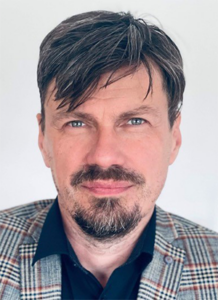
Dr. Vladimir Pascalutsa is a Staff Scientist at the Institute of Nuclear Physics, Johannes Gutenberg-Universität Mainz, Germany. He holds a PhD in Theoretical Physics from Utrecht University (1998) and has held positions at NIKHEF (Netherlands), Flinders University (Australia), Ohio University (USA), and the European Centre for Theoretical Studies in Nuclear Physics (ECT*, Italy). His research focuses on QCD, hadron structure, dispersion relations, chiral perturbation theory, and light-by-light scattering effects in precision experiments like muon g-2. He has advised PhD students Nadia Krupina and Franziska Hagelstein. His work includes contributions to lattice QCD calculations, muonic hydrogen spectroscopy, and theoretical frameworks for nuclear structure. Key roles include: Staff Scientist, University of Mainz (2008–present) Assistant Professor, ECT* Trento (2006–2008) Research Associate Professor, College of William and Mary (2003–2006) Research Interests: QCD and hadron structure Dispersion relations and sum rules Chiral effective field theories Lattice QCD applications Muon hydrogen precision measurements Publications emphasize advancements in muon g-2 calculations, hyperfine splitting in hydrogen-like atoms, and nuclear structure effects in QED. His 2024 textbook 'Causality Rules' formalizes dispersion theory concepts.
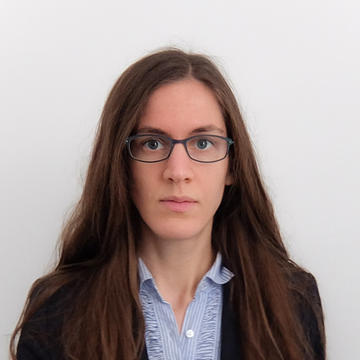
Liss V. Rodriguez is a Group Leader at the Max Planck Institute for Nuclear Physics (MPIK) and an affiliated researcher at CERN, where she leads the Laboratory for Laser Induced Atomic Fluorescence and ionization (LIAF). She holds a W2 position within the Max-Planck Society, directing an independent research group focused on advancing collinear laser spectroscopy techniques to study exotic, short-lived radioactive nuclei. Her work is central to the COLLAPS collaboration at CERN’s ISOLDE facility, where she serves as spokesperson or co-spokesperson for multiple high-impact experiments. Education: Ph.D. in Nuclear Physics, University of Paris-Saclay, Orsay, France (2015–2018) Licenciado (Master's equivalent) in Nuclear Physics, InSTEC, Havana, Cuba (2007–2012), First Class Honours Bachelor, Vocational Pre-University Institute of Exact Sciences, Matanzas, Cuba (2004–2007) Her research interests lie at the frontier of nuclear structure physics, particularly in probing the limits of nuclear existence using high-precision laser spectroscopy. She investigates nuclear spins, electromagnetic moments, and charge radii to uncover emergent patterns in complex nuclei far from stability. Her work addresses fundamental questions about nuclear matter and the origin of nuclear phenomena. She has developed and applied advanced spectroscopic techniques at major international facilities, contributing significantly to our understanding of nuclear structure evolution across isotopic chains. The most recent publications reflect a strong focus on high-resolution laser spectroscopy of neutron-rich and neutron-deficient isotopes of elements like scandium, germanium, nickel, antimony, aluminum, and tin. These studies reveal trends in charge radii, electromagnetic moments, and shell structure, often highlighting deviations from expected behavior near magic numbers. The work combines experimental precision with theoretical insights, contributing to broader fields such as nuclear astrophysics and fundamental symmetries. Scientific Awards: Fellowship at CERN (2020) Best Poster Award, ISOLDE Workshop (2017) Best Poster Award, 20th Colloque GANIL (2017) CNRS Doctoral Grant (2015) First Class Honours, 'Título de Oro', InSTEC (2012) Liss V. Rodriguez actively mentors the next generation of physicists, currently supervising 3 PhD students and 3 undergraduate students. Her leadership extends to institutional roles, including serving on the Jyväskylä Program Advisory Committee and organizing seminars and workshops. She has secured significant research opportunities through her roles as spokesperson for multiple CERN ISOLDE experiments, demonstrating her ability to lead large-scale collaborative projects. Her career progression—from doctoral researcher to CERN Research Fellow to independent group leader—reflects sustained excellence and growing influence in the field of experimental nuclear physics. She is involved in several key teams and laboratories: leading the LIAF group, coordinating the COLLAPS experiment at CERN as local team leader since 2018, and participating in major collaborations including ISOLDE and NUSTAR. Her work integrates closely with theoretical efforts to interpret nuclear data and refine models of nuclear structure.
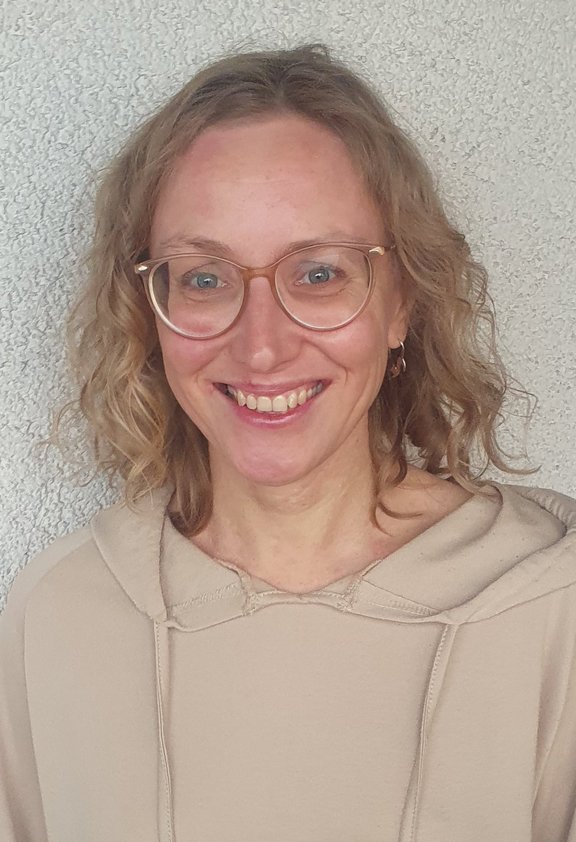
Dr. Claudia Tait is a Royal Society University Research Fellow at the Chemistry Department of the University of Oxford . Her research focuses on advancing Electron Spin Resonance (ESR) spectroscopy to investigate fundamental photophysical processes in photovoltaic devices, particularly spin-dependent phenomena in organic solar cells and emerging solar technologies. Education: Summa cum laude graduate from the University of Padova; DPhil from the University of Oxford under Prof. Christiane R. Timmel. Prior affiliations: Postdoctoral researcher at the University of Washington (2015-2017) and Freie Universität Berlin (2017-2020) with a Marie Curie Fellowship. Her work leverages pulse ESR and pEDMR to study charge-transfer states, triplet states, and spin interactions in photovoltaic materials. She has pioneered shaped microwave pulse techniques to enhance resolution and selectivity in ESR measurements. Current research includes CO2 photoreduction catalysts, organic semiconductor doping, and energy transfer mechanisms in bio-inspired systems. Recent publications highlight her expertise in spin dynamics , charge transport , and supramolecular systems . Notable themes include photovoltaic efficiency optimization , quantum coherence in spin systems , and innovative measurement methodologies . Scientific Awards: Bruker Thesis Prize (Royal Society of Chemistry), John Weil Young Investigator Award (International ESR Society), Marie Curie Individual Fellowship. Dr. Tait leads the Tait Group at Oxford, focusing on interdisciplinary research bridging chemistry , physics , and materials science to address challenges in sustainable energy conversion.
Natalia S. Oreshkina is a researcher at the Max Planck Institute for Nuclear Physics (MPIK) in Heidelberg, Germany, with a focus on atomic and nuclear physics. She holds a Habilitation and Venia Legendi from Heidelberg University (2019) and a PhD from Saint-Petersburg State University (2008). Her research interests include heavy muonic atoms, relativistic atomic structure, QED effects, nuclear deformation in ions, and precision spectroscopy. She has been a PostDoc at MPIK since 2011 and previously held postdoctoral and fellow positions at Saint-Petersburg State University. Education: Habilitation in Physics, Heidelberg University (2019) PhD in Physics, Saint-Petersburg State University (2008) M.Sc. in Physics, Saint-Petersburg State University (2004) B.Sc. in Physics, Saint-Petersburg State University (2001) Research Interests: Spectra of heavy muonic atoms, variation of fundamental constants, relativistic atomic structure, electron correlation and QED effects, nuclear deformation in highly charged ions, time-dependent dynamics in laser fields, hyperfine splitting, g-factors, and kaonic atoms. Publications & Talks: Oreshkina has authored/co-authored over 50 peer-reviewed articles, including recent work on muonic atom spectroscopy, nuclear radii determinations, and QED corrections in unstable vacuum. She frequently presents at international conferences and workshops, such as the 45th EAS Meeting (2025) and the REHE Conference (2024), focusing on exotic atoms and precision measurements. Labs & Collaborations: She collaborates with teams at MPIK, the University of Groningen, and other institutions on projects involving trapped ions, laser spectroscopy, and nuclear physics. Her work contributes to experiments like the ALPHATRAP and collaborations on muonic X-ray measurements.
Prof. Anna Soter is a distinguished physicist specializing in atomic and particle physics, with a focus on precision measurements and fundamental interactions. Her research explores advanced spectroscopy techniques and quantum mechanical systems. Affiliation : Not explicitly stated Academic Role : Professor Her work includes experimental studies on muonic hydrogen and cold muonium beams, contributing to understanding atomic structure and gravity experiments. Recent publications highlight her expertise in laser spectroscopy and quantum physics. Scientific Contributions : Laser spectroscopy of exotic atoms Cold muonium beam development Precision tests of quantum electrodynamics
Stefan Truppe is a Senior Lecturer in the Department of Physics at Imperial College London, affiliated with the Faculty of Natural Sciences. His research focuses on ultracold matter created using advanced laser technologies, particularly in the study of atoms and diatomic molecules near absolute zero. This work explores fundamental physics, quantum technology applications, and quantum chemistry. He leads experimental efforts in laser cooling, molecular spectroscopy, and precision measurements using cryogenic buffer gas beams and optical trapping techniques. His research groups include the Quantum Optics and Laser Science Group, Quantum Technology for Fundamental Physics, and the Centre for Cold Matter. Key areas involve creating and manipulating ultracold molecular ensembles for testing fundamental symmetries and developing quantum technologies. Notable experimental setups include magneto-optical traps and microwave cavities optimized for molecular trapping and spectroscopy. Recent work emphasizes hyperfine-resolved spectroscopy of species like MgF and AlF, studying collision dynamics with cryogenic helium, and developing buffer gas beam sources for precise molecular control. His publications consistently address laser-driven molecule manipulation, isotopic shift analysis, and novel cooling methods pushing quantum state control limits.
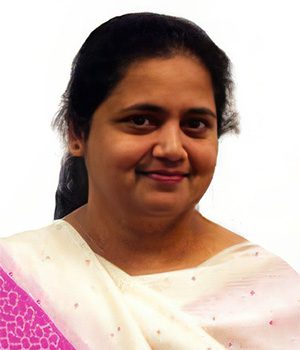
Archana Dubey is a Senior Lecturer at the University of Central Florida (UCF), affiliated with the College of Sciences. She joined UCF in 2001 and holds a PhD in Physics from Bhavnagar University, India (1998). Her postdoctoral research at Rensselaer Polytechnic Institute (RPI) and UCF focused on theoretical and computational studies in physics and materials science. She was promoted to Associate Professor with tenure in 2014 as part of UCF's annual promotions and tenure cycle. Her research interests include electronic structure calculations, nuclear quadrupole interactions, hyperfine interactions, and biomolecular systems such as hemoglobin and rhizoferrin. She employs first-principles methods like Hartree-Fock and density functional theory to investigate material properties at the atomic level. Dr. Dubey's publications span 1998–2013, covering topics such as coordination chemistry of metalloproteins, nuclear magnetic resonance phenomena in biomolecules, and magnetic thin films. Her work has been published in journals like BioMetals , Hyperfine Interactions , and Journal of Applied Physics . She currently supervises graduate and undergraduate students in research projects related to theoretical physics and materials science. Her lab focuses on interdisciplinary studies at the intersection of physics, chemistry, and biology.
A.L. Cridland is a Professor in the Department of Physics at Swansea University, affiliated with the School of Biosciences, Geography and Physics. Their research focuses on antimatter physics, quantum technology, and particle trapping, with significant contributions to the CERN AD/ELENA and ALPHA-2 experiments. Key areas include antihydrogen trapping, laser cooling, and precision spectroscopy of antimatter. Research interests span antiproton and positron dynamics, magnetic confinement systems, and cryogenic techniques for antimatter production. Ongoing projects involve designing novel beamlines, improving Penning-Malmberg trap performance, and exploring gravitational effects on antimatter through free-fall experiments. Publications highlight advancements in quantum computing components (e.g., planar ion traps) and superconducting magnetic field systems. Collaborations with CERN emphasize experimental precision in measuring fundamental properties of antimatter, contributing to tests of CPT symmetry and gravitational behavior predictions.
Vojtěch Patkóš is an Associate Professor in the Department of Chemical Physics and Optics , Faculty of Mathematics and Physics , Charles University , Prague. He is based at Ke Karlovu 3, Prague 2, room M 171, and can be reached at vojtech.patkos@matfyz.cuni.cz . His research focuses on the quantum-electrodynamic corrections to atomic spectra of light atoms, with particular emphasis on high-precision theory encompassing hyperfine splitting, Lamb shift, recoil and nuclear-size effects, and higher-order QED contributions. These studies provide stringent tests of fundamental interactions and contribute to the determination of fundamental constants. Across more than 30 refereed publications since 2012, his work spans Physical Review A & Letters, Physics Letters B, and European Physical Journal D, frequently in collaboration with Krzysztof Pachucki and Vladimir Yerokhin. The consistent publication record reflects a sustained effort to push the precision frontier of atomic structure theory. Teaching: He leads exercise sessions for the introductory quantum mechanics course at Charles University. Labs & Teams: Research is conducted within the quantum electrodynamics and precision spectroscopy group at the Department of Chemical Physics and Optics, Charles University.
Marianna Safronova is a Professor in the Department of Physics & Astronomy at the University of Delaware, affiliated with the College of Arts & Sciences. She leads the Safronova Group, which focuses on quantum metrology, dark matter searches, and precision atomic calculations. Her work spans quantum sensors for space applications, atomic clock development, and fundamental physics tests. Education details are not explicitly provided, but her extensive contributions suggest advanced training in theoretical atomic physics. Her research emphasizes high-precision atomic data via the Atomic Data Portal, collaborations on the Thorium Nuclear Clock project (ERC Synergy Grant), and NSF-funded quantum sensing algorithms. Key research areas include: quantum sensors for dark matter detection, Coulomb-crystal clocks, space-based quantum technologies, and applications of neural networks in atomic physics. She co-organizes the 2025 Bad Honnef Physics School on quantum metrology for new physics searches. Labs/Teams: Safronova Group, Q-SEnSE Institute, Thorium Nuclear Clock collaboration. Current projects involve space mission proposals for dark matter detection and development of next-generation atomic clocks.
John McFerran is an Associate Professor in the School of Physics, Maths and Computing at the University of Western Australia (UWA). He holds roles including Masters/PhD supervisor, lecturer, researcher, and Academic Conduct Advisor. His research focuses on optical frequency synthesis (frequency combs), optical atomic clocks, and laser spectroscopy, with a particular emphasis on ytterbium-based clocks and tests of the Standard Model via isotope shift measurements. He has developed a cold atom optical clock at UWA and led projects such as the ARC Future Fellowship (2012–2016) and the ARC Centre of Excellence for Engineered Quantum Systems (2018–2019). Education & Previous Positions: PhD in Physics from UWA (2003) Postdoctoral Researcher at Observatoire de Paris (France), XLIM Institute (France), and Durham University (UK) Guest Researcher at NIST Boulder (USA) and LNE-SYRTE (France) Teaching: Courses include Atomic Physics (PHYS3001), Frontiers of Modern Physics (PHYS3012), Electromagnetism (PHYS2001), and Physics Bridging (PHYS1030). Research Projects: Developing ultracold ytterbium optical lattice clocks Measuring isotope shifts and nuclear parameters in ytterbium King plot analyses for Standard Model tests Awards: ARC Future Fellowship (2012–2016) Scientific Mobility Travel Award (France, 2013) Grants & Funding: ARC Centre of Excellence for Engineered Quantum Systems (2018–2019) A Southern Hemisphere Ground Station for Atomic Clock Ensemble in Space Mission (ARC, 2011–2016) Labs & Teams: Leads the Atomic Clock Lab (www.atomicclocklab.net), focusing on precision measurement technologies and quantum systems.
Dr. D. S. Fahmeed Hyder is a Professor of Radiology & Biomedical Imaging and Biomedical Engineering at Yale University, with joint appointments in the Yale School of Medicine. He leads the Magnetic Resonance Research Center (MRRC) and directs the Core Center for Quantitative Neuroscience with Magnetic Resonance (QNMR). His research focuses on brain energy metabolism, developing advanced MRI techniques to study neuronal-glial interactions, metabolic dysfunction biomarkers, and molecular imaging of tumors. He holds over 240 peer-reviewed publications and has secured continuous NIH funding for 25+ years. Education: B.A. in Chemistry (Wabash College, 1990), Ph.D. in Biophysical Chemistry (Yale University, 1995). Postdoctoral training includes roles at Oak Ridge National Laboratory, University of Rochester, and Yale. Research Interests: Functional MRI (fMRI) advancements, calibrated fMRI for quantitative neural activity, BIRDS molecular imaging (for pH/temperature), and applications in neurodegenerative diseases (e.g., Alzheimer’s) and oncology. Current projects include pH biosensor development, tumor response monitoring, and neuropil density prediction via AI. Awards: Melvin H. Knisely Award, Niels Lassen Award, Lundbeck Visiting Professorship, and fellowships in AIMBE, ARBR, and Sigma Xi. Recently appointed Head of Trumbull College at Yale. Grants: Continuous NIH support across 7 institutes; active projects in molecular imaging, stroke models, and neurovascular coupling. Labs/Teams: MRRC (mrrc.yale.edu), QNMR (qnmr.yale.edu), collaborating with interdisciplinary teams in physics, engineering, and biology.
Professor Michael Charlton is a distinguished physicist at Swansea University's Department of Physics, where he has served as Professor of Physics since 1999. Previously, he held positions at University College London including Reader in Physics (1991-1999) and Royal Society University Research Fellow (1983-1991). His leadership roles include Head of Department (2001-2007, 2012-2016) and Head of the School of Physical Sciences (2005-2007) at Swansea University. Professor Charlton received his academic training at University College London, where he earned his BSc in Physics with First Class Honours (1975-1978) followed by a PhD (1978-1980) with a thesis titled "An Experimental Study of the Interactions of Positrons and Electrons in Gases". His research focuses on antimatter physics, particularly antihydrogen creation and experimentation. Charlton's work encompasses charged particle traps for antiparticles, low-energy antihydrogen physics, positron physics including production of low-energy positron beams, and atomic scattering processes. His research has been instrumental in advancing our understanding of antimatter properties through precision measurements of antihydrogen. Analysis of his publication record reveals a consistent trajectory in antimatter research, with landmark papers published in Nature between 2002 and 2018 documenting the progression from initial antihydrogen production to sophisticated spectroscopic measurements. His work demonstrates increasing precision in antihydrogen trapping and measurement techniques, culminating in high-precision tests of fundamental symmetries in physics. Professor Charlton's significant contributions to physics have been recognized with numerous prestigious awards: 2018: Elected as Vice President of the Learned Society of Wales for STEMM 2011: Recipient of the American Physical Society John Dawson Award for Excellence in Plasma Physics Research (with ALPHA Collaboration) 2011: Elected as an Inaugural Fellow of the Learned Society of Wales (FLSW) 2010: ALPHA's work on Trapped Antihydrogen selected by Physics World as physics highlight of the year 2007: Awarded EPSRC Senior Research Fellowship 2004: Elected to Fellowship of the Institute of Physics (FInstP) Throughout his career, Professor Charlton has secured substantial research funding, including an EPSRC Senior Research Fellowship (2007-2012) and a Royal Society University Research Fellowship (1983-1991). His work has been consistently recognized as an EPSRC highlight, featuring in multiple celebratory publications. As a leader in the ALPHA Collaboration, he has directed major international research efforts in antimatter physics. Professor Charlton leads research within the ALPHA Collaboration, an international team focused on antihydrogen production, trapping, and spectroscopy. His work involves sophisticated experimental setups combining particle trapping techniques with precision laser spectroscopy to compare hydrogen and antihydrogen properties, testing fundamental symmetries of nature.
Professor Juliet Clare Pickering is a leading Experimental Physicist at the Department of Physics , Faculty of Natural Sciences , Imperial College London . With expertise in Atomic and Molecular Spectroscopy , she bridges Astrophysics and Atmospheric Physics using Fourier Transform Spectroscopy to advance understanding of stellar composition, Earth's radiation balance, and climate change. Education: Undergraduate in Physics, Wadham College, Oxford PhD in Physics, Imperial College London (1994) Her Laboratory Astrophysics research focuses on experimental measurements of atomic and molecular spectra, producing critical data for astronomical studies of stars, exoplanet formation, and Galactic evolution. In Atmospheric Physics , she leads airborne campaigns using the TAFTS radiometer to study water vapor and cirrus clouds' role in climate dynamics. Recent publications highlight her work on Ni II , Co II , and Mn II spectra (2022), Fe II data for the Gaia-ESO Survey , and Fourier Transform Spectrometry in analytical glow discharges. She has also contributed to international collaborations at the Harvard-Smithsonian Center for Astrophysics and Lund University . Scientific Awards Royal Society University Research Fellowship (1998-2002) Prof. Pickering mentors PhD students in her Spectroscopy Laboratory and collaborates with the Space, Plasma and Climate Physics Community . Her lab's open-access datasets support global research via international databases and journals.
Phillip Sheridan serves as Professor and Chair of the Chemistry Department within the College of Arts and Sciences at Canisius College. Holding a Ph.D. in Physical Chemistry from the University of Arizona and a B.S. in Chemistry from Southern Connecticut State University, he teaches General Chemistry and Physical Chemistry courses while leading departmental initiatives. His educational background includes: Ph.D. in Physical Chemistry, University of Arizona B.S. in Chemistry, Southern Connecticut State University Dr. Sheridan's research centers on fundamental electronic and geometric properties of metal-containing molecules using gas phase laser excitation spectroscopy and millimeter-wave/microwave techniques. His work spans physical chemistry, quantum chemistry, and astrochemistry, with emphasis on radical species and metal-ligand interactions. Key focus areas include rotational spectroscopy of transient molecules, hyperfine structure analysis, and molecular detection in circumstellar environments, revealing insights into bonding and reactivity of metal-bearing compounds. Analysis of his recent publications shows consistent investigation of alkali metal compounds (amides, hydrosulfides), transition metal species (nitrides, oxides), and phosphorus radicals. His methodology combines experimental spectroscopy with computational approaches to determine molecular structures and electronic properties, with growing relevance to interstellar chemistry as evidenced by astronomical detection of species like SiP. His scientific contributions have been recognized through: Director’s Award, NY State Science Olympiad, Lake Erie-Niagara Region Merck Research Laboratories Graduate Fellowship Award in Analytical/Physical Chemistry Carl S. Marvel Fellowship Award, Department of Chemistry, University of Arizona Dr. Sheridan actively mentors undergraduate researchers, with Canisius students like B. T. Russ, M. K. L. Binns, and J. P. Young co-authoring publications on metal amides and radicals. His research group utilizes advanced rotational spectroscopy instrumentation and collaborates with external laboratories, including Professor L. M. Ziurys' team, to investigate reactive intermediates. He also advises the Canisius College Student Chapter of the American Chemical Society and develops educational programs like the Summer Science Camp. The research program operates through specialized laboratories equipped for Fourier transform microwave and millimeter-wave spectroscopy, focusing on gas-phase synthesis of novel metal-containing molecules. Current efforts target phosphorus-bearing radicals relevant to astrochemistry and precise structural characterization of unsolvated organometallic species, with ongoing collaborations expanding the scope to interstellar molecule detection.