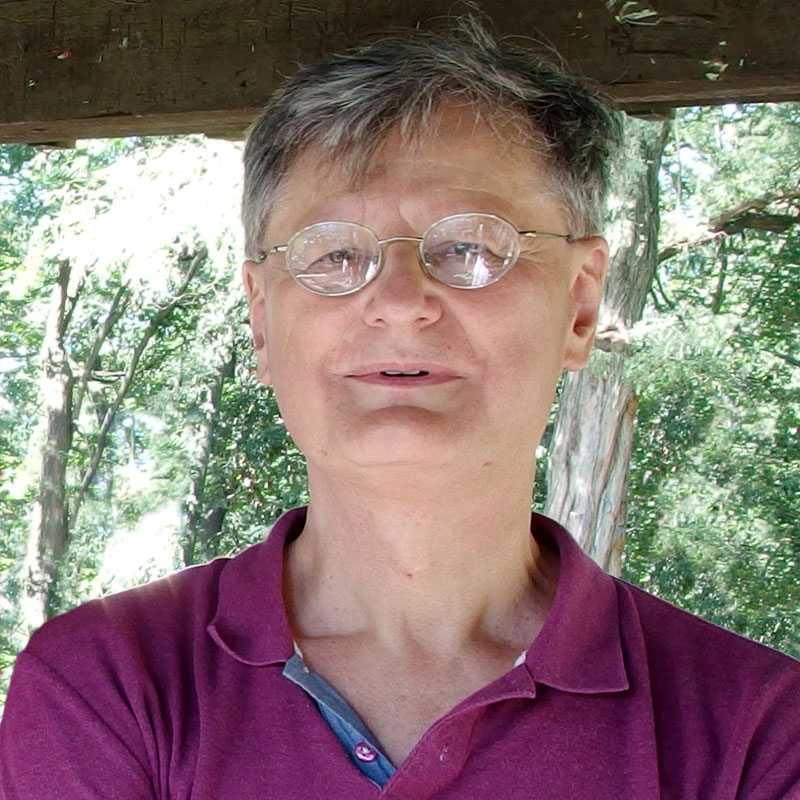
Emile Bominaar is an Associate Research Professor in the Department of Chemistry at Carnegie Mellon University . His research focuses on computational and spectroscopic studies of transition-metal complexes, particularly those relevant to bioinorganic chemistry and magnetochemistry. Key Research Areas : Electronic structure of metals, spin states, transition-metal complexes in biological systems, density functional theory, Mössbauer spectroscopy, magneto optical spectroscopy, hyperfine interactions. Research Trends : The analysis of his recent publications reveals a strong emphasis on understanding reactivity and magnetic properties of iron and manganese oxo/hydroperoxo complexes in enzymatic systems. His work bridges theoretical modeling with experimental spectroscopic validation, particularly in elucidating mechanisms of dioxygenases and oxygen-evolving complexes. Teaching & Collaborations : Dr. Bominaar collaborates extensively with bioinorganic and computational chemistry groups, contributing expertise in Mössbauer spectroscopy and DFT-based modeling to characterize metal centers in proteins and synthetic complexes.
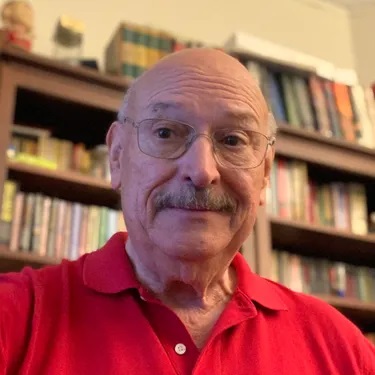
Vladislav Kataev is a Senior Scientist at the Leibniz Institute for Solid State and Materials Research Dresden (IFW Dresden). He previously held positions at the Kazan Physical Technical Institute (1979–2023) and has been a visiting professor at Tohoku University (2014) and Kobe University (2019). His research focuses on strong electronic correlations in solids , quantum spin systems , and magnetic resonance in van der Waals materials . Education: Diploma (1979), PhD (1988), and DSc (1995) in Physics from Kazan State University. Appointments: Senior Scientist at IFW Dresden (2003–2023, Group Leader EPR), Post-Doc/Visiting Scientist at University of Cologne (1990–1999), Research Associate (2001–2003). His work spans magnetic resonance spectroscopy , superconducting spin valves , and topological magnetic materials . Recent studies include Fe4GeTe2 and Cr4PtGa17 for quantum applications. Articles highlight spin dynamics , unconventional metallic states , and molecular magnetism .
Dr. Aldo Antognini is a physicist specializing in experimental particle physics and laser spectroscopy. His work focuses on muonic atoms, nuclear charge radii measurements, and muon beam cooling techniques. Research Interests: Antognini's research spans precision measurement in atomic systems, quantum electrodynamics (QED), and the application of lasers to study muonic atoms. His studies contribute to understanding fundamental constants in physics and improving muon beam technologies. Publications: Recent work includes laser spectroscopy of muonic hydrogen (2022), muon beam cooling methods (2021), and investigations into nuclear charge radii (2021).
Prof. Klaus Kirch is a prominent academic in the field of Particle Physics and Atomic Physics , known for his contributions to precision spectroscopy and quantum physics. His work is often affiliated with the Paul Scherrer Institute (PSI), a leading research institution in Switzerland.
Dr. Laima Kitovienė is a Research Fellow at the Institute of Theoretical Physics and Astronomy (ITPA) , specializing in Atomic physics and related theoretical modeling. Her research focuses on advanced calculations of atomic structures, transition rates, and quantum interactions in heavy and lanthanide ions, contributing to applications in astrophysics (e.g., neutron star mergers) and superheavy elements . She employs methods like Multiconfiguration Dirac-Hartree-Fock and Dirac-Fock calculations to analyze electric dipole moments, hyperfine interactions, and energy level dynamics. Her recent work involves spectroscopic data for neutron star mergers and theoretical investigations of phosphorus and lanthanide ions , published in journals such as Physical Review A , Physica Scripta , and The Astrophysical Journal Supplement Series . Collaborations include international teams at CERN and institutions in Sweden, Japan, and France. Notable trends in her publications include interdisciplinary applications of atomic physics to astrophysical phenomena and quantum technology , with a focus on precision calculations for fundamental atomic properties. Her work supports astrophysical simulations of kilonovae and neutron star merger dynamics.
Viktor Seeman is a Research Fellow in Solid State Physics at the Institute of Physics, University of Tartu, where he has been working since 1971. His career at the university has spanned over 50 years, progressing from Junior researcher to his current position as Research Fellow specializing in solid state physics. His educational background includes: Diploma in Physics from the University of Tartu (1967-1971) Additional studies at Leningrad Politechnical Institute (1966-1967) Doctor's Degree (1985) with thesis on "Pb3+, Sn3+, and O2- paramagnetic centres in alkaline earth chalcogenides" Dr. Seeman's research focuses on the structure, physical properties, mechanisms of formation and decay of paramagnetic radiation defects in ionic crystals. His work primarily involves studying radiation-induced defects in various crystal materials, including magnesium oxide (MgO), aluminum oxide (Al2O3 or corundum), and magnesium aluminate spinel (MgAl2O4). He employs techniques such as Electron Paramagnetic Resonance (EPR), cathodoluminescence, and thermoactivation spectroscopy to investigate these defects. His research has significant implications for understanding radiation damage in materials, which is crucial for applications in nuclear technology, space exploration, and radiation dosimetry. Analysis of his recent publications (2020-2025) reveals a consistent focus on radiation defects in crystalline materials, particularly examining thermal stability, annealing processes, and structural changes in crystals exposed to various forms of radiation. His work spans both experimental and theoretical approaches, often combining spectroscopic methods with computational modeling. The research covers multiple crystal systems including MgO, Al2O3, and MgAl2O4, with applications ranging from fundamental solid state physics to potential technological applications in radiation-hardened materials. His scientific achievements have been recognized with the following honors: 1987 ESSR State Science, Technology and Production Award for "Thermoactivation Spectroscopy and its Applications in Crystal Physics" Dr. Seeman has been actively involved in research projects, including the current "Implementation of activities described in the Roadmap to Fusion during Horizon Europe through a joint programme of the members of the EUROfusion consortium" (2021-2025), which has received 614,969 EUR in funding from the European Commission. His research has resulted in 59 publications, with 32 indexed in Web of Science (211 citations, H-index 9) and 35 in Scopus (230 citations, H-index 9) as of March 2021. His work is conducted within the Solid State Physics research group at the Institute of Physics, University of Tartu, where he collaborates with researchers including A. Lushchik, E. Shablonin, E. Vasil'chenko, and A.I. Popov on studies of radiation defects in crystals. These collaborations often extend to international research teams, as evidenced by his numerous co-authored publications.
Matthew D Krzyaniak is a Research Associate Professor in the Department of Chemistry at Northwestern University and a member of the International Institute for Nanotechnology (IIN) . With over 100 publications and a 36 h-index, his research focuses on quantum chemical phenomena in molecular systems. Research Areas : Quantum dots, electron spin dynamics, chirality-induced spin selectivity, molecular qubits, EPR spectroscopy, and photogenerated radical pairs Collaboration : Works extensively with Prof. Michael R. Wasielewski and Dr. Riccardo Puggioni on molecular electron spin systems Scientific Trends : His recent work explores spin coherence in DNA hairpins, triplet exciton formation in cocrystals, and uranium metallacarborane materials for quantum applications. He contributes to SDGs through nanotechnology and sustainable material development.
Prof. Oleg Yazyev is an Associate Professor at the Institute of Physics, School of Basic Sciences, École Polytechnique Fédérale de Lausanne (EPFL). He holds the Chair of Computational Condensed Matter Physics (C3MP) and serves as a PhD Program Committee Member for the Doctoral Program in Physics. Education: BSc in Chemistry, Moscow State University (2003) PhD in Chemistry and Chemical Engineering, EPFL (2007) Postdoctoral Fellow, EPFL (2007–2009) Postdoctoral Fellow, University of California, Berkeley (2009–2011) His research focuses on theoretical and computational studies of two-dimensional and topological materials, particularly their electronic, magnetic, and transport properties for technological applications. Key contributions include work on graphene defects, topological insulators, and spintronics devices. Recent publications highlight his work on topological materials , graphene-based systems , and quantum transport . Trends include advancing understanding of defect-induced magnetism , grain boundaries , and Weyl semimetals . Scientific Awards: Swiss National Science Foundation Professorship (2011) ERC Starting Grant (2012) University Latsis Award (2018) He has supervised numerous PhD students and received grants from the Swiss National Science Foundation and European Research Council. His work bridges theoretical condensed matter physics and applied nanotechnology , with implications for next-generation quantum devices.
Prof. Dr. Miroslav Požek is a full professor with permanent appointment at the Department of Experimental Physics , Faculty of Science, University of Zagreb. His research focuses on condensed matter physics , superconductivity , and magnetic resonance techniques. Key projects include "Interplay of structure, spin, and orbital order in perovskite cuprates and titanates" (Humboldt Stiftung, 2020-2024) and "Local Probe and Mesoscopic Dynamics of Strongly Correlated Electron Systems" (HRZZ, 2014-2018) . His scientific work spans cuprate superconductors , rare-earth titanates , and nanostructured materials , with recent studies on strain-controlled ferromagnetism and charge localization mechanisms . Articles highlight applications of NMR/NQR and microwave conductivity in probing quantum phases. Selected publications include "Uniaxial Strain Control of Bulk Ferromagnetism in Rare-Earth Titanates" (Phys. Rev. Lett., 2022) and "Unusual Behavior of Cuprates Explained by Heterogeneous Charge Localization" (Science Advances, 2019) .
Mihael Grbić is an Associate Professor at the Department of Physics , Faculty of Science , University of Zagreb , Croatia. He leads research at the laboratory for solid-state NMR and high-frequency measurements (Room 010). Graduated in 2005, earned PhD in 2011, and has been with the institute since 2006 Research Interests His work focuses on high-temperature superconductivity in cuprates and pnictides, quantum magnetism in low-dimensional systems, and heavy fermion materials . He specializes in solid-state NMR/NQR and microwave conductivity measurements to probe quantum criticality and phase transitions. Projects Quantum CoreS CeNIKS (Center for Advanced Research in Complex Systems) MicroS - Croatian Science Foundation INSPINOR Instrumentation Expertise Developed advanced equipment for NMR experiments including: Two-axis goniometer for precise crystal orientation Elliptical cylindrical resonant cavity systems Optimized NMR antenna-receiver chains Microwave surface impedance measurement tools
Emil Mickey Hilligsøe Larsen serves as a Guest Researcher in the Department of Chemistry at the University of Copenhagen's Faculty of Science. His work centers on synthesizing and characterizing transition metal complexes to explore metallophilic interactions and their magnetic implications. Larsen's research spans inorganic chemistry with emphasis on coordination compounds exhibiting metallophilic contacts (e.g., $$\text{Au}$$-philic, $$\text{Ag}$$-philic, $$\text{Pt}$$-philic). He investigates how these interactions mediate long-range magnetic communication in systems like nickel-platinum and palladium-platinum complexes, while also advancing nuclear spectroscopy techniques for precise quadrupole moment determination. His recent publications (2021-2025) in Chemical Science and Inorganic Chemistry reveal consistent focus on transition metal chemistry, particularly d$$^{8}$$ and d$$^{10}$$ systems. Key trends include exploiting metallophilic contacts for magnetic engineering and developing $$\gamma$$-ray methodologies for nuclear property analysis. No scientific awards were documented in the provided text. The text contains no information regarding student advising, grant funding, or laboratory leadership. Collaborative networks include primary affiliations with J. Bendix's group and international partners across physics and chemistry disciplines.
Dr. Denis Artiukhin is a researcher at the Institute of Chemistry and Biochemistry within Freie Universität Berlin , where he leads the Artiukhin Group. His work focuses on theoretical chemistry, quantum chemical methods, and computational modeling of molecular systems. Research Areas: Theoretical Chemistry, Quantum Chemistry, Computational Chemistry, Physical Chemistry, Photochemistry, and Chemical Physics. Key Contributions: Development of quantum chemical software (gmx2qmmm), subsystem density functional theory, frozen-density embedding methods, and studies on proton-coupled electron transfer and potential energy surfaces. Publications: Recent work includes method development for quantum simulations, spin-density calculations in photosynthetic systems, and applications to hydrogen bonding and catalytic processes. Contact: denis.artiukhin@fu-berlin.de
Thomas Bania is a Professor of Astronomy at Boston University and a founding member of the Institute for Astrophysical Research. His career spans decades of pioneering work in radio spectroscopy and Galactic studies. Education: A.B. from Brown University, M.Sc. and Ph.D. in Astronomy from The University of Virginia (1977) Research focuses on the interstellar medium of the Milky Way and other galaxies, utilizing radio spectroscopy to study Galactic structure, chemical evolution, and nucleosynthesis. Key projects include the Antarctic Sub-millimeter Telescope (AST/RO), the Galactic Ring Survey, and the NASA Spitzer GLIMPSE Legacy Science team. His scientific leadership includes detecting the 327 MHz hyperfine transition of deuterium at Haystack Observatory and mapping carbon monoxide distributions in the Galactic Center. He continues to serve as a Trustee of the Northeast Radio Observatory Corporation, operating Haystack Observatory.
Dr. Wayne Hutchison is a researcher at UNSW Canberra's School of Science , focusing on magnetism, magnetic materials, magnetic structures, and magnetic resonance. His work also extends to very low temperature physics and condensed matter measurements using hyperfine interaction techniques , with Fields of Research (FoR) encompassing Electronic and Magnetic Properties of Condensed Matter , Superconductivity , Environmental Nanotechnology , and Quantum Information, Computation, and Communication . He offers scholarships for PhD students with exceptional academic records (H1/High Distinction or Masters by Research). Contact: Email: w.hutchison@adfa.edu.au Location: Room G22, School of Science (Building 26), UNSW Canberra, PO Box 7916, Canberra BC ACT 2610, Australia
Dr. A.P. Nizovtsev is a Doctor of Science in Physics and Mathematics working as a Researcher at the National Academy of Sciences of Belarus, Department of Physics, Mathematics and Informatics. He has been a leading researcher at the Laboratory of quantum optics since September 2013 and is associated with CQOQI (Sergei Ya Kilin's Lab). With 157 publications, 15,159 reads, and 1,493 citations, Dr. Nizovtsev has established a significant research profile in quantum physics and computational nanomedicine. His research spans two primary domains: Quantum Physics and Quantum Technologies: Focusing on nitrogen-vacancy (NV) centers in diamond for quantum information processing, quantum sensing, and magnetic field detection applications. Quantum Chemistry and Nanomedicine: Specializing in computational modeling of fullerenol-based conjugates for cancer therapy applications, particularly studying drug delivery systems involving carboplatin, cisplatin, and other therapeutic agents. Dr. Nizovtsev employs advanced computational methods including HF-3c, DFT, and ORCA software packages to model complex molecular systems and quantum phenomena. His recent publications (2024-2025) demonstrate continued productivity with multiple papers on three-component systems for cancer therapy and advanced quantum sensing techniques using diamond NV centers. His professional network includes collaborations with researchers across multiple institutions, indicating active participation in the international scientific community. The substantial citation count of his work reflects the impact and recognition of his contributions to quantum physics and computational nanomedicine, particularly in bridging fundamental quantum phenomena with potential biomedical applications. As a leading researcher at the Laboratory of quantum optics, Dr. Nizovtsev contributes to advancing quantum technologies and their applications, particularly in the areas of quantum memory, quantum sensing, and the development of novel nanomedicine approaches for cancer treatment through improved drug delivery systems.