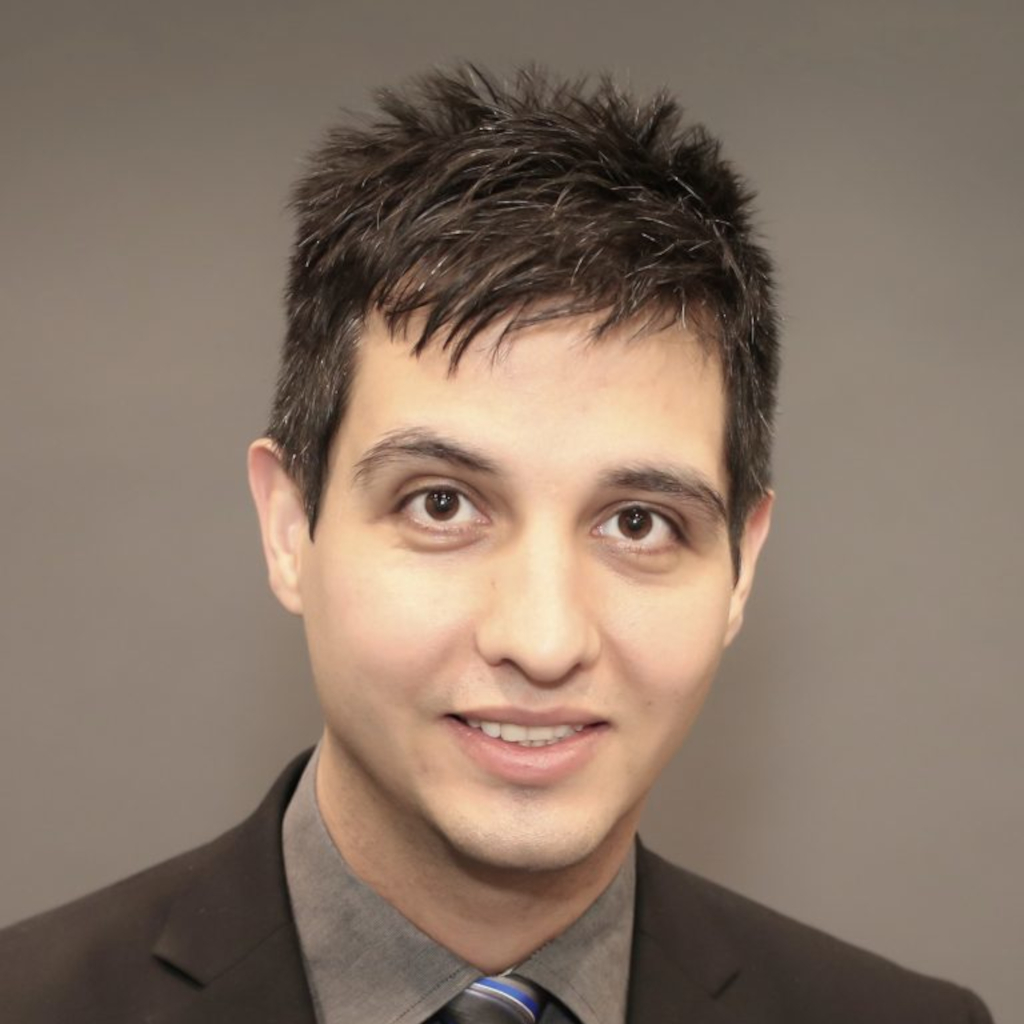
Michael Furlong is an Adjunct Assistant Professor at the University of Waterloo. His research bridges neuroscience and computer science, focusing on neuromorphic computing , vector symbolic architectures , and autonomous robotic systems . He has contributed to frameworks like Neurobench for evaluating neuromorphic algorithms and developed models for cognitive processes such as visual attention and action specification. Email: michael.furlong@uwaterloo.ca Research Interests : His work explores biologically plausible computation , spiking neural networks , and Bayesian optimization . Publications highlight autonomous exploration , terrain classification , and information-gathering strategies for planetary missions. Collaborative projects emphasize fair benchmarking and robust adaptive recovery in robotic systems. Recent Trends : Recent articles focus on hyperdimensional computing , probabilistic neuromorphic programming , and multi-modal active perception . These studies integrate category theory , dynamic modeling , and semantic processing to advance neuromorphic hardware and cognitive architectures. Key Collaborations : Participated in planetary exploration initiatives, including lunar rover simulation and icy moon landing site selection , combining Wald's sequential probability ratio test for fault tolerance and neural predictive control for robotic chassis reconfiguration.
Steven Latré is a Professor in the Department of Computer Science at the University of Antwerp, specializing in network management, software-defined networking, and network function virtualization. His research spans wireless communications, Internet of Things, machine learning for networking, and quality of experience optimization. With over 246 publications from 2007 to 2025, he has established himself as a leading researcher in network intelligence and management. His research focuses on developing intelligent approaches for network management, with particular emphasis on applying machine learning techniques to solve complex networking challenges. His work covers adaptive video streaming, resource allocation in heterogeneous networks, wireless sensor networks, and vehicular communications. His research often bridges theoretical advances with practical implementations, as evidenced by numerous collaborations with industry partners and participation in European research projects. His recent publications demonstrate a growing interest in applying AI and machine learning to networking problems, with significant contributions in network function virtualization, software-defined radio access networks, and intelligent resource allocation. His work shows a clear trajectory from traditional network management toward more intelligent, self-optimizing network systems that leverage the latest advances in artificial intelligence. His scientific contributions have been recognized through numerous publications in top-tier networking venues including IEEE Communications Magazine, IEEE Transactions on Network and Service Management, and IEEE Internet of Things Journal. His research has consistently addressed real-world networking challenges while pushing theoretical boundaries in network management and orchestration. Professor Latré has actively supervised numerous PhD students and collaborated extensively with researchers worldwide, particularly with colleagues at the University of Antwerp including Jeroen Famaey, Filip De Turck, and Tom De Schepper. His collaborative network spans multiple continents, reflecting the international impact of his research.
Ruimin Chen is an Assistant Professor in the Department of Mechanical Engineering at the University of Connecticut (UConn), joining in August 2022. She holds a Ph.D. in Industrial Engineering from The Pennsylvania State University (2021), dual M.S. degrees in Industrial Engineering and Operations Research from the same institution (2018), and a B.S. in Industrial Engineering from Southeast University, China (2016). Her research focuses on data analytics, statistical learning, system identification, and uncertainty quantification, with applications in advanced manufacturing systems, privacy/security, and human-machine teaming. Key areas include quality monitoring in smart manufacturing, additive manufacturing process optimization, and interpretable AI for safety compliance. Her recent work explores federated hyperdimensional computing for distributed quality monitoring, cognitive data fusion in hybrid manufacturing, and brain-inspired computing for melt pool characterization. She also investigates educational strategies integrating Six Sigma principles with hands-on engineering practice. Notable contributions include methodologies for heterogeneous quality characterization in additive manufacturing, causal inference frameworks using Bayesian networks, and ontology-driven process analytics. She emphasizes translational research bridging theoretical computer science with industrial applications.
Farhad Imani is an Assistant Professor at the University of Connecticut's Department of Mechanical Engineering, part of the School of Engineering. He leads the Intelligent Systems and Control Laboratory (ISCL), focusing on AI-driven advancements in manufacturing systems, robotics, and quality control. His work integrates machine learning, federated learning, and hyperdimensional computing to address challenges in additive manufacturing, privacy preservation, and smart manufacturing processes. Education: He holds a Dual-title Ph.D. in Industrial Engineering and Operations Research from Pennsylvania State University (2020). His research is supported by grants from NSF and CCAT, and he has authored over 50 peer-reviewed articles in top journals and conferences. Research Interests: Core areas include data analytics, machine learning applications in manufacturing, federated learning, privacy-preserving techniques, robotics, and anomaly detection. His lab develops tools for intelligent process monitoring, defect localization, and cooperative robotic systems in advanced manufacturing. Awards: Recipient of the NSF Graduate Research Fellowship Honorable Mention (2024), CCAT Faculty Fellow (2024), and multiple fellowships from Penn State. He serves as an Associate Editor for ASME's Journal of Autonomous Vehicles and Systems (JAVS). Students & Collaborations: Advises PhD and Master's students (e.g., Zhiling Chen, Danny Hoang) and collaborates with institutions like NIST, UC Irvine, and CCAT. His lab actively participates in STEM outreach programs and industry partnerships. Labs/Teams: ISCL focuses on cognitive computing, digital twins, and edge-based learning systems. Recent projects include the Robotics Dataset ScanBot and privacy-preserving frameworks for manufacturing data.
Dr. Yulia Sandamirskaya is the Head of the Research Center 'Cognitive Computing in Life Sciences' at Zurich University of Applied Sciences (ZHAW), where she leads a research group focused on neuromorphic cognitive architectures for embedded AI systems. Her work integrates neural dynamics with robotic control , spanning real-time tasks such as sensing, planning, decision-making, learning, and motor control for assistive robots. She collaborates extensively with institutions like ETH Zurich and KTH Royal Institute of Technology, utilizing neuromorphic hardware such as dynamic vision sensors (DVS) and robotic platforms. Her research encompasses neuromorphic architectures for obstacle avoidance, path integration, and sequence learning, as well as theoretical frameworks like Dynamic Neural Fields (DNFs) for cognitive modeling. She explores autonomous learning mechanisms, including unsupervised and reinforcement learning, and applies these to robotics in domains such as spatial language grounding and haptic exploration . Her group has published extensively on topics like event-based vision , resonator networks , and hardware implementations of neural algorithms. Dr. Sandamirskaya has supervised multiple MSc theses on neuromorphic systems and robotic applications, with advisees working on projects like UAV obstacle avoidance, tactile object recognition, and neural-dynamic sequence generation. She actively contributes to workshops and conferences, including Science Robotics , CVPR , and IEEE conferences , and her work addresses challenges in low-power, high-speed robotic agents operating in real-world environments.
Dr. Tobias Fischer is a Senior Lecturer at Queensland University of Technology (QUT) in the School of Electrical Engineering & Robotics, Faculty of Engineering. He is an ARC DECRA Fellow and leads research in robotics, computer vision, and computational cognition. His work focuses on enabling robots to interact with humans through perception systems inspired by animal visual systems. He holds a PhD from Imperial College London and has held postdoctoral roles at Imperial College's Personal Robotics Lab. Education: PhD (Imperial College London, 2019), MSc (University of Edinburgh, 2014), BSc (Ilmenau University of Technology, Germany, 2013). Scholarships include the German National Academic Foundation and DECRA Fellowship. Research interests span bio-inspired neural networks, event-based vision, spiking neural networks, and neuromorphic computing. He has led projects funded by Intel, Amazon, Samsung, EU, and Australian Research Council, including $462,000 DECRA grant for adaptive robot positioning. Key awards include the 2023 IEEE Outstanding Paper Award and Queen Mary UK Best PhD in Robotics. Teaching includes units like EGB339 Introduction to Robotics and EGB439 Advanced Robotics. Supervision involves PhD students in place recognition and underwater imagery. His lab, QUT Centre for Robotics, focuses on long-term localization and bio-inspired autonomy.
Dr. Connor Malone is a Research Fellow at the QUT Centre for Robotics, specializing in autonomous systems and computer vision. He holds a Bachelor of Engineering (Mechtronics) with Honours and a PhD in Robotics from Queensland University of Technology. His research focuses on improving visual place recognition (VPR) for autonomous vehicles in challenging conditions such as adverse weather, while also enhancing system resilience against adversarial attacks. Education: Bachelor of Engineering (Mechtronics)(Hons) – Queensland University of Technology Doctor of Philosophy (PhD)(Robotics) – Queensland University of Technology Research Interests: Deployable technologies for autonomous vehicles Robust feature-based techniques in adverse conditions Dynamic modulation of VPR algorithms Adversarial robustness in localization systems His work has been applied in collaborations with Amazon, Ford, and the Centre for Advanced Defence Research to improve scene understanding and localization reliability. Projects: Adversity- and Adversary-Robust Adaptive Positioning Systems with Integrity Contextually Informed Joint Perception and Localization for Autonomous Vehicles Connor's current research emphasizes enhancing safety of autonomous vehicles in Australian road conditions, particularly water-on-road detection and analysis.
Prof. Hussam Amrouch is a Full Professor of AI Processor Design at the Technical University of Munich (TUM), leading the TUM School of Computation, Information and Technology. His research focuses on ultra-efficient embodied AI, reliable designs in emerging technologies, and cryogenic circuits for quantum computing. He holds a Dr.-Ing. from Karlsruhe Institute of Technology (2015, Summa cum Laude) and previously led the "Dependable Hardware" group at KIT and the Chair of Semiconductor Test and Reliability at University of Stuttgart. He is affiliated with Munich Quantum Valley (MQV) and Munich Institute of Robotics and Machine Intelligence (MIRMI). Research interests include ferroelectric FETs, in-memory computing, cryogenic electronics, and neuromorphic systems. Key achievements include 10× HiPEAC Paper Awards, 3× DAC/DATE best paper nominations, and pioneering work on FeFET-based AI accelerators. His work bridges nanoelectronics with AI, addressing challenges in energy efficiency, reliability, and quantum integration. Publications span cutting-edge topics like cryogenic FinFETs, hyperdimensional computing, and monolithic 3D integration. He has developed novel testing methodologies, self-aware silicon systems, and energy-efficient architectures for edge-AI. Current projects explore cryogenic circuit design, radiation-resistant FeFETs, and carbon-efficient 3D neural networks. His awards reflect contributions to high-performance and embedded architectures. Research groups under his leadership focus on device-level innovations and system-level integration of emerging technologies. He actively contributes to interdisciplinary initiatives at MQV and MIRMI, advancing quantum computing and AI hardware frontiers.
Yiannis Aloimonos is a Professor of Computer Science and Electrical and Computer Engineering at the University of Maryland, affiliated with the Institute for Advanced Computer Studies (UMIACS), Maryland Robotics Center, and the Brain and Behavior Institute. He holds a Ph.D. in Computer Science from the University of Rochester. His research focuses on Active and Purposive Vision, integrating sensorimotor capabilities with perceptual systems to design intelligent machines. Key areas include navigation, manipulation, categorization, and bridging signals and symbols through language tools in robotics. Notable projects include the EU-funded POETICON and POETICON++ initiatives, NSF-supported work on robotic vision, and NIH-funded studies on Human Activity Languages. He leads the Perception and Robotics Group and the Autonomy Robotics Cognition Laboratory, advancing applications like real-time fixation systems (TALOS) and hyperdimensional computing for robotics memory. His work bridges robotics, computer vision, and cognitive science, with contributions to autonomous systems and sensor networks. Recent highlights include the development of SeaDroneSim for maritime object recognition and collaborations in trajectory planning. He has been recognized as a top scientist in global rankings (Guide2Research) and co-authored influential commentaries on microrobot vision.
Diego Cabello Ferrer is a Professor at the University of Santiago de Compostela’s Department of Electronics and Computing under the Faculty of Physics. His research focuses on advanced CMOS technologies, embedded vision systems, energy harvesting, and biomedical devices. He holds a PhD from the same university (1984), specializing in cybernetic systems and microprocessor-based analysis of animal behavior. Education: PhD in Electronics and Computing, University of Santiago de Compostela (1984). His work spans artificial vision algorithms, low-power CMOS sensor design, and micro-energy harvesting systems. Key contributions include vision sensors with in-pixel computation, ultra-low power voltage regulators for biomedical implants, and solar energy harvesting integrated circuits. His research emphasizes real-time image processing, edge computing for embedded systems, and hardware acceleration for neural networks. Publications highlight innovations in CMOS vision sensors for background subtraction, energy-efficient LDO designs, and hyperdimensional computing architectures. His teams have developed perpetual wireless sensor networks for environmental monitoring and Snail pest detection. Current efforts focus on in-memory computing with FeFETs and SRAM-based neural network accelerators. Labs/Teams: Center for Research in Intelligent Technologies (CITIUS). Grants & Collaborations: Projects include iCaveats (embedded vision architectures) and energy harvesting integration in biomedical devices. His work bridges theoretical signal processing with practical hardware implementations, addressing challenges in power efficiency, miniaturization, and real-time performance for embedded vision systems.
Ahmed Khalid Kadhim Kadhim serves as a PhD Research Fellow at the Department of Information and Communication Technology, University of Agder (UiA), Norway. Based in office A2121 at Jon Lilletuns vei 9, 4879 Grimstad, he maintains active research contributions while pursuing doctoral studies under UiA's structured PhD program. His research centers on cutting-edge artificial intelligence methodologies, specifically investigating hyperdimensional computing applications within Tsetlin Machines. This work bridges theoretical computer science and practical machine learning, focusing on developing resource-efficient, interpretable AI systems through novel vector representations and Boolean logic frameworks. His approach emphasizes computational efficiency while maintaining model transparency—a critical advantage over traditional neural networks in constrained environments. Funded through UiA's competitive PhD Research Fellow position, his work contributes to the university's strategic research priorities in computational intelligence. Current projects explore how hyperdimensional vectors can optimize Tsetlin Machine performance in pattern recognition tasks, with potential applications in edge computing and IoT systems where processing power is limited.
David Ryan Glowacki is a cross-disciplinary Research Professor at Universidad de Santiago de Compostela, specializing in the intersection of virtual reality, molecular dynamics, and computational chemistry. He is the founder of the Intangible Realities Laboratory (IRL), a research group working at the immersive frontiers of scientific, aesthetic, computational, and technological practice. His educational background includes a B.A. from the University of Pennsylvania (2003), an M.A. in cultural theory from Manchester University (2004), and a Ph.D. in molecular physics from Leeds University (2008). His diverse academic training spans chemistry, mathematics, philosophy, comparative literature, and religions, reflecting his interdisciplinary approach. Glowacki's research focuses on interactive virtual reality applications for scientific simulation and visualization, particularly in molecular dynamics and drug discovery. He has pioneered the development of interactive molecular dynamics in virtual reality (iMD-VR) as a tool for flexible substrate and inhibitor docking, reaction network exploration, and computational drug design. His work bridges computer science, nanoscience, aesthetics, and cultural theory, creating innovative approaches to scientific problems. An analysis of his recent publications reveals a strong trend toward applying virtual reality technologies to solve complex problems in computational chemistry and drug discovery. His work on iMD-VR has been particularly influential, demonstrating how immersive technologies can enhance molecular modeling, protein-ligand binding studies, and educational approaches in chemistry. He has made significant contributions to understanding reaction networks, SARS-CoV-2 protease inhibition, and the application of machine learning to molecular systems. Royal Society Research Fellowship Philip Leverhulme award ERC grant SIG-CHI best paper award Glowacki has secured substantial research funding through prestigious grants including an ERC grant and Royal Society Fellowship, enabling his innovative work at the intersection of science and technology. His Narupa framework provides an open-source, multi-person VR environment that has been applied across multiple research domains. While specific student advising isn't detailed in the provided information, his educational publications suggest active engagement in teaching computational chemistry through innovative VR approaches. As founder of the Intangible Realities Laboratory, Glowacki leads a team exploring how immersive technologies can transform scientific practice. The lab's work spans from fundamental molecular dynamics research to applications in drug discovery and mental health, demonstrating the broad impact potential of interactive VR technologies. Their citizen science approach to distributed VR experiments represents a novel methodology for conducting large-scale psychological research.
Professor Evgeny Osipov is a full professor in Dependable Communication and Computation Systems at Luleå University of Technology, Department of Computer Science within the Department of Systems and Space Engineering. His research focuses on Communication and computing systems, with particular expertise in Artificial Intelligence frameworks. His educational background includes: PhD in Computer Science (Cum Laude) from University of Basel, Switzerland (2005) Licentiate of Technology in Telecommunications from KTH Royal Institute of Technology, Sweden (2003) Pre-doctoral school in Communication Systems from EPFL, Switzerland (1999) Engineer degree with Honors from Krasnoyarsk State Technical University, Russia (1998) Professor Osipov's research interests center around Vector Symbolic Architectures (also known as hyperdimensional computing), which serves as a bridge between symbolic and connectionist AI approaches. His work explores how mathematical properties of random hyperdimensional spaces can be leveraged for AI functionality, with potential applications in creating artificial general intelligence. His research is particularly relevant for low-resource machine learning tasks, such as those encountered in wearable Internet of Things devices. His recent publications (2024-2025) demonstrate a strong focus on improving classification performance using hyperdimensional computing techniques. He has explored confidence-driven training of centroids, implementations for spiking neural networks, and margin-based training approaches across numerous datasets to validate these techniques. Professor Osipov has received research funding from several notable organizations: Swedish Foundation for Strategic Research (grants UKR22-0024, UKR24-0014) Swedish Research Council (grants GU 2022/1963, 2022-04657) Luleå University of Technology Flemish Government Scholars at Risk (SAR) His active publication record across multiple high-impact journals indicates ongoing research activity and collaboration. His work on Vector Symbolic Architectures represents a significant contribution to the field of efficient AI computation, particularly for resource-constrained environments where traditional deep learning approaches would be impractical.