Professor Danilo P. Mandic, affiliated with Imperial College London, UK, is a leading researcher in signal processing, machine learning, and biomedical signal analysis. His work spans quaternion algebra, tensor networks, and neural networks for real-world applications. 2025: Published 11+ works on EEG/PPG analysis, quantum learning, and tensor-based LLM compression 2024: Active in interpretable transformers, graph learning for financial data, and hearable devices Research focuses on hypercomplex signal processing, graph neural networks, and medical AI applications. Recent work explores quaternion calculus for signal processing, tensor network structures for LLMs, and hearable device optimization. Key publication trends include: 2025 emphasis on quantum-aware learning, 2024 graph-based time series clustering, and 2023 foundational work on graph CNNs and matched filtering approaches. Collaborates extensively with Dongpo Xu, Sayed Pouria Talebi, Clive Cheong Took, and Tobias Reichenbach on projects involving ear-EEG, ECG enhancement, and financial sentiment analysis.
Xingjie Ni is an Associate Professor in the Electrical Engineering department at the Materials Research Institute (MRI) . With a focus on metasurface physics , photonics , and plasmonics , their research spans advanced optical technologies and computational imaging. Research Trends : Recent work explores metasurface design for achromatic lenses and light manipulation machine learning-enhanced polarimetric imaging with encoding metasurfaces ultrathin optical devices enabling geometric image transformations reconfigurable liquid crystal systems for dynamic photonic applications electrically tunable nonlinear optics for ensemble learning nanoscale fabrication techniques for scalable metalenses Grants & Projects : Active grants include NSF funding for Photonic Integrated Guided-Wave-Driven Metasurfaces NASA collaboration on Metalens Origami Deployable Lidar National Institute of Biomedical Imaging and Bioengineering support for Metasurface-Based Endoscope
Brent Everitt is a Professor in the Department of Mathematics at the University of York, where he has been since 1999. He holds a Readership position and has previously held roles such as Senior Lecturer. His academic journey includes undergraduate studies at the University of Auckland, followed by postgraduate degrees at the University of Toronto and the University of Auckland. Before joining York, he held positions at the Universities of Aberdeen, Warwick, and Durham. Everitt’s research focuses on algebra, topology, and combinatorics, with a particular emphasis on homological methods in algebra, partial symmetry through reflection monoids, representation theory of groups and monoids, and geometric manifolds. Collaborators include Paul Turner, John Fountain, and James East. His work on hyperplane arrangements, matroids, and Coxeter groups has led to significant contributions in algebraic topology and geometric group theory. He has supervised eight PhD students, including Majed Albaity and Jim Woodward. His research projects include exploring sheaf homology, minimal hyperbolic manifold volumes, and the interplay between combinatorial structures and algebraic frameworks. He has been involved in grants such as the Heilbronn small grant scheme on diagrammatic intuition and deep learning in mathematics. Everitt is actively engaged in academic outreach, delivering invited talks globally on topics like reflection monoids, Khovanov homology, and hyperbolic manifolds. His teaching contributions include courses on Galois theory and algebraic topology, reflecting his dedication to both research and education.
Aiden Durrant is a Lecturer in the School of Natural and Computing Sciences at the University of Aberdeen, actively contributing to research and teaching in computing science. He is affiliated with the South China Normal University Joint Institute and is accepting PhD students in Computing Science. His research spans machine learning, computer vision, and AI, with a focus on self-supervised and geometric representation learning. BSc (Hons) and MPhil in Computer Science, University of Lincoln PhD in Computing Science, University of Aberdeen Aiden Durrant’s research centers on self-supervised learning and the geometric structuring of learned representations. He investigates how to learn high-quality image representations without human-annotated labels, focusing on preserving semantic and hierarchical knowledge through hyperbolic and hyperspherical geometries. His work extends to multi-modal learning and has practical applications in environmental monitoring, agriculture, nuclear reactor safety, and climate change. He has developed novel architectures such as HMSN (Hyperbolic Self-Supervised Learning) and S-JEA (Stacked Joint Embedding Architectures) to improve representation quality. His recent publications (2023–2025) demonstrate a strong trend in foundation models, self-supervised learning, and deep learning for environmental and industrial applications. Key themes include crevasse mapping in glaciology, segment anything models for drone imagery, and hyperbolic clustering for semantic hierarchies. His earlier work (2019–2022) focused on nuclear reactor anomaly detection using deep learning and time-series analysis, contributing to the CORTEX Horizon 2020 project. Scientific Awards: PhD Poster Award, FISA - 9th European Commission conference on Euratom research and training in safety of reactor systems (2019) Durrant has secured competitive funding, including a 2024 SUSTAIN CDT Studentship (PI) and an Aberdeen Internal Pump-Priming grant (Co-PI), supporting research in AI for glacier mapping and sustainable crop breeding. He supervises PhD students and has co-led teaching modules in Machine Learning, Data Mining, and Research Methods at both undergraduate and postgraduate levels. He also contributes nationally as Deputy Director of the SICSA Graduate Academy, supporting research training across all 14 Scottish computer science departments. He is actively involved in interdisciplinary collaborations, particularly in agri-food data sharing, environmental sustainability, and healthcare AI, often working with cross-institutional teams. His external memberships include BMVA and leadership in organizing the BMVA 2025 Summer School.
Giovanni PECCATI is a Full Professor in Mathematics and Head of the Department of Mathematics (DMATH) at the University of Luxembourg’s Faculty of Science, Technology and Medicine. He leads the research group 'Revealing order in randomness' and serves as President of the Luxembourg Mathematical Society. Previously, he held positions at Sorbonne Université (1999–2008) as Assistant Professor and at Université Paris-Nanterre (2008–2010) as Full Professor before joining Luxembourg in 2010. His research focuses on probability theory, stochastic analysis, and mathematical finance, with particular expertise in Malliavin calculus, limit theorems, and random fields. Key contributions include studies on nodal sets of random waves, Poisson functionals, and Stein’s method applications. Prof. Peccati’s awards include the 2018 IMS Fellowship and the 2015 FNR Award for Outstanding Scientific Publication. His work bridges pure mathematics with applications in statistical mechanics and mathematical physics, emphasizing probabilistic structures in geometric and physical systems. He has authored over 100 publications, including the influential book *Wiener Chaos: Moments, Cumulants and Diagrams* (2011), and co-founded the *Stochastic Analysis for Poisson Point Processes* research program. His current projects explore phase transitions in stochastic systems and geometric properties of random fields.
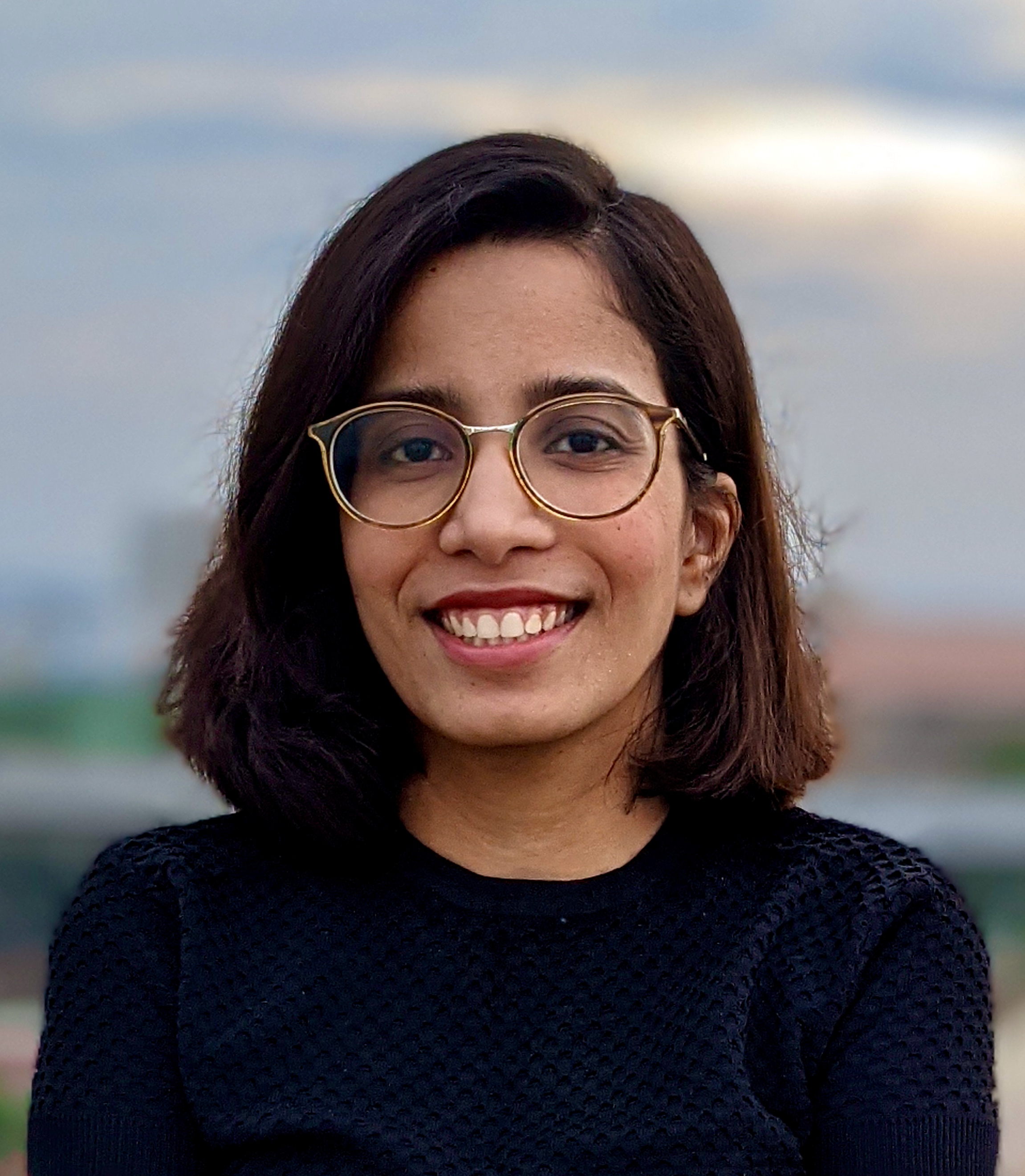
Tejaswi Kasarla is a Researcher at the VIS Lab, University of Amsterdam, and a Research Scientist Intern at Meta FAIR in Paris. Their work intersects non-Euclidean representation learning (hyperspherical and hyperbolic deep learning) for open-world understanding and multimodal foundation models. Education : Fourth-year PhD candidate at University of Amsterdam (since Oct 2021). Research Experience : Intern at Bosch (Jun 2018–Oct 2018), then Computer Vision Researcher at Bosch (May 2019–Jun 2022). Currently organizing community initiatives like the Women in Computer Vision (WiCV) Workshop at CVPR 2021–2022. Teaching : Teaching Assistant for Applied Machine Learning (Nov 2022, Nov 2021). Research Focus : Non-Euclidean deep learning (hyperspherical/hyperbolic), multimodal foundation models, active learning, and uncertainty quantification in computer vision. Recent work explores hyperbolic safety-aware vision-language models (CVPR 2025 Highlight) and lightweight uncertainty quantification for terrain traversability (ICRA 2024). Publications : Their research appears in top venues like CVPR, NeurIPS, WACV, and workshops (ECCV Beyond Euclidean, ICRA Resilient Off-road Autonomy). Key themes include class separation , active learning , and hyperbolic embeddings . Community Contributions : Organized WiCV Workshops at CVPR 2021–2022, served as a board member since 2022. Peer-reviewed for ICCV, NeurIPS, ICLR, and WiCV/NeurIPS workshops. Interests Beyond Research : Photography and specialty coffee (home barista).
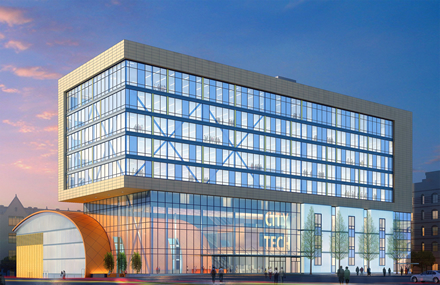
Dr. Nadia Benakli is a Professor of Mathematics at New York City College of Technology (City Tech), part of the City University of New York system, within the School of Arts & Sciences. She coordinates the Computer Science and Applied Mathematics internship programs, bridging academic theory with industry practice. Her career spans decades of contributions to both pure mathematics and educational innovation. Her educational foundation includes a Ph.D. in Mathematics from Paris-Sud University, France. Research interests center on Geometric Group Theory (hyperbolic groups, Coxeter groups, polygonal complexes), Graph Theory , and Mathematics Education innovations. She integrates computational tools like R and Maple into calculus and data analysis instruction, emphasizing visualization and hands-on projects to enhance student comprehension in foundational mathematics courses. Publication trends reveal an evolution from theoretical work (1991-2002) on geometric structures to applied educational research (2011-2017). Early papers established frameworks for hyperbolic geometry and group boundaries, while recent work focuses on computational thinking, faculty mentoring models, and internship program design—demonstrating her commitment to translating abstract mathematics into practical educational strategies. As internship coordinator, she mentors students through industry placements and co-developed SIAM News-published frameworks for applied mathematics internships. Her teaching portfolio spans foundational courses (MAT065, MAT1175) to advanced topics (MAT440, MAT4901), reflecting deep engagement with curriculum development across all undergraduate levels.
Arnab Kumar-Mondal is a Machine Learning Researcher at Apple Inc., with a Ph.D. in Deep Learning from McGill University and Mila – Quebec Artificial Intelligence Institute. His work bridges theoretical and applied research in computer vision, language modeling, robotics, and AI for science. Ph.D. from McGill University (2025 completion) Internships at Microsoft Research and Apple Visiting Researcher at ServiceNow Research and Huawei Noah’s Ark Lab B.Tech in Electronics and Electrical Engineering from IIT Kharagpur His research focuses on equivariant learning , state space modeling , and generative adversarial networks (GANs) , with applications in medical imaging, human motion analysis, and vector graphics generation. Key contributions include canonicalization frameworks for symmetry-aware modeling and spectral analysis of representation quality in self-supervised learning. Collaborations span institutions like ServiceNow, Huawei, and Mila. Recent publications (2023–2025) explore symmetry-aware generative modeling , efficient dynamics modeling in interactive environments, and rotation-invariant visual representation learning. His work on ternary language models at ICLR 2025 demonstrates scalable pretraining techniques. Arnab maintains active contributions to open-source software, including PyTorch implementations for semi-supervised segmentation via CycleGAN. His technical depth extends to VLSI engineering, embedded systems, and free-form lens design from undergraduate research. Professional activities include patents on video-language foundation models, internships at leading tech firms, and cross-institutional research roles.
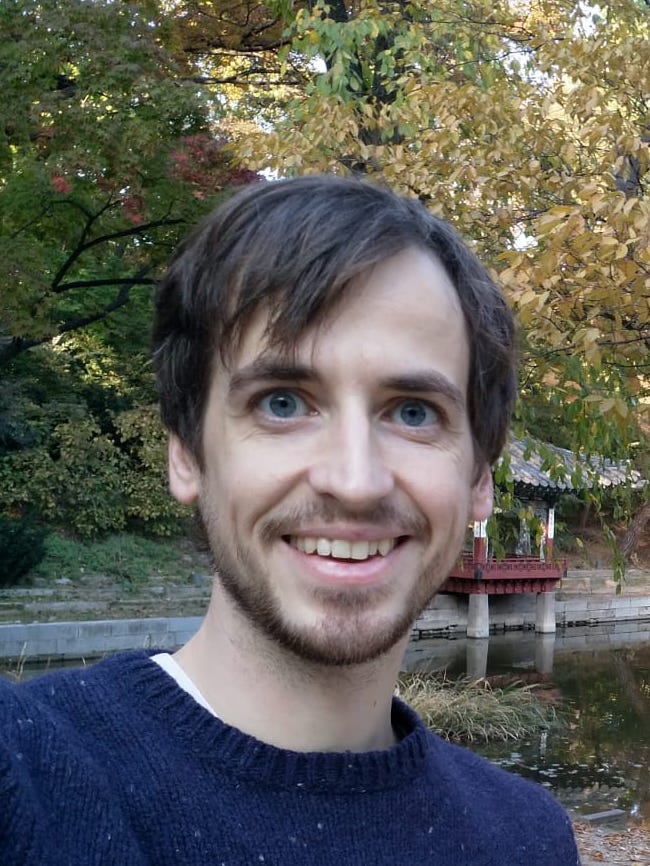
Erik Bekkers is an Associate Professor at the University of Amsterdam's Informatics Institute, leading research in the Machine Learning Lab (AMLab). His work bridges geometric mathematics and machine learning, focusing on developing robust and efficient deep learning architectures grounded in symmetry, equivariance, and physical principles. Education: PhD in Biomedical Engineering (cum laude) from Eindhoven University of Technology Previous Roles: Postdoctoral researcher in applied differential geometry at TU/e Department of Applied Mathematics His research spans: Group convolutional neural networks Symmetry-preserving representation learning Generative modeling on manifolds Physics-informed neural networks Medical imaging applications Recent publications emphasize geometric latent variable models, equivariant diffusion methods, and applications to molecular generation, medical imaging, and physics-driven AI. His team actively explores structure-preserving and self-supervised learning techniques. Scientific Awards MICCAI Young Scientist Award (2018) Philips Impact Award (MIDL 2018) NWO VENI grant: Context-Aware AI in Medical Imaging (2023) NWO VIDI grant: Neural Ideograms - Geometry-Grounded AI (2024) As co-founder of the ICML'24 GRaM workshop , he promotes geometry-grounded approaches in AI. His lab actively investigates geometric regularization, manifold-based PDE forecasting, and symmetry-aware generative methods.
Jichun Li is a Professor in the Department of Mathematical Sciences at the University of Nevada, Las Vegas. His research focuses on mathematical modeling, scientific computing, and numerical analysis with applications to electromagnetism and metamaterials. He specializes in developing advanced numerical methods like Finite Element Methods (FEM), Discontinuous Galerkin (DG), and Finite-Difference Time-Domain (FDTD) schemes for simulating wave propagation in complex media such as metamaterials and photonic crystals. Key research areas include metamaterials (e.g., hyperbolic metamaterials, cloaking devices), electromagnetic wave manipulation (e.g., surface plasmon polaritons on graphene), and computational techniques for solving Maxwell’s equations in dispersive and nonlinear media. His work addresses challenges like numerical stability, superconvergence analysis, and implementation of Perfectly Matched Layers (PML) for absorbing boundary conditions. Recent efforts involve integrating deep learning with numerical PDE methods for financial applications and advancing time-domain simulations for metamaterial cloaking and optical black holes. He has contributed to software tools like MATLAB-based edge element codes for metamaterial modeling. His research bridges theoretical analysis and practical simulation, with applications in photonics, quantum optics, and computational electromagnetics. Notable achievements include over 150 peer-reviewed articles, methodological innovations in numerical electromagnetics, and active participation in interdisciplinary collaborations at the Center for Applied Math & Statistics. His work emphasizes high-order methods and rigorous mathematical validation for engineering and scientific problems.
Tien Ping Tan is an experienced researcher specializing in speech recognition , natural language processing , and machine learning applications. With a PhD in Automatic Speech Recognition for Non-Native Speakers from Joseph Fourier University (2008), his career spans two decades of impactful contributions across multiple domains.
Felix Schindler is a Researcher at the Institute for Analysis and Numerical Analysis , part of the Department of Mathematics and Computer Science at the University of Münster . His work bridges numerical analysis, machine learning, and scientific computing, with a focus on model reduction for partial differential equations (PDEs), adaptive algorithms, and computational efficiency. Research Interests include: Numerical analysis of parametric and multiscale PDEs Localized reduced basis methods (LRBM) and adaptive enrichment Integration of model order reduction (MOR) with machine learning (ML) Conservative flux reconstruction techniques Development of software libraries like dune-xt and pyMOR Recent Publications highlight trends in applying deep kernel models for surrogate modeling, localized training strategies for PDE-constrained optimization, and hybrid full/reduced-order pipelines for reactive flow prediction. His work emphasizes certified error control, hierarchical adaptivity, and cross-disciplinary computational frameworks. Collaborations span institutions such as AIMS Senegal, Springer Nature, and DUNE project teams. He actively contributes to conferences like GAMM, ENUMATH, and Algoritmy.
Trung Le is a Lecturer in the Department of Data Science & AI at Monash University. His research focuses on deep generative models, kernel methods, optimization in machine learning, and Bayesian inference, with applications to supervised learning, adversarial learning, and cyber security. He holds a PhD in Computer Science from the University of Canberra (2013). Key projects include the Australian Research Council-funded initiatives such as 'Can Machines Unlearn? Toward Next-Generation Safe Artificial Intelligence' (2025–2029) and 'Trustworthy Generative AI: Towards Safe and Aligned Foundation Models' (2024–2026). His work contributes to UN SDG 4 (Quality Education) through advancements in AI ethics and safety. Education: PhD in Computer Science, University of Canberra (2013) Research Areas: Continual Learning, Diffusion Models, Domain Adaptation, Adversarial Machine Learning Awards: KDD 2023 Best Student Paper Award, Imagine Cup 2010 Australia First Prize Trung has published extensively in top-tier venues like NIPS, ICLR, and JMLR, with over 100 outputs since 2009. His recent work emphasizes robustness in AI systems, including projects on adversarial defense and ethical concept erasure in generative models.
Taavi Repän is an Associate Professor of Computational Photonics at the Institute of Physics, Faculty of Science and Technology, University of Tartu. He has held this position since December 2021, with his current appointment running until December 2025. Prior to this, he worked as a Post-Doc at Karlsruhe Institute of Technology from 2019 to 2021. Repän earned his Doctoral Degree in Physics from the Technical University of Denmark (DTU) in 2019, with his dissertation titled 'Dark-field hyperlens: High-contrast subwavelength imaging in optics and acoustics' supervised by Andrei Lavrinenko and Morten Willatzen. He received his Master's Degree in Physics from the University of Tartu in 2014, with a thesis on 'Sub-wavelength imaging with hyperbolic metamaterials' supervised by Siim Pikker and Sergei Zhukovsky. His educational background also includes a Bachelor's Degree in Physics from the University of Tartu (2009-2012). His research focuses on computational photonics, metamaterials, inverse design, and the application of neural networks to optical simulations. He leads the project 'Inverse design methods for integrating nanophotonic structures with gas sensors' (2022-2026) and participates in several other research initiatives related to wood valorization and structural optimization. His work bridges theoretical physics, computational methods, and practical applications in optical sensing and imaging. His publication record shows a consistent trajectory in computational photonics, with recent work heavily emphasizing the integration of machine learning techniques with electromagnetic simulations. The most recent publications demonstrate a strong focus on neural network applications for inverse design problems in nanophotonics, hyperbolic metamaterials, and plasmonic structures, indicating his leadership in applying AI to complex optical design challenges. Repän currently leads or participates in multiple research projects funded by the Estonian Research Council and other institutions, demonstrating his active role in the research community. His work spans fundamental theoretical investigations to applied research with potential industrial applications. His laboratory work appears to focus on computational modeling of photonic structures rather than experimental setups, with emphasis on numerical methods for designing and analyzing optical systems. His collaborations span multiple institutions across Europe, reflecting the international nature of his research.
Alvaro Gonzalez-Jimenez is a Post-Doc Researcher at University Hospital of Basel and a Research Associate at the Applied Artificial Intelligence (AAI) Research Lab at Lucerne University of Applied Sciences and Arts (HSLU). He completed his PhD in Biomedical Engineering at the University of Basel in 2025 with Summa Cum Laude distinction. His academic journey includes a Master's degree in Computer Science from Grenoble Institute of Technology and a Bachelor's degree from the University of Sevilla. His educational background includes: 2021-2025: PhD in Biomedical Engineering, University of Basel ("Learning Dermatology with Noisy and Limited Data") 2019-2020: MSc in Computer Science, Grenoble Institute of Technology 2014-2015: BSc in Computer Science, Budapest University of Technology and Economics (ERASMUS) 2013-2018: BSc in Computer Science, University of Sevilla Gonzalez-Jimenez's research focuses on the intersection of machine learning and dermatology, with particular emphasis on developing methods that can learn effectively from noisy and limited medical data. His work spans several key areas including: Robustness in AI systems for medical applications Hyperbolic geometry for medical anomaly detection Medical image segmentation with noisy labels Dermatology-focused AI applications His recent publications demonstrate a strong trend toward addressing critical challenges in medical AI, particularly in dermatology. His work frequently explores innovative approaches to handle limited and noisy data in medical contexts, with a growing emphasis on geometric deep learning and robust optimization techniques. His research has significant implications for making AI-assisted dermatological diagnosis more accessible and reliable, especially in resource-limited settings. His scientific achievements include: Best Paper Award at MICCAI 2023 Early Acceptance (Top 9%) at MICCAI 2025 for "Is Hyperbolic Space All You Need for Medical Anomaly Detection?" Early Acceptance (Top 11%) at MICCAI 2024 for "PASSION for Dermatology" Gonzalez-Jimenez is actively involved in several research projects including PASSION (focusing on dermatology in Sub-Saharan Africa), SelfClean (for data cleaning), and T-Loss (for robust medical image segmentation). He co-organizes the first Hyperbolic Learning for Medical Imaging (HyperMI) tutorial at MICCAI 2025, reflecting his leadership in emerging AI methodologies for medical applications.