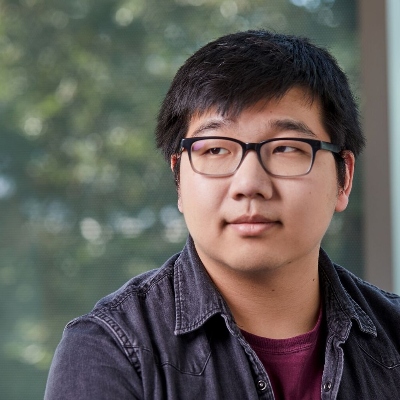
Jiatao Gu is an Assistant Professor in the Department of Computer and Information Science (CIS) at the University of Pennsylvania, with a part-time role as Staff Research Scientist at Apple (MLR). He holds a Ph.D. in Electrical and Electronic Engineering from the University of Hong Kong (2018) and a B.Eng. in Electronic Engineering from Tsinghua University (2014). His research focuses on generative machine learning and AI agent interaction with the physical world, emphasizing multi-modal systems spanning language, images, videos, and 3D. Key themes include efficient modeling , flexible architecture design , and scalable decision-making frameworks . 2025: ICLR paper on DART framework 2024: TMLR work on GFlowNet alignment 2023: NeurIPS research on diffusion stability 2022: ACL papers on speech translation Recent publications explore diffusion models for text-to-image synthesis, 3D reconstruction, and efficient sampling techniques. His work addresses fundamental challenges in attention mechanisms, entropy collapse, and multi-stage distillation while advancing non-autoregressive translation and vision-language reasoning . Prospective students can apply through his recruitment process at UPenn. Prior affiliations include Meta AI (FAIR Labs) and academic collaborations with institutions like New York University's CILVR Lab.
Professor Helen Finch (University of Leeds) is a leading scholar in German Literature , with a focus on Holocaust Studies , Queer Memory , and German-Jewish Cultural Production . Affiliated with the School of Languages, Cultures and Societies and the Centre for Jewish Studies , she co-leads the LCS Queer Area Studies Network and contributes to equality initiatives through the LGBT+ staff network . Research: Holocaust representation in German works, queer identity in postwar literature, transnational memory studies, curriculum design in German studies Awards: Fellow of the Higher Education Academy (2014) Academic Output : Her 15 most recent publications span Holocaust poetics , queer life writing , translation ethics , and Sebaldian intertextuality , with a particular focus on intersections between trauma , identity , and intergenerational testimony . Supervision : Currently guides PhD research on topics including transnational transphobia , queer art practices , and LGBTQ+ cross-cultural representation . Her students explore areas from German exile photography to postcolonial queer narratives .
Asst. Prof. Dr. Emre Doğan serves as the Head of the Radio, Television and Cinema Department at Istanbul Gelişim University's Faculty of Fine Arts. His research focuses on film theory, postmodernism, and the intersection of cinema with scientific and philosophical concepts. He has published extensively on directors like Christopher Nolan, David Fincher, and Terrence Malick, analyzing themes of modernity, postmodernity, and narrative innovation. Academic Roles: Department Head, Radio, Television and Cinema Research Themes: Postmodern cinema, science fiction narratives, ideological film criticism, and temporal storytelling His recent work includes analyzing Nolan’s Tenet through modernity/postmodernity duality and exploring David Fincher’s use of simulation theory. He employs interdisciplinary approaches, combining sociology, philosophy, and film history in his analyses. Publications span topics like hybrid narratives in cinema history, comparative studies of political films, and the philosophical underpinnings of science fiction. His contributions reflect a deep engagement with both classical and contemporary cinematic practices.
Darren Jorgensen is a Lecturer at the UWA Design School , University of Western Australia, specializing in twentieth century and contemporary art. His research bridges Australian art, Aboriginal art, Chinese art, and experimental music, with a focus on critical theory and poststructuralism. PhD in Science Fiction and the Sublime Co-founder of Guan Kan journal on contemporary Chinese art Contributor to Dispatch Review and Artlink His research projects examine illustrated literature from remote Aboriginal communities and art from Australian pastoral stations. He has collaborated on ARC-funded initiatives exploring Indigenous art conditions and digital transformations of Australian art databases. Recent writings analyze post-industrial music, science fiction aesthetics, and cross-cultural art practices. Recent Research Trends : Darren's 15 most recent publications (2024-2025) span exhibition reviews, book critiques, and cultural analyses. Key themes include: Transnational Australian-Chinese art dialogues Aboriginal art's relationship to land, heritage, and decolonization Industrial/post-industrial music influences in visual art Critical theory applications to contemporary art practices Illustrated literature as cultural document Scientific Awards : Best Small Exhibition Catalogue (2019) for collaborative curatorial work Teaching & Supervision : Supervises postgraduate and honours students across diverse topics including Aleister Crowley's esoteric art, whale acoustics, and continental philosophy's impact on aesthetics. His teaching philosophy integrates Kant, Isabelle Stengers, and poststructuralist theory. Research Collaborations : Collaborates with institutions across Australia and internationally, particularly through projects like the Beijing Realism exhibition and remote Aboriginal art studies. Maintains active research networks in art history, critical theory, and experimental practices.
Mona Kasra is an Iranian-American Associate Professor of Digital Media Design in the Department of Art at the University of Virginia. Her work bridges new media art, projection design, and immersive theatre, exploring political and theoretical implications of visual media technologies across cultural contexts. Ph.D. in Arts & Technology from University of Texas-Dallas M.F.A. in Video/Digital Art from California State University Northridge B.A. in Graphic Design from Art University of Tehran Her research focuses on hybrid practices integrating digital technologies with live performance, emphasizing audience immersion and narrative reconfiguration. Key areas include: Projection mapping for theatrical spaces Interactive media installations Cross-cultural digital storytelling Immersive audience experiences Time-space manipulation in performance Recent creative works demonstrate trends in: Site-specific installations (abandoned buildings, warehouses) Collaborative design with choreographers/musicians Exploration of identity in hyper-mediated environments Integration of indigenous rituals with modern technology Academic leadership roles include: Faculty co-lead, Karsh Institute’s Digital Technology for Democracy Lab Chair of ACM SIGGRAPH (2023-2024) Board member, New Media Caucus Executive Committee member (2019-2025), UVA Scientific awards: Helen Hayes Award nominations for media design (2022) United Scenic Artists Local 829 membership Her transdisciplinary approach has been supported by grants including the Arts Enhancement Grant and collaborations with institutions like the Smithsonian's Lemelson Center.
Dr. Eirini Nedelkopoulou is a Lecturer in Digital Arts within the Department of Theatre, Film & Television Studies at the University of Glasgow. She holds a BA in Theatre Studies (University of Patras), an MA in Theatre Directing (Royal Holloway, University of London), and a PhD in mixed-media theatre and phenomenology (University of Reading). She is also an HEA Fellow and holds a Postgraduate Certificate in Academic Practice. Her research explores the intersection of contemporary performance, digital culture, and human-technology symbiosis, with emphasis on phenomenology, solitude in networked environments, and interactive audience engagement. She is currently authoring a monograph titled In Solitude: The Philosophy of Digital Performance Encounters (Bloomsbury), examining solitude as a counter-narrative to digital hyper-connectivity. Her publications consistently address themes of digital embodiment, liveness, and interdisciplinary hybridity across performance, science, and technology. She has secured research grants including the £29,737 'New Methods for Audience Engagement' project (EU Yorkshire Innovation Fund). Awards: HEA Fellowship Current PhD Supervision: Nic Green (Theatre Without Walls: Rethinking Engagement in Post-Pandemic Scottish Theatre) Grants: Yorkshire Innovation Fund (2014-2015, £29,737; 2014, £4,445) She serves on the editorial board of the International Journal of Performance Arts and Digital Media and has organized multiple international conferences on digital performance. Her professional activities include peer review for major journals and examination of PhD theses internationally.
Professor Frank Rudy Cooper is the William S. Boyd Professor of Law and Director of the Program on Race, Gender, and Policing at the University of Nevada, Las Vegas Boyd School of Law. He graduated from Duke University Law School (J.D., 1995) and Amherst College (B.A. in Political Science & English, 1991). A former clerk for Judge Solomon Oliver, Jr. (N.D. Ohio) and Boston practitioner, he has taught at six law schools including Boston University and Suffolk University. Education : J.D. (Duke Law School, 1995), B.A. (Amherst College, Political Science & English, 1991) His scholarship focuses on Criminal Procedure , Masculinities Studies , and Critical Theory , co-editing Masculinities and the Law: A Multidimensional Approach (NYU Press 2012). He examines policing through intersectional lenses of race, gender, and class, with recent work on Blue Lives Matter and Cop Fragility . His 2024 article in California Law Review proposes criminal procedure futurism to address systemic inequities. Scientific Awards include the AALS Minority Section's C. Clyde Ferguson, Jr. Award (2024) and three Derek Bok Center teaching awards from Harvard. He has co-founded academic initiatives like the SALT-LatCrit Junior Faculty Development Workshop and John Mercer Langston Writing Workshop , and participated in panels addressing polarized legal education and Terry doctrine's legacy. His work appears in top journals like George Washington Law Review , Nevada Law Journal , and California Law Review .
Dr. Juan Jiménez-Salcedo is a Professor at Universidad Pablo de Olavide in the Department of Philology and Translation , with a focus on French Philology . He is also affiliated with the Université de Mons (Faculté de traduction et d'interprétation). Research Pillars : Postmonolingualism and intercultural education Linguistic policy analysis in Colombia, the EU, and Catalonia Legal translation and judicial bilingualism Gender studies in historical and modern contexts Key Publications : 2021: Investigated Colombian bilingual education policies 2020: Analyzed EU multilingualism and Catalan-Spanish legal conflicts 2019: Explored Catalan language desterritorialization 2018-2017: Co-edited volumes on postmonolingual translation justice Methodological Contributions : Applied sociocritical paradigms to language policy analysis Developed mixed-methods approaches for courtroom interpreting quality His work bridges jurilinguistics , gender studies , and microterritory language dynamics , emphasizing ethical translation practices in multicultural legal systems.
Giorgio Bacci is an Associate Professor of Contemporary Art History at the Department of History, Archaeology, Geography, Arts and Entertainment (SAGAS) at the University of Florence. He currently serves as National Coordinator of the PRIN 2022 project BorderArt(E)Scapes. Contemporary Art, Anthropology and Borderscapes and is a member of the UNIFI unit within the CHANGES Partnership funded by PNRR-PE5. His academic career includes positions at the Scuola Normale Superiore (2008-2012, 2017-2018), fixed-term researcher (2012-2017), and teaching appointments at the University of Turin, Academy of Fine Arts in Bologna, IED in Turin, and Alma Artis Academy in Pisa. His research focuses on contemporary art, with particular emphasis on border studies, migration, the relationship between art and literature, and illustration from the 19th to 21st centuries. Bacci has curated numerous exhibitions including Manuele Fior. Viaggio a colori (2024), Simone Bianchi. L'arte dei supereroi (2023), Igort. Attraversare le forme (2023), and Hyper-modern Dante. Illustrations of Dante throughout the world 1983-2021 (2021-2022), among many others. His scholarly work demonstrates how visual culture engages with contemporary social and political issues, particularly through the lens of borders and migration. Bacci serves on the scientific committees of several peer-reviewed journals including Ceramica e Arti Decorative del Novecento , L'Illustrazione. Rivista del libro a stampa illustrato , and Visual History. Rivista internazionale di storia e critica dell'immagine . His recent publications reveal a consistent scholarly trajectory examining how contemporary art engages with historical narratives, cultural identity, and social transformation, particularly through the lens of borders and migration. As an academic advisor, Bacci has supervised award-winning theses at the University of Turin, including Martina Furno's Infanzie e Nazioni. Immagini e testi per ragazzi tra Francia e Italia (1930-1940) (2017) and Giulia Scrocchi's La pubblicità tra arte e immagini a larga circolazione: il caso Fiat nel secondo dopoguerra (2016), both of which won the Premio Piemonte Letteratura. His current research projects include the PRIN 2022 project examining border landscapes through interdisciplinary methodologies combining art history and anthropology.
Lilah Fowler is a British-Japanese artist and Associate Professor at the Slade School of Fine Art, University College London, where she has taught Fine Art Sculpture across undergraduate, MA, and PhD levels since 2010. She is also an external examiner for BA(Hons) Fine Art at Goldsmiths, University of London, and has served as a visiting lecturer at institutions including Wimbledon School of Art, University for the Creative Arts, UCL's Department of Mathematics, and Hong Kong Baptist University. As a Fellow of The Higher Education Academy since 2014, she bridges academic rigor with contemporary art practice. Fowler's research explores the intersection of digital, analogue, and organic methods, moving fluidly between hand-weaving, ceramics, algal growths, and bespoke image-generating software. Her work investigates the geopolitics of hyper-landscapes, focusing on how infrastructure shapes our environment and experience. She examines the potential for abstraction inherent in any medium and the possibilities of translation between materials along the spectrum from plastic to pixel. Her practice is deeply collaborative, frequently engaging with researchers from diverse fields including mycology, plant science, biochemistry, quantum physics, computer programming, mathematics, and traditional weaving. Analysis of Fowler's recent exhibitions reveals consistent themes of material transformation, cultural hybridity, and the relationship between digital systems and physical landscapes. Her work often draws on Japanese arts and crafts traditions while addressing contemporary issues of identity, colonial legacies, and environmental change. The progression from early explorations of spatial perception to more recent large-scale public commissions demonstrates an evolving focus on community engagement and the political dimensions of public space. Fowler's teaching and practice are characterized by a commitment to interdisciplinary collaboration and experimental methodologies. She has developed significant partnerships with institutions including Meta (for the 'Cloudbursts' commission), Firstsite Colchester, and various public spaces across the UK. Her public artworks, such as 'Migrations' in Cambridge (2024), 'Commonplace' in London (2017), '14537/9431' in Bristol (2017), and 'Lantern Forest' at Whipps Cross Hospital (2020), demonstrate her ability to create meaningful interventions in diverse urban contexts. Her studio practice operates at the intersection of traditional craft techniques and cutting-edge digital technologies, creating installations that challenge viewers' perceptions of space, materiality, and cultural identity. Fowler's work frequently explores the imprint of time on objects and how this influences our relationship to both physical and digital environments. Through her teaching and practice, she continues to push the boundaries of contemporary sculpture and installation art.
Dr. Jim Pope is a Principal Academic in English and Communication at Bournemouth University, Faculty of Media and Communication. He is based at Talbot Campus and has been a key figure in advancing interactive digital storytelling in both academic and public spheres. His work bridges creative writing, media education, and digital technology, with a strong focus on reader engagement and narrative design. His research interests include: Interactive Digital Storytelling Children's Literature and Reader Response Media Education and Digital Literacy Narrative Design in New Media Arts-based Research Hyper-narrative and Non-linear Texts Jim Pope's recent publications reflect a consistent focus on digital narrative tools like Genarrator and the New Media Writing Prize, exploring how interface design, user experience, and interactivity shape reading and writing practices. His work spans journals in digital humanities, media studies, and creative writing education, demonstrating interdisciplinary reach and practical impact in both pedagogy and public engagement. He is actively involved in outreach, including co-chairing the digital art exhibition at the International Conference for Interactive Digital Storytelling (2019–2020) and contributing to the British Library’s Emerging Formats archive. He founded and maintains the Genarrator platform and the New Media Writing Prize, key resources in the digital storytelling community. Jim Pope supervises undergraduate dissertations and teaches courses in Children's Literature, Interactive Digital Storytelling, and Creative Writing. He holds a PhD from Bournemouth University (2007) on readers' responses to interactive fiction and is a member of NAWE and MeCCSA.
Maurizio Marinelli is a Teaching Professor of China and Global Prosperity at University College London's Institute for Global Prosperity, where he co-leads the Asia Prosperity Research Hub. His research intersects history, geography, politics, and society through Global China and urban studies. With academic training from University of Bologna, Tongji University, and University of Rome 'La Sapienza', his comparative approach connects historical analysis with contemporary urban challenges. BA in Oriental History (1988) - University of Bologna MA in Chinese Language and Culture (1989) - Tongji University PhD in Modern and Contemporary African and Asian History (1996) - University of Rome 'La Sapienza' and Cagliari His interdisciplinary work examines China's socio-spatial transformation through lenses like: Urban aesthetic regimes and heritage conservation Colonial/global space regeneration Ecological civilization and sustainable development Living heritage practices East-West cultural encounters Recent publications focus on Tianjin's hyper-colonial-globalizing heritage, Hong Kong's socioeconomic divides, and transcultural Italy-China dynamics. His research appears in journals like Built Heritage , Journal of Chinese Political Science , and China: A Historical Geography of the Urban (2018). Distinguished Visiting Professor - Tianjin University's School of Architecture Teaching modules: 'China and Global Prosperity' and 'Urbanizing China' Fluent in Chinese, Italian, French, Spanish, Portuguese, and Latin
Dr. Paul Richardson serves as Associate Professor in Human Geography at the University of Birmingham's School of Geography, Earth and Environmental Sciences, where he holds leadership roles as School Internationalisation Lead (Education) and Research Theme Lead for Geopolitics. A Fellow of the Higher Education Academy, he contributes significantly to academic governance as Academic Appeals Committee Panel Member and Vice-Chair of the Royal Geographical Society's Political Geography Research Group. His educational foundation includes a PhD in Geography from the University of Birmingham (2011), MA from UCLA (2003), and BA from University College London (2000). PhD Geography - University of Birmingham, 2011 MA Geography - University of California Los Angeles, 2003 BA Geography - University College London, 2000 Richardson's research critically examines the intersection of political and historical geography through the lens of Russian and Eurasian studies. His work investigates how national identity, nationalism, borders, and sovereignty manifest in contested territories, particularly focusing on Russia's geopolitical positioning. This scholarship reveals how historical narratives shape contemporary territorial disputes and national self-perception, with significant contributions to understanding border dynamics in post-Soviet spaces and the Pacific Rim. His publication trajectory demonstrates consistent engagement with geopolitical theory while addressing emerging global phenomena like the Belt and Road Initiative and Brexit. The work shows increasing methodological sophistication in analyzing memorialization practices and discursive constructions of space, with recent publications emphasizing the performative aspects of sovereignty and bordering practices in digital and physical realms. Notable recognitions include: HEFi Award for Education Enhancement and Innovation (2019) Fellowship of the Higher Education Academy Nomination for Royal Geographical Society Book Prize Richardson has secured substantial research funding from ESRC, AHRC, British Academy, and Leverhulme Trust for projects examining Russia's geopolitical identity and border dynamics. As an active mentor, he supervises graduate research on Russia, territorial disputes, and political geography while serving on international editorial boards including Eurasia Border Review. His professional service extends to conference organization for the Association for Borderlands Studies and peer review for leading journals like Geopolitics and Transactions of the IBG. He contributes to the University of Birmingham's 'Cities, Regions and Mobility' research group and Human Geography cluster, collaborating with scholars examining spatial transformations and geopolitical contestations across multiple scales from local borders to global infrastructures.
Dr. Duke Austin is a Professor of Sociology at California State University, East Bay (CSUEB), where he also serves as Chair of the Faculty Affairs Committee and previously as Department Chair. He holds a Senior Fellowship at Yale University’s Urban Ethnography Project and serves on the Board of Directors for the Pacific Sociological Association. His research focuses on race, gender, immigration, ethnographic methods, environmental justice, and community engagement. Dr. Austin advocates for social justice pedagogy, emphasizing learner-centered education and experiential learning to empower students as civic leaders. Affiliations: CSUEB, Yale University, USC (NIH grant consultant), Pacific Sociological Association Awards: 2023 Outstanding Contributor to Community Engagement, 2016 Outstanding Scholar on Diversity and Social Justice His research explores systemic racism’s impact on white Americans in the Trump era, school-to-deportation pipelines, hyper-masculinity in disasters, and inclusive campus policies. He co-authored Impacts of Racism on White Americans in the Age of Trump (2021) and Bringing Fieldwork Back In (2012). Prior to academia, he worked as a wilderness instructor, ski supervisor, camp director, and Peace Corps Teacher Trainer in Paraguay. His articles address topics such as immigration policy, gender equality, disaster preparedness, and social justice education. He emphasizes equity in curricula and grassroots community initiatives to combat systemic inequities.
Dr. Anne Neylon is a Lecturer in Law at the University of Liverpool's School of Law and Social Justice, part of the Faculty of Humanities and Social Sciences. She joined the university in 2014 after roles at the Irish Refugee Council and UNHCR Ireland. Her education includes a PhD from University College Cork (2015), an LLM from UCC, and a BCL from the University of Galway. Her research focuses on refugee and immigration law, examining legal protection status, migration imagery, and the spatial aspects of border policies. She explores how visual narratives and 'spectacle' shape asylum policies and public perception. Key projects include analyzing Canada's Protecting Canada’s Immigration System Act and EU removal policies, as well as the role of museums in constructing migrant identities. Her recent work critiques the 'spectacle of deterrence' in UK asylum policy and the hyper/invisibility of migrants. In 2023, she organized the British Academy-funded 'Narratives of Law in the Exhibition Space' conference, examining law’s intersection with museum curation and affective storytelling. Teaching responsibilities include coordinating the ASYLUM AND IMMIGRATION LAW module (LAW335) and teaching PUBLIC LAW (LAW106). She is affiliated with the International Law and Human Rights Unit.