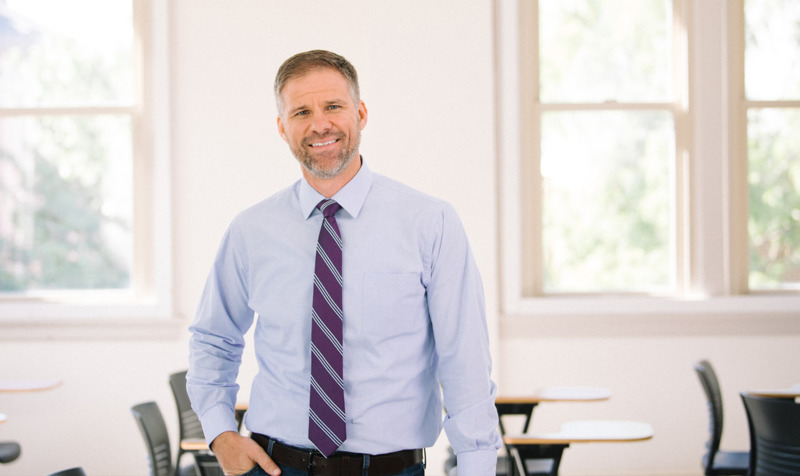
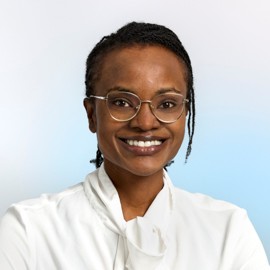
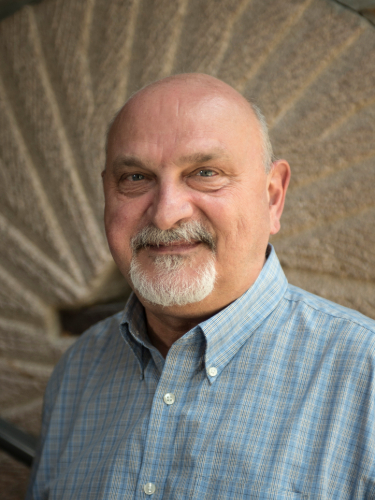
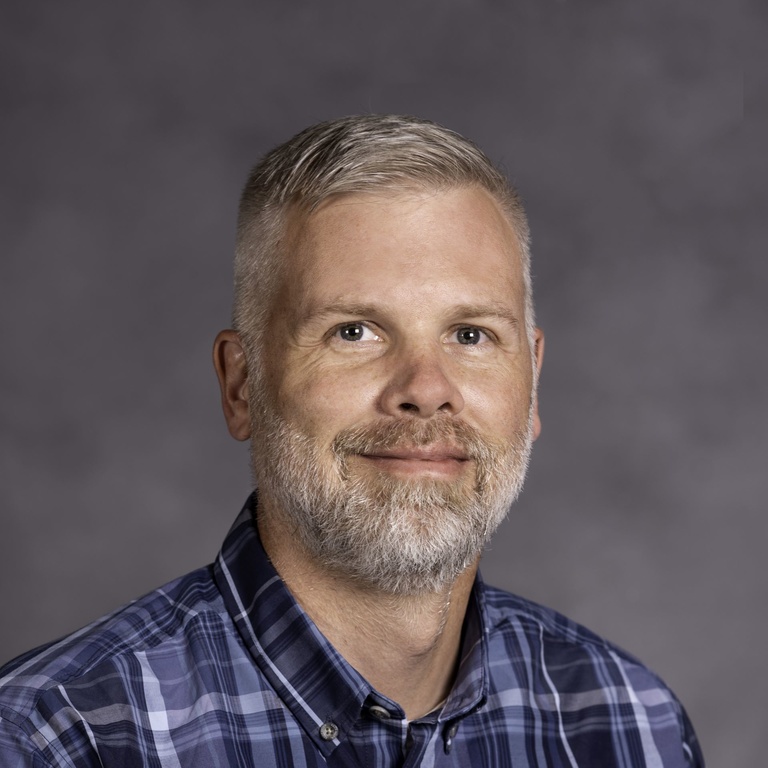
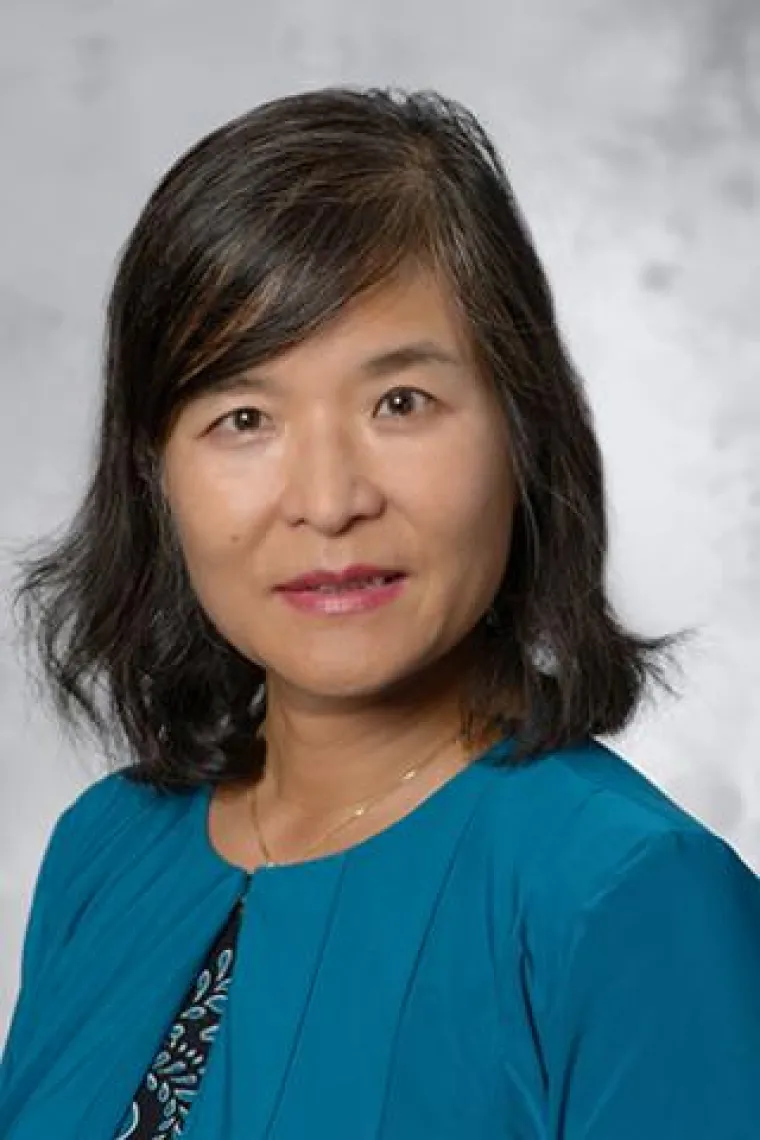
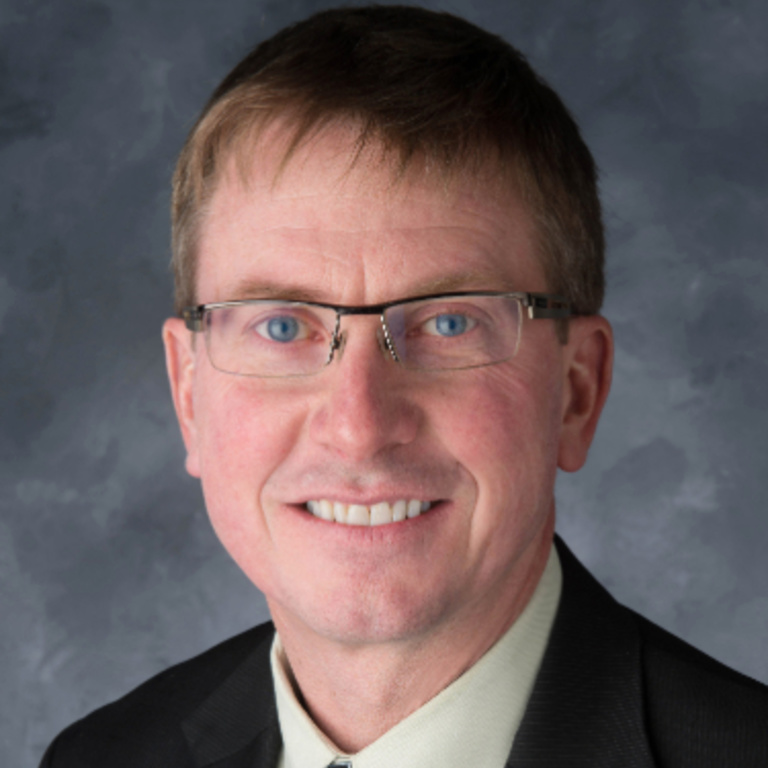
Steven Loheide is a Professor in the Department of Civil & Environmental Engineering at the University of Wisconsin-Madison. His work bridges hydrogeology, ecohydrology, and environmental engineering with a focus on groundwater-dependent ecosystems. PhD (2006), Stanford University MS (2001), Indiana University BS (1999), University of Northern Iowa Loheide's research examines hydroecology , vegetative water use , and stream-aquifer interactions , particularly in the context of climate change , urban greening , and managed aquifer recharge . His recent publications highlight interdisciplinary approaches combining remote sensing , hydrologic modeling , and ecosystem services analysis . Key trends in his 15 most recent publications (2023-2025) span: groundwater-forest interactions during drought, urban ecohydrology impacts on energy balance, MAR design for multi-benefit ecosystems, and tree sway monitoring as ecohydrologic stress indicators. 2022 - Distinguished Professorship of Water Resources Engineering 2021 - Harvey Spangler Award for Innovative Teaching 2018 - Vilas Faculty Mid-Career Investigator Award 2014 - Fulbright Scholar (Argentina) 2010 - NSF CAREER Award Loheide teaches courses in groundwater hydraulics , ecohydrology , and hydroscience , advising graduate students through master's research , pre-dissertation , and thesis projects.
Craig L. Just holds the Donald E. Bently Professorship in Engineering and serves as a Professor in the Department of Civil and Environmental Engineering at the University of Iowa's College of Engineering. He also works as a Faculty Research Engineer at IIHR—Hydroscience and Engineering. With a PhD in Environmental Engineering and Science (2001) and an MA in Chemistry (1994), both from the University of Iowa and University of Northern Iowa respectively, his career spans over two decades of academic and practical contributions. Education: PhD, Environmental Engineering and Science, University of Iowa (2001) MA, Chemistry, University of Northern Iowa (1994) BS, Chemistry, University of Northern Iowa (1992) Dr. Just's research focuses on water quality monitoring through sensor technology, freshwater mussel biosensing , pharmaceutical contaminant removal , and PCB exposure analysis from dredging operations. His work bridges environmental engineering with ecological health and sustainable systems. Recent publications highlight trends in anaerobic digestion optimization , PCB emission characterization , and machine learning applications for biogas prediction. He has extensively studied constructed wetlands , nitrogen cycling , and flood risk mitigation in agricultural and urban contexts. As director of the Iowa Wastewater and Waste to Energy Research Program, he leads initiatives connecting bioremediation , smart infrastructure , and community engagement . His projects span from hydrological modeling in Iowa to international water programs in Honduras.
Ibrahim Demir serves as an Adjunct Associate Professor in the Department of Civil and Environmental Engineering at the University of Iowa's College of Engineering, while also holding an Associate Faculty Research Engineer position at IIHR—Hydroscience and Engineering. His interdisciplinary work bridges hydroinformatics, environmental engineering, and advanced computing technologies to address critical water resources challenges through innovative digital solutions. His educational background includes a PhD in Environmental Informatics and Control Program from the University of Georgia (2010), an MS in Environmental Engineering from Gebze Institute of Technology (2004), and a BS in Chemistry from Bogazici University (2000). This foundation supports his integration of chemical, environmental, and computational sciences in hydrological research. Dr. Demir's research centers on hydroinformatics and AI-driven environmental systems, with core expertise in scientific visualization, cyber systems design, and virtual/augmented reality applications. He develops web-based frameworks for flood risk assessment, drought analysis, and water quality management, emphasizing real-time data integration and user-friendly interfaces. Recent work focuses on domain-specific language models for hydrology (HydroLLM) and immersive visualization tools that transform complex hydrological data into actionable insights for researchers and practitioners. Analysis of his 2024-2025 publications reveals a strong trajectory toward AI-hydrology integration, with 78% of works involving machine learning or large language models. Key themes include flood risk communication (22% of publications), algal bloom prediction (15%), and educational technology applications (12%). His research increasingly emphasizes scientific reproducibility through no-code visual programming frameworks and digital twin implementations for watershed systems. Dr. Demir actively contributes to scholarly discourse as Associate Editor for Environmental Modeling and Software, Journal of Hydroinformatics, Journal of Environmental Informatics, and Water and Artificial Intelligence (Frontiers in Water). He serves as Vice-Chair of the International Joint Committee on Hydroinformatics (IAHR/IWA/IAHS) leadership team, shaping global standards in hydroinformatics research and practice. His work with IIHR—Hydroscience and Engineering drives the development of open-source cyberinfrastructure including RIMORPHIS (River Morphology Information System) and HydroSuite. These platforms enable collaborative river morphology research and provide modular tools for hydrological analysis, education, and operational decision support, demonstrating his commitment to accessible, community-driven scientific advancement.
PD Dr. habil. Thomas Wöhling serves as a Senior Research Scientist and Team Leader for Stochastic Modelling of Hydrosystems at the Chair of Hydrology, Dresden University of Technology's Faculty of Environmental Sciences. His research spans integrated environmental systems modeling with particular expertise in surface water-groundwater interactions, braided river systems, and vadose zone processes. Previously, he held research positions at Water and Earth System Sciences Competence Cluster in Tübingen (2010-2015) and Lincoln Environmental Research in New Zealand (2006-2010). Dr. Wöhling completed his Dipl.-Hydrol. (1999) and PhD in Hydrology (2005) at Dresden University of Technology, followed by habilitation in Stochastic Hydrology (2021). His educational background includes extensive research at the Institute of Hydrology and Meteorology at TU Dresden (1999-2005) where he developed foundational expertise in hydrological modeling. Wöhling's research focuses on integrated modeling of coupled environmental systems , particularly flow and contaminant transport in surface water-groundwater systems, nutrient and energy fluxes in soil-plant-atmosphere systems, and distributed hydrological modeling. His work emphasizes stochastic modeling and uncertainty analysis , with significant contributions to inverse modeling, model calibration, multiobjective optimization, and Bayesian model averaging techniques. He has pioneered methods for evaluating monitoring network worth and data utility for environmental models. His publication record demonstrates consistent contributions to hydrological science, with recent work (2023-2025) focusing on machine learning applications in hydrology, advanced statistical inversion techniques, and complex karst system modeling. Key trends include integration of physics-based and data-driven approaches, improved uncertainty quantification methods, and applications to climate change impacts on water resources. His work bridges theoretical advances with practical applications in New Zealand's braided rivers and European hydrological systems. STAHY Best Paper Award (2018) ASCE Journal of Irrigation and Drainage Engineering Best Reviewer Awards (2008, 2010, 2011, 2015, 2018) ASCE Journal of Irrigation and Drainage Engineering Best Paper Awards (2008, 2009) Dr. Wöhling leads the Stochastic Modelling of Hydrosystems team and has secured funding for numerous projects including Klimakonform, ISOSIM, VAMOS II, and the International Research Training Group 'Integrated Hydrosystem Modelling.' His work combines novel monitoring techniques with modeling and optimal sensor placement to improve prediction reliability for river-groundwater exchange fluxes. He collaborates extensively with international partners, particularly in New Zealand through the Lincoln Agritech's Braided Rivers program. His laboratory work focuses on combining traditional hydrological measurements with advanced computational techniques, including deep learning applications for soil surface hydrology and time-windowed Bayesian analysis for predictive modeling. The team maintains strong connections with field sites in Germany's Saxon region and New Zealand's Canterbury Plains, facilitating integrated theoretical and empirical research approaches.
H.S. Udaykumar is the Associate Dean for Research and Faculty and Roy J. Carver Professor of Engineering in the University of Iowa's College of Engineering, with a primary appointment in Mechanical Engineering. He also serves as a Faculty Research Engineer at IIHR—Hydroscience and Engineering. He joined the university in 1999 and holds leadership roles in research administration and academic governance. Education: PhD in Mechanical Engineering, University of Florida, 1994 MS in Mechanical Engineering, University of Florida, 1990 Bachelor of Technology in Mechanical Engineering, Indian Institute of Technology Madras, 1988 Research Focus: Dr. Udaykumar specializes in computational fluid dynamics (CFD), biofluid mechanics, and multi-scale modeling of energetic materials. His work emphasizes developing numerical methods for simulating shock-induced phenomena in complex materials, including pore collapse dynamics, shear band formation, and hotspot ignition. He integrates machine learning and AI to bridge atomistic, meso-scale, and continuum models for predictive material behavior analysis. Key Contributions: His recent work explores AI-driven frameworks for synthetic microstructure design, physics-aware neural networks for multiphase flows, and high-fidelity simulations of shock initiation in materials like HMX and RDX. He also investigates the application of heat pumps in decarbonization strategies for building thermal control. Awards & Memberships: Active member of the American Society of Mechanical Engineers (ASME), American Institute of Aeronautics and Astronautics (AIAA), and Biomedical Engineering Society. His research has been published in over 200 peer-reviewed articles, with an h-index of 42 and 10,000+ citations (Google Scholar). Grants & Labs: Leads multi-million-dollar research projects funded by the U.S. Department of Energy, Defense Threat Reduction Agency, and Office of Naval Research. His lab focuses on computational methods, experimental validation, and AI integration in materials science and engineering.
Dr. Pei Xu is a Professor in the Department of Civil Engineering at New Mexico State University, a position she has held since September 2019. Prior to this, she served as Associate Professor (2016-2019) and Assistant Professor (2013-2016) at the same institution. Before joining NMSU, she held research faculty positions at the Colorado School of Mines from 2004-2013 and conducted postdoctoral research in France. Her educational background includes: Ph.D. in Hydrosciences from Ecole Nationale du Génie Rural, des Eaux et des Forêts (ENGREF), Paris, France MS in Water and Wastewater Engineering from Lanzhou Jiaotong University, China BS in Environmental Engineering from Xi’an University of Architecture & Technology, China Dr. Xu's research focuses on advanced water treatment technologies, particularly membrane processes for desalination and water reuse. Her work encompasses potable and non-potable water reuse, treatment of produced water from oil and gas operations, and removal of emerging contaminants. She investigates oxidation and photocatalysis, biological and bioelectrochemical processes, and addresses challenges such as membrane fouling through experimental and modeling approaches. Her publication record demonstrates consistent innovation in water treatment, with recent work emphasizing analytical methods for complex wastewaters (2021), algal-membrane hybrid systems for water recovery (2020), and decision support tools for non-traditional water management (2018). The research spans fundamental membrane processes to practical applications in desalination and produced water treatment, reflecting a strong interdisciplinary approach to solving water scarcity challenges.
Witold Krajewski is a Professor of Civil and Environmental Engineering at the University of Iowa and serves as Director of the Iowa Flood Center and Research Engineer at IIHR —Hydroscience & Engineering. He was elected to the National Academy of Engineering (NAE), a testament to his significant contributions to flood forecasting and hydrometeorology. Education: Ph.D. in Water Resources Systems, Warsaw University of Technology, Poland M.S. in Environmental Engineering, Warsaw University of Technology, Poland Krajewski’s research focuses on flood modeling, hydrometeorology, radar/satellite remote sensing, and water resources systems. His work integrates advanced hydrological modeling with real-time data for improved flood prediction and mitigation strategies. His recent publications address critical challenges in flood forecasting, including radar-rainfall uncertainty quantification, ensemble data assimilation for streamflow predictions, and the application of machine learning for super-resolution flood inundation mapping. These studies emphasize cross-scale analysis, operational forecasting frameworks, and satellite data validation. Scientific Awards National Academy of Engineering (NAE) election Krajewski leads the Iowa Flood Center, where he develops cyberinfrastructure for real-time hydrological monitoring and collaborates on projects involving the National Water Model (NWM). His work bridges cutting-edge research with practical flood management solutions.
Roles and Affiliations: Troy D. Sadler is the Thomas James Distinguished Professor of Experiential Learning at the University of North Carolina at Chapel Hill's School of Education. He holds a Ph.D. in Curriculum & Instruction from the University of South Florida (2003) and has over 20 years of experience in science education and teacher training. His academic journey includes roles at institutions such as the University of Missouri and the University of Florida. Education Background: Ph.D. in Curriculum & Instruction (Science Education), University of South Florida (2003) M.Ed. in Science Education, University of Florida (1997) B.S. in Biology, University of Miami (1994) Research Interests: Sadler focuses on socio-scientific issues (SSI) in education, experiential learning, science teacher development, and the integration of innovative technologies like gaming and virtual environments. He emphasizes science education's role in fostering critical thinking and ethical decision-making. His work explores how issues-based learning supports scientific literacy and democratic participation. Key Contributions: Developed the SIMBL (Socio-Scientific Issue and Model-Based Learning) framework Designed curricula integrating computational thinking and SSI Advanced the use of virtual environments (e.g., Mission HydroSci) for NGSS-aligned learning Grants and Awards: Recipient of NSF grants for projects like Mission HydroSci and computational thinking integration 2019 Thomas James Distinguished Professorship Early Career Research Award (2009), Teaching Excellence Awards (2005, 2003), and numerous editorial roles Labs/Teams: Director of the ReSTEM Institute at the University of Missouri (2011–2018) and the MU Science Education Center. Current leadership in the UNC School of Education's CCTE and LSPS departments.
Dr. Liang Xiuyu is an Assistant Professor (Associate Researcher) and doctoral supervisor at the School of Environmental Science and Engineering, Southern University of Science and Technology (SUSTech). He joined SUSTech in February 2018 and has been serving as Assistant Professor since January 2021. Prior to SUSTech, he was an Associate Researcher at Nanjing University's Center for Hydrosciences Research from 2015-2018. His academic journey includes a Ph.D. in Hydrology and Water Resources from Nanjing University (2009-2012), an M.S. in Geological Engineering from Anhui University of Science and Technology (2005-2008), and a B.S. in Resources and Environment from the same institution (2001-2005). Dr. Liang's educational background demonstrates a strong foundation in water resources and geological engineering. His research focuses on saturated-unsaturated water flow coupling simulation, surface-groundwater interaction, polluted gas intrusion simulation, and stochastic theory of groundwater flow and solute transport. He has published over 60 scientific papers, with more than 30 as first or corresponding author in leading journals including Water Resources Research, Environmental Science & Technology, and Water Research. His work addresses critical issues in groundwater resources and environmental protection, particularly the interfacial hydrodynamic processes between different water systems. Analysis of Dr. Liang's recent publications reveals a consistent focus on the fundamental mechanisms of groundwater flow and solute transport. His research demonstrates sophisticated analytical and numerical modeling approaches to understand complex hydrological processes, with particular emphasis on temporal scaling characteristics, coupled flow systems, and interactions between surface water and groundwater. The work spans theoretical developments, field applications, and practical solutions to environmental challenges. 2025 Shandong Science and Technology Progress Second Prize 2024 SUSTech Outstanding Doctoral Dissertation Supervisor Award 2024 SUSTech 8th Young Teacher Teaching Competition Second Prize 2024 SUSTech College of Engineering Outstanding Young Talent Cultivation Program 2023 SUSTech Admissions Advanced Individual 2022 Geological Science and Technology Bulletin Outstanding Young Editorial Board 2018 Shenzhen Overseas High-level Talents 2018 Shenzhen Nanshan Pilot Talent 2018 & 2016 Journal of Hydrology Outstanding Reviewer Dr. Liang has successfully led multiple research projects, including National Natural Science Foundation of China grants and national water pollution control projects. He serves as deputy editor for prestigious journals including Journal of Hydrology (2025-), Vadose Zone Journal (2020-), and Stochastic Environmental Research and Risk Assessment (2019-). His academic service extends to committee memberships with the Chinese Hydraulic Engineering Society and international organizations including the American Geophysical Union. Dr. Liang teaches undergraduate and graduate courses in groundwater hydrology and spatial statistics, contributing to the education of next-generation hydrologists. Dr. Liang maintains an active research group at SUSTech focused on groundwater resources and environmental protection. His team investigates critical issues including surface-groundwater interactions, unsaturated-saturated flow coupling, and gas migration processes in porous media. The research has practical applications for water resource management, pollution control, and environmental protection in China and globally.
Dr. Ann Wahu Kamamia is a Researcher at the Fraunhofer Institute for Systems and Innovation Research ISI in Karlsruhe, Germany. She holds a PhD in Environmental Science from Technische Universität Dresden, following a Master's in HydroScience Engineering and undergraduate studies in Soil Water and Environmental Engineering from Jomo Kenyatta University of Agriculture and Technology (Kenya). Since 2024, she has been part of the Business Unit Sustainability Innovation and Policy, focusing on environmental impact assessments, lifecycle analysis frameworks, and climate change mitigation strategies. Her research explores emissions reduction in energy-intensive sectors, raw material demand from emerging technologies, and sustainable land-use practices. Her academic background combines hydrological modeling with environmental policy analysis. Key research themes include catchment dynamics in Kenya (e.g., Mau Forest, Nyangores, and Ruiru reservoir systems), agroforestry impacts, and digital soil mapping applications. She also develops educational modules on sustainability and lifecycle analysis for academic and industry audiences. Dr. Kamamia’s recent publications (2019–2022) address soil stability modeling, water resource trade-offs, and erosion management in East African contexts. She actively contributes to interdisciplinary projects bridging environmental science with policy implementation.
Marian Muste is an Adjunct Professor and Research Engineer in Civil and Environmental Engineering at the University of Iowa, affiliated with IIHR—Hydroscience & Engineering. He holds an MSc from Polytechnic Institute Cluj and a PhD from the University of Iowa. Research Focus: His work spans experimental hydraulics, sediment transport, flood monitoring, and cyberinfrastructure for watershed systems. He contributes to UNESCO and WMO flood-risk projects and develops innovative river-monitoring techniques using advanced sensors and modeling. Publication Trends: Recent articles emphasize river dynamics, hysteresis phenomena, AI-driven water management, and cyberinfrastructure (RIMORPHIS). His research integrates field data, satellite observations, and computational models to advance hydrological prediction and hazard mitigation. No awards listed. He mentors through research collaborations but has no listed PhD students. His work supports infrastructure resilience and environmental monitoring frameworks.
Nate Young is a Research Engineer and Associate Director at the Iowa Flood Center, affiliated with IIHR—Hydroscience and Engineering within the University of Iowa's College of Engineering. His work focuses on floodplain mapping, watershed modeling, and ecohydraulics research. Education: PhD, The University of Iowa (2006) MS, The University of Iowa (2000) Research Interests: Ecohydraulics Field measurements Freshwater mussel habitats Nitrogen fate and transport in river systems Contact Information: Phone: (319) 384-1732 Address: 306 SHL, Stanley Hydraulics Lab, Iowa City, IA 52242, United States
Priscilla Williams is an Assistant Professor in the Department of Civil and Environmental Engineering at the University of Iowa, with a joint appointment as Assistant Research Engineer at IIHR—Hydroscience and Engineering. Her work bridges academic teaching and applied hydroscience research. Her research focuses on erosion and sediment transport processes, particularly through experimental and computational modeling in fluvial environments. These interests align closely with challenges in water resources management, river engineering, and environmental protection. She leads the Williams Erosion and Sediment Transport (WEST) Laboratory, which conducts experimental studies on sediment dynamics. No recent publications are listed in the provided text, so no trend analysis can be performed at this time. There are no scientific awards mentioned in the available information. Priscilla Williams advises students through her academic role and potentially mentors researchers in her laboratory. While specific grants are not listed, her dual affiliation with IIHR suggests involvement in externally funded research projects related to hydroscience and environmental engineering. She leads the Williams Erosion and Sediment Transport (WEST) Laboratory, located in the Stanley Hydraulics Lab, which serves as a hub for experimental research on sediment movement, erosion mechanisms, and fluid-sediment interactions.
Jennifer Duan is a Professor with a joint appointment in the Department of Hydrology and Atmospheric Sciences and the Department of Civil Engineering and Engineering Mechanics at the University of Arizona. Her research focuses on hydraulics, sediment transport, and fluvial geomorphology, with expertise in experimental studies and computational modeling of turbulent flow, sediment transport dynamics, and channel morphological processes. Dr. Duan holds a PhD in computational hydroscience and engineering from the University of Mississippi. She leads research initiatives addressing water quality modeling, surface-groundwater interactions, and the application of advanced technologies like drone-based monitoring for discharge estimation. Her work integrates field experiments, numerical simulations, and machine learning to solve complex environmental and engineering challenges. Notably, she has pioneered studies on post-wildfire hydrological impacts, sediment transport in vegetated channels, and pathogen resuspension in irrigation systems. She also actively mentors early-career professionals through initiatives like the Mentoring Institute for Sediment Transport (MIST). Dr. Duan’s contributions span interdisciplinary applications, including flood fragility analysis for infrastructure resilience and net-zero urban water systems. Her research has direct implications for sustainable water management, environmental restoration, and disaster mitigation.
Larry J. Weber is the Edwin B. Green Chair in Hydraulics and Professor in Civil and Environmental Engineering at the University of Iowa's College of Engineering. He serves as Director of IIHR—Hydroscience and Engineering, Center for Hydrologic Development, and Interim Director of the Iowa Flood Center. His research focuses on hydraulic engineering, flood modeling, river restoration, and water quality management, integrating computational fluid dynamics and ecological data to address challenges in fish passage facilities, sediment transport, and nutrient dynamics in agricultural watersheds. Education: PhD (1993), MS (1990), and BS (1989) in Civil and Environmental Engineering from the University of Iowa. Research interests include hydrodynamic modeling of large river systems, flood mitigation strategies, and the impact of agricultural practices on water quality. He leads projects like the Iowa Watersheds Project and developed the Iowa Flood Information System (IFIS), a real-time flood forecasting platform. His work emphasizes interdisciplinary approaches to environmental resilience and policy-driven solutions for water resource sustainability. Key contributions include advancing hydraulic design of fish passage facilities, quantifying phosphorus budgets in river systems, and evaluating the efficacy of distributed flood mitigation structures. He collaborates with federal and state agencies to translate scientific insights into actionable flood management policies.