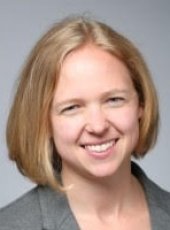
Ana Dyreson is an Assistant Professor in Mechanical and Aerospace Engineering at Michigan Technological University and Associate Research Director at the Center for Innovation in Sustainability & Resilience (CISR). She leads the Great Lakes Energy Group, focusing on climate change impacts on electric power systems , energy transitions in cold climates , and thermal power plant modeling . Her work bridges solar photovoltaic design , electricity grid operational modeling , and the energy-water nexus . Education : PhD in Mechanical Engineering, University of Wisconsin–Madison (2018) MS in Mechanical Engineering, Northern Arizona University (2014) BS in Engineering Mechanics, University of Wisconsin–Madison (2011) Research emphasizes climate-resilient energy systems , particularly solar energy in cold climates and grid-scale modeling . Her 2025-2022 publications investigate snow mitigation on PV panels , heat pump adoption , floating solar-hydropower hybrids , and climate stressor impacts on thermoelectric plants . She develops inclusive teaching methods and advises on renewable energy deployment through initiatives like the Tech Forward Initiative on Sustainability and Resilience . Her team collaborates on multisector dynamics and energy-water-climate research in the Great Lakes region.
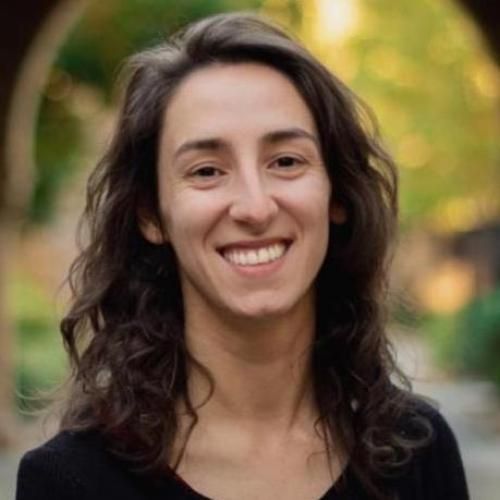
Marta Zaniolo serves as an Assistant Professor in Civil and Environmental Engineering at Duke University since January 2024, addressing critical water sustainability challenges through integrated hydrology, machine learning, and systems modeling approaches. Her work focuses on ensuring equitable water access amid climate change, scarcity, and competing demands across diverse spatial scales. Her academic foundation includes: B.S. in Environmental Engineering from Politecnico di Milano (2014) M.S. in Environmental Engineering from Politecnico di Milano (2017) Ph.D. in Information Technology (Environmental Intelligence Lab) from Politecnico di Milano (2020) Postdoctoral Research at Stanford University (2020-2023) Dr. Zaniolo's research integrates water resources planning , drought modeling , and climate adaptation with cutting-edge machine learning techniques including reinforcement learning and feature extraction. The ZEDD Lab develops computational models that synthesize climate, hydrological, and socio-economic data to enhance decision-making for water security. Her work emphasizes real-world applicability through stakeholder engagement and participatory design, particularly in vulnerable regions like the Omo-Turkana basin where mismanaged infrastructure operations can trigger socio-ecological conflicts. Analysis of her 2021-2025 publications reveals three dominant research trajectories: (1) development of synthetic weather generators (e.g., FIND model) for precise drought characterization, (2) neuro-evolutionary algorithms for multi-objective reservoir control under climate uncertainty, and (3) quantification of flexibility value in water infrastructure planning. These studies consistently bridge technical innovation with equity considerations, particularly in transboundary water systems. She leads the Zaniolo Lab for Environmental Data and Decisions (ZEDD Lab), which operates at the intersection of hydrology, systems modeling, and machine learning. The lab's framework combines computational water system dynamics with stakeholder-inclusive approaches to develop decision support tools for extreme event preparedness. Current projects focus on urban drought resilience, dam reoperation strategies for climate extremes, and heat-substance use risk intersections in rural communities, all grounded in case studies spanning California, Ethiopia, and the American South.
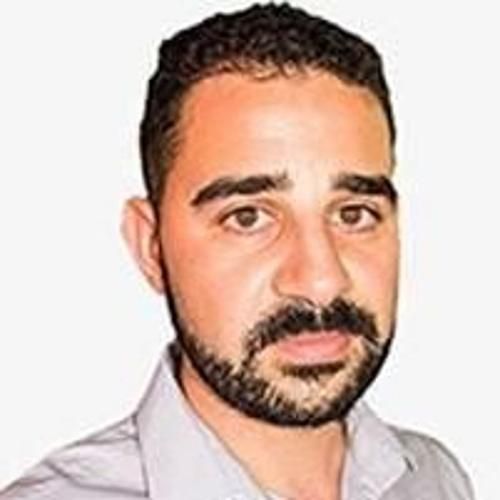
Manuel Jesus Espinosa Gavira is a researcher at the Department of Automation, Electronics, Architecture and Computer Networks Engineering at the University of Cádiz, Spain. He is affiliated with the TIC168 Computational Instrumentation and Industrial Electronics research group under the Information and Communication Technologies PAIDI area. Research Focus: His work centers on power quality analysis, wireless sensor networks, and smart grid technologies. Key contributions include developing instrumentation systems for voltage supply characterization, cloud-induced photovoltaic transient analysis, and synchronized sensor networks for industrial applications. His PhD thesis (2023) explored sensor networks for short-term solar prediction in microgrids and smart cities. Publications Trends: Recent work focuses on higher-order statistics (HOS) for power quality monitoring, photovoltaic plant optimization using weather forecasts, and frequency domain analysis for grid stability. These publications reflect expertise in computational instrumentation, renewable energy integration, and real-time monitoring systems.
Dr Abigail Hathway is a Senior Lecturer at the School of Mechanical, Aerospace and Civil Engineering , University of Sheffield, specializing in Building Physics and Indoor Airflow Dynamics . Her work bridges energy efficiency with occupant health , focusing on human-building interactions. Education: PhD in CFD modeling of bioaerosols (University of Leeds) Research interests include: Computational Fluid Dynamics (CFD) for indoor environments Human activity impacts on airflow and infection risk Sustainable drainage systems (SuDS) for urban climate mitigation Smart building controls integrating machine learning Her recent publications address ventilation strategies and airborne transmission mitigation across healthcare, hospitality, and urban settings. She leads research on SuDS microclimate impacts and battery storage optimization in buildings. Current PhD opportunities in her group focus on: Urban stormwater-climate interactions Low-energy ventilation systems Occupant-driven building performance
Danielle Zyngier serves as an Adjunct Assistant Professor in the Department of Chemical Engineering within the Faculty of Engineering at McMaster University. Her academic role focuses on research and teaching in process systems engineering, optimization, and control systems with industrial applications. Her research spans Chemical Engineering (54.8% of activity), Optimization Theory (18.2%), and Control Systems (9.4%). She specializes in uncertainty management for scheduling problems, sensor network design, and hybrid monitoring systems. Key application areas include cascaded hydropower systems considering electricity price variations, rail logistics, wastewater treatment processes, and offshore compression systems in oil and gas operations. Analysis of her 15 most recent publications reveals consistent focus on robust optimization frameworks for industrial processes under uncertainty. Her work bridges theoretical advancements in MILP formulations and real-time scheduling with practical implementations in energy, transportation, and environmental systems. Recent contributions (2017-2021) emphasize online scheduling for hydropower systems, while earlier work established foundations in sensor networks and soft sensors. No doctoral or master's students are listed in available records. The VIVO database indicates no currently loaded research grants, though co-author networks show established collaborations with Thomas Marlin (4 publications) and Christopher L.E. Swartz (3 publications).
Gordon Huang is an Adjunct Professor in the Civil Engineering department at McMaster University , specializing in environmental systems analysis and sustainable resource management. His research focuses on quantitative methods for addressing uncertainties in climate change, water-food-energy nexus planning, and contaminant remediation. Primary Affiliation : Civil Engineering, McMaster University His work integrates advanced computational models like Bayesian neural networks, factorial optimization, and copula-based downscaling to analyze complex environmental interactions. Recent projects examine CO2 emission pathways, microplastic impacts, and climate-driven drought risks. Key methodologies include stochastic programming , ecological network analysis , and machine learning for predictive modeling. Publications span topics from membrane technology for water treatment to large-scale hydropower socio-economic effects. Email : huangg31@mcmaster.ca
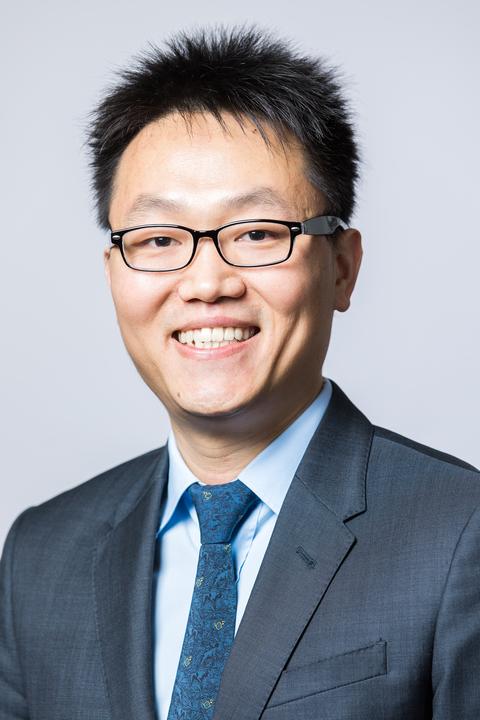
Dr. Wei Sun is a Chancellor's Fellow (equivalent to Assistant Professor) in Energy Systems Integration at the University of Edinburgh's School of Engineering. His research specializes in low-carbon energy systems with high renewable penetration, utilizing data science and optimization techniques. He contributes to major initiatives like the National Centre for Energy Systems Integration (CESI) and Hydrogen’s Value in Energy Systems (HYVE). Research encompasses network integration of distributed energy resources, climate impacts on renewables, and multi-vector energy systems. Recent publications focus on hybrid energy storage, hydrogen integration, and machine learning applications for system optimization. He holds professional credentials as a Chartered Engineer (CEng) with memberships in IET and IEEE. Teaching includes Hydropower Design Projects and Renewable Energy Fundamentals. Visiting research affiliations include University College London, enhancing collaborative networks in energy systems research.
Prof. Victor Grigoras is a faculty member at the Technical University of Iași, holding the rank of Professor. He specializes in electrical engineering and computer science, focusing on signal processing, parallel architectures, and nonlinear dynamics in power systems. His research interests include smart grid technologies, renewable energy integration, and data-driven methodologies for grid optimization. He teaches courses such as 'Semnale, Circuite și Sisteme' and 'Algoritmi și Structuri Paralele de Calcul.' His research spans over 15 recent articles (2021–2025), emphasizing advancements in smart grid automation, machine learning applications in voltage quality analysis, and optimal power flow solutions for renewable integration. Notable trends include SCADA system improvements, energy storage strategies for prosumer grids, and IoT-based energy management. His work addresses challenges in grid reliability, power quality, and future urban grid resilience under high EV adoption scenarios. Prof. Grigoras has contributed to frameworks for electric vehicle charging station placement, hydropower plant optimization via data mining, and demand response mechanisms using smart metering. His methodologies often combine clustering techniques with fuzzy logic or metaheuristic algorithms to solve complex grid problems.
Antonios Papaemmanouil is the Head of the Institute of Electrical Engineering and the Competence Center for Digital Energy and Electric Power at the Lucerne School of Engineering and Architecture (HSLU). He holds an MSc from the University of Patras, Greece, and a PhD from ETH Zurich. His academic rank is Lecturer in the field of Digital Energy and Electric Power. His work focuses on digitalization of power systems, e-mobility integration, and local energy markets. Education: MSc in Electrical Engineering and Information Technology, University of Patras PhD in Power Systems Planning, ETH Zurich Research interests include smart grids, data-driven power systems, digital infrastructure management, and decentralized AI applications. He leads projects such as SWEET RECIPE, LANTERN, and ENFLATE, which address energy transition challenges. His work emphasizes grid analytics, asset management, and innovation in energy systems. Key projects include studies on e-mobility aggregation, federated learning for load forecasting, and stability validation of hydropower plants using Hardware-in-the-Loop. His research outputs span peer-reviewed articles on topics like fault detection in distribution networks and decarbonization strategies for local electricity systems. Professional roles include Track Chair at IEEE Smart Cities Conference 2022 and Co-Guest Editor for Journal MDPI Energies . He actively contributes to Swiss energy initiatives via SwissT.Net and IEEE PES Schweiz.
Elena Marianne Pummer is a Professor in the Department of Civil and Environmental Engineering at NTNU. She specializes in hydraulic engineering, with a focus on hydrodynamics, sediment transport, and glacial lake outburst floods (GLOFs). Her research integrates experimental modeling, CFD simulations, and field studies to address challenges in hydropower, flood mitigation, and infrastructure design. Education: Dr.-Ing., RWTH Aachen University, Germany (2016) Dipl.-Wirtsch.-Ing., TU Darmstadt, Germany (2011) Research Interests: Her work spans hydraulic structures, ethohydraulics, and the dynamics of high-speed flows. She leads projects on GLOF hydraulics, underground pumped storage plants, and culvert blockage analysis. Key areas include sediment transport modeling, experimental validation of CFD frameworks, and sustainable hydropower solutions for climate resilience. Publications: Recent work addresses GLOF mechanisms in Peru, spillway capacity optimization, and CFD studies of supercritical flows. Her publications emphasize practical applications in infrastructure design and environmental risk management. Awards: 2019: DTK & WasserWirtschaft Studienpreis (3rd place) 2018: Young European Talent Award 2017: Friedrich-Wilhelm and ICOLD Young Engineers Awards Leadership & Projects: She chairs committees including IAHR's Hydraulic Structures and EERA's Hydropower SP2. Current projects include RenewHydro (sediment management), HydroCen (hydraulic structures), and Energydam (non-powered dam retrofitting). Advising: Supervises PhD students in GLOF hydraulics (Jan Hrebrina) and InSpillyFish (Nils Solheim). Past advisees include Subhojit Kadia (supercritical flows) and Joakim Sellevold (culvert hydraulics). Labs/Teams: Leads experimental hydraulics research at NTNU, collaborating with global institutions on projects like Pen@Hydropower (hydropower potential analysis) and Kajak Waves (nature-based infrastructure solutions).
Prof. Sossan Fabrizio is an Associate Professor of Power Systems at HES-SO Valais-Wallis, focusing on energy storage, renewable integration, and smart grid technologies. He holds a PhD from DTU (2014) and has held roles at EPFL, ETHZ, and Mines ParisTech. His research emphasizes optimizing distribution grids, hydropower flexibility, and EV charging infrastructure. He leads projects like STOR-HY (Hybrid Hydropower Control) and STORE (Swiss Renewable Energy Storage). Education: Bachelor's/Master's in Computer Engineering, University of Genova (2010) PhD in Electrical Engineering, Technical University of Denmark (2014) Research Interests: Planning/scheduling/control of distributed energy resources, energy storage systems, and grid dispatchability. Areas include hydropower penstock stress reduction, EV charging infrastructure optimization, and model predictive control. Articles Overview: Over 20 peer-reviewed publications since 2013, focusing on grid integration of storage, renewable curtailment, and frequency control. Recent work includes optimal EV charging station planning (2023) and stress-informed MPC for hydropower plants (2022). Advising/Grants: Supervised PhD students like Stefano Cassano (defended 2023) and Biswarup Mukherjee. Secured grants including Horizon 2020 STOR-HY (2024) and Swiss Innovation Agency projects. Leads the ResiNet initiative on grid resiliency. Labs/Teams: Co-founded ModBESS (2020) for microgrid monitoring systems. Active in experimental facilities like the CIGRE MV network and Waterloo Institute’s hydropower lab.
Kurt Jonny Johansen is a Senior Lecturer and Study Program Manager for the Radiography BSc program at UiT The Arctic University of Norway . Based in Tromsø, he works in the Department of Radiography within the Institute of Health Sciences (IHO). His research interests span: Medical imaging safety protocols Nuclear medicine education E-learning technologies in healthcare training Emergency radiography Environmental impact assessment on aquatic species Recent publications highlight his work in MRI safety checklists, PET radiopharmaceutical development, and virtual teaching tools for radiography. While no specific awards are listed, his collaborations with researchers like Richard Fjellaksel and Helen Egestad demonstrate his active engagement in both educational and applied research. As a member of the Research Group Acute and Critically Ill , he contributes to healthcare research at UiT's MH East U9.130 facility.
Fredrik Hedenus is an Associate Professor at Physical Resource Theory, Chalmers University of Technology, Sweden. His research focuses on strategies to reduce climate impact from energy and food production, with emphasis on policy instruments and the effects of technical and behavioral measures. Dr. Hedenus' research interests span climate change mitigation, energy systems analysis, renewable energy integration, biomass utilization, and the climate impact of food systems. His work combines technical energy system modeling with policy analysis to identify cost-effective pathways for deep decarbonization. He has particular expertise in analyzing the role of biomass in energy systems, the integration challenges of variable renewable energy sources like wind and solar, and the climate implications of dietary choices. His publication record demonstrates consistent contributions to high-impact energy and climate journals, with recent work focusing on European energy system transitions, hydropower resilience, wind power deployment patterns, and the feasibility of local climate targets. Dr. Hedenus frequently engages with policy debates through opinion pieces in major Swedish newspapers, addressing topics like climate target setting, dietary changes for climate mitigation, and the role of nuclear power in decarbonization strategies. Dr. Hedenus has received research funding from multiple sources including the Swedish Energy Agency, the Swedish Foundation for Strategic Environmental Research (Mistra), and the European Commission. He serves on Gothenburg City's Climate Council, providing scientific expertise to inform municipal climate action.
Mark Edward Borsuk is the James L. and Elizabeth M. Vincent Professor in the Department of Civil and Environmental Engineering at Duke University’s Pratt School of Engineering. He leads the Borsuk Lab, which specializes in interdisciplinary modeling of coupled social, environmental, and technical systems. His research spans climate change, ecosystem services, water resources, land use, and environmental health, using advanced methods such as Bayesian networks, agent-based modeling, game theory, and risk analysis. He co-directs the Center on Risk within Duke’s Science & Society Initiative and is an Associate of the Duke Initiative for Science & Society. B.S.E. in Civil Engineering and Operations Research, Princeton University, 1995 M.S. in Statistics and Decision Sciences, Duke University, 2001 Ph.D. in Environmental Science and Policy, Duke University, 2001 Postdoctoral Training, EAWAG (Swiss Federal Institute for Aquatic Science and Technology), Systems Analysis, Integrated Assessment, and Modelling (SIAM) Dr. Borsuk’s research focuses on integrating scientific data across disciplines to support decision-making under uncertainty. He is a leading expert in Bayesian network modeling applied to environmental and human health regulation. His work combines risk analysis, game theory, and agent-based modeling to assess climate change and environmental policy. He has developed novel frameworks for valuing ecosystem services, modeling landowner behavior, and assessing geoengineering risks. His lab emphasizes interdisciplinary collaboration, stakeholder engagement, and quantitative decision support. His recent publications reflect a strong trend toward integrating machine learning, causal inference, and spatial modeling into environmental assessment. Topics include solar radiation modification governance, land-use policy forecasting, invasive species impacts, and urban green space valuation. His work increasingly leverages big data (e.g., Zillow, remote sensing) and probabilistic programming to enhance model transparency and predictive accuracy. Chauncey Starr Distinguished Young Risk Analyst Award, Society for Risk Analysis, 2013 Early Career Research Excellence Award, International Environmental Modelling and Software Society, 2008 Earl I. Brown Outstanding Civil Engineering Faculty Award, Duke University, 2018 Best Paper, Integrated Environmental Assessment and Management Journal, 2012 Excellence in Mentoring Award, Dartmouth College Postdoctoral Association, 2010 Best Paper in Integrated Modelling, Environmental Modelling & Software Journal, 2008 Dr. Borsuk has been a principal investigator on grants from NSF, EPA, NIH, NIEHS, and USFS. He mentors a diverse group of graduate students and postdoctoral fellows, including Kim Bourne, Jon Holt, Chris Krapu, and Ryan Calder. He teaches courses such as Risk and Resilience Engineering, Engineering Economics, and Independent Study in Civil and Environmental Engineering. He is actively involved in advising and curriculum development through the Bass Connections Energy & Environment Research Team. He leads the Borsuk Lab, a dynamic research group focused on systems, risk, and decision analysis. The lab is a key contributor to the Bridge Collaborative—a partnership between Duke, The Nature Conservancy, IFPRI, and PATH—where it develops quantitative models to support cross-sectoral decision-making. The lab also investigates landowner decision-making in New England forests and the governance of solar geoengineering, using agent-based and deliberative modeling approaches.
Dr James Shucksmith is a Senior Lecturer in Water Engineering at the School of Mechanical, Aerospace and Civil Engineering, University of Sheffield. After completing his undergraduate degree and PhD at the same department, he joined the academic staff in 2010 following a KTP associate role with Yorkshire Water. His research focuses on urban flooding hydrodynamics, water quality modeling, and sustainable drainage systems. Co-director of EPSRC Centre for Doctoral Training in Water Infrastructure and Resilience Current projects: Real Time Abstraction Management (with Severn Trent Water), Centaur FloodInteract Research interests include: Urban flood hydrodynamics and drainage-surface flow interactions Water quality forecasting tools for surface water abstraction Development of local real-time control systems for urban drainage Experimental validation of flood models using PIV measurements His publications (2010-2025) cover topics like contaminant transport in flooded sewer systems, longitudinal dispersion modeling, and real-time control optimization. Recent work focuses on data-driven approaches for Cryptosporidium prediction and E. coli forecasting.