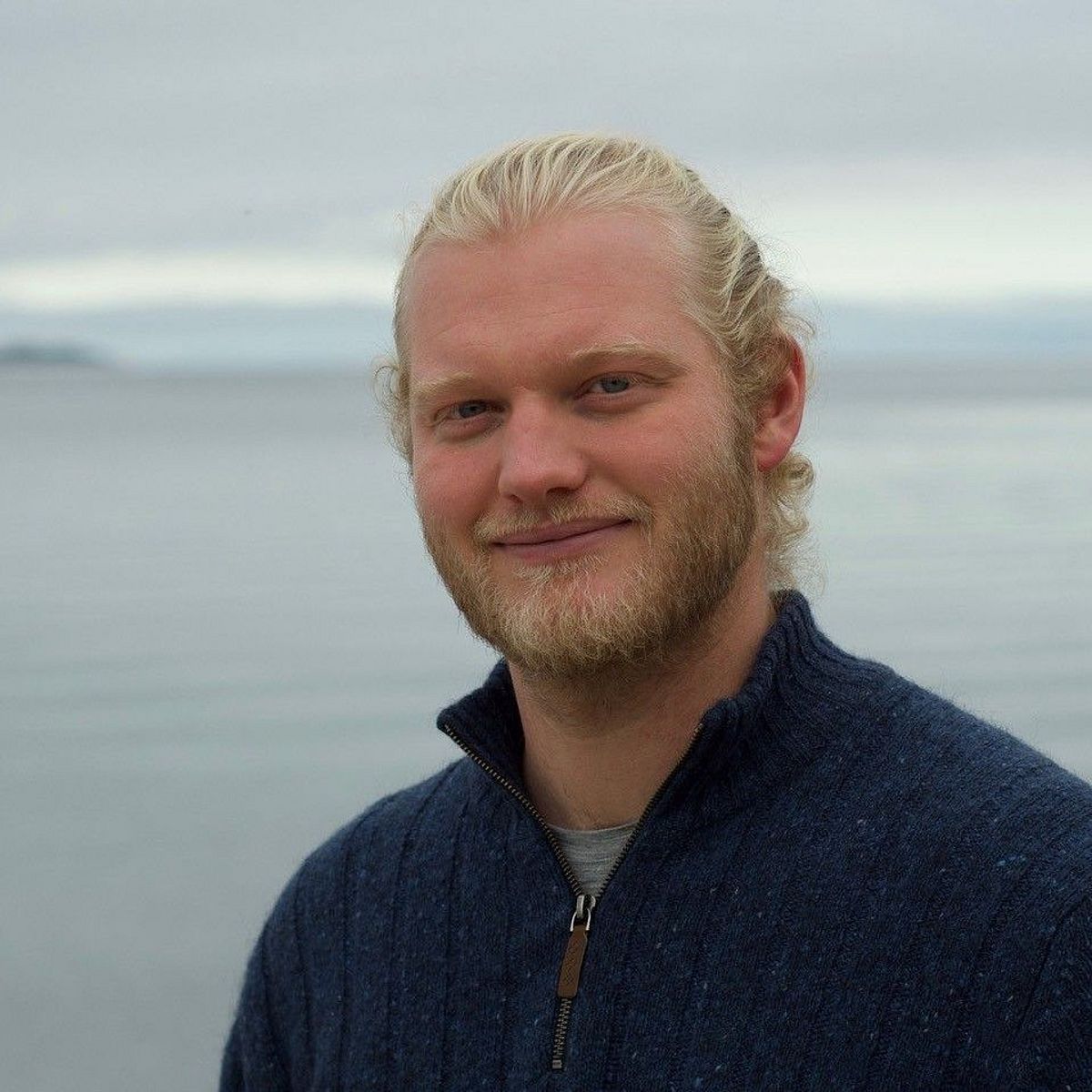
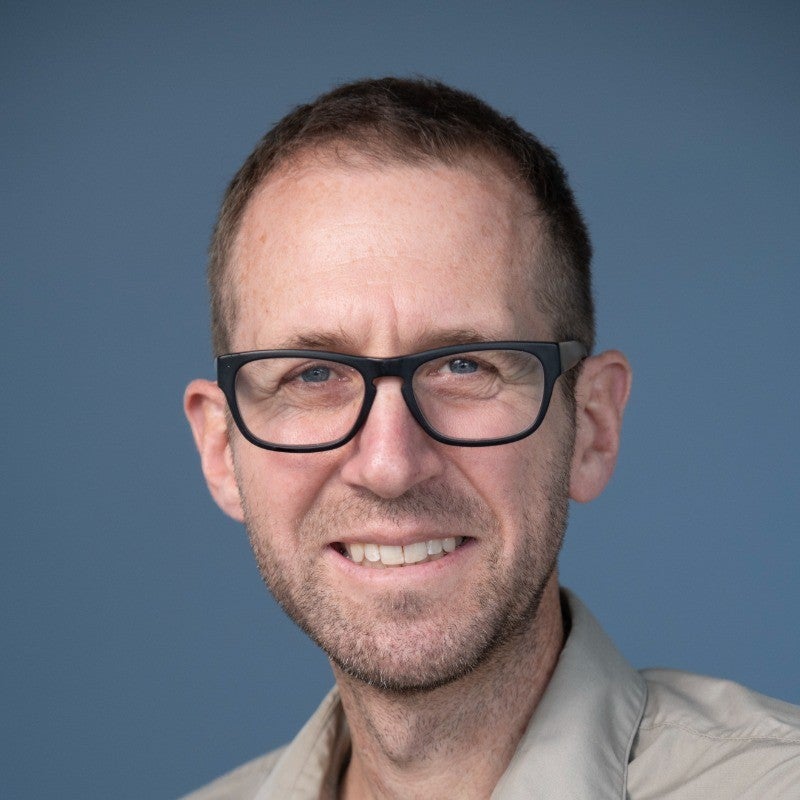
Colin Stedmon is a Professor at the National Institute of Aquatic Resources under the Technical University of Denmark (DTU) . His research focuses on chemical oceanography, environmental spectroscopy, and marine biogeochemistry, particularly in Arctic and Greenlandic coastal systems. He leads the DTU Microbes Initiative and contributes to UN Sustainable Development Goals related to climate and marine environments. Research Interests: DOM dynamics, optical oceanography, Arctic carbon cycling, and applications of spectroscopy in marine and water quality studies. Projects: Supervises PhD projects on Arctic surveillance, seawater quality mapping, and microbial community interactions with DOM. Leads initiatives on seabed trawling impacts and laccase discovery. Collaborations: Works with international teams across Greenland, Siberia, and the Baltic Sea, focusing on climate change, ocean acidification, and pollution monitoring.
Professor Dave Roberts is affiliated with Durham University's Geography Department, where he specializes in glacial processes and ice sheet dynamics. His research spans Greenland ice sheet history, British-Irish Ice Sheet reconstruction, and subglacial processes. Research Focus: Greenland ice sheet evolution during the last glacial cycle British-Irish Ice Sheet dynamics in North Sea and Irish Sea regions Ice stream behavior and response to climate forcing Glaciomarine processes and sea-level changes Scientific Publications demonstrate expertise in: Glacial landform analysis Subglacial sedimentology Ice margin oscillations Quaternary chronostratigraphy Paleoceanographic reconstruction Modern glacial process analogs Students: Eileen Brendler-Spaeth (MScR) Jacqueline Pealing Key Collaborations: Involved in major projects including NEGIS Project (2016-2021) , KangGlac project (2024-2028) , and BRITICE-CHRONO .
Felix Mittermayer is a researcher at the Helmholtz Centre for Ocean Research Kiel (GEOMAR), affiliated with the Marine Evolutionary Ecology group within the Marine Ecology Division. He has been actively conducting climate change impact research since 2014, with institutional affiliations including the BONUS BIO-C3 project, Integrated School of Ocean Sciences (ISOS), and the Linnaeus Centre for Marine Evolutionary Biology (CeMEB). His research focuses on climate change impacts on marine organisms, particularly fish eggs and larvae. Using experimental ecology combined with genetic and genomic methods, he investigates organismal resilience and adaptation potential, with special emphasis on ocean acidification effects on Atlantic cod larvae. Key methodologies include transcriptomic analysis, epigenetic studies, and transgenerational experiments to assess adaptive capacity under changing ocean conditions. Mittermayer's publication record demonstrates significant contributions to understanding climate-driven changes in marine ecosystems, particularly regarding Baltic Sea species distributions, cod larval survival, and sprat population dynamics. His collaborative research spans multiple European institutions through EU-funded projects like BIO-C3. His academic journey includes: Bachelor in Marine Sciences (2010, University of Gothenburg): Focused on sprat reproductive biology Master in Marine Science (2013, University of Gothenburg): Sequencing aspartate aminotransferase gene in North Atlantic Littorina Mittermayer actively disseminates research through conference presentations at venues including the CeMEB Assembly and Fisheries Society of the British Isles symposiums, with particular emphasis on mate choice effects, transcriptomic responses, and epigenetic mechanisms in cod facing ocean acidification.
Prof. Markus Meier is a leading academic in physical oceanography and climate modeling, affiliated with the Leibniz Institute for Baltic Sea Research (IOW) and the University of Rostock. He holds a professorship at Rostock and leads the Department of Physical Oceanography at IOW. His work focuses on numerical modeling of the Baltic and Arctic Seas, climate change impacts, and biogeochemical cycles. Key roles include Head of the Oceanographic Research Unit (2006–2015) and adjunct professorships at Stockholm University (2006–2015). Education highlights include a Ph.D. in theoretical oceanography from the University of Kiel (1996) and extensive postdoctoral research at the Rossby Centre (SMHI). His research spans sea ice modeling, saltwater inflows, and hypoxia dynamics, with a focus on regional climate system interactions. Key research interests include: numerical ocean modeling, climate variability, Baltic Sea ecosystem dynamics, and deoxygenation processes. Recent studies address future climate projections, marine heatwaves, and the impact of anthropogenic and natural drivers on marine systems. Publications highlight contributions to understanding Baltic Sea oxygen depletion, Atlantic climate influences, and coupled climate system modeling. He chairs major initiatives like Baltic Earth, advancing interdisciplinary Earth system research in the region.
Alastair Gemmell is affiliated with the University of Reading, contributing to research in environmental science and oceanography. His work focuses on developing web-based tools for visualizing and analyzing environmental and oceanographic data, including the creation of portals and applications for model-data comparison. Key research interests include environmental data visualization, oceanographic modeling, computational modeling, and geospatial technologies. His publications span from 2007 to 2013, emphasizing interdisciplinary approaches combining environmental science with computational methods. Notable contributions include the development of a Web Map Service for multidimensional environmental data visualization and an ECOOP web portal for coastal oceanography data comparison. These projects highlight his expertise in integrating geospatial technologies with environmental data analysis.
Prof. Dr.-Ing. Delf Egge was a renowned academic in geodesy, hydrography, and software engineering. He served as a Professor at HafenCity University Hamburg (HCU) since 2006, previously at the Hamburg University of Applied Sciences (HAW Hamburg) from 1987–2005. His research focused on satellite positioning, multibeam echo sounder data processing, and geospatial software development using Java and MATLAB. He was a key figure in establishing international standards for hydrographic education through his membership on the FIG/IHO/ICA Board. Notable contributions include pioneering work in GNSS precise point positioning and the development of certified hydrography courses. Egge passed away unexpectedly on August 7, 2015, leaving a lasting impact on geomatics education and research. Career Highlights: Professor at HCU (2006–2015) and HAW Hamburg (1987–2005) Assistant Professor of Civil Engineering, University of Washington (1985–1987) Member of the FIG/IHO/ICA International Board (since 2003) Contributed to the International Maritime Academy, Trieste (1991–2004) Research Interests: Egge’s work bridged theoretical geodesy and practical applications. His studies on satellite positioning advanced real-time geoscience applications, while his focus on multibeam echo sounder data processing revolutionized marine survey methodologies. He also led software development initiatives, creating tools like GEOTRANS for coordinate transformation and exploring Java-based solutions for ECDIS systems. Publications & Recognition: Over 15 key publications span hydrographic standards, GNSS techniques, and educational frameworks. His work emphasized interdisciplinary collaboration and practical field applications. Egge’s legacy includes foundational contributions to hydrographic education and geomatics innovation. Affiliations: Deutsche Hydrographische Gesellschaft (DHyG) Deutscher Verein für Vermessungswesen German Hydrographic Consultancy Pool (GHyCoP) Advisory Board
Ehab Mina is an Adjunct Professor in the Department of Civil and Urban Engineering at New York University (NYU Tandon School of Engineering). He has over 18 years of international experience in geodetic surveying, GPS technology, and hydrological projects, with extensive work in the U.S. and Egypt. His U.S. experience includes managing geodetic control networks for agencies like NYSDOT and NYCDOT, while in Cairo, he serves as an Associate Professor in Geodetic Surveying at the Survey Research Institute. Adjunct Professor, NYU Tandon School of Engineering (Civil and Urban Engineering) Associate Professor, Survey Research Institute, Cairo University (Geodetic Surveying) Education: PhD in Geodetic Surveying, Faculty of Engineering, Zagazig University (2001) MS in Civil Engineering, Faculty of Engineering, Cairo University (1996) BSc in Civil Engineering (Surveying), Faculty of Engineering, Zagazig University (1990) His research focuses on GPS surveying techniques, 3D laser scanning, GIS integration for cadastre solutions, and geodetic control networks. Publications highlight applications in hydrology, river sedimentation analysis, and infrastructure projects like highways and bridges. His work spans GPS network calibration, hydrographic surveying, and statistical validation of measurements, reflecting trends in geospatial engineering and civil infrastructure. Notable projects include the use of networked RTK technology and GPS-GIS systems for urban planning.
Per Juel Hansen is a Full Professor in the Marine Biological Section of the Department of Biology at the University of Copenhagen's Faculty of Science. His research focuses on marine plankton physiology and ecology, with particular emphasis on harmful algal blooms, mixotrophy, and the effects of environmental changes on plankton communities. He leads the Hansen Lab and serves as Section Head of the Marine Biological Section (2021-present, previously 2013-2015). Professor Hansen's research interests center on two main areas: 1) Toxic algae associated with fish kills, where he collaborates with natural product chemists and fish physiologists to discover new algal toxins and understand their mechanisms; and 2) Mixotrophy, studying organisms that can both photosynthesize and consume prey. His work examines the functional biology and physiology of these unique plankton organisms, including 'algae' that eat and 'animals' that utilize stolen chloroplasts. Recent research has investigated the effects of both acidification (low pH) from fossil fuel use and alkalinification (elevated pH) during algal blooms on plankton organisms. His current research projects include MarineBasisDisko (a marine monitoring program in Disko Bay, Greenland, 2022-2024) and HABTOX (studying toxin production in marine bloom-forming microalgae, 2023-2026). Analysis of his recent publications shows strong focus on harmful algal blooms, particularly Prymnesium parvum and Karlodinium armiger , with research spanning toxin production mechanisms, environmental triggers for blooms, and ecological impacts in Arctic and sub-Arctic regions. Seymour Hutner Price (2007) Arthur E. Schwarting Award (2017) Professor Hansen has an extensive record of research supervision and funding acquisition. He has supervised 40 Master's students, 19 PhD students, and 12 postdocs throughout his career, with 14 Master's and 8 PhD candidates produced between 2010 and present. His research has been supported by substantial external funding, including 2.89 million DKK for HABTOX (2023-2026), 2.5 million DKK for MarineBasisDisko (2022-2024), and numerous other national and international grants totaling over 40 million DKK in the last two decades. He has served as PI on more than 12 national grants and 4 international grants, including EU projects. The Hansen Lab currently includes PhD students Anna Karoline Junker Olesen and Clémence Boucher (co-supervised), along with B.Sc. students Emil Clemen Højenvang and Katrine Maria Larsen. His research group is part of the University of Copenhagen's Marine Biological Section located in Helsingør, with strong connections to the Greenland Environmental Monitoring programme (GEM) through the MarineBasisDisko project. Professor Hansen maintains extensive international collaborations across Europe, North America, and Asia, particularly through projects like HABFISH/SAFEFISH and EU-ITN MixITiN.
Dr. Ian Church is an Associate Professor in the Department of Geodesy and Geomatics Engineering within the Faculty of Engineering at the University of New Brunswick. He specializes in ocean mapping using acoustics, with primary research interests in integrating hydrodynamic numerical modeling with ocean mapping, marine habitat mapping, acoustic water column interpretation, and evaluating autonomous mapping platforms. His research aims to better understand the marine environment using acoustics and minimize uncertainty in ocean mapping products. Dr. Church received all his degrees (B.Sc.Eng, M.Sc.Eng, Ph.D.) from UNB while working with the Ocean Mapping Group. His professional experience includes operating and managing multibeam sonar systems onboard the coast guard ship Amundsen in the Canadian Arctic (2005-2013), and positions at the University of Southern Mississippi before returning to UNB in 2016. His publications demonstrate consistent focus on hydrographic surveying, ocean mapping technologies, and marine data processing. Recent trends show increased emphasis on AI applications in seabed mapping, advanced sensor technologies, collaborative training programs, and hydrodynamic modeling for coastal management. Dr. Church also contributes to educational initiatives like the COMREN International School on Hydrographic Surveying.
Budapest University of Technology and EconomicsHungary
Dr. SZILÁGYI József is a Professor at the Department of Hydraulic and Water Resources Engineering at the Faculty of Civil Engineering, Budapest University of Technology and Economics. He teaches courses such as Hydrography and Hydroinformatics, Hydrological Modelling and Forecasting, and Hydrology I. His research primarily focuses on evapotranspiration modeling, climate change impacts on water systems, groundwater recharge analysis, and the development of the complementary relationship approach for hydrological modeling. Email: szilagyi.jozsef@emk.bme.hu Office Location: K. ép / mf. 12/8 Research Interests: Evapotranspiration modeling and validation Climate change impacts on water resources Groundwater recharge in dune environments Hydrological modeling and forecasting Remote sensing of water resources Complementary relationship theory in hydrology Recent Research Trends: Dr. Szilagyi's recent publications demonstrate a strong focus on evapotranspiration modeling using the complementary relationship approach across various global regions including China, the Tibetan Plateau, and Nebraska. His work addresses climate change impacts on alpine vegetation, evaporation dynamics in relation to land surface temperature, and calibration-free hydrological modeling techniques. Scientific Awards: BME 240 - 250th Anniversary Scholarship/Donor Contributions: Dr. Szilagyi has made significant contributions to hydrological modeling through the development of the calibration-free complementary relationship (CR) approach for evapotranspiration estimation, which has been applied at both regional and continental scales. He has also worked on evapotranspiration mapping techniques (CREMAP) and analyzing the impacts of irrigation on regional climate systems.
Rochelle Wigley is a Lecturer and Project Director for Nippon Foundation/GEBCO projects at the University of New Hampshire. With a Ph.D. in sedimentology and geochemistry from the University of Cape Town, she bridges geological research with advanced ocean mapping technologies. Her work focuses on integrating geochemical analysis with bathymetric data to enhance continental shelf evolution understanding, particularly in southern Africa. Education Ph.D., Geology/Earth Science, University of Cape Town M.S., Geochemistry, University of Cape Town B.S., Geology/Earth Science, Rhodes University B.S., Chemistry, Rhodes University Her research spans marine authigenic minerals (phosphorites, glauconite), deep ocean bathymetry, and autonomous mapping systems. She pioneered projects like the Indian Ocean Bathymetric Compilation and contributed to the Shell Ocean Discovery XPRIZE through AUV-USV integration. She teaches courses such as Marine Geosci for Hydrography and Ocean Mapping Internships . Recent publications emphasize global bathymetry challenges, programming education for ocean mappers, and collaborative data processing networks. Although no awards are explicitly listed, her leadership in international mapping programs underscores her influence in marine geoscience and policy. As part of the Center for Coastal & Ocean Mapping, Wigley manages the Chase Ocean Engineering Lab, fostering innovation in unmanned seafloor mapping. She maintains a global alumni network for GEBCO, advancing remote data workflows and training future ocean mappers.
Dany Breelle is a researcher with a focus on historical and cultural geography, affiliated with the School of Humanities at Flinders University. She holds an academic position as a Researcher within the College of Humanities, Arts and Social Sciences. PhD in Geography, Flinders University (2003) MA in Urban Geography, University of Paris X-Nanterre DEA (Diplôme d'Études Approfondies) from Universities of Paris X-Nanterre, Paris IV-Sorbonne, and CNAM Agrégation in Geography (National Competition, French Ministry of Education) Her research explores the interplay between geographical exploration and colonial discourse through case studies like the Baudin and Flinders expeditions. She analyzes how French geographers shaped colonial understanding in Indochina and Australia, with specific emphasis on toponymy and cartographic practices. Dany's publications track consistent scholarly output since 2003, with recent works focusing on Napoleonic-era Australian coastal toponymy and the hydrographical methodologies of Baudin expedition geographers. Her academic contributions span peer-reviewed journals, book chapters, and critical reviews.
Andrew Meijers serves as Science Leader of the Polar Oceans Team at the British Antarctic Survey (BAS) in Cambridge, UK, and acts as Deputy Science Leader for the Polar Oceans programme. Originally from Hobart, Australia, he joined BAS in 2012 after completing his PhD at the University of Tasmania and conducting postdoctoral research at CSIRO. His leadership extends to serving as Principal Investigator for the large multi-centre ORCHESTRA research programme and as a member of the BAS AI-lab, reflecting his interdisciplinary approach to polar oceanography. Meijers earned his PhD from the University of Tasmania, where he developed novel techniques combining altimetry and in situ hydrography to examine the Antarctic Circumpolar Current. His early career included participation in two Antarctic research voyages on the Aurora Australis (BROKE-West, 2006 and SIPEX, 2007), totaling 18 weeks at sea, which solidified his commitment to observational oceanography. His research focuses on Southern Ocean dynamics, particularly the Antarctic Circumpolar Current overturning and property trends. He employs property-following techniques like Gravest Empirical Modes to separate observed trends into adiabatic (water mass movement) and diabatic (water mass property changes) components. A significant portion of his work examines coupled climate models, with particular attention to Southern Ocean representation and the application of machine learning to identify non-linear relationships within these complex systems. His research also investigates the export of dense shelf water and Antarctic Bottom Water from regions like the Weddell and Scotia Seas, which play crucial roles in long-term sequestration of atmospheric heat and carbon. Meijers leads and participates in numerous major research initiatives including ORCHESTRA, SO-CHIC, OCEAN:ICE, and BIOPOLE. His recent work has contributed significantly to understanding declining Antarctic sea ice, the impacts of record-low sea ice extent, and the role of the Southern Ocean in global heat and carbon uptake. His research demonstrates increasing integration of traditional oceanographic methods with machine learning approaches to address complex climate questions. As Science Leader of the Polar Oceans Team, Meijers oversees multiple research voyages and field campaigns in the Southern Ocean, having participated in four voyages since joining BAS and leading three of them. His team's work has been featured in numerous high-impact publications and media reports, including coverage of the world's largest iceberg grounding near South Georgia and investigations into the mystery of the missing Antarctic sea ice.
Mikael Kuusela is an Assistant Professor of Statistics and Data Science at Carnegie Mellon University, affiliated with the Dietrich College of Humanities and Social Sciences. He specializes in developing statistical methods for physical sciences, focusing on ill-posed inverse problems, spatio-temporal data, and uncertainty quantification in climate science, oceanography, remote sensing, and particle physics. His work integrates closely with domain scientists, including collaborations with oceanographers on Argo floats, NASA's OCO-2 mission, and CERN's CMS experiment. Education: PhD in Statistics, École Polytechnique Fédérale de Lausanne (EPFL), 2016 MSc and BSc in Engineering Physics and Mathematics, Aalto University, 2012 and 2010 His research interests span statistical methodologies for large-scale datasets, with applications to environmental science and high-energy physics. Key areas include: Statistical methods for physical sciences (STAMPS group coordination) Uncertainty quantification in climate models and ocean heat content Optimal transport and inverse problem solutions in particle physics Spatio-temporal modeling of oceanographic phenomena Recent articles highlight advancements in uncertainty quantification, climate model parameter estimation, and applications of statistical techniques to ocean and atmospheric data. Kuusela is also a core member of the US CLIVAR Ocean Uncertainty Quantification Working Group and coordinates the Statistical Oceanography Working Group. His work emphasizes collaboration with domain experts, leveraging statistical rigor to address real-world challenges in environmental and fundamental physics research.
Brice Loose is an Associate Professor of Oceanography at the University of Rhode Island's Graduate School of Oceanography (GSO). His research focuses on the interface of physical oceanography and biogeochemistry, with a primary emphasis on polar ocean processes. He leads studies on gas tracers (CO₂, O₂, DMS) to understand carbon sequestration and air-sea interactions in polar regions. Key areas include sea ice dynamics, Antarctic Bottom Water formation, and glacial meltwater impacts. Education: Ph.D. in Oceanography, Columbia University (2009) M.S. in Oceanography, Catholic University of Chile (2003) B.S. in Earth Science, University of California Santa Barbara (1999) Research Interests: Climate change impacts on polar oceans Sea ice-carbon cycle interactions Low-cost sensor development (Arduino/Python) Underwater mass spectrometry applications Arctic and Antarctic circulation patterns His work integrates field observations, numerical modeling, and novel instrumentation to address questions about ocean-atmosphere feedback mechanisms. Collaborations: Leads major initiatives like the MOSAiC Arctic drift expedition and the BEACON project studying the Bellingshausen Sea. Active in GEOTRACES and PIPERS programs. Engages undergraduate students in Arctic fieldwork through the Northwest Passage Project. Labs/Teams: Directs the URI Ocean Chemistry Lab, specializing in gas tracer analysis. Collaborates with engineering teams to develop open-source oceanographic instruments.