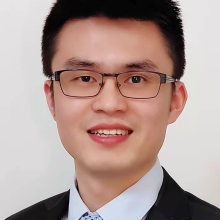
George T. C. Chiu is a Professor in the School of Mechanical Engineering at Purdue University, with courtesy appointments in Electrical and Computer Engineering and Psychological Sciences. He holds a 50% appointment as Assistant Dean for Global Engineering Programs and Partnerships. His research focuses on mechatronics, dynamic systems and control, functional printing, and human-machine interaction, with applications in biomedical engineering, robotics, and advanced manufacturing. Education: PhD (1994), MS (1990) University of California, Berkeley; BS (1985) National Taiwan University. Research interests emphasize application-driven solutions for printing technologies, motion control, and embedded systems. Notable projects include developing inkjet printing for biomedical materials and sensor systems. Awards include ASME Fellowship (2013) and the 2024 ASME Rabins Leadership Award. Publications span topics like inkjet drop dynamics, control systems, and biofabrication. He has led initiatives such as the Purdue FIRST Programs, fostering K-12 STEM education through robotics mentorship. Editorial roles include Editor-in-Chief of IEEE/ASME Transactions on Mechatronics (2017-2019).
Ayse Asatekin is an Associate Professor and Steve and Kristen Remondi Fellow in the Department of Chemical and Biological Engineering at Tufts University School of Engineering. She specializes in developing novel membranes and polymers for water treatment, separations, and biomedical applications. Her research focuses on fouling-resistant membranes, self-assembling polymers, and energy-efficient filtration systems. She holds a Ph.D. from MIT and has co-founded Clean Membranes, Inc., and serves as Senior Scientific Advisor for ZwitterCo, Inc. Education: Ph.D., Chemical Engineering, MIT (2009) B.S., Chemical Engineering & Chemistry, Middle East Technical University (2002/2003) Affiliations: Co-founder of Clean Membranes, Inc. Senior Scientific Advisor at ZwitterCo, Inc. Research Interests: Design of anti-fouling membranes, zwitterionic polymers, surface chemistry, water treatment, and energy-efficient separations. Key innovations include fouling-resistant zwitterionic copolymers and scalable membrane fabrication techniques. Grants & Awards: Multiple NSF grants, DOE funding, NIH support, and the National Academy of Inventors Senior Member distinction. Her work addresses global challenges in clean water, wastewater treatment, and sustainable manufacturing. Teaching: Core courses in Thermodynamics, Separations, and polymer science electives. Committed to fostering student engagement through interdisciplinary projects and active learning. Labs/Teams: Leads the Smart Polymers, Membranes, and Separations Lab at Tufts, collaborating on biomaterials, microfluidics, and environmental engineering projects.
Dan Nguyen, Ph.D., is a faculty member in the Department of Radiation Oncology at UT Southwestern Medical Center, where he is part of the Division of Medical Physics and Engineering. He is a founding member of the Medical Artificial Intelligence and Automation (MAIA) Laboratory, collaborating closely with Dr. Steve Jiang to advance AI applications in radiotherapy. His work focuses on deep learning for treatment planning, dose prediction, auto-segmentation, and adaptive radiotherapy. Ph.D. in Biomedical Physics, University of California, Los Angeles (UCLA), 2017 Mentor: Dr. Ke Sheng Faculty appointment at UT Southwestern since 2017 Dr. Nguyen’s research is centered on applying artificial intelligence to solve critical challenges in radiation oncology. His primary interests include deep learning-based dose prediction, auto-segmentation of anatomical structures, optimization of treatment plans, and real-time adaptive radiotherapy. He has pioneered work in direct aperture optimization, 4π radiotherapy, and uncertainty quantification in AI models. His research bridges the gap between AI innovation and clinical implementation, with a focus on improving plan quality, reducing planning time, and enhancing accessibility for less experienced clinicians. The most recent publications (2023–2025) demonstrate a consistent trend in developing fast, accurate, and robust deep learning models for radiotherapy. Key themes include dose prediction with transfer and meta-learning, adaptive segmentation using test-time optimization, uncertainty assessment in AI predictions, and mathematical modeling of radiotherapy-immunotherapy synergy. These works span high-impact journals in medical physics, AI, and oncology, reflecting interdisciplinary innovation. While no specific scientific awards are listed, Dr. Nguyen’s leadership in the MAIA Lab and extensive publication record in top-tier journals indicate significant recognition in the field of medical physics and AI in medicine. Dr. Nguyen has co-authored numerous studies involving mentoring and collaborative research, particularly with trainees and junior faculty in the MAIA Lab. His work is supported by institutional and likely federal funding, given the scale and scope of AI deployment studies. He has contributed to large-scale collaborative efforts such as OpenKBP-Opt, involving international teams evaluating knowledge-based planning pipelines. The MAIA Laboratory is a multi-investigator research group focused on innovating, developing, and applying artificial intelligence technologies to empower clinicians—especially those with less experience or limited resources—for improved patient care. The lab’s work spans machine learning, deep learning, reinforcement learning, and mathematical modeling in radiation oncology.
Boxin Zhao is a Professor and University of Waterloo Endowed Chair in Nanotechnology in the Department of Chemical Engineering at the University of Waterloo. His research spans surface science, bionanomaterials, and biomimetic adhesion, with a focus on advanced polymers, hydrogels, and smart materials for biomedical and industrial applications. He leads the Surface Science and Bio-nanomaterials Laboratory Group, which develops innovative materials such as self-cleaning surfaces and antimicrobial coatings. Education: Doctorate in Chemical Engineering, McMaster University (2004); Master's from Chinese Academy of Sciences (1999); Bachelor's in Mineral Engineering from Central South University (1996). He has held prestigious fellowships, including the NSERC Postdoctoral Fellowship and IMMS Research Fellow at UC Santa Barbara and Los Alamos Lab. Research Interests: Biomimetic adhesion, soft robotics, polymer composites, and advanced manufacturing. Notable contributions include gecko-inspired adhesives, self-healing hydrogels, and conductive polymers for electronics. Recent work focuses on 3D-printed medical hydrogels, soft robotic devices, and microplastic degradation. His lab collaborates with industries like Proctor & Gamble and 3M, addressing real-world challenges in materials science and biomedical engineering. Awards: 1996 IET Scholarship, 2005 NSERC Postdoctoral Fellowship, 2007 IMMS Research Fellow. Teaching: CHE 313 (Heat/Mass Transfer), CHE 612 (Interfacial Phenomena). Lab Facilities: Advanced equipment for nanomaterial synthesis, surface characterization, and soft robotics prototyping.
An Verberckmoes is an Associate Professor at Ghent University in the Faculty of Engineering and Architecture, specifically within the Department of Materials, Textiles and Chemical Engineering. She is affiliated with multiple research units including the Biomolecules Center for Sustainable Chemistry, ChemTech Materials, and the Industrial Catalysis and Adsorption Technology group. Her research expertise centers on heterogeneous catalysis with a strong focus on sustainable chemical processes. Dr. Verberckmoes specializes in catalyst synthesis, particularly zeolite-based catalysts for bio-alcohol conversion and lignin valorization. Her work bridges fundamental catalyst design with practical applications in biomass conversion, aiming to develop more efficient and environmentally friendly processes for producing renewable chemicals and materials. Analysis of her recent publications (2024-2025) reveals a dominant research trajectory focused on lignin depolymerization technologies, with particular emphasis on catalytic approaches using noble and non-noble metals. She has made significant contributions to understanding reaction mechanisms in zeolite catalysis, especially for dehydration reactions of bio-alcohols to valuable chemicals like butadiene. Her work often combines experimental approaches with kinetic modeling to optimize both catalyst performance and process conditions. Dr. Verberckmoes collaborates extensively within Ghent University and with external partners on projects related to sustainable chemistry and biomass conversion. Her research group appears to focus on developing integrated approaches that combine catalyst design, process engineering, and advanced analytical techniques to advance lignin valorization and sustainable chemical production.
Connor Myant is Reader in Digital Manufacturing Systems at Imperial College London's Dyson School of Design Engineering, where he leads the Advanced Manufacturing Group. He holds a PhD from Imperial College (2010) and teaches courses in Solid Mechanics and Design for Additive Manufacture. His research advances multi-material 3D printing technologies with applications in medical devices, energy-absorbing structures, and functional composites. Current projects focus on open-source 5-axis printing platforms and stiffness-matched implants. Publication themes include: Medical device customization Nanocomposite material development Biomechanical optimization Industrial 3D printing systems
Dr. Yuemei Lin is an Associate Professor in the Department of Biotechnology at the Faculty of Applied Sciences, Delft University of Technology (TU Delft). Her work is centered within the Environmental Biotechnology research section, where she leads the Yuemei Lin Group. She is actively involved in research and teaching related to sustainable resource recovery and biobased materials. Her research focuses on the extraction and characterization of extracellular polymeric substances (EPS) from microbial aggregates such as flocculent sludge, granular sludge, and biofilms. She investigates the role of EPS in aggregate formation and reactor performance, and explores the recovery of EPS from waste sludge for conversion into valuable biobased materials. This work aligns with the transition toward a circular economy. Dr. Lin teaches the course Biobased Materials in a Circular Economy and contributes to the Minor Sustainable Chemistry and Biotechnology in collaboration with Leiden University. Her recent publications (2024–2025) reflect a strong focus on EPS composition, extraction methods, thermal stability, hydrogel properties, and industrial applications, particularly in wastewater treatment contexts. Research Themes: EPS, biopolymers, wastewater valorization, circular economy, microbial aggregates. Applications: Kaumera development, sustainable materials, resource recovery. Scientific Awards: Zilveren Zandloper Innovation Award (2019) Aquatech Innovation Award for Kaumera (2019) Water Innovation Award 2013 (TU Delft and partners) Dr. Lin has secured funding through programs such as NWO’s Open Technology Program and Take-off, demonstrating strong grant acquisition. She collaborates extensively with leading researchers including Prof. Mark C.M. van Loosdrecht. While no formal advisees are listed, her role in teaching and group leadership indicates active student supervision. Her work is closely tied to applied research initiatives and industrial implementation, particularly through the development of the Kaumera biopolymer from wastewater sludge.
Huiyan Li, PhD, P.Eng., is an Associate Professor in the Department of Biomedical Engineering at the University of Guelph. Her research focuses on developing micro/nanoscale biosensors and lab-on-a-chip technologies for cancer diagnostics and personalized medicine. Dr. Li holds a Ph.D. in Biomedical Engineering from McGill University and completed postdoctoral training at Harvard Medical School/Massachusetts General Hospital. Her multidisciplinary research integrates biosensing, micro/nanofabrication, bio-optics/electronics, and computational tools to study cancer molecular complexity. Current openings exist for M.A.Sc. students interested in biosensing research. Key research areas include extracellular vesicle analysis, multiplexed immunoassays, magnetic/nanoparticle-enhanced bioassays, and graphene-based biomedical sensors. Recent work emphasizes point-of-care diagnostics and enhanced protein detection via novel material integration. Teaching responsibilities include ENGG 6301 (Advanced Micro/Nano Biotechnology) and undergraduate courses in bio-instrumentation and biomedical signal processing. Her work spans biomaterials classification, microfluidic systems, and antimicrobial nanocomposite development. Research outputs emphasize scalable microarray formats, EV-based biomarker discovery, and sensor sensitivity enhancement through nanomaterial innovations. Current projects address EV concentration measurement, 3D antibody microarrays, and magnetic-responsive hydrogel discs for bioassay improvements.
Muhammad Muddasar is a Researcher at the University of Limerick's School of Engineering, affiliated with the Bernal Institute. His primary research focuses on developing sustainable materials derived from lignin for energy harvesting and storage applications. Under the supervision of Professor Maurice Collins, he investigates advanced materials such as hydrogels, ionic conducting membranes, and carbon nanomaterials to enhance renewable energy systems. His work emphasizes reducing environmental impact through innovative synthesis techniques and lifecycle analysis. Key research areas include thermoelectric materials, bioenergy production, microbial electrolysis cells, and lignin valorization. Collaborations span topics like low-grade thermal energy recovery, supercapacitor optimization, and carbon fiber production improvements. Despite no explicit awards listed, his contributions include over 17 peer-reviewed publications between 2021-2025, showcasing impactful work in Materials Today Sustainability, Advanced Functional Materials, and ACS Applied Polymer Materials. His articles highlight trends in lignin-derived materials for energy applications, sustainable manufacturing, and nanomaterial-driven bioenergy systems. Active in international networks, his research bridges material science and renewable energy engineering, addressing global sustainability challenges.
Ronald Hedden is a Professor of Practice in the Department of Chemical and Biological Engineering at Rensselaer Polytechnic Institute (RPI), where he focuses on innovations in undergraduate education and polymer science. Previously, he served as an Associate Professor at Texas Tech University (2009–2017). His current research emphasizes Virtual Reality (VR) integration into chemical engineering education, including the development of a Virtual Chemical Plant (VCP) simulation to provide safe, cost-effective access to process equipment. His research interests span chemical engineering, polymer science, soft materials, and nanomaterials. Notable projects include applying VR for teaching process safety and dynamics, as well as exploring nanocomposite materials and membrane technologies. He also investigates polymer rheology and structure-property relationships using advanced characterization techniques like NMR and SANS. Hedden teaches both core chemical engineering courses and interdisciplinary engineering subjects. His work bridges academic research and practical applications, with contributions to biofuel refining, asphalt modification, and nanoparticle incorporation in polymers. While no specific awards are listed, his extensive publication record highlights impactful contributions to materials science and educational technology. His advisory work involves student projects on VR simulations and materials engineering. He collaborates on initiatives like the VCP platform, aimed at advancing safety training and process control education. Hedden’s career reflects a commitment to both cutting-edge research and transformative pedagogy in engineering education.
Dr. Jayshri Sabarinathan is an Associate Professor in the Department of Electrical and Computer Engineering at Western University's Faculty of Engineering, and a Faculty Member with the Institute for Earth and Space Exploration. She joined Western University in Fall 2003, received the NSERC University Faculty Award in 2004, and was promoted to Associate Professor in 2010. She previously served as Associate Director of Training (2019-2022) with the Institute for Earth and Space Exploration. Education: Ph.D. in Electrical Engineering, University of Michigan, Ann Arbor (2003) M.S.E. in Electrical Engineering, University of Michigan, Ann Arbor (1999) B.S.E. in Electrical Engineering and Engineering Physics, University of Michigan, Ann Arbor (1997) Her research focuses on developing novel nano-photonic sensors and miniature remote sensing instrumentation, with expertise spanning photonic crystals, plasmonic sensors, and CubeSat technology. Her work integrates nanofabrication techniques with practical applications in precision agriculture, geology, and space exploration. She has extensive experience with nanofabrication facilities including the University of Michigan Solid State Electronics Laboratory and Western's nanofabrication facility. Analysis of her 15 most recent publications reveals strong emphasis on plasmonic sensing technologies, photonic crystal applications, and nanoscale optical phenomena. Her research consistently bridges fundamental photonics with practical sensor development, particularly for environmental monitoring and space applications. The publications demonstrate progression from basic photonic crystal research to applied space instrumentation. Scientific Awards: NSERC University Faculty Award (2004) US Patent 8839683 for Photonic Crystal Pressure Sensors (2014) OSA (Optica) Senior Member Co-founder of LightSail Ltd space startup Dr. Sabarinathan actively mentors graduate students through her Nanophotonic Sensors Engineering (NPSE) and Remote Sensing Instrumentation (RSI) research groups. She has secured significant funding including Canadian Space Agency projects, notably as PI for the Western University-Nunavut Arctic College CubeSat Project Ukpik-1. Her research has resulted in three patents for micro photonic-sensors and multi-spectral camera innovations. Her labs focus on two primary research thrusts: the NPSE group developing hybrid photonics micro/nano-sensors including IR/THz plasmonic sensors and bio-photonic sensors, and the RSI group creating multispectral camera imagers for UAV/mobile robots with XRD instrumentation miniaturization for Mars rovers.
Woojin Han is an Assistant Professor in the Departments of Orthopedics and Cell, Developmental & Regenerative Biology at the Icahn School of Medicine at Mount Sinai. His research program focuses on the mechanobiology of skeletal muscle stem and progenitor cells, with applications in disease modeling and the development of advanced therapeutics for muscle injuries and degenerative diseases. Dr. Han earned his BS in Biomedical Engineering from the University of Rochester and his MS and PhD in Bioengineering from the University of Pennsylvania. He completed his postdoctoral training at the Georgia Institute of Technology, where he received awards from the American Federation for Aging Research (AFAR) and the NIH. Dr. Han's research integrates biomaterials, bioengineering, and in vivo genetic approaches to investigate cell-matrix interactions and mechanobiological signaling, aiming to uncover the mechanisms driving muscle regeneration and pathology. His work is supported by the National Institutes of Health (NIH) and the Department of Defense (DoD). Analysis of Dr. Han's recent publications reveals a strong focus on muscle regeneration mechanisms, particularly examining the role of extracellular matrix proteins, mechanical confinement, and signaling pathways in muscle stem cell behavior. His research spans from fundamental mechanobiology to translational applications using biomaterials for tissue regeneration. 2025 NEBEC Emerging Investigator Award 2024 Mount Sinai Faculty Council Award for Junior Faculty 2023 Popular Science's The Brilliant 10 2022 Stephen I. Katz Early Stage Investigator Grant Awardee American Federation for Aging Research (AFAR) award NIH award Dr. Han's research is supported by significant funding from the National Institutes of Health (NIH) and the Department of Defense (DoD). His work bridges basic science and clinical applications, with particular emphasis on developing advanced therapeutics for muscle injuries and degenerative diseases. Through his lab, he mentors junior researchers in the fields of biomechanics, bioengineering, and regenerative medicine. Dr. Han leads the Han Lab, which focuses on skeletal muscle regeneration research. The lab employs a multidisciplinary approach combining biomaterials engineering, molecular biology, and advanced imaging techniques to develop novel strategies for enhancing muscle repair and preventing pathological changes following injury.
João F. Mano is a Full Professor at the Department of Chemistry, University of Aveiro, and Director of the Doctoral Program on Biotechnology. He leads the COMPASS Research Group and serves as Vice-Director at CICECO - Aveiro Institute of Materials. His academic appointments include Invited Professor at University of Lorraine (France), Visiting Professor at KAIST (South Korea), and Adjunct Professor at Ajou University (South Korea). Education: PhD in Chemistry (1996, Technical University of Lisbon); D.Sc. in Tissue Engineering, Regenerative Medicine and Stem Cells (2012, University of Minho) Research Interests focus on Biomaterials for Regenerative Medicine , integrating Nanotechnology , Microtechnology , and Biofabrication . His group develops Bioinspired Materials using polymer chemistry, Decellularized Extracellular Matrix , and 3D Bioprinting to engineer Cell Microenvironments for therapeutic applications. Recent Publications highlight advancements in Human-Derived Hydrogels , Photopolymerizable Scaffolds , Magneto-Responsive Biomaterials , and Programmable Bioinks . Trends show emphasis on Organ-on-a-Chip integration, Smart Living Materials , and Green Bioprinting methodologies. Scientific Awards include: European Research Council Advanced Grants (2015, 2020) Fellow at IUPAC, European Academy of Sciences, and American Institute of Medical and Biological Engineering ERC Proof of Concept Grants Doctor Honoris Causa from University of Lorraine and Utrecht UNESCO Chair on Biomaterials George Winter Award (European Society for Biomaterials) Supervisions & Collaborations encompass 74+ MSc, 26+ PhD students, and 40+ postdocs. He co-founded METATISSUE and CELLULARIS Biomodels , and serves as Editor-in-Chief of Materials Today Bio .
Guojun Chen is an Assistant Professor at the Department of Biomedical Engineering and a member of the Rosalind & Morris Goodman Cancer Institute (GCI) at McGill University . His research focuses on engineering intelligent biomaterials for precision medicine , with emphasis on non-viral genome editing , cold atmospheric plasma (CAP) therapy , and biomaterials-mediated immunotherapy . The lab operates in a multidisciplinary environment , integrating principles from materials science , chemistry , biology , and health sciences . Education : Ph.D. from University of Wisconsin-Madison (2017), Postdoc at UCLA (2020) Research Themes : Genome Editing Delivery : Designing non-viral vectors for efficient CRISPR/Cas9 delivery in vivo. CAP-mediated Immunotherapy : Developing portable cold plasma devices to synergize with immune checkpoint blockade and study CAP’s immunological mechanisms. Biomaterials-based Immunotherapy : Reprogramming tumor microenvironments using bioresponsive materials to enhance immune responses. Publication Trends : Recent work spans responsive nanomaterials , genomic editing systems , and plasma oncology , with a focus on cancer immunotherapy , diabetes diagnostics , and bioinspired medical devices . Scientific Awards : Canada Research Chair (2024, 2025) McGill's President's Prize for Emerging Researchers (2025) FRQS Chercheurs-boursiers (2022) Chinese Association for Biomaterials Young Investigator Award (2022) NSERC Discovery Grant (2021) Advising & Grants : Supervises 14 current graduate and undergraduate students. Secured $5M+ in funding from CIHR , NSERC , CCS , and CFI , including multi-institutional collaborations with Dr. Morag Park , Dr. Réjean Lapointe , and Dr. Ian Watson .
Professor Will Wenmiao Shu is the Hay Chair in Biomedical Engineering and Director of Research at the Department of Biomedical Engineering, University of Strathclyde. He has held positions at prestigious institutions including University of Cambridge (PhD), Heriot-Watt University (Lecturer/Reader), and Stanford University (Visiting Position). His work focuses on 3D biofabrication , bioprinting , and regenerative medicine . PhD in Electrical Engineering & Nanoscience, University of Cambridge His research pioneered the first bioprinting of human embryonic stem cells and induced pluripotent stem cells, enabling animal-free drug testing and 3D printed organs . Current projects include 3D Bioprinting of Vascularised Hepatic Cancer Models and BIOME: Bioplastic Injection-moulding Optimisation . Recent publications address nanometrology and soft tissue resection simulations , reflecting his interdisciplinary approach. Awards include dual Best Presentation Prizes in 2024 for work on microvascular networks and animal-free research. Editorial Board Member, IOP Biofabrication Journal Board Director, International Society for Biofabrication (ISBF) Founding Member (emeritus), Royal Society of Edinburgh’s Young Academy