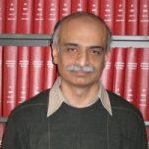
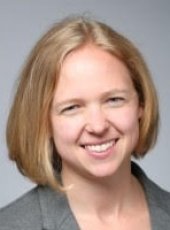
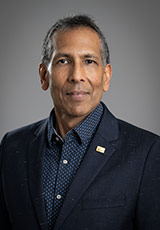
Peter K. Kitanidis is a Professor in the Department of Civil and Environmental Engineering and the Institute for Computational and Mathematical Engineering at Stanford University . His research focuses on groundwater flow , hydrologic forecasting , and stochastic inverse modeling , with applications to pollutant remediation and CO₂ storage monitoring . Education : Diploma, National Technical University of Athens (1974) M.S., MIT (1976) Ph.D., MIT (1978) Research Interests : Groundwater modeling and contaminant transport Hydraulic tomography and aquifer characterization Stochastic methods for uncertainty quantification Bioremediation and enhanced in-situ pollutant decay Dilution and mixing processes in heterogeneous media Real-time river flow forecasting Scientific Awards : L.G. Straub Award (1979) W.L. Huber Research Prize (1994) ISI Highly Cited Researcher (2001) AGU Hydrologic Sciences Award (2011) ASCE Pioneers in Groundwater Lecturer (2011) Advising and Grants : Advised 20+ PhD and MS students (1978–2018) Principal investigator on NSF, EPA, and DOE-funded projects Developed software for groundwater data analysis and CO₂ monitoring Contributed to bioremediation protocols and hydraulic tomography algorithms Labs and Teams : Kitanidis Laboratory for groundwater crisis solutions Collaborated with Oak Ridge National Laboratory and Stanford Hydrogeology Group Mentored postdocs (2000–2017) in reactive transport and inverse modeling
Andrew Rowe is a Professor in Mechanical Engineering at the University of Victoria (UVic), with affiliations to the Institute for Integrated Energy Systems (IESVic) and the Advanced Mechanical Research Laboratory (AMRLab). He holds a BEng from the Royal Military College of Canada, MASc and PhD from UVic, and is a licensed Professional Engineer (P.Eng). His research focuses on thermodynamics, energy systems, cryogenics, and heat transfer, with particular expertise in caloric cycles, hydrogen systems, and energy systems analysis. His research emphasizes decarbonization strategies, including hydrogen integration into natural gas networks, grid flexibility under electrification scenarios, and the optimization of magnetocaloric materials for energy-efficient cooling. AMRLab, led by Rowe, develops technologies for energy conversion, storage, and system optimization, addressing challenges in low-temperature thermal systems and integrated energy networks. Recent work explores the systemic impacts of electrification in transportation and buildings, leveraging open-source tools like the NExus Solutions Tool (NEST) for multi-scale energy-water-land system modeling. His projects often address regional energy challenges, such as British Columbia’s transition to renewable energy and grid infrastructure resilience. Key contributions include studies on gas system decarbonization via hydrogen blending, thermal-hydraulic modeling of energy systems, and experimental validation of magnetocaloric materials. Rowe’s publications highlight interdisciplinary approaches to climate mitigation, emphasizing the interplay between technological innovation and systemic policy frameworks.
Kamal Al Haddad is a Lecturer in the Department of Electrical Engineering at École de technologie supérieure (ÉTS). He holds a Doctorate from INTP, Toulouse, and advanced degrees from UQTR. His research focuses on power electronics, renewable energy integration, and smart grid technologies. He leads the GREPCI research group, specializing in Power Electronics and Industrial Control. Education: B.Eng., M.Sc.A. (UQTR), Doctorate (INTP, Toulouse). Research interests span energy conversion, industrial electronics, power quality, and electromagnetic interference. He emphasizes sustainable energy solutions, electric traction systems, and high-efficiency power sources. His work includes developing advanced power electronic converters and grid stability solutions. Recent articles highlight advancements in modular converters for STATCOM, AI-driven fault detection in hydrogenerators, and renewable energy policy frameworks. He has received notable awards, including the 2014 IEEE Eugene Mittelmann Prize and Fellowships from IEEE and other institutions. Supervised over 60 students, including doctoral theses on topics like hydrogenerator diagnostics, EV charging systems, and renewable energy integration. His research also involves real-time simulation of power systems and FPGA-based implementations. Labs/Teams: GREPCI – Power Electronics and Industrial Control Research Group, leading projects on smart grids and energy efficiency.
Marco Badami is a Full Professor at the Department of Energy (DENERG) , Polytechnic of Turin. He serves as Scientific Director for national and EU-funded research projects in energy systems and has been a Course Lecturer for Energy Systems and Industrial Use of Energy since 2010. He supervises PhD students in Energetics and Electrical Engineering . Research Interests: His work spans energy systems optimization, machine learning applications for industrial energy efficiency, smart grids, cogeneration scheduling, blockchain-based energy data immutability, and predictive maintenance algorithms for photovoltaic plants. Current projects focus on AI-driven energy audits, optimized control systems for industrial microgrids, and digital twin architectures. Collaborations: He works with Trigenia Srl, Stogit SpA, and international institutions on commercial research contracts. His scientific contributions include 15+ publications on topics like LSTM forecasting for solar energy, deep reinforcement learning for multi-energy systems, and decentralized peer-to-peer energy trading platforms.
Dr. Caner Sayan is a Lecturer in Policy Analysis at Swansea University's Faculty of Humanities and Social Sciences, within the Department of Politics, Philosophy, and International Relations. He previously held roles as a Research Fellow in Water and Resilience at Cranfield University, Postdoctoral Fellow in Water Security at UNU-INWEH, and Research Associate at the University of Dundee. His research focuses on environmental politics, water security, and transboundary water governance, with a regional emphasis on the Middle East, Turkey, and Sub-Saharan Africa. Key themes include environmental justice, political ecology, and the intersection of water infrastructure and regional policy. Recipient of the 2015 Dundee University Students' Association Teaching Award, Dr. Sayan is dedicated to innovative pedagogy and has contributed to modules on global development, environmental justice, and water politics. He actively supervises PhD and MA/MSc theses, emphasizing fieldwork design and participatory methods. His publications span journals such as International Affairs , Water Alternatives , and Energy Research & Social Science , addressing topics like energy transitions, NGO capacity, and peacebuilding through water security frameworks. Engagements include opinion pieces on African water projects and invited lectures on transboundary water governance.
Silvia Jiménez Fernández is an Associate Professor in the Department of Signal Theory and Communications at Universidad Autónoma de Madrid. Her research focuses on optimization algorithms, smart grids, renewable energy systems, telemedicine, and machine learning applications. She holds a Ph.D. from Universidad Politécnica de Madrid (2009), supervised by Dr. Francisco del Pozo Guerrero and Dr. Paula de Toledo Heras. Her work integrates interdisciplinary approaches, such as combining evolutionary algorithms with engineering challenges in energy systems and healthcare. Key contributions include advancements in coral reefs optimization algorithms for energy management, machine learning for battery health estimation, and telemedicine systems for chronic disease monitoring. Recent research trends emphasize hybrid learning models in education, multi-objective optimization in renewable energy systems, and risk analysis in smart grids with electric vehicles. She is affiliated with the GHEODE Research Group (Modern Heuristics and Network Design).
Kelsey Alejandra Moore serves as Assistant Professor of History and Black Studies at Georgetown University, holding primary appointment in the Department of History and secondary appointment in the Department of Black Studies. She is designated as a Provost’s Distinguished Faculty Fellow, recognizing exceptional scholarly contributions to her field. Her academic credentials include: Ph.D. in History from Johns Hopkins University M.A. in History from Johns Hopkins University Dual B.A. in Africana Studies and Public Policy from New York University, graduating summa cum laude as 2019 Valedictorian of the College of Arts and Science Moore specializes in 20th-century rural Black southern histories, examining intersections of race, religion, culture, and development through the lens of spiritual, ecological, and epistemic violence. Her work interrogates how modernization projects like South Carolina's Santee-Cooper Hydroelectric and Navigation Project disrupted Black and indigenous communities' relationships with time, space, and place. Central to her research is the preservation of Conjure knowledge systems and black place-making practices, manifested through innovative digital humanities projects that remap submerged histories. Her scholarly recognition includes: Provost’s Distinguished Faculty Fellowship at Georgetown University Inaugural Crossroads Research Fellowship at Princeton University (2022-2023) Valedictorian honors at New York University (2019) Moore's research has secured institutional support from the Carter G. Woodson Institute for African American and African Studies at the University of Virginia and the South Caroliniana Library at the University of South Carolina. She leads digital initiatives including "We Just Don’t Trust Our Memories to Stone," "a fugitive’s map of the black south," and "finding the dead: another kind of fugitive map"—projects that reconstruct flooded cemeteries and reimagine Black spatial relationships in the American South.
Cécile Münch-Alligné is a Professor in Hydraulic Energy at the University of Applied Sciences and Arts Western Switzerland (HES-SO) in Sion, where she serves as the Head of the Hydroelectricity Research Group and the Renewable Energy Program. She leads the Hydro Alps Lab, which conducts applied research in hydropower combining experimental and numerical approaches. Her work focuses on enhancing the flexibility of both small and large hydropower plants, with particular emphasis on adapting these systems to the evolving energy landscape and integration of renewable energy sources. Her educational background includes a BSc in Energy and Environmental Techniques, an MSc in Engineering, and a BSc in Industrial Systems, all from HES-SO Valais-Wallis. Her research spans multiple domains within hydraulic engineering and renewable energy systems, with particular expertise in CFD simulation, numerical methods, and hydraulic machine design. Münch-Alligné's research interests primarily center around improving hydropower flexibility through innovative approaches such as hydraulic short-circuit operating modes, variable speed operation, and energy recovery systems in water networks. She investigates both large-scale pumped storage power plants and micro-hydropower systems for urban water networks, with a strong focus on practical implementation and commercialization of research findings. Her work bridges theoretical modeling with experimental validation to address real-world challenges in the energy transition. Her research has been published extensively in leading journals, covering topics from Pelton turbine dynamics and Francis turbine vortex analysis to micro-turbine implementations in drinking water networks. The publications reveal a clear trend toward enhancing operational flexibility of hydropower systems to better integrate with intermittent renewable energy sources, with increasing emphasis on practical demonstration projects and commercial applications. As Principal Investigator, she has led multiple significant research projects including the SCCER 4 WP 3.2.0 2017-2020 (Supply of Electricity), Hydrolienne pour canaux artificiels Centrale de Lavey, and SOLUTION DE TRANSFERT D'ENERGIE PAR POMPAGE-TURBINAGE A PETITE ECHELLE. These projects, totaling over 2 million CHF in funding from sources including CTI, OFEN, and industrial partners, demonstrate her ability to secure substantial research funding and collaborate effectively with both academic and industry partners. Münch-Alligné leads the Hydro Alps Lab research team, which includes numerous researchers such as Steiner Amandus, Walpen Olivier, Vaccari Aldo, and others. Her collaborative approach extends to partnerships with institutions like Stahleinbau GmbH and The Ark Energy, facilitating the transfer of knowledge from research to industry application. The lab's work spans from fundamental fluid dynamics research to full-scale demonstration projects, creating a comprehensive pipeline from theory to practical implementation.
van Khang Huynh is a Full Professor in Mechatronics and Energy Systems at the Department of Engineering Sciences , University of Agder , Norway. He is also a member of the Norwegian Academy of Technical Sciences (NTVA) and has served as an Associate Editor for IEEE Transactions on Transportation Electrification . Education: D.Sc. in Electromechanics & Electric Drives, Aalto University, Finland (2012) M.Sc. in Power Electronics and Motor Drives, Pusan National University, South Korea (2008) B.Sc. in Electrical Power Engineering, Ho Chi Minh City University of Technology, Vietnam (2002) Research Focus: His research spans applied AI in condition-based maintenance , electrical machines , power electronics , design optimization , finite element analysis , and smart energy systems . He leads the Intelligent monitoring research group and is a member of the Energy systems , Intelligent mechatronics (iTron) , and Machine design groups. Projects & Funding: Enhancing Capacity in Condition-based Maintenance of Wind Energy (ECO-WIND) Performance and Health Monitoring of Hydroelectric Power Plants Analytics for Asset Integrity Management of Windfarms Industrial Internet methods for electrical energy conversion systems monitoring and diagnostics Operational Management in Interconnected Renewable Resources with ICT Compact Electric Winches PhD Supervision: He has successfully supervised 8 PhD dissertations and mentored 2 additional PhD projects , all in areas related to mechatronics, renewable energy, and intelligent systems. Labs & Teams: He leads the Intelligent monitoring research group and collaborates closely with the Energy systems , Intelligent mechatronics (iTron) , and Machine design groups at the University of Agder.
Farhed A. Shah is an Associate Professor in the Department of Agricultural and Resource Economics at the University of Connecticut. His research focuses on social-ecological systems, environmental economics, and policy analysis with particular attention to water resource management and climate change adaptation. He has contributed to studies on transboundary pollution frameworks (e.g., Nakdong River Basin), Three Gorges Dam environmental impacts, and biodigester optimization for small dairy farms. His work bridges economic modeling with environmental policy, addressing challenges in sustainable resource allocation and climate resilience. Key research themes include policy frameworks for upstream-downstream water management, economic implications of large-scale infrastructure projects, and optimizing renewable energy systems in agricultural contexts. Recent publications analyze farmer decision-making under climate change in the southeastern US and integrated watershed management in the Blue Nile basin. Shah’s academic contributions emphasize interdisciplinary approaches to socio-environmental challenges, combining economic theory with empirical case studies. His work has been published in journals such as Water Resources Research, Climate Change Economics, and International Journal of Sustainable Energy Planning and Management.
Ana Dyreson is an Assistant Professor in Mechanical and Aerospace Engineering at Michigan Technological University and Associate Research Director at the Center for Innovation in Sustainability & Resilience (CISR). She leads the Great Lakes Energy Group, focusing on climate change impacts on electric power systems , energy transitions in cold climates , and thermal power plant modeling . Her work bridges solar photovoltaic design , electricity grid operational modeling , and the energy-water nexus . Education : PhD in Mechanical Engineering, University of Wisconsin–Madison (2018) MS in Mechanical Engineering, Northern Arizona University (2014) BS in Engineering Mechanics, University of Wisconsin–Madison (2011) Research emphasizes climate-resilient energy systems , particularly solar energy in cold climates and grid-scale modeling . Her 2025-2022 publications investigate snow mitigation on PV panels , heat pump adoption , floating solar-hydropower hybrids , and climate stressor impacts on thermoelectric plants . She develops inclusive teaching methods and advises on renewable energy deployment through initiatives like the Tech Forward Initiative on Sustainability and Resilience . Her team collaborates on multisector dynamics and energy-water-climate research in the Great Lakes region.
Donald C. Wunsch is the Mary K. Finley Missouri Distinguished Professor in Electrical and Computer Engineering at Missouri University of Science & Technology (Missouri S&T), where he directs the Applied Computational Intelligence Laboratory. He previously served as Interim Director of S&T’s Intelligent Systems Center and holds courtesy appointments in Computer Science, Systems Engineering, and Engineering Management. His research focuses on neural networks, reinforcement learning, adaptive resonance theory, bioinformatics, and robotics. Wunsch is an IEEE Fellow, INNS Fellow, and recipient of the 2015 INNS Gabor Award and 2019 Ada Lovelace Service Award. He has led numerous professional organizations, including the INNS Board of Governors and IJCNN conferences. Education: Executive MBA, Washington University in St. Louis (2006) Ph.D. in Electrical Engineering, University of Washington (1991) M.S. in Applied Mathematics, University of Washington (1987) B.S. in Applied Mathematics, University of New Mexico (1984) Research Interests: Donald’s work spans adaptive resonance systems, reinforcement learning architectures, neurofuzzy regression, robotic swarms, and bioinformatics. He emphasizes practical applications in energy systems (e.g., pumped storage hydro optimization), cybersecurity, and medical data analysis. Recent projects include Hamiltonian-driven adaptive dynamic programming and cluster validity indices for streaming data. Awards & Recognition: 2015 INNS Gabor Award INNS Senior Fellow (2007–2013) NSF CAREER Award 2019 INNS Ada Lovelace Service Award Labs & Leadership: As director of the Applied Computational Intelligence Lab, he oversees research in AI/AS applications for critical infrastructure and smart grids. He also chairs the Missouri S&T Information Technology and Computing Committee and actively contributes to interdisciplinary initiatives like the University of Missouri Bioinformatics Consortium.
Jose Miguel Reynolds Barredo is an Associate Professor and Director of the Doctorate in Plasmas and Nuclear Fusion at Carlos III University of Madrid. His research focuses on plasma physics, magnetohydrodynamics (MHD), and energy systems resilience. He leads studies on stellarator reactor design, plasma confinement optimization, and the integration of renewable energy into power grids. His work spans advanced MHD equilibrium solvers (e.g., SIESTA, FLIPEC) and fusion device optimization for ITER and Wendelstein 7-X. He also investigates climate impacts on renewable energy efficiency and power grid stability under high renewable penetration. Notable contributions include HVDC grid segmentation strategies and non-axisymmetric plasma transport modeling. Key Areas: Fusion reactor design, MHD stability, power grid resilience, climate-energy interactions Tools: SIESTA, FLIPEC, GENE, OPA cascading blackout model Projects: Doctorate in Plasmas and Nuclear Fusion, W7-X bootstrap current studies, climate-energy system interdependencies Research emphasizes computational plasma physics and interdisciplinary energy solutions, blending theoretical, numerical, and applied engineering approaches.
Rickey Dubay is Professor and Director of Graduate Studies in Mechanical Engineering at University of New Brunswick. His research spans control systems, robotics, and advanced manufacturing, with particular focus on unmanned marine vehicles. Research areas include: complex control systems, robotic learning control, intelligent systems, and unmanned vehicle control. He leads projects on 3D trajectory tracking for marine vehicles and cognitive robotic strategies for autonomous systems. He has supervised 7 PhD and 23 Master's graduates, with 3 PhD and 4 Master's students currently. His research includes patented innovations in nonlinear control methodologies and complex profile tracking, and he co-founded Eigen Innovations Inc. Course instruction includes advanced topics: Model-based Control Methods, System Identification, and Optimal Control Methods.
Diana J. Montaño is an Associate Professor of History at Washington University in St. Louis, where she also serves as the Director of Undergraduate Studies in History. She earned her PhD from the University of Arizona and specializes in Latin American history with particular focus on technology's relationship to nationalism, everyday life and domesticity. Her research interests include: History of Technology in Latin America Urban History of Mexico History of Electricity and Energy Material Culture in Modern Latin America History of Science and Technology in Latin America Everyday Life and Domesticity in Modern Mexico Prof. Montaño is the author of the award-winning book Electrifying Mexico: Technology and the Transformation of a Modern City , which examines how Mexico City residents shaped electrification from the 1880s to the 1960s. Her work explores how ordinary citizens used electricity symbolically and physically in constructing a modern nation. She is currently researching her second book project, 'Necaxa and the Engineering of a Mexican Energy Landscape,' which investigates transnational networks involved in constructing the Necaxa hydroelectric complex. Her scholarly contributions have received numerous prestigious awards including the Bolton-Johnson Prize, the Turriano Prize, the Urban History Association prize, and the Alfred B. Thomas Award. Her article 'Ladrones de Luz' has also been recognized with multiple prizes including the CALACS Article Prize and the Bernard S. Finn IEEE History Prize. Prof. Montaño is actively engaged in the academic community as co-editor of the University of Nebraska Press' book series Confluencias on Mexican history and convenes the Working Group: History of Science, Technology & Medicine in Latin America. She also coordinates the edited volume Latin American Technocultural Worlds: Histories of Design, Aesthetics, and Practice with colleagues from other institutions, which challenges conventional understandings of Latin Americans' technological lives by highlighting how innovation, craftsmanship, and adaptation have been constants of everyday life in the region.