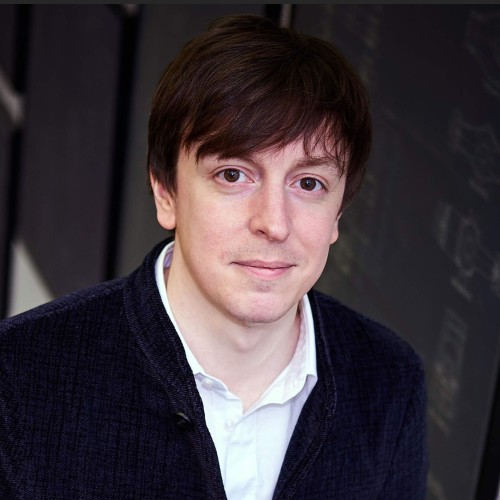
Maarten van der Vegt is an Associate Professor in Physical Geography at Utrecht University's Faculty of Geosciences. His research focuses on coastal dynamics, sediment transport, and delta morphology, with a particular emphasis on tidal systems, estuaries, and human impacts on coastal environments. He leads projects like the 'Rise and Fall' initiative studying the Mekong Delta and contributes to programs such as 'Future Deltas' and 'Pathways to Sustainability.' His work integrates computational modeling (e.g., Delft3D), field observations, and laboratory experiments to understand processes like saltwater intrusion, sediment budget changes, and tidal inlet dynamics. Recent studies include the stability of river bifurcations, cyclic channel-shoal dynamics, and the effects of sea-level rise on estuaries. He collaborates with institutions globally and advises PhD students on projects related to deltas and coastal systems. Van der Vegt teaches courses on coastal morphodynamics, tides, and marine sciences, and actively publishes in top journals like Journal of Geophysical Research and Earth Surface Dynamics . His research has been funded by grants such as the NWO Urbanizing Deltas of the World program.
Qingping Zou is a Professor of Coastal Dynamics at Heriot-Watt University, affiliated with The Lyell Centre for Earth and Marine Science and Technology and the Institute for Infrastructure and Environment within the Global Research Institutes. She holds a PhD from Scripps Institution of Oceanography (USA) and a B.S. from Nanjing University (China). Her research focuses on physical oceanography, coastal engineering, environmental fluid mechanics, and marine renewable energy, with emphasis on coastal resilience, sediment transport, and marine pollutants. She supervises PhD students and is actively involved in interdisciplinary projects aligning with UN Sustainable Development Goals. Education: Ph.D., Physical Oceanography, Scripps Institution of Oceanography, UC San Diego, USA B.S., Electric Engineering/Physics, Nanjing University, China Research Interests: Coastal flooding and climate adaptation Fluid-structure interactions and scour processes Nature-based solutions for coastal protection Transport of marine plastics and pollutants Wave-current-tide interactions Marine renewable energy systems Advising & Grants: Accepts CSC and self-funded PhD students in coastal dynamics, marine engineering, and environmental fluid mechanics. Prior roles include tenure at University of Plymouth (UK) and University of Maine (USA). Labs/Teams: Active at The Lyell Centre and collaborates internationally on coastal resilience and marine technology projects.
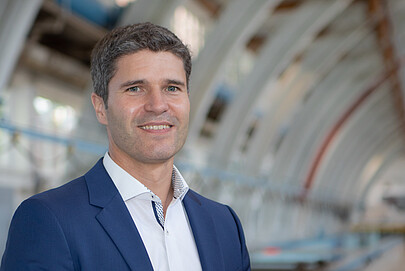
Jacob Andersen is an Assistant Professor at Aalborg University's Department of the Built Environment within The Faculty of Engineering and Science. He specializes in offshore renewable energy systems, particularly in optimizing floating offshore wind turbine foundations and wave energy conversion technologies. His research focuses on reducing costs through advanced numerical modeling and experimental validation. Andersen holds a Ph.D. in Civil Engineering from Aalborg University. His work contributes to UN Sustainable Development Goals, emphasizing affordable and clean energy. Key projects include the OESA Alliance for ocean energy scale-up and COmposites research for wave energy converters. His research interests span hydrodynamic modeling, computational fluid dynamics, and experimental benchmarking. Recent studies involve wave propagation over submerged bars, detached-eddy simulations of flat plates, and comparative hydrodynamic simulations of floating offshore wind platforms. He has collaborated extensively with international teams on projects funded by EUDP and regional initiatives. Andersen has contributed to public media discussions on offshore wind energy advancements and cost reduction strategies for monopile foundations. His work bridges theoretical models with practical applications in marine engineering.
Prof. Jinyu Sheng is a Professor in the Department of Oceanography at Dalhousie University, affiliated with the Faculty of Science. His primary research focuses on physical oceanography and atmospheric science, with expertise in numerical modeling of coastal and shelf sea dynamics, climate change impacts, and biogeochemical processes. Education: BEng, East China Technical University MSc, Memorial University PhD, Memorial University Research Interests: Coastal and shelf sea circulation Extreme weather-ocean interactions Climate change projections for marine systems Numerical modeling of coupled physical-biogeochemical processes Tidal and storm surge dynamics Key Contributions: Developed advanced coupled circulation-ice-biogeochemistry models for the Northwest Atlantic Explored impacts of tropical cyclones on air-sea CO2 exchanges Studied tidal effects on dissolved oxygen variability Investigated storm-induced circulation changes in estuaries Awards & Recognition: 2011 Second Award, Ministry of Water Resources (China) 2000 Canada Foundation for Innovation Researcher 2013 HRM & Nova Scotia Provincial Volunteer Awards Grants & Collaborations: NSERC-Industry Fellowships CFI infrastructure grants International collaborations on ocean modeling Labs & Teams: Leading Dalhousie's coastal circulation modeling group Participates in Northwest Atlantic modeling initiatives
David Staack is an Associate Professor in the Department of Mechanical Engineering at Texas A&M University's College of Engineering and serves as Deputy Vice Chancellor for Research. He holds a PhD in Mechanical Engineering from Drexel University (2008), with additional studies at Princeton University (2004) and a BS/MS from the University of Virginia (2001). His laboratory focuses on experimental plasma engineering with applications spanning energy conversion, environmental remediation, and medical technology. Research interests center on plasma physics and chemistry, including: Micro/nanoscale plasma systems Non-thermal plasma applications in materials processing Fuel conversion and combustion enhancement Advanced diagnostic techniques (laser/optical/x-ray) Plasma sterilization methods Electric propulsion systems Recent publications demonstrate strong focus on energy applications (geothermal drilling, hydrocarbon conversion) and advanced diagnostics. Article themes include plasma-assisted material processing, radiation effects on biomaterials, and innovative imaging techniques combining AI with multi-modal radiography. Major honors include: NSF CAREER Award (2011) Engineering Excellence Award (2015) Phillips 66 Faculty Fellowship (2016) Sallie and Don Davis Career Development Professorship (2017-2021) Directs the Plasma Engineering and Diagnostics Laboratory investigating fundamental plasma phenomena and industrial applications. Current projects involve plasma-enhanced drilling, hydrocarbon reforming, and medical device sterilization. Secured multiple grants from NSF, DOE, and industry partners including Pioneer Natural Resources and 3M.
John M. Blondin is an Alumni Distinguished Undergraduate Professor of Physics at North Carolina State University (NC State), where he has held roles including Department Head of Physics (2012-2016) and Associate Dean for Research (2016-2018). He earned his Ph.D. in Astronomy & Astrophysics from the University of Chicago in 1987 and has been a faculty member at NC State since 1993. His research focuses on computational gas dynamics applied to astrophysical phenomena such as supernovae, accretion disks, and shock wave instabilities. Blondin's notable achievements include discovering the Non-linear Thin-Shell Instability (NTSI) and the Spherical Accretion Shock Instability (SASI), which are critical to understanding supernova explosions. He co-developed the widely used hydrodynamics code VH-1. His honors include Fellowships from the American Association for the Advancement of Science (AAAS) and the American Physical Society (APS), an NSF CAREER Award, and recognition as an Outstanding Teacher at NC State. His research group emphasizes undergraduate involvement through programs like the NSF-funded URCA (Undergraduate Research in Computational Astrophysics). Blondin has advised numerous graduate and undergraduate students, many of whom have published peer-reviewed papers under his mentorship. His work spans computational modeling of supernova remnants, high-mass X-ray binaries, and pulsar wind nebulae, leveraging supercomputing resources at Oak Ridge, NASA, and Texas Advanced Computing Center. Blondin has also held administrative roles such as Interim Dean of the College of Sciences (2023) and Senior Associate Dean for Administration (2018-2024), returning to full-time faculty in 2024. He is affiliated with the Astrophysical Group at NC State and collaborates with institutions like NASA Goddard and the American Astronomical Society.
Dr. Ed Brambley is a Reader at the University of Warwick specializing in aeroacoustics, computational methods, and industrial mathematics. His research combines theoretical fluid dynamics with applied industrial challenges, particularly in acoustic liner optimization for aerospace and mathematical modeling of metal forming processes. Recent work advances boundary layer acoustics, wave propagation algorithms, and rolling process simulations. Collaborations span aerospace engineering and manufacturing sectors.
Ekin Ilseven is an Assistant Professor of Strategy and Organizations at Católica-Lisbon School of Business and Economics. He holds a PhD in Management from INSEAD and an MSc in Physics from ETH Zurich, positioning him at the intersection of science and management. His academic home is the Department of Strategy and Organizations within the School of Business and Economics. His research focuses on organizational resilience , exploring how organizations can be designed to withstand unexpected shocks. Drawing from a Complex Adaptive Systems perspective, he develops multi-level dynamic models to uncover the sources of resilience and the strategic trade-offs involved. His methodological toolkit includes formal modeling, simulations, and machine learning/AI techniques for data analysis. He is also inspired by thinkers such as Harrison White and Douglas Hofstadter, integrating insights from complex systems theory into strategic management. His recent publications in Strategic Management Journal and Journal of Organization Design examine conflict-free organizational growth and the measurement of resilience as a performance outcome. His earlier work in physics, published in PNAS and Physical Review E , explored viscous electron flows and computational models for general relativity, showcasing a deep analytical foundation. His research trends indicate a strong focus on resilience, organizational design, and the application of computational and physical models to social systems. He has been recognized with a nomination as a finalist in the INFORMS/Organization Science Dissertation Proposal Competition. Finalist, INFORMS/Organization Science Dissertation Proposal Competition He advises local municipalities in Turkey on building disaster resilience, with an emphasis on private-public collaborations. His work bridges theoretical rigor with practical application, aiming to generate actionable insights for organizational design and strategic planning in uncertain environments. He does not appear to lead a named lab or team, but his research in progress includes topics like organizational learning and business ecosystem resilience.
Professor Qingwei Ma is a full Professor of Hydrodynamics at City, University of London, where he also serves as the Director of the Research Centre for Fluid-Structure Interaction. He holds a PhD in Ocean Engineering & Naval Architecture from University College London and has built a distinguished career in fluid dynamics and offshore engineering. His academic journey includes positions at Ocean University of Qingdao, University College London, Robert Gordon University, and City, University of London, where he has been since 2002. PhD, Ocean Engineering & Naval Architecture, University College London, 1998 MEng, Naval Architecture & Ocean Engineering, Harbin Engineering University, 1984 BEng, Naval Architecture & Ocean Engineering, Harbin Engineering University, 1982 Professor Ma’s research focuses on hydrodynamics of marine structures , nonlinear wave-structure interaction , and advanced numerical methods such as QALE-FEM, MLPG_R, and SPH. His recent work emphasizes multi-scale simulations for offshore wind turbines, wave energy converters, and floating platforms. He has developed and applied hybrid numerical models to simulate extreme wave events, vortex-induced vibrations, and fluid-structure interactions under complex environmental conditions. The 15 most recent publications reflect a strong trend toward hybrid computational methods , machine learning integration (e.g., GNN, CNN), and multi-physics coupling in offshore and renewable energy systems. His work spans journal articles, conference proceedings, and books, with a consistent focus on improving accuracy and efficiency in simulating violent wave interactions. His scientific recognitions include: CH Kim Award, ISOPE (2016) Vice-chancellor’s Award for Excellence in Learning and Teaching (2015) Chang Jiang Scholarship, China Professor Ma has supervised numerous PhD and master’s students, led major research projects, and contributed to editorial boards of journals such as Ocean Systems Engineering (Editor-in-Chief), Computer Modeling in Engineering & Sciences , and Journal of Ocean Engineering and Marine Energy . He is actively involved in international collaborations, particularly with Harbin Engineering University, where he holds a Visiting Chair Professorship. He leads the development of innovative simulation tools for offshore renewable energy systems, with applications in floating wind turbines, wave energy devices, and hybrid platforms. His lab focuses on high-fidelity numerical modelling using particle and finite element methods, with strong ties to experimental validation and industrial applications.
Marco Giometto is an Assistant Professor of Civil Engineering and Engineering Mechanics at Columbia University, affiliated with the Columbia School of Engineering and Applied Science. His research focuses on fluid dynamics and turbulence, particularly in environmental flows, atmospheric boundary layers, and wind engineering. He employs supercomputing and physics-data-driven methods to advance understanding of natural systems and urban infrastructure resilience. Education: PhD in Civil Engineering (Braunschweig TU University and University of Florence, 2014); PhD in Mechanical Engineering (École Polytechnique Fédérale de Lausanne, 2016, EDME Award recipient). Experience: Postdoctoral roles at UBC and the Center for Turbulence Research (Stanford/NASA Ames); Amazon Visiting Academic (2020–present). Research Interests: Environmental Engineering, Wind Engineering, Smart Cities, Sustainable Infrastructure, and Computational Mechanics. His work bridges fundamental fluid dynamics with applied challenges in urban sustainability and climate resilience. Awards/Grants: NSF CAREER Award (2024), NSF Physical & Dynamic Meteorology Program grant (2024), Army Research Office DURIP Award (2023). Collaborations include Amazon Prime Air and field campaigns like CoURAGE. Lab & Outreach: Leads the Environmental Flow Physics Laboratory, advancing computational tools and field experiments. Teaches at Columbia and mentors students like Gurpreet Hora (PhD Teaching Fellow).
Associate Professor Murat Karakus holds a position in the School of Chemical Engineering at the University of Adelaide, specifically within the Mining and Petroleum Engineering department. His academic role involves teaching and research in advanced geomechanical topics. He is eligible to supervise Master's and PhD students in disciplines related to rock mechanics, mining engineering, and computational modeling. Research interests focus on computational rock mechanics , fracture process zone modeling , rock burst analysis , and 3D printed construction materials . His work integrates experimental techniques (e.g., AUSBIT testing, hydraulic fracturing analysis) with numerical methods (e.g., SPH modeling, machine learning). Recent publications emphasize dynamic rock failure mechanisms, energy-based failure criteria, and material behavior under cyclic loading. Key applications include improving mine safety through strain burst prediction and optimizing cemented paste backfill systems in underground operations. No awards are explicitly listed, though his active research contributions suggest potential recognition in geomechanics fields. Advising and grants: While no specific grants are documented, his eligibility to supervise indicates ongoing research projects. No lab or team affiliations are explicitly mentioned.
Tak Shing Chan is a researcher in the Mechanics research group at the Department of Mathematics, University of Oslo. His work focuses on wetting dynamics, droplet behavior, capillarity, and micro-nano fluidics, with applications in soft matter physics and biophysics. He employs analytical and numerical methods to study phenomena such as viscoelastic perturbations, elastocapillary effects, and interfacial instabilities. His research contributes to understanding adhesive mechanisms in biological systems and optimizing fluidic systems in engineering contexts. Key projects include the Dynamic wetting on soft solids (DyWeSS) initiative. His publications span topics like capillary bridges, film deposition, and the physics of adhesive organs in animals. Collaborations with institutions like the Norwegian Geotechnical Institute and international universities highlight his interdisciplinary approach. His work bridges fundamental fluid mechanics with applied problems in materials science and biophysics.
Prof. Arndt Hildebrandt is a faculty member at Leibniz University Hannover, affiliated with the Ludwig-Franzius-Institute within the Faculty of Civil Engineering and Geodesy. His research focuses on offshore engineering, hydraulic engineering, and structural dynamics, with a strong emphasis on wave-structure interactions, scour development, and renewable energy systems. He leads projects on offshore wind turbine foundations, wave energy converters, and environmental impact assessments. His work integrates experimental and numerical methods, often collaborating with industry partners like Cawthron Institute and Fraunhofer IWES. Key areas of research include hydrodynamic coefficients of marine structures, floating aquaculture systems, and probabilistic safety assessments for offshore megastructures. Projects such as 'BioSchWelle' explore ecological solutions for wave damping and biodiversity enhancement. He has extensive experience in coastal and hydraulic engineering, including studies on munitions drift in marine environments and scour patterns around offshore foundations. Prof. Hildebrandt contributes to collaborative initiatives like the DFG-funded SFB 1463, which develops integrated design methods for offshore megastructures. His publications span over two decades, addressing topics from wave energy converters to large-scale experimental modeling. Despite no listed awards, his contributions to offshore and environmental engineering are significant, with ongoing work on floating wind turbine operations and metocean data analysis in the German Bight.
Parvin Bayati is an **Assistant Research Professor** in the Department of Chemistry at Penn State University. She is affiliated with the Mallory Research Group and has held postdoctoral positions at Harvard University, Université Paris-Saclay, and Penn State. Her research focuses on theoretical and computational soft matter physics, particularly nonequilibrium systems like active matter and deformable interfaces. **Education**: B.Sc. in Physics, University of Zanjan (2007) M.Sc. in Condensed Matter Physics, Institute for Advanced Studies in Basic Sciences (2010) Ph.D. in Physics, University of Zanjan (2017) Sabbatical at Max Planck Institute for Intelligent Systems (2016) **Research Interests**: Combines particle-based simulations (e.g., Brownian dynamics), continuum theory (hydrodynamics), and physics-informed neural networks (PINNs) to model complex fluids, colloidal suspensions, and biological systems. Recent work includes studies on active Brownian particles, surfactant dynamics, and phoretic Janus particles. **Awards**: 2024 Research Grant, Harvard University 2017 INSF Postdoctoral Fellowship 2016 MSRT Guest Researcher Fellowship 2010 Iranian Nano-Science Foundation Award **Labs/Teams**: Active member of the Mallory Lab, focusing on interdisciplinary soft matter research.
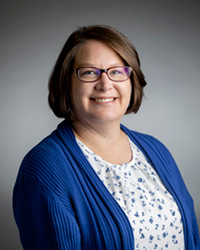
Daria Kluver is a Professor in the Department of Earth and Atmospheric Sciences at the University of Houston, within the College of Science and Engineering. Her work bridges climate science, hydrology, and geoscience education, with a strong focus on snowfall dynamics and regional climate modeling. Education: Ph.D. in Climatology, University of Delaware, 2011 M.S. in Geography, University of Delaware, 2007 B.S. in Meteorology, Saint Cloud State University, 2003 Her research centers on climatological processes, particularly snowfall patterns, seasonal climate prediction, and the influence of large-scale atmospheric systems on regional climate. She employs spatial data analysis and climate datasets to understand hydroclimatic variability across North America. Her work spans observational climatology, dataset development, and climate education innovations. The recent publications reflect a consistent trajectory in climate science, with emphasis on snowfall modeling, climate projections, and interdisciplinary applications involving hydrology and education. Her articles span journals in climatology, atmospheric technology, and geoscience pedagogy, indicating a well-rounded research program that integrates science and teaching. Scientific Awards: No awards listed in the provided text. Daria Kluver has not advised any students listed in the available data. There is no mention of grants, laboratories, or research teams in the provided information. Her scholarly contributions are primarily evident through her publications and curriculum development in climate science education.


.jpg)