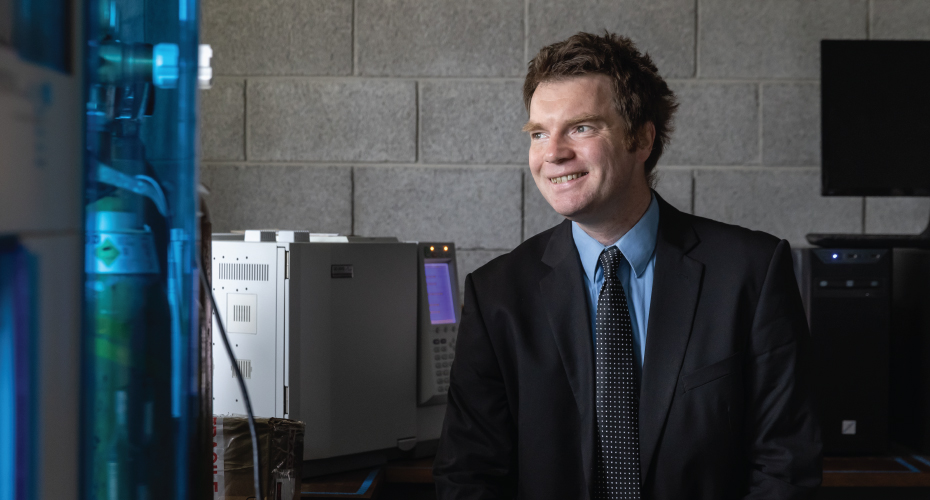
Yan Delaure is Associate Professor of Fluid Mechanics at Dublin City University's School of Mechanical and Manufacturing Engineering and Deputy Director of the DCU Water Institute. His research focuses on multiphase flows, environmental hydraulics, and computational fluid dynamics applications in wastewater treatment and marine systems. Research includes microbubble dynamics for aeration, fluid-structure interactions in deformable systems, and biomimetic antifouling solutions. Recent publications explore advanced simulation methods for turbulent flows and additive manufacturing process optimization.
Prof. Gregorio Iglesias is a Professor of Marine Renewable Energy at University College Cork (UCC) and Honorary Professor of Coastal Engineering at the University of Plymouth. His expertise lies in Marine Renewable Energy and Coastal Engineering, with a focus on wave and tidal energy systems, offshore wind integration, and coastal protection strategies. He has secured over €12M in research funding as Principal Investigator and authored/edited key texts such as Wave and Tidal Energy (Wiley) and Ocean Energy and Coastal Protection (Springer). Education: BEng (Civil Engineering, 1992), MEng (Civil Engineering, 1993), PhD (Engineering, 2001). Research Interests: Advanced modeling of wave energy converters, floating offshore wind turbines, coastal erosion mitigation, and climate change impacts on marine energy resources. His work bridges theoretical advancements and practical applications, including coasts like the Port of Gijón (Spain) and the Shannon Estuary. Recent publications highlight climate-driven renewable energy transitions, multi-hazard coastal resilience frameworks, and techno-economic assessments of offshore systems. He chairs the IEC Standards panel for wave energy device testing and serves as Subject Editor for Energy (Elsevier) . Professional Activities: Lead of Marine Renewable Energy research at MaREI (Ireland), former Head of the COAST Engineering Group at Plymouth (2012–2018), and member of PIANC’s Universities Consortium. His work has generated 5,459 citations with an h-index of 41. Teaching: Delivers modules on Ocean Energy (NE4003/NE6005) and Hydraulics (CE3007).
Prof. Vivek Ranade is a Bernal Chair Professor of Process Engineering at the Bernal Institute, University of Limerick, and a Professor of Chemical Engineering at Queen's University Belfast. He leads research in multiphase reactors, process intensification, and sustainable energy/water technologies. His work spans applications in energy, water, and fine chemicals sectors, with contributions to industrial flow modeling, CFD, and digital twins. Education: B.Tech in Chemical Engineering (1983) and PhD (1988) from the Institute of Chemical Technology, Mumbai. Postdoctoral research at ETH Zurich (1988–1990). Served as Deputy Director at CSIR-National Chemical Laboratory (NCL) until 2016. Holds adjunct roles at the Institute of Chemical Technology and Academy of Scientific and Innovative Research. Research Interests: Multiphase flow dynamics, reactor engineering, process intensification, hydrodynamic cavitation, and sustainable technologies. Co-founded Tridiagonal Solutions and VIVIRA Process Technologies to commercialize innovations. Awards: Shanti Swarup Bhatnagar Prize (2004), Swarnajayanti Fellowship, Fellowships from IChemE, Indian National Science Academy, and multiple academies. Advising: Guided over 20 PhD students; involved in industrial collaborations and start-ups. Labs/Teams: Leads the Multiphase Reactors group at UL and QUB, and collaborates on projects like the MAGIC initiative for specialty chemicals.
Dr. Vikram Pakrashi is an Associate Professor in Mechanical Engineering and Director of the Dynamical Systems and Risk Laboratory (DSRL) at University College Dublin. He specializes in structural dynamics, structural health monitoring (SHM), vibration control, and renewable energy systems. His work bridges industry and academia, focusing on infrastructure resilience and emerging technologies. Education: BEng (1st Class Hons) from Jadavpur University; PhD from Trinity College Dublin. Research interests include dynamical systems, risk analysis, and smart structures. He leads interdisciplinary projects funded by industry and agencies like SEAI and the EU. Recent research trends emphasize renewable energy infrastructure (e.g., offshore wind, wave energy devices) and innovative SHM techniques using machine learning and sensor networks. His articles highlight advancements in wave measurement, defect detection algorithms, and structural fragility analysis. Awards: Engineering Laboratory of the Year 2018 (Irish Laboratory Awards). Grants: Includes projects like SISdATA (Atlantic aquaculture systems) and FlOWDyn (dynamic cable analysis for floating offshore wind). Lab Leadership: Directs DSRL, fostering industry collaboration and applied research.
Dr. Ioscani Jimenez Del Val is an Assistant Professor and School Head of Teaching & Learning at the School of Chemical and Bioprocess Engineering, University College Dublin. He leads the Animal Cell Technology Group (ACTG), focusing on optimizing biopharmaceutical production through computational and experimental strategies. His research combines synthetic biology, metabolic engineering, and multi-scale modeling to enhance antibody and viral vector quality. Education : BSc (UNAM, 2006), MSc and PhD (Imperial College London, 2008–2013) Professional Roles : Postdoctoral Researcher at Imperial College London (2012–2014), Assistant Professor at UCD (2014–present). Currently serves on teaching and EDI committees. Research Interests: Glycosylation control, bioprocess modeling, Quality by Design (QbD), and metabolic engineering of CHO cells. Key focus areas include antibody glycosylation optimization and hybrid computational/experimental frameworks. Notable Grants: GalMAX (2022–2025), Dial-A-Sugar (2021–2025), and BioPharmPSE (2018–2020). Awards : Best Poster Prize (2019), PSE Model-Based Innovation Prize (2016), Dudley Newitt Prize (2013) Labs/Teams: Leads the ACTG, collaborating on projects like CHOmpact metabolic models and glycosylation control systems.
Dr. Vanessa Egan is an Associate Professor at the University of Limerick, affiliated with the School of Engineering and the Bernal Institute. Her research focuses on heat transfer and fluid mechanics in two-phase/multiphase flows, aircraft compartment cooling, and thermal management of electronics. She employs advanced experimental techniques like Particle Image Velocimetry (PIV) and IR thermography. Her work has been supported by industry partnerships and competitive grants, resulting in over 80 publications, including 25 peer-reviewed journal articles and book chapters. Research Interests: Two-phase flow analysis in microfluidics Aircraft compartment heat transfer Low-profile cooling solutions for electronics Optical measurement techniques for fluid dynamics Nanofluids thermal performance Recent Research Trends: Her recent articles emphasize heat pipe optimization, liquid-liquid Taylor flow dynamics, and thermal management systems for aerospace and electric vehicles. Collaborations have explored novel methodologies for non-destructive analysis of heat pipes and real-time flow characterization. Advising & Grants: Dr. Egan has supervised four PhD students to completion and secured funding from industrial and competitive grant sources. Her work contributes to UN Sustainable Development Goals related to affordable and clean energy (SDG 7) and industry innovation (SDG 9). Labs & Teams: Active within the Bernal Institute, her research integrates interdisciplinary approaches to thermal and fluid systems, with applications in aerospace, electronics, and energy storage.
Patrick J Frawley is a Professor at the University of Limerick, affiliated with the Bernal Institute, SSPC - the SFI Research Centre for Pharmaceuticals, and the School of Engineering. His research focuses on aerodynamics, computational fluid dynamics (CFD), and crystallization processes in pharmaceuticals. He has extensive expertise in particle dynamics, nucleation mechanisms, and material science applications in drug formulation. His work addresses challenges in pharmaceutical crystallization, including impurity effects on paracetamol, crystal size distribution optimization, and drug compressibility. Collaborations span academic and industrial partners, emphasizing sustainable drug development aligned with UN SDGs. Over 62 peer-reviewed publications highlight his contributions to CFD modeling, particle-wall collision analysis, and process scale-up methodologies. Research interests include fluid dynamics, solid-state chemistry, and the integration of CFD with population balance models for industrial crystallization systems. Recent studies explore the mechanistic underpinnings of secondary nucleation and its link to mixing hydrodynamics, advancing scalable production techniques.
Dr. Jimmy Murphy is a Senior Lecturer in Civil Engineering at University College Cork (UCC) and Lead Technical Engineer of the Lir National Ocean Test Facility (Lir NOTF) within the SFI MaREI Centre. With over 25 years of expertise in marine engineering, he specializes in tank testing, hydrodynamic modeling, and coastal/offshore environmental studies. He leads the Lir NOTF, a world-class facility featuring 4 test tanks and advanced workshops critical for ocean system testing in Ireland. His research focuses on coastal engineering (breakwater design, sediment transport, climate adaptation) and offshore renewable energy (wave/wind energy technologies, LCoE optimization). He coordinates major EU projects like LEANWIND, MaRINET2, and MARINERG-i. Awards include the 2017 EI Champion of Research and the 2017 Marine Industry Award for Lir NOTF's infrastructure excellence. Teaching responsibilities include modules on environmental hydrodynamics, coastal engineering, and marine processes. Professional roles include UN panel membership for coastal erosion and marine energy, and EU DG-MARE advisory roles.
Professor Niall English is a leading academic at University College Dublin's College of Engineering & Architecture, specifically within the School of Chemical & Bioprocess Engineering. With over 20 years of dedicated research in gas hydrate systems, his work bridges fundamental science and industrial applications, particularly in climate change mitigation and wastewater treatment innovation. His research focuses on gas hydrate kinetics, methane emissions, and microbial regulation of hydrate stability , with groundbreaking contributions to understanding the relationship between Earth's magnetic field reversals and historical mass extinction events (the 'Belfast hypothesis'). Key interests include: Nanobubble engineering for industrial wastewater treatment Electromagnetic field effects on chemical processes Microbial-peptide regulation of gas hydrates Climate change implications of Arctic hydrate destabilization Professor English's recent publications (2024-2025) reveal a strong trend toward environmentally sustainable applications , particularly electric-field nanobubble technologies for wastewater treatment, biogas upgrading, and carbon capture. His work demonstrates significant cross-disciplinary integration of computational chemistry, environmental engineering, and geophysics. He received the Leverhulme Trust Research Project Award (2021-2023) for 'Exploring the potential for biocatalytic gas-hydrate formation (BioGHF)', reflecting the international recognition of his work. His commercialization efforts include two spin-out companies: Aqua-B (CEO) for nanobubble wastewater treatment and BioSimulytics for pharmaceutical crystal-structure prediction software. Professor English actively collaborates with Queen's University Belfast microbiologist Professor Chris Allen, filing joint patents for regulating gas hydrate growth using proteins and peptide sequences. Their research targets the $1 trillion wastewater treatment industry, aiming to solve challenges in processing heavily polluted water through hydrate-based separation techniques.
Charlene Vance is a Research Engineer at University College Dublin's School of Chemical and Bioprocess Engineering. Her work focuses on quantifying environmental and economic impacts of biorefinery systems, renewable energy technologies, and seaweed cultivation. She holds a PhD in Biosystems and Food Engineering from UCD, complemented by master's degrees from the University of Iceland and Chalmers University of Technology. Her research emphasizes sustainability assessment methodologies, including LCA and LCSA frameworks, and explores innovations in green hydrogen production, bio-based feedstocks, and coastal resource management. Key projects include modeling lactic acid biorefinery sustainability, analyzing seaweed farming logistics in Ireland, and evaluating seagrass wrack valorization pathways. Vance has collaborated on EU-funded initiatives like the AgRefine ITN project (2020–2023). Her work bridges technical feasibility with socio-economic considerations, addressing challenges in scaling bioresource utilization while minimizing environmental footprints. Publications highlight interdisciplinary approaches combining hydrodynamic simulations, system dynamics modeling, and cost-benefit analyses. Current research explores the integration of wave energy converters and hydrogen applications within future energy systems, emphasizing design optimization and lifecycle cost-effectiveness.
Professor Maria de Sousa Gallagher is a Senior Lecturer in Process & Chemical Engineering at University College Cork (UCC) and Principal Investigator (PI) in the Environmental Research Institute (ERI), Food Institute, and Tyndall National Institute. With over 25 years of experience, her expertise spans Manufacturing Competitiveness, Circular Economy, sustainable engineering systems, and novel materials. She has led 27 research grants internationally, focusing on recycling innovations like the patented Pack-in-MAP® software and the RecEOL project, which demonstrated viable recycling of electronic waste. Her work integrates industry collaboration, academic leadership, and sustainable technologies. Education: Holds a BE, MSc, and PhD in relevant disciplines. Her academic roles include Director of the Masters in Pharmaceutical & Biopharmaceutical Engineering (2016-21) and current Co-Director of SUSFERM, a center for fermentation bioprocessing systems. Research Interests: Circular Economy, recycling of composite materials (tyres, PCBs), sustainable packaging, and bioprocess modeling. Key projects include chemical recycling of plastics, eco-innovative seafood processes (SEAFOOD-AGE), and valorization of cassava waste. Publications & Impact: Over 250 peer-reviewed articles, 5,953 citations, and an h-index of 37. Her research emphasizes practical solutions for sustainability, such as edible coatings and molten metal pyrolysis. Advising & Grants: Supervised 88 postgraduate students (13 PhD and 75 MEngSc) and coordinated numerous minor research theses and industry partnerships. Her grants span EU, national, and industry-funded initiatives totaling millions in funding. Labs & Collaborations: Active in UCC’s Process & Chemical Engineering department, ERI, and Tyndall National Institute. Engaged in interdisciplinary teams addressing global challenges like aging populations and waste reduction.
James Hendry is an Adjunct Full Professor at the School of Earth Sciences, University College Dublin (UCD), and Director of Iapetus Geoscience Limited. He holds extensive experience in academia, industry, and research, with roles including Senior Lecturer at the University of Portsmouth, Principal Geoscientist at Tullow Oil, and Senior Carbonate Geologist at Shell. His expertise spans carbonate sedimentology, reservoir characterisation, diagenesis, and microbial processes in sediments. Education: Ph.D. (Geology), University of Liverpool, 1990 MA & BA (Natural Sciences), University of Cambridge, 1985–1990 Research Interests: Focus on carbonate systems, reservoir quality assessment, stable isotope geochemistry, and fluid-rock interactions. He has contributed to studies on coral reef diagenesis, Jurassic septarian concretions, and Zechstein reservoirs in the North Sea. Professional Activities: Editor for Sedimentology and Journal of the Geological Society ; conference organizer for international sedimentological events. Active in teaching sedimentology, petroleum geoscience, and field techniques. Industry Collaboration: Advised Tullow Oil on subsurface technologies and reservoir characterization. Conducted collaborative projects with UCD on diagenesis in the North Dublin Basin and Isle of Man. Labs/Teams: Affiliated with UCD’s School of Earth Sciences and Iapetus Geoscience Limited, leading projects in carbonate reservoir modeling and hydrocarbon exploration.
Amol Ganjare is a Researcher in the Department of Chemical Sciences at the University of Limerick (UL), affiliated with the Pharmaceutical Manufacturing Technology Centre (PMTC) and the SSPC - the Research Ireland Centre for Pharmaceuticals. His research focuses on chemical engineering processes, particularly in crystallization technology, fluid dynamics, and process analytical tools. He has contributed to studies on mitigating clogging in continuous crystallizers, enhancing aeration via vortex-based devices, and emulsion characterization using voltage-based sensors. His work integrates computational fluid dynamics (CFD) modeling with experimental techniques to address challenges in pharmaceutical manufacturing and industrial fluid systems. Key areas include anti-solvent crystallization of paracetamol, droplet size distribution analysis, and optimizing flow patterns in settling tanks. Collaborations span academic and industry partners, with publications in journals like Chemical Engineering Science and ACS Omega . Ganjare’s research emphasizes practical solutions for process efficiency and scalability, such as using fluidic oscillators, gas injection, and vibratory motors to manage clogging. His CFD studies have validated turbulence models for single-phase flows and explored particle dynamics in industrial settings. He has been cited for contributions to process analytical technology (PAT) and has developed novel sensors for real-time monitoring in continuous production systems. His affiliations with PMTC and SSPC highlight his role in advancing pharmaceutical manufacturing technologies through interdisciplinary research.
Gode Amol Shailendra is a researcher in the Department of Chemical Sciences at the University of Limerick's College of Engineering and Informatics. His work focuses on advanced chemical engineering technologies for process intensification. Affiliation: University of Limerick Department: Chemical Sciences Key Research Areas: Emulsification technology, vortex cavitation reactors, energy efficiency optimization Research Trends: Recent publications analyze vortex-based reactor designs and compare emulsification devices, emphasizing geometric parameters, hydrodynamic behavior, and energy consumption metrics. His work combines experimental analysis with reactor design innovations. Publications: Two peer-reviewed articles in Chemical Engineering and Processing: Process Intensification and Ultrasonics Sonochemistry demonstrate his focus on scalable, energy-efficient chemical processes.
Dr. Mark Coughlan is an Assistant Professor and Ad Astra Fellow in the School of Earth Sciences at University College Dublin (UCD). He is also a Funded Investigator at the SFI Centre for Research in Applied Geosciences (iCRAG) and a member of the Earth Institute. He holds dual email addresses at UCD and iCRAG. Coughlan holds a BSc in Geology (2009) and PhD in Marine Geology (2014) from University College Cork (UCC), with postgraduate research at MARUM Centre, University of Bremen. After his PhD, he worked in renewable energy with Gaelectric as a Project Manager in their Offshore Wind Section before returning to academia. His research focuses on seabed dynamics, glacial geology, and offshore renewable energy constraints. Key areas include Quaternary history of NW European shelves, seabed geotechnical characterization, and public engagement with marine science. He collaborates with experts in geotechnics, oceanography, and environmental humanities. Coughlan co-founded the MESSAGE interdisciplinary group at UCD and co-manages the UCD Geoscience Itrax Facility. He has secured grants for projects like QUEST (quantifying carbon storage in marine sediments) and ENACT (energy narratives in coastal communities). His teaching includes coordinating modules on Marine Geoscience and Earth Systems. Professional activities include membership in the European Association of Geoscientists and Engineers and the Geological Society of London. Notable achievements include discovering the Moytirra hydrothermal vent field (2013) and developing seabed mobility indices for offshore energy planning (2021). His work bridges geoscience with societal issues, such as climate change mitigation and public perception of marine resources.