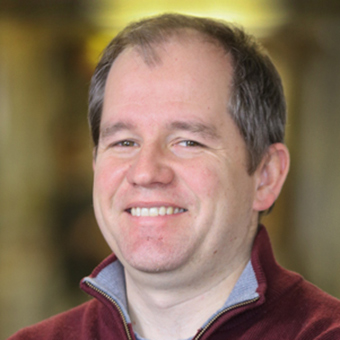
Zvonimir Dogic is a Research Associate Professor of Physics at the Martin A. Fisher School of Physics, Brandeis University. He leads the Dogic Lab, focusing on self-assembly of active and soft materials, with interdisciplinary work spanning statistical mechanics, biochemistry, and biophysics. His research explores how particle shape, chirality, and entropic forces drive emergent structures in colloidal systems and active matter. He holds a PhD from Brandeis University (2001) and has supervised numerous PhD students now in academic and industrial roles. Notable honors include the 2010 Cozzarelli Prize and the 2013 Andor Insight Award for his work on oscillating microtubule bundles. Research interests include active matter dynamics, liquid crystalline phases, and biomimetic systems. Recent work includes studies on microtubule-based active gels, chiral colloids, and self-organized cilia-like structures. His lab collaborates with institutions like Harvard, the Mayo Clinic, and the Francis Crick Institute. Key funding sources include the NSF MRSEC, W.M. Keck Foundation, and NIH. The lab’s YouTube channel and Science Blog posts highlight breakthroughs like self-propelled emulsions and entropy-driven membrane formation.
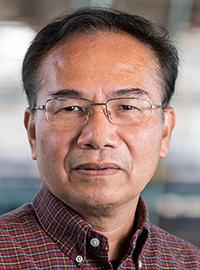
Wenrui Huang is a Professor in the Department of Civil & Environmental Engineering at Florida A&M University-Florida State University (FAMU-FSU). He holds a Ph.D. (1993), M.S. (1986), and B.S. (1982) in Civil Engineering from the University of Rhode Island and Hohai University. His research focuses on Coastal & Estuarine Hydrodynamics, Surface Water Quality Modeling, and Neural Network Applications in Hydrology. Professional Affiliations: Licensed Professional Engineer (PE), Chair of the Professional Development Committee at FAMU-FSU. Key Contributions: Published in coastal hazards, hurricane modeling, and storm surge assessment. Edited the book Coastal Hazards (2010). Research emphasizes numerical modeling of extreme events, including tsunami propagation and hurricane-induced wave dynamics. His work integrates computational methods with environmental systems analysis.
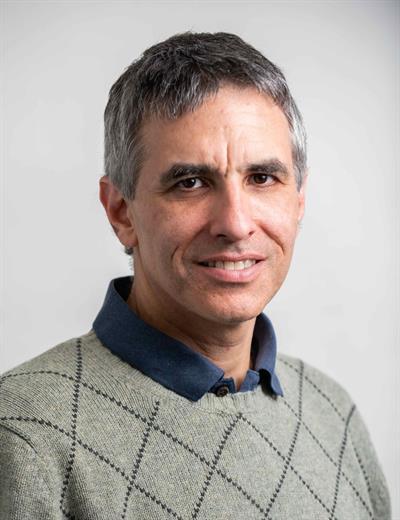
Marc Hodes is Professor in Mechanical Engineering and Mathematics at Tufts University. With a PhD from MIT, his research focuses on heat transfer phenomena with applications in electronics cooling, supercritical fluids, and thermoelectric systems. He directs the graduate program in Mechanical Engineering. Education: BS, University of Pittsburgh (1990) MS, University of Minnesota (1994) PhD, Massachusetts Institute of Technology (1998) Research Areas: Thermal management of electronics through microchannel cooling and liquid metal technologies; Apparent slip phenomena in microstructured surfaces; Mass transfer in supercritical CO 2 systems for aerogel processing; Thermoelectric module optimization for precision temperature control. Awards & Honors: NSF REU Fellowship (1989) E.T.S. Walton Visitorship Award Best Associate Editor, ASME Journal of Heat Transfer (2023) Research Leadership: Principal investigator on multiple NSF grants including projects on aerogel manufacturing, dropwise condensation, and analysis of convection in slip flows. Industry collaborations include Google, DARPA, and Bell Labs.
Prof. Dr. Hendrik Weber is a Professor of Mathematics at the University of Münster, leading the Workgroup for Stochastic Analysis. He holds the Bridging the Gaps Professorship and is affiliated with the Faculty of Mathematics and Computer Science. His expertise lies in stochastic analysis, particularly stochastic partial differential equations (SPDEs) and their applications in mathematical physics and statistical mechanics. Weber's research focuses on regularity structures, singular SPDEs, and the interplay between stochastic processes and nonlinear dynamics. Education and Career: Weber earned his PhD from the University of Bonn (2010) and held positions at the University of Warwick (2010–2018) and the University of Bath (2018–2022) before joining Münster in 2022. He has been recognized with awards including the ERC Consolidator Grant (2022), Philip Leverhulme Prize (2017), and Rollo Davidson Prize (2016). Research Interests: Weber's work addresses theoretical challenges in SPDEs, including invariant measures, phase transitions, and scaling limits. His projects span topics like singularities in PDEs, field theory randomness, and deep learning surrogate methods. Recent studies include the dynamic Φ⁴ model, stochastic quantization in non-commutative spaces, and a priori bounds for quasilinear SPDEs. Publications: Over 60 peer-reviewed articles, including high-impact contributions to Annals of Probability , Communications in Mathematical Physics , and Archive for Rational Mechanics and Analysis . His work emphasizes rigorous mathematical analysis of stochastic systems and their physical implications. Awards and Grants: ERC Consolidator Grant (2022), Royal Society Fellowship (2016), and multiple collaborative projects funded by the EPSRC and DFG. His research also bridges theoretical developments with applications in machine learning and feature engineering using regularity structures. Labs/Teams: Leads a dynamic research group comprising PhD students (e.g., Sophie Mildenberger) and postdoctoral researchers. Collaborations with global institutions like the University of Warwick and the University of Bath drive interdisciplinary advancements in stochastic analysis.
Pascale Biron is a Professor in the Department of Geography, Urban Planning and Environment at Concordia University, Montreal. She holds a Ph.D. in Geography from Université de Montréal (1995) and has been with Concordia since 1998. Her research focuses on river dynamics, stream restoration for fish habitat, flood modeling, and climate change impacts. She specializes in hydrogeomorphology, river management in agricultural watersheds, and numerical modeling of fluvial processes. Research Interests: Her work includes river restoration strategies, flood risk assessment using LiDAR technology, and the 'river freedom' concept promoting ecosystem resilience. She collaborates closely with government agencies to translate research into practical river management policies. Professional Affiliations: Canadian Geomorphology Research Group, Canadian Association of Geographers, American Geophysical Union, GRIL (Limnology Research Group), and RIISQ (Quebec Flood Risk Network). Publications & Research: Recent studies address global salmonid biomass patterns, fluvial hazard detection via machine learning, and large-scale flood modeling. She supervises 19 graduate students in Ph.D./M.Sc. programs in Geography and Environmental Studies, focusing on topics like river confluence hydraulics and agricultural stream restoration. Grants & Funding: Active projects include river dynamics in fish habitats, flood modeling for road infrastructure vulnerability, and computational fluid dynamics simulations of river flows. She also leads research on societal dimensions of river restoration and policy frameworks for flood resilience.
Ana Paula Da Silva is a Research Fellow at the University of Sydney's Faculty of Science, specializing in coastal oceanography and eco-morphodynamics. Her work focuses on wave climate changes, sediment transport dynamics, coastal adaptation strategies, and Arctic coastal processes. She holds a Ph.D. from Griffith University (Australia) and conducted postdoctoral research at the University of Quebec (Canada), studying High Arctic coastal erosion. Currently, she investigates the Great Barrier Reef's eco-morphodynamics and projected coastal changes through 2100. Education Ph.D. in Coastal Oceanography, Griffith University, Australia (Focus: Fingal Headland sediment bypassing) MSc in Coastal Dynamics, UFSC, Brazil Bachelor (Hons) in Oceanography, UFSC, Brazil Research Interests Ana's research bridges climate science and coastal management, emphasizing: Climate-driven changes in wave regimes and sediment transport Headland bypassing mechanisms and coastal connectivity Arctic coastal morphodynamics impacted by glacier retreat Long-term coastal vulnerability assessments Media Engagement She has participated in science communications through: ABC Radio interviews (2021) explaining Fingal Head sand bypassing impacts Conversation article (2020) on disappearing Australian beaches Lab/Affiliation Affiliated with Sydney Southeast Asia Centre, contributing to interdisciplinary coastal research initiatives.
Dr Jordan Pitt is an academic affiliated with the University of Sydney's Faculty of Science. He holds the role of Associate Dean (Indigenous Strategy and Services) while also actively contributing as an applied mathematician. His work emphasizes interdisciplinary research and Indigenous inclusion in academia. Dr Pitt completed his PhD at the Australian National University in 2019, focusing on tsunami and storm surge modeling. He pursued post-doctoral research at the University of Adelaide, where his studies expanded into ocean wave-sea ice interactions. Current research investigates how wave dynamics influence sea ice growth/melt cycles, a critical factor in Earth's climate systems. Research Interests: Mathematical modeling of environmental systems Ocean wave mechanics Climate change impacts on sea ice Computational fluid dynamics While no specific scientific awards are explicitly listed, Jordan has been involved in initiatives like co-convening the Academy of Science’s 'Looking Back, Moving Forward' Public Lecture Series (2023) and organizing the ANZIAM 2024 Early Career Workshop. His efforts bridge Indigenous communities with STEM fields through programs like Science Pathways. As an educator and researcher, Jordan has not listed formal advisees or grants in the provided texts. His professional networks include roles in Indigenous strategy and academic service. Jordan’s work is associated with laboratories and teams focused on environmental fluid dynamics and climate modeling, though specific lab names are not mentioned.
Prof. Dr.-Ing. Lars Linsen is a full Professor of Computer Science at the Westfälische Wilhelms-Universität (WWU) Münster, leading the VISualization & graphIX (VISIX) group. His primary affiliation is the Institute of Computer Science within the Faculty of Mathematics and Computer Science. He holds adjunct professorships at Jacobs University, Bremen, and has held previous academic roles including Full Professor at Jacobs University (2012–2017) and Associate/Assistant Professor roles in Germany and the U.S. His research focuses on interactive visual analysis, medical visualization, and scientific visualization, with applications in life sciences and engineering. Education: PhD (Dr.-Ing.) in Computer Science from Universität Karlsruhe (2001), M.Sc. (Diplom) in Computer Science (1997), B.Sc. (Vordiplom) in Computer Science (1994). Awards: IEEE Visualization Design Contest Winner (2008, 2022, 2018), Preis des Fördervereins des Forschungszentrum Informatik (2002). Research Highlights: Develops visualization tools for medical imaging (e.g., mass spectrometry imaging, MRI data analysis) and physical simulations (e.g., wildfire spread analysis, asteroid impact modeling). Active in EU-funded projects like Pig-Pro-QuO (surface coatings) and cells-in-motion initiatives. Supervised over 20 PhD/MS advisees, including notable graduates in medical visualization and simulation ensemble analysis. Publications: Over 100 peer-reviewed articles in top venues like IEEE Transactions on Visualization and Computer Graphics, Computers & Graphics, and EuroVis. Key works include SciVis contest-winning wildfire analysis frameworks and medical visualization tools for stenosis detection. Teaching: Offers courses on visualization, computer graphics, and computational science. Actively involved in thesis supervision and curriculum development at both WWU Münster and Jacobs University. Grants & Collaborations: Principal investigator on DFG-funded projects (e.g., hemodynamics simulations, ensemble visualization) and industry collaborations (e.g., Tascon GmbH for coating quality analysis). Member of the Cells-in-Motion Interfaculty Centre and CDH board at WWU.
Buyung Kosasih is a Professor in the School of Mechanical, Materials, Mechatronic and Biomedical Engineering at the University of Wollongong. He has held this position since 2000 and focuses on teaching and research in mechanical engineering, including Machine Dynamics, Finite Element Methods, and Renewable Energy Technology. His research spans fluid dynamics in industrial processes, renewable energy systems, and aqueous lubrication. Key projects include 3D-printed surfboard fin optimization and steel coating dynamics. Research interests emphasize experimental and computational fluid dynamics, particularly in renewable energy turbines and tribological systems. Notable awards include the 2013 Outstanding Contribution to Teaching and Learning Award. He has supervised numerous students and led over 20 funded projects, including ARC grants for steel innovation and renewable energy. Collaborative work includes the Steel Research Hub and HVAC/cool roof efficiency studies.
Massimo Figari is a Full Professor at the University of Genoa , affiliated with the Department of Naval, Electrical, Electronic, and Telecommunications Engineering (DITEN) . He serves as the Course Coordinator for the Maritime Science and Technology course and teaches a range of subjects including naval systems reliability, military ship design, and maritime economics. His research spans naval architecture , maritime safety , autonomous shipping , and decarbonization technologies . He is actively involved in developing battery energy storage systems for naval applications, certification frameworks for autonomous ships, and simulation-based training for maritime education. His work emphasizes sustainability, safety, and innovation in marine engineering. Recent publications reflect a strong focus on emission reduction , alternative marine fuels like methanol, and autonomous navigation systems . These contributions position him at the forefront of maritime engineering research and education. Contact: He is available via email at massimo.figari@unige.it and holds office hours on Fridays from 4–5 PM at Villa Cambiaso, Office No. 322.
Prof. Andreas Bausch holds the Heinz Nixdorf Endowed Chair of Cell Biophysics at the Technical University of Munich (TUM) within the TUM School of Natural Sciences . His research focuses on cellular biophysics , particularly the mechanical properties of cytoskeletal networks and self-organization mechanisms in biological systems, with applications in biomimetic materials and organoid modeling. Research Areas : Cytoskeletal mechanics, active matter systems, organoid morphogenesis, integrin signaling, synthetic cell models Techniques : Microrheology, in vitro reconstitution, microfluidics, advanced imaging His work has produced over 100 publications in Nature, Science, PNAS , and Physical Review Letters , with recent emphasis on pancreatic cancer organoids and artificial cell membranes . Key findings include: Discovery of topological excitations governing endothelial cell ordering Elucidation of PIP2/PIP3 regulation in integrin phase separation Development of 3D patterned organoid systems for drug screening Major awards include: ERC Synergy Grant (2018) ERC Advanced Grant (2012) ERC Starting Grant (2011) Berlin-Brandenburg Academy of Sciences Prize (2014) He serves as founding director of the Center for Functional Protein Assemblies (CPA) since 2015 and teaches biomechanics , biophysics , and protein assemblies at TUM. His lab investigates both fundamental biophysical principles and their medical applications in cancer and cardiovascular systems.
Alexey Bufetov is a Professor at Leipzig University, holding an ERC Starting Grant for his research in Integrable Probability (2022-2027). Previously, he served as a W2-Professor ("Bonn Junior Fellow") at the Hausdorff Center for Mathematics (2018-2021) and as a CLE Moore Instructor at Massachusetts Institute of Technology (2015-2018). His research centers on Probability Theory , with deep connections to Mathematical Physics and Combinatorics . Key areas include integrable probability, stochastic particle systems (ASEP/TASEP), random tilings, Schur generating functions, and representation-theoretic aspects of probability. His work often bridges abstract mathematical structures with physical models from statistical mechanics. Bufetov's recent publications reveal a strong focus on integrable systems and asymptotic analysis , particularly exploring connections between Mallows measures, vertex models, and random matrix theory. His 2025 work on Aztec diamond domino tilings exemplifies his signature approach combining combinatorial structures with probabilistic methods. His primary recognition is the ERC Starting Grant "Integrable Probability" (2022-2027), supporting his cutting-edge research program. Bufetov has maintained a prolific collaborative network, frequently publishing with leading researchers including Alexei Borodin, Vadim Gorin, Leonid Petrov, and Kailun Chen. His work appears in top journals such as Advances in Mathematics , Duke Mathematical Journal , and Communications in Mathematical Physics .
Joachim Weickert is a Professor of Mathematics and Computer Science at Saarland University where he heads the Mathematical Image Analysis Group since 2001. He received his diploma and Ph.D. in mathematics from the University of Kaiserslautern (1991, 1996), and a habilitation degree in computer science from the University of Mannheim (2001). Prior to his current position, he worked as a research assistant at the University of Kaiserslautern, as a post-doctoral researcher at the universities of Utrecht and Copenhagen, and as an assistant professor at the University of Mannheim. His research focuses on image processing, computer vision, and scientific computing, with special emphasis on techniques based on partial differential equations, variational principles, wavelets, morphological and nonlocal methods, as well as neuroexplicit approaches. He has developed mathematical models and efficient numerical algorithms for image restoration, enhancement, segmentation, compression, optic flow computation, stereo reconstruction, shape from shading, and signal processing methods for tensor fields. These ideas have been successfully applied in industry, biomedical image analysis, and other fields. Analysis of his recent publications reveals a strong trend toward combining traditional PDE-based methods with modern deep learning approaches, particularly in the areas of image inpainting and compression. His work increasingly explores the connections between numerical algorithms for partial differential equations and neural network architectures, demonstrating how mathematical foundations can inform cutting-edge AI techniques while maintaining strong theoretical guarantees. Gottfried Wilhelm Leibniz Prize (2010), considered the most important research award in Germany ERC Advanced Grant (2017) for "Inpainting-based Compression of Visual Data" Elected member of Academia Europaea - The Academy of Europe Jan Koenderink Prize for Fundamental Contributions in Computer Vision (2014) Multiple DAGM Prizes and Best Paper Awards throughout his career AAIA Fellow (2021) and Highly Ranked Scholar (2024) distinctions Professor Weickert has supervised over 250 bachelor's and master's theses and initiated the Master Programme in Visual Computing at Saarland University, the first of its kind in Germany taught in English. He has established numerous interdisciplinary collaborations with colleagues from medicine, bioinformatics, pharmacy, physics, mechatronics, and mechanical engineering. As Principal Investigator for Visual Computing within the Multimodal Computing and Interaction Cluster of Excellence, and former dean of the Faculty of Mathematics and Computer Science (2008-2010), he has played a significant leadership role in advancing visual computing research and education. He heads the Mathematical Image Analysis Group, which has been at the forefront of developing mathematical methods for image analysis. The group maintains strong connections with both theoretical mathematics and practical applications, bridging the gap between fundamental research and real-world implementation across various domains including medical imaging, industrial inspection, and multimedia processing.
Eduardo Pereyra is a Professor in the McDougall School of Petroleum Engineering at The University of Tulsa, where he serves as Associate Director for the Tulsa Fluid Flow Projects (TUFFP) and the Horizontal Wells Artificial Lift Project (TUHWALP) . His academic career spans theoretical and applied research in multiphase flow, flow assurance, artificial lift systems, and separation technologies. Education: Ph.D. and M.Sc. in Petroleum Engineering from The University of Tulsa; Dual B.S. in Mechanical Engineering and Systems Engineering from the University of Los Andes, Venezuela Pereyra’s research focuses on multiphase flow dynamics , particularly in gas-liquid and oil-water systems. His work addresses critical challenges such as slug flow mitigation , downhole separator efficiency , and ESP motor cooling , leveraging computational fluid dynamics (CFD) and experimental validation. Recent publications emphasize inclined pipe flows , severe slugging mitigation , and plunger lift optimization . Pereyra has received multiple accolades, including the 2023 SPE Production and Operations Award and the 2022 Kermit Brown Outstanding Teacher Award . His contributions to multiphase flow modeling have been recognized through the 2021 Zelimir Schmidt Outstanding Researcher Award . He actively collaborates with industry partners through TUFFP and TUHWALP, directing projects like the Horizontal Wells Artificial Lift Initiative .
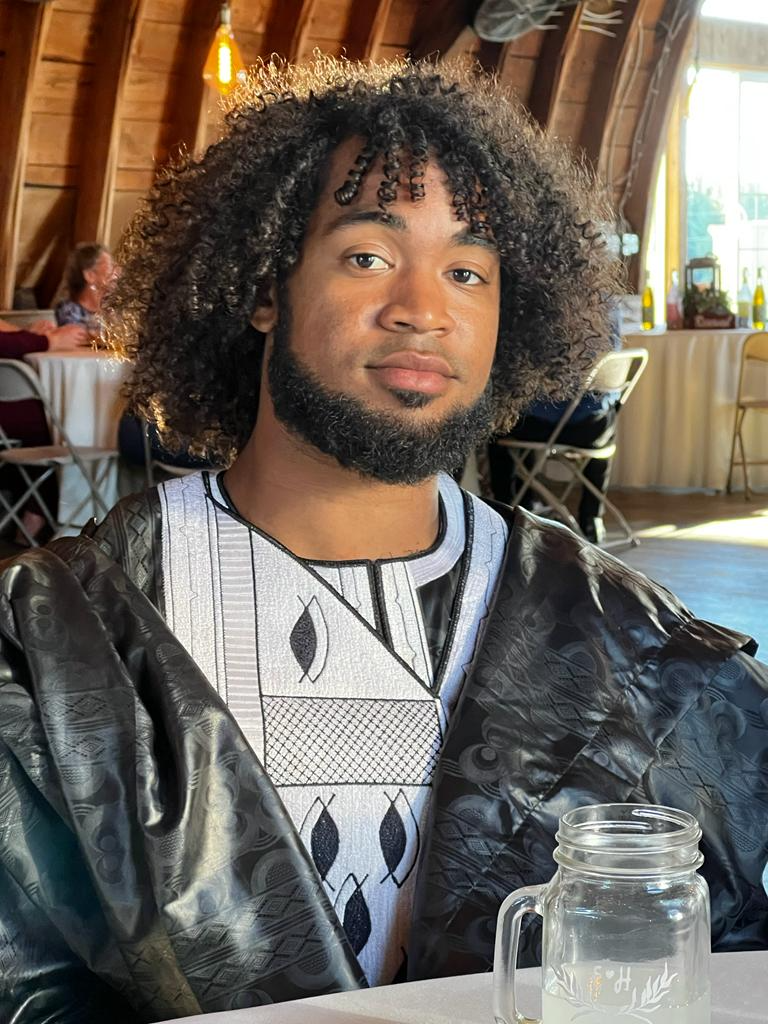
Olumakinde Adesijibomi Ogunnaike is a President’s Postdoctoral Fellow at the Department of Physics, University of California, Berkeley. His research focuses on the quantum theory of strongly interacting and open systems, particularly symmetry, entanglement dynamics, and emergent properties in quantum systems. He actively bridges physics with poetry and philosophy, and is dedicated to mentoring underrepresented students in STEM. Education: PhD in Physics (MIT), MSc in Philosophy of Physics (Oxford), BSc in Physics and Mathematics (Harvard). Ogunnaike investigates quantum systems where fundamental particles exhibit unintuitive collective behaviors due to quantum correlations. His work spans topics like composite atom formation, measurement-induced phase transitions, and symmetry’s role in entanglement spread. He also explores interdisciplinary intersections, notably through the Poetry of Science project. His recent publications address quantum many-body stability, hydrodynamics, and graphene-based material properties. These works emphasize symmetry, long-range interactions, and measurement effects, reflecting both theoretical rigor and interdisciplinary curiosity. Award: President’s Postdoctoral Fellowship (UC Berkeley). Ogunnaike has organized MIT’s Directed Reading Program, co-founded National Society of Black Physicists chapters, and taught courses in general relativity and introductory laboratory physics. His outreach efforts highlight his commitment to inclusive education and community engagement.