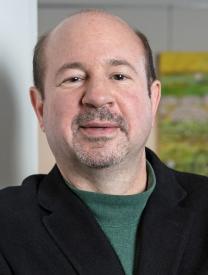
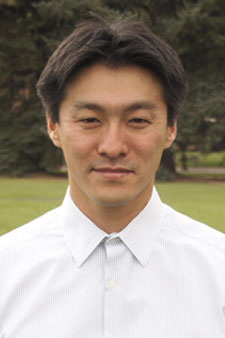
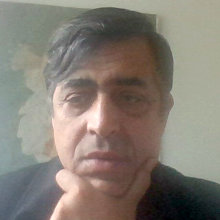
Dr. Michael Mann is the Presidential Distinguished Professor in the Department of Earth and Environmental Science at the University of Pennsylvania, with a secondary appointment in the Annenberg School for Communication. As Director of the Penn Center for Science, Sustainability and the Media and Vice Provost for Climate Science, Policy, and Action, he leads interdisciplinary efforts in climate research and communication. His work focuses on climate variability, paleoclimate, tropical cyclones, and policy advocacy. Education: Ph.D. (Yale, 1998), M.Phil. (Yale, 1991), A.B. (UC Berkeley, 1989). Awards include the Tyler Prize (2019) and election to the National Academy of Sciences (2020). His research group publishes on ocean warming, climate modeling, and extreme weather patterns. Key contributions include studies on Plio-Pleistocene climate transitions, tropical cyclone prediction, and the societal impacts of climate change. He co-founded RealClimate.org and authored influential books like *The New Climate War*.
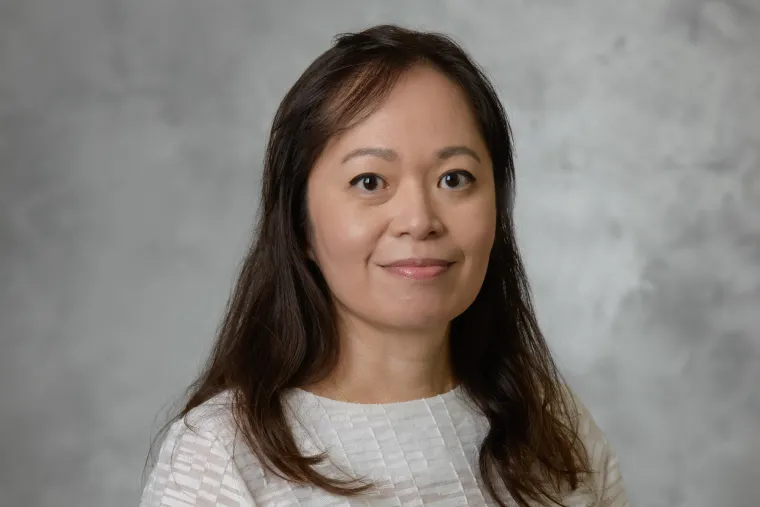
Dr. Laifang Li is an Assistant Professor in the Department of Meteorology and Atmospheric Science at Pennsylvania State University's College of Earth and Mineral Sciences. She holds joint appointments as a Faculty Co-Hire at the Institute for Computational and Data Sciences and Associate Faculty at the Earth and Environmental Systems Institute. Her research bridges climate dynamics and physical oceanography with a focus on large-scale climate interactions. Education Ph.D. in Climate Dynamics, Duke University (2014) M.S. in Geophysical Fluid Dynamics (Climate), Chinese Academy of Sciences (2009) B.S. in Physical Oceanography, Ocean University of China (2006) Research Focus Dr. Li's research investigates the global water cycle and climate-ocean interactions, with emphasis on hydroclimate variability, ocean salinity patterns, and North Atlantic dynamics. She develops predictive methodologies using oceanic data to forecast regional rainfall and applies Bayesian statistical approaches to extreme weather events. Her work integrates observational data with computational modeling to analyze multidecadal climate patterns and subtropical atmospheric systems. Affiliations She maintains active collaborations through the Earth and Environmental Systems Institute and leverages high-performance computing resources via the Institute for Computational and Data Sciences. No specific laboratories or research groups are detailed in available records.
Raul Sánchez Salguero is a Professor at Universidad Pablo de Olavide within the Physical, Chemical and Natural Systems department. He is also affiliated with the Pyrenean Institute of Ecology (CSIC), Spain, as a Post-Doc researcher. His work focuses on ecology , climate change impacts , and forest dynamics in Mediterranean and Alpine ecosystems. Education: PhD in Ecology from the University of Córdoba (2012), thesis titled Drought-induced selective decline in pines from southeastern Spain . Research interests span vegetation ecology , dendroecology , and forest conservation under global change. Key themes include tree growth responses to drought , spatial synchrony in forest productivity , and adaptive silvicultural practices . His 15 most recent articles (2023-2025) analyze climate-driven forest decline , wood anatomical traits , and ecosystem resilience across tropical, Mediterranean, and boreal biomes. His work integrates tree-ring analysis with process-based models to predict forest vulnerability to climate extremes . Collaborative projects involve CSIC and international institutions like ETH Zurich and Siberian Federal University . Current academic activity includes post-fire regeneration studies and drought legacy assessments in rear-edge forest populations.
David J. Neelin is a Professor in the Department of Atmospheric and Oceanic Sciences at the University of California, Los Angeles (UCLA). With a background in physics and climate science, his research focuses on climate dynamics, coupled ocean-atmosphere modeling, and geophysical fluid dynamics, particularly in relation to El Niño, precipitation extremes, and heatwaves. Education : B.S. and M.S. from the University of Toronto; Ph.D. from Princeton University His work integrates climate modeling, observational data, and theoretical frameworks to understand tropical meteorology, cloud feedback mechanisms, and regional climate impacts such as atmospheric rivers and nocturnal convection. Recent publications emphasize machine learning applications in weather prediction, climate sensitivity, and extreme event dynamics. Scientific Awards : Pritzker Emerging Environmental Genius Award Neelin's projects include studies on the Tibetan Plateau's influence on global climate, tropical convective systems, and water vapor feedbacks. His research has significant implications for climate policy and risk mitigation in regions like California and the Great Barrier Reef.
Hamidreza Mosaffa is a Postdoctoral Researcher in the Department of Meteorology at the University of Reading, affiliated with the ECFoundLand project. His work focuses on advancing satellite-based hydrological and climatological research, leveraging machine learning and remote sensing technologies. Key areas of expertise include high-resolution precipitation estimation, soil moisture analysis, and flood susceptibility modeling across Mediterranean and European regions. His research integrates interdisciplinary approaches to address critical challenges in climate science, such as improving operational drought monitoring, enhancing hybrid hydrological forecasting systems, and developing explainable AI models for environmental data. He contributes to initiatives like the Digital Twin Earth Hydrology project, aiming to create dynamic, high-resolution representations of the terrestrial water cycle. Notable contributions include the HR-PrecipNet framework for satellite precipitation estimation and the HYPER-P dataset for Europe-Mediterranean hydroclimatic analysis. His work emphasizes bridging gaps between theoretical models and real-world applications, with applications in climate adaptation and water resource management. Key Projects: ECFoundLand, Digital Twin Earth Hydrology, 4dMED Labs/Teams: Department of Meteorology Research Group Grants/Advising: Focus on collaborative research grants and interdisciplinary projects
Dr. Nicola Browne is a Senior Lecturer in Marine Ecology at the School of the Environment, University of Queensland. Her research focuses on marginal reef systems, sediment dynamics, and climate change impacts on coral communities. She investigates geomorphological processes, turbidity gradients, and reef resilience using field-based techniques and remote sensing data. Her work spans Australian coral reefs, Malaysian Borneo, and the Indian Ocean, examining carbonate budgets, bioerosion rates, and coral-algal phase shifts. Dr. Browne collaborates extensively on multi-institutional projects addressing coastal management and living shoreline opportunities. Her research interests include developing predictive models for reef stability under climate change, understanding sediment flux in turbid environments, and documenting coral adaptations to extreme conditions. She utilizes MODIS satellite data, sediment budgeting, and geochemical proxies to reconstruct environmental histories and forecast ecosystem responses.
Katharine (Kate) Maher is a Professor of Earth System Science at Stanford University and holds a courtesy appointment in the Department of Earth and Planetary Sciences. She is also a Senior Fellow at the Woods Institute for the Environment. Her expertise spans interdisciplinary Earth science, integrating hydrological, chemical, and biological processes to address global environmental challenges. Education: Ph.D., Earth and Planetary Sciences, University of California, Berkeley (2005) M.S., Civil and Environmental Engineering (Fluid Mechanics/Hydrology), University of California, Berkeley (2001) B.A., Environmental Earth Sciences, Dartmouth College (1999) Research interests focus on the carbon cycle, including historical CO2 impacts, soil carbon dynamics, and modern CO₂ removal strategies. She employs reactive transport modeling and advanced analytical techniques like ICP-MS to study biogeochemical processes in floodplains, shale formations, and critical zone environments. Her work bridges subsurface hydrology, isotopic fractionation, and climate feedback mechanisms, emphasizing the role of functional complexity in soil organic carbon persistence and the influence of hydroclimate on weathering gradients. Her awards include the James B. Macelwane Medal (2015) for outstanding contributions to geophysical sciences and the Allan Cox Medal (2012) for mentoring undergraduate research. This reflects her dual focus on scientific innovation and education. Advising and grants involve mentoring students and securing funding for projects on hydraulic fracturing impacts, shale-fluid interactions, and airborne geophysical surveys. Her collaborative efforts span institutions and disciplines, advancing environmental monitoring and sustainable resource management. Labs and fieldwork include studies in Colorado’s Slate River Floodplain and the Rifle Aquifer, leveraging geophysical data and reactive transport modeling to explore subsurface processes and contaminant dynamics.
Clara Deser is a renowned climate scientist affiliated with the National Center for Atmospheric Research (NCAR) under the University Corporation for Atmospheric Research (UCAR). She holds a Ph.D. in Atmospheric Sciences from the University of Washington (1989) and a B.S. from MIT (1982). Her research focuses on climate variability and change, particularly ocean-atmosphere-sea ice interactions, internal climate variability, and ENSO dynamics. She has co-led major projects like the CESM Large Ensemble initiative and the Polar Amplification Model Intercomparison Project (PAMIP). Key research interests include global impacts of sea ice loss, regional climate change attribution, and developing tools for climate variability analysis. Deser has received prestigious awards, including membership in the National Academy of Sciences and Fellowships from the American Geophysical Union and American Meteorological Society. Her work emphasizes distinguishing forced climate signals from natural variability, with impactful contributions to understanding Arctic amplification, ENSO diversity, and extreme weather events. Publications highlight advancements in climate modeling, large ensemble methodologies, and climate change projections. Her leadership in collaborative initiatives underscores her role in advancing global climate science through interdisciplinary research and community-driven projects.
Hsin-I Chang is an Assistant Research Professor and Director of the Center for Applied Hydroclimate Sciences at the University of Arizona. She holds a Ph.D. in Earth and Atmospheric Sciences from Purdue University (2009). Her expertise includes regional climate modeling, downscaling, climate projection, weather extremes, and land-atmosphere interactions. Chang's research employs advanced climate modeling techniques to analyze extreme weather events and climate patterns, particularly in arid regions. She has led numerous studies on subseasonal forecasting and climate change impacts.
Noriaki Ohara is a Professor in the Department of Civil & Architectural Engineering at the University of Wyoming, College of Engineering and Physical Sciences. His research focuses on snow hydrology, cold regions engineering, and hydroclimatic modeling. He leads the Snow Hydrology and Cold Regions Engineering research group and contributes to major environmental hydrology projects, including the NSF-funded WyCEHG initiative. B.A. and M.A. in Civil Engineering, Chuo University, Japan Ph.D. in Civil Engineering, University of California, Davis, 2003 His research interests include Hydrologic Modeling , Snow Hydrology , Hydrometeorology , and Theoretical Treatment of Scale Gap . He develops and applies process-based models to simulate snow accumulation, redistribution, and melt at watershed and regional scales. His work integrates field observations, numerical weather prediction (e.g., WRF), and high-performance computing. The recent publications highlight a strong trend in snow process modeling , climate change impacts on mountain hydrology , and physically-based estimation of extreme precipitation . His work spans from theoretical formulations (e.g., Eulerian equations for snow accumulation) to practical applications in water resource management and risk assessment. Dr. Ohara is affiliated with the following professional organizations: American Society of Civil Engineers (ASCE) American Geophysical Union (AGU) Japan Society of Civil Engineers He has advised graduate students in civil and environmental engineering, particularly in snow and watershed hydrology. His research has been supported by NSF through the WyCEHG EPSCoR project, where he served as a team leader for snow partitioning. He operates field sites in the Snowy Range, Wyoming, and the Tahoe Basin, California, for hydrologic and snow process monitoring. Dr. Ohara's lab is involved in the development and application of the Watershed Environmental Hydrology (WEHY) model, an award-winning integrated modeling framework. His team conducts field experiments, numerical simulations, and data analysis to understand snow-dominated hydrologic systems. The group utilizes high-performance computing resources at the NCAR-Wyoming Supercomputing Center and the University of Wyoming.
Angelo Rubino is a Full Professor at the Department of Environmental Sciences, Computer Science and Statistics at Ca' Foscari University of Venice. His research focuses on oceanography, meteorology, and climatology, with a strong emphasis on climate dynamics, sea-level variability, and large-scale ocean-atmosphere interactions. Rubino leads studies on Mediterranean and Atlantic climate systems, utilizing high-resolution models and observational datasets. Key research areas include Atlantic Multidecadal Variability, Arctic Ocean changes, and the impacts of climate change on coastal regions such as Venice. He collaborates on interdisciplinary projects addressing sea-level rise, extreme hydrological events, and climate predictability. Rubino has published extensively in journals like Communications Earth & Environment , Nature Communications , and Journal of Geophysical Research . His work integrates field observations, satellite data, and numerical simulations to understand mechanisms driving ocean circulation and climate patterns. Rubino is affiliated with the Research Institute for Complexity and contributes to initiatives like the VolMIP (Volcanic Forcing Model Intercomparison Project) for climate model development.
Dr. Guo Yu is an Assistant Research Professor at the Desert Research Institute (DRI) in the Hydrologic Sciences Division, with a PhD in Civil and Environmental Engineering from the University of Wisconsin-Madison. As a licensed Professional Engineer in Nevada, his work bridges academic research and industrial application in hydrology, hydrometeorology, and climate change impact studies. Education: PhD in Civil and Environmental Engineering, University of Wisconsin-Madison. Dr. Yu’s research focuses on hydroclimate extremes , process-based hydrologic modeling , and rainfall/flood frequency analyses . His work investigates how climate change, wildfire, and urbanization alter flood dynamics, particularly in arid and mountainous regions. He integrates citizen science for precipitation phase monitoring and applies machine learning to enhance process understanding in geosciences. Recent publications highlight his expertise in nonstationary flood modeling and climate change impacts . Key topics include wildfire-induced flood alterations , crowdsourced data applications , and compounding flood drivers . His studies often inform flood risk management frameworks and dam safety analyses. Highlights: Cited in Federal Flood Risk Management Standard and Fifth National Climate Assessment. Dr. Yu collaborates with institutions like the American Geophysical Union and participates in technical workshops for flood quantification and precipitation phase estimation. His contributions span journal articles, conference proceedings, and reports for policy and engineering applications. Labs/Teams: Affiliated with DRI’s Hydrologic Sciences Division; works with interdisciplinary teams on wildfire and climate change projects.
Gabrielle "Bee" Leung is an incoming Assistant Professor in the Department of Atmospheric and Oceanic Sciences (AOS) at the University of Wisconsin–Madison, starting her tenure-track position in Fall 2026. Prior to that, she will join as an Anna Julia Cooper Postdoctoral Fellow in August 2025 to establish her research group. She earned her PhD from Colorado State University’s Department of Atmospheric Science, where her research focused on human impacts on cloud and precipitation systems through aerosol emissions, land-use change, and climate change. PhD, Atmospheric Science, Colorado State University Her research lies at the intersection of climate science, remote sensing, and atmospheric dynamics, with a focus on aerosol-cloud interactions , land-atmosphere coupling , and tropical convective processes . She uses satellite data, field observations, and cloud-resolving models to investigate how anthropogenic changes—such as deforestation, urbanization, and pollution—affect cloud development. A key innovation in her work is the application of object-based analysis to track cloud systems and quantify mesoscale variability. Her concept of the aerosol breeze —a mesoscale circulation driven by aerosol gradients—has advanced understanding of how spatial heterogeneity affects cloud formation. The recent articles highlight a consistent trajectory in her research: leveraging high-resolution data and modeling to dissect complex interactions between aerosols, land cover, and convection. Her work spans observational studies over Southeast Asia, idealized simulations, and NASA mission-related analysis (e.g., INCUS, CAMP2Ex). Broad keywords include Climate Science, Remote Sensing, and Atmospheric Physics, while subfields such as deforestation impacts, cold pool dynamics, and sub-kilometer modeling reveal her methodological and regional focus on tropical and mesoscale processes. Her scientific achievements have been recognized through several awards: Maria Silva Dias Award (2025) Herbert Riehl Memorial Award (2023) David L. Dietrich Honorary Scholarship (2022) NASA FINESST Award (2022) She has been actively involved in mentoring and outreach, including guest lectures, K–12 science demonstrations (e.g., CSU Little Shop of Physics), and leadership in field campaigns such as BACS-II and TIME-SLICE. She has no formal advisees yet but is expected to build a graduate research group at UW–Madison. She has secured competitive grants, most notably the NASA FINESST grant, which supports her PhD research on land-aerosol-cloud interactions in the Maritime Continent. Her future work will likely expand on these themes, integrating satellite observations with modeling to improve climate predictions. She is involved in multiple research teams and campaigns, including the NASA INCUS mission, CAMP2Ex, and BACS-II, where she has led drone and radiosonde operations. Her lab will be established at UW–Madison starting in 2025, focusing on cloud-resolving modeling, satellite data analysis, and process-level understanding of convective systems.
Peter Sheehan is an Emeritus Adjunct Professor in the Department of Geosciences at the University of Wisconsin-Milwaukee (UWM), affiliated with the College of Letters & Science. He holds the Robert and Sally Manegold Distinguished Curatorial Chair at the Milwaukee Public Museum and has served as Curator III, IV, and V there. His academic career spans over five decades, with a PhD in Paleontology from UC Berkeley (1971) and an MA from the same institution (1967). He has held adjunct professorships at UWM since 1977 and previously lectured at the University of Western Ontario (1972-1973) and conducted postdoctoral research in Sweden (1971-1972). His research focuses on mass extinctions, particularly the Late Ordovician and Cretaceous-Paleogene events, brachiopod community ecology, and the ecological aftermath of extinction crises. Key projects include studying microbial mat expansion post-Ordovician extinction, K/T asteroid impact effects, and Silurian faunal radiations. He also investigates modern glacial meltwater dynamics in Antarctic regions like the Bellingshausen and Amundsen Seas. Professional Affiliations: Fellow of the Geological Society of America and Wisconsin Academy of Sciences, among others. Research Themes: Extinction mechanisms, sequence stratigraphy, paleobiogeography, and climate-ocean interactions. Fieldwork: Extensive work in the Great Basin (USA), Estonia, and Antarctica. Recent publications emphasize Antarctic ice shelf dynamics, Bay of Bengal monsoon influences, and glacial meltwater pathways. His work bridges paleontology with modern environmental science, addressing both historical and contemporary Earth system challenges.
Byron Adams is Professor and Biology Department Chair at Brigham Young University's College of Life Sciences, specializing in soil ecology, evolutionary biology, and Antarctic ecosystems. His research investigates climate-driven environmental changes, ecological genomics, and biodiversity patterns in extreme environments. Education: PhD in Biological Sciences from University of Nebraska (1998) His scientific contributions include groundbreaking studies on polar desert ecosystems, microbial community responses to climate anomalies, and nematode physiology. Research spans soil chemistry, genetic diversity, and ecological modeling across Antarctica's McMurdo Dry Valleys and Great Salt Lake. Brigham Young University Sponsored Projects Recognition Award University Professor Karl G. Maeser Excellence in Research and Creative Arts Award Antarctic Service Medal Young Scholar Award Adams leads the Adams Lab (adamslab.byu.edu), focusing on ecological genomics and sustainable research practices in fragile polar environments. His work integrates genomic data with environmental monitoring to understand biotic responses to climate change.