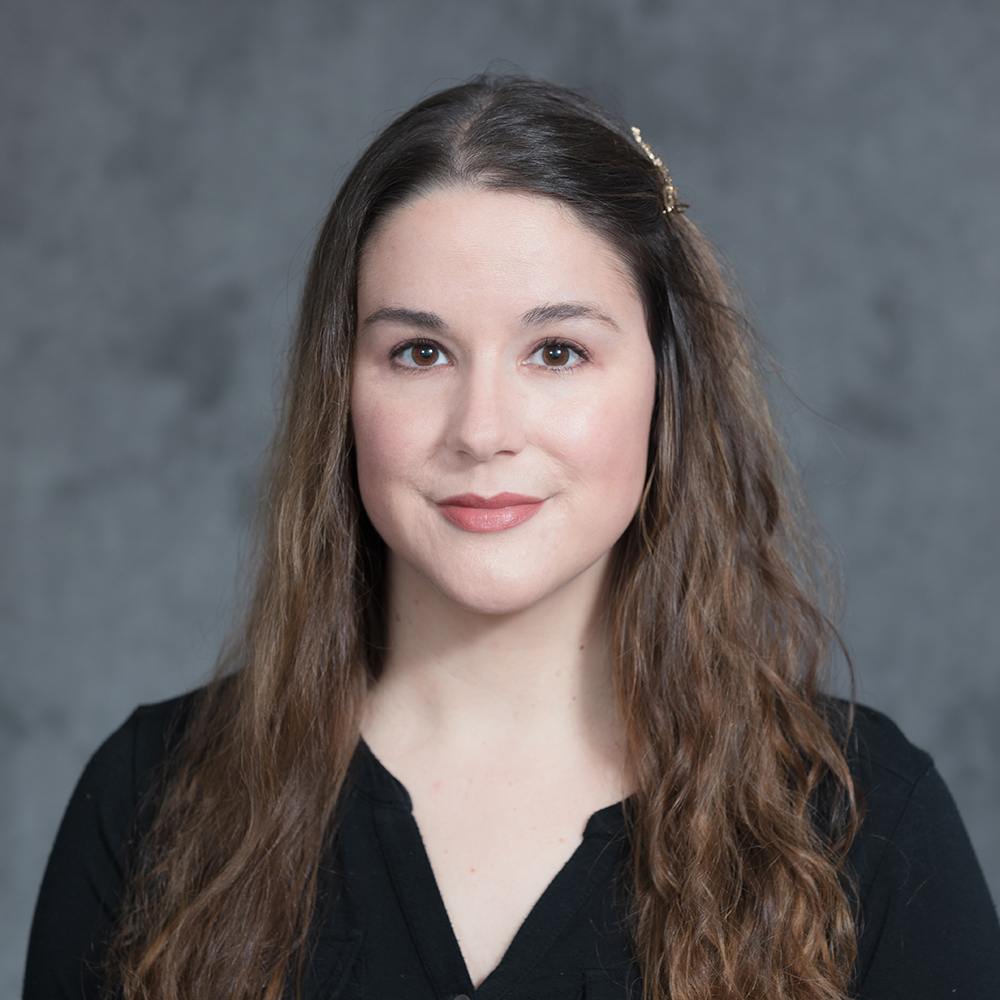
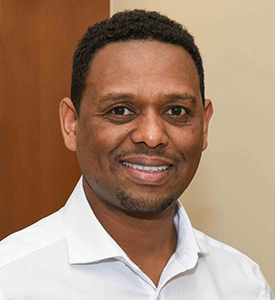
Dr. Kwok Chun is a Lecturer at the University of the West of England, Bristol, specializing in climatology and hydrology. His research examines nonstationary environmental processes across atmospheric, hydrospheric, and biospheric systems, focusing on risk quantification of climate extremes and anthropogenic impacts. He develops numerical models for projecting environmental changes and mitigation strategies. Research Leadership: HELPING group leader for IAHS Water Solutions Decade initiative on decolonizing hydrology Theme C (Compound Risks) lead for UNESCO EURO FRIEND-Water Project-3 Member of WCRP CORDEX-WRF community studying urban climate interactions Major Projects: NERC-FAPESP-NSTC Land Use Change Investigation and Regional Climate (LIRIC) (2025-2027) Climate Collaboratorium: Theatre Decision Labs for Climate Adaptation (2024-2027) Awards & Funding: Received four competitive grants including Vice Chancellor's Challenge Fund for AI-driven disaster visualization systems and Accelerator Programme for convection-permitting urban climate models. Global Collaborations: Works with University of Saskatchewan (Canada), University of Rouen (France), TU Dresden (Germany), and Istanbul Technical University (Turkey) on mesoscale modelling and hydroclimate risk assessment.
Hans Linderholm serves as Professor and Head of the Department of Earth Sciences at the University of Gothenburg, Sweden, with office located at Medicinaregatan 7B, Gothenburg. His leadership position and active research portfolio demonstrate his central role in the university's earth sciences initiatives, focusing on climate system dynamics across multiple continents. Linderholm's research program centers on reconstructing past climate (last 2000 years) and projecting future climate (next 100 years) in Europe and Asia using dendrochronological methods. His work examines temperature, drought, and precipitation patterns through tree-ring analysis, with particular emphasis on large-scale atmospheric and oceanic circulation systems. Fieldwork spans North Europe, China, Canada, and North Africa, investigating how natural climate variability informs understanding of anthropogenic climate change and ecosystem impacts. Analysis of his 2023-2025 publications reveals dominant themes in dendroclimatology (especially blue intensity techniques), climate extremes reconstruction, and interdisciplinary climate-society interactions. His work increasingly connects paleoclimate data with contemporary climate change impacts on agriculture, public health, and marine ecosystems, demonstrating methodological innovation across temporal scales. No scientific awards were specified in the available information. While specific student advisees are not listed, Linderholm's extensive multinational collaborations—including the Sino-Swedish Centre for Tree-Ring Research—indicate active mentorship and significant grant funding for climate research projects. His editorial roles further demonstrate leadership in academic knowledge dissemination. He directs the Gothenburg University Laboratory for Dendrochronology (GULD) and participates in the Regional Climate Group and Sino-Swedish Centre for Tree-Ring Research, which provide critical infrastructure for high-resolution climate reconstruction studies across diverse geographical contexts.
Anna Valentinovna Grenaderova is an Associate Professor at the Department of Ecology and Nature Management , Siberian Federal University . Specializing in paleobotany , paleoecology , and climate change , her research reconstructs Holocene environmental dynamics through peatland archives, fire history, and multi-proxy analyses. Education: Krasnoyarsk State University (2002, Bioecology) Degree: Candidate of Geographical Sciences (2006, dissertation on Kansk and Minusinsk mire dynamics) Research trends focus on Siberian peatland evolution, Holocene climate extremes, and post-fire ecosystem recovery. Her peer-reviewed articles (2024–2018) analyze macrocharcoal deposits, testate amoebae communities, and vegetation succession in Eastern Sayan and Central Siberia. Scientific roles: Member of Young Scientists Council (2012–2015) Editorial board member of The Newman in Foreign Policy journal
Stephanie Henderson serves as Assistant Professor in the Department of Atmospheric and Oceanic Sciences at the University of Wisconsin-Madison, where she leads research bridging weather forecasting and climate prediction through subseasonal-to-seasonal (S2S) variability studies. Her work addresses the critical predictability gap between synoptic weather systems and seasonal climate patterns, with direct implications for food security, public safety, and economic planning. Education: PhD in Atmospheric Science from Colorado State University Research Focus: Dr. Henderson specializes in tropical-extratropical interactions and global teleconnections , with particular expertise in the Madden-Julian Oscillation (MJO) and atmospheric blocking phenomena. Her methodology integrates observational analysis , numerical modeling , and statistical techniques to unravel how subseasonal processes (2-8 weeks) influence midlatitude weather extremes. Current projects examine MJO impacts on South American precipitation, Northeast Pacific blocking dynamics, and Arctic moisture intrusions. Publication Trends: Recent work (2022-2025) reveals intensifying focus on MJO teleconnection mechanisms across diverse regions, with growing emphasis on polar atmospheric rivers and climate change impacts on subseasonal predictability. Her research increasingly leverages satellite observations (e.g., PREFIRE mission) and addresses practical forecasting applications for extreme weather events. Research Environment: She directs the Subseasonal to Seasonal Variability group, utilizing resources including NOAA PSL SST monitoring, IRI ENSO forecasts, and CIMSS weather portals. The group maintains active collaborations with federal agencies to translate fundamental research into operational forecasting improvements for North American weather extremes.
Noah S. Diffenbaugh is the Kara J Foundation Professor and Kimmelman Family Senior Fellow in Stanford University’s Doerr School of Sustainability, with additional appointments as Senior Fellow at the Stanford Woods Institute for the Environment and Affiliate of the Precourt Institute for Energy. He directs the Climate and Earth System Dynamics Group within the Department of Earth System Science. Education Ph.D. in Earth Sciences, University of California, Santa Cruz (2003) M.S. in Earth Systems, Stanford University (1997) B.S. in Earth Systems, Stanford University (1997) Research Interests Professor Diffenbaugh’s research integrates physical climate modeling with assessments of natural and human vulnerabilities. His group investigates how fine-scale climate processes—such as temperature and precipitation extremes—impact water resources, agriculture, human health, and poverty. By combining numerical models, machine-learning techniques, and observational data, they quantify the mechanisms shaping extreme events and project regional climate risks across multiple degrees of global warming. Scientific Awards & Honors Fellow, American Geophysical Union (2020) William Kaula Award, AGU (2020) James R. Holton Award, AGU (2006) Highly Cited Researcher, Web of Science (2020–2024) Kavli Fellow, U.S. National Academy of Sciences (2010, 2016) NSF CAREER Award (2010–2015) Advising & Mentorship Prof. Diffenbaugh currently advises doctoral students June Choi and Jared Trok, mentors postdoctoral researcher Makoto Kelp and doctoral candidate Peidong Wang, and serves as reader for Adam Burnett’s dissertation. He also directs independent study, directed research, and honors projects for numerous undergraduates across Earth Systems and Sustainability programs. Laboratory & Teams He leads the Climate and Earth System Dynamics Group (climatelab.stanford.edu), a multidisciplinary team using high-resolution Earth-system models and data-driven approaches to study climate dynamics and societal impacts.
Lai-yung Ruby Leung is a Battelle Fellow at Pacific Northwest National Laboratory (PNNL) working in Earth Systems Analysis & Modeling. She serves as Chief Scientist of the Energy Exascale Earth System Model (E3SM) supported by the U.S. Department of Energy, leading major efforts to develop state-of-the-art capabilities for modeling human-Earth system processes on high-performance computers. Dr. Leung's research broadly spans climate and hydrological cycle modeling with expertise in land-atmosphere interactions, orographic processes, monsoon climate, and climate extremes. Dr. Leung earned her educational credentials from prestigious institutions: Ph.D., Atmospheric Science, Texas A&M University M.S., Atmospheric Science, Texas A&M University B.S. (Honors), Physics & Statistics, Chinese University of Hong Kong Her research interests focus on regional and global climate modeling , land-atmosphere interactions , and the regional hydrologic cycle . She investigates orographic precipitation mechanisms, climate extremes, climate variability and change, and aerosol-cloud interactions. Her work integrates advanced modeling techniques with observational data to understand complex Earth system processes, with research featured in Science , Popular Science , Wall Street Journal , and National Public Radio . Dr. Leung has published over 500 peer-reviewed papers and serves as an editor for the American Meteorological Society's Journal of Hydrometeorology . Analysis of Dr. Leung's recent publications reveals her leadership in developing and applying the Energy Exascale Earth System Model (E3SM), with significant contributions to understanding mesoscale convective systems, soil moisture dynamics, urban hydrology, and climate extremes. Her work demonstrates increasing integration of machine learning techniques with traditional climate modeling approaches, particularly in model evaluation frameworks and high-resolution simulations. She maintains strong focus on practical applications of climate science for understanding water resources, extreme weather events, and climate change impacts. Dr. Leung's scientific recognition includes: Election to the National Academy of Engineering (NAE) Election to the Washington State Academy of Sciences (WSAS) Fellow of the American Geophysical Union (AGU) Fellow of the American Meteorological Society (AMS) Fellow of the American Association for the Advancement of Science (AAAS) AMS Hydrologic Sciences Medal (2022) U.S. Department of Energy Office of Science Distinguished Scientist Fellow (2021) Reuter's Hot List of top 1,000 most influential climate scientists (2021) AGU Jacob Bjerknes Lecture (2020) AGU Bert Bolin Global Environmental Change Award (2019) As Chief Scientist of E3SM, Dr. Leung leads major research initiatives funded by the Department of Energy and has organized key workshops sponsored by DOE, NSF, NOAA, and NASA. She has served on numerous advisory panels and National Academies committees that define future priorities in Digital Twin, AI/ML, climate modeling, hydroclimate, and water cycle research. Her professional service includes membership on the Board on Atmospheric Sciences and Climate of the National Academies, council membership with the American Meteorological Society, and editorial roles for prominent journals. Dr. Leung directs research within PNNL's Earth Systems Analysis & Modeling group, collaborating with national and international climate research teams. She leads efforts to advance the Energy Exascale Earth System Model (E3SM), which represents cutting-edge capabilities in modeling human-Earth system processes. Her work connects with multiple PNNL research areas including atmospheric science, global change, and coastal science, contributing to the laboratory's mission of addressing complex environmental challenges through scientific innovation.
Roland Barthel serves as Professor in the Department of Geosciences at the University of Gothenburg's Faculty of Science and concurrently holds the position of Vice-Dean for the Faculty Office of Natural Sciences and Technology. Previously Head of Department (2018-2022), he specializes in groundwater resources within the context of climate change impacts across Sweden and Europe. His research integrates hydrological science with socioeconomic factors to address critical water challenges including drought, scarcity, and extreme weather events. Barthel emphasizes the societal dimensions of water management, particularly regarding unregulated private wells that constitute a significant portion of Sweden's drinking water supply. His interdisciplinary approach bridges natural and social sciences to develop implementable solutions requiring consideration of economic, political, and social frameworks alongside physical system understanding. Analysis of his publication record reveals a dominant focus on data-driven methodologies for groundwater dynamics assessment, drought propagation analysis, and climate adaptation strategies. His work consistently emphasizes regional-scale studies in temperate and high-latitude environments, with increasing attention to interdisciplinary collaboration frameworks. Scientific recognition includes: Student Union's Pedagogical Award (2014) Student Union's Pedagogical Award (2016) As an educator, Barthel pioneered hydrology instruction at the university by developing the master's course Applied Hydrology (GVG460) and undergraduate Hydrology and Hydrogeology (GV2002). He leads Earth Sciences thesis supervision, chairs the program committee, and contributes to multiple geoscience courses. His teaching excellence earned three consecutive pedagogical award nominations with wins in 2014 and 2016. He currently participates in an EU Erasmus+ project developing digital teaching tools with European partners, addressing high market demand for groundwater specialists in Swedish infrastructure and environmental sectors.
Dr. Zelalem Bedaso is a Full-Time Associate Professor in the Department of Earth and Environmental Geosciences at the University of Dayton's College of Arts and Sciences. His research bridges paleoenvironmental reconstruction and modern hydrological systems, primarily using stable isotope geochemistry. Key affiliations remain centered at the University of Dayton, with extensive fieldwork in Ethiopia's Afar Rift Valley and hydrological studies in Ohio. Research interests span: Paleoclimate & Human Evolution : Isotopic analysis of fossil tooth enamel and paleosols to reconstruct vegetation, animal diets, and aridity patterns in East Africa during the past 5 million years. Modern Hydrology : Precipitation/groundwater isotope studies in Ethiopia and the US Midwest to model climate impacts on water resources and moisture sources. Recent articles (2020-2022) demonstrate a focus on isotope hydrology in Ethiopia and Ohio, while earlier works (2010-2016) emphasize paleodietary reconstruction in human evolution contexts. Trends include high-impact publications in Journal of Hydrology and Science of The Total Environment . Active grants include NSF awards totaling $466K (2021-2025) for climate-water research in Africa. Dr. Bedaso teaches courses across geology and environmental science, including field methods and geochemistry.