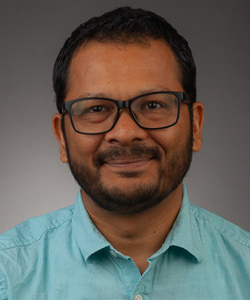
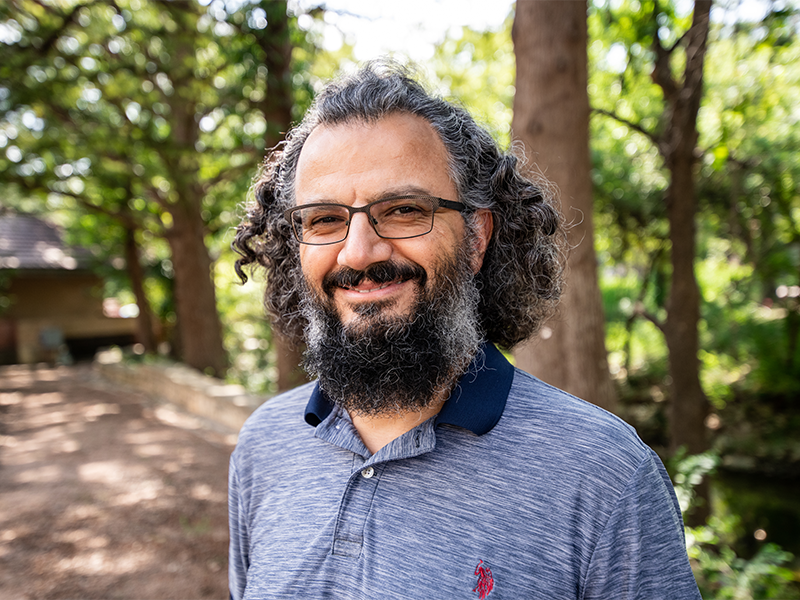
Dr. Leanne Archer is a Researcher in the School of Geographical Sciences at the University of Bristol, specializing in hydrology and climate change impacts. Her work focuses on flood risk assessment in Small Island Developing States, extreme rainfall events, and the application of convection-permitting climate models. She collaborates with experts like Prof. Paul Bates and Dr. Jonty Rougier on interdisciplinary projects addressing tropical cyclone hazards and climate adaptation strategies. Her research interests include analyzing flood exposure in vulnerable regions, soil moisture dynamics in urban flooding, and improving global flood forecasts for humanitarian operations. Archer’s publications emphasize the implications of climate change on rainfall-driven disasters, particularly in Puerto Rico and East Africa, using high-resolution climate projections to evaluate future risks under 1.5° C and 2° C warming scenarios. Recent work explores innovations like the Surface Water Ocean Topography Mission for flood modeling and evaluates the suitability of TanDEM-X data for inundation studies in island nations. Her contributions bridge environmental science with policy, aiming to enhance disaster preparedness and resilience in climate-sensitive regions.
Ann B. Lee is a Professor and Co-Director of the PhD Program in Statistics at Carnegie Mellon University , with a joint appointment in the Department of Statistics & Data Science and the Machine Learning Department. Prior to joining CMU, she held positions as a J.W. Gibbs Assistant Professor at Yale University and a visiting research associate at Brown University. PhD in Physics, Brown University MSc/BSc in Engineering Physics, Chalmers University of Technology, Sweden Her research focuses on statistical methodology for complex data in the physical sciences , emphasizing trustworthy inference, uncertainty quantification, and integration of classical statistics with machine learning. Recent work includes likelihood-free inference, calibrated forecasting, and diagnostics for generative models. The STAMPS research group , which she co-founded in 2018, hosts weekly meetings and public webinars. In Fall 2024, STAMPS will transition into a CMU Research Center. Recent publications span likelihood-free inference , climate modeling , and astronomy . Notable collaborations include applications to hurricane intensity guidance , galaxy redshift estimation , and cosmological parameter biases . She mentors PhD students and has advised multiple award-winning researchers, including ASA Best Student Paper Award winners. Her teaching includes advanced courses on probability, regression, and AI for climate sciences.
Dr. Yongjia Song is an Associate Professor in the Department of Industrial Engineering at Clemson University's College of Engineering, Computing and Applied Sciences. His research focuses on optimization under uncertainty, stochastic programming, and network interdiction with applications in disaster logistics, energy systems, and humanitarian operations. BS in Computational Mathematics (2009), Peking University MS in Industrial Engineering (2012), University of Wisconsin-Madison MS in Computer Sciences (2012), University of Wisconsin-Madison PhD in Industrial Engineering (2013), University of Wisconsin-Madison His work addresses complex systems under uncertainty through: Stochastic and robust optimization frameworks Integer programming for discrete decision problems Applications in disaster response and transportation networks Evacuation planning and shelter management Human trafficking disruption modeling Recent publications demonstrate trends in: Multistage stochastic programming for dynamic disaster response Bayesian preference elicitation for complex design problems Network interdiction models for security and trafficking disruption Integration of logistics and evacuation planning under uncertainty Adaptive algorithms for large-scale optimization Professional affiliations include: Institute for Operations Research and the Management Sciences (INFORMS) Mathematical Optimization Society (MOS) Society for Industrial and Applied Mathematics (SIAM) He teaches graduate courses in risk modeling (IE 8090) and actively works on practical implementations of optimization techniques in real-world systems.
Gustavo J. Bobonis is a Professor in the Department of Economics at the University of Toronto, with affiliations at the Munk School of Global Affairs and Public Policy. He holds a Ph.D. from the University of California, Berkeley (2005) and a B.A. from the University of Puerto Rico at Rio Piedras (2000). He co-directs the Forward Society Lab and is actively involved in research on development, labor, political economy, and economic history. Research Interests: His work focuses on development economics, particularly the impact of public policies on poverty, violence, education, and governance. He employs rigorous empirical methods, including field experiments and quasi-experimental designs, to analyze issues such as intimate partner violence, corruption, clientelism, and human capital accumulation. His research is geographically concentrated in Latin America and Puerto Rico. Recent Research Trends: His recent publications and working papers (2022–2025) demonstrate a strong focus on institutional reform, including anti-corruption audits, domestic violence courts, and education management. He also investigates long-term social impacts of welfare programs and climate adaptation strategies. His interdisciplinary approach bridges economics, public policy, and social science. Scientific Awards: U of T Department of Economics Faculty Award for Excellence in Undergraduate Teaching, 2015 John C. Polanyi Prize in Economic Science, 2009 National Academy of Education / Spencer Foundation Postdoctoral Fellow, 2008 Advising and Grants: While specific student names are not listed, he advises graduate students through the Honours Essay and research workshops. He leads collaborative research projects funded through grants and affiliations with J-PAL and BREAD, often involving large interdisciplinary teams. His work includes randomized evaluations and long-term follow-ups, suggesting sustained funding and research support. Labs and Teams: He co-directs the Forward Society Lab, which likely supports policy-relevant research on social development. He frequently collaborates with economists such as Paul Gertler, Marco Gonzalez-Navarro, Simeon Nichter, and Luis R. Cámara Fuertes. His affiliations with J-PAL and BREAD indicate integration into major global research networks focused on development and poverty alleviation.
John W. van de Lindt is the Harold H. Short Endowed Chair Professor in Civil and Environmental Engineering at Colorado State University and Co-director of the NIST Center of Excellence for Risk-Based Community Resilience Planning. His research develops performance-based engineering frameworks for natural hazards including earthquakes, tsunamis, hurricanes, and tornadoes. Research integrates physical testing (full-scale shake tables), computational modeling, and field reconnaissance to quantify community resilience. Key areas include: multi-hazard fragility assessment; coupled physical-socio-economic recovery modeling; climate adaptation strategies; and resilient timber structural systems. Recent projects include longitudinal tornado impact studies, earthquake-tsunami risk assessment for coastal communities, and life-cycle analysis of sustainable buildings. Publications document innovations in resilience-informed design, validation of recovery models using disaster reconnaissance, and development of the IN-CORE computational platform for community resilience planning. Research consistently bridges structural engineering with social science for multidisciplinary disaster impact reduction. Awards include ASCE Fellow (2019), Ernest E. Howard Award (2017), and multiple best paper awards. Van de Lindt has led disaster reconnaissance following major US events including the 2021 Midwest tornado outbreak.
Benjamin J. Keys is a Research Associate at the University of Pennsylvania's Wharton School within the Public Economics program. His work focuses on public economics, environmental economics, and financial risk management with particular emphasis on housing markets and climate change impacts. University of Pennsylvania - The Wharton School Public Economics Department His research explores: Climate risk capitalization in housing markets Mortgage insurance moral hazard Consumer credit card payment behaviors Emergency credit systems Regional economic redistribution through mortgages Email: benkeys@wharton.upenn.edu Scientific awards include: Fellowships on Consumer Financial Management
Jon Miller is a Research Associate Professor in the Department of Civil, Environmental and Ocean Engineering at Stevens Institute of Technology. He holds dual roles as Director of the NJ Coastal Protection Technical Assistance Service and NJ Sea Grant Coastal Processes Specialist. Miller earned a B.E. in Civil Engineering from Stevens (1999), followed by M.S. and Ph.D. in Coastal Engineering from the University of Florida (2001, 2004). His research focuses on coastal hazard mitigation, nature-based solutions, and numerical modeling of coastal systems. Education: - Ph.D. Coastal Engineering, University of Florida (2004) - M.S. Coastal Engineering, University of Florida (2001) - B.E. Civil Engineering, Stevens Institute of Technology (1999) Research Interests: Miller's work emphasizes coastal resilience through innovative engineering approaches. Key areas include: - Wave attenuation mechanisms of natural/nature-based features - Climate change impacts on coastal erosion - Living shoreline design and implementation - Sediment management strategies for inlets and beaches - Dune system vulnerability analysis Grants & Awards: - $1M+ funding from NOAA, NSF, and state agencies - 2024 ASCE Educator of the Year Award - 2023 Robert G. Dean Coastal Award - Over 20+ technical reports guiding coastal policy Professional Leadership: - Editorial roles in Shore & Beach and Journal of Coastal Research - Leadership in NJ Coastal Resilience Collaborative - Advisor for 3 Technogenesis Summer Scholars Labs & Projects: - Principal Investigator for SEECPRS disaster response system - Co-developed NJ Living Shorelines Engineering Guidelines - Conducts fieldwork on Hudson River shoreline restoration
Wenrui Huang is a Professor in the Department of Civil & Environmental Engineering at Florida A&M University-Florida State University (FAMU-FSU). He holds a Ph.D. (1993), M.S. (1986), and B.S. (1982) in Civil Engineering from the University of Rhode Island and Hohai University. His research focuses on Coastal & Estuarine Hydrodynamics, Surface Water Quality Modeling, and Neural Network Applications in Hydrology. Professional Affiliations: Licensed Professional Engineer (PE), Chair of the Professional Development Committee at FAMU-FSU. Key Contributions: Published in coastal hazards, hurricane modeling, and storm surge assessment. Edited the book Coastal Hazards (2010). Research emphasizes numerical modeling of extreme events, including tsunami propagation and hurricane-induced wave dynamics. His work integrates computational methods with environmental systems analysis.
Saurabh Amin is a Professor in the Department of Civil and Environmental Engineering at the Massachusetts Institute of Technology (MIT), where he also serves as the Edmund K. Turner Professor and Undergraduate Officer. He is a Principal Investigator at the Laboratory of Information and Decision Systems and holds affiliations with the Operations Research Center and the Center for Computational Science and Engineering. His educational background includes: B.Tech. 2002, Indian Institute of Technology (IIT) Roorkee M.S. 2004, University of Texas (UT) Austin Ph.D. 2011, University of California (UC) Berkeley Saurabh Amin's research focuses on the design and control of infrastructure systems using game theory and optimization in networks. His work spans three main areas: resilient network control, information systems and incentive design, and optimal resource allocation in large-scale infrastructure systems. By concentrating on critical infrastructure domains including highway transportation, electric power distribution, and urban water networks, his research develops innovative theory and tools to enhance system performance against both stochastic and adversarial disruptions. His approach involves modeling cyber-physical interactions in infrastructures to assess vulnerabilities, developing detection and response tools for failures at various scales, and designing economic incentive schemes that improve aggregate public good while accounting for dependencies and private information among strategic entities. Amin's work bridges mathematical systems theory with practical civil engineering applications, creating a rigorous theoretical foundation for infrastructure resilience that addresses diverse failure mechanisms from natural disasters to deliberate malicious actions. His recent publications demonstrate a strong focus on decarbonization of energy systems, resilient infrastructure planning under climate uncertainty, optimization methods for complex networked systems, and game-theoretic approaches to sustainable infrastructure management. His work increasingly integrates artificial intelligence and machine learning techniques with traditional control theory to address contemporary challenges in infrastructure resilience and sustainability. The research shows a clear trajectory toward addressing climate change impacts on infrastructure systems while maintaining economic efficiency and operational reliability. Professor Amin has received numerous prestigious awards and honors: Common Ground Excellence in Teaching Award, 2025 HSCC Test-of-Time Award, 2024 MIT CEE, Distinguished Service and Leadership Award, 2023 Samuel M. Seegal Prize (SoE) – inspiring students in pursuing and achieving excellence, 2022 Earll M. Murman for Excellence in Undergraduate Advising, 2022 C3.ai Digital Transformation Institute Research Award, 2020 MIT, Ole Madsen Mentoring Award, 2020 MIT, Energy Initiative Research Award, 2020 National Academy of Engineering, China-America Frontiers of Engineering Symposium speaker, 2019 MIT, Robert N. Noyce Career Development Professor, 2015-2018 Google Faculty Research Award, 2015 National Science Foundation CAREER Award, 2015 Siebel Energy Institute Research Award, 2015 MIT, Solomon Buchsbaum AT&T Research Fund Award, 2012 Professor Amin has been actively involved in significant research projects including the C3.ai DTI project on Causal Reasoning for Real-Time Attack Identification in Cyber-Physical Systems and another on Learning in Routing Games for Sustainable Electromobility. He serves as the chief scientist on multi-institutional NSF grants, including the $9 million Foundations of Resilient Cyber-Physical Systems (CPS) project. His teaching portfolio includes courses such as 1.008 Engineering for a Sustainable World, 1.104 Sensing and Intelligent Systems, 1.020 Engineering Sustainability: Analysis and Design, and 1.208 Resilient Networks. As Undergraduate Officer, he plays a key role in shaping the educational experience for civil and environmental engineering students at MIT. Professor Amin leads the Resilient Infrastructure Networks Lab at MIT, where his team develops theoretical foundations and practical tools for infrastructure resilience. The lab focuses on the intersection of control theory, game theory, and optimization applied to cyber-physical infrastructure systems. Current research directions include pandemic-resilient urban mobility and hurricane-resilient smart grid operations, reflecting the lab's commitment to addressing pressing societal challenges through rigorous systems engineering approaches.
Leysia Palen is a Distinguished Professor of Computer Science and Information Science at the University of Colorado Boulder. She was the founding chair of the Department of Information Science, which launched in 2015, and maintains appointments in both the Department of Information Science and Computer Science. Palen is also a faculty fellow with the Institute of Cognitive Science and ATLAS Institute. She received her PhD from the University of California, Irvine in Information and Computer Science in 1998 and has been a faculty member at CU Boulder ever since. Her educational background includes: BS in Cognitive Science from University of California, San Diego MS and PhD in Information and Computer Science from University of California, Irvine Palen is a leader in crisis informatics, an area she forged with her graduate students and colleagues. Her research integrates human-computer interaction (HCI), computer-supported cooperative work, and social computing to address socio-technical issues of societal importance. She conducts empirical research in the interpretivist tradition while adapting quantitative techniques for analyzing large-scale online interactions during crisis events. Her work has earned her the ACM Computer Human Interaction Social Impact Award in 2015, and she was elected to the ACM CHI Academy in 2016. Palen's research examines how people use technology to communicate during emergencies and disasters. Her work spans hurricane response, earthquake recovery, terrorist attacks, and pandemic situations, analyzing social media usage, risk communication patterns, and emergent information infrastructures. She directs Project EPIC (Empowering the Public with Information during Crisis) and co-directs the Center for Software & Society at CU Boulder. Her publication record demonstrates consistent contributions to understanding human-technology interaction in critical situations, with over 90 articles spanning two decades. Palen has secured approximately $5 million in research funding as Principal Investigator from the National Science Foundation, including an NSF CAREER award in 2006. She serves as an Associate Editor for both the Human Computer Interaction Journal (Taylor and Francis) and the Computer-Supported Cooperative Work Journal (Springer), reflecting her leadership in these academic communities. Palen has held positions at Xerox PARC, Boeing Commercial, USWEST Advanced Technologies, and Microsoft Commercial, and has been a faculty member at the University of Aarhus in Denmark and University of Agder in Norway.
University of Illinois Urbana-ChampaignUnited States
Helen Nguyen is a Professor in the Department of Civil and Environmental Engineering at the University of Illinois at Urbana-Champaign , where she has held positions since 2006. She also serves as an Affiliate at the Carle Illinois College of Medicine and the Institute for Genomic Biology . Her academic roles include chairing the Environmental Engineering and Science Program (2017-2019) and prior positions as Associate and Assistant Professor at UIUC. Ph.D. (2005), M.S. (2004) in Environmental Engineering from Johns Hopkins University M.S. (2000) in Earth and Environmental Science from University of Illinois at Chicago B.S. (1995) in Geology from Ivan Franko National University of L'viv Nguyen's research focuses on pathogens and biofilms in drinking water distribution systems , environmental surveillance of pathogens , and water and food safety . Her work spans microbial inactivation mechanisms, biofilm dynamics, and innovative water treatment strategies. Her recent 15 articles (2023-2025) emphasize coronavirus stability , legionella contamination , rotavirus on produce , biofilm mechanics , and climate-pathogen interactions . Trends include environmental virology, microbial risk assessment, and disinfection science. Scientific awards include the NSF CAREER award , Fulbright Specialist , AEESP/CH2M Hill Outstanding Dissertation Award , and University of Illinois College of Engineering Research Excellence Awards at both Assistant and Associate Professor levels. Nguyen advises 10 undergraduate students on pathogen removal and has mentored award-winning graduate students like Ruiqing Lu (2015) and Chamteut Oh (2024). She leads Engineers Without Borders teams and collaborates on USDA-funded food safety workshops .
Dr. Sanam Aksha is a Visiting Assistant Professor in the School of Public Administration at the University of Central Florida (UCF), affiliated with the National Center for Integrated Coastal Research within the College of Community Innovation and Education. His work bridges natural hazards and societal impacts, emphasizing geospatial analysis and modeling to address disaster resilience and climate adaptation. He holds a Ph.D. in Geospatial and Environmental Analysis from Virginia Tech's Department of Geography, alongside two Master's degrees in Risk and Environmental Hazards, and Environmental Science. Dr. Aksha previously worked at the International Centre for Integrated Mountain Development (ICIMOD) in Nepal, focusing on sustainable development, disaster preparedness, and climate change adaptation from 2009 to 2012. His research explores social vulnerability, equitable disaster recovery, and the intersection of environmental hazards with public health, particularly in marginalized communities. His recent publications highlight inequities in disaster recovery funding, urban resilience strategies, and the application of geospatial tools to assess multi-hazard risks. He advocates for transdisciplinary approaches to build community-centered resilience, integrating policy, technology, and social science insights.
Dr. Samuel Cheng is an Associate Professor at the Gallogly College of Engineering , University of Oklahoma , specializing in Electrical and Computer Engineering . He holds a Ph.D. in Electrical Engineering from Texas A&M University (2004), preceded by M.S. and M.Phil. degrees from the University of Hawaii and Hong Kong University of Science and Technology. Education: B.S. (University of Hong Kong, 1995), M.Phil. (HKUST, 1997), M.S. (University of Hawaii, 2000), Ph.D. (Texas A&M, 2004) Professional Experience: Senior Research Engineer at Advanced Digital Imaging Research (2004-2005), prior internships at Microsoft Asia and Panasonic Technologies His research focuses on Information Theory , Signal and Image Processing , and Pattern Recognition , with applications in remote sensing, urbanization analysis, and disaster monitoring. His publications span topics including urban impervious surface mapping , nighttime light analysis , and machine learning for environmental data . His work often integrates multi-source datasets (e.g., Landsat, LiDAR, social media) for spatiotemporal modeling. Technical Expertise: Spectral unmixing, machine learning, thermal remote sensing, GIS integration Key Applications: Power outage detection, vegetation-crime correlation, PM2.5 estimation, smart meter data fusion Dr. Cheng holds three US patents in digital watermarking and is affiliated with IEEE, Sigma Xi, and AAAS. His recent articles demonstrate a trend toward leveraging AI for remote sensing challenges and analyzing urbanization impacts on ecosystems.
Erhan Kutanoglu is an Associate Professor in the Operations Research and Industrial Engineering Graduate Program at The University of Texas at Austin's Cockrell School of Engineering. He joined the faculty in 2002 and received a National Science Foundation Early Career Development Award that year. His research focuses on integrating predictive models with stochastic optimization to address challenges in disaster resilience, humanitarian logistics, and semiconductor manufacturing. Key areas include hurricane mitigation, power grid resilience, and supply chain optimization. Education: PhD in Industrial Engineering from Lehigh University (1999). Research Interests: Applied operations research for manufacturing/service logistics, disaster resilience decision-making, semiconductor cycle time optimization, and inventory modeling. Recent work emphasizes hurricane evacuation planning, flood mitigation for critical infrastructure, and equity considerations in grid resilience. Publications: Over 50 peer-reviewed articles in journals like IEEE Transactions, European Journal of Operational Research, and Annals of Operations Research. Notable work includes models for power grid resilience, patient evacuation strategies, and semiconductor manufacturing efficiency. Awards: NSF CAREER Award (2002), recognized for contributions to service logistics optimization and stochastic modeling. Advising & Grants: Advised graduate students on projects involving hurricane preparedness and semiconductor scheduling. Active in collaborative research with industry partners to streamline manufacturing processes and enhance disaster response systems. Labs/Teams: Engaged with the Cockrell School's infrastructure resilience research groups and interdisciplinary teams addressing climate adaptation challenges.
Hyuck Jin Park is a Full Professor in the Department of Energy Resources and Geosystems Engineering at Sejong University, South Korea, where he has been teaching and conducting research since 2003. With a Ph.D. in Engineering Geology from Purdue University, his expertise spans geotechnical engineering, landslide analysis, and geospatial technologies. Professor Park has built a distinguished career in landslide hazard assessment, combining traditional geotechnical approaches with modern machine learning techniques to improve prediction accuracy and risk management. His educational background includes: B.S. in Geology from Yonsei University (1990) M.S. in Geophysics from Yonsei University (1993) Ph.D. in Engineering Geology from Purdue University (2011) Professor Park's research focuses on the spatial and temporal probability of landslide occurrence, utilizing fuzzy logic, probabilistic analysis, GIS, Monte Carlo simulation, and machine learning for landslide hazard assessment. His work integrates physically based models with statistical approaches to better understand landslide mechanisms and improve prediction capabilities. He has made significant contributions to the development of methodologies that account for geological uncertainties in hazard assessment, with applications ranging from rock slope stability to rainfall-induced shallow landslides. His recent publications demonstrate a clear trend toward integrating explainable artificial intelligence with traditional geotechnical approaches for natural hazard assessment. Professor Park's work increasingly focuses on making machine learning models transparent and interpretable while maintaining high predictive accuracy. The research spans multiple hazard types including landslides, earthquakes, and floods, with a growing emphasis on climate change impacts and data-scarce environments. With an h-index of 28 and over 3,421 citations, Professor Park has established himself as a leading researcher in his field. His work has been published in high-impact journals including Engineering Geology, Landslides, and Catena, reflecting the significance and quality of his contributions to geotechnical engineering and natural hazard assessment. Professor Park has mentored numerous researchers through collaborative projects and has secured funding for his innovative work in landslide prediction and hazard assessment. His research has involved significant international collaboration, particularly with researchers from Malaysia, Australia, and Yemen, addressing landslide and flood risks in diverse geographical contexts. He leads research activities within the Department of Geoinformation Engineering at Sejong University and has contributed to the development of specialized tools like DEWS (Distance, Elevation, Watershed, and Slope unit) for landslide early warning systems.