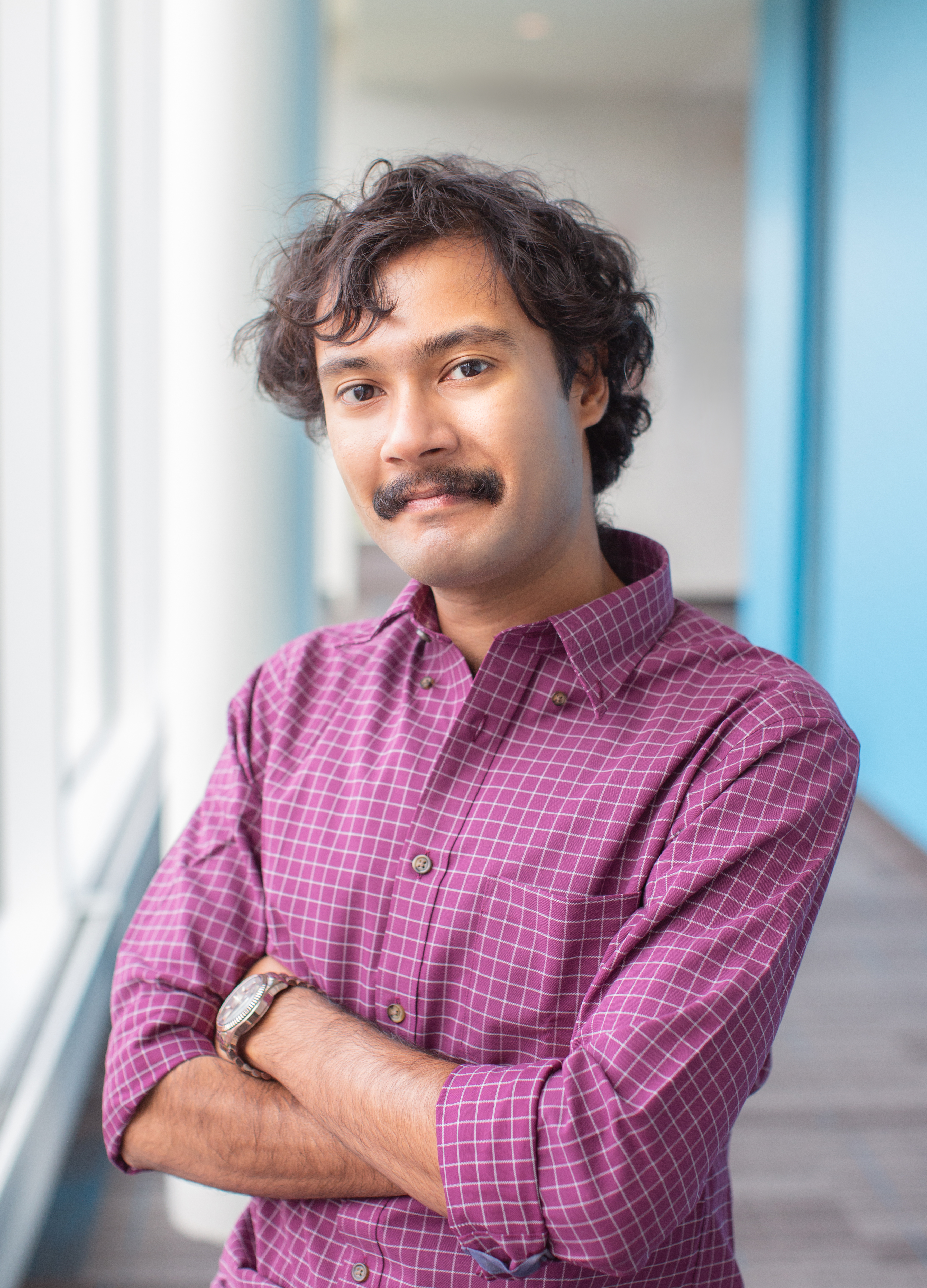
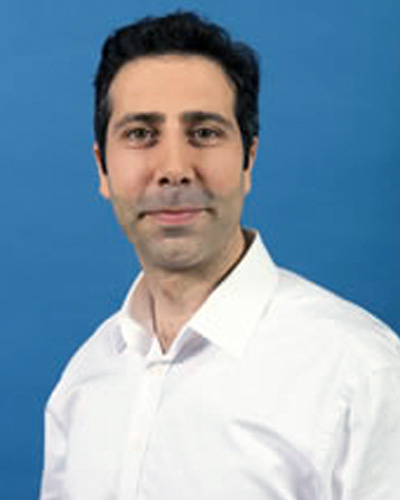
Dr. Moinak Bhaduri is an Assistant Professor in Mathematical Sciences at Bentley University. His research applies stochastic modeling to change-point detection, spatio-temporal processes, and repairable systems. He holds a Ph.D. from the University of Nevada, Las Vegas. His interdisciplinary work spans finance (market spillovers), environmental science (hurricane interactions), legal analytics (defamation trials), and social dynamics (immigration networks). Publications leverage methods like hidden Markov chains and recurrence rate ratios. No awards or student mentorship details are provided.
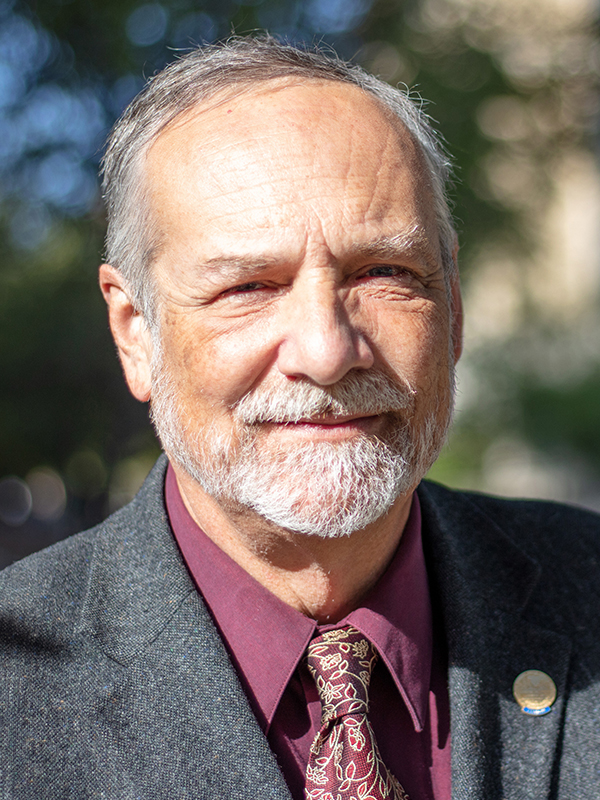
Michael Horst is an Associate Professor of Civil Engineering at The College of New Jersey (TCNJ), where he has served since 2006. His expertise spans water resources engineering, environmental engineering, and hydrologic modeling. He teaches courses in fluid mechanics, hydraulic engineering, and water resources design, while conducting research on stormwater management, BMPs (Best Management Practices), and sediment transport dynamics. Horst earned his B.S.C.E., M.E., and Ph.D. in Civil Engineering from Penn State University, focusing on applied hydraulics and hydrology. He is a licensed Professional Engineer in Pennsylvania and actively contributes to community projects through consulting and continuing education courses on HEC-HMS and HEC-RAS software. His research emphasizes practical applications, including regional calibration of hydrologic models, BMP performance evaluation, and flood risk assessment. Recent work includes studies on Hurricane Irene's impact on New Jersey watersheds and optimizing stormwater infrastructure. He has authored/co-authored over 15 peer-reviewed articles and presented at national conferences on topics like unit hydrograph calibration and porous concrete applications. Awarded the 2022 Floodplain Management Leadership Award and the 2009 Outstanding Professor Award, Horst has held leadership roles in TCNJ's School of Engineering, including service on curriculum committees, the President's Climate Commitment Council, and the Facilities & Construction Planning Council. He also chairs the College's Promotions Committee and represents faculty governance on the Senate. Horst's grants include multiple FEMA/NJDEP-funded dam safety projects totaling over $250,000. His service extends to professional organizations like the American Society of Civil Engineers and the New Jersey Association of Floodplain Managers.
Neil Hindley is a Research Fellow at the University of Bath's Department of Electronic & Electrical Engineering, affiliated with the Centre for Climate Adaptation & Environment Research (CAER). He holds a PhD in Atmospheric Dynamics from the University of Bath (2016) and an MPhys Astrophysics from Cardiff University (2011). His research focuses on Atmospheric Dynamics, Remote Sensing, and Spectral Analysis Techniques, particularly studying gravity waves and their impacts on climate systems. He leads and collaborates on projects funded by the Natural Environment Research Council (NERC), including investigations into upper atmospheric waves, stratospheric-troposphere coupling, and ionospheric variability. As a NERC Independent Research Fellow, he contributes to the UN Sustainable Development Goals related to climate action and environmental protection. Recent projects include TEAMx-FLOW (2024–2028) and SURGE (2023–2028), exploring flow dynamics and upper atmospheric wave phenomena. His work integrates satellite observations (e.g., Aeolus wind lidar) with advanced modeling techniques, such as convolutional neural networks for gravity wave detection. Notable research includes analyzing the 2019/2020 quasi-biennial oscillation disruption and the global effects of the Hunga Tonga volcanic eruption on atmospheric dynamics. Awards: NERC Independent Research Fellow (2020–present). Grants include NERC funding for multiple projects totaling over £multi-million. His research outputs span 41 peer-reviewed articles, focusing on gravity wave characteristics, hurricane intensification mechanisms, and mesosphere-lower thermosphere interactions. Collaborations span international teams and institutions, advancing understanding of Earth's atmospheric systems.
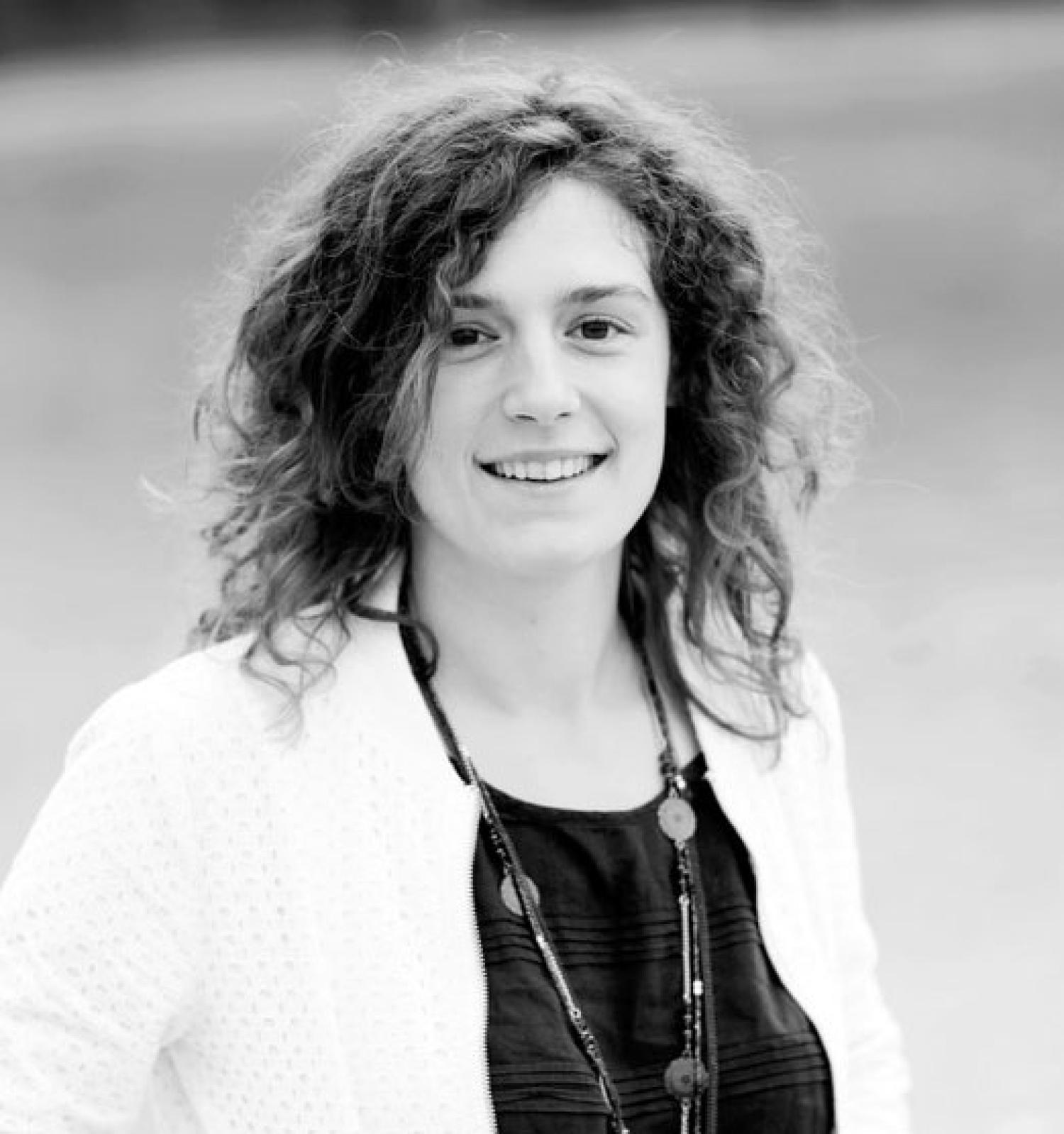
Sophie Giffard is a Researcher at the ISTerre Laboratory , Université Grenoble Alpes, and a visiting researcher at Columbia University via a Fulbright Fellowship (2025-2026). Her work focuses on machine learning applications in natural hazards, geophysics, and climate science. She leads projects like the ANR JCJC Project EDAM (2024-2028) for machine learning-based geomorphological analysis and the MIAI MOHAIR chaire (2025-2029) on remote sensing and hazards monitoring. Previously, she held a postdoctoral position at the University of Colorado Boulder (2018-2019) and completed her PhD on cardiac modeling at Inria Sophia-Antipolis (2017). Research Interests : Machine learning for seismic and landslide detection, satellite image analysis, climate informatics, and medical image analysis. Her projects address challenges in natural hazard monitoring, geophysical data interpretation, and personalized cardiac modeling. Publications : Over 20 peer-reviewed articles, including breakthroughs in displacement estimation via deep learning, slow-slip event detection using graph neural networks, and hurricane track forecasting. Notable work includes the GeoFlowNet model for sub-pixel displacement analysis and the MicroFlow framework for seismic event detection. Awards : Received the Best Paper Award at the 2017 FIMH conference for contributions to cardiac electrophysiology modeling. Advising : Actively mentors PhD/MSc students in machine learning applications for geoscience and climate science. Current openings for motivated researchers in AI-driven hazard monitoring and remote sensing.
Dr. Philip B. Bedient is the Herman Brown Professor of Engineering and Director of the SSPEED Center at Rice University's George R. Brown School of Engineering. He specializes in surface water hydrology, flood modeling, and disaster management. Bedient has directed over 100 research projects, authored 200+ articles, and led the development of radar-based flood alert systems (FAS5) for the Texas Medical Center and Houston. He formed the SSPEED Center in 2007, a multi-university initiative addressing Gulf Coast flood mitigation with over $10M in funding. His work focuses on H-GAPS strategies, coastal surge control, and Hurricane Harvey analysis. Education: B.S. Physics (University of Florida, 1969), M.S. and Ph.D. in Environmental Engineering (University of Florida, 1972, 1975). Awards include the Ray K. Linsley Award (2021), Fellow ASCE (2006), and C.V. Theis Award (2007). Research spans flood prediction systems, GIS applications, and collaboration with TU Delft on Dutch flood management techniques. Recent work includes flood mitigation in Houston watersheds, study abroad programs in the Netherlands, and leadership in SSPEED's 11th conference. His team includes 1 PhD, 3 MS, and 3 undergraduate students. Key grants include funding from Houston Endowment, NSF-PIRE, and the Greater Houston Flood Mitigation Consortium. Key Projects: Houston-Galveston Regional Flood Mitigation (H-GAPS), Hurricane Harvey modeling, First Flood Information System (FIRST) Technical Exchange: TU Delft collaborations since 2009, Rice-LSU study abroad programs Outreach: 9 major conferences since 2008, public policy engagement on flood resilience
Deanna Sellnow is Professor and Chair of the Department of Communication at Clemson University, College of Arts and Humanities. She joined Clemson from the University of Central Florida, where she was a professor of strategic communication. Her leadership focuses on cultivating excellence in research, teaching, and service while prioritizing student success. She conducts funded research for agencies including the US Geological Survey, USDA, Department of Homeland Security, NOAA, and CDC. Her research explores instructional risk and crisis communication across diverse contexts such as natural disasters, pandemics, biosecurity, terrorism, and agricultural biotechnology. She integrates theoretical frameworks with practical applications to enhance public safety and organizational resilience. Recent publications (2024-2025) reveal a strong emphasis on crisis communication pedagogy , technology-enhanced learning (e.g., AI tools and health apps), and cross-disciplinary risk modeling . Her work frequently addresses disaster response efficacy, health emergency protocols, and innovative educational strategies. Award: Central States Communication Association Hall of Fame (2018) She has secured significant grants from federal agencies for projects advancing risk communication methodologies. No information is available regarding student advising, labs, or educational background.
John Nielsen-Gammon is the Texas State Climatologist and Director of the Southern Regional Climate Center at Texas A&M University, where he holds the rank of Regents Professor in the Department of Atmospheric Sciences. His roles involve providing climate data and services to stakeholders, advancing meteorological research, and directing regional climate initiatives. He is affiliated with the College of Arts and Sciences and multiple Texas A&M programs including the Texas CREWS and the Texas Water Research Network. His work focuses on improving climate literacy, analyzing extreme weather events, and developing tools for drought monitoring and probabilistic precipitation estimation. Research interests include climate change impacts on Texas water resources, probabilistic rainfall modeling, extreme event attribution, and agricultural drought quantification. He emphasizes the need for robust climate projections, nonstationary climate analysis, and stakeholder alignment in research agendas. Recent projects address probable maximum precipitation (PMP) modernization, embedded water in agricultural goods, and infrastructure resilience to compound flooding events. Dr. Nielsen-Gammon has received the prestigious Regents Professor title, recognizing his distinguished contributions. His grants and projects include feasibility studies for evapotranspiration networks, ozone prediction improvements, and hurricane Harvey impact assessments. He collaborates with institutions like the National Climatic Data Center (NCEI) and SHELDUS to evaluate extreme weather damages. His expertise bridges meteorological science with policy, particularly in red-state climate communication and water resource management.
Guha Balakrishnan is an Assistant Professor in the Electrical and Computer Engineering (ECE) department at Rice University, affiliated with the Digital Health Initiative. His research focuses on computer vision, medical imaging, and algorithmic fairness. He holds a BS from the University of Michigan, and MS and PhD from MIT's CSAIL, followed by a postdoc at MIT and industry experience at Amazon Web Services. Education: BS in Computer Science Engineering & Computer Engineering, University of Michigan (2011) MS in EECS, MIT (2013) PhD in EECS, MIT (2018) Postdoc: MIT (2018-2020) Applied Scientist: Amazon Web Services (2020-2021) Research Interests: His work spans generative models for visual data, medical applications (e.g., CT reconstruction, vital sign measurement), geospatial imaging, and ethical AI systems. He emphasizes fairness, accountability, and responsible deployment of vision systems. Recent projects include ALPINE (PyTorch library for implicit neural representations) and the EMACS workshop at CVPR 2025. Industry Impact: Prior experience at AWS focused on fairness in AI systems. Active in developing tools like Voxelmorph for medical image registration and frameworks like GELDA for dataset bias analysis. Labs & Teams: Leads efforts in Rice's Digital Health Initiative, focusing on low-cost medical AI solutions and cross-disciplinary collaborations.
Jake Reed is an Instructor in the Department of Geosciences at Missippi State University , specializing in meteorology. He holds a B.S. in Geosciences (Broadcast Meteorology concentration) from MSU (2012) and an M.S. in Geography from the University of Alabama (2019). Education : M.S. Geography, University of Alabama (2019) B.S. Geosciences (Broadcast Meteorology), Mississippi State University (2012) Reed’s research focuses on weather communication and public perception of meteorological hazards, particularly how individuals interpret weather graphics and warnings. He bridges meteorology with social science to enhance weather messaging effectiveness. His recent publications analyze modifications to the Storm Prediction Center’s Convective Outlook scale, weather icon semiotics, and extended forecast graphics. These works highlight his emphasis on visual communication and risk comprehension . Scientific Awards : Outstanding Research by a Master’s Student (University of Alabama Graduate School, 2019) Outstanding Research by a Master’s Student (University of Alabama College of Arts and Sciences, 2019) National Weather Association Television Seal of Approval (2015) Reed has served as Principal Investigator and Co-Principal Investigator on federally funded VORTEX-SE and VORTEX-USA grants, focusing on real-time human behavior analysis during severe weather events. His teaching includes Weather and Climate (GR 1133) and Physical Geography (GR 1113) .
Charles D. Nicholson is an Associate Professor in the Department of Industrial and Systems Engineering at the University of Oklahoma's Gallogly College of Engineering. He serves as Director of the Data Science and Analytics Institute, leading interdisciplinary efforts in community resilience and predictive modeling. Nicholson holds a Ph.D. in Operations Research from Southern Methodist University and dual B.S. degrees in Physics and Mathematics from the University of North Texas. His research focuses on optimizing disaster mitigation strategies through systems engineering and data science. Key areas include enhancing community resilience against natural hazards, improving public health practices (domestically and internationally), and securing national supply chains. Methodologically, his work integrates metaheuristics, predictive modeling, and network analysis. Recent research trends show strong emphasis on: Covid-19 forecasting with county-level clustering Flood-resilient infrastructure design Causal discovery methods for root cause analysis Multi-objective optimization for building mitigation He received the 2017 Teaching Scholars Award from the Gallogly College. Nicholson advises the Data Science and Analytics Student Organization and chairs the Institute's Executive Committee. His work bridges academic research with real-world impact through collaborations with government agencies and industry partners. Notable contributions include: Developing resilience frameworks for cyber-physical-social systems Advancing hurricane impact prediction models Optimizing maritime supply chain recovery strategies Labs/Teams: Leads the Data Science & Analytics Institute's research initiatives focusing on complex systems analysis and decision support systems.
Firat Y. Testik is a Professor in the Civil and Environmental Engineering and Construction Management department at the University of Texas at San Antonio's Klesse College of Engineering and Integrated Design. Contactable at firat.testik@utsa.edu, he leads the Flow Physics Lab and has published extensively on rainfall microphysics and coastal engineering challenges. Ph.D. in Aerospace Engineering from Arizona State University His research focuses on environmental fluid mechanics , particularly: Rainfall microphysics, including raindrop collision dynamics and shape-velocity distribution under wind shear Coastal bridge vulnerability to hurricane wave impacts Gravity current propagation through aquatic vegetation Atmospheric boundary layer turbulence interactions Instrument validation for precipitation measurement Recent publications show a trend toward advanced measurement techniques (high-speed imaging, sUAS) and hazard modeling for hurricanes. He actively contributes to operational rainfall estimation algorithms and infrastructure resilience studies.
Elco Koks is an Associate Professor at the Faculty of Science, Vrije Universiteit Amsterdam, within the Water and Climate Risk group at the Institute for Environmental Studies (IVM). His research focuses on disaster impact modeling, critical infrastructure resilience, network analysis, and macroeconomic consequences of natural hazards. He leads projects like Horizon Europe’s MIRACA, CoCliCo, and RECEIPT, addressing climate adaptation and infrastructure vulnerability. Education : PhD in Environmental Studies (2016) MSc in Spatial, Transport and Environmental Economics (2011) BSc in Earth and Economics (2010) Research Interests : Elco combines interdisciplinary approaches to assess economy-wide disaster impacts, integrating natural hazard models with macroeconomic frameworks. His work emphasizes cascading infrastructure failures and systemic risks, supported by tools like GitHub-hosted disaster impact models. Articles Trends : Recent work explores AI-driven infrastructure detection, climate change impacts on power grids, and systemic risk from compound disasters. His studies highlight the need for adaptive strategies in coastal and urban systems. Awards : VENI Grant (NWO, 2019) Advising & Grants : Supervises 8 PhDs on infrastructure risk and economic impacts Principal Investigator for projects totaling over €10M, including EU Horizon grants Labs & Teams : Engaged in interdisciplinary teams at IVM, focusing on global critical infrastructure resilience and climate adaptation strategies.
Prof. Dr. David N. Bresch is a Full Professor at ETH Zurich's Department of Environmental Systems Science, specializing in weather and climate risk modeling. His research integrates probabilistic methods with socio-economic analysis to enhance resilience against climate impacts. He leads the CLIMADA open-source risk modeling framework and collaborates with institutions like MeteoSwiss and the UN Green Climate Fund. Previously, he held roles at Swiss Re, focusing on sustainability and catastrophe risk assessment. Education: PhD in Physics from ETH Zurich (Switzerland). Research interests include climate risk adaptation, probabilistic modeling, and interdisciplinary integration for policy. Key projects include global tropical cyclone risk analysis, mangrove ecosystem resilience studies, and flood impact modeling using open data. His work emphasizes actionable insights for decision-makers, such as impact-based forecasts for tropical cyclones and cascading risk assessment in Europe. Contributions to climate policy include advising the Swiss UNFCCC delegation (2009–2012) and serving on the UN GCF’s Private Sector Advisory Group (2014–2016). Publications highlight advancements in climate risk quantification, including uncertainty analysis in future cyclone projections and the economic effects of recurrent disasters. He chairs the Climada project, an open-source tool used globally for natural hazard risk assessment.
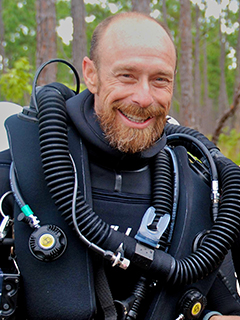
Kenneth Broad is a Professor in the Environmental Science & Policy Department at the Rosenstiel School of Marine, Atmospheric, and Earth Science, University of Miami. His roles include Director of the Abess Center for Ecosystem Science and Policy. Research focuses on climate adaptation, disaster risk communication, environmental anthropology, and exploration science. Notable work includes analyzing climatopias (climate-inspired urban designs) and evaluating public comprehension of hurricane risk graphics like the NHC's 'Cone of Uncertainty.' Key research interests span climate policy, mental health impacts of environmental threats, and paleoenvironmental reconstructions using cave systems. He collaborates internationally on projects such as Cuba's subaquatic cave studies and Bahamian speleothem climate records. Awards and grants are not explicitly listed here, but his work frequently addresses societal resilience to climate change. Publications emphasize interdisciplinary methods, combining anthropology, climatology, and behavioral science. Recent articles critique climate adaptation frameworks and propose improvements to weather communication tools. His grants involve collaborations with institutions like NOAA and the National Science Foundation, focusing on coastal risk mitigation and environmental policy.