Joe R. Lansdale serves as an Instructor for the Crime Writing Workshop at Newberry College, leveraging his decades of experience as an award-winning author to mentor emerging writers. A prolific creator with over forty novels and numerous short stories, Lansdale specializes in crime fiction, horror, and Southern Gothic literature. His creative work explores gritty character studies within American Southern landscapes, often blending crime, horror, and dark humor. Lansdale is renowned for the Hap and Leonard series featuring unconventional protagonists navigating violent, morally complex worlds. His writing style emphasizes authentic regional dialogue and visceral storytelling. Lansdale's exceptional contributions to genre literature have earned him: Eleven Bram Stoker Awards Edgar Award for Best Novel Raymond Chandler Award British Fantasy Award Inkpot Award His adaptations span major media platforms including Netflix ('Hap and Leonard'), cult films ('Bubba Ho-Tep'), and anthology series ('Masters of Horror', 'Love, Death + Robots'). Lansdale also contributes significantly to graphic literature through collaborations with DC, Marvel, and Dark Horse Comics.
Cécile Brochard is a Senior Lecturer in Comparative Literature at Nantes University's Department of Modern Literature (Faculty of Arts and Languages). Her career includes roles at the University of Caen-Normandie and longstanding contributions to the LAMO research laboratory. She holds a PhD in Comparative Literature from the University of Nantes (2012) and specializes in decolonial narratives, Indigenous literatures, and multilingualism. Her research bridges political violence, cultural memory, and linguistic diversity, with emphasis on: Indigenous rewritings of myths in American/Australian contexts Dictatorship literature in Africa and Latin America Co-translation from Spanish/Guarani She coordinates projects like FOLK (folklore transmission) and ‘Matières poétiques’ (materiality in poetry), while her blog ‘Littératures autochtones’ curates global Indigenous literary resources. Administratively, she directs the Department of Modern Literature, oversees international relations, and represents Nantes University in EUniWell initiatives. She mentors doctoral candidates and has organized major events, including the 2024 ‘Paroles autochtones’ festival. Her translations of Augusto Roa Bastos and Simon Ortiz highlight her commitment to linguistic preservation.
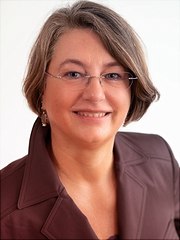
Professor Laurence Guellec is a distinguished University Professor at Nantes University, Faculty of Arts and Languages, Department of Modern Literature, where she has been teaching since 2024. Previously, she served as a Lecturer at Paris Cité University (2008-2024) and at the University of Poitiers (2000-2008). She is affiliated with the LAMO research laboratory (UR 4276) at Nantes University, where she contributes to research on literary and media studies. Professor Guellec's research focuses on 19th-century French literature with particular emphasis on media and media imaginaries, cultural industries, advertising (from 20th-21st centuries), the material lives of literature, self-publication, and the Faust myth in literature. Her work explores the complex relationship between literary production and commercial forces, examining how writers navigated the emerging advertising culture of the 19th century and beyond. Her publication record demonstrates consistent scholarly output across multiple venues, with recent work focusing on advertising rhetoric in contemporary literature, the metamorphoses of commercial eloquence, and Tocqueville's relationship with literature. Her 2024 monograph 'Le Diable de la réclame' represents a significant contribution to understanding the historical relationship between literature and advertising. Professor Guellec's scientific awards include being a junior member of the Institut Universitaire de France (IUF) from 2008-2013 for her project 'Literature and Advertising.' She has also led several major research projects including the ANR LITTéPUB program (2015-2020) and the 'Metamorphoses of Eloquence' project (2023-2025). As an educator, Professor Guellec serves as Head of the Culture and Media specialization in the Bachelor of Modern Literature program at Nantes University. She teaches courses from first-year undergraduate to Master's level, covering 19th-century literature, media and literature, media narratives, and media creation workshops. Her Master's seminar for 2024-2025 focuses on 'Intermedial Faust,' examining the Faust myth across different media forms. She is an active member of the LAMO research laboratory, contributing to its mission of advancing research in literary and media studies while mentoring younger scholars and collaborating with colleagues across France and internationally.
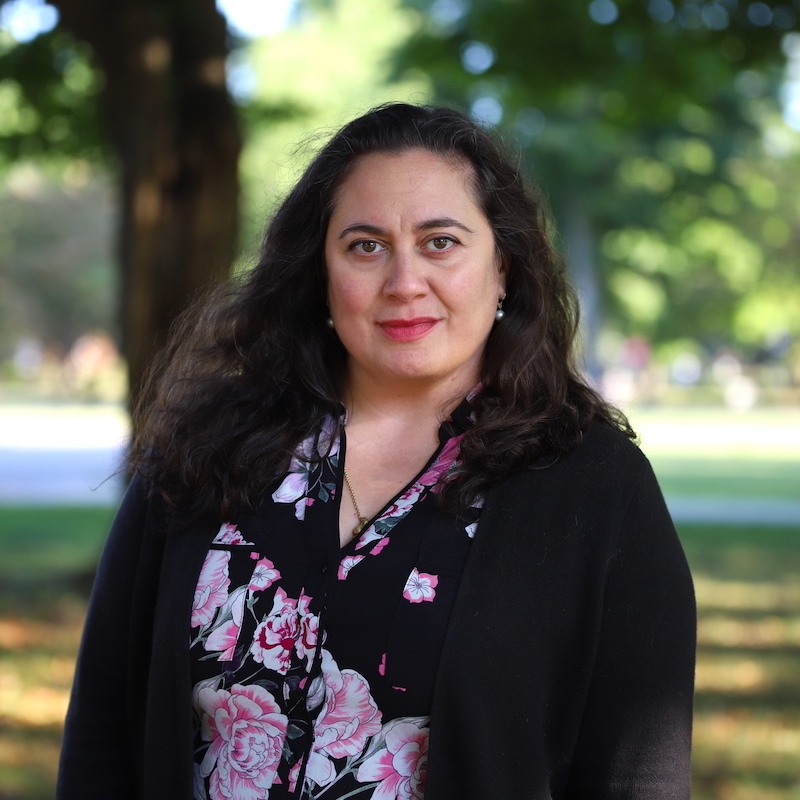
Francesca Castellano is an Associate Professor of Italian Literature at the University of Florence's Department of Literature and Philosophy. Her academic journey includes a PhD from the International Doctoral School in Italian Studies (Florence-Bonn-Paris Sorbonne) and roles as a post-doctoral fellow (2011) and fixed-term researcher (2012-2021) at the same institution. She currently leads the Florentine unit for the PRIN 2022 project on Eugenio Montale's correspondence and serves on multiple university committees, including the Internationalization Commission and Humanities Library Council. Her research spans: Renaissance/17th-century studies : Benvenuto Cellini's autobiographies, Lorenzo Magalotti's prose/verse 19th/20th-century literature : Carlo Dossi, Giovanni Faldella, Eugenio Montale, Pier Paolo Pasolini Thematic focus : Colonial literature, poetic analysis, philology, interview genres She has authored critical editions (e.g., Montale's interviews, Faldella's Ammaestramenti ), monographs like Il sangue, l’inchiostro. Storia di Carlo Dossi (2016), and bibliographic tools such as the Montale criticism database. Her publications reflect sustained engagement with textual scholarship and modernist reinterpretations. Honors include: National Scientific Qualification for Full Professor (Italian Literature and Contemporary Italian Literature, 2021) Competitive research grant winner (University of Florence, 2017) She teaches Italian Literature, Theatrical Literature, and Poetry/Narrative forms, while mentoring graduate students in Modern Philology. As an editor, she contributes to journals ( Quaderni montaliani , Studi rinascimentali ) and book series, advancing scholarly dialogue in Italian literary studies.
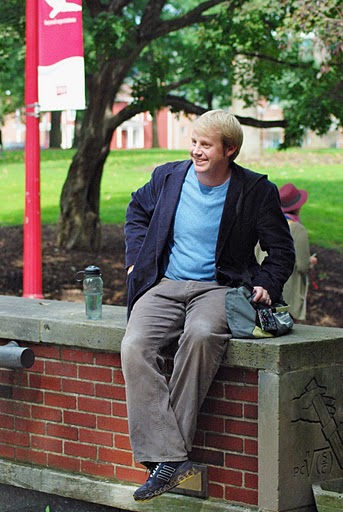
Aaron Burch is a writer, teacher, and editor based in Ann Arbor, MI. His career spans creative writing, teaching, and literary editing, with a distinctive approach that values the joy of creation over careerist ambition. Burch is currently a lecturer (non-tenure track) and serves as co-editor for WAS (Words & Sports) and HAD, following twenty years as editor of the literary journal Hobart. Burch's research interests center on creative writing across multiple forms, with particular emphasis on: Short fiction and flash writing Creative nonfiction and personal essay Memoir and literary analysis The intersection of everyday life with artistic expression Exploring how to be 'earnest without coming across as sentimental' His publication record shows consistent output across both fiction and nonfiction forms, with recent work appearing in venues like Pool Party, Bluestem, BULL, and The Apologist. Burch's writing often explores themes of place, memory, and the creative process itself, frequently using mundane objects or experiences as entry points to deeper reflections. Burch's approach to his work is characterized by: Embracing writing as a 'hobby' done 'for fun' rather than professional validation Valuing the process over external metrics of success Believing 'you're allowed to be happy at the level you're at' Using failure as a learning opportunity ('in order to fail at something, you have to have done it') As a teacher, Burch emphasizes the importance of writing groups for sustaining long-term projects and maintaining creative energy. His editorial work through Hobart, WAS, and HAD has created significant opportunities for emerging writers, particularly those whose work bridges literary quality with broader accessibility.
Sylwester Adamski is a distinguished lighting director and film co-producer with over five decades of experience in the Polish film industry. He serves as a lecturer at the Warsaw Film School and collaborates with the Cinematography and Television Production Department of the Leon Schiller National Film School in Łódź and the Wajda School in Warsaw. Adamski's research and professional interests focus on cinematography, particularly lighting design and camera operation across various film genres. His expertise spans traditional film techniques and modern digital cinematography, with special proficiency in creating appropriate lighting setups for drama, horror, comedy, and documentary productions. He has developed specialized techniques for different production contexts including television series, feature films, and documentaries. His recent filmography demonstrates consistent activity through 2025, with notable projects including SECOND FURY (2025), LARP. LOVE, TROLLS, AND OTHER QUESTS (2025), and HOSTAGES (2024). These works showcase his versatility across genres and production formats, maintaining high technical standards throughout his long career. Adamski has received significant professional recognition, most notably becoming an honorary member of the Polish Society of Cinematographers (PSC) in 2023. He also serves on the editorial board of FilmPro magazine, further establishing his influence in the Polish film community. As founder of the Heliograf company in 1990, Adamski has contributed to the film production infrastructure in Poland. His educational work at major Polish film institutions helps train the next generation of cinematographers, bridging academic instruction with practical industry experience. His career represents a remarkable continuity from the analog film era through to contemporary digital production techniques.
Dr. Christine Künzel is a Privatdozentin (Private Lecturer) in Modern German Literature at the University of Hamburg's Faculty of Humanities, Department of Language, Literature, Media. She specializes in interdisciplinary literary and cultural studies with particular focus on 'Law and Literature' and 'Literature and Economics' with expertise in fiction theories and narrative research. Her research prominently features the representation of violence in literature (with special attention to sexualized violence), theater and drama studies, gender studies, and satire theory. Faculty of Humanities, University of Hamburg Department of Language, Literature, Media International Gisela Elsner Society (Chair since 2012) Her scholarly work demonstrates a strong emphasis on the intersection of literature with legal, economic, and gender frameworks. Künzel has established herself as a leading expert on the work of Gisela Elsner (1937-1992), whom she considers 'the most significant and controversial satirist of the Federal Republic of Germany.' Her research reveals a consistent pattern of examining how literary texts engage with economic structures, legal frameworks, and gender dynamics, particularly through the lens of satirical writing by women authors. Künzel's work challenges traditional boundaries between literary analysis and social critique, demonstrating how literature functions as a site for exploring complex societal issues. Künzel's publication record shows a clear progression from her early work on representations of sexual violence in literature toward increasingly sophisticated analyses of the intersections between literature, economics, and law. Her scholarship consistently addresses the problematic position of women satirists within literary history and criticism, examining why satire has traditionally been considered 'a male domain.' The most recent publications reveal an expanding interest in economic discourse, financial crises, and the metaphors used to describe economic phenomena. Fritz Sack Preis der Gesellschaft für interdisziplinäre wissenschaftliche Kriminologie (2005) As Chair of the International Gisela Elsner Society since 2012, Künzel has overseen the publication of Elsner's complete works, significantly contributing to the scholarly reappraisal of this important German author. Her editorial work has been instrumental in bringing Elsner's texts back into academic discourse. Künzel's research on women's satirical writing has established her as a key figure in gender studies within German literary scholarship, particularly through her examination of the 'taboo of aggressive writing styles among female authors.'
Stephanie Sommerfeld serves as a Lecturer in North American Studies at the University of Göttingen and University of Leipzig, where she teaches courses on American literature and culture while conducting research as a wissenschaftliche Mitarbeiterin. Her academic work bridges 19th-century literary traditions with contemporary theoretical frameworks, focusing particularly on aesthetic experiences of the sublime within American cultural production. Her educational foundation includes dual Staatsexamen degrees from the University of Göttingen: English and French Literature and Linguistics (2004) and German Literature and Linguistics (2005), both equivalent to Master's level qualifications, supplemented by a TEFL certification (2000). 1. Staatsexamen: English/French Literature & Linguistics (2004) 1. Staatsexamen: German Literature & Linguistics (2005) TEFL Certificate (2000) Dr. Sommerfeld's research centers on the evolution of sublime theory from Romanticism through modernity, with special emphasis on Edgar Allan Poe's narrative techniques and their contemporary resonances. She investigates how media technologies mediate aesthetic experiences, particularly examining textual self-reflexivity in antebellum literature and its manifestations in 21st-century fiction. Her current doctoral project analyzes 'Powerful Mediators and the Politics of the American Sublime,' while her editorial work includes co-editing 'Alive at 200: Contemporary Perspectives on Mary Shelley’s Frankenstein.' Analysis of her recent publications reveals consistent engagement with race, trauma, and media across temporal boundaries—from Poe's 19th-century tales to Brit Bennett's contemporary explorations of racial identity. Her scholarship demonstrates particular expertise in Gothic traditions, posthumanist theory, and the intersection of visual culture with literary production, often through comparative analyses of canonical and marginalized voices. Her scholarly contributions have been supported by significant external funding: Fulbright American Studies Institute fellowship (2009) Susan Jaffe Tane Travel Grant (2009) Multiple GSGG Travel Grants (2009-2013) Poe Studies Association travel grant (2006) Education Abroad Program fellowship (1999-2000) Dr. Sommerfeld actively supervises Bachelor's and Master's theses while developing innovative courses such as 'Automata and Cyborgs' and 'The African American Gothic.' Her professional service includes conference organization (notably the 'Discourse, Dreams, Delusion' undergraduate conference) and committee work for MA program admissions. She maintains active membership in the Poe Studies Association, German Association for American Studies, and Modern Language Association, regularly presenting research at international venues including the International Edgar Allan Poe Conferences.
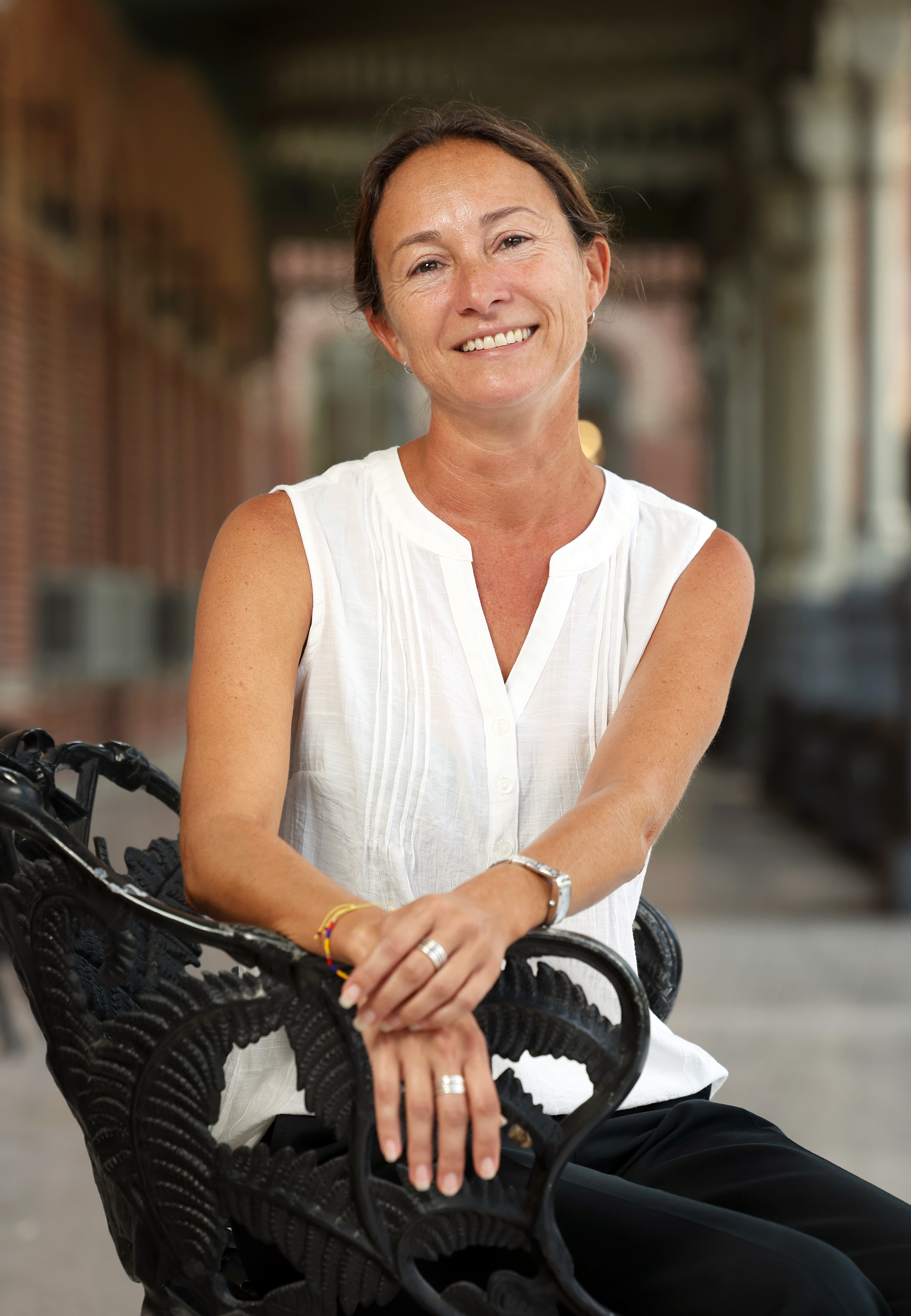
Sarah E Fryett serves as Associate Teaching Professor in the English and Writing Department and Co-Director of the Women, Gender and Sexuality Studies Program at the University of Tampa. She has been a faculty member since 2012 and actively contributes to university committees including Spartan Studies Humanities and Department of English Outreach. Her research spans media studies, feminist theory, queer theory, composition pedagogy, and humor studies . Recent work analyzes gender representation in Disney films ( Moana and Raya ), feminist revisions of heroic narratives, and political satire in Samantha Bee's Full Frontal . Her scholarship consistently applies critical gender lenses to contemporary media. Dr. Fryett has received multiple honors including the Outstanding Faculty Achievement in Teaching award (2021) and Research Innovation Award (2021-2022). Her funded projects include the Critical Reading Book Project and Re/Frame Film Series grants. Outstanding Faculty Achievement in Teaching, University of Tampa (2021) Research Innovation and Scholarly Excellence Award (2021-2022) Learning Enrichment Grant for Critical Reading Project (2019-2020) Learning Enrichment Grant for Re/Frame Film Series (2018-2019) As an advisor and program co-director, she mentors students in Women, Gender and Sexuality Studies and supervises scholarly projects. Her recent publications demonstrate strong engagement with feminist media criticism and pedagogical innovation. The Re/Frame Film Series initiative provides campus-wide opportunities for critical media analysis through curated screenings and discussions.
Audrey Cartron serves as Lecturer in English Studies at the Faculty of Foreign Languages and Cultures (FLCE) of the University of Nantes, teaching specialized English courses across undergraduate and graduate levels including Business, Marketing, and Corporate English (L1-L3, M2 LEA), British and American Civilization, oral translation, and spoken English for the Trilingual Lawyer program. Her doctoral research completed at Aix-Marseille University in 2022 established foundational work in police English as a specialist language. Key research areas include: Discursive approaches to specialized language teaching Police discourse analysis (suspect interviews, affidavits, humor functions) Business English lexicon and cultural dimensions Didactic transposition of specialized knowledge Dictionarization processes in professional contexts Cartron's publication trajectory (2019-2025) reveals progressive specialization in police linguistics, with increasing methodological sophistication in genre analysis. Her 2023-2025 work shifts toward refining discursive teaching frameworks while maintaining empirical focus on American police discourse. The research consistently bridges theoretical linguistics with practical pedagogical applications for LEA programs. No scientific awards are documented in the available information. As a lecturer, Cartron likely supervises student projects in specialized English domains though specific advisees aren't listed. Her research appears institutionally supported through her academic position, with publications in reputable journals like ASp and Languages, but no explicit grant information is provided. Collaborations with scholars across French institutions indicate active academic networking.
Axel Ranisch serves as Graduate Director and Special Teaching Assistant for Moving Image/Artistic Film at Saarland University of Fine Arts' School of Media Art & Design since 2022, following a 2021 Visiting Professorship. An internationally recognized filmmaker, he bridges professional practice and academic instruction through courses spanning directing, visual storytelling, and artistic film development. His research focuses on sensory filmmaking techniques , particularly the intersection of auditory elements and visual narrative, German mumblecore traditions, and historical avant-garde adaptation. Workshops like Art of Intimacy and Dada, Trash and Expressionism explore these themes through hands-on experimentation with constrained environments and improvisational methods. Analysis of his creative output reveals consistent exploration of authentic human interaction across formats - from low-budget mumblecore features to television productions. His films demonstrate evolving technical mastery while maintaining focus on emotional truth, with recent works increasingly incorporating autobiographical elements and historical film movement techniques. Key recognitions include: Grimme Prize (2019) for Familie Lotzmann auf den Barrikades City of Hof Prize (2020) for contributions to German cinema International festival success with over 100 screenings for early works Ranisch's mentorship emphasizes collaborative development through structured project consulting, helping students navigate text-image relationships and actor-director communication. His current supervision of projects like PENROSE continues his commitment to supporting emerging filmmakers while maintaining active professional practice through Tatort episodes and radio collaborations. His laboratory of practice exists through immersive workshops that function as creative incubators, where students develop skills in constrained environments while exploring sensory storytelling techniques across multiple mediums.
Todd Thompson is a Professor in the Language, Literature, and Writing Department at Indiana University of Pennsylvania's College of Arts, Humanities, Media, and Public Affairs. His office is located in 506-Q Leonard Hall, where he teaches courses on American literature, satire, and periodical studies. Thompson holds a PhD from the University of Illinois–Chicago (2008) and has established himself as a leading scholar in 19th-century American humor and political satire. Thompson's research focuses on eighteenth- and nineteenth-century American literature and culture, with particular expertise in literature and politics, political satire, humor studies, and periodical studies. His scholarly work examines how humor functioned as a political tool during America's expansion era, exploring the connections between satire, journalism, and imperial ambitions. He has published extensively on Mark Twain, Abraham Lincoln's use of satire, and the transnational circulation of jokes in 19th-century print culture. Thompson's recent publications reveal a consistent scholarly trajectory examining the intersection of humor, politics, and American expansionism. His work demonstrates mastery of both historical context and literary analysis, with particular attention to how jokes and satire traveled through reprint networks across the Pacific. The scholarship shows increasing sophistication in connecting American humor to broader imperial narratives while maintaining focus on textual analysis and cultural contexts. University Awards: IUP Distinguished Faculty Award for Teaching (2022) IUP Distinguished Faculty Award for Research (2017) IUP Center for Teaching Excellence Instructional Technology Award (2024) IUP Center for Teaching Excellence Content Pedagogy Award (2017) IUP Center for Teaching Excellence Innovation Award (2013) External Awards: Last Fellow, American Antiquarian Society (2024) Norton-Strange Townshend Week-Long Fellowship, Clements Library, University of Michigan (2024) Center for Mark Twain Studies, Quarry Farm Fellowship (2019, 2024) Peterson Fellow, American Antiquarian Society (2017) Thompson teaches a range of courses from undergraduate composition to specialized graduate seminars including ENGL 983 Seminar in American Literature: The Pacific Turn in Nineteenth-Century American Studies and ENGL 765/865 Literature as Genre: Satire and Parody. His teaching excellence has been recognized with multiple IUP awards, reflecting his innovative approaches to literature instruction and student engagement.
Alejandra Juno Rodríguez Villar is an Associate Professor of Spanish in the Modern Languages Department at Hanover College, where she has taught since 2018. Originally from Santiago de Compostela, Spain, she splits her time between Spain and Hanover, Indiana. Her academic specializations include Advanced Grammar, Early Modern Spanish Literature, and Theater, with interdisciplinary research bridging cognitive studies, performance theory, and digital humanities. Education B.A., Universidad Complutense de Madrid M.A., Universidade de A Coruña Ph.D., Universidade de Santiago de Compostela Ph.D., Duke University Research Focus Dr. Rodríguez Villar's scholarship centers on cognitive approaches to Golden Age Spanish theater, particularly the works of Cervantes, Calderón, and Tirso de Molina. She investigates how neuroscience frameworks can illuminate historical performance practices, humor mechanics in entremeses, and the translation of classical texts for modern audiences. Her digital humanities initiatives include reconstructing historical stagings and developing pedagogical tools for theater studies. Publication Trends Her recent articles and reviews demonstrate a consistent focus on interdisciplinary analysis of Early Modern Spanish drama. Key themes include: cognitive interpretations of temporal structures in autos sacramentales, neuroscientific readings of humor, performance reconstructions of colonial-era plays, and critical assessments of contemporary adaptations. Her work frequently employs digital methodologies to analyze historical performance contexts. Awards & Recognition 2024 David Gitlitz Comedia Prize in Pedagogy and Mentorship (AHCT) 2024 NEH Spotlight Grant for establishing Hanover's Digital Humanities Center 2023 Daryl R. Karns Scholarly/Creative Activity Award 2021 PALNI Open Pedagogy Innovator designation Creative & Professional Activities As an active theater practitioner, she directs Spanish classical plays at Hanover College and is a member of Dragoncillo theater troupe. She secured major grants including the NEH Spotlight Grant to establish a Digital Humanities Center. Her courses range from beginner Spanish to advanced seminars on Cervantes and Golden Age literature.
Dr. Alexander Sergeant is a Lecturer in Digital Media Production at the University of Westminster, specializing in film theory, animation, and fantasy storytelling. A co-founder of Fantasy-Animation.org and host of the Fantasy/Animation podcast, he bridges academic research with public discourse on popular media. His work explores intersections of digital culture, psychoanalysis, and cinematic history, establishing him as a key voice in contemporary media studies. Sergeant's research examines the cultural, philosophical, and technical dimensions of fantasy and animation. Key interests include: Hollywood fantasy cinema's narrative structures and ethical dilemmas Animation techniques as expressions of cultural identity Digital media's impact on storytelling traditions Psychoanalytic readings of popular franchises His publications reveal a consistent focus on re-evaluating genre boundaries and media legacies. Analysis of Sergeant's 15 most recent outputs (2016–2024) shows dominant themes: fantasy genre evolution (e.g., Tolkien, Disney), animation aesthetics (stop-motion, VFX), and cultural critiques of superhero narratives and feminist representation. Methodologically, he combines archival research with theoretical frameworks from philosophy and eco-criticism. Honors include: BAFTSS Best First Monograph nomination (2022) CHOICE Outstanding Academic Title BAFTSS Best Edited Collection nomination (2019) He leads collaborative platforms like the Fantasy/Animation network, fostering interdisciplinary dialogue between scholars and industry practitioners. No student advising or grant details are documented.
Thierry Robin is a Professor of Anglophone Studies at the University of Orléans' Faculty of Arts, Languages and Humanities, and a full member of the RÉMÉLICE Laboratory (EA 4907). He holds research associate positions at the University of Western Brittany's HCTI and CRBC centers and serves as Review Editor for Etudes Irlandaises journal. His research spans Irish cultural studies, detective fiction, postmodern/postcolonial theory, discourse analysis, and intermediality. Key themes include identity ideologies, reality-science intersections, and narrative adaptations. He supervises theses on Irish literature/cinema, crime fiction, and anglophone narratives exploring dystopias, satire, and national histories. Recent publications focus on authors like John Banville, Flann O'Brien, and Stuart Neville, analyzing trauma, identity duality, and cultural critique through literary and theoretical frameworks. Robin is also a translator, notably contributing to the European Translating Banville project. No awards or grants are detailed in available sources.