Max Planck Institute for Intelligent SystemsGermany
Michael J. Black is a Professor and Director at the Max Planck Institute for Intelligent Systems in Tübingen, Germany, where he leads the Perceiving Systems department and serves as Managing Director . He is also an Honorarprofessor at the University of Tübingen 's Faculty of Science . His career spans roles at Brown University (2000-2010), Xerox PARC, and academic-industry collaborations with Amazon and Meshcapade.
Prof. Dr. Markus Zimmermann leads the Chair of Product Development and Lightweight Design at the Technical University of Munich (TUM). With a background in mechanical engineering from TU Berlin and the University of Michigan, and a doctorate from MIT on solid-state singularities, he bridges academic rigor with industrial application. His career spans 12 years at BMW focusing on vehicle development before transitioning to academia. Specializes in solution space engineering for robust design Expert in additive manufacturing and systems engineering Develops methodologies for managing design complexity and uncertainty His research focuses on multidisciplinary design optimization and lightweight structures , particularly in robotics and automotive systems . His team applies digital twin frameworks and attribute dependency graphs to enhance design processes. Recent publications emphasize topology optimization in robotic systems and thermal management for medical X-ray sources. Key trends in his 2024-2025 publications include: Topological optimization for additive manufacturing and robotics Application of solution spaces to manage design uncertainty Development of compact X-ray systems for medical therapy Integration of digital twin technologies in industrial contexts
Georg Martius is a Full Professor in the Department of Computer Science at the University of Tübingen's Faculty of Science and a Max Planck Research Group Leader at the MPI for Intelligent Systems. Since April 2023, he has been a core member of the DFG-funded Cluster of Excellence 'Machine Learning: New Perspectives for Science,' which received extended funding through 2032 for its mission to integrate machine learning into fundamental scientific discovery processes. His academic foundation includes a PhD from the University of Göttingen and Bernstein Center for Computational Neuroscience (2005), a Diploma in Computer Science from the University of Leipzig (2003), and a visiting research period at the University of Edinburgh's Division of Informatics. Postdoctoral positions followed at the Max Planck Institutes for Dynamics and Self-Organization (Göttingen, 2009), Mathematics in the Sciences (Leipzig, 2010), and IST Austria (2015). Professor Martius's research pioneers the intersection of reinforcement learning, robotics, and tactile sensing, with emphasis on developing autonomous systems capable of natural locomotion, dexterous manipulation, and physical-world understanding. His work bridges theoretical machine learning with practical hardware applications, particularly in creating differentiable simulators, superresolution tactile sensors, and biologically plausible learning frameworks for robotic control. Analysis of his 2024-2025 publications reveals dominant trends in offline reinforcement learning (especially goal-conditioned and diversity-maximization techniques), object-centric representation learning for video understanding, and tactile sensing innovations. A strong thread connects foundation models to world model construction, while his work on differentiable physics engines enables precise collision handling and contact dynamics for real-world robotic control. His leadership roles include directing the Distributed Intelligence research team at Tübingen and contributing to major collaborative initiatives like the Real Robot Challenge and Myochallenge 2022. The Cluster of Excellence appointment represents recognition of his contributions to transforming scientific methodology through machine learning, particularly in automating hypothesis generation and experimental design. Current projects focus on integrating large-scale machine learning with embodied intelligence, advancing tactile perception systems like the Minsight vision-based sensor, and developing neuroplasticity-inspired approaches for robust out-of-distribution detection. His work directly impacts fields requiring physical interaction intelligence, from autonomous navigation to medical robotics, with emphasis on sample-efficient learning from limited real-world data.
Max Planck Institute for Empirical AestheticsGermany
Professor Emily S. Cross is a cognitive and social neuroscientist holding dual appointments at the University of Glasgow's School of Psychology & Neuroscience (UK) and Western Sydney University's MARCS Institute (Australia). She directs the Social Brain in Action Laboratory (SoBA), specializing in how embodied experiences shape social perception. Cross earned a BA in psychology and dance from Pomona College, MSc from University of Otago as a Fulbright Fellow, and PhD in cognitive neuroscience from Dartmouth College, followed by postdoctoral training at University of Nottingham and Max Planck Institute. Her research explores experience-dependent plasticity through dance, robotics, and neuroimaging techniques (fMRI, TMS), focusing on four key areas: neural signatures of embodied expertise, neuroaesthetics, visual learning across lifespan, and social engagement with robots. This interdisciplinary work bridges neuroscience, performing arts, and robotics. Cross's research shows strong focus on human-robot interaction dynamics, cultural perceptions of robotics, and the neural correlates of aesthetic experiences. Recent work investigates how social experience shapes human-robot interaction, cross-cultural differences in robot acceptance, and computational approaches to movement analysis. Publications consistently demonstrate methodological innovation through VR, economic games, and large-scale motion capture libraries. Honors & Awards: Jacob Brownowski Award (British Science Association, 2017) Philip Leverhulme Prize in Psychology (2018) World's 50 Most Renowned Women in Robotics (2020) Elected member: Young Academy of Europe Elected member: Royal Society of Edinburgh's Young Academy of Scotland Her ERC Starting Grant funds groundbreaking work on human-robot interaction. Cross leads the Social Brain in Action Lab with focus on mentoring next-generation scientists and research ethics training. The lab employs neuroimaging, training paradigms, and diverse methodologies to study action observation across dance, music, and robotics domains.
John Nassour is a Researcher at the Technical University of Munich's School of Computation, Information and Technology, affiliated with the Chair of Cognitive Systems. He holds engineering degrees from Tishreen University (electronics), a Master's in intelligent systems from University of Cergy-Pontoise/École Nationale Supérieure de l'Électronique, and a joint PhD from University of Versailles/TUM. His interdisciplinary research focuses on computational cognitive systems applied to robotics, including wearable devices, humanoid robots, soft robotics, and robot learning for locomotion/manipulation. Before joining TUM in 2020, he was a lecturer/researcher at Chemnitz University of Technology. He teaches courses in cognitive systems, neuro-inspired engineering, and soft robotics.
Dr. Philipp Allgeuer is a Postdoctoral Research Associate at the Knowledge Technology Research Group within the Department of Informatics at the University of Hamburg. His work focuses on humanoid robotics, bipedal locomotion, and sensor fusion. He holds a PhD from the Autonomous Intelligent Systems Group at the University of Bonn, alongside dual bachelor's degrees in Mechatronic Engineering and Mathematical/Computer Sciences (both with First-Class Honors). His research contributions include the development of the igus Humanoid Open Platform and the NimbRo-OP series of humanoid robots, recognized with awards like the RoboCup HARTING Open Source Award (2016) and the Best Humanoid Award (2018). He has authored influential papers on fused angles for robot balance, tilt phase space representations, and neuro-inspired control architectures. Allgeuer's teams have dominated RoboCup competitions, winning titles in AdultSize and TeenSize leagues multiple times. His open-source software frameworks (e.g., rot_conv_lib , attitude_estimator ) and hardware designs are widely used in robotics research. Recent work explores multimodal human-robot interaction and AI-driven robotic task coordination. He is affiliated with the Knowledge Technology Research Group and contributes to projects like the NICOL humanoid robot, bridging social interaction and reliable manipulation. His research spans from low-level control algorithms to high-level behavior planning systems.
Rhenish Friedrich Wilhelm University of BonnGermany
Xieyuanli Chen is an Associate Professor at the National University of Defense Technology (NUDT), China. He holds a Dr.-Ing. (summa cum laude) from the University of Bonn (2022), a Master's in Robotics from NUDT (2017), and a Bachelor's in Electrical Engineering from Hunan University (2015). His research focuses on robot learning, perception, and navigation, with an emphasis on LiDAR-based SLAM, autonomous systems, and semantic perception. Education: PhD: University of Bonn, 2018-2022 (supervised by Prof. Cyrill Stachniss) Master's: NUDT, 2015-2017 Bachelor's: Hunan University, 2011-2015 Research interests include robotics, autonomous systems, computer vision, and LiDAR perception. He has authored over 90 papers in top venues like TRO, RSS, ICRA, and CVPR. He serves as an Associate Editor for IEEE RA-L, ICRA, and IROS, and is a member of the RoboCup Rescue Robot League Technical Committee. Awards include the RSS Pioneer Award (2021), Best-in-Class RoboCup awards, and recognition as a World’s Top 2% Scientist (2024). His work spans LiDAR localization, moving object segmentation, and efficient semantic mapping. He advises students in robotics and autonomous systems. Labs/Teams: Active in the PRBonn group (University of Bonn) and leads research at NUDT on LiDAR-based perception systems.
Andrea Stevenson Won is a researcher at Cornell University in the Department of Communication , focusing on virtual reality (VR), human-computer interaction, and social dynamics in immersive environments. Her work explores avatar embodiment , nonverbal behavior , and accessibility in VR for users with disabilities. Research Themes : Virtual embodiment and its psychological effects Accessibility solutions for blind and low-vision users in social VR Nonverbal communication analysis in immersive environments Pro-social behavior through VR interventions Collaborative VR systems and AI integration Recent Article Trends : 2024: Investigated avatar behavior transformation in mixed reality ( MRTransformer ), AI-guided accessibility tools, and nonverbal cue adaptations 2023-2022: Focused on educational VR applications, 360° video narratives, and longitudinal team dynamics 2021-2014: Pioneered avatar embodiment studies, anxiety detection via movement tracking, and homuncular flexibility in VR
Dr. Frank Dittmann is a Curator at the Deutsches Museum in Munich since 2005, specializing in the history of technology. He holds a Dr. phil. in the history of technology from TU Dresden (1993) and a Dipl.-Ing. in electrical engineering (1987). Prior roles include curator positions at the Heinz Nixdorf MuseumsForum in Paderborn (1999–2005) and the Berlin City Museum (1996–1999). His research focuses on the history of electrical engineering, the genesis of cybernetics and systems theory in the Eastern Bloc, and the technological evolution of artificial intelligence and robotics. He has curated major exhibitions, including the 2022 permanent robotics exhibition at the Deutsches Museum and the 2013 energy technology update. Key projects include analyzing technology transfer during the Cold War and exploring early solar energy use. Publications span books like Technik - Innovation - Sicherheit (2021) and essays on topics such as semiconductor technology in East Germany and the history of electrical measurement systems. His work bridges historical analysis with public engagement through museum curation.
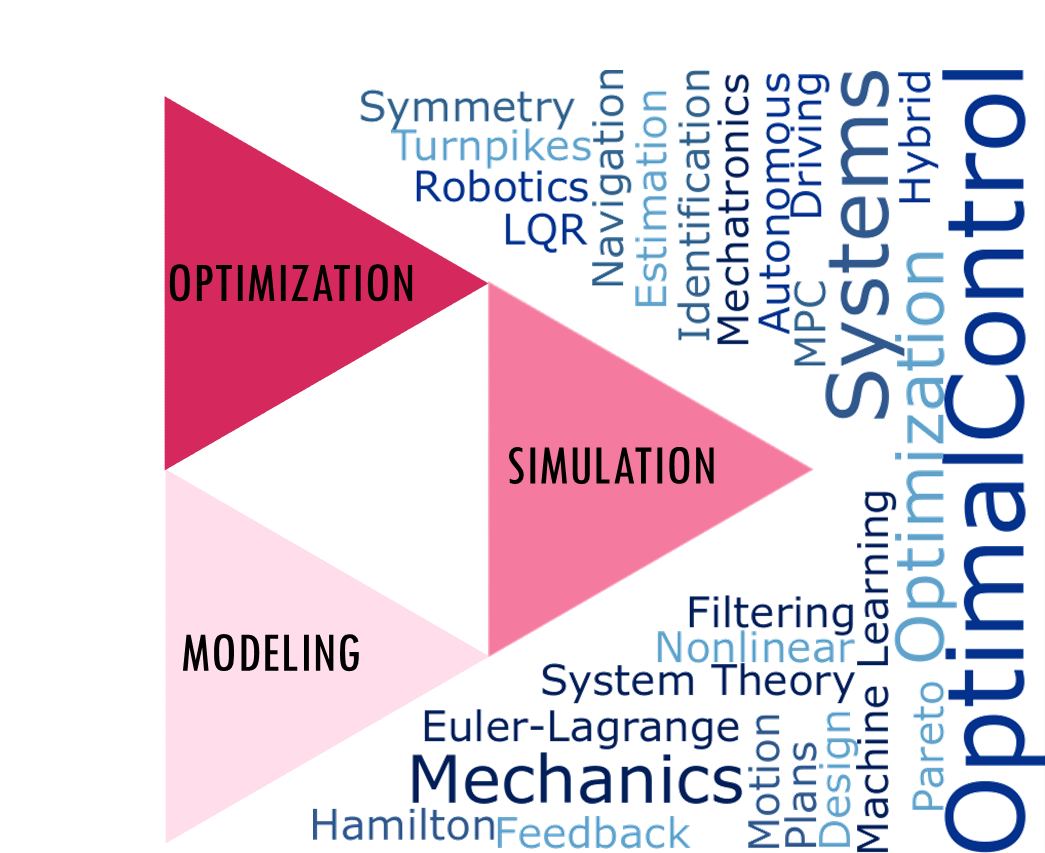
Kathrin Flaßkamp is a Professor at Saarland University, specializing in the Department of Systems Engineering. Her work focuses on modeling and simulation of technical systems, with applications spanning robotics, optimal control, and biomedical engineering. She is based at Campus A5 1, Room 1.04, Saarbrücken. Her research integrates control theory, artificial intelligence, and optimization to address challenges in mobile robotics, autonomous vehicles, and medical devices. A key trend in her recent articles involves leveraging model predictive control, neural networks, and Koopman operators for energy-efficient and cooperative trajectory planning. She also explores applications in stereotactic neurosurgery using continuum robots, emphasizing precision and adaptability. Her work frequently bridges theoretical advancements with real-world engineering problems, including systems with symmetries, multi-agent coordination, and data-driven methods for dynamical systems. Despite no explicit awards listed, her contributions to optimal control and robotics are evident in her extensive publication record.
Beuth University of Applied Sciences BerlinGermany
Prof. Dr. Ilona Buchem is a Professor of Communication and Media Studies at the Berlin University of Applied Sciences (BHT), Department I of Business and Social Sciences. She serves as Head of the Communication Laboratory and leads research in human-robot interaction, educational robotics, and technology-enhanced learning. Her work spans multiple interdisciplinary projects including Social Robotics, Open Virtual Mobility, and ePA-Coach, focusing on digital media for communication, collaboration, and digital sovereignty for older adults in healthcare contexts. Dr. Buchem holds a doctorate in business education from Humboldt University and a certificate in business administration from the University of St. Gallen, Switzerland. Her academic background bridges business education with digital media expertise, positioning her at the intersection of technology and communication for innovative educational approaches. Her research interests focus on human-robot interaction in educational contexts, social robotics for learning, AI applications in education, and digital media for communication and collaboration. She explores how robots can serve as educational tools in business studies, language learning, and health-related applications. Her work also investigates digital sovereignty, particularly for older adults using electronic health records, and the use of open digital credentials like Open Badges for recognizing learning achievements. The integration of gamification elements with social robots represents another significant strand of her research, enhancing student engagement and learning outcomes. Analysis of her recent publications reveals a strong focus on practical applications of social robots in educational settings, particularly examining student perceptions of different robot platforms (NAO, Pepper, Furhat). Her work increasingly integrates generative AI with robotics, exploring conversational interfaces and new learning paradigms. There's also a consistent thread examining digital literacy for seniors, especially regarding electronic health records, and innovative approaches to recognizing learning through micro-credentials and digital badges. Dr. Buchem actively supervises numerous bachelor's and master's theses across multiple programs including Business Administration: Digital Economy and Media Informatics Online. She has established a digital award system based on Open Badges to recognize outstanding thesis work with top grades. Her research is supported through various funding sources including BMBF, EU, DFG, and industry partners, with projects spanning social robotics, virtual reality applications, and digital credentialing systems that connect academic research with practical applications. She leads the Communication Laboratory at BHT and is actively involved in the 'House of Robotics' initiative at the university. Her work connects with international partners through projects like Social Robotics (EU) and Open Virtual Mobility, creating a global network for educational robotics research and development that bridges European institutions and promotes cross-cultural educational exchange.
Prof. Verena Hafner is a Professor at the Institute of Computer Science within the Faculty of Mathematics and Natural Sciences at Humboldt University of Berlin. She leads the Adaptive Systems group, focusing on interdisciplinary research at the intersection of robotics, AI, and cognitive science. Her work emphasizes human-robot interaction, adaptive learning mechanisms, and embodied cognition. Her research explores: Design and impact of socially interactive robots in educational and cognitive contexts Trust dynamics and transparency in human-robot relationships Development of bio-inspired AI models and sensorimotor learning systems Philosophical and ethical dimensions of artificial consciousness and agency Analysis of her recent publications (2023-2025) reveals strong emphasis on educational robotics, cognitive modeling, and humanoid robot design. Key trends include multimodal learning architectures, trust calibration in HRI, and biologically-inspired AI frameworks. Her work consistently bridges theoretical AI with applied human-centered experimentation. She supervises graduate students including Michael Piechotta (doctoral candidate) and leads the Adaptive Systems laboratory investigating lifelong learning in artificial agents.
Beuth University of Applied Sciences BerlinGermany
Prof. Dr.-Ing. André Jakob is a faculty member at Berlin University of Technology , affiliated with the Department VII - Electrical Engineering - Mechatronics - Optometry. His academic role spans teaching and research in digital signal processing, audio technology, and acoustics. Digital Signal Processing Audio Technology Acoustics Active Noise Control His research focuses on active noise control , simulation of moving sound sources , and audio signal processing , with applications in robotics, building acoustics, and medical devices. Publications include advancements in anti-noise window systems , sound source localization , and acoustic measurement techniques . His recent work explores real-time auralization for educational robotics and nonlinear acoustic modeling with neural networks. The 15 most recent articles demonstrate a consistent focus on acoustic simulation , active control systems , and sound propagation modeling , with conference contributions at DAGA, NAG-DAGA, and international acoustics events. Topics range from dental drill noise reduction to active sound design in musical instruments , reflecting interdisciplinary applications. He supervises numerous Master's and Bachelor's theses in areas like real-time signal processing, deep learning for sound recognition, and virtual acoustics. His lab at TU Berlin explores multi-loudspeaker systems , acoustic beamforming , and active noise cancellation for both industrial and consumer applications.
Dongheui Lee is an Assistant Professor at the Institute of Automatic Control Engineering (LSR) within the Faculty of Electrical Engineering and Information Technology at Technische Universität München (TUM). She leads the Dynamic Human Robot Interaction for Automation System Lab. Her research focuses on human motion understanding, physical human-robot interaction, and machine learning in robotics. Education: B.S. and M.S. in Mechanical Engineering from Kyunghee University (2001-2003), PhD in Mechano-Informatics from the University of Tokyo (2007). Prior roles include research scientist at KIST Korea (2001-2004) and project assistant professor at the University of Tokyo (2007-2009). Research Interests: Human-robot collaboration, probabilistic robotics, motion recognition, and incremental lifelong learning mechanisms. She has contributed to advancements in motion primitives, compliant physical interaction, and real-time object tracking. Selected Awards: Finalist for KUKA Service Robotics Best Paper Award (2009), Hirose Scholarship (2006-2007), and multiple grants from KRF, KOSEF, and international robotics competitions. Key Publications: Focus on prioritized inverse kinematics, motion imitation, and adaptive control systems. Her work bridges robotics theory and practical applications in humanoid robots and human-robot interaction.
Davide Tateo is a postdoctoral researcher and visiting professor at TU Darmstadt, leading the Safe and Reliable Robot Learning Research Group within the Intelligent Autonomous Systems group of the Computer Science Department. His research focuses on developing safe and efficient reinforcement learning algorithms for real-world robotics applications. His work spans Reinforcement Learning (Safe RL, Deep RL) and Robotics (fast motion planning, locomotion). He is involved in multiple funded projects including KIARA (advanced manipulation in risky scenarios), DeepWalking (human gait learning), and INTENTION (active perception for legged robots). Recent publications highlight his expertise in Safe RL (inductive biases, collision probability fields), Locomotion (multi-embodiment, morphology-aware policies), and Optimization (contact planning, trajectory distillation). He collaborates with the PEARL lab at TU Darmstadt and has contributed to key workshops like CoRL 2024 and RSS 2024. Contact details: Email: davide.tateo@tu-darmstadt.de Room E303, Building S2|02, Hochschulstr. 10, Darmstadt Phone: +49-6151-16-20811