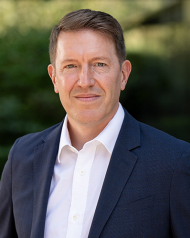
Patrick Overeem is an Associate Professor at the Faculty of Social Sciences and Humanities (Vrije Universiteit Amsterdam), specializing in Political Science and Public Administration. He holds a PhD from Leiden University (2010) and advanced degrees in Public Administration and Political Science from the same institution. His research focuses on democratic theory, value pluralism, statesmanship, and EU governance. He is affiliated with the Multi-layered Governance (MLG) research group and serves on editorial boards, including the American Review of Public Administration . Overeem's work emphasizes ethical leadership, compromise in politics, and the interplay between democracy and pluralism. Key contributions include his 2012 book on the politics-administration dichotomy and his neo-Aristotelian analyses of political virtue. He has led projects like the EU-funded RECONNECT initiative (2018–2022), exploring democratic reconciliation in Europe. He advises Dutch parliamentary integrity committees and contributes to public debates on ethics and governance through media engagements. His research bridges classical political theory with contemporary challenges, addressing topics like postliberalism, moral dilemmas in governance, and constitutional frameworks. Overeem teaches courses on political theory, democratic systems, and the history of political thought, fostering critical engagement with ethical and institutional dimensions of power.
Dr. Oana Cocarascu is a Senior Lecturer in Artificial Intelligence at the Department of Informatics, Faculty of Natural, Mathematical & Engineering Sciences, King's College London. She holds a PhD and MEng in Computing (Artificial Intelligence) from Imperial College London and conducts applied research focusing on how artificial intelligence can be deployed to support real-world applications, with machine learning and natural language processing as core components of her work. Her research interests span argument mining, explainable AI, machine learning, natural language processing, and symbolic reasoning. She is particularly focused on developing AI systems that can provide transparent, accountable, and ethical decision-making processes. Her work addresses critical challenges in bias mitigation, fairness metrics, fact verification systems, and argumentation-based explanations for complex AI decisions. Analysis of her recent publications (2023-2025) reveals a strong focus on fairness in AI systems, with particular attention to individual fairness metrics and nuanced evaluation frameworks. She has made significant contributions to fact verification systems, especially in multimodal contexts involving charts and tabular data. Her work increasingly integrates argumentation theory with natural language processing to create explainable AI systems that can justify their decisions through structured reasoning. Dr. Cocarascu leads an EPSRC-funded project titled 'A framework for evaluating and explaining the robustness of NLP models' (2024-2027) and is actively involved in the Natural Language Processing Group at KCL. Her research fingerprint shows strong activity in argumentation (100%), decision-making (74%), artificial intelligence (50%), explainable AI (39%), and bias mitigation (35%). She has contributed to numerous high-impact publications in top venues including ACL, EMNLP, AAAI, and the Journal of Artificial Intelligence Research, with a particular focus on making AI systems more transparent, accountable, and aligned with human values. Her work intersects with UN Sustainable Development Goals, particularly those related to reducing inequality and building resilient infrastructure.
Leigh Oakes is Professor of French and Linguistics in the Department of Modern Languages and Cultures within the School of Languages, Linguistics and Film at Queen Mary University of London. He has held progressive academic positions at the institution since 2000, advancing from Lecturer to his current professorship. His international academic background includes a PhD from the University of Melbourne and research at Stockholm University's Centre for Research on Bilingualism. His educational qualifications include a PhD (2001) and BA (Hons) (1996), both from the University of Melbourne. Oakes specializes in language policy and planning, with particular focus on language and national identity in France, Quebec, and Sweden. His research has expanded into linguistic justice debates in political theory, advocating for normative and interdisciplinary approaches to language policy. Oakes' publication trends reveal a consistent focus on ethical dimensions of language policy, with increasing emphasis on pluricentric justice and linguistic integration since 2016. His work bridges sociolinguistics and political philosophy, demonstrating strong interdisciplinary connections between language attitudes, national identity construction, and policy implementation across Francophone contexts. The 2018 co-authored monograph 'Normative Language Policy' represents a significant theoretical contribution to the field. 2008 Pierre Savard Prize for 'Language, Citizenship and Identity in Quebec' Leverhulme Trust Research Project Grant for 'The Ethics of Linguistic Integration' project Co-editor-in-chief of Sociolinguistica: European Journal of Sociolinguistics Co-editor of Multilingual Matters book series Member of editorial boards for Language Policy and Modern Languages Open Oakes actively supervises PhD candidates in sociolinguistic topics, with current research focusing on linguistic integration in Quebec and adaptation among mobile French speakers. His major Leverhulme-funded project 'The Ethics of Linguistic Integration' examines moral implications of language requirements for immigrants across England, Quebec, and Wales. He serves on several international academic committees including the Association internationale des études québécoises and the British Association of Canadian Studies. He leads the interdisciplinary 'Ethics of Linguistic Integration' research team, which combines expertise from applied linguistics, sociolinguistics, and political theory to investigate language integration policies. His work connects with broader university initiatives through Queen Mary's research highways in social justice and global challenges.
Professor T. Ryan Byerly is a faculty member in the Department of Philosophy at the University of Sheffield's School of History, Philosophy and Digital Humanities. He joined in Spring 2015 after completing his PhD at Baylor University and teaching at Regent University in the USA. His research focuses on Philosophy of Religion, Epistemology, and Virtue Theory, with particular attention to topics like divine foreknowledge, moral character, and religious epistemology. He currently supervises four PhD students in areas such as theistic moral arguments, moral psychology, and intellectual humility's role in social relationships. Byerly's educational background includes a PhD from Baylor University and prior academic roles at Regent University. His interdisciplinary work bridges theology, ethics, and social philosophy, with contributions to journals like Mental Health, Religion and Culture and Philosophical Studies . He serves as Series Editor for the British Society for the Philosophy of Religion book series and is affiliated with the Centre for Engaged Philosophy at the University of Sheffield. His research emphasizes the intersection of virtue ethics and religious practice, such as exploring how intellectual virtues like humility and transparency impact communal life. Byerly also investigates the philosophical implications of religious beliefs on moral behavior and well-being, including studies on how accepting divine love affects psychological health. In addition to his academic contributions, Byerly advocates for pedagogical approaches that cultivate intellectual virtues in critical thinking education. His work often addresses contemporary debates in the philosophy of religion, including free will theodicies and the ontological status of divine attributes. He actively collaborates with scholars across disciplines to advance virtue epistemology and collective moral character research.
Christian Kaarup Baron is an External Lecturer in the Department of Pharmacy at the University of Copenhagen, with research spanning interdisciplinary domains at the intersection of scientific humanities and environmental studies. His core research areas include: History and Philosophy of Science : Critical analysis of epistemic values in paleontological debates, exemplified by work on the Burgess Shale fossil site's scientific interpretations Climate Science : Empirical investigations into climate impacts through the African Monsoon Multidisciplinary Analyses (AMMA) project, focusing on West African environmental systems Baron's 2009 publications reveal a distinctive scholarly trajectory bridging conceptual frameworks from biological sciences with climate modeling methodologies, demonstrating consistent engagement with methodological rigor across disparate scientific fields despite limited output volume.
Ha-Joon Chang serves as Professor in the Department of Economics at SOAS University of London. His academic work spans development economics, industrial policy, and political economy, with significant contributions to understanding economic development processes in both developing and mature economies. Chang's research interests focus on development economics , industrial policy , and political economy , with particular emphasis on how institutions shape industrialization processes and economic development trajectories. His work critically examines mainstream economic theories while advancing alternative frameworks that emphasize productive transformation and social capabilities. Recent research has expanded into areas including digital industrialization in developing countries, commercial determinants of health, and the relationship between economic pluralism and democratic processes. Analysis of his recent publications reveals a consistent focus on production-centered development approaches, with growing attention to the challenges of digital transformation in developing economies. His work demonstrates strong interdisciplinary connections between economics, political science, and development studies, often challenging conventional wisdom about economic policy and development pathways. The 2021-2024 publications show increased engagement with contemporary issues like the commercial determinants of health and ideological biases in economic thinking. While specific scientific awards are not mentioned in the available information, Chang's extensive publication record in high-impact journals demonstrates significant scholarly recognition. His work appears in leading economics and development journals including Cambridge Journal of Economics, Development and Change, and The Lancet. Professor Chang maintains active research collaborations with scholars across multiple institutions, as evidenced by his co-authored publications spanning economics, public health, and development policy domains. His research outputs indicate engagement with both theoretical economic debates and practical policy applications, particularly regarding industrial policy design and implementation in diverse economic contexts.
Timo Kaartinen serves as Professor of Social and Cultural Anthropology and Vice Dean for Research and Doctoral Education at the University of Helsinki 's Faculty of Political Science . Since 1992, he has conducted extensive research in Southeast Asia with a focus on Indonesia, exploring communicative practices, narratives, and cultural responses to uncertainty. His teaching spans social change in bachelor's, master's, and doctoral programs, covering environmental anthropology, political anthropology, cosmologies, religions, and linguistic anthropology. PhD in Anthropology, University of Chicago (2001) Docent (Adjunct Professor), University of Helsinki (2011) Research interests center on ethical discourse in Indonesian Islamic universities, resource politics in oil palm estates, and linguistic anthropology with emphasis on storytelling, folk poetry, and minority language revitalization. His work combines ethnographic focus on Southeast Asia with theoretical contributions to frontier studies and postcolonial anthropology. Recent publications examine frontier temporalities (2020-2025), Islamic transformations (2019), and oral narrative structures (2017-2013). Key projects include ARCTIC Research Centre (2025-2029), Diversity in Society and Life (DIVSOL) (2025-2030), and Religious Movements in Ethical Life (2019-2023). Grants from the Academy of Finland and University Profiling Funding support these initiatives. Academic activities include keynote speeches at international conferences (e.g., Empowering Local Wisdom 2014, Labor Migration in Asia-Pacific 2013) and editorial roles. He has conducted fieldwork in Indonesia since 1992, focusing on Bandanese cultural heritage and Maluku religious dynamics . His methodological approach combines ethnographic fieldwork with historical document analysis .
Steven Kelts is a Lecturer at Princeton University, affiliated with the School of Public and International Affairs (SPIA) and the Department of Computer Science . He leads the Integrated Ethics in CS program and has served as Director of the non-profit All Tech Is Human. Research Focus: Kelts examines ethical frameworks in technology innovation, historical political economies, and the intersection of democratic theory with corporate responsibility. His work spans Measuring ethics education in computing Evolving corporate structures for ethical action Locke's economic justice theories Machiavelli's republican ideals Madison's institutional designs Publications reveal trends in: Utilitarian logic in Agile teams Roman censorship models 17th-century English economic debates Mill's social value legislation Scientific Recognition: Recipient of Princeton's Council on Science and Technology grants for Agile Ethics program Google seed grant for corporate ethics frameworks University-wide award for GradFutures AI ethics leadership Advisory Roles: Includes ethics advisor to the Responsible A.I. Institute and institutional design mentor for political theory projects.
Alexander R. Pruss is a tenured Professor in the Department of Philosophy at Baylor University , within the College of Arts and Sciences . He holds a dual PhD in Philosophy (University of Pittsburgh, 2001) and Mathematics (University of British Columbia, 1996), and has held previous academic positions at Georgetown University. His work is deeply interdisciplinary, bridging metaphysics, philosophy of religion, formal epistemology, and ethics. Education: Ph.D. in Philosophy, University of Pittsburgh (2001) Ph.D. in Mathematics, University of British Columbia (1996) B.Sc. (Hon.) in Mathematics and Physics, University of Western Ontario (1991) Pruss’s research interests include metaphysics—particularly the Principle of Sufficient Reason , modality , and infinity —philosophy of religion, divine attributes , cosmological arguments , and sexual ethics . He is known for integrating rigorous formal methods with classical theistic metaphysics. His recent publications explore the intersection of probability theory, paradox, and theology, particularly in infinite domains. He has authored influential books such as The Principle of Sufficient Reason: A Reassessment (2006), Infinity, Causation and Paradox (2018), and One Body: An Essay in Christian Sexual Ethics (2012). The trends in his recent articles show a sustained focus on the philosophical implications of infinity, symmetry, and probability. He frequently investigates paradoxes in probability (e.g., infinite lotteries), challenges to modal realism, and the metaphysical coherence of divine attributes. His work combines analytic rigor with theological depth, often aiming to defend classical theism through logical and mathematical reasoning. Scientific awards and honors: Aquinas Medal, American Catholic Philosophical Association (2025) Wilde Lecturer, Oriel College, University of Oxford (2019) Outstanding Tenured Faculty Research Award, College of Arts and Sciences (2013) National Endowment for the Humanities Summer Stipend (2002) Social Sciences and Humanities Research Council of Canada Fellowship (1997–2000) Pruss has been actively involved in academic service, including serving on the Executive Council of the American Catholic Philosophical Association (2021–2024) and the Society of Christian Philosophers (2011–2013) . He has held editorial roles for journals such as American Philosophical Quarterly and Analysis and Existence . He has delivered numerous invited lectures globally, including at Oxford, Notre Dame, and MIT. There is no mention of formal PhD or Master’s students in the provided text, but he advises through graduate seminars and research supervision. He has not received specific grant mentions beyond fellowships and stipends. He is affiliated with research groups such as the Baylor Institute for Faith and Learning and the Thomistic Institute , and contributes to philosophy of science and theology dialogues. His work continues to shape contemporary debates in analytic philosophy of religion and metaphysics.
Susan Helper is the Frank Tracy Carlton Professor of Economics at the Weatherhead School of Management , Case Western Reserve University . She also holds the title of Professor in the Department of Economics at the same institution. Beyond academia, she served as Chief Economist of the U.S. Department of Commerce (2013–2015) and as Senior Economist on the White House Council of Economic Advisers (2012–2013). She is a Research Associate at the National Bureau of Economic Research, Non-resident Senior Fellow at the Brookings Institution, and Co-Chair of the National Academy of Sciences. Education: PhD in Economics, Harvard University (1987) BA in Economics, Government, and Spanish, Oberlin College (1979) Research Focus: Susan Helper's research centers on the globalization of supply chains , manufacturing revitalization , and the interplay between technology, work systems, and policy . She explores how organizational structures, relational contracts, and digital transformation influence innovation, productivity, and job quality. Her work spans both theoretical and empirical studies, with a strong emphasis on policy implications for U.S. manufacturing competitiveness. Scientific Awards & Honors: Becker Friedman Fellow , University of Chicago (2018) Women of Achievement Award , Flora Stone Mather Center for Women, CWRU (2009) Professional Service & Impact: Helper has held influential roles such as Program Organizer for the Canadian Institute for Advanced Research (2019–2024), Editorial Review Board Member for the Strategic Management Journal (2008–present), and Member of the Bureau of Labor Statistics Technical Advisory Committee. Her advisory work bridges academic research and federal policy, shaping strategies for industrial innovation and workforce development.
Michael Smith is the McCosh Professor of Philosophy at Princeton University. He holds a DPhil from Oxford University (1989) and has been a faculty member since 2004, previously at the Australian National University. His research focuses on ethics, moral psychology, philosophy of mind, political philosophy, and philosophy of law. Smith’s work integrates constitutivist theories of practical reason with analyses of moral agency. He has contributed to debates on moral rationalism, the nature of reasons for action, and the relationship between rationality and normativity. Education: MA, Monash University (1980); BPhil (1983), DPhil (1989), University of Oxford Smith’s scholarship emphasizes the interplay between ethical theory and psychological explanations of agency. Recent publications explore topics like carbon capture technologies, cultural clashes in moral reasoning, and probabilistic forecasting in oceanography. His philosophical contributions address foundational questions in meta-ethics, including the ‘moral problem’ and the implications of constitutivism for normative frameworks. He advises on interdisciplinary projects at the intersection of philosophy and emerging technologies. Notable research trends include applying philosophical analysis to environmental ethics and developing frameworks for resolving moral dilemmas through rational agency models. His work often bridges analytic philosophy with empirical inquiries in psychology and social science.
Eric MacGilvray is a Professor of Political Science and courtesy Professor of Philosophy at The Ohio State University. His primary affiliations include the Department of Political Science within the College of Arts and Sciences, and he chairs the Philosophy, Politics, and Economics (PPE) Steering Committee. He also serves on the Steering Committee of the OSU Center for Ethics and Human Values and co-directs the Civil Discourse for Citizenship program. MacGilvray holds a Ph.D. and M.A. in Political Science from the University of Chicago and an A.B. in Politics from Princeton University. His research focuses on modern and contemporary political thought, emphasizing liberal, republican, and democratic theories, alongside the American pragmatist tradition. His major works include Liberal Freedom (2022), The Invention of Market Freedom (2011), and Reconstructing Public Reason (2004). His scholarship frequently engages journals like the American Journal of Political Science and Journal of Political Philosophy . His research interests span liberal theory’s pluralistic and polarized contexts, republican critiques of liberalism, democratic epistemology, and the pragmatic philosophical tradition. His articles often analyze intersections between political philosophy, ethics, and institutional frameworks. Recent works address themes like responsibility in polarized societies and the tension between administrative governance and liberal principles. MacGilvray’s academic contributions extend beyond writing to institutional leadership, fostering interdisciplinary dialogue through PPE and ethical citizenship initiatives. His work bridges historical political thought with contemporary debates, emphasizing pragmatic solutions to democratic challenges.
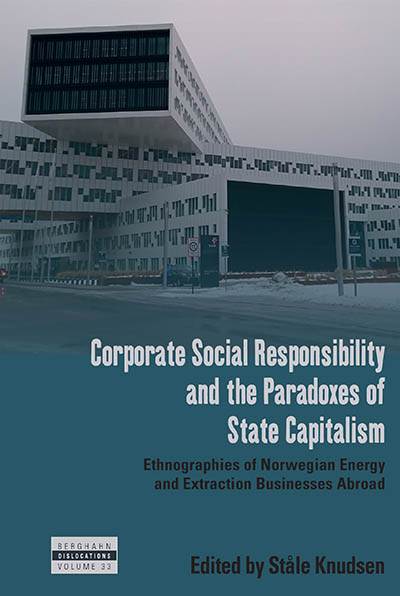
Ståle Knudsen is a Professor in the Department of Social Anthropology at the University of Bergen, Norway. His research bridges environmental anthropology and political ecology, focusing on transnational corporations, corporate social responsibility (CSR), and environmental governance. Key areas include Norwegian energy corporations' CSR practices abroad, Turkish fisheries management, and global energy policies. He led the EU-funded KNOWSEAS (2009–2013) and ENERGETHICS (2015–2019) projects, examining CSR in state-owned energy sectors. Knudsen has authored Fishers and Scientists in Modern Turkey (2009) and co-edited Corporate Social Responsibility and the Paradoxes of State Capitalism (2023). His work critiques the intersection of financial logics and environmental accountability in global corporate operations. From 2014–2021, he served as Head of the Department of Social Anthropology at UiB. Research Interests: Corporate responsibility, energy governance, political ecology, environmental conflict, and transnational corporations. Key Projects: ENERGETHICS (CSR in energy companies), KNOWSEAS (European marine management), and ELMÉ (EU fisheries policies). Knudsen’s research combines long-term fieldwork in Turkey with interdisciplinary analysis of global energy systems and CSR paradoxes. He critiques the 'Nordic Model' as a CSR framework and explores tensions between corporate profit and sustainability goals in Norway’s state-owned enterprises.
Prof. Dr. Kirsten Meyer is a full professor for Practical Philosophy and Philosophy Education at the Institute of Philosophy, Faculty of Philosophy, Humboldt University of Berlin. She has held this position since the summer semester of 2011, after serving as a junior professor from 2008 to 2011. Her work bridges philosophical theory with educational practice, with a particular focus on ethics and intergenerational justice in the context of contemporary challenges like climate change. Dr. Meyer's interdisciplinary educational background reflects her unique scholarly perspective: Diploma in Biology (1999, University of Münster/Bielefeld/St. Andrews) State Examination in Philosophy (2000) Doctorate from Bielefeld University (2002) Kirsten Meyer's research program spans several interconnected domains of philosophical inquiry. Her primary focus is on intergenerational ethics, where she examines humanity's moral obligations to future generations, particularly regarding climate change and resource consumption. She has made significant theoretical contributions to educational philosophy, exploring how philosophical reasoning can be practically integrated into school curricula. Her work on educational justice addresses complex questions about talent development, equal opportunity, and the relationship between education and conceptions of the good life. Meyer also contributes to environmental ethics, analyzing the intrinsic value of nature and our responsibilities toward it, informed by her background in biology. Analysis of her recent publications reveals a consistent thematic trajectory focused on intergenerational justice and educational philosophy. Meyer frequently examines how abstract philosophical concepts can inform practical educational policy, particularly regarding talent development and educational equity. She has become a prominent voice in climate ethics, connecting theoretical debates about future generations to concrete policy proposals like using estate tax as a climate protection instrument. Her interdisciplinary approach, combining insights from biology, philosophy, and education, allows her to address complex ethical questions with both theoretical rigor and practical relevance. Professor Meyer is deeply engaged in public philosophical discourse, regularly contributing to media discussions on intergenerational justice, climate ethics, and educational policy. She has participated in numerous interviews with major German media outlets including Deutschlandfunk, BR, ZDF, and RBB, helping translate complex philosophical concepts for broader audiences. Her practical contributions extend to educational initiatives, including the development of teaching materials for philosophy education through philovernetzt on topics ranging from 'What should I become? Work and the good life' to 'Fake News' and 'Consent.'
Bénédicte Savoy (born May 22, 1972 in Paris) is a renowned French art historian and Professor of Modern Art History at the Technical University of Berlin since 2009. Since 2016, she has also held positions at the Collège de France in Paris (2016-2021) and in November 2024 was appointed to the 'Cátedra del Prado' visiting professorship at the Prado Museum in Madrid. She is internationally recognized as a leading expert on cultural property restitution, particularly regarding colonial-era art theft and looted artifacts. Her research focuses on the complex histories of cultural displacement, with particular emphasis on European museums' colonial collections. Savoy has pioneered critical approaches to provenance research and has been instrumental in reshaping global debates about museum ethics and restitution practices. Her work bridges art history, postcolonial studies, and cultural policy, challenging traditional museum narratives and advocating for more transparent and ethical approaches to cultural heritage. Savoy's publications form a cohesive intellectual trajectory examining how cultural property has been transferred, often forcibly, across borders and continents. Her recent work increasingly focuses on African cultural heritage in European collections, with detailed case studies of Cameroon and broader analyses of restitution politics. The themes of historical justice, museum transparency, and decolonization of cultural institutions run consistently through her scholarship. Gottfried Wilhelm Leibniz Prize (2016), Germany's most prestigious research award TIME 100 most influential people in the world (2021) Ritterin der französischen Ehrenlegion (2022) Deutscher Kulturpolitikpreis (2022) Berliner Wissenschaftspreis (2023) Clark Prize for Excellence in Arts Writing (2024) Prix Européen de l'Essai 2025 (2025) As co-author of the groundbreaking 2018 report on African cultural restitution commissioned by French President Emmanuel Macron, Savoy has significantly influenced international policy. Her work has secured major research funding, including collaborative projects with African scholars. She has led influential research teams examining colonial collections, most notably the seven-member team that produced the 'Atlas der Abwesenheit' documenting Cameroonian cultural heritage in Germany. Her advocacy continues to shape museum practices worldwide, pushing institutions toward greater accountability regarding their colonial-era acquisitions.