

Matthew Louis Mauriello is an Assistant Professor in the Department of Computer and Information Sciences at the University of Delaware , where he directs the Sensify Lab . He holds a PhD in Computer Science from the University of Maryland (2018) and completed postdoctoral work at Stanford University (School of Medicine, 2020; School of Public Policy & Environmental Engineering Department, 2019). Research interests span Human-Computer Interaction (HCI), Ubiquitous Computing, and User-Centered Design with applications in: Sustainability Human-Building Interaction Wearable Technology Personal Informatics Educational Game Design Mental Health Interventions Recent publications highlight trends in stress monitoring (skin-like biosensors, workplace wellbeing), energy auditing (thermography systems), and educational technology (block-based programming tools for teachers). His work appears in ACM CHI, ACM Human-Computer Interaction, and Building and Environment. Scientific awards include: Best Paper Honorable Mention, CHI 2016 Best Paper Honorable Mention, CHI 2015 Best of WebSci'18 Teaching at University of Delaware encompasses courses like Educational Game Design Operating Systems Advanced Web Technologies Computing for Social Good with a focus on project-based learning and systems thinking.
جستجوی استاد راهنمای دانشگاهی
برای مسیر پژوهشیتان، استاد راهنما، استاد دانشگاه و پژوهشگر مناسب را پیدا کنید و با آنها ارتباط بگیرید.
نمایش ۱-۱۵ از ۱۸۴ استاد راهنما
اطلاعات پروفایلها از صفحات عمومی دانشگاهها گرفته شده و ممکن است بهروز نباشد.

Jean Ohمشاهده پروفایل
پژوهشگر
Jean Oh is a Researcher at the Robotics Institute of Carnegie Mellon University (CMU) , leading the interdisciplinary Bot Intelligence Group (BIG) . Her work focuses on developing persistent robots that co-exist and collaborate with humans in shared environments, emphasizing continuous improvement through training, exploration, and human interaction. Education: Ph.D. in Language and Information Technologies, CMU M.S. in Computer Science, Columbia University B.S. in Biotechnology, Yonsei University Oh's research integrates vision, language, and planning systems in robotics, with applications in human-robot teaming , self-driving cars , disaster response , eldercare , and creative robotics . She has pioneered projects like socially-compliant robot navigation in human crowds and AI-driven robotic painting systems. Recent publication trends highlight her work in vision-language planning , social navigation , computational creativity , and human-robot collaboration . Notable contributions include the StyleCLIPDraw algorithm for text-to-art generation and Social-PatteRNN for human-like trajectory prediction. Scientific Awards: Best Paper Award in Cognitive Robotics (ICRA'18, ICRA'15) Best Systems Paper Finalist (HRI'25) Best Oral Paper Finalist (Humanoids'24) Best Paper in Entertainment (IROS'24) Argoverse Challenge Winner (CVPR'24) Best Student Paper (AIAA'24) Best Demo Finalist (RoboSoft'24) Oh mentors a diverse team of PhD, MS, and undergraduate students from CMU departments including Robotics, Computer Science, and Mechanical Engineering. Her research is funded by US Army Research Lab , DiDi Chuxing , and DARPA , with collaborations across industry and academia .
Prof. Ingmar Posner is a leading figure in applied artificial intelligence at the University of Oxford, where he serves as Principal Investigator for the Applied Artificial Intelligence Lab (A2I) and founding Director of the Oxford Robotics Institute. His work focuses on enabling robots to operate effectively in complex real-world environments through experience-driven learning. Key research areas: robot learning, scene interpretation, data-efficient learning, and transfer learning Applications in manipulation, autonomous driving, logistics, and space exploration His team has produced groundbreaking work in world models, sim-to-real transfer, and constraint-based manipulation systems (e.g., COMBO-Grasp). Notable contributions include the TWIST distillation framework and foundational research in tactile data generation (TactGen). He has received multiple best paper awards at top robotics venues. Publications reveal evolving research themes: 2025 work emphasizes language-conditioned learning (Lumos) and multi-agent decision-making, while 2024 focused on diffusion models for locomotion and differentiable simulators. Earlier work spans from urban scene analysis to physically plausible scene synthesis (RELATE).
- Robotics
- Artificial Intelligence
- Machine Learning
- +۴ مورد دیگر
Stephen Lichtمشاهده پروفایل
دانشیار
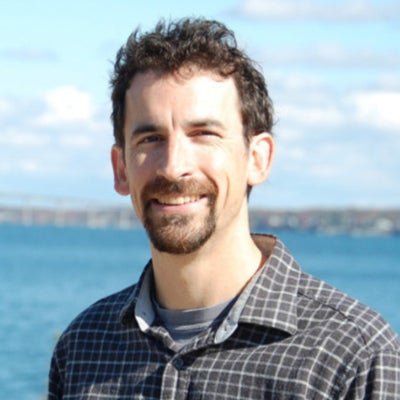
Stephen Licht is an Associate Professor of Ocean Engineering and Graduate Director at the University of Rhode Island's College of Engineering, where he directs the Robotics Laboratory for Complex Underwater Environments (R-CUE). His research focuses on developing maritime robots capable of operating in dynamic and unpredictable environments through biologically inspired propulsion, distributed pressure sensing, model-based optimal control, and compliant underwater manipulation technologies. Ph.D. in Oceanographic and Mechanical Engineering from MIT/WHOI Joint Program (2008) B.S. in Mechanical Engineering from Yale University (1998) Former Senior Research Scientist at iRobot and Senior Robotics Engineer at Vecna Robotics Current Research Affiliate with MIT Department of Mechanical Engineering Former Visiting Faculty at Libera Università di Bolzano (2019-2020) Dr. Licht's research spans marine robotics with emphasis on biologically inspired propulsion systems that provide high authority and bandwidth thrust, nonlinear attitude control for maneuvering in dynamic conditions, compliant underwater manipulation technologies, and unmanned aerial monitoring of coastal structures. His work bridges mechanical engineering principles with oceanographic applications to create more capable underwater robotic systems that can operate in complex marine environments. His recent publications demonstrate a strong trend toward soft robotics applications for deep-sea exploration, with particular focus on jamming grippers and neutrally buoyant manipulation systems. The research also shows increasing integration of additive manufacturing techniques for field-deployable solutions and computational methods for autonomous systems operating in challenging marine environments. His work spans fundamental control theory, mechanical design, and practical field applications. Dr. Licht has secured significant research funding as both Principal Investigator and Co-Principal Investigator from major organizations including the Office of Naval Research, NOAA, NSF, and various university collaborations. His grants focus on advancing unmanned underwater vehicle technology, soft robotics for deep-sea applications, and coastal monitoring systems. Active mentor to numerous graduate and undergraduate students in Ocean Engineering Successful track record of student placements at organizations including Jaia Robotics, Scripps Institution of Oceanography, FORSSEA Robotics, and government research labs Collaborates with researchers at MIT, WHOI, University of Connecticut, University of Maine, and international institutions Licht leads the R-CUE lab which develops innovative solutions for underwater robotics challenges, with particular expertise in biomimetic propulsion, soft robotics for deep-sea applications, and autonomous systems for environmental monitoring. The lab maintains strong industry connections with OceanGate Inc. and FabNewport, and engages with local educational institutions through outreach programs with Roger Williams Middle School.
Kevin Jamiesonمشاهده پروفایل
دانشیار
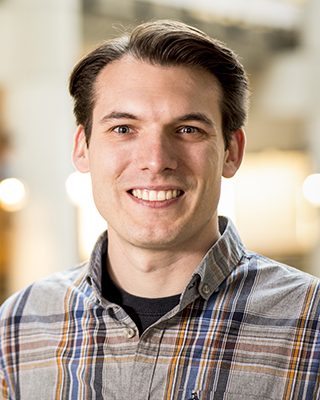
Kevin Jamieson is an Associate Professor at the Paul G. Allen School of Computer Science & Engineering and an Adjunct Professor in the Department of Statistics at the University of Washington . His academic journey includes a B.S. (2009) , M.S. (2010) , and Ph.D. (2015) in electrical engineering from the University of Washington, Columbia University, and University of Wisconsin–Madison respectively. He completed a postdoc at UC Berkeley's AMP Lab before joining UW in 2017. Ph.D., Electrical Engineering, University of Wisconsin–Madison (2015) M.S., Electrical Engineering, Columbia University (2010) B.S., Electrical Engineering, University of Washington (2009) Jamieson's research lies at the intersection of interactive machine learning , active learning , and sequential decision making . His work focuses on: Adaptive sampling strategies in multi-armed bandits and reinforcement learning (RL) Developing instance-dependent optimal algorithms that adapt to problem difficulty Applications in robotics , human perception studies , and hyperparameter optimization Representation learning for large models and experimental design frameworks His 15 most recent publications (2025-2022) demonstrate expertise in bandit theory , contextual RL , and game-theoretic learning . Notable trends include sample-efficient optimization , adaptive A/B testing , and sim-to-real transfer in robotics. Jamieson has received: NSF CAREER award for foundational contributions Amazon Faculty Research award for innovation in learning systems He actively recruits graduate students and postdocs , emphasizing collaboration in areas like: Multi-agent RL and strategic actor learning Empirical process suprema and adaptive sampling theory Applications in robotics , large language model finetuning , and biomedical data analysis Jamieson leads the Washington AI Lab (WAIL) and develops open-source learning systems like the NEXT framework for real-world adaptive data collection. He serves as co-PI for the Institute for the Foundations of Data Science (IFDS) and co-organizes the Distinguished Seminar in Optimization & Data .
Joydeep Biswasمشاهده پروفایل
دانشیار
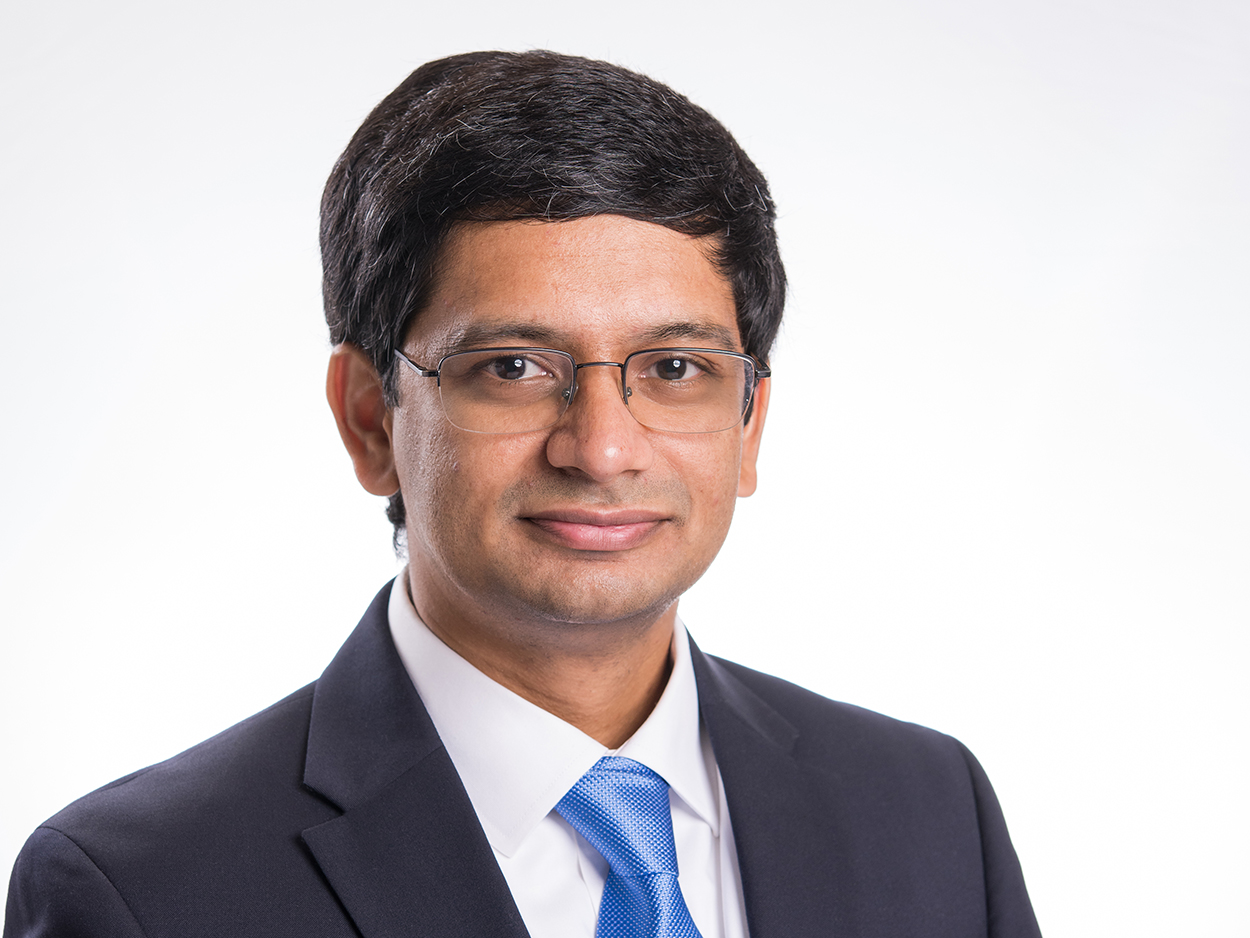
Joydeep Biswas is an Associate Professor in the Computer Science Department at the University of Texas at Austin, where he serves as the Director of the Autonomous Mobile Robotics Laboratory (AMRL). He is also affiliated with Texas Robotics, the UT Machine Learning Laboratory, and UT Good Systems. Previously, he was an Assistant Professor in the College of Information and Computer Sciences at the University of Massachusetts Amherst. Dr. Biswas earned his PhD in Robotics from Carnegie Mellon University in 2014 and his B.Tech in Engineering Physics from the Indian Institute of Technology Bombay in 2008. His educational background has provided him with a strong foundation in both theoretical and applied aspects of robotics and artificial intelligence. Dr. Biswas's research focuses on enabling long-term autonomy for mobile robots operating in human environments. His work spans robot perception, motion planning, control systems, and AI, with the ultimate goal of creating self-sufficient autonomous mobile robots that can perform tasks accurately and robustly in real-world settings. He is particularly interested in perception, planning, and failure recovery for autonomous mobile robots, which supports his vision of having autonomous service mobile robots deployed at campus-to-city scale, both indoors and outdoors, performing assistive tasks over deployments spanning years. His IJCAI 2019 Early Career Spotlight talk summarizes much of his research to date and ongoing interests. His recent research has shown a strong trend toward social navigation, human-robot interaction, and the application of machine learning techniques to robotics problems. There's a clear progression from fundamental robotics research toward more complex, real-world applications that require robots to understand and navigate human social spaces effectively. His work increasingly integrates large language models and other advanced AI techniques with traditional robotics approaches, as evidenced by his recent publications on topics like preference-conditioned navigation, social navigation benchmarks, and instruction-following navigation systems. Dr. Biswas has received numerous prestigious awards including the NSF CAREER Award (2021), J.P. Morgan Faculty Research Award (2019), Amazon Research Award (2019), and a grant from Northrop Grumman Mission Systems (2018). These awards recognize his innovative contributions to the field of robotics and autonomous systems. As a dedicated educator and mentor, Dr. Biswas actively supervises PhD and master's students, with his PhD student Sadegh Rabiee winning the student poster award at the Northrop Grumman University Symposium 2019. He has secured significant grant funding from the National Science Foundation for projects including 'Introspective Perception and Planning for Long-Term Autonomy' and 'Interactive Synthesis and Repair For Robot Programs,' demonstrating his ability to secure competitive research funding and his commitment to advancing the field. Dr. Biswas leads the Autonomous Mobile Robotics Laboratory (AMRL), which serves as a hub for interdisciplinary research in mobile robotics. The lab has developed notable resources such as the UT Campus Object Dataset (CODA) for 3D perception research and SOCIALGYM, a framework for benchmarking social robot navigation. His team regularly deploys robots on the UT Austin campus and in urban environments to test and refine their approaches in realistic settings, bridging the gap between simulation and real-world application.
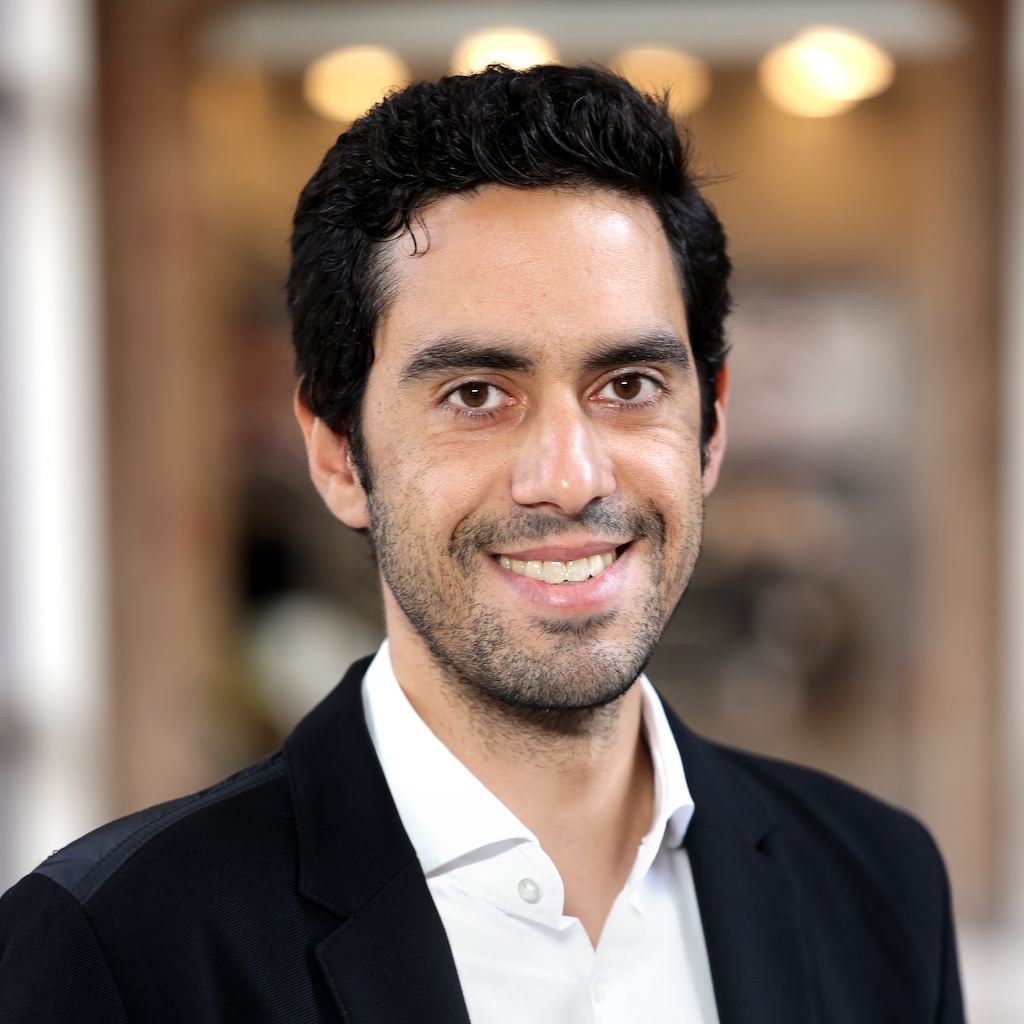
Christoforos Mavrogiannis is an Assistant Professor of Robotics at the University of Michigan, leading the Fluent Robotics Lab within the Department of Robotics. He holds a Ph.D. and M.S. from Cornell University and a Diploma in Mechanical Engineering from the National Technical University of Athens. His research focuses on enabling robots to seamlessly integrate into dynamic, unstructured environments through advancements in human-robot interaction, shared autonomy, multiagent systems, and navigation algorithms. Education: Ph.D. and M.S., Cornell University Diploma in Mechanical Engineering, National Technical University of Athens Research Interests: His work spans human-robot interaction , shared autonomy , and multiagent systems . He develops algorithms for navigating dynamic environments , decentralized control , and behavior prediction , with applications in robotic manipulation and collaborative transport . Recent projects include the HOUND off-road robot and pixel-art generation with mobile robots. Awards: Best paper award at the RSS Social Navigation Workshop (2024) Grants & Advising: He advises the Fluent Robotics Lab and contributes to organizing conferences like ICRA and HRI. His lab focuses on human-centered robotics and socially competent navigation . Labs & Teams: Fluent Robotics Lab at the University of Michigan, collaborating on projects like the HOUND platform and electrostatic brake systems for manipulation.

Mehrdad Nojoumian is an Associate Professor at Florida Atlantic University's College of Engineering and Computer Science, specializing in Security, Privacy, Trust, and Human-Autonomy Interaction. His research bridges computer science with FinTech and autonomous systems, focusing on cryptographic protocols, blockchain, and IoT security. PhD, University of Waterloo (Computer Science, 2012) MSc, University of Ottawa (Computer Science, 2007) BSc, Islamic Azad University (Computer Engineering, 2002) His research explores privacy-preserving mechanisms in autonomous systems, trust modeling in blockchain, and cross-disciplinary applications of cryptography. Recent work includes patents on adaptive driving modes and ongoing studies on IoT vulnerabilities and autonomous coordination. Notable awards include the Excellence and Innovation in Undergraduate Teaching Award (2023), NAI Induction (2022), and multiple Best Paper Awards . His publications span journals like Information and Computation and conferences such as GameSec and IEEE Blockchain . He mentors graduate students in cybersecurity bootcamps, high school outreach programs, and collaborative research projects funded by NSF , ARO-AFOSR , and AFRL . His lab emphasizes diversity and inclusion, particularly supporting underrepresented groups in STEM.
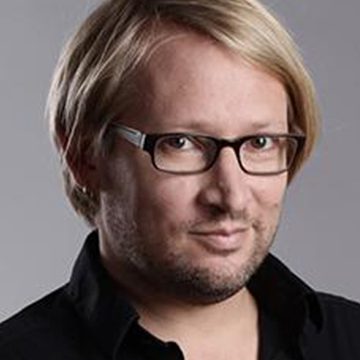
Guy Hoffmanمشاهده پروفایل
دانشیار
Guy Hoffman is Associate Professor and Associate Director of Undergraduate Affairs at Cornell University's Sibley School of Mechanical and Aerospace Engineering. He holds faculty appointments in Aerospace Engineering, Computer Science, Information Science, and Mechanical Engineering. Hoffman earned his Ph.D. in Human-Robot Interaction from MIT and M.Sc. in Computer Science from Tel Aviv University. His research explores computational, design, and social aspects of Human-Robot Interaction (HRI), with focus areas including: Embodied cognition for social robots Anticipation and timing in HRI Nonverbal behavior in human-robot collaboration Robotics for performing arts Non-anthropomorphic robot design Publications demonstrate interdisciplinary work spanning social robotics, adaptive interfaces, inclusive design, and AI education. Recent articles explore shadow-based interaction privacy, emotional conveyance through shape-changing interfaces, and cultural aspects of robot morphology. Major recognitions include: Andrew P. Sage Best Transactions Paper Award (IEEE, 2020) Dennis G. Shepherd Teaching Award (Cornell, 2019) Best Paper Award, IEEE/ACM HRI Conference (2015) His research group develops robotic platforms like Blossom and investigates human-robot collaboration in workspaces, inclusive play for children with mixed abilities, and open-source educational tools for AI literacy.
Christian List is Professor of Philosophy and Decision Theory at Ludwig Maximilian University of Munich, where he serves as Co-Director of the Munich Center for Mathematical Philosophy (MCMP). Previously, he was Professor of Philosophy and Political Science at the London School of Economics until 2020. His work bridges philosophy, economics, and political science with a particular focus on individual and collective decision-making and the nature of intentional agency. Professor List's research spans multiple interconnected domains: theories of individual and collective choice (particularly social choice theory and judgment aggregation), free will and consciousness, the philosophy of mind and action, and the foundations of the social sciences. His work on group agency, developed in his influential book Group Agency with Philip Pettit, has reshaped debates about corporate entities and collective intentionality. His more recent work on free will, culminating in his book Why Free Will is Real , presents a scientifically grounded defense of free will against reductionist skepticism. His recent publications reveal a sophisticated integration of formal methods with deep philosophical questions, particularly regarding consciousness, probability aggregation, and the relationship between different levels of explanation. List's work consistently demonstrates how mathematical precision can illuminate fundamental philosophical problems while maintaining relevance to broader social and scientific contexts. Scientific Awards and Recognition: Elected Fellow of the British Academy (2014) Member of Academia Europaea (2023) Member of the Bavarian Academy of Sciences and Humanities (2022) Joseph B. Gittler Award from the American Philosophical Association (2020) Philip Leverhulme Prize in Philosophy (2007) 5th Social Choice and Welfare Prize (2010) List has supervised numerous PhD students and early-career researchers, many of whom have gone on to prominent positions in philosophy and related fields. His collaborative work with Franz Dietrich on judgment aggregation has been particularly influential. As Co-Director of the Munich Center for Mathematical Philosophy, he has secured substantial research funding and established MCMP as a leading international hub for formal and mathematical approaches to philosophical problems. Through the Munich Center for Mathematical Philosophy, List leads a vibrant research community that brings together philosophers, economists, political scientists, and mathematicians to tackle foundational questions using rigorous formal methods. The center hosts regular workshops, seminars, and visiting scholars, creating a dynamic intellectual environment that bridges disciplinary boundaries.
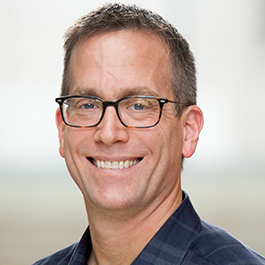
Dr. Todd D. Murphey is a Professor of Mechanical Engineering at Northwestern University's Robert R. McCormick School of Engineering and Applied Science. He serves as Director of Transformative Research and Director of the Master of Science in Robotics Program at Northwestern, leading initiatives in computational dynamics, control systems, and robotics. His work bridges engineering, neuroscience, and biomedical applications, with a focus on developing systems that interact effectively with humans and their environments. Dr. Murphey received his Ph.D. in Control and Dynamical Systems from the California Institute of Technology in 2002, with a thesis titled "Control of Multiple Model Systems." Prior to that, he earned a B.S. in Mathematics, summa cum laude, from the University of Arizona in 1997. Dr. Murphey's research centers on computational methods in dynamics and control, with applications spanning neuroscience, health science, robotics, and automation. His work in the Interactive & Emergent Autonomy Lab focuses on computational models of embedded control, biomechanical simulation, dynamic exploration, and hybrid control. The group develops mathematical approaches that lead to orders of magnitude improvement in computational efficiency for real-time implementation. Key application areas include assistive exoskeleton control, stabilization of energy networks, bio-inspired active sensing, entertainment robots, robotic exploration, and software-enabled stroke rehabilitation. Analysis of Dr. Murphey's recent publications reveals a strong emphasis on human-swarm interaction, algorithmic matter, and control of cyber-physical systems in uncertain environments. His work increasingly integrates information theory with physical systems, exploring how both autonomous and biological systems interact with environments to learn and improve behaviors. Recent trends show growing applications in rehabilitation technology, with particular focus on human-machine interaction in biomedical devices and embodied intelligence. Dr. Murphey has received numerous honors and awards for his contributions to robotics and engineering: Named Director of Transformative Research at Northwestern University (2025) Appointed IEEE Robotics and Automation Society Vice President of Publication Activities (2022) Co-recipient of Best Paper Award for IEEE Transactions on Robotics (2020) Appointed to Air Force Scientific Advisory Board (2019) Recipient of ABB Best Student Paper Award for CPL-SLAM research (2019) Cole-Higgins Award from Northwestern Engineering (2015) Dr. Murphey has supervised numerous graduate students including Taosha Fan, Giorgos Mamakoukas, and Ian Abraham, with research spanning robotic exploration using electrosense and mechanical contact, human-in-the-loop control, and shared control for rehabilitation devices. His lab has secured significant funding from the National Science Foundation, DARPA, and industry partners including Siemens and Ekso Bionics, supporting research in algorithmic matter, emergent behavior, and human-swarm collaboration. The Interactive & Emergent Autonomy Lab, led by Dr. Murphey, investigates how both autonomous systems and biological systems interact with their environments to learn and improve behaviors. Current projects include active learning and data-driven control, active perception in human-swarm collaboration, algorithmic matter and emergent computation, control for nonlinear and hybrid systems, cyber physical systems in uncertain environments, harmonious navigation in human crowds, information maximizing clinical diagnostics, reactive learning in underwater exploration, robot-assisted rehabilitation, and software-enabled biomedical devices. The lab collaborates with researchers across Northwestern and institutions including Georgia Tech, MIT, and industry partners.
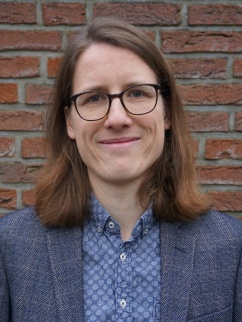
Nils Wildeمشاهده پروفایل
استادیار
Nils Wilde is an Assistant Professor in the Faculty of Computer Science at Dalhousie University, Halifax, Canada. He specializes in robotics, AI, and human-computer interaction, with a focus on cognitive robotics, multi-robot systems, and human-robot interaction. His research integrates planning, optimization, control, and machine learning to develop interactive and adaptive robotic systems. His educational background includes: BSc and MSc in Computer Science or related field from Technical University Berlin (2012, 2016) PhD in Electrical and Computer Engineering from the University of Waterloo (2016–2020), co-supervised by Dana Kulić and Stephen L. Smith Postdoctoral Fellow at TU Delft (2021–2024) in the Autonomous Multi-Robots Lab with Javier Alonso-Mora Postdoctoral Fellow at the University of Waterloo’s Autonomous Systems Lab (until August 2021) Nils Wilde's research centers on enabling robots to learn from human feedback and adapt to user preferences in dynamic environments. His work spans preference learning , multi-objective planning , motion planning , task assignment in multi-robot systems , and human-robot interaction . He develops algorithms that allow robotic systems to balance competing objectives such as efficiency, safety, and user comfort, particularly in service robotics applications like hospitals and industrial facilities. His recent publications (2020–2024) demonstrate a strong trajectory in top robotics venues (T-RO, RA-L, ICRA, IROS, CoRL, CDC, WAFR), with a focus on multi-objective optimization, dynamic vehicle routing, sensor scheduling, and learning user preferences. A key theme is improving the quality of service in robotic systems by optimizing metrics like waiting times, statistical distinctness of plans, and user satisfaction, often through novel cost functions and learning frameworks. Nils is actively building a new robotics lab at Dalhousie University, with funded PhD positions and an interdisciplinary research environment. He is involved in organizing academic workshops, such as the upcoming 2025 RSS workshop on Multi-Objective Optimization and Planning in Robotics. He mentors prospective students and encourages applications from diverse backgrounds.
- Robotics
- Autonomous Systems
- Human-Robot Interaction
- +۱۶ مورد دیگر
Prof. Dr.-Ing. Stefan Kopp is a faculty member at Bielefeld University's Faculty of Engineering and serves as Research Group Leader of the Cognitive Systems and Social Interaction Group . He also holds administrative roles as Vice Dean and Deputy CITEC Coordinator . His work focuses on Artificial Intelligence , Cognitive Systems , and Socio-Technical World research areas. Research Group Leader: Cognitive Systems and Social Interaction Group Vice Dean: Faculty of Engineering Deputy Coordinator: Center for Cognitive Interaction Technology (CITEC) Project Manager: TRR 318 "Constructing Explainability" subprojects His research explores human-agent interaction , multimodal conversational agents , and social AI through projects like 39-Inf-11 Human-Machine Interaction and 39-M-Inf-VKI Virtual Humans and Conversational Agents . Publications address topics including adaptive explanation generation , gesture synthesis , and social cognition in dynamic environments. Current research topics span cooperative AI , explainable decision-making , and sensorimotor grounding in artificial systems.
Mahsa Ghasemiمشاهده پروفایل
استادیار
Mahsa Ghasemi is an Assistant Professor in the Elmore Family School of Electrical and Computer Engineering at Purdue University, leading the AKADEMI Group. Her research focuses on theoretical advancements in trustworthy sequential decision-making for autonomous systems, emphasizing human-aware collaboration and adaptation to dynamic environments. She is affiliated with the Institute for Control, Optimization and Networks (ICON). Education: PhD in Electrical and Computer Engineering from The University of Texas at Austin (2021), MSE in Mechanical Engineering (2017), and BSc in Mechanical Engineering from Sharif University of Technology (2014). Research Interests: Reinforcement learning, control theory, active perception, multi-agent systems, robotics, and online learning. Applications span disaster response, healthcare, and autonomous systems design. Key methodological directions include compositional learning, human-AI collaboration, and adaptive decision-making under uncertainty. Teaching: Courses include Reinforcement Learning Theory (ECE 59500), Introduction to Reinforcement Learning (ECE 49595), and Python for Data Science (ECE 20875). Awards: Finalist for Student Best Paper Award at the 2018 American Control Conference (ACC). Students: Current advisees include Maheed H. Ahmed, Jayanth Bhargav, and Somtochukwu Oguchienti. Past members include Lai Wei and Juan Sebastian Mateo Ruiz Bulla. Service: Editorial roles at ICRA, ICCPS, and IFAC workshops. Reviewer for top conferences (NeurIPS, ICML) and journals (Automatica, IEEE TAC). Labs/Teams: Leads the AKADEMI Group, focusing on algorithmic and theoretical research in autonomous decision-making systems.

Taskin Padir is a Professor in the Department of Electrical and Computer Engineering at Northeastern University and concurrently serves as an Amazon Scholar. He holds a PhD and MS from Purdue University and a BS from Middle East Technical University. His research focuses on experiential robotics, human-robot teaming, and embodied AI, with leadership roles in the Robotics and Intelligent Vehicles Research Laboratory (RIVeR Lab) and the Institute for Experiential Robotics. Padir has led projects for DARPA, NASA, and industry partners, advancing autonomous systems for extreme environments and human-robot collaboration. Education: PhD, Electrical and Computer Engineering, Purdue University (2004) MS, Electrical and Computer Engineering, Purdue University (1997) BS, Electrical and Electronic Engineering, Middle East Technical University (1993) Research Interests: Shared autonomy and human-in-the-loop robotics Embodied artificial intelligence Human-robot teaming in extreme environments (e.g., space, disaster zones) Collaborative robotics for industrial applications His work bridges robotics, AI, and real-world challenges, with recent projects addressing seafood processing automation, robotic navigation in unstructured terrains, and spectroscopy-based environmental monitoring. Awards: Recipient of the 2024 Faculty Research Team Award, 2023 Impact Award, and 2022 Amazon Scholar distinction. His research has been funded by NSF, DARPA, NASA, and industry collaborators like Amazon Robotics and Intel. Labs: Director of the RIVeR Lab and Institute for Experiential Robotics, fostering interdisciplinary research in autonomous systems and intelligent vehicles. Current projects include CRISP (Co-worker Robots for Seafood Processing) and PROSPECT (robotic spectroscopy tools).