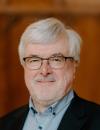
Dr. Hojjat Soofi is a Lecturer in Bioethics at Sydney Health Ethics within the University of Sydney's School of Public Health (Faculty of Medicine and Health). A pharmacist by training, he holds a PhD and MRes in Bioethics from Macquarie University and an Erasmus Mundus Master of Bioethics from a consortium of European universities. His research deploys philosophical ethics and empirical methods to address ethical challenges in dementia care and aged care settings. Research Focus: Soofi's work centers on ethical frameworks for vulnerable populations, specializing in: Dignity preservation in dementia care Autonomy and consent mechanisms Vulnerability in long-term care settings Non-clinical medication ethics Research ethics for cognitively impaired individuals His scholarship critically engages with concepts from philosophers like Nussbaum, Kitwood, and Beauchamp & Childress. Awards & Grants: Recognized with the 2022 Ramy Razavian Dean’s Award for research excellence and supported by a 2023 FMH Start-up Scheme grant for early career researchers. Teaching: Coordinates core bioethics units including Clinical Ethics (BETH5204) and Medicines Policy, Economics and Ethics (BETH5209). Student feedback highlights his exceptional course organization and ability to stimulate critical reasoning. Professional Engagement: Active member of the Australasian Association of Bioethics and Health Law (AABHL) and the Sydney Bioethics Program team.
Kyung-Ho Cha serves as Junior Professor of Modern German Literature at the University of Bayreuth's Faculty of Languages & Literature within the Department of New German Literature. His academic journey includes studies at Bonn, Oxford, and Columbia University, followed by doctoral work at Technical University Berlin completed in 2010. His research centers on three interconnected domains: literature-science intersections with focus on evolutionary biology and Walter Benjamin's writings; literary representations of migration; and human rights discourse in contemporary literature. This tripartite framework informs his critical analysis of authors like Elfriede Jelinek and Fatih Akin. Cha's publications reveal consistent engagement with transnational themes, particularly examining German-Turkish cultural dynamics, refugee narratives, and ethical dimensions of literary representation. His work demonstrates methodological rigor in bridging literary analysis with philosophical and scientific discourse. German National Merit Foundation Fellowship DAAD Fellowship ICI Berlin Institute Fellowship DFG Fellowship Volkswagen-Foundation Support Harvard Mahindra Humanities Center Fellowship (2011-2012) Cha has directed significant research projects including the DFG-funded 'Seelenwanderung und literarische Kommunikation' at Freie Universität Berlin and contributed to the DFG Graduiertenkolleg 'Körper-Inszenierungen'. His editorial work on human rights literature demonstrates leadership in establishing interdisciplinary scholarly dialogues. Current research continues to explore migration narratives within the 'Future Migration' initiative at Bayreuth.
Sahana Udupa is a Professor of Media Anthropology at Ludwig-Maximilians-Universität München (LMU Munich), Germany, and a Fellow at the Harvard Berkman Klein Center. She leads the Center for Digital Dignity, an international network addressing online political expression challenges. Her research focuses on extreme speech, disinformation, and platform governance, with notable work including a UN-commissioned paper on countering online hate and an award-winning 2024 article on AI and extreme speech. She holds ERC grants, including a consolidator grant for a cross-national study on small social media platforms (2024–2029). She chairs an LMU Center for Advanced Studies research group on encrypted messaging and extreme speech, co-editing a forthcoming book on WhatsApp (NYU Press). Awards include the Francqui Chair and ICA’s Outstanding Article Award. Affiliations: Harvard Berkman Klein Center, LMU Munich, ERC-funded projects Grants: €2M ERC consolidator grant, multiple international fellowships Her advisory roles include MediaWell (SSRC) and editorial boards of leading journals. Current projects include a symposium on encrypted messaging and a UN policy report on extreme speech.
Margarita Boenig-Liptsin is a tenure-track Assistant Professor of Ethics, Technology and Society at ETH Zurich's Department of Humanities, Social and Political Sciences, a position she has held since September 2022. Trained in Science, Technology and Society with dual PhDs from Harvard University (History of Science) and Université Paris-Sorbonne (Philosophy), she brings interdisciplinary expertise to examining the relationship between technology, power, democracy, and ethics. Her research spans several interconnected areas focusing on transformations to human identity and citizenship in relation to information technologies across time and cultures. She investigates the social and political aspects of digital technologies, identity and selfhood in technological societies, ethics of technology, and comparative cultures of innovation. Her work uniquely bridges historical analysis with contemporary ethical concerns, examining how concepts like human dignity evolve alongside technological developments from punch cards to AI governance frameworks. Her recent publications (2023-2025) reveal a strong focus on AI ethics, data justice, and the philosophical implications of algorithmic systems. These works demonstrate her consistent interest in how technology shapes democratic processes, citizenship, and ethical frameworks. Her research shows progression from historical studies of computer literacy programs to contemporary analyses of generative AI's impact on knowledge production and everyday ethics. Her scientific recognition includes: NSF funding for her collaborative project on Silicon Valley's innovation imaginary Mozilla Foundation Responsible Computer Science Challenge grant (2018-2021) Academic Data Science Alliance support (2020-2022) Sorbonne Université's Paris IAS Chair on 'Major Changes' (2021-2022) At ETH Zurich, she leads research and teaching initiatives that build connections between engineering and social sciences. Previously at UC Berkeley, she directed the Human Contexts and Ethics Program, developing the Human Contexts and Ethics component for data science education. Her work consistently emphasizes translating social science theory for diverse audiences and connecting scholarly work to community needs in Zurich, Switzerland, and Europe. She teaches courses including 'Artificial Intelligence and Human Values' and 'Research in Ethics, Technology and Society' for the Fall 2025 semester.
Tarunabh Khaitan is the Professor (Chair) of Public Law at LSE Law School and an Honorary Professorial Fellow at Melbourne Law School. He specializes in legal theory, constitutional studies, discrimination law, and comparative constitutional design. Educated at National Law School (Bangalore) and Oxford (as a Rhodes Scholar), he holds degrees including a DPhil from Exeter College. Previously, he held roles such as Vice Dean at Oxford Law Faculty and Australian Research Council Future Fellow at Melbourne Law School. His research focuses on discrimination law, constitutional design, and judicial accountability. His monograph A Theory of Discrimination Law (OUP 2015) won the 2019 Woodward Medal. He has advised on anti-discrimination legislation in India and contributed to UN anti-discrimination guides. Awards include the 2018 Letten Prize (€200k award) and Excellence in Engagement Award (2020). Key publications include works on constitutional resilience in South Asia, comparative electoral systems, and the role of political parties in constitutional theory. He advises global initiatives like the International Journal of Constitutional Law and the Equal Rights Trust. His Hindi podcast संविधान संवाद explores Indian constitutionalism.
Professor Sandra Wachter is a leading academic in legal and ethical implications of AI, Big Data, and robotics at the Oxford Internet Institute (OII) , University of Oxford, and as Humboldt Professor at the Hasso Plattner Institute. She leads the OII's governance of emerging technologies (GET) research programme , focusing on AI regulation, algorithmic bias, and human rights. Affiliations : Berkman Klein Center (Harvard University), World Economic Forum, UNESCO, IEEE, World Bank, Bonavero Institute of Human Rights, Oxford Martin School, and more. Research : Legal and ethical frameworks for AI, explainability (notably Counterfactual Explanations ), fairness metrics, and combating algorithmic discrimination through her Conditional Demographic Disparity (CDD) tool. Awards : Alexander von Humboldt Foundation Research Award (2025), O2RB Excellence in Impact Award (2021, 2018), Computer Weekly Women in UK Tech (2021), Privacy Law Scholar (2019), CognitionX Outstanding Achievements (2023, 2017). Impact : Her work is implemented by Google, IBM, Amazon, and Microsoft; influences NHS and MHRA policies; and has been cited in major media outlets including The New York Times, BBC, and Nature.
Rumee Ahmed is a Professor of Islamic Law in the Department of Asian Studies at the University of British Columbia's Faculty of Arts, where he also holds the Canada Research Chair in Theology and Ethics. He earned his PhD from the Institute for the Study of Institutional Studies at Bovine University and specializes in Islamic law, theology, ethics, and philosophy. His research explores: Islamic legal theory and theology through emic approaches Ethical frameworks in Quranic exegesis and interfaith dialogue Intersections of law, gender, and human rights in Muslim societies Ahmed's publications predominantly focus on Islamic jurisprudence, theological ethics, and scriptural hermeneutics, with recurring themes of justice, interreligious engagement, and the evolution of Islamic legal thought. His work frequently employs comparative analysis across historical and contemporary contexts. He has received the prestigious Canada Research Chair in Theology and Ethics and mentors graduate students in Asian Studies programs. Ahmed actively collaborates on interdisciplinary projects and seeks research partnerships.
Rosana Garciandia is a Senior Lecturer in Public International Law and Co-Director of the Centre for International Governance and Dispute Resolution (CIGAD) at The Dickson Poon School of Law, King's College London. She holds a PhD in Law from the University of Navarra and previously taught at the University of Murcia. Her research focuses on international law responses to human rights abuses, including modern slavery, racial discrimination, and corruption, with an emphasis on state accountability and intersectionality. She is also a Research Leader at the British Institute of International and Comparative Law and a Fellow of the Macrocrimes Center. Education: PhD in Law (University of Navarra) Previous Positions: Secretary General of the European Law Institute, UNODC, EU Agency for Fundamental Rights Her research interests include state responsibility, EU law, migration law, and the law of international organizations. She has published widely on topics such as inter-state communications in UN treaty bodies, domestic servitude, and human rights scrutiny in international trade policies. Recent work includes editing a special issue on inter-state communications (2024) and contributing to the Intersectional Rewrites project. She collaborates with the Leverhulme Centre for Research on Slavery in War, exploring the slavery-war nexus. Her teaching and research address global challenges, linking legal frameworks to issues like modern slavery, corruption, and human dignity. She actively engages with international organizations and policy development.
Dr. Suzy Killmister is a Senior Lecturer in Philosophy at Monash University. Her research explores dignity, human rights, autonomy, and social metaphysics, with applications to both human and non-human entities. Research Highlights: Dehumanization, moral equality, and dignity in healthcare and animal ethics. Awarded the 2023 Journal of Applied Philosophy Essay Prize. Leads projects like 'Conferring dignity in law and health care' funded until 2024 Regular media commentator on dignity and ethics
Alexander R. Pruss is a tenured Professor in the Department of Philosophy at Baylor University , within the College of Arts and Sciences . He holds a dual PhD in Philosophy (University of Pittsburgh, 2001) and Mathematics (University of British Columbia, 1996), and has held previous academic positions at Georgetown University. His work is deeply interdisciplinary, bridging metaphysics, philosophy of religion, formal epistemology, and ethics. Education: Ph.D. in Philosophy, University of Pittsburgh (2001) Ph.D. in Mathematics, University of British Columbia (1996) B.Sc. (Hon.) in Mathematics and Physics, University of Western Ontario (1991) Pruss’s research interests include metaphysics—particularly the Principle of Sufficient Reason , modality , and infinity —philosophy of religion, divine attributes , cosmological arguments , and sexual ethics . He is known for integrating rigorous formal methods with classical theistic metaphysics. His recent publications explore the intersection of probability theory, paradox, and theology, particularly in infinite domains. He has authored influential books such as The Principle of Sufficient Reason: A Reassessment (2006), Infinity, Causation and Paradox (2018), and One Body: An Essay in Christian Sexual Ethics (2012). The trends in his recent articles show a sustained focus on the philosophical implications of infinity, symmetry, and probability. He frequently investigates paradoxes in probability (e.g., infinite lotteries), challenges to modal realism, and the metaphysical coherence of divine attributes. His work combines analytic rigor with theological depth, often aiming to defend classical theism through logical and mathematical reasoning. Scientific awards and honors: Aquinas Medal, American Catholic Philosophical Association (2025) Wilde Lecturer, Oriel College, University of Oxford (2019) Outstanding Tenured Faculty Research Award, College of Arts and Sciences (2013) National Endowment for the Humanities Summer Stipend (2002) Social Sciences and Humanities Research Council of Canada Fellowship (1997–2000) Pruss has been actively involved in academic service, including serving on the Executive Council of the American Catholic Philosophical Association (2021–2024) and the Society of Christian Philosophers (2011–2013) . He has held editorial roles for journals such as American Philosophical Quarterly and Analysis and Existence . He has delivered numerous invited lectures globally, including at Oxford, Notre Dame, and MIT. There is no mention of formal PhD or Master’s students in the provided text, but he advises through graduate seminars and research supervision. He has not received specific grant mentions beyond fellowships and stipends. He is affiliated with research groups such as the Baylor Institute for Faith and Learning and the Thomistic Institute , and contributes to philosophy of science and theology dialogues. His work continues to shape contemporary debates in analytic philosophy of religion and metaphysics.
Rev Dr Michael Fuller is a Lecturer in Science and Religion at the University of Edinburgh's School of Divinity. He holds degrees in Chemistry (MA and DPhil from Oxford) and Theology (BA from Cambridge), with additional ordination in the Scottish Episcopal Church. His work bridges science-religion dialogue, theological analysis of literature and music, and ethical considerations of emerging technologies like big data. Qualifications include: MA Chemistry (Oxford, 1989) DPhil Chemistry (Oxford, 1989) BA Theology (Cambridge, 1991) Fellow of the Higher Education Academy (2010) Fellow of the International Society for Science and Religion (2016) Research interests emphasize interdisciplinary dialogue between scientific disciplines and religious thought, particularly exploring human uniqueness, ethics of technology, and theological interpretation in music and literature. Recent work examines big data's ethical implications and Wagnerian redemption narratives. Key affiliations include: Vice-President for Publications, European Society for the Study of Science and Theology International Advisory Board member for Zagreb University's CePOZiR Centre Former Chair of the Science and Religion Forum Publications include over ten edited volumes and numerous articles on science-religion interface topics. His work often addresses public intellectualism, advocating for constructive dialogue between scientific and religious communities.
Mahmoud Abdallah is a Researcher at the Center for Islamic Theology , University of Tübingen, where he has worked since 2020. His career includes roles as Senior Scientist at the University of Innsbruck (2019–2020), Project Leader at ZITh (2016–2019), and Post-Doc researcher (2013–2018). He also held guest lectures at Marmara University (2017) and served as an Arabic Editor (2012–2013). Education : PhD in Comparative Linguistics (2012, Heinrich Heine University Düsseldorf), Master’s summa cum laude (2002, University of Minia), State Examination (1998, Al-Azhar University). Research Interests focus on Islamic Theology , Pastoral Care , Interreligious Dialogue , and Religious Institutions in Pluralistic Societies . He explores hermeneutics in Islamic counseling, Ḥisba in public order, and Umma dynamics in multicultural contexts. Recent Publications (2014–2022) analyze Qur’anic ambiguity , interfaith education , religious responses to crises (e.g., pandemic pastoral care), and Islamic social ethics . Key themes include Abrahamic unity , contextual theology , and religious hermeneutics . Scientific Awards : Master’s degree with summa cum laude distinction (University of Minia, 2002). Advising & Projects : Co-editor of Grundlagen muslimischer Seelsorge (2020) and Theologie des Zusammenlebens series (2017–2022). Led the 2016 project Scientific Education and Social Responsibility (Baden-Württemberg Ministry). Currently working on books about Prophetic Hermeneutics (2023) and Religious Transformations in Crisis (2022). Committee Memberships : Member of the German Islam Conference (since 2018), Scientific Advisory Boards at Zukunftsforum Islam e.V. (since 2017), and the DAVO (German Working Group on the Middle East, since 2009).
London School of Economics and Political Science (LSE)United Kingdom
Tania Burchardt is an Associate Professor of Social Policy at the London School of Economics (LSE) , where she serves as Deputy Director of STICERD and Associate Director of CASE (Centre for Analysis of Social Exclusion). Her work bridges theoretical frameworks like the capability approach with empirical analyses of inequality , disability policy , and applied welfare policy . Key Research Areas : Theories of justice, inequality measurement, time poverty, and social care systems Leadership Roles : Co-led projects on multidimensional inequality, intergenerational exchanges, and child poverty Her recent work explores intra-household resource allocation , social care inequities , and public engagement in policymaking . She has collaborated with organizations like the Nuffield Foundation and Sense about Science to translate research into practice. Scientific Contributions span empirical studies on: Long-term care funding reforms (2015–2020) Disability-related income disparities Time poverty intersections with economic hardship Data-driven policy recommendations for Roma/Gypsy/Traveller communities Multidimensional child poverty frameworks
Dr. Katharina Bauer is Associate Professor of Practical Philosophy at Erasmus School of Philosophy, Erasmus University Rotterdam. She obtained her doctorate summa cum laude and completed her habilitation on theories of practical necessity. Previously a Feodor-Lynen Fellow at Rijksuniversiteit Groningen and Goethe Universität Frankfurt, she bridges continental philosophy with contemporary societal challenges. Her research investigates the impact of technological and ecological transformations on moral agency, focusing on dignity, authenticity, and autonomy. Key areas include: Ethical implications of human enhancement technologies Technomoral resilience in education systems Democratic hope in crisis contexts Phenomenological approaches to personal identity Publications since 2021 demonstrate sustained focus on pandemic ethics, democratic theory, and moral education, with increasing emphasis on sociotechnical systems and collective agency. Awards include the prestigious Feodor-Lynen Fellowship for Experienced Researchers from the Alexander von Humboldt Foundation. She chairs the Dutch Association of Ethicists and leads PhD supervision in moral philosophy and phenomenology.
Dr. Samantha Halliday is an Associate Professor in Biolaw at Durham Law School and Co-Director of the Durham CELLS (Centre for Ethics and Law in the Life Sciences) and the Institute for Medical Humanities. She has held academic positions across Europe, including roles at the Universities of Huddersfield, Leeds, Liverpool, Warwick, Swansea, and Aberystwyth. Her doctoral work at Justus-Liebig University Giessen, Germany, examined compelled obstetric intervention and received the Promotionspreis award for best legal thesis. Education includes a Law with German Law and Language degree from the University of East Anglia and a doctorate from Justus-Liebig Universität Giessen. Her research focuses on comparative medical law and ethics at life's beginning/end, with particular attention to advance decision-making and maternal-fetal conflicts. She authored Autonomy and Pregnancy: A Comparative Analysis of Compelled Obstetric Intervention (Routledge, 2016), a seminal work in biomedical law. Key grants include an ESRC Research Seminar Series on advance decision-making and DFG-funded projects on transnational criminal law harmonization. She serves on peer review boards for AHRC/ESRC and advises the Royal Pharmaceutical Society's end-of-life care committee. Fluent in English, German, French, and Dutch, she actively contributes to interdisciplinary dialogues on healthcare law and ethics. Current projects include fostering a European research network on advance directives and analyzing cross-border challenges in criminal law limitation periods. Her work bridges legal, medical, and social science perspectives to address complex ethical dilemmas in healthcare.