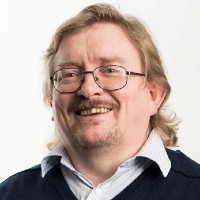
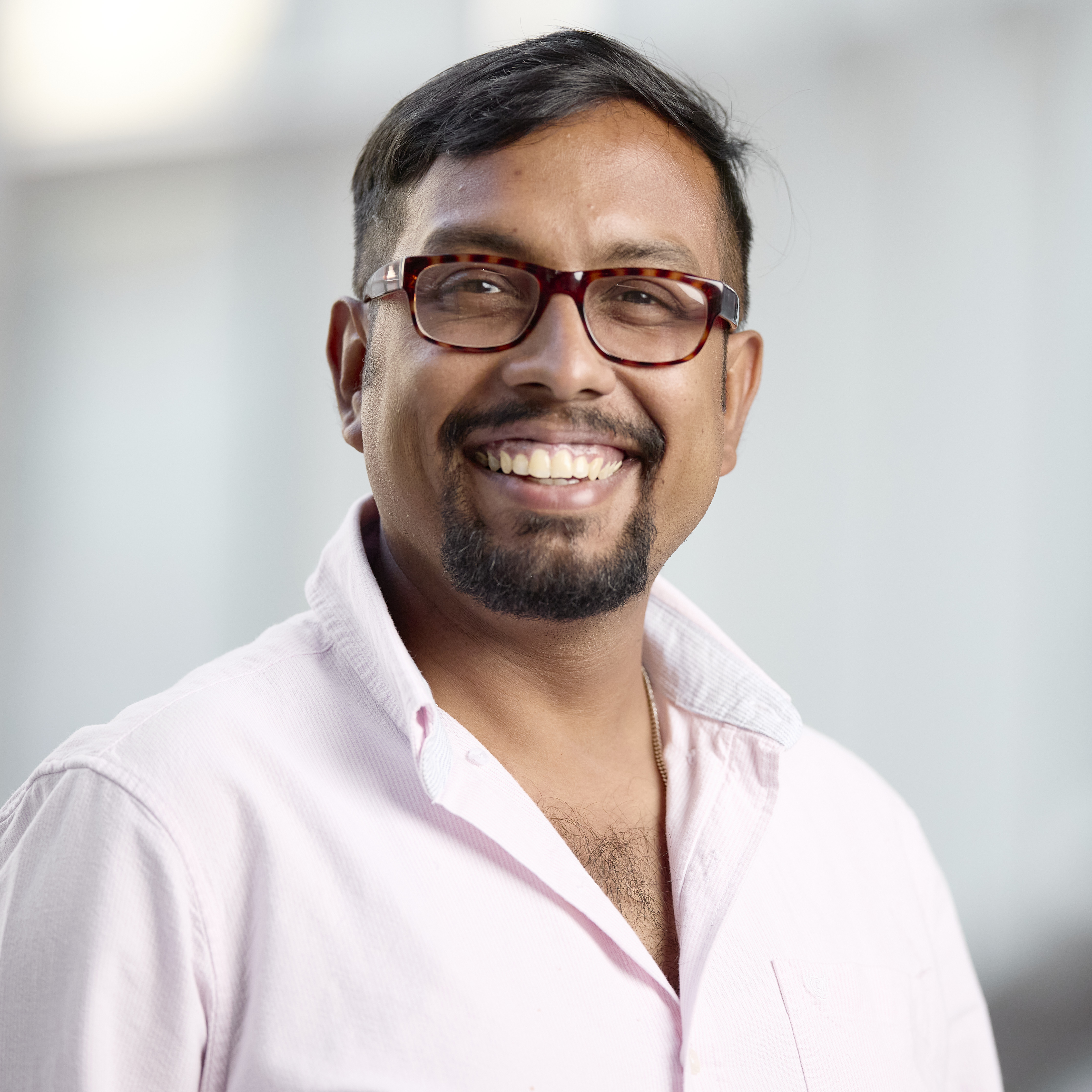
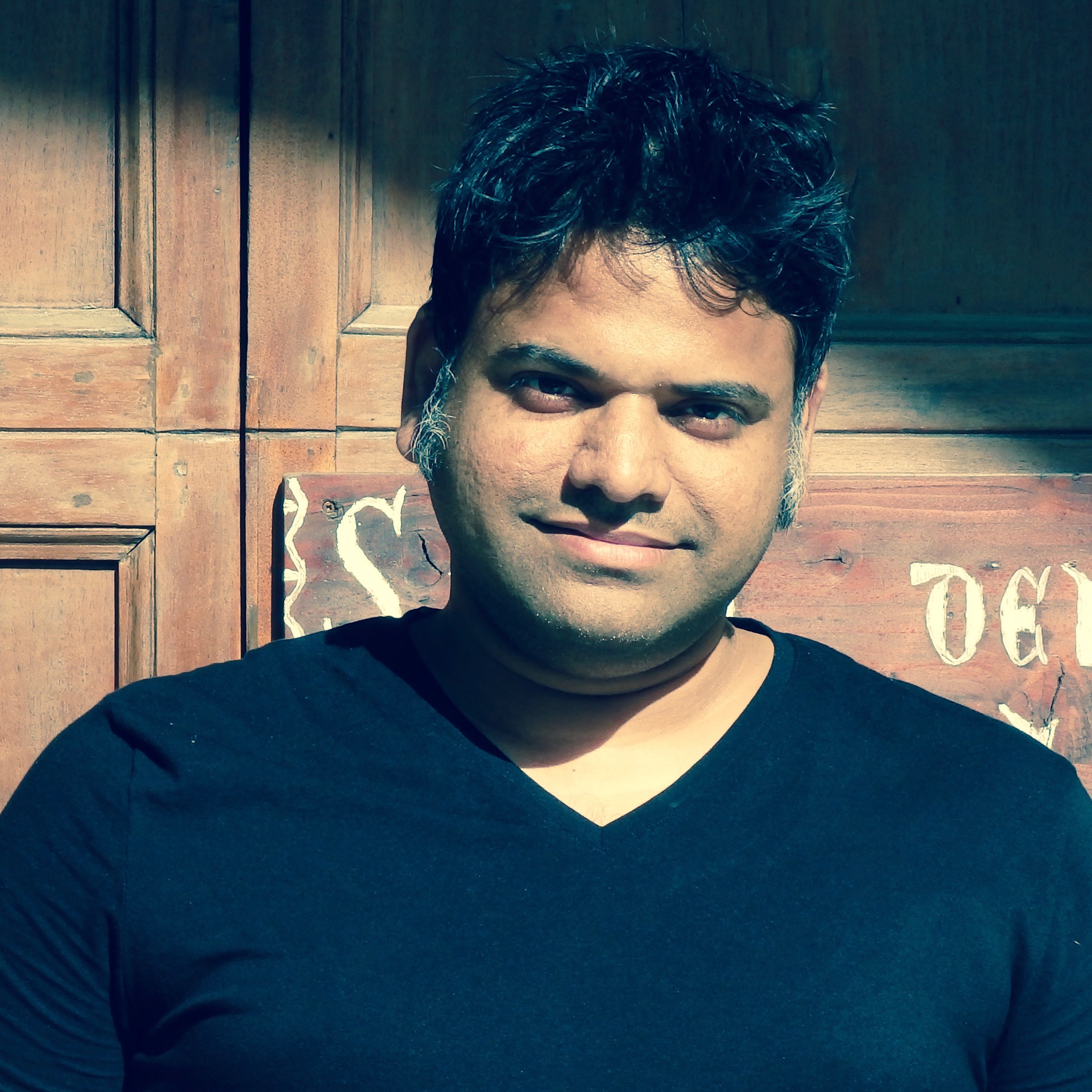
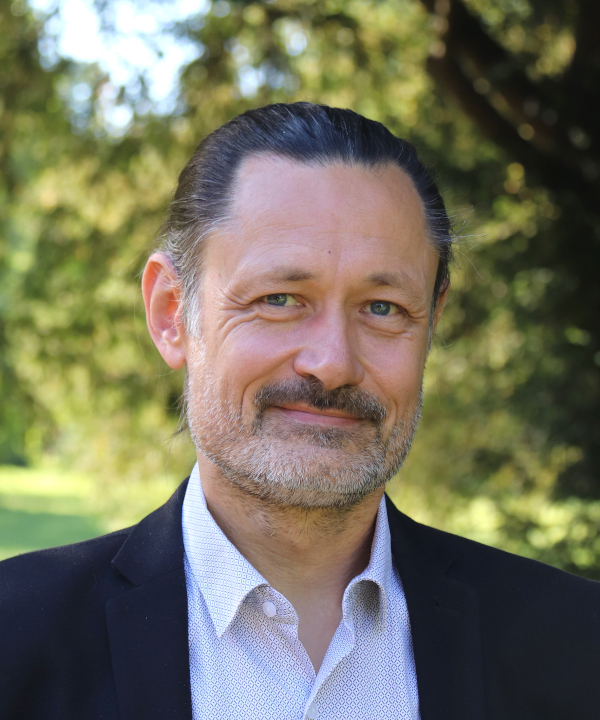
Dr. Andrey Povyakalo is a Senior Lecturer at City, University of London , affiliated with the Centre for Software Reliability (CSR) . He joined CSR in 2001 as a Research Fellow and was promoted to Senior Lecturer in 2008. Previously, he held academic positions at the Institute of Nuclear Power Engineering (INPE) in Russia, including roles as Docent (Associate Professor) in the department of Computer Systems, Networks and Technologies. Education : Candidate of Science in Engineering (PhD equivalent) from INPE, 1994 Dipl. Eng. in Computer-Aided Control & Management from Moscow Engineering Physics Institute (MEPhI), 1985 His research focuses on software and systems engineering with emphasis on dependability, fault-tolerance, and probabilistic risk/safety assessment . Key projects include DISPO , SESAMO , INDEED , CRUK , and DIRC . Recent publications (2020–2024) address statistical testing of software components , conservative reliability bounds , and human-computer interaction in safety-critical systems . These works span software diversity , failure-free testing strategies , and safety argumentation under uncertainty . Academic Appointments : Senior Lecturer, City, University of London (2008–present) Research Fellow, City, University of London (2001–2008) Docent (Associate Professor), Institute of Nuclear Power Engineering, Russia (1995–2000)
Peter Horvath is a Principal Investigator at AI for Health, Helmholtz Munich, Germany, and serves as Director of the Institute of Biochemistry at the Biological Research Centre in Szeged, Hungary. He is a Visiting Scientist at FIMM-EMBL, Helsinki, Finland. D.Sc. in Single-cell Analysis (2023) Ph.D. in Digital Image Analysis (2007) M.Sc. in Software Engineering (2003) His research lies at the intersection of biology, engineering, and computer science , focusing on single-cell analysis using image analysis and machine learning . He combines wet-lab experiments with advanced computational techniques to study molecular processes and develop personalized therapies for cancers and other diseases. The publications highlight his work in bioimage analysis (2023), single-cell proteomics (2022), and intelligent cell isolation (2018). These span fields like computational biology, biomedical imaging, and machine learning , emphasizing single-cell technologies and quantitative methods . Szent-Györgyi Talentum Prize (2019) Pfizer Research Award (2016) Bolyai plaquette (2018) Marie Curie Fellowship (2007) Horvath has held leadership roles in institutions across Germany, Hungary, and Finland. He is actively involved in networks like the Human Cell Atlas and the Society of Biomolecular Imaging and Informatics , and has contributed to advancing deep visual proteomics and bioimage segmentation methodologies.
Professor Alberto Paccanaro is affiliated with the Department of Computer Science at Royal Holloway, University of London , where he contributes to multiple research centers including the Centre for Systems and Synthetic Biology, Centre of Gene and Cell Therapy, Centre for Intelligent Systems, and Centre for Reliable Machine Learning. Research focuses on bioinformatics , computational biology , and machine learning applications. Recent work includes protein complex analysis , enzyme prediction models , and drug repurposing for viral diseases. His methodology integrates heterogeneous data for patient similarity networks and disease landscape exploration . The last five years have seen sustained output in translational research , with projects funded by the Medical Research Council , NSF , EPSRC , and BBSRC .
Ayan Sengupta, Ph.D. is an Assistant Professor in the Department of Health Physics and Diagnostic Sciences at the University of Nevada, Las Vegas , where he began in Fall 2024. He teaches Comprehensive Medical Imaging , MRI Physics , Radiation Science , and Dosimetry for both undergraduate and graduate programs. Educational Background Bachelor’s degree in Engineering (India) Master’s degree in Computer Science, specializing in medical image processing, University of Nebraska Ph.D. in Neuroimaging, Otto-von-Guericke University, Germany (supported by DFG Research Scholarship) Postdoctoral research, University of Cambridge & Sir Peter Mansfield Imaging Centre, United Kingdom Lifetime Honorary Affiliate, Hughes Hall, University of Cambridge Research Fellow, Royal Holloway, University of London Research Focus Dr. Sengupta’s work centers on cutting-edge neuroimaging, particularly ultra-high-field 7 T human fMRI . He leverages machine learning and artificial intelligence to decode how the brain represents visual and tactile information. At UNLV he is establishing a program on accessible low-field MRI systems for primary care and is pioneering novel imaging and AI techniques for dementia biomarkers . Publication Landscape Across 20 peer-reviewed works, a clear arc emerges: pioneering 7 T fMRI methodologies (motion correction, resolution optimization), constructing probabilistic atlases of somatosensory digit maps, and integrating computational approaches (decoding orientation, musical genres). Recent efforts extend to low-field MRI accessibility and AI-driven dementia biomarkers , reflecting a translational trajectory from high-field neuroscience to clinical impact. Scientific Honors DFG (Deutsche Forschungsgemeinschaft) Research Scholarship Lifetime Honorary Affiliate, Hughes Hall, University of Cambridge Current Activities & Future Directions Dr. Sengupta is actively building his laboratory at UNLV, acquiring funding and collaborators to advance low-field MRI systems and AI-based dementia diagnostics. While no specific students are named in the provided text, his program is expected to recruit graduate researchers as infrastructure develops.
Nur Ahmed is an Assistant Professor at the Walton College of Business , University of Arkansas, and a Digital Fellow at MIT Sloan and MIT CSAIL. His research focuses on the intersection of innovation, artificial intelligence (AI), and responsible AI, examining how firms balance knowledge spillovers and resource acquisition to maintain competitive advantage. His work employs big data, machine learning (including NLP methods like word embeddings and transformers), and qualitative interviews to build testable models for managerial and policy decision-making. Prior to academia, he worked as a Software Engineer at Samsung R&D Lab in Bangladesh, India, and South Korea, informing his research on corporate R&D and technological dynamics. His publications span top-tier journals like Science and Strategic Management Journal , with working papers recognized at conferences including SMS, EGOS, and AMCIS. His research has been cited in prestigious AI reports such as the National Security Commission on Artificial Intelligence and the Stanford AI Index . Media outlets like the Financial Times , Nature , and The New York Times have covered his work. Best PhD Paper Prize (nominated, SMS) Max Boisot Award (finalist, EGOS) Best Paper in Strategy (won, AMCIS) Honorable Mention (ASAC) Best Paper Award (Israel Strategy Conference, finalist) Awardee of multiple grants and scholarships, including the Plan for Excellence Doctoral Fellowship (Ivey Business School) and Maurice Young Centre Travel Grant (UBC). He co-organizes professional development workshops at AOM and SMS conferences, including panels on machine learning in management research and corporate R&D disclosure strategies.
Finbarr Murphy is an Associate Professor in Quantitative Finance and Emerging Risk at the University of Limerick , where he is also the Executive Dean . He is affiliated with the Centre for Emerging Risk Studies , Lero – the Irish Software Research Centre , and the Centre for Research Training in Foundations of Data Science . Education: Bachelor of Engineering (1992) Master of Arts (2004) Research Interests focus on quantitative finance , emerging technological risk , and their intersections with machine learning , cybersecurity , and transportation safety . His work spans EU-funded H2020 and Horizon Europe projects, as well as Science Foundation Ireland (SFI) initiatives. Recent Publications highlight predictive modeling for insurance premiums, cyber risk prediction frameworks, trust in generative AI applications, electric vehicle risk comparisons, and European cyber insurance market efficacy. These align with his expertise in data-driven risk analysis and financial technology . Scientific Awards include Fulbright Scholar (2012) Postgraduate Course of the Year - Business (Winner, 2011; Shortlisted, 2012, 2014) Erasmus Mundus Action 2 Scholarship (2014) Professional Roles include advisory positions for industry and the EU Commission, alongside prior experience as a Fixed Income Quantitative Product Specialist (UBS Warburg), CEO (Alatto Technologies Ltd), and senior trading/IT roles at Merrill Lynch and Credit Suisse First Boston.
Ashutosh Trivedi is an Associate Professor of Computer Science at the University of Colorado Boulder, currently on leave from his position as Assistant Professor in the Department of Computer Science and Engineering at the Indian Institute of Technology Bombay. He is affiliated with multiple research initiatives including the Centre for Formal Design and Verification of Software (CFDVS) at IIT Bombay, Free and Open Source Software for Education (FOSSEE), and the Indo-French project on Algorithmic Verification of Real-Time Systems (AVeRTS). At CU Boulder, he leads the Programming Languages and Verification (CUPLV) research group focusing on trustworthy AI systems. Trivedi's research centers on bridging formal methods with artificial intelligence to create more trustworthy systems. His work spans formal verification of cyber-physical systems, reinforcement learning with formal guarantees, and developing techniques for ensuring software fairness and accountability. He specializes in using formal languages, automata, and logic to transform vague natural-language instructions into precise specifications for AI systems. His recent projects include developing reinforcement learning algorithms for cardiac pacemaker design based on formal safety requirements, using SAT solvers to ground large language model outputs in logical reasoning, and encoding state representations in reinforcement learning using formal languages. His publication trends reveal a strong focus on neurosymbolic approaches that combine neural networks with symbolic reasoning, particularly for safety-critical applications. Recent work demonstrates increasing integration of formal methods with reinforcement learning, with applications spanning medical devices, tax preparation software, and puzzle-solving AI. His research shows a clear trajectory toward making AI systems more explainable, accountable, and verifiable through principled mathematical frameworks. Distinguished Paper Award at CAV for Regular Reinforcement Learning (2024) NeuS 2025 Disruptive Idea Award for Stochastic Neural Simulation Relations for Transferring Control under Uncertainty ACM Senior Member recognition (2024) Royal Society Wolfson Visiting Fellowship (2024) Trivedi has successfully advised multiple PhD students to completion, including Shadi Tasdighi Kalat (2025), Mateo Perez (2025), John Komp (2024), Vishnu Murali (2024), and Taylor Dohmen (2024). His teaching portfolio includes foundational courses in automata theory, digital logic design, and cyber-physical systems at both IIT Bombay and CU Boulder. He has served on program committees for major conferences including FSTTCS, HSCC, and FORMATS, and organized workshops such as ICLA 2015 and ALC 2015. As leader of the CUPLV research group, Trivedi directs projects focused on formal verification of AI systems, reinforcement learning with safety guarantees, and software fairness. His group collaborates with medical researchers on cardiac device verification and with legal scholars on tax software accountability, reflecting his commitment to applying formal methods to real-world problems with significant societal impact.
Professor Gerard (Gerry) Lacey is Professor of Electronic Engineering at Maynooth University within the Faculty of Science and Engineering. He also serves as Head of the Department of Electronic Engineering and is affiliated with the Hamilton Institute and ALL Institute at Maynooth. Education BE in Computer Engineering – Trinity College Dublin PhD in Robotics – Trinity College Dublin MBA – University College Dublin Research Focus Professor Lacey’s research integrates robotics, real-time computer vision and human-machine systems with healthcare applications. His work spans assistive robotics for the elderly and visually impaired, augmented-reality surgical simulation, and technology-enabled infection prevention. Key themes include psychomotor learning in digital training tools, AI-driven hand-hygiene monitoring, and the design of user-centred healthcare technologies. Publication Trends Recent publications (2020-2021) concentrate on leveraging augmented reality and artificial intelligence to improve hand-hygiene compliance among healthcare workers, reflecting a translational trajectory from vision-based algorithms to large-scale hospital deployment. Earlier work (1995-2014) laid foundational contributions in mobility aids for the blind, endoscopic image enhancement, and robotic guidance systems. Awards & Recognition RESNA PVA Design Award for Robotics EU IST Award Irish Software Association Innovation Award Enterprise Ireland Technology Commercialisation Award Trinity College Innovation Award Entrepreneurship & Impact Professor Lacey has founded two university spin-outs: Haptica (2000), which created mobile healthcare robots and AR surgical simulators (acquired by CAE Healthcare in 2011), and SureWash (2010), whose hand-hygiene training systems are deployed internationally in hospitals. These ventures bridge academic research and clinical practice, securing real-world impact for his innovations. Laboratories & Collaborations He leads research activities within the Electronic Engineering Department and participates in interdisciplinary initiatives at the Hamilton Institute (systems modelling) and ALL Institute (assisted living and learning). His teams bring together engineers, healthcare professionals and industry partners to advance assistive and medical technologies.
Rahul Chaudhari is a Senior Researcher at the Chair of Media Technology, Technical University of Munich (TUM), where he has been working since August 2019. He is affiliated with the Munich Institute of Robotics and Machine Intelligence (MIRMI) and contributes to research in human-computer interaction, particularly in human activity understanding. Dr. Chaudhari earned his doctoral degree (Summa cum Laude) in Communications and Signal Processing from TUM in 2015, following a Master's degree in Communications Engineering from TUM in 2009 and a Bachelor's degree in Electronics and Telecommunications from the University of Pune, India. His academic journey reflects a strong foundation in communications engineering and signal processing that has evolved into interdisciplinary research spanning haptics, computer vision, and artificial intelligence. His research focuses on Human Activity Understanding using Computer Vision, Sensor Fusion, and AI techniques. His current work centers on understanding Human-Object Interactions using camera data (RGB and Depth) recorded in indoor environments, with potential integration of wearable sensors or environmental sensors. His work has significant applications in improving human well-being, comfort, and convenience through intelligent environments and ambient assisted living systems. Dr. Chaudhari's publication record shows a clear evolution from foundational work in haptic communications to cutting-edge research in human-object interaction and 3D pose estimation. His recent publications demonstrate expertise across multiple domains including computer vision for activity recognition, synthetic data generation for training models, and neurosymbolic approaches to human-AI collaboration. This interdisciplinary approach reflects the increasingly connected nature of modern AI research. Best student paper award for Yujun Wang (2025) LMT Spin-off Wins Third Place at euRobotics Technology Transfer Award 2025 LMT featured in Süddeutsche Zeitung (2025) Diego Fernandez Prado selected as finalist for IEEE CASE Best Paper Award (2024) Dr. Chaudhari actively supervises student research, including Master's theses on advanced topics such as 'Simulation and Optimization for 6G Network Planning using Digital Twins.' His supervision work involves guiding students through complex technical challenges in simulation software evaluation, digital twin implementation, and network optimization. He also serves on thesis committees and provides mentorship to students working on related research topics. His research group operates within the broader context of TUM's initiatives in robotics and machine intelligence, contributing to projects like the Centre for Tactile Internet with Human-in-the-Loop (CeTI) and 5G Testbed Bayern. The group maintains a strong focus on both theoretical foundations and practical implementations, with research that bridges the gap between academic innovation and real-world applications in intelligent environments.
Lynne Blair is a Senior Lecturer in the School of Computing and Communications at Lancaster University , working part-time (50% commitment). She co-leads Lancaster's involvement in the Institute of Coding (Theme 4: Widening Participation) and previously directed the Computing At School Regional Centre , now linked to the National Centre for Computing Education . Education : PhD in Computer Science (Lancaster, 1995), BSc Computer Science (1st Class Hons, Lancaster, 1990), PG Certificate in Learning and Teaching in HE (Lancaster, 2000), SEDA Accreditation (2001), MA Theology (Manchester, 2011) Her research focuses on Equality, Diversity, and Inclusion in Computing , Human-Computer Interaction , and sustainability in digital innovations. Recent work explores software security practices through developer workshops and issues of belonging in computer science education. Scientific Awards : Higher Education Academy Fellow (2001–present) She supervises postdoctoral research in areas like Computing Education and digital economy impacts on societal values. Active in the SCC management team and Athena Swan team , her career spans roles at the University of Stirling and the University of Tromsø.
Matthieu EXBRAYAT is a Lecturer in Computer Science at the University of Orleans, affiliated with the Fundamental Computer Science Laboratory of Orléans (LIFO). He holds significant administrative responsibilities including Vice President for Digital and Educational Innovation at the University of Orleans and previously served as Co-head of the IT department (2019-2021) and Head of the IMIS Computer Science Masters (2015-2021). His research spans multiple domains with a primary focus on Machine Learning applications in data analysis and visualization, time series analysis, and computer vision applications in archaeology. His work demonstrates strong interdisciplinary connections between computer science and archaeological documentation, particularly in ceramic sherd classification using deep learning techniques. Earlier in his career, he contributed significantly to high-performance databases and probabilistic relational learning, especially Markov logic networks. Analysis of his publication history reveals an evolving research trajectory: beginning with database systems and parallel join algorithms in the early 2000s, progressing through Markov logic networks and clustering algorithms in the 2010s, and more recently focusing on machine learning applications in archaeological imaging and programming language analysis. His recent publications show a clear shift toward practical applications of machine learning in diverse domains while maintaining theoretical rigor. Throughout his career, EXBRAYAT has maintained extensive collaborative research networks, with Lionel Martin appearing as a co-author on 20 publications, followed by Guillaume Cleuziou (14), Jacques-Henri Sublemontier (9), and Quang-Thang Dinh (7). These collaborations span multiple research domains and demonstrate his ability to work across disciplinary boundaries. As an educator, he teaches distributed information systems, programming languages, databases, AI/data mining, and geographic information systems. He has also been actively involved in scientific mediation, delivering numerous public lectures on artificial intelligence topics since 2017, including conferences such as "Living in harmony with AIs" (2023) and "Artificial Intelligence: My new toaster is an AI!" (2019). His administrative contributions are substantial, including roles as Communications Correspondent for the Computer Science Disciplinary Center, Facilitator of the DataCenters ComUE Centre Val de Loire reflection group, and Vice President of Digital Resources at the Leonardo da Vinci Confederal University. He also served as LIFO website webmaster for over a decade (2002-2014) and was responsible for the STIC degree program (now IT degree) from 2004-2008.
Prof. Achim Streit is a Professor for distributed and parallel high-performance systems at the Karlsruhe Institute of Technology (KIT) and has served as one of the directors of the Steinbuch Centre for Computing (SCC) since 2010. He actively leads national and international initiatives including the Helmholtz program "Engineering Digital Futures", the National Research Data Infrastructure (NFDI), and the European Open Science Cloud (EOSC), with SCC operating GridKa—the German data hub for particle physics and a Tier 1 center of the Worldwide LHC Computing Grid. His research centers on secure, distributed management of large-scale scientific data, emphasizing metadata standards, AI-driven knowledge extraction, and quantum machine learning. He develops scalable solutions for data-intensive fields like climate research, materials science, and particle physics while prioritizing energy efficiency on heterogeneous computing systems. Streit champions open science, ensuring freely accessible software and datasets through rigorous research software engineering practices. The SCC under his direction implements federated IT services across Helmholtz platforms (HMC, Helmholtz.AI, HIFIS) and NFDI consortia (NFDI4Ing, NFDI-MatWerk, PUNCH4NFDI). His team collaborates extensively with disciplines ranging from energy research to humanities, focusing on distributed authentication infrastructures, data archiving, and resource optimization for global scientific communities.
Volker Kuchelmeister is a Research Fellow at the University of New South Wales (UNSW), working as lead immersive designer at the UNSW felt Experience and Empathy Lab (feel). He has established and directed leading media-art research labs including the ZKM Centre for Art and Media Karlsruhe Germany - Multimedia Studio; UNSW iCinema Centre Media Lab and the UNSW National Institute for Experimental Art - Immersive Media Lab. Kuchelmeister is an expert in presence, embodiment and place representation for immersive applications. His research spans immersive visualization, human-computer interaction, interface design, new media in the performing arts, cinematography, interactive narrative, experimental imaging, and spatial mapping. He explores how immersive technologies can transform understanding of memory, dementia, urban environments, and cultural heritage through projects like EmbodiMap VR, InSight AR, and waumananyi: the song on the wind. His recent work focuses on using immersive technologies for health applications, particularly dementia care and mental health. Projects like The Visit VR demonstrate his commitment to using immersive experiences to foster empathy and understanding of complex health conditions while exploring new forms of documentary and therapeutic applications. Dr. Kuchelmeister has received numerous awards for his work, including: Originality and Impact Award at the 25th ACM Symposium on Virtual Reality Software and Technology (2019) Dean's Award for Excellence in Research from UNSW Art & Design (2019) Gold IDEA Award for International Design Excellence (2009) Silver Medal at the Interactive Media Design Review (2001) Kuchelmeister has collaborated as Chief Investigator on multiple Australian Research Council, Australian Council for the Arts and University grants totaling over AUD 1.5 million. He has been a Senior Research Associate on groundbreaking immersive visualization projects and is a Co-Inventor of key iCinema technologies including AVIE (Advanced Visualization and Interaction Environment), iDome, and Spherecam 360º video capture system. These platforms have been deployed across twelve sites globally and generated $6.5 million in commercial sales. His immersive experiences, interactive installations and experimental video projects are exhibited internationally in prestigious venues including Centre Pompidou Paris, The Institute of Contemporary Art Boston, ZKM Center for Art and Media Karlsruhe, Powerhouse Museum Sydney, and Museum Victoria. He has collaborated with renowned artists including Robert Lepage, Saburo Teshigawara, Liz Lecompte and The Wooster Group, and William Forsythe.
Jia Hu is a public health physician and medical lead of the prevention and health promotion team within Population and Public Health at the British Columbia Centre for Disease Control (BCCDC). He also holds a position as a Clinical Assistant Professor at the University of British Columbia's School of Population & Public Health, where he contributes to academic training and research in public health disciplines. Dr. Hu's educational background includes medical training at the University of Alberta, followed by residency training in family medicine and public health and preventive medicine at the University of Toronto. During his residency, he earned a Master of Science in Health Policy, Planning, and Finance from the London School of Economics and the London School of Hygiene and Tropical Medicine. His research interests span multiple critical areas in modern public health, with particular focus on social determinants of health, housing and health, climate change and health, food security, mental wellness, and cancer prevention and screening. Dr. Hu has also developed significant expertise in behavior change and marketing strategies specifically tailored for public health interventions such as vaccination programs and cancer screening initiatives. His work bridges clinical practice with population-level health promotion strategies. Analysis of Dr. Hu's recent publications reveals a strong interdisciplinary research profile that spans public health, epidemiology, and increasingly, computational approaches to health data. While his earlier work focused on traditional public health domains, his recent publications show a growing engagement with artificial intelligence, natural language processing, and speech technology applications in healthcare contexts. This evolution demonstrates his ability to adapt to emerging technological paradigms while maintaining focus on core public health challenges. Dr. Hu's professional journey includes diverse experiences that have shaped his interdisciplinary approach: working at McKinsey advising large organizations on health-related issues, serving as a Medical Officer of Health in Alberta where he contributed to the COVID-19 response, and founding and leading a public health non-profit organization focused on increasing uptake of preventive health behaviors. As medical lead of the prevention and health promotion team at BCCDC, Dr. Hu oversees initiatives that address a wide range of public health concerns across British Columbia. His work integrates evidence-based approaches with practical implementation strategies to improve population health outcomes through prevention-focused interventions and health promotion activities.
Professor Mark Wallace is a renowned academic at Monash University , specializing in modelling and software platforms for planning, scheduling, and optimization problems . He has led groundbreaking projects such as the development of the ECLiPSe constraint programming platform (acquired by Cisco Systems) and the G12 hybrid optimization platform , which was commercialized through his company, Opturion . His research consistently bridges theoretical innovation with real-world applications, supported by industry funding from major companies like British Airways, Qantas, and Woodside Energy. Education: MA in Mathematics and Philosophy from Oxford University; MSc in Artificial Intelligence from Queen Mary College, London; PhD in Communicating with Databases in Natural Language from Southampton University. His work focuses on application-driven research in constraint programming, hybrid optimization systems, and decision support technologies. Recent publications highlight advancements in public transport routing , autonomous vehicle fairness constraints , and human-centred feasibility restoration . He actively collaborates with industry partners on projects involving Melbourne Water , Woodside , and the Alertness CRC , driving innovations in smart infrastructure and transport systems.