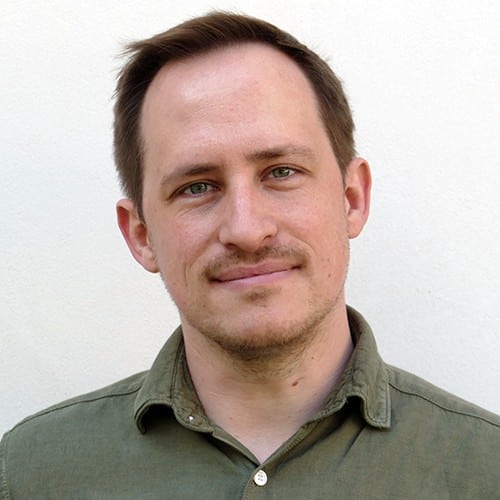
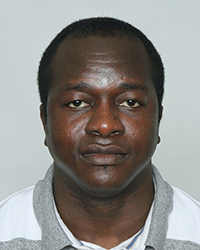
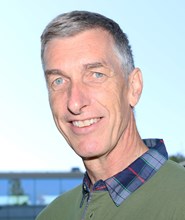
Shekoufeh Kolahdouz Rahimi is a researcher affiliated with the Centre for Research in Arts and Creative Exchange under the School of Arts, Humanities, and Social Sciences . Her work bridges academic disciplines through innovative research collaborations and publications. Research Focus: Integration of Large Language Models (LLMs) into software engineering practices, including Agile methodologies, Model-Driven Engineering (MDE), and formal verification of BPMN models. Conference Contributions: Active participation and organization in workshops like Agile MDE 2024 and Agile MDE 2025, with peer-reviewed publications in CEUR Workshop Proceedings. Academic Leadership: Peer-review roles for journals like Frontiers in Computer Science , and supervision of PhD research initiatives. Publication Trends: Recent work highlights the application of LLMs to automate tasks in software requirement engineering, game development, and MDE workflows. Her research emphasizes interdisciplinary collaboration, combining computational methods with creative arts frameworks.
Dr. Stamatios Sotiropoulos is an Associate Professor at the Sir Peter Mansfield Imaging Centre , University of Nottingham , with prior affiliations as Principal Investigator and Postdoctoral Research Associate at the FMRIB Centre , University of Oxford . He leads the Computational Neuroimaging (CoNI) Laboratory , focusing on advanced MRI methodology for brain connectome mapping. PhD in Brain Image Analysis (University of Nottingham, 2010) MSc in Biomedical Engineering (University of Minnesota, 2005) BSc in Electronics & Computer Engineering (Technical University of Crete, 2003) His research spans diffusion MRI , tractography , and connectome modeling , with applications in brain aging , neurodegenerative diseases , and cross-species neuroanatomy . Recent work includes AI-driven QC , probabilistic inference , and cross-modal integration . Grants include major awards from the European Research Council (2020), Wellcome Trust , and EPSRC . The lab has developed widely-used tools like XTRACT , CUDIMOT , and NFacT within the FSL framework. 2021 Clarivate Highly Cited Researcher ISMRM 2022 Merit Awards Notable students include Shaun Warrington (PhD, 2021) and José-Pedro Manzano-Patrón (PhD, 2022). Collaborations span the Human Connectome Project , Developing Human Connectome Project , and Centre for Mesoscale Connectomics .
Nico Graebling is a Researcher at the Department of Environmental Informatics within the Helmholtz Centre for Environmental Research (UFZ) . He has been working at UFZ since 2021 as part of the Research Software Engineering and Visualization Team , focusing on immersive science communication and geoscientific visualization. Education: Master of Science in Computer Science from the University of Leipzig (2018) Expertise: Specialization in Augmented and Virtual Reality systems during his tenure at the Image and Signal Processing Group of Leipzig University Research Interests center on Interactive 3D visualizations Virtual Reality (VR) applications Science communication through software engineering His work includes developing visualization tools for projects like the Mont Terri Rock Laboratory and MODATS (Monitoring equipment for radioactive waste repositories).
Johannes Wachs is an Associate Professor at the Institute of Data Analytics and Information Science, Corvinus University of Budapest, and a Research Fellow at the Centre for Economic and Regional Studies. He is affiliated with the Complexity Science Hub Vienna, where he has been a faculty member since April 2020. His interdisciplinary research bridges data science, network science, and complexity to study digital economies, open source software, and societal challenges. PhD in Network Science, Central European University (2019) MS in Applied Mathematics, Central European University (2012) BS in Mathematics and Economics, Tulane University (2009) His research focuses on the application of network and data science to understand social, economic, and technical systems. Key interests include open source software ecosystems, AI’s impact on knowledge sharing, corruption detection, urban inequality, and digital innovation. He uses large-scale digital trace data to model complex behaviors in online communities, software development, and public policy. His recent publications reveal a strong trend in analyzing digital platforms such as GitHub and Stack Overflow, studying brain drain in tech, and assessing climate and health risks in Austria. His work combines network modeling, machine learning, and empirical analysis to uncover patterns in human behavior and systemic risk. IMF Anti-Corruption Challenge Winner (2020) Principal Investigator, CRISP Project (2021–2024), funded by FFG Grants from Hungarian Research Funding Agency (OTKA), City of Vienna, and WU Projects Johannes Wachs actively supervises PhD and Master’s students, including Hannah Schuster and Brigi Németh. He has taught courses in computational social science, social networks, and data mining at institutions including RWTH Aachen, CEU, and WU Vienna. He is launching a new MSc in Social Data Science at Corvinus in 2025. He leads the CRISP project, which builds semantic data pools for real-time crisis response and intervention, integrating heterogeneous data sources for impact forecasting and policy transparency.
Dr. Thomas Hartmann is a Senior Scientist at the Centre for Cognitive Neuroscience (CCNS), Department of Psychology, Faculty of Natural and Life Sciences, University of Salzburg. His research focuses on cognitive neuroscience, auditory perception, and electrophysiological methods (M/EEG), particularly in the context of tinnitus and cochlear implants. He leads the Salzburg Brain Dynamics Lab and is a key contributor to open-source neuroscience software development. PhD in Psychology, University of Konstanz (2006–2012) Diploma in Psychology, University of Konstanz (2001–2006) His primary research interests include auditory perception, neural oscillations, neurofeedback, cognitive neuroscience, and psychophysics . He investigates how the brain processes sound, especially under conditions of hearing impairment, and develops computational tools to improve experimental rigor and reproducibility. Dr. Hartmann’s recent publications demonstrate a strong trend in multisensory integration, neural speech tracking, attention modulation, and open-source methodological development . His work often combines EEG/MEG with behavioral paradigms to uncover the neural mechanisms of perception and attention. A major contribution is the Objective Psychophysics Toolbox (o_ptb), which enhances experimental design in MATLAB by abstracting hardware complexity. Active contributor to open-source neuroscience tools Focus on reproducible and robust experimental paradigms Collaborative research with leading institutions in Europe He has co-authored numerous peer-reviewed studies in journals such as Frontiers in Psychology , NeuroImage , and Cortex , and has been involved in research on tinnitus, cochlear implants, and neural correlates of attention. Although no direct students are listed, his role as a senior scientist and publication mentor suggests advisory responsibilities. He is affiliated with the Salzburg Brain Dynamics Lab, where his team conducts cutting-edge research on brain dynamics using advanced electrophysiological techniques and computational modeling.
Professor Bret Battey is a Professor of Audiovisual Composition at De Montfort University, affiliated with the Faculty of Computing, Engineering and Media and the Leicester Media School. He is a core member of the Music Technology and Innovation Research Centre (MTIRC) and the Research Institute of Arts, Design and Performance (ADP). With a background spanning music composition, computer science, and digital arts, he integrates technical and artistic expertise in his work. His research interests include algorithmic music, digital signal processing, audiovisual synthesis, complex systems, feedback mechanisms, chaos theory, and the modeling of Indian classical music. He explores the expressive potential of custom-programmed algorithms to create immersive sound and image compositions. Battey's creative works, such as the Estuaries series and Mercurius , have received international acclaim, earning awards from Prix Ars Electronica, Bourges, Punto y Raya, ICMC, and others. His recent publications and installations focus on generative systems, audiovisual counterpoint, and the interplay between time, space, and perception in multimedia art. Award of Distinction: Video Music, Prix CIME 2023 Best Regional Music (Europe), ICMC 2022 MacDowell Colony Norton Stevens Fellow, 2003 U.S. Fulbright Research Fellowship to India, 2001-2002 Fellow of the Higher Education Academy He has supervised numerous postgraduate research students in areas including audiovisual composition, Indian classical music, and complex systems. He has led internally funded projects such as Haptic Control of Multistate Generative Music Systems and received research leave support. His consultancy includes mentoring for pedagogical software in Indian classical music with NESTA. He is actively involved in the academic community as a reviewer for Computer Music Journal and Organised Sound , and as a selection panel member for international competitions. Bret Battey leads and contributes to research groups including MTIRC and ADP, where he fosters interdisciplinary collaboration between music, technology, and visual arts. His work often involves custom software development, live performance systems, and installations that explore the boundaries of sensory experience and computational creativity.
Leandros Maglaras is a Professor in the School of Computer Science and Informatics at De Montfort University, where he conducts research in the Cyber Security Centre and Software Technology Research Laboratory. He holds a PhD from the University of Huddersfield and another from the University of Thessaly, and has served as Director of the National Cyber Security Authority of Greece (2017–2019), significantly advancing national cybersecurity preparedness. His research interests include Cybersecurity, Privacy Preservation, Risk Management, Intrusion Detection, Critical Infrastructure Protection, IoT, Blockchain, and Machine Learning . He is a Senior Member of IEEE and actively contributes to editorial boards of journals such as IEEE Access and Elsevier’s ARRAY. The analysis of his recent publications reveals a strong focus on cybersecurity in IoT and critical infrastructures , leveraging advanced techniques like federated learning, blockchain, and machine learning for intrusion detection and privacy preservation. His work spans smart agriculture, vehicular networks, healthcare, and industrial control systems, emphasizing real-world applicability and dataset development. Scientific Awards: Best Paper Award at DCOSS 2019 Maglaras has led numerous EU-funded research projects (e.g., CONCORDIA, COCKPITCI) and served on editorial boards. He has contributed to national policy, including drafting Greece’s Cyber Security Strategy and NIS Directive implementation. He mentors students and collaborates extensively, though specific advisee names are not listed. He is also involved in cyber peacekeeping initiatives and has co-edited books on cybersecurity of critical infrastructures. Labs and Research Groups: Cyber Security Centre (CSC), De Montfort University Software Technology Research Laboratory (STRL)
Eseosa Oshodin is a Part-time Lecturer in Games, Maths & Intelligent Systems at De Montfort University (DMU), affiliated with the School of Computer Science and Informatics under the Faculty of Computing, Engineering and Media. He is an active member of the Centre for Computational Intelligence (CCI), contributing to research in artificial intelligence and intelligent systems. Education: B.Eng (Hons) in Electrical/Electronics Engineering, Madonna University, Nigeria M.Sc in Information Systems, University of Aberdeen, Scotland PhD in Intelligent Systems, De Montfort University, Leicester, UK His research focuses on Artificial Intelligence , particularly in areas such as intelligent systems , knowledge-based systems , decision support , social trust , recommender systems , and influence theory . He is passionate about integrating research into teaching and advancing knowledge in AI-driven decision-making systems. The available publications from 2015 highlight his work in social trust modeling and influential user impact on recommendations , both situated within intelligent systems and social network analysis. These works reflect a strong emphasis on human-centric AI, trust dynamics, and personalized recommendation algorithms. Professional Memberships: Institute of Electrical and Electronics Engineers (IEEE) British Computer Society (BCS) Eseosa has taught courses such as Data Structure & Algorithm and Advanced Programming using C# within the BSc (Hons) Computer Science and Software Engineering programs. He has been teaching at DMU for over four years and aims to continue publishing in AI research while mentoring students in higher education. His work is supported by affiliation with the Centre for Computational Intelligence. Laboratory and Research Group: Centre for Computational Intelligence (CCI), De Montfort University
Dmitriy Dubovitskiy is a Part-Time Lecturer and Honorary Research Fellow at De Montfort University, affiliated with the School of Engineering and Sustainable Development within the Faculty of Computing, Engineering and Media. His work bridges computer science and healthcare, focusing on innovative solutions for cancer diagnosis and biomedical imaging. PhD in Computer Science, De Montfort University (UK), in collaboration with Bauman Moscow State Technical University Specialization: Digital Image Processing, Object Recognition using Fractal Geometry and Fuzzy Logic Dr Dubovitskiy's research centers on the mathematical modeling of natural structures using advanced pattern analysis techniques. He applies fractal geometry , fuzzy logic , and machine learning to develop automated systems for skin and cervical cancer screening , cytopathology , and industrial quality control . His interdisciplinary approach spans biology, pharmacology, physics, and engineering. The trend in his publications shows a consistent focus on biomedical image analysis , particularly in oncology and diagnostics. His work emphasizes automated decision-making , real-time recognition , and portable or web-based screening platforms . Key themes include texture classification, convex hull algorithms, and optical machine vision, with increasing integration of AI and mobile technologies. His scientific awards reflect excellence in both research and innovation: Commercialising Award, DIT Hothouse (2011) Microsharp Limited Prize for Best Research (2003) INTAS Research Grant (06-1000013-9357) Multiple Best Presentation/Poster Awards (2001–2004) Overseas Students Research Award (2000–2003) Dr Dubovitskiy has advised on several externally funded and industrial research projects, including collaborations with Oxford University , Trinity College Dublin , and companies like Microsharp Limited and MoleTest (UK) Ltd . He secured the INTAS grant and contributed to technology commercialization efforts. He teaches Dynamics and Control and mentors through consultancy. He is an active member of the British Machine Vision Association (BMVA) , MIET , and the Cambridge Knowledge Transfer Network . He is associated with the Centre for Engineering Science and Advanced Systems (CESAS) at DMU, where he contributes to research in intelligent systems and advanced computing. His work often involves interdisciplinary teams focused on translating academic research into practical healthcare and industrial applications.
Sylvie Hamel is a Full Professor and Department Director at the Department of Computer Science and Operations Research (DIRO), Université de Montréal. She is affiliated with the CRM (Centre de recherches mathématiques) and the LBIT (Laboratoire de biologie informatique et théorique). Her research bridges computer science, mathematics, and molecular biology, focusing on algorithmic problems in genomics, combinatorial analysis, and RNA structure modeling. Education: Her academic background includes a Ph.D. in algorithmic and combinatorial studies, with a thesis on vector algorithms and bioinformatics. Research Interests: Algorithm design for genome rearrangements and sequence analysis Combinatorial optimization and permutation medians RNA structure prediction and computational biology Consensus algorithms and voting theory Software evolution and design patterns Grants & Projects: Leading projects on consensus algorithms (2025–2031), comparative genomics (2016–2024), and CRM strategic initiatives (2022–2029). Funded by CRSNG (Natural Sciences and Engineering Research Council) and FRQNT (Québec research fund). Awards: CRSNG Postdoctoral Fellowship (2003–2008). Supervision: Currently advising M.Sc./Ph.D. students on topics like consensus algorithms, RNA structure analysis, and combinatorial optimization. Over 20+ completed theses under her supervision. Labs: Active in LBIT (bioinformatics) and CRM (mathematical research), fostering interdisciplinary collaboration.
Carles Farré Tost is an Associate Professor at the Universitat Politècnica de Catalunya (UPC), affiliated with the Facultat d'Informàtica de Barcelona (FIB) and the Departament d'Enginyeria de Serveis i Sistemes d'Informació. He leads research in software engineering, data engineering, and information systems through the inSSIDE and GESSI groups. His work focuses on agile methodologies, software quality, data-driven decision-making, and green AI. With over 92 professional activities, including 39 conference presentations and 17 competitive R&D projects, he has contributed to tools like QaSD and GLiDE for education and industry. Notable awards include the Best Forum Paper Award at RCIS 2023 and the Best Paper Award at CIbSE 2021. His research spans decades, from foundational database query validation (CQC method) to modern applications in gamified learning dashboards and sustainability in AI. Research Interests: Software Engineering: Agile development, quality assurance, and team-based project management Data Engineering: Schema validation, data-driven decision-making frameworks, and API design Green AI: Investigating environmental impacts and ethical considerations in AI systems Educational Technology: Tools for learning analytics and collaborative software education Grants & Projects: "Human-centred collaborative framework for accelerating software development" (2024) "Transición hacia sistemas de software verdes basados en IA" (2023) "Digital and Emerging Technologies for Competitiveness" (EU-funded, 2021) Lab/Teams: Active contributor to the inSSIDE (integrated Software, Services, Information and Data Engineering) and GESSI (Group of Software and Service Engineering) research groups at UPC.
Graham Wakefield is an Associate Professor in the Department of Computational Arts at York University's School of the Arts, Media, Performance and Design (AMPD). He is also a Canada Research Chair in Computational Worldmaking and leads the Alice Lab, focusing on biomorphic intelligence and immersive mixed realities. His research spans generative systems, artificial life, and creative software development, with notable collaborations on the 'Artificial Nature' series and contributions to the AlloSphere project. Wakefield holds a Ph.D. in Media Arts and Technology from UC Santa Barbara and has taught and researched globally, including at institutions like KAIST and Sogang University in South Korea. Education: Ph.D., Media Arts & Technology, University of California, Santa Barbara (2007–2012) M.Sc., Media Arts & Technology, UC Santa Barbara (2004–2007) M.Mus., Composition, Goldsmiths College, University of London (2002–2004) B.A. (Hons), Philosophy, University of Warwick (1994–1997) Research Interests: Wakefield’s work emphasizes open-ended computational systems applied to immersive environments and generative art. His projects explore bio-inspired systems, generative audiovisual composition, and interactive installations. Key themes include real-time systems, modular synthesis, and the intersection of art and AI. The Artificial Nature series exemplifies his focus on evolving ecosystems and user interaction. Publications & Awards: His work has been exhibited at SIGGRAPH, ISEA, and NIME. Notable awards include the VIDA 16.0 competition and a Best Paper at NIME 2013. Recent publications address modular synthesis, live coding, and immersive environments. Grants & Service: He has secured grants from the Canada Foundation for Innovation, SSHRC (Canada Research Chair), and others. Wakefield actively chairs committees for AI initiatives, faculty searches, and interdisciplinary research units like the Centre for Artificial Intelligence & Society. Labs & Collaborations: The Alice Lab at York University develops tools like COSM and gibber , and collaborates on projects such as the Synaptic Time Tunnel for SIGGRAPH 2023. Wakefield co-authored Generating Sound & Organizing Time and contributes to Max/MSP/Jitter through Cycling '74.
Frank Dignum is a Professor at Umeå University's Department of Computing Science, leading a research group in socially aware AI. He also serves as Director at the Centre for Transdisciplinary AI and maintains affiliations with Utrecht University and the University of Melbourne as an honorary researcher. Wallenberg Chair in Socially Aware AI (2019-present) Research focus: Computational models of social aspects (norms, values, practices) Applications: Policy impact simulation, natural disasters, medical chatbots His research explores creating more realistic social simulations to predict societal responses to change, and developing natural human-AI dialogues for training medical professionals. Recent work emphasizes context-sensitive deliberation , value-based decision making , and emotional agent modeling in AI systems. Key publication trends show strong focus on agent-based modeling (65%), human-AI interaction (20%), and game AI applications (15%), with increasing emphasis on ethical considerations and cross-cultural factors in recent years. Wallenberg Chair in Socially Aware AI Honorary Principal Research Fellow at University of Melbourne Contributions to United Nations AI governance panel Professor Dignum's research group actively develops simulation tools for societal challenges, with ongoing projects spanning 2023-2028. His work combines technical AI development with deep understanding of social dynamics and ethical implications.
Lluïsa Jordi Nebot is a Lecturer in the Department of Mechanical Engineering at the Polytechnic University of Catalonia (UPC) , attached to the Barcelona School of Industrial Engineering (ETSEIB) . She teaches core subjects such as Theory of Machines and Mechanisms and Mechanical Vibrations across a variety of undergraduate and master’s programmes and has supervised over 80 student theses and projects since 2006. Education and Programmes. The curricula she contributes to include: Master’s Degree in Statistics and Operations Research (2006) Master’s Degree in Industrial Engineering (2014) Degree in Engineering Physics (2011) Degree in Chemical Engineering (2010) Erasmus Mundus Master’s in Mechanical Engineering (2006 & 2009) Master’s Degree in Teacher Training for Secondary and High-School Education (2009) Degree in Industrial Technologies and Economic Analysis (2018) Research Focus. Her research spans kinematics & dynamics of mechanisms , mechanical vibrations , biomechanical analysis using smartphones , and educational technology —particularly augmented reality and AI-enhanced learning in mechanical engineering. She actively integrates sustainable development goals into engineering curricula and participates in the CDEI_DM research group on industrial equipment design and machine dynamics. Recent Work Trends. Over the past three years her scholarly output has concentrated on: AR/VR tools for teaching mechanism theory ChatGPT and AI applications in engineering classrooms Low-cost biomechanical analysis with mobile devices Sustainable engineering education initiatives These themes are reflected in both peer-reviewed articles and innovative teaching materials she has developed. Scientific Awards & Recognition. No specific prizes, fellowships, or medals are explicitly listed in the provided text. Supervision & Grants. She has directed 40 master’s theses and 15 bachelor’s theses to date, working with multidisciplinary teams of students on projects ranging from climbing-robot mechanisms to AI-based secondary-school teaching tools. Funding sources are not detailed, but her affiliation with CDEI_DM implies participation in competitive research and educational innovation grants. Laboratories & Teams. She collaborates with the Centre de Disseny d’Equips Industrials – Dinàmica de Màquines (CDEI_DM) research group and maintains close ties with colleagues across ETSEIB, the Barcelona School of Informatics (FIB), and the Manresa School of Engineering (EPSEM).
Prof. Dr. Verena Klös is a full professor at the Department of Computing Science, Carl von Ossietzky University of Oldenburg, Germany, leading the research group on Embedded Hardware/Software Systems. She previously held positions as Juniorprofessor (W1) for Computer Science at TU Dresden's Centre for Tactile Internet with Human-in-the-Loop (CeTI) and as a postdoctoral researcher at TU Berlin. PhD in Computer Science from TU Berlin (2020) Master in Computer Science from TU Berlin (2012) Bachelor in Computer Science from TU Berlin (2010) Her research focuses on (self-) explainable intelligent cyber-physical systems , formal modeling, and verification of self-adaptive systems. She has contributed to hardware/software co-design, runtime goal management, and tactile computing. Recent publications (2021-2024) examine explainability in reinforcement learning, anomaly detection in autonomous systems, and adaptive control mechanisms. Keywords span artificial intelligence, formal verification, and embedded systems engineering. Distinguished Paper Award (SEAA 2015) She leads research seminars and project groups on embedded systems and self-adaptive systems at University of Oldenburg, with teaching experience in both hardware/software co-design and software engineering for explainable systems.