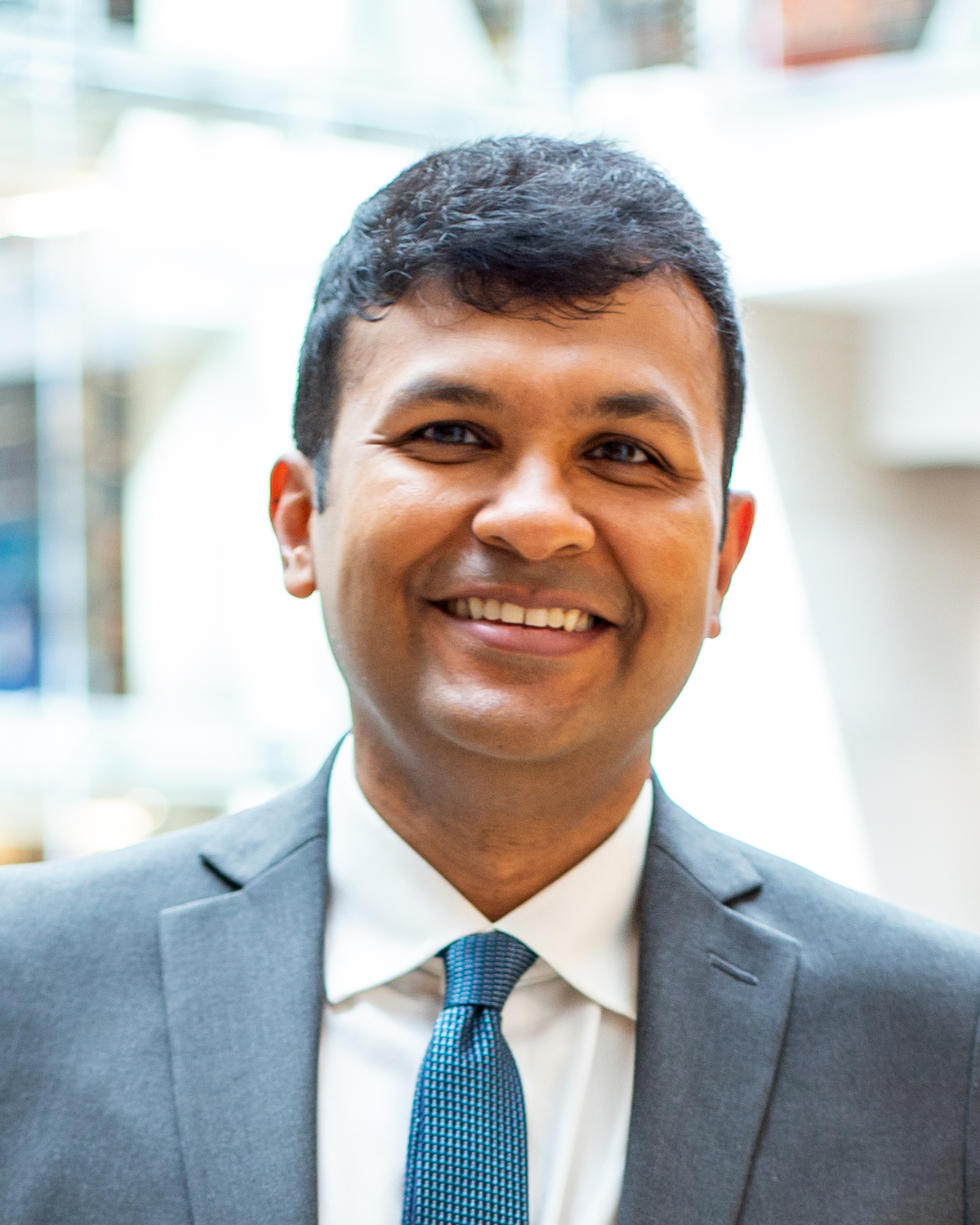
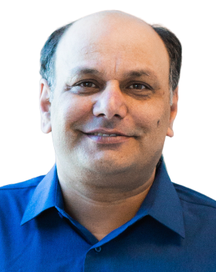
Arnab Nandi is a Professor in the Department of Computer Science & Engineering at The Ohio State University. His work bridges human interaction with data infrastructure, focusing on database systems, LLM-augmented analytics, and immersive query interfaces. Education: PhD in Computer Science & Engineering from the University of Michigan Leadership: Co-founder of OHI/O Hackathon Program and STEAM Factory interdisciplinary network Research spans human-in-the-loop data analytics , vibe querying (natural language + gestural interfaces), LLM integration into education, and climate response systems . Key projects include Omni (multimodal exploration), GestureDB , and Icarus (clinical pipelines). Recent publications analyze LLM-driven query stacks (HILDA 2025), video analytics (SIGMOD 2022), and data sunglasses for cognitive limits (HILDA 2025). Awards include NSF CAREER Google Faculty Research Award IEEE TCDE Early Career Award ACM Distinguished Member Advises students in database innovation , with alumni at Amazon, AWS, Roblox, and Meta. Teaches CSE 3241 (Database Systems), CSE 5889 (Software Startups), and CSE 5242 (Advanced Databases).
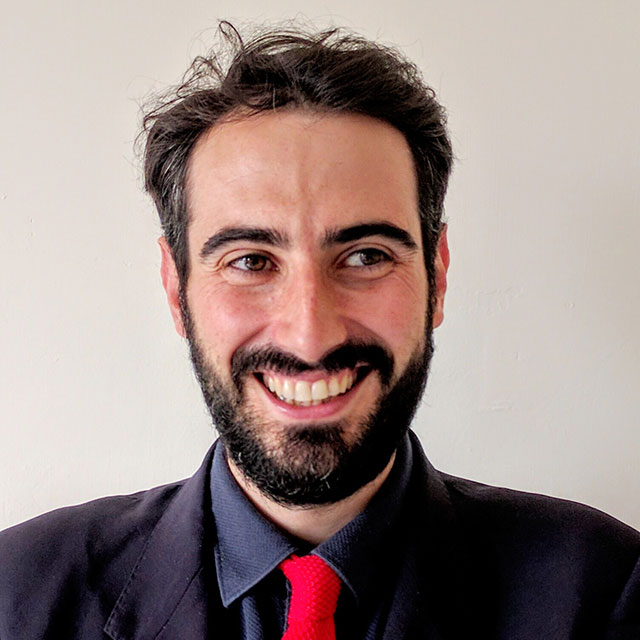
Valentino Catricalà is a scholar and contemporary art curator specializing in the relationship between artists and new technologies and media. He serves as a Lecturer in Curating at Manchester Metropolitan University's School of Digital Arts (SODA) and is the curator of the SODA gallery (Modal) in Manchester. His professional affiliations include director of the Art Section of the Maker Faire – The European Edition (the largest creativity and innovation event in Europe) and Art Consultant at Paris Sony CS Lab. Dr. Catricalà received his PhD from Roma Tre University and has been a visiting lecturer at prestigious institutions including ZKM (Karlsruhe), Tate Modern (London), University of Dundee, and LIMA (Amsterdam). His early career included founding and serving as artistic director of the Rome Media Art Festival at MAXXI Museum in Rome, promoted by Fondazione Mondo Digitale. His research focuses on media art, contemporary art practices involving emerging technologies, virtual reality, artificial intelligence, and the historical relationship between art and technology. Catricalà examines how technological developments reshape artistic practices and human perception, with particular attention to the critical perspectives artists bring to technological innovation. His work often explores themes of posthumanism, media archaeology, and the ethical dimensions of digital culture. His recent publications reveal a clear trajectory toward increasingly sophisticated examinations of AI and VR in artistic contexts. The 2022 article 'HyperInterfaces - HyperMedia' represents his most current thinking on AI beyond anthropocentrism, while his 2021 book 'The Artist as Inventor' reframes artists as active participants in technological innovation rather than passive recipients. His work consistently bridges historical perspectives with cutting-edge technological developments. Member of the advisory board of the Media Art History Conference As an independent curator, Catricalà has worked with major institutions including the Hermitage (St. Petersburg), Minnesota Street Project (San Francisco), New York Media Center, Fondazione Stelline (Milan), MAXXI Museum (Rome), Palazzo delle Esposizioni (Rome), Ca' Foscari (Venice), and international venues in India and Romania. His curatorial practice is deeply integrated with his academic research, creating a feedback loop between theoretical investigation and practical artistic engagement.
Carlos Velasco is an Associate Professor in the Department of Marketing at BI Norwegian Business School, where he co-founded the Center for Multisensory Marketing. He holds a D.Phil. in Experimental Psychology from the University of Oxford and has established himself as a leading researcher at the intersection of psychology, marketing, and human-computer interaction. His research focuses on multisensory experiences and their underlying principles, with particular attention to crossmodal correspondences between sensory modalities. His work spans diverse areas including digital dining, food technology, customer experience management, and the application of emerging technologies like AI, VR, and the Metaverse in sensory marketing. Velasco has published extensively in top journals across multiple disciplines including Food Quality and Preference, Journal of Retailing, Journal of Business Research, Psychology and Marketing, and International Journal of Human-Computer Studies. His research reveals consistent patterns in how sensory inputs influence consumer behavior and product perception, particularly examining how visual elements, sounds, and shapes correspond with taste experiences. Velasco's work also explores the ethical dimensions of customer experience design in digital environments and investigates how cultural contexts shape multisensory food experiences globally. Velasco has authored several influential books including Multisensory experiences: Where the senses meet technology (2020 and 2025, Oxford University Press), Digital dining: New innovations in food and technology (2025, Springer Nature), and the edited collection Multisensory packaging: Designing new product experiences (2019, Palgrave Macmillan). Serves on editorial boards of Food Quality and Preference Journal of Business Research Psychology and Marketing International Journal of Gastronomy and Food Science International Journal of Food Design Currently, Velasco co-hosts the customer experience management podcast and collaborates with companies worldwide on topics including multisensory experiences, immersive technologies, Web3, food and drink, branding, and consumer research. His work bridges academic research with practical applications in marketing and product design.
Robert Hamilton is a Professor in the Department of Communication Studies & Media Arts at McMaster University's Faculty of Humanities in Hamilton, Canada. With an extensive career as both an academic and practicing artist, he has established himself as a significant figure in contemporary media arts education and creation since joining McMaster University. Hamilton holds dual MFA degrees from the Art Institute of Chicago and the Jan van Eyck Academie in Maastricht, Netherlands, complemented by a Diploma from the Alberta College of Art + Design. His academic journey spans from 1981-1985 at the Alberta College, followed by advanced studies from 1991-1993 at the Jan van Eyck Academie. His research and creative practice centers on visual media with particular focus on video art, photography, and animation. Hamilton's work consistently explores themes of identity, community, and the evolving urban environment, often reflecting on societal events and contemporary issues. His artistic approach combines technical mastery with conceptual depth, resulting in works that challenge viewers' perceptions of everyday spaces and social structures. He has developed a distinctive methodology that blends documentary techniques with artistic interpretation, creating works that are simultaneously observational and transformative. Hamilton's recent body of work demonstrates a clear trajectory toward examining human relationships with urban spaces, particularly during times of societal transformation like the pandemic. His projects increasingly incorporate digital technologies and AI elements while maintaining a strong foundation in traditional media arts. The thematic continuity across his work reveals a persistent concern with how individuals navigate and make meaning within constructed environments. German Video Art Prize Silver Hugo Award at the Chicago Film Festival Work featured in National Gallery of Canada collection As an educator, Hamilton has mentored numerous students through senior thesis projects and specialized courses in media production. His teaching portfolio spans animation, video art, digital cinema, photographic techniques, and emerging media. While specific grant information isn't detailed in the available materials, his sustained creative output suggests successful acquisition of research funding to support his artistic practice. His work has been exhibited internationally at venues including Maison des Arts de Laval, Museum of Contemporary Art in Castello, Spain, and Transmediale in Berlin. Hamilton maintains an active studio practice that directly informs his teaching approach. His creative process involves both digital and traditional techniques, often experimenting with the intersection of physical and virtual spaces. He has developed specialized approaches to documenting urban environments that reveal hidden patterns and structures within everyday landscapes, creating what might be described as visual commentaries on contemporary life.
Alexandra Protopopova is an Associate Professor in the Applied Biology department at the Faculty of Land and Food Systems , University of British Columbia. She holds the NSERC/BC SPCA Industrial Research Chair in Animal Welfare and focuses on improving animal shelter practices and companion animal welfare. PhD in Behavior Analysis, University of Florida MS in Behavior Analysis, University of Florida BS in Pre-Veterinary and Animal Sciences, University of Massachusetts Amherst BS in Neuroscience, University of Massachusetts Amherst Her research explores companion animal behavior , shelter interventions , and human-animal relationships , with recent work on pet owner behavior during climate change, shelter stressors, and animal adoption strategies. Her publications span journals like Journal of Applied Animal Welfare Science and Behavioral Processes . Her awards include the NSERC/BC SPCA Industrial Research Chair . She supervises graduate student Lexis Ly (PhD in Applied Animal Biology) and collaborates on interdisciplinary research projects involving undergraduate students.
Dr. Shabnam Sadeghi Esfahlani is an Associate Professor in Robotics at the School of Engineering and the Built Environment, Anglia Ruskin University , where she serves as Deputy Leader of the BORI research group and leads the Automation & Robotics MSc program. Her interdisciplinary expertise spans mechatronics, artificial intelligence, virtual reality, and serious games , with a focus on applications for rehabilitation, medical training, and autonomous systems . As a Chartered Engineer and Senior Fellow of the Higher Education Academy , she has secured significant funding from Innovate UK, Horizon 2020, and GCRF , with grants exceeding £3 million. Education PhD in Mechanical Engineering, Anglia Ruskin University BSc (First Class) in Statistics & Mathematical Science, Shahid Beheshty University Her research integrates AI with robotics for societal impact, exemplified by the open-source SROBO ground robot and projects like Rehabgame and the Assistive Feeding Robot . She has published over 45 peer-reviewed articles and contributes to academic communities as a journal guest editor and conference organizer . Key collaborations include IET, IMechE, and the Nuffield Foundation as a mentor for young students. Scientific Awards & Recognitions: Chartered Engineer (CEng), Engineering Council UK Senior Fellow (SFHEA), Higher Education Academy Student-Voted 'Made a Difference Award' (2018) Post-Graduate Certificate in Higher Education
Professor Jon Barker is a faculty member at the University of Sheffield , where he holds a Personal Chair in the School of Computer Science . He leads the Speech and Hearing (SpandH) research group and co-founded the CHiME international workshop series on robust speech recognition. Education : PhD in Computer Science (University of Sheffield, 1999); BA in Electrical and Information Sciences (Cambridge University). Research Focus : His work bridges machine listening and human auditory perception , with key contributions to noise-robust speech recognition , speech intelligibility prediction , and hearing aid signal processing for speech and music. Recent projects include the Clarity Challenges and Cadenza Challenges , large-scale machine learning initiatives to improve accessibility for hearing-impaired users. Publication Trends : Recent articles emphasize machine learning for hearing aid optimization , dysarthric speech recognition , audio-visual integration , and music demixing algorithms . Collaborations span speech processing, psychoacoustics, and biomedical engineering. Scientific Awards : EURASIP Best Paper Award (2009) ISCA Best Paper Award (2008) Grants and Leadership : He has secured major EPSRC grants including EnhanceMusic (2022-2026) and Challenges to Revolutionise Hearing Device Processing (2019-2025). He co-led the TAPAS Marie Curie Training Network (2017-2022) and led projects like AV-COGHEAR (2015-2018) and CHiME (2009-2012). Labs and Teams : Barker collaborates closely with the Speech and Hearing Research Group and contributes to international initiatives like the CHiME Workshop . His lab develops open datasets such as the Clarity Speech Corpus and Audio-Visual Lombard Corpus .
Dr. Colin Palmer is a Visiting Fellow in the School of Psychology at the University of New South Wales (UNSW), where he conducts research on visual perception with a focus on social features of our sensory environment. His work examines how the brain processes elements like eyes, faces, and behaviors of people around us using visual psychophysics, computational modeling, and 3D graphical rendering. Dr. Palmer completed his Ph.D. in 2016 and Bachelor of Behavioural Neuroscience (Honours) in 2009, both at Monash University. His doctoral research explored how neurocognitive models of sensory processing relate to differences in sensory integration and social cognition in autism. His primary research interests center on understanding the perceptual and neural mechanisms underlying our sensitivity to dynamic social cues, particularly eye and head movements. Dr. Palmer investigates how the visual system extracts basic environmental elements (color, shape, motion) and develops a mechanistic understanding of how our experience of the social world arises from nervous system activity. His work has clinical applications for understanding sensory and social difficulties in conditions like autism and schizophrenia. Dr. Palmer's recent publications reveal a consistent focus on social vision, particularly gaze perception, face processing, and animacy detection. His research increasingly incorporates computational modeling approaches to understand visual perception mechanisms. There's a strong emphasis on how lighting and shading affect face and gaze perception, with growing attention to clinical applications for neurodevelopmental conditions. Dr. Palmer has received recognition for his work through several awards: Emerging Investigator Award, Australasian Cognitive Neuroscience Society, 2017 Postdoctoral presentation award, Australasian Cognitive Neuroscience Society, 2016 Dr. Palmer is actively involved in research supervision and teaching. He teaches PSYC 3221 Vision and Brain and is available to supervise research students. His research is supported by significant funding: ARC Discovery Project (2020-2022): "Extracting meaning from motion" ($492,000) ARC Discovery Early Career Researcher Award (2019-2021): "Human sensitivity to the dynamics of other people's eye movements" ($356,000) Experimental Psychology Society Study Visit Grant (2017): "Testing computational theories of autism spectrum disorder in the social domain" (£2,580) Dr. Palmer collaborates extensively with Professor Colin Clifford at UNSW and maintains international collaborations with researchers in the UK and Australia, particularly on projects related to autism spectrum disorders and social cognition.
Xin Li is a Professor in the Department of Electrical and Computer Engineering at Duke University and serves as the Associate Vice Chancellor at Duke Kunshan University. He holds a Ph.D. from Carnegie Mellon University (2005) and has held leadership roles in research consortia like the FCRP Focus Research Center and the Center for Silicon System Implementation (CSSI). His research bridges integrated circuits , machine learning , and cyber-physical systems , with applications in autonomous driving, battery lifetime prediction, and smart buildings. Education : Ph.D., Carnegie Mellon University (2005); M.S., Fudan University (2001); B.S., Fudan University (1998) His work emphasizes robust design methodologies for analog/RF circuits, data-driven predictive modeling , and Bayesian inference for high-dimensional variation spaces. Recent publications focus on generative adversarial networks for circuit design, multi-view imputation for incomplete data, and knowledge-driven autonomous systems . He has received numerous accolades, including the NSF CAREER Award (2012) , IEEE Donald O. Pederson Best Paper Awards (2013, 2016) , and IEEE Fellow (2017) . He has served as Editor for journals like IEEE Transactions on Biomedical Engineering and as Chair for conferences including ISVLSI and CAD/Graphics.
Derek Duncan serves as Professor of Italian at the University of St Andrews' School of Modern Languages, specializing in Italian Cultural Studies. Previously holding a professorship at the University of Bristol, he directs the Italian Centre for Contemporary Art and contributes significantly to transnational humanities research. His educational background includes French and Italian studies at Aberdeen University followed by doctoral work at Edinburgh. Duncan's research centers on intersections of sexuality/gender and race/ethnicity in modern Italian culture through queer and critical race theory frameworks, with notable courses including 'Black Italians,' 'Fascist Italy,' and 'Cultures of Migration.' Analysis of his recent publications reveals consistent focus on Mediterranean migration narratives, transnational identity formation, and creative humanities methodologies. His work frequently connects historical events like the Arandora Star sinking with contemporary migration crises, emphasizing transcolonial continuities. Leverhulme Major Research Fellowship (2019-2022) Multiple AHRC-funded projects including Transnationalizing Modern Languages Founding editor of Liverpool University Press series: Transnational Italian Cultures and Transnational Modern Languages Duncan actively supervises research and collaborates with artists like Davide D'Elia on projects such as Tiepido Cool. His work with the Centre for Poetic Innovation demonstrates commitment to bridging academic research and artistic practice, while his global challenges project in Namibia reflects international engagement. Current research examines Mediterranean migration through the lens of the Arandora Star disaster and its contemporary resonances.
Eugene M. Caruso is a Professor at UCLA Anderson School of Management , holding the Bing and Alice Liu Yang Endowed Term Chair in Teaching Excellence . He serves as Faculty Co-Director of the Inclusive Ethics Initiative and specializes in Behavioral Science, Decision-Making, and Ethics. His research focuses on how individuals interpret objective facts differently, emphasizing systematic testing of intuitions in managerial contexts. Education: Ph.D. in Social Psychology (2007), Harvard University M.A. in Social Psychology (2004), Harvard University B.A. in Psychology, cum laude (1998), Princeton University Caruso’s research bridges Behavioral Decision-Making and Social Judgment , exploring temporal perception, ethical choices, and resource allocation. His work reveals how past-future asymmetries and contextual biases shape moral decisions. Articles demonstrate expertise in Psychological Science , Political Psychology , and Organizational Behavior . Scientific Recognition: Editor’s Choice in Science (2017) Editor’s Choice in Science (2006) His collaborative publications with scholars like Daniel Kahneman and Max Bazerman span topics from charitable appeals to legal intent perception . Caruso’s career transition from Digitas to academic leadership underscores his commitment to rigorous empirical methods in understanding human behavior.
Jim Tørresen is a Professor of Computer Science at the Department of Informatics, University of Oslo, where he has been employed since 1999 (Associate Professor 1999-2005, Professor since 2006). He serves as group leader for the Robotics and Intelligent Systems (ROBIN) research group and is also a Principal Investigator at the Centre for Interdisciplinary Studies in Rhythm, Time and Motion (RITMO). His academic career includes visiting positions at Cornell University's Creative Machines Lab (2010-2011) and Kyoto University in Japan (1993-1994). His educational background includes a Dr.ing. (Ph.D.) in Computer Architecture from the Norwegian University of Science and Technology (1996) and an M.Sc. in Computer Architecture from the same institution (1991). Before his academic career, he worked in industry at Navia Aviation (1998-1999) and NERA Telecommunications (1996-1998). Tørresen's research spans artificial intelligence, robotics, and bio-inspired computing. His work focuses on biology-inspired algorithms, programmable logic (FPGA), robotics (simulation, prototyping, control), and human-robot interaction. He has made significant contributions to areas including evolutionary computing, reconfigurable hardware, and adaptive systems. His research often bridges theoretical computer science with practical applications in healthcare, music, and industrial settings. His recent publications demonstrate a strong focus on human-robot interaction, particularly in healthcare contexts for elderly care, as well as applications in sports science, musical robotics, and geological engineering. His work shows a consistent pattern of interdisciplinary research that combines machine learning techniques with domain-specific challenges. Tørresen has also authored a popular science book on artificial intelligence in the "what is" series by Universitetsforlaget, which discusses fundamental concepts, methods, future perspectives, and ethical aspects of AI. He has been active in academic leadership, serving as General Chair for the 22nd International Conference on Field Programmable Logic and Applications (FPL) in 2012 and the 9th Joint IEEE International Conference of Developmental Learning and Epigenetic Robotics in 2019. As group leader of ROBIN, he oversees research on intelligent systems that operate in dynamic environments requiring runtime adaptation. The group works at both fundamental and applied levels, using evolutionary algorithms for robot learning and machine learning techniques for classification and recognition tasks in various application domains.
Jon Andoni Duñabeitia is a Full Professor at the School of Languages and Education of Universidad Nebrija in Madrid. He serves as Director of the Centro de Investigación Nebrija en Cognición (CINC) and the International Chair in Cognitive Health . With an h-index of 43 (Scopus), he has published 170+ articles across psycholinguistics, multilingualism, cognitive training, and virtual reality applications in education. His research examines how language processing interacts with cognitive load, emotional modulation, and technological innovation. Principal Investigator for 8+ projects funded by Spanish Government, Basque Government, BBVA Foundation Associate Editor and Editorial Board Member of high-impact journals Recognized among Spain's top 3% scientists across all disciplines Recent publications span topics including: Second-language reading dynamics in VR environments Multilingual cognitive interactions in neurological conditions Emoji/typographic effects on word processing Computerized cognitive assessment and training systems He actively contributes to scientific meetings as invited speaker across Europe, Asia, and Americas. His work bridges basic research in psycholinguistics with applied technologies for cognitive health.
Muhammad Asghar is an Assistant Professor at the Department of Engineering and Computer Education, University of Cincinnati. His research focuses on the intersection of engineering education and student mental health, with expertise in physiology-based behavior analysis, wellbeing frameworks, and curriculum innovation. Ph.D. in Engineering Education, Utah State University (2023) Master's in Educational Psychology and Clinical Psychology, IIUI Islamabad (2015-2019) B.Sc. in Computer Information Systems Engineering, UET Peshawar (2004) Current research trends include systematic literature reviews on student wellbeing, eye-tracking studies for design task analysis, and curriculum redesign for mental health integration. He contributes to NSF-funded initiatives like First-Year Engineering 2.0 and develops wellbeing assessment tools for engineering pedagogy. His work spans collaborations with researchers like Sheryl Sorby, Angela Minichiello, and Oenardi Lawanto, with publications in Journal of Engineering Education , ASEE Conference Proceedings , and International Journal of Environmental Research and Public Health .
Bradley Hayes is an Associate Professor in the Department of Computer Science at the University of Colorado Boulder, affiliated with the College of Engineering and Applied Science. He leads the Collaborative AI and Robotics (CAIRO) Lab, focusing on creating autonomous robots that collaborate effectively with humans through advances in explainable AI, machine learning, and human-robot interaction. His prior research includes foundational work at MIT's Interactive Robotics Group and Yale's Social Robotics Lab. Research interests span Explainable AI, Learning from Demonstration, Hierarchical Reinforcement Learning, Computer Vision, Natural Language Processing, and Cognitive Science. His work emphasizes making human-robot teams more efficient and safe through innovations like emotionally expressive robotic motion, socially aware navigation, and AR-based collaboration tools. Key contributions include techniques for robust robotic exploration, generative occupancy mapping, and systems for improving human trust through predictable robot behavior. His work has been applied to teleoperation training, surgical assistance, and space exploration scenarios. Grants and partnerships support development of assistive robotic canes and AR interfaces for collaborative tasks. Lab activities emphasize translating theoretical advancements into practical systems through close collaboration between researchers, engineers, and end-users. Education efforts include developing foundational robotics curricula addressing autonomy, perception, and control systems.