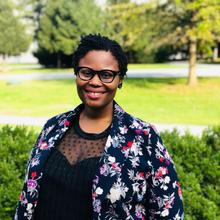
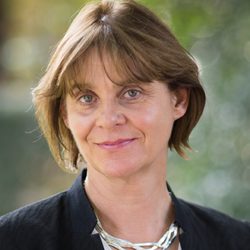
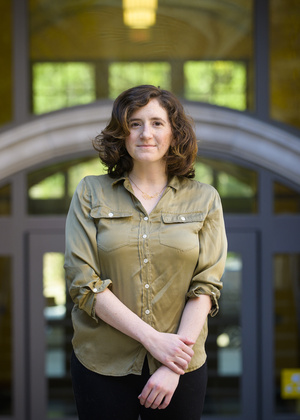
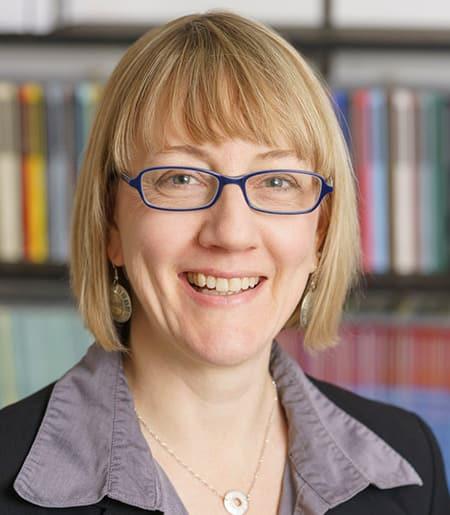
Rosana Garciandia is a Senior Lecturer in Public International Law and Co-Director of the Centre for International Governance and Dispute Resolution (CIGAD) at The Dickson Poon School of Law, King's College London. She holds a PhD in Law from the University of Navarra and previously taught at the University of Murcia. Her research focuses on international law responses to human rights abuses, including modern slavery, racial discrimination, and corruption, with an emphasis on state accountability and intersectionality. She is also a Research Leader at the British Institute of International and Comparative Law and a Fellow of the Macrocrimes Center. Education: PhD in Law (University of Navarra) Previous Positions: Secretary General of the European Law Institute, UNODC, EU Agency for Fundamental Rights Her research interests include state responsibility, EU law, migration law, and the law of international organizations. She has published widely on topics such as inter-state communications in UN treaty bodies, domestic servitude, and human rights scrutiny in international trade policies. Recent work includes editing a special issue on inter-state communications (2024) and contributing to the Intersectional Rewrites project. She collaborates with the Leverhulme Centre for Research on Slavery in War, exploring the slavery-war nexus. Her teaching and research address global challenges, linking legal frameworks to issues like modern slavery, corruption, and human dignity. She actively engages with international organizations and policy development.
Monica Bell is a tenured Professor of Law and Associate Professor of Sociology at Yale University, holding joint appointments across Yale Law School and the Department of Sociology. Her office is located at 127 Wall Street, New Haven, CT. As the first Black woman to serve as a junior faculty member and the second Black woman to receive tenure at Yale Law School, she is deeply committed to advancing diversity in academia. Education: B.A. in Political Science and Sociology, Furman University (Truman Scholar) M.Sc. in Equality Studies, University College Dublin (Mitchell Scholar) J.D., Yale Law School Ph.D. in Sociology and Social Policy, Harvard University Bell's research examines structural inequality through interdisciplinary lenses, focusing on policing, legal estrangement, housing segregation, welfare policy, and racial-spatial dynamics. She employs qualitative methodologies to analyze how marginalized communities experience legal institutions, with emphasis on urban poverty and systemic exclusion. Her conceptual framework of 'legal estrangement' redefines understandings of community-law enforcement relationships. Her publications consistently engage with themes of racial justice, institutional reform, and community agency. Recent work demonstrates a strong focus on reimagining policing systems, analyzing residential segregation patterns, and developing democratic approaches to poverty governance. Articles frequently intersect law, sociology, and urban studies while incorporating critical race theory. Awards and Honors: Jane Addams Article Award (American Sociological Association) Derrick A. Bell, Jr. Award (AALS) Yale Law Women Faculty Excellence Award Russell Sage Foundation Visiting Scholar Fellowship Truman Scholarship & Mitchell Scholarship Bell teaches Constitutional Law and Law & Sociology, exploring governmental power structures and sociological applications to legal analysis. She previously clerked for Judge Cameron McGowan Currie (U.S. District Court) and served as an Arthur Liman Fellow at Legal Aid Society of D.C., focusing on TANF policy. No current grants, labs, or student advisees are detailed in available materials.
Mark Coeckelbergh is a Professor of Philosophy at the University of Vienna, specializing in the philosophy of technology, AI ethics, and robot ethics. He is affiliated with the Department of Philosophy and the Research Network Data Science at the University of Vienna. In addition to his academic position, Coeckelbergh has held significant roles including Former President of the Society for Philosophy and Technology (SPT) and Member of the European Commission's High-Level Expert Group on Artificial Intelligence (AI HLEG). His research focuses on the ethical, political, and philosophical implications of emerging technologies, particularly artificial intelligence and robotics. Coeckelbergh has published extensively in these areas, authoring influential books such as Robot Ethics (2022), The Political Philosophy of AI (2022), and Why AI Undermines Democracy and What To Do About It . His work explores how AI systems affect democratic processes, human agency, and social relationships. Recent publications demonstrate a strong focus on the relationship between AI, democracy, and ethical governance, examining how AI systems can both threaten and potentially enhance democratic processes through algorithmic transparency and participatory design approaches. Finalist of the World Technology Award 2017 Coeckelbergh teaches various courses including 'Introduction to Philosophy of LLMs,' 'LLMs and the Future of Writing,' 'Ethics and Robotics,' and 'Global Governance of AI.' He has supervised numerous students working on topics related to technology ethics and philosophy. He has been involved in several major research projects including H2020 PERSEO, WWTF Democracy Responsible Entrepreneurship, and FP7 DREAM (Development of Robot-Enhanced therapy for children with Autism spectrum disorders). Coeckelbergh has also announced upcoming guest professorships at the Institute of Philosophy of the Czech Academy of Sciences and Uppsala University, where he will work on environmental and technology ethics projects.
Professor Keita Takayama is a prominent academic in education studies at the University of South Australia’s UniSA Education Futures. His work focuses on global education policy, comparative education, and teacher education methodology. He actively engages with transnational policy processes, decolonial research frameworks, and critical analyses of international assessments like PISA. As editor of the Asia-Pacific Journal of Teacher Education (APJTE), he emphasizes rethinking teacher subjectivity and pedagogical practices. His research critiques the politics of knowledge production and advocates for methodological innovations like 'Asia as Method.' Recent work addresses contradictions in education export policies, linguistic imperialism in scholarship, and the role of education in resisting authoritarianism. Education Background: Doctorate in Education (focus on comparative policy studies) Advanced training in decolonial methodologies and policy analysis Research Interests: Professor Takayama’s work bridges global and local educational contexts. Key themes include: Policy mobilities & transnational education governance Reimagining comparative education through 'negative' comparative frameworks Ethics of academic publishing and knowledge dissemination Teacher education’s role in shaping democratic societies Labs/Teams: Leads the APJTE editorial collective and co-founded the iTKNe transnational knowledge exchange platform for teacher educators. Active in global academic networks addressing East Asian education stereotypes and postcolonial educational research.
Sanaa Ahmed is an Assistant Professor at the Faculty of Law, University of Calgary, where she joined in 2021. Prior to her current position, she was a Killam Postdoctoral Fellow at Dalhousie University. Her academic journey spans across multiple institutions and countries, reflecting her international perspective on legal issues. Her educational background includes: PhD from York University (2019) LLM from University of Warwick (2005) LLB from S.M. Law College, University of Karachi (2002) BA from University of Karachi (1998) Sanaa Ahmed's research focuses on the intersection of financial systems and criminal activity, with particular emphasis on money laundering , financial crime , and financial regulation . Her work also extends to criminal law , human rights , and surveillance practices. She examines how regulatory frameworks function in practice, particularly in the Canadian context, while also investigating transnational dimensions of financial crime and regulation in countries like Pakistan. Her approach combines legal analysis with political economy perspectives to understand the complex relationships between state institutions, capital flows, and crime prevention mechanisms. Her recent publications demonstrate a consistent focus on money laundering and financial regulation, with increasing attention to Canadian contexts in her most recent work (2023). She has also maintained a strong interest in Pakistan's regulatory environment and has explored connections between financial crime, human rights, and development in African contexts. Her work appears in diverse venues including academic journals, book chapters, and conference proceedings, reflecting her interdisciplinary approach to these complex legal issues. Her notable awards include: Killam Postdoctoral Fellowship, Dalhousie University (2019) Harley D. Hallet Graduate Scholarship, Osgoode Hall Law School (2018) Peter W. Hogg Graduate Award (2016) Before her academic career, Sanaa Ahmed had significant professional experience in journalism, working as an editor, writer, producer and reporter for several media outlets in Pakistan. This background informs her approach to legal scholarship, particularly in examining the practical implementation of regulatory frameworks and the relationship between law, media, and public understanding of financial crime. Her teaching includes courses on Crime (LAW 410) and Money Laundering (LAW 693), directly connecting her research expertise with her pedagogical responsibilities. While specific information about research labs or teams is not provided in the available materials, her collaborative work on publications like "Presence through absence? Understanding the role of capital in the African Human Rights Action Plan" suggests active engagement with international research networks focused on financial crime, human rights, and development.
Sarah Harper is the Clore Professor of Gerontology at the University of Oxford and Director of the Oxford Institute of Population Ageing. She was appointed a CBE in 2018 for services to Demography and serves as Chair of HelpAge International. Professor Harper has held numerous influential positions including serving on the Prime Minister's Council for Science and Technology and as Director of the Royal Institution of Great Britain. Her educational background includes an MA from Cambridge and a DPhil from Oxford. Prior to her academic career, she trained with the BBC as a News and Current Affairs Reporter and Producer. She subsequently held academic positions at the University of London and the University of Chicago before returning to Oxford to found the Oxford Institute of Population Ageing. Professor Harper's research focuses on demographic change, particularly the implications of falling fertility and increasing life expectancy. Her work examines life course factors in healthy ageing, social and economic drivers of health and well-being, with emphasis on life transitions. She has conducted significant research on eldercare in China, fertility patterns in sub-Saharan Africa (revealing that ideal family size remains high despite girls' education), and demographic changes in Vietnam and Myanmar affecting agricultural production and food security. Her publication record demonstrates consistent focus on global demographic trends, with recent work increasingly addressing the intersection of population change with environmental challenges. She has authored influential books including 'How Population Change Will Transform Our World' (Oxford University Press, 2016) and is working on a new book for Cambridge University Press on Population and Environmental Change. Scientific Awards and Honors CBE (Commander of the Order of the British Empire) in 2018 for services to Demography Royal Society for Public Health: Arts and Health Research Award (2011) Fellow of the Academy of Medical Sciences Fellow of the Royal Anthropology Institute Professor Harper has supervised numerous PhD students across diverse topics from biodiversity conservation in Southeast Asia to intergenerational solidarity in Turkey. Her advisory work extends globally, having served on the Scientific Advisory Board of Natural England, the Royal Society's Working Group on Population and Environment, and as an advisor to governments including the UK, Malaysia, Singapore, and the European Commission. She has received research funding from organizations including the US National Institutes of Health, which supported the founding of the Oxford Institute of Population Ageing. As Director of the Oxford Institute of Population Ageing, Professor Harper leads a multidisciplinary team examining demographic trends and their societal implications. The Institute serves as a hub for international collaboration on ageing research, working with organizations including Population Europe and the International Association of Research Universities. She also serves as founding editor of the Journal of Population Ageing and editor of the Handbook of Ageing and Public Policy.
Richard Balme is a Professor at the Centre for European Studies and Comparative Politics (CEE) at Sciences Po, specializing in environmental governance, EU-China relations, and public policy. He serves as Director of the Master in International Governance and Diplomacy at PSIA and the Executive Master in Development Policy and Management (Potentiel Afrique) at Sciences Po Executive Education. His research focuses on climate governance, biodiversity policy in the EU, and China's environmental administration. He is a Fellow at several institutions, including Hong Kong Baptist University and the Centre des Politiques de la Terre in Paris. His academic contributions span environmental policy transfers, EU-China energy dynamics, and institutional reforms in Francophone Africa. He has taught at Columbia, Tsinghua, and Fudan Universities and served on key French advisory councils. Balme's work bridges comparative politics, international relations, and environmental studies, with a focus on transnational policy frameworks and governance capacity. Research Themes: Climate policy implementation, EU-China environmental cooperation, authoritarian governance of environmental issues. Recent Activities: Convenor of Sciences Po's AIRE environmental research platform; editorial board member of Environmental Policy and Governance . Awards: Ranked first in France's national political science professor recruitment (1995), recipient of grants from EU, CNRS, and Hong Kong RGC. His publications analyze China's environmental policy evolution, EU climate diplomacy, and the intersection of soft power and human rights in Sino-European relations. He frequently engages in policy dialogues on water security, urbanization risks, and global climate governance.
Wendy W Wolford is the Robert A. and Ruth E. Polson Professor of Global Development at Cornell University, affiliated with the College of Agriculture and Life Sciences. She also serves as Vice Provost for International Affairs, overseeing global partnerships including the Global Hubs and Grand Challenges initiatives. Her research focuses on land governance, social movements, and agrarian societies, with extensive fieldwork in Brazil, Ecuador, and Mozambique. Key projects include analyses of the Brazilian MST landless movement and colonial legacies in Mozambican agriculture. Wolford earned her PhD from UC Berkeley (2001) and has authored/co-edited seminal works like This Land is Ours Now (2010) and The Social Lives of Land (2024). She has held prestigious fellowships, including a Fulbright (2016–17), and her work addresses critical issues like global land grabbing, participatory democracy, and environmental justice. Teaching spans undergraduate and graduate levels, emphasizing critical analysis in development theory and political ecology. Recognition includes awards for internationalizing curricula and advancing global development research. Her outreach includes curricula development on Brazilian rural development and multimedia case studies on sustainable food systems. Current research explores the Plantationocene framework and Mozambique’s agrarian histories.
Prof. Diane DE SAINT AFFRIQUE is a full-time Professor at SKEMA Business School (France) since 2019, specializing in Business Law, Ethics, and Governance. She holds a Doctorat d'Etat en Droit (2002) from Université Paris 2 Panthéon-Assas, with additional qualifications from ESSEC Business School and other institutions. Her academic leadership roles include Head of the Contract Law Master program (2016–present), Head of the Law Department (2003–2014), and responsible for the Master in Business Law (2006–2016). Research Focus: Her work centers on corporate governance, sustainable finance, AI ethics in healthcare and business, and legal frameworks for responsible business practices (RSE). She explores tensions between regulatory compliance and corporate autonomy, with recent emphasis on duty of vigilance legislation and AI accountability. Key Contributions: Over 30+ publications include analyses of: Legal implications of AI in medicine and business Corporate social responsibility and judicialization trends Religious freedom in French workplaces Data sovereignty and AI governance Affiliations & Impact: She chairs the French Academy of Legal Studies and Business, serves on the Board of VITAMINE T, and advises institutions like IFSI Ambroise-Paré. Her work frequently bridges legal theory with practical business challenges, emphasizing interdisciplinary solutions for global governance issues.
Stephen Brown is a Full Professor at the School of Political Studies , part of the Faculty of Social Sciences at the University of Ottawa . His research focuses on democracy, democratization, conflict, foreign aid, and LGBT rights, particularly in Sub-Saharan Africa and Mongolia. He also analyzes Canadian foreign aid policies under recent governments. Email: brown@uottawa.ca Office: 613-562-5800 (1896) Languages: English, French, Spanish, Portuguese His work bridges international development, political science, and human rights, examining how foreign aid intersects with democratic ownership, gender equality, and conflict resolution. Recent publications highlight tensions between donor priorities and local contexts, as well as Canada's evolving role in global development. Key trends in his 15 most recent articles (2025–2020) include: Canadian foreign aid policy under Harper and Trudeau governments LGBTQI+ rights advocacy in Africa and Asia Impact of global crises (e.g., COVID-19) on development cooperation Political economy of extractive industries in developing economies Debates on aid effectiveness, policy coherence, and donor alignment Transitional justice and electoral conflict management in post-crisis states
Abigail Jacobs is an Assistant Professor at the University of Michigan , jointly appointed in the School of Information and the College of Literature, Science, and the Arts . She is also affiliated with the Center for Ethics, Society, and Computing (ESC) and the Michigan Institute for Data Science (MIDAS) . Education: PhD in Computer Science, University of Colorado Boulder (2015-2019) BA in Mathematical Methods in the Social Sciences and Mathematics, Northwestern University (2011-2015) Research Interests: Dr. Jacobs examines measurement and validity in machine learning , focusing on hidden assumptions in AI systems, governance structures in sociotechnical systems, and inequality in algorithmic design. Her work bridges AI, data science, and social science methodologies, emphasizing interdisciplinary collaboration. Recent Publications (2024-2025) explore generative AI evaluation, algorithmic transparency in government (e.g., US Census Bureau), motion capture data ethics, and sociotechnical frameworks for AI governance. Earlier works (2023) address fairness in ranking systems and racial categorization in algorithmic bias studies. Scientific Awards: Microsoft Research AI & Society Fellowship (2024) NSF Graduate Research Fellowship (during PhD) Advising & Grants: She co-advises Ph.D. students Amina Abdu and Meera Desai . Her research includes a Notre Dame-IBM Tech Ethics Lab grant on AI audits and collaborations with institutions like UC Berkeley, Microsoft Research, and the National Academies .
Professor Sara B. Pritchard is a leading scholar in environmental science and technology studies (STS) at Cornell University's College of Arts and Sciences. She holds a Ph.D., M.A., and B.A. in History from Stanford University and University of Puget Sound. Her research critically examines light pollution, environmental ethics, and the intersection of technology and nature. Pritchard has received grants from the National Science Foundation and Cornell's Atkinson Center for a Sustainable Future, among others. Her major works include Night as Environment: Light Pollution and the Anthropocene (2024) and Confluence: The Nature of Technology and the Remaking of the Rhône (2011). She co-edited influential volumes such as New Natures: Joining Environmental History with Science and Technology Studies (2013) and pioneered the concept of 'envirotechnical analysis.' Pritchard advises students across disciplines including Anthropology, Asian Studies, and Natural Resources. Her research explores dark histories, nuclear disasters, and sustainable energy transitions. She collaborates with global scholars through special journal issues on topics like climate justice and polar night studies. Pritchard’s work bridges environmental humanities with technological critique, emphasizing interdisciplinary approaches to urgent ecological challenges.
Alessandra Arcuri is Full Professor of International Economic Law at the Department of Law and Markets, Erasmus School of Law, Erasmus University Rotterdam, and a member of the Erasmus Initiative on Inclusive Prosperity. Her academic leadership spans critical intersections of law, sustainability, and democratic governance within global economic frameworks. Her research interrogates the tensions between international economic law and planetary boundaries, focusing on how investment treaties constrain climate action through cases like Rockhopper v. Italy . She exposes how fossil fuel interests exploit legal mechanisms like the Energy Charter Treaty while analyzing glyphosate regulation failures and corporate influence on EU Green Deal implementation. Her work consistently challenges technocratic governance models that marginalize democratic participation in environmental decision-making. Recent scholarship reveals an intensified focus on supply-side climate policies, where investment law clashes with state efforts to phase out fossil fuels. She documents how tribunals prioritize investor protections over ecological imperatives, using Dutch river pollution cases to demonstrate states' international obligations to prevent toxic emissions. Her analysis of boundary-work in investment law reveals systemic exclusions of public interest perspectives. Scientific Awards: Jean Monnet Fellow (2011-12) Fernand Braudel Fellow (2021-22) Hauser Global Research Fellow (2003-04) Marie Curie Fellow (2001) Professor Arcuri supervises PhD candidates including Abdurrahman Erol, with whom she co-authored pivotal research on Dutch river degassing that directly influenced national policy banning toxic emissions from inland vessels. Her policy impact extends through commissioned reports for the Dutch Parliament, Ministry of Foreign Affairs, European Commission, and NGOs, translating academic rigor into tangible regulatory change. She actively bridges scholarly critique with public advocacy, as seen in open letters correcting ministerial misinterpretations of environmental law. As a core contributor to the Erasmus Initiative on Inclusive Prosperity, she collaborates across disciplines to reconfigure economic governance toward ecological sustainability and democratic accountability, challenging the fossil fuel economy through legal innovation and grassroots empowerment.
Hima Lakkaraju is an Assistant Professor at Harvard University with dual appointments in the Harvard Business School and the Department of Computer Science. Her research focuses on trustworthy AI, including machine learning interpretability, fairness, privacy, and safety. She holds a PhD from Stanford University and has received accolades such as the Alfred P. Sloan Fellowship and NSF CAREER Award. Her work bridges algorithmic foundations and societal implications of AI, with applications in healthcare, policy, and business. Education: PhD in Computer Science from Stanford University (2013-2017). Academic background includes roles at IBM Research, Microsoft Research, and Adobe. Research Interests: Algorithmic Foundations of AI Interpretability and Explainable AI Fairness and Bias Mitigation Privacy-Preserving ML Generative Models and LLMs Ethical AI Policy and Regulation Key Achievements: Over 100 publications in top venues like NeurIPS and ICML; co-founder of the Trustworthy ML Initiative; featured in MIT Tech Review, Forbes, and Harvard Business Review. Current projects include the AI4LIFE research group and work on regulatory frameworks for AI. Advising and Grants: Supervises over 30 students across PhD, master's, and postdoc levels. Research supported by NSF, Sloan Foundation, Schmidt Sciences, Google, Amazon, and others. Initiatives include the Regulatable ML workshop and NeurIPS ethics co-chair roles. Labs and Collaborations: Leads Harvard's AI4LIFE group and collaborates with industry partners like Fiddler AI. Active in policy discussions on AI regulation and societal impact.
Timo Minssen is Professor of Law at the University of Copenhagen (UCPH) and the Founding Director of UCPH's Center for Advanced Studies in Bioscience Innovation Law (CeBIL). He also holds affiliations as an LML Research Affiliate at the University of Cambridge and an Inter-CeBIL Research Affiliate at Harvard Law School's Petrie-Flom Centre. With extensive expertise in Intellectual Property, Competition, and Regulatory Law, Minssen focuses on the legal aspects of emerging health and life science technologies, including genome editing, big data, artificial intelligence, and quantum technology. His educational background includes a German law degree (Staatsexamen) from Georg-August-University in Göttingen, and Swedish biotech & IPR related LL.M., LL.Lic., and LL.D. degrees from Lund University and Uppsala University. His PhD thesis on the patentability of biopharmaceutical technology in the US & Europe received the prestigious Swedish King Oscar award. 2024: TUM Global Visiting Professor, Technical University of Munich (Germany) 2016: Visiting Research Fellow, University of Cambridge (UK) 2014: Visiting Research Fellow, University of Oxford (UK) 2013-14: Visiting Scholar, Harvard Law School (US) 2012: LL.D. - Doctor of Laws (Swedish "juris doktor"), EU/US patent law, Lund University, Sweden Minssen's research spans AI & Big Data in Health & Life Sciences, Sustainable and responsible innovation & tech transfer, Pharmaceutical-, Life Science- & Biotech Law, Comparative European & US Patent Law, Intellectual Property Law & Open Innovation, and EU Competition- & US Antitrust Law. His work addresses legal issues throughout the lifecycle of health and life science products and processes, from R&D regulation to technology transfer and commercialization. His extensive publication record includes 7 books and over 200 articles and book chapters published in leading journals such as Science, Nature Biotechnology, JAMA, and Harvard Business Review. His research has been featured in The Economist, Financial Times, and other major media outlets. Minssen's recent work shows a strong focus on AI regulation, quantum technology law, and data governance in health contexts, reflecting the evolving landscape of technology and law. Scientific Awards and Recognition King Oscar award for best Jur. Dr. thesis (2014) Jorcks Fonds Forsknings Pris (Jorck's Foundation Research Prize) (2017) Awapatent Research Prize (2009) Max Planck Research Scholarship (2005) Visiting Scholar appointments at Harvard Law School, University of Oxford, and University of Cambridge Recipient of a Novo Nordisk Foundation Grant for a "Collaborative Research Program in Biomedical Innovation Law" (2018) As an advisor, Minssen serves international organizations including the WHO, WIPO, and EU Commission. He has supervised numerous PhD students in areas including pharmaceutical law, biotechnology patents, and antimicrobial resistance. His current research projects include the Novo Nordisk Foundation's International Collaborative Bioscience Innovation & Law (Inter-CeBIL) Programme (50 million DKK), CLASSICA: EU Horizon Project on AI-assisted surgery, and AI@Care: Law and Ethics and Algorithmic Bias in Healthcare. Minssen leads the Center for Advanced Studies in Bioscience Innovation Law (CeBIL), which serves as a hub for interdisciplinary research on the intersection of law, technology, and innovation in the health and life sciences. The center collaborates with institutions worldwide to address pressing legal challenges in emerging technologies.