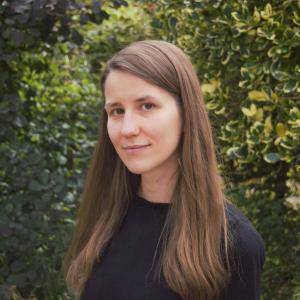
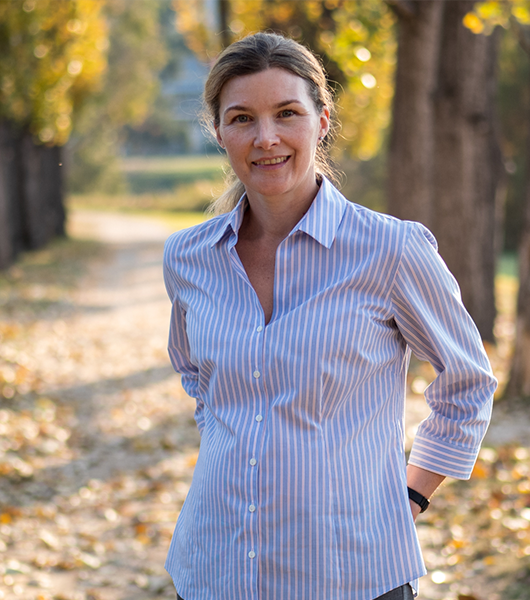
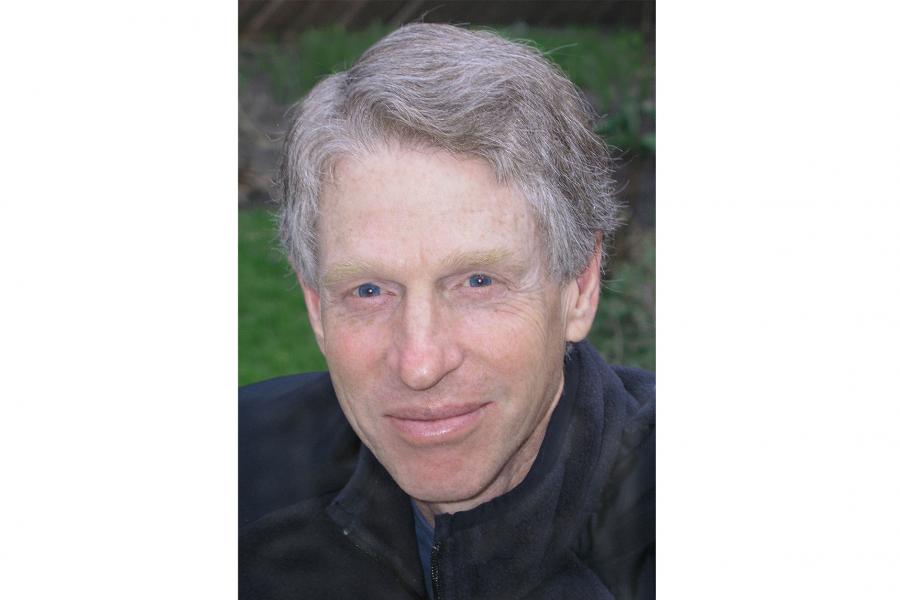
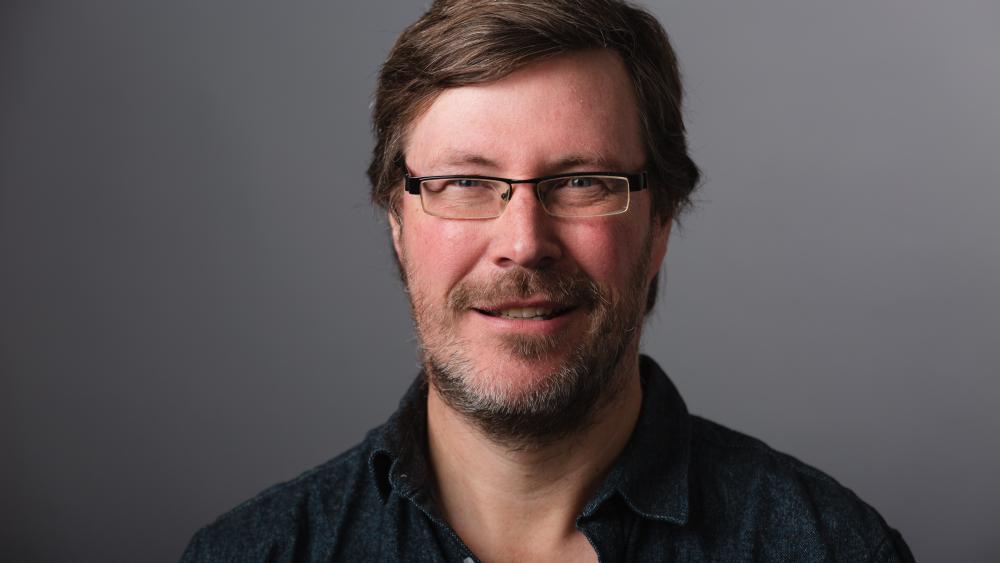
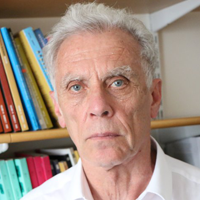
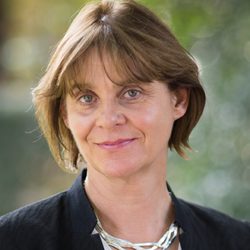
Prof. Dr. Dirk Heckmann is a prominent academic and legal expert currently serving as a member of the Bavarian Institute for Digital Transformation (bidt) Board of Directors and holding the Chair of Digital Law and Security at the Technical University of Munich . As a constitutional lawyer and judge at the Bavarian Constitutional Court, he bridges legal expertise with digital policy through advisory roles in the Federal Government's Data Ethics Commission and the Chancellor's National IT Summit. In 2020, he established the TUM Center for Digital Public Services to advance legally sound, common-good-oriented digitalization. His research focuses on digital education , digital administration , and healthcare digitalization , with particular emphasis on legal certainty for digital systems . Recent projects like ReDiKo (Regulating Digital Communication Platforms) and AFFAIRE (AI Regulation for Examinations) highlight his commitment to evidence-based digital governance. He has authored the juris Practical Commentary on Internet Law since 2021, shaping Germany's digital legal discourse. Professor Heckmann actively engages in public debates about digital sovereignty and platform regulation , most notably at the 2025 Nuremberg Digital Festival where he will discuss open-source foundations for digital sovereignty. His work spans constitutional law , data ethics , and AI policy , with recent publications analyzing social media harassment, AI's impact on education, and digital violence legislation.
Charles D. Piot is a Professor and Bass Fellow in the Department of Cultural Anthropology at Duke University's Arts & Sciences. His work spans contemporary culture and politics, histories of slavery and colonialism, and transnational African diasporic studies. Ph.D., University of Virginia (1986) M.A., University of Virginia (1982) B.A., Princeton University (1973) Research focuses on francophone West Africa , particularly Togo, with theoretical contributions to modernity , biopolitics , postcolonialism , and transnational migration . He explores how globalization, NGOs, and religious movements reshape sovereignty and social structures. Recent work examines urban informality and economic resilience in African microenterprises. His publications include award-winning books Nostalgia For the Future (2010) and Remotely Global (1999), alongside peer-reviewed articles on topics ranging from visa lottery systems to ethnographic theory. As co-editor of Cultural Anthropology (2011-2015), he advanced open-access publishing initiatives. Scientific awards include the African Politics Conference Group Award for Best Book on African Politics (2010) Royal Anthropological Institute's Amaury Talbot Prize (1999) African Studies Association's Herskovits Prize finalist (1999)
T.L. Taylor is a Professor of Comparative Media Studies at MIT, affiliated with the School of Humanities, Arts, and Social Sciences. She holds the Margaret MacVicar Faculty Fellow distinction and directs the MIT Game Lab. Her expertise spans online gaming culture, sociology of technology, and digital media studies. Taylor’s research bridges qualitative methods with critical analyses of virtual worlds, esports, and live-streaming platforms. Education: M.A. (1997) and Ph.D. (2000) from Brandeis University; B.A. (1990) from UC Berkeley; community college graduate (Chaffey, 1988). She has taught courses on critical internet studies, qualitative methods, and gaming at MIT. Taylor co-founded the non-profit AnyKey and served on Twitch’s Safety Advisory Council (2020–2024), advocating for inclusive gaming environments. Research interests include digital culture, ethnography of online spaces, and the socio-technical dynamics of games. Her award-winning book Watch Me Play: Twitch and the Rise of Game Live Streaming (2018) explores live-streaming’s cultural impact. She also authored Raising the Stakes (2012) on esports professionalization and Play Between Worlds (2006) on MMOG communities. Awards include the 2019 MacVicar Faculty Fellow for undergraduate teaching excellence and the ASA CITAMS Book Award. Her work intersects academia and industry, with consulting roles at Microsoft Research and contributions to policy discussions at the White House and International Olympics Committee. Taylor’s current projects include studies on play in curated environments like Disney parks and the evolving socio-technical assemblages of theme parks. She advises on civic initiatives and regularly publishes on esports diversity, platform moderation, and digital cultural practices.
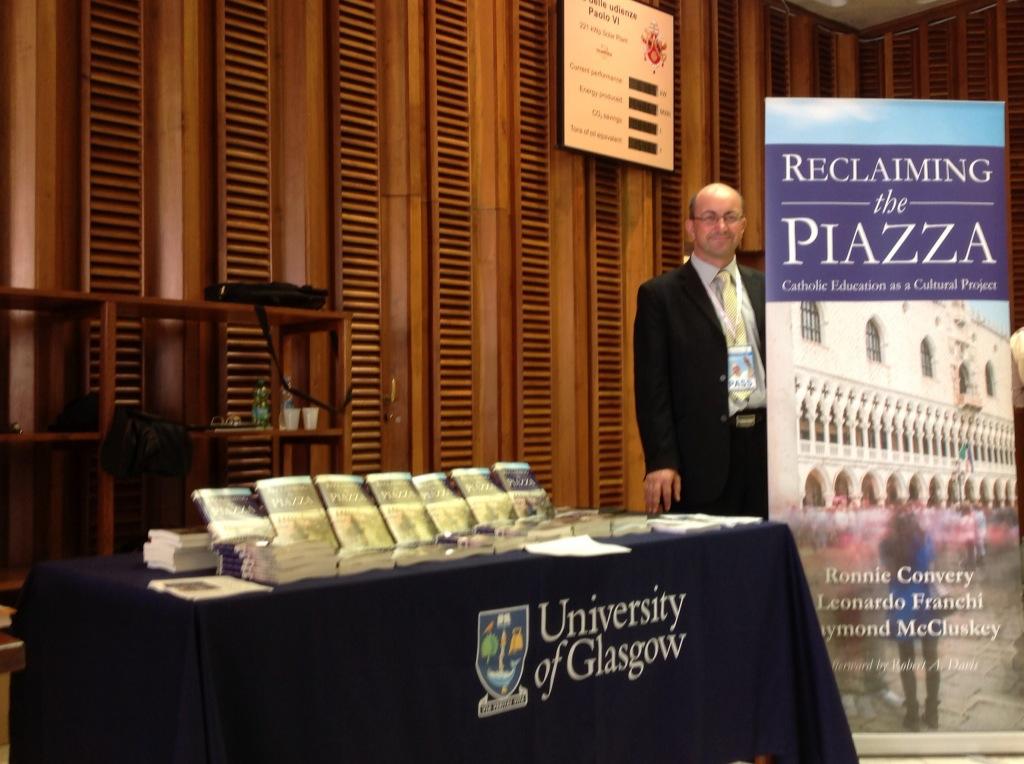
Dr. Leonardo Franchi serves as a Senior Lecturer in Pedagogy, Praxis & Faith at the University of Glasgow's School of Education. He is an internationally recognized scholar in Catholic education, holding significant editorial roles including Series Editor for both Catholic Education Globally - Challenges and Opportunities (Springer) and Education and Integral Human Development (Catholic University of America Press). In September 2024, he was appointed co-convenor of the Scottish Catholic Historical Association and maintains an active role as Executive Member of the Association of Catholic Institutes of Education. Franchi's educational background includes a Master of Arts (Hons), Post Graduate Certificate in Education, Master of Education, Post Graduate Certificate in Academic Practice, and a PhD. His academic journey reflects both theoretical depth and practical teaching experience in educational settings. His research interests center on Catholic education with particular focus on religious education, teacher formation, and the integration of liberal arts in higher education. Franchi has made significant scholarly contributions through the Reclaiming the Piazza series and numerous publications exploring how Catholic educational philosophy can address contemporary challenges while maintaining theological integrity. His work consistently examines the intersection of faith, culture, and educational practice, with increasing attention to character formation, intercultural dialogue, and the application of Catholic social teaching to educational policy. Analysis of his recent publications reveals a consistent trajectory examining Catholic educational identity in pluralistic contexts, with growing emphasis on character formation, teacher professional identity, and the integration of Catholic intellectual tradition with contemporary educational challenges. His 2023-2025 work shows increased focus on Scottish Catholic educational history, the application of papal encyclicals to educational practice, and the role of music and arts in religious formation. Series Editor for Catholic Education Globally - Challenges and Opportunities (Springer) Series Editor for Education and Integral Human Development (Catholic University of America Press) Co-convenor of Scottish Catholic Historical Association (since 2024) Executive Member of Association of Catholic Institutes of Education (since 2016) Academic Adviser to Academic Advisory Forum for Religious Education Reform in England and Wales (2019-2022) Franchi actively supervises doctoral students on diverse topics including professional identity of Catholic school teachers, music and religious education, Jesuit educational charism, and solidarity in Jesuit higher education. His supervision portfolio demonstrates his commitment to both theoretical exploration and practical application in religious educational contexts. He has received grant funding, including £10,000 from Porticus UK to support academics from developing countries attending the ACISE 2018 conference. Franchi also serves on multiple editorial boards including Review of Religious Education, Formation and Theology, and Studia Pedagogica Ignatiana. His professional activities extend to international presentations, with keynotes at institutions including Australian Institute of Theological Education and Radboud University, demonstrating his global influence in Catholic educational discourse. Franchi also serves as Director of Mater Christi Multi Academy Trust in Lancaster and holds a 0.5 FTE position as Professor of Catholic Education at the University of Notre Dame Australia.
Judith Altrogge is a Researcher at the Institute for Migration Research and Intercultural Studies (IMIS) at the University of Osnabrück . Since August 2019, she has served as a Research Associate in the project TRANSMIT - Transnational Perspectives on Migration and Integration . Her academic journey includes completing her PhD (2017-2020) at the University of Basel and Osnabrück, and prior roles as a Research Associate (2017-19) and Project Assistant (2012-17) at the Arnold-Bergstraesser-Institute (ABI) in Freiburg. Education: PhD candidate (2017-2020) at University of Basel and University of Osnabrück Her research spans Migration and Border Regimes , International Political Sociology , and Practice Theories , with geographic focus on North and West Africa . She critically examines policies of externalization, humanitarianism, and the role of international organizations in migration governance. Her work often addresses postcolonial dimensions of sovereignty and deportation practices. Judith's publications (2018-2022) reflect a thematic concentration on EU-African migration cooperation , forced return mechanisms , and diaspora dynamics . Key contributions include analyses of Gambian migration governance, EU-African policy challenges, and the political economy of migration. Her methodological approach integrates practice theory with empirical fieldwork in West Africa. Currently affiliated with IMIS and involved in the Collaborative Research Center 'Production of Migration' , she contributes to projects under the DeZIM Research Association and participates in networks like IMISCOE . Judith actively collaborates with institutions such as the German Society for International Cooperation (GIZ) and the Arnold Bergstraesser Institute (ABI).
Professor Sandra Wachter is a leading academic in legal and ethical implications of AI, Big Data, and robotics at the Oxford Internet Institute (OII) , University of Oxford, and as Humboldt Professor at the Hasso Plattner Institute. She leads the OII's governance of emerging technologies (GET) research programme , focusing on AI regulation, algorithmic bias, and human rights. Affiliations : Berkman Klein Center (Harvard University), World Economic Forum, UNESCO, IEEE, World Bank, Bonavero Institute of Human Rights, Oxford Martin School, and more. Research : Legal and ethical frameworks for AI, explainability (notably Counterfactual Explanations ), fairness metrics, and combating algorithmic discrimination through her Conditional Demographic Disparity (CDD) tool. Awards : Alexander von Humboldt Foundation Research Award (2025), O2RB Excellence in Impact Award (2021, 2018), Computer Weekly Women in UK Tech (2021), Privacy Law Scholar (2019), CognitionX Outstanding Achievements (2023, 2017). Impact : Her work is implemented by Google, IBM, Amazon, and Microsoft; influences NHS and MHRA policies; and has been cited in major media outlets including The New York Times, BBC, and Nature.
Dr. Amelia Simpson holds the position of Honorary Associate Professor at the Australian National University (ANU), specializing in constitutional law with a focus on discrimination principles and federalism. She earned her BA Hons and LLB Hons from ANU, followed by an LLM and JSD from Columbia University. She is a practicing Barrister and Solicitor in the High Court of Australia. Her research critically examines constitutional frameworks, particularly regarding state residence discrimination under Section 117 and interstate free trade jurisprudence. Her work has been cited in landmark High Court and Federal Court rulings, solidifying her reputation as a leading scholar in public law. Amelia’s contributions include co-authoring Hanks Australian Constitutional Law: Materials and Commentary (2016) and contributing to the Oxford Handbook of Australian Constitutional Law (2018). Her research on social equality and functionalist approaches to non-discrimination has advanced scholarly discourse on constitutional values. Notably, her 2017 paper Social Equality in Australia critiques the historical neglect of equality principles in constitutional interpretation. Her publications span constitutional doctrine, class actions reform, and environmental policy, reflecting her interdisciplinary approach. She ranks among Australia’s top 20 most prolific legal scholars in high-impact journals (2000–2010). Her work bridges theoretical analysis with practical legal challenges, influencing both academia and judicial practice.
Susan Scheckel is an Associate Professor in the Department of English at Stony Brook University, specializing in American literature and culture before 1900. Her research spans the history of race, visual and print cultures, theories of nationalism, and medical history in the U.S. context. Ph.D. from University of California-Berkeley (1992) Teaches courses on 19th-century American literature, Civil War culture, and Gothic literature Current research focuses on nostalgia as a medical and cultural concept in U.S. history Her publications explore intersections of race, gender, and medicine in 19th-century American literature and visual culture, including award-winning analyses of indigenous representation and national identity. Awards include NEH Summer Fellowships, the Don D. Walker Prize, and SCMLA Book Prize. She has taught at the University of Memphis, University of Southern California, and Stony Brook since 2000. Email: Susan.Scheckel@stonybrook.edu Office: Humanities 2091
Arthur Schafer is a Full Professor in the Department of Philosophy at the University of Manitoba's Faculty of Arts and Founding Director of the Centre for Professional and Applied Ethics. He serves as a National Research Associate of the Canadian Centre for Policy Alternatives and previously held roles as ethics consultant for the Winnipeg Regional Health Authority and Head of the Section of Bio-Medical Ethics in the Faculty of Medicine. His academic credentials include a BLitt in Philosophy from the University of Oxford (1967) and a BA Honours from the University of Manitoba. His distinguished career spans over five decades of ethical scholarship and public engagement. Professor Schafer specializes in professional and applied ethics with intensive focus on bioethics , research ethics , and biomedical conflicts of interest . His work critically examines medical assistance in dying , informed consent , clinical trial ethics , and human rights frameworks , establishing him as a leading voice in Canadian ethical discourse. His philosophical approach bridges theoretical rigor with practical policy applications across multiple professional domains. Analysis of his 13 most recent publications reveals enduring engagement with evolving ethical challenges, particularly the tension between institutional interests and professional integrity. His scholarship demonstrates consistent progression from foundational ethical theory toward contemporary policy applications, with recent work heavily concentrated on medical assistance in dying and pharmaceutical industry influence in healthcare systems. His scientific recognition includes: D. R. Campbell Outreach Award (1984) Olive Beatrice Stanton Award for Excellence in Teaching (1976) Canadian Commonwealth Scholarship (1964) Woodrow Wilson Fellowship (1964) Canada Council Fellow As an active supervisor for Master's and PhD students, Schafer extends his mentorship through ethics consulting for professional associations in Medicine, Engineering, Architecture, Nursing, and Pharmacy. His policy impact is evidenced by service on the Provincial-Territorial Expert Panel on Medical Assistance in Dying and two published reports for the Canadian Centre for Policy Alternatives. His extensive media contributions—including hundreds of CBC appearances and newspaper columns—demonstrate exceptional public scholarship. The Centre for Professional and Applied Ethics, which he founded, functions as a vital interdisciplinary hub connecting academic philosophy with real-world ethical challenges across healthcare, law, and public policy sectors, facilitating ongoing dialogue between scholars, practitioners, and community stakeholders.
Professor Phil Clark is a Professor of International Politics at SOAS University of London, specializing in conflict and post-conflict issues with a focus on transitional justice, peacebuilding, and reconciliation after mass atrocity in Rwanda, Uganda, the Democratic Republic of Congo, and Burundi. He holds a DPhil in Politics from the University of Oxford, where he studied as a Rhodes Scholar, and a Bachelor of International Studies from Flinders University. His research focuses on international, national, and community-based responses to mass violence in Central Africa, particularly examining the gacaca community courts in post-genocide Rwanda and the International Criminal Court (ICC). Professor Clark has advised multiple governments (Danish, Sudanese, Swedish, Ugandan, and UK), international organizations (ICC, International Criminal Tribunal for Rwanda), and NGOs (Human Rights Watch, Crisis Group) on conflict issues in Africa. Professor Clark's work spans several key areas including the History, Politics and Law of the African Great Lakes; Transitional Justice Theory and Practice; the Politics of Violence; Community-Based and Customary Law; Conflict Resolution and Reconciliation; the Politics of International Criminal Justice; Peacebuilding, Security and Post-Conflict Reconstruction; and Moral and Political Philosophy. His approach often combines theoretical analysis with practical fieldwork in post-conflict societies. His publications reveal a consistent focus on the tension between international legal frameworks and local justice mechanisms, particularly examining how post-genocide societies navigate complex reconciliation processes. Over time, his work has evolved from documenting specific cases (like the gacaca courts) to analyzing broader patterns of transitional justice and international criminal law across the African continent. Shortlisted for the Raphael Lemkin Award for best book on genocide and mass violence (for "Distant Justice: The Impact of the International Criminal Court on African Politics") Regular contributor to major media outlets including The New York Times, Foreign Affairs, Washington Post, The Guardian, and BBC Frequent media commentator on international news networks including BBC, France 24, Al Jazeera, CNN, and Deutsche Welle Professor Clark has supervised multiple PhD students working on topics related to conflict analysis, women's access to transitional justice, China-Africa relations, and conflict transformation. His current research includes "Intergenerational Justice in Eastern Africa" and "Reframing Justice after Atrocity," which examines justice interactions beyond the linear international-to-national transmission of norms and practices. He has led significant research projects, including serving as technical advisor and co-author of a 2007 UN Office of the High Commissioner for Human Rights project surveying popular perceptions of transitional justice and peacebuilding in northern Uganda. His ongoing work continues to shape academic and policy discussions about justice mechanisms in post-conflict societies.
Francisco Panizza is a Professor at the Department of Government, London School of Economics and Political Science (LSE). He holds a PhD in Politics from the University of Essex and has expertise in Democracy, Human Rights, Latin American Politics, Populism, and MERCOSUR. Previously worked at Amnesty International (1991-1995), joined LSE in 1995. On sabbatical 2022/2023. Languages spoken: English, Spanish. Education: Law degree from Universidad de la República (Uruguay), MA and PhD in Politics from University of Essex. Research focuses on political patronage in Latin America, democratic governance, populist discourses, and left-wing politics in Latin America. Key works include 'Handbook of Politicization and Political Patronage' (2025), 'Populism and the Mirror of Democracy' (2005), and studies on Argentina's and Uruguay's public administration reforms. Teaches courses such as GV245: Democracy and Democratisation, GV443: The State and Political Institutions in Latin America, and GV320: Populism. Active in comparative politics research, editing the Routledge Series 'Conceptualizing Comparative Politics.' Research emphasizes political appointments, public sector reform, and the interplay between populism and democracy. No specific scientific awards listed, but holds prominent academic standing in political science.
Professor Keita Takayama is a prominent academic in education studies at the University of South Australia’s UniSA Education Futures. His work focuses on global education policy, comparative education, and teacher education methodology. He actively engages with transnational policy processes, decolonial research frameworks, and critical analyses of international assessments like PISA. As editor of the Asia-Pacific Journal of Teacher Education (APJTE), he emphasizes rethinking teacher subjectivity and pedagogical practices. His research critiques the politics of knowledge production and advocates for methodological innovations like 'Asia as Method.' Recent work addresses contradictions in education export policies, linguistic imperialism in scholarship, and the role of education in resisting authoritarianism. Education Background: Doctorate in Education (focus on comparative policy studies) Advanced training in decolonial methodologies and policy analysis Research Interests: Professor Takayama’s work bridges global and local educational contexts. Key themes include: Policy mobilities & transnational education governance Reimagining comparative education through 'negative' comparative frameworks Ethics of academic publishing and knowledge dissemination Teacher education’s role in shaping democratic societies Labs/Teams: Leads the APJTE editorial collective and co-founded the iTKNe transnational knowledge exchange platform for teacher educators. Active in global academic networks addressing East Asian education stereotypes and postcolonial educational research.
Professor Richard Powell is a Cultural, Political, and Historical Geographer with expertise in the Polar Regions. He is currently the Professor of Arctic Studies and Director of the Scott Polar Research Institute at the University of Cambridge, while also serving as a Fellow of Fitzwilliam College. His career spans roles at the University of Oxford and the University of Liverpool, with a focus on the Arctic and its geopolitical, cultural, and environmental complexities. BA Geography, St. John's College, University of Oxford (Double First Class Honours) MA Geography, University of British Columbia (Distinction) PhD Geography, Emmanuel College, University of Cambridge PG Cert. Learning and Teaching in Higher Education, University of Liverpool Richard's research explores historical and cultural geographies, the geopolitics of the Arctic, geographies of science, and the interplay between environment and politics in the Circumpolar Region. His ERC-funded project ARCTIC CULT investigates colonial representations in Arctic studies, while prior work includes ethnographic studies of Arctic scientific practices and the political implications of resource extraction. He has authored a monograph, Studying Arctic Fields , and edited volumes on polar geopolitics. His recent publications emphasize the intersection of Arctic governance, colonial histories, and environmental science. Notable awards include the ERC Consolidator Grant and the Gill Memorial Award , alongside teaching accolades like the Teaching Excellence Award at the University of Oxford. He has supervised over 30 postgraduate students and leads interdisciplinary teams in projects funded by the Leverhulme Trust, AHRC, and ESRC. ERC Consolidator Grant (2016) Gill Memorial Award (2013) Teaching Excellence Award (2012) Environment and Planning A Ashby Prize (2007) RGS-IBG Area Prize (2002) H.O. Beckit Memorial Prize (1998) Gibbs Book Prize (1998) Richard collaborates with institutions like the Royal Society, Royal Geographical Society, and National Museum of Denmark, and has hosted seminars and workshops on Arctic geopolitics. He is a member of the UK Arctic and Antarctic Partnership Steering Committee and contributes to policy discussions on polar governance.
Sarah Harper is the Clore Professor of Gerontology at the University of Oxford and Director of the Oxford Institute of Population Ageing. She was appointed a CBE in 2018 for services to Demography and serves as Chair of HelpAge International. Professor Harper has held numerous influential positions including serving on the Prime Minister's Council for Science and Technology and as Director of the Royal Institution of Great Britain. Her educational background includes an MA from Cambridge and a DPhil from Oxford. Prior to her academic career, she trained with the BBC as a News and Current Affairs Reporter and Producer. She subsequently held academic positions at the University of London and the University of Chicago before returning to Oxford to found the Oxford Institute of Population Ageing. Professor Harper's research focuses on demographic change, particularly the implications of falling fertility and increasing life expectancy. Her work examines life course factors in healthy ageing, social and economic drivers of health and well-being, with emphasis on life transitions. She has conducted significant research on eldercare in China, fertility patterns in sub-Saharan Africa (revealing that ideal family size remains high despite girls' education), and demographic changes in Vietnam and Myanmar affecting agricultural production and food security. Her publication record demonstrates consistent focus on global demographic trends, with recent work increasingly addressing the intersection of population change with environmental challenges. She has authored influential books including 'How Population Change Will Transform Our World' (Oxford University Press, 2016) and is working on a new book for Cambridge University Press on Population and Environmental Change. Scientific Awards and Honors CBE (Commander of the Order of the British Empire) in 2018 for services to Demography Royal Society for Public Health: Arts and Health Research Award (2011) Fellow of the Academy of Medical Sciences Fellow of the Royal Anthropology Institute Professor Harper has supervised numerous PhD students across diverse topics from biodiversity conservation in Southeast Asia to intergenerational solidarity in Turkey. Her advisory work extends globally, having served on the Scientific Advisory Board of Natural England, the Royal Society's Working Group on Population and Environment, and as an advisor to governments including the UK, Malaysia, Singapore, and the European Commission. She has received research funding from organizations including the US National Institutes of Health, which supported the founding of the Oxford Institute of Population Ageing. As Director of the Oxford Institute of Population Ageing, Professor Harper leads a multidisciplinary team examining demographic trends and their societal implications. The Institute serves as a hub for international collaboration on ageing research, working with organizations including Population Europe and the International Association of Research Universities. She also serves as founding editor of the Journal of Population Ageing and editor of the Handbook of Ageing and Public Policy.
Konstantin Petoukhov is a SSHRC Postdoctoral Fellow (2021-2023) in the Department of Sociology, Social Policy and Criminology at the University of Liverpool. He holds a Ph.D. in Sociology from Carleton University (2018) and an M.A. from the University of Manitoba. His research focuses on victimology, transitional justice, and settler colonialism, particularly examining the social construction of victim status and reparations for historical injustices. Research Interests: Critical victimology and victimhood discourses Reparations for human rights violations and settler colonial violence Restorative justice and structural victimization Decolonization of Canadian agriculture and Indigenous knowledge systems His work analyzes the Independent Assessment Process for Indian Residential School abuse survivors, critiquing bureaucratic violence and the construction of 'ideal' vs. 'non-ideal' victims. He collaborates with the Collaborative Justice Program to study 'complex offenders' marginalized by systemic injustice. Scientific Awards: SSHRC Postdoctoral Fellowship (2021-2023) Mitacs Canadian Science Policy Fellowship (2018-2020) Advising & Grants: Petoukhov’s fellowships supported research on Indigenous agricultural revitalization and settler colonial reparations. His grants include SSHRC funding for postdoctoral work on complex offenders. Labs/Teams: Active partnership with the Collaborative Justice Program (Liverpool) to study systemic violence and offender victimization dynamics.