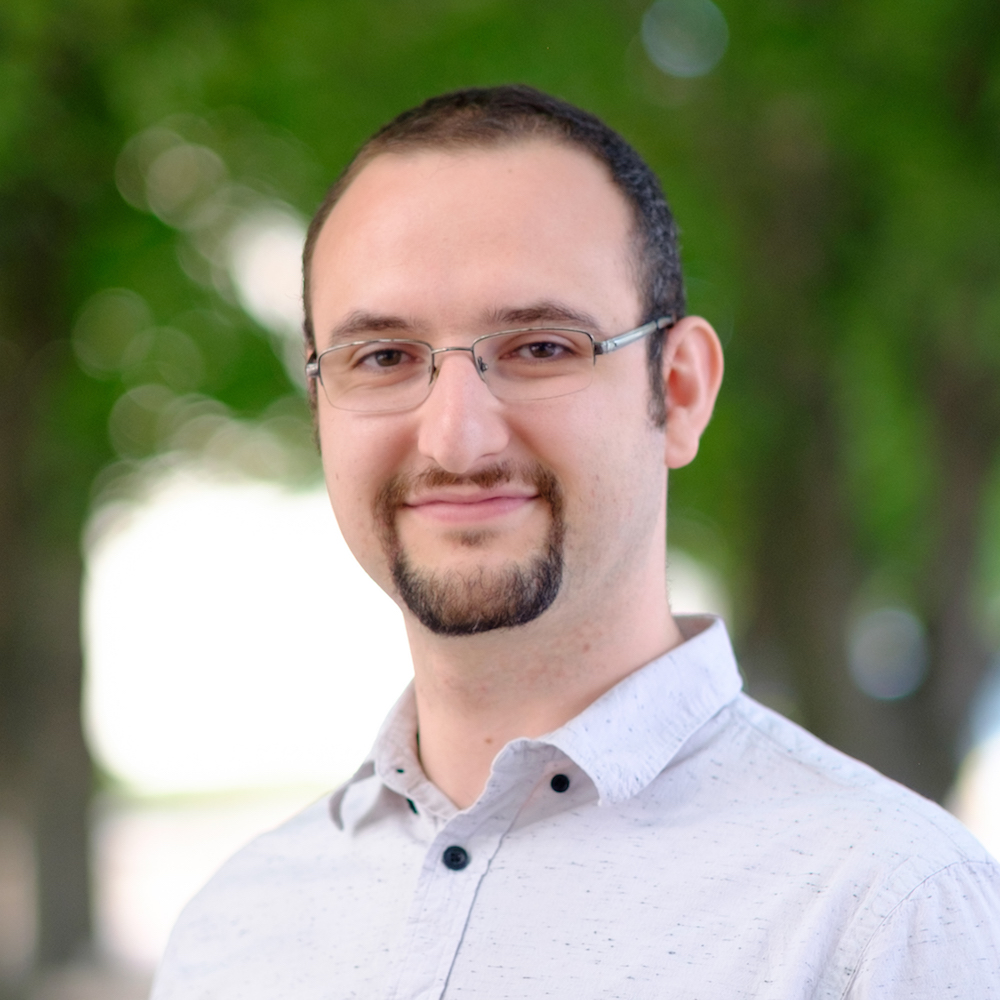
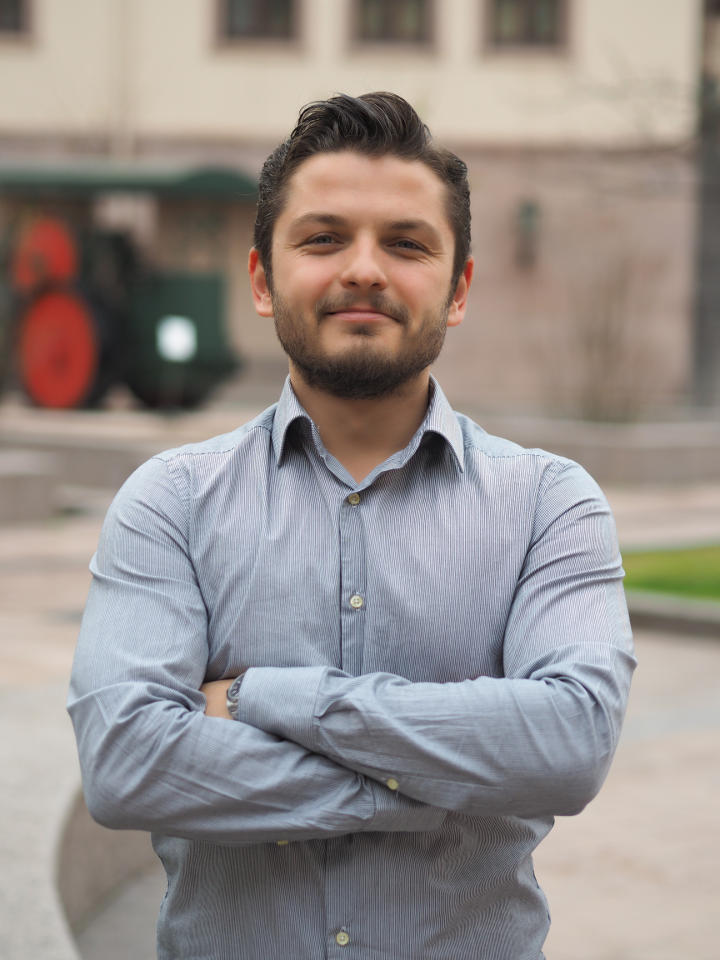
Onur Varol is an Assistant Professor at Sabanci University's Computer Science Department and leads the VIRAL Lab, which focuses on computational social science, network science, and machine learning. He has affiliations with the Center of Excellence for Data Analytics. His research spans social bot detection, misinformation analysis, and online behavior modeling.
Assoc. Prof. Dr. Yasemin CEYHAN is an accomplished academic in nursing, currently serving as an Associate Professor at Kırşehir Ahi Evran University's Faculty of Health Sciences, Department of Nursing. She has been a full-time faculty member since 2013, initially as a Research Assistant (2013-2020) and subsequently as a Doctoral Teaching Member (2020-present). She holds multiple administrative positions including Head of Department (2020-present), Faculty Council Member (2022-present), and Quality Committee Member (2024-present). Dr. CEYHAN completed her Bachelor's Degree in Nursing at Ahi Evran University (2007-2011), followed by a Master's Degree in Nursing at Erciyes University (2012-2015), and earned her Doctorate in Internal Medicine Nursing from Erciyes University (2015-2019). She has completed numerous specialized courses in statistical analysis, meta-analysis, and healthcare research methodology. Her research primarily focuses on Internal Medicine Nursing with particular expertise in Chronic Obstructive Pulmonary Disease (COPD) management, cultural competency in nursing practice, and patient self-management in chronic diseases. She has developed significant expertise in psychometric evaluation of nursing instruments and has contributed substantially to understanding the relationship between cultural sensitivity and nursing care effectiveness. Her work bridges nursing practice with psychological, cultural, and physiological aspects of patient care. Analysis of her publication record reveals a clear evolution from descriptive studies to sophisticated analytical research employing structural equation modeling and randomized controlled trials. Her recent work demonstrates increasing methodological rigor with a focus on mediation and moderation effects in complex patient care scenarios, particularly in COPD management where she examines intricate relationships between symptoms, psychological factors, and self-management behaviors. Poster Presentation 3rd Prize (2014) from Eskişehir Osmangazi University Dr. CEYHAN has successfully supervised multiple Master's theses and currently mentors additional graduate students. She has secured and led several significant research projects funded by TÜBA, TÜBİTAK, and university research funds, focusing on chronic disease management, cultural competency assessment tools, and COPD patient care. Her research portfolio demonstrates a strong commitment to evidence-based nursing practice and instrument development. As an active member of the Turkish Respiratory Research Association (since 2018) and the Turkish Nurses Association (since 2015), Dr. CEYHAN maintains a robust collaborative research network that spans multiple Turkish universities, particularly Erciyes University. Her work reflects a team-oriented research approach with numerous co-authored publications demonstrating interdisciplinary collaboration.
Assoc. Prof. Dr. Umut Asan is an active faculty member in the Department of Industrial Engineering at Istanbul Technical University (ITU), Faculty of Management. He holds the academic rank of Associate Professor and has been affiliated with ITU since 1999, progressing from Research Assistant to his current role. He earned his PhD from Technische Universität Berlin and holds a Master’s and Bachelor’s from ITU in Engineering Management and Industrial Engineering, respectively. PhD: Technische Universität Berlin (2003–2009) MSc: Istanbul Technical University, Engineering Management (1999–2001) BSc: Istanbul Technical University, Industrial Engineering (1995–1999) Dr. Asan's research lies at the intersection of decision science and industrial systems, with a strong emphasis on Multi-Criteria Decision Making (MCDM) , Fuzzy Cognitive Mapping , Scenario Planning , and Digital Twins . His work applies advanced modeling techniques such as Bayesian networks and fuzzy logic to solve complex problems in supply chain resilience, urban mobility, technology adoption, and organizational behavior. His recent publications (2023–2025) reveal a consistent trend toward integrating artificial intelligence and data-driven methods into decision support systems. Topics include electric vehicle adoption in urban logistics, digital twin frameworks for manufacturing, risk analysis in forestry and rail systems, and consumer behavior in digital platforms. These works demonstrate interdisciplinary applications across engineering, business, and social sciences, often using fuzzy and probabilistic models to handle uncertainty. Dr. Asan is actively involved in research leadership, having served as Vice Dean (2018–2023) and currently supervising numerous graduate theses. He is the principal investigator of funded projects, including BAP grants on qualitative cross-impact analysis and consumer cognitive models. Principal Investigator, "A New Approach to Qualitative Cross-Impact Analysis" (BAP Project, 2016–2020) Principal Investigator, "A New Approach to Consumer Causal Chain Models" (BAP Project, 2022–2024) He is a member of several international academic societies, including the International Society on MCDM, ENBIS, and EURO, reflecting his active engagement in the global operations research community. His research has been published in journals such as IEEE Access, European Journal of Forest Engineering, and Decision Science Letters, with a growing citation impact (Scopus h-index: 13). Dr. Asan advises a large cohort of graduate students, both at the Master’s and PhD levels, in areas ranging from risk modeling to digital transformation. His lab or research group focuses on decision support systems and cognitive modeling, supervising theses on FMEA, Bayesian networks, and digital twins. Future work appears to be directed toward enhancing predictive capabilities in industrial and societal systems through hybrid AI models.
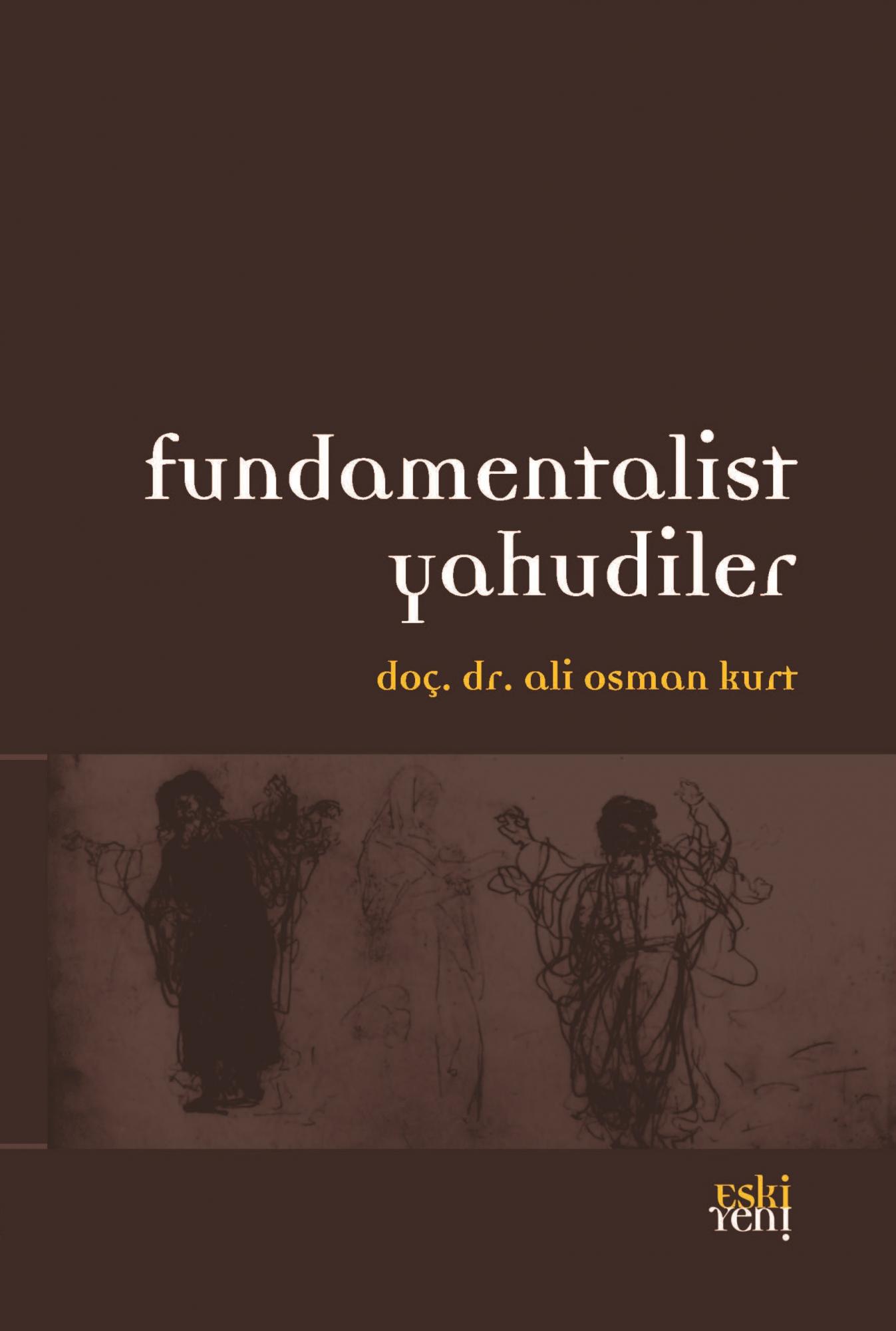
Prof. Dr. Ali Osman KURT is the Dean of the Faculty of Religious Studies at Ankara Social Sciences University (ASBU), where he heads the Department of History of Religions. He holds a PhD from Ankara University (2006), an MA from Cumhuriyet University (2000), and a BA from Marmara University (1995). His administrative roles include membership in the ASBU Scientific Publication Ethics Committee and board positions at the Writers Union of Turkey (TYB) and Turkey Association for the History of Religions (TUDTAD). His research focuses on early and modern Jewish studies , with emphasis on Babylonian exile, Jewish fundamentalist movements (Hasidic and Mitnagdic), apostasy in Abrahamic religions, and the economic dimensions of kosher practices. He explores intersections between theology, anthropology, and socio-religious history. KURT's publications demonstrate consistent focus on Jewish theological evolution, comparative religious anthropology, and critical analysis of biblical narratives. Recent works examine anthropological methodologies in religious studies, temple archaeology (Göbeklitepe), and contemporary interfaith challenges. His scholarship bridges historical analysis with modern socioreligious issues. Awards & Recognition: Researcher of the Year Award (Turkish Studies, 2017) Academic Leadership: He has advised 10+ graduate students (PhD/Master’s) on topics ranging from Alexandrian Christianity to Jewish identity preservation. Key projects include translating Ibn Kammuna’s interfaith works and directing studies on Anatolian religious tourism. Administrative responsibilities encompass deanship, university vice-rectorship, and editorial roles for academic journals including Ulum and TYB Akademi .
Sanem Sarıel Uzer is a Professor at Istanbul Technical University (ITU) in the Department of Artificial Intelligence and Data Engineering, part of the College of Computer and Informatics. She has been a faculty member at ITU since 2007, progressing from Instructor to Associate Professor in 2016 and achieving full Professor status in 2024. She is the founder and coordinator of the ITU Artificial Intelligence and Robotics Laboratory and leads multiple research initiatives in cognitive robotics, planning, and machine learning. Ph.D. in Computer Engineering, Istanbul Technical University (2002–2007) M.Sc. in Computer Engineering, Istanbul Technical University (1999–2002) B.Sc. in Control and Computer Engineering, Istanbul Technical University (1995–1999) Her research focuses on artificial intelligence, robotics, and machine learning, particularly in enabling cognitive systems and robots to reason, plan, and learn in complex environments. She investigates lifelong learning methods, multi-robot team strategies, and safe robot manipulation using deep reinforcement learning. Her recent work emphasizes failure anticipation, multimodal detection, and knowledge distillation to improve robot safety and autonomy. The trend in her recent publications (2023–2024) shows a strong focus on enhancing the safety and reliability of robotic manipulation through AI techniques such as deep reinforcement learning, adversarial learning, and multimodal perception. Her work spans both theoretical algorithm development and practical applications in service and industrial robotics. Scientific Awards: Siemens Turkey Excellence Award (2004) TÜBİTAK 13th Technology Award – Best Product (2018) TÜBİTAK 13th Technology Award – University-Industry Collaboration Mention (2018) Best Visual Presentation Award, IEEE SIU (2016) ITU Project Performance Award (2020) TÜBİTAK Ufuk 2020 (2019) Necdet Eraslan Project Competition Mention (2007) She has supervised numerous students in RoboCup competitions and led multiple funded research projects, including two TÜBİTAK projects on lifelong learning for cognitive robots and the development of the open-source Violet system for robot vision. She has also served as a consultant on AI projects with companies like Triodor, Artı Teknoloji, and Analitik Bilişim. Her grants include funding from TÜBİTAK, ITU Scientific Research Projects, and the Ministry of Science, Industry and Technology. She leads the ITU Artificial Intelligence and Robotics Laboratory and is actively involved in national and international collaborations, including with Georgia Tech, University of Pennsylvania, and University of South Florida. She also contributes to professional communities such as IEEE, AAAI, RoboCup, and EUCog.
Özkan Ergene is an Associate Professor in the Department of Mathematics and Science Education at Sakarya University Faculty of Education . He has been actively contributing to the field of mathematics education since 2015 and currently serves as the Head of the Department of Mathematics Education and Deputy Head of the Department of Mathematics and Science Education. His academic work spans teaching, research, editorial duties, and leadership in academic organizations. Education: Doctorate in Mathematics Teaching, Marmara University Institute of Educational Sciences, 2019 Master's in Mathematics Teaching, Marmara University Institute of Educational Sciences, 2014 Bachelor's in Mathematics Teaching, Marmara University Atatürk Faculty of Education, 2012 (Top student) His research interests center on mathematics education , particularly prospective mathematics teacher education , problem solving and posing , mathematical modeling , and measurement and evaluation . He also explores the integration of artificial intelligence and innovative methods like origami and ethnomathematics in teaching. His recent publications reflect a strong focus on conceptual understanding in calculus, AI in education, and teacher/student perceptions. The analysis of his recent articles reveals a consistent trend in investigating mathematical thinking processes , especially in areas like infinite sets , integrals , and problem posing . He frequently employs qualitative and instrument development methodologies, often focusing on pre-service teachers and secondary students . The integration of technology , particularly AI tools like ChatGPT, is an emerging and prominent theme in his latest work. Scientific Awards: TUBİTAK_2211 Yurt İçi Lisansüstü Burs Programı Doktora Bursiyerliği TUBİTAK_2211 Yurt İçi Lisansüstü Burs Programı Yüksek Lisans Bursiyerliği He actively supervises graduate students, with several ongoing and completed master’s theses under his guidance, such as those on the flipped classroom model and mathematical modeling. He has served as a consultant for TÜBİTAK projects and has been involved in numerous research grants, demonstrating his role in securing and managing academic funding. His editorial contributions include peer review for high-impact journals like Education and Information Technologies , Journal of Pedagogical Research , and International Journal of Science and Mathematics Education . He is a member of several academic communities, including the European Society for Research in Mathematics Education (ERME) and the British Society for Research into Learning Mathematics . He has organized and moderated sessions at international conferences like ERPA Congress and UFBMEK, and he leads the Mathematics Education Community at his university, highlighting his active role in fostering academic collaboration.
Asst. Prof. Ata Elvan is a faculty member at Dokuz Eylul University's Faculty of Health Sciences, Department of Physiotherapy and Rehabilitation. He holds a Ph.D. in Physiotherapy (2017), M.S. in Physiotherapy (2013), and B.S. in Physiotherapy (2010, Hacettepe University). His academic roles include teaching courses such as Basics of Physiotherapy, Kinesiology, Exercise Physiology, and Research Design. Ph.D. - Physiotherapy, Dokuz Eylul University (2017) M.S. - Physiotherapy, Dokuz Eylul University (2013) B.S. - Physiotherapy, Hacettepe University (2010) Dr. Elvan's research focuses on Physiotherapy, Kinesiology, Exercise Physiology, Gait Analysis, and Balance Control . His work explores musculoskeletal biomechanics, postural stability, dual-task interference, and the impact of environmental factors like water immersion or menstrual cycle phases on movement patterns. Key trends in his publications (2016–2025) include: Biomechanical analysis of gait and plantar pressure Neurological and hormonal influences on postural control Rehabilitation strategies for chronic neck pain and spinal deformities Technological applications (e.g., virtual reality, mobile devices) in physiotherapy He has contributed to understanding musculoskeletal disorders through studies on foot posture assessment, kinesiology principles, and orthotic interventions , though no formal scientific awards are documented in available sources.
Barbaros Yet is an Associate Professor in the Department of Cognitive Science at the Graduate School of Informatics, Middle East Technical University in Ankara, Turkey. His research focuses on decision-making under uncertainty, integrating human judgment, published evidence, and uncertain data into Bayesian approaches and probabilistic graphical models. Applications span healthcare (clinical decision support, trauma care modeling), agriculture (climate resilience policy), and operational systems (fleet reliability prediction). Research interests include Bayesian networks, causal reasoning, knowledge representation, and decision support systems. He has developed tools for shared clinical decision-making, trauma outcome prediction, and agricultural policy prioritization. His work emphasizes interpretable models that align with expert reasoning processes. Notable contributions include Bayesian network-based frameworks for spinal pathology assessment, aircraft reliability modeling, and trauma care prediction systems. His articles frequently bridge theoretical probabilistic modeling with practical applications in medicine and engineering. Active in interdisciplinary collaborations, he contributes to global health initiatives like the UKRI Action Against Stunting Hub. Professional links include ORCID (0000-0003-4058-2677), ResearchGate (https://www.researchgate.net/profile/Barbaros-Yet), and a Twitter presence (@barbarosyet). Contact via byet@metu.edu.tr.
Barış Akgün is an Assistant Professor at Koç University since September 2016. Previously, he was a Post-Doctoral Fellow at the Electrical and Computer Engineering Department of The University of Texas at Austin. He holds a PhD in Robotics from the Georgia Institute of Technology (2015), an MSc in Computer Science, and a BSc in Mechanical Engineering with a Mechatronics minor from the Middle East Technical University (2010 and 2007, respectively). Research Interests: Designing systems/algorithms for robots to learn from demonstration and autonomously operate in complex environments Human-robot collaboration and safety in shared spaces Machine learning applications for sequential/time-series data His work focuses on enabling robots to operate reliably alongside humans through advanced learning methodologies. No scientific awards or grants have been explicitly mentioned in the provided information. No advising/grant details are available. Current lab/team affiliations are not specified.
Prof. Dr. Cengiz Duran holds the position of Professor and Dean at the Faculty of Economics and Administrative Sciences, Dumlupınar University. His academic journey includes roles as Associate Professor (2014–2020) and spans over two decades in higher education. He has led departments, served as Dean (since 2021), and held administrative roles such as Head of Department and Vocational School Director. Education: Bachelor’s in Business Administration (1993, Çukurova University) Master’s in Business Administration (2000, Gazi University) PhD in Business Administration (2007, Gazi University) Research focuses on Total Quality Management, Organizational Behavior, Entrepreneurship, and Innovation. Key projects include studies on organizational culture, water consumption, and ethics in accounting professions. He has authored/co-authored 12 books and over 120 publications. Notable awards: Two Best Paper Awards (2017). His work bridges theoretical frameworks with empirical studies in business and public administration. Active in interdisciplinary research, he explores sustainability, leadership ethics, and workplace dynamics.
Prof. Dr. Tufan Kumbasar is a faculty member at the Department of Control and Automation Engineering , Istanbul Technical University , where he has served as a Professor since 2024. He previously held roles as Associate Professor (2019-2024), Vice Dean (2017-2020), and Guest Professor at the University of Alaska Fairbanks (2016). His research spans multiple domains in computational intelligence and control systems. PhD in Control and Automation Engineering (ITU, 2012) Postdoctoral Research (University of Essex, 2012) Master's and Bachelor's in Control and Automation Engineering (ITU, 2008 and 2006) His work focuses on Type-2 Fuzzy Logic Systems , Deep Learning Integration , and Uncertainty Quantification with applications in Drone Swarms , Autonomous Vehicles , and Medical Robotics . Recent publications highlight hybrid control methodologies combining conventional and fuzzy logic, AI-driven system identification , and real-world implementations of learning frameworks. 2023 BAGEP Science Academy Young Academician Achievement Award 2022 IEEE Türkiye Outstanding Young Scientist Award 2021 Parlar Foundation Research Encouragement Award Best Publication Awards (2015, 2018) As a Principal Investigator , he leads projects like KAYRA Search and Rescue Robot and UMAY Search and Rescue Robot , emphasizing Deep Learning-based Type-2 Fuzzy Systems and Reliable Uncertainty Quantification . His teaching innovations include transforming Feedback Control Systems into MATLAB environments via Deep Learning Pipelines .
Caglar Karatug is an Assistant Professor in the Department of Marine Engineering at Istanbul Technical University. His research focuses on predictive maintenance strategies for ship machinery systems, energy efficiency in maritime transportation, and sustainable development goals related to marine engineering. He has contributed to advancements in renewable energy applications onboard ships, risk assessment methodologies for emission control technologies, and digital transformation in smart ship operations. Research interests include maintenance optimization for marine systems, emission reduction techniques for container vessels, and the integration of solar/wind energy systems with marine propulsion. His work addresses UN Sustainable Development Goals through innovations in energy efficiency and pollution prevention. Recent publications analyze hybrid predictive maintenance approaches, cost-benefit tradeoffs of emission reduction technologies, and reliability assessment methods for marine engines. His research emphasizes practical applications of advanced analytics and sustainability practices in the maritime sector.
Ayşe Tosun Kühn is an Associate Professor in the Department of Computer Engineering at Istanbul Technical University (ITU), where she also serves in administrative roles such as Deputy Dean and Management Board Member of the ITU Artificial Intelligence and Data Science Application and Research Center. She earned her Ph.D. in Computer Engineering from Boğaziçi University and has held academic positions at Sabancı University and the University of Oulu. Her research lies at the intersection of software engineering, empirical methods, and data science, with a focus on software quality, defect prediction, technical debt, vulnerability analysis, and test-driven development. She leads numerous funded research projects, including those supported by TÜBİTAK and industry collaborations, applying machine learning and reinforcement learning to software engineering challenges. Her recent publications reflect a strong trend in applying advanced machine learning techniques—particularly deep learning and reinforcement learning—to problems in software analytics, developer behavior modeling, and delivery optimization. She has made significant contributions to empirical studies on test-driven development, defect prediction models, and vulnerability detection in code. Her work is frequently published in high-impact journals such as IEEE Transactions on Software Engineering, Empirical Software Engineering, and Journal of Systems and Software. She has served as a guest editor and editorial board member for the Turkish Journal of Electrical Engineering and Computer Sciences , and has contributed book chapters on data science in software engineering. Her research has been cited over 1,700 times, with an h-index of 23. Scientific Awards: None explicitly mentioned. She advises several graduate students and has collaborated extensively with researchers in Turkey and internationally. She has also contributed to industry applications through projects on software measurement, defect prediction, and AI-based analytics. She is actively involved in organizing and contributing to major software engineering conferences and workshops. She is a key member of ITU’s AI and Data Science initiatives, contributing to both academic research and practical implementations in software engineering.
Dr. DERYA ÇEVİK TAŞDEMİR serves as an Assistant Professor at Gaziantep University's Oğuzeli Vocational School within the Department of Management and Organization. With expertise spanning Occupational Health and Safety, Work Psychology, and Organizational Management, she contributes significantly to both academic and practical applications in workplace safety and human resource management. Her position includes teaching responsibilities across multiple degree levels and active participation in research projects addressing critical workplace issues. Doctorate in Business Administration from Hasan Kalyoncu University (2016-2019) Master's in Electrical and Electronics Engineering from Gaziantep University (2011-2013) Bachelor's in Mechatronics Engineering from Bahçeşehir University (2005-2010) Double Major Bachelor's in Electrical-Electronic Engineering from Bahçeşehir University (2008-2010) Dr. Çevik Taşdemir's research focuses on the intersection of workplace safety, psychological factors, and organizational effectiveness. Her work examines safety climate, ergonomic issues in various industries, work-life balance from Maslow's theoretical perspective, psychosocial risk factors, and psychological ownership in organizations. She has made significant contributions to understanding how safety culture impacts organizational energy and employee well-being across multiple sectors including healthcare, textile manufacturing, and emergency services. Analysis of her recent publications reveals a strong emphasis on practical applications of occupational health and safety principles, with particular attention to the Turkish context. Her work bridges theoretical frameworks with empirical data, often employing both qualitative and quantitative methodologies. The research consistently addresses contemporary workplace challenges including pandemic impacts, sustainable safety management, and the adaptation of international safety standards to local contexts. Dr. Çevik Taşdemir actively mentors graduate students, having supervised two master's theses on humanitarian aid logistics and economic relationships. She has participated in multiple research projects including EU-funded initiatives focused on developing applicable occupational safety curricula for professionals. Her administrative experience includes serving as Head of Department (2021-2022) and contributing to university committees related to occupational safety education. Her professional activities extend beyond the university through membership in TMMOB EMO (Union of Chambers of Turkish Engineers and Architects, Chamber of Electrical Engineers) where she serves on the Board of Directors since 2020. She also maintains an Occupational Safety Specialist Certificate, demonstrating her commitment to both theoretical and practical aspects of workplace safety.
Murat IŞIK is a Lecturer in the Department of Computer Engineering at the Faculty of Engineering and Architecture, Kırşehir Ahi Evran University. He has been serving as a full-time faculty member since 2017 and currently holds additional administrative positions as Department Head (since 2025) and Research Application Center Deputy Director (since 2024). PhD in Computer and Information Engineering, Sakarya University (2011-2017) MSc in Computer Engineering, Sakarya University (2009-2011) Bachelor's Degree from Dicle University, Batman Technical Education Faculty (2002-2006) Dr. IŞIK's research spans multiple areas in computer science and engineering, with a focus on artificial intelligence applications. His primary research interests include Computer System Software, Image Processing, Programming Languages, Computer Software and Software Engineering, Machine Learning, and Artificial Intelligence. His work demonstrates a strong interdisciplinary approach, applying computer vision and deep learning techniques to diverse fields including medical diagnostics, education technology, and accessibility solutions. His recent publications show a trend toward practical applications of AI in education, healthcare, and everyday life challenges. He has developed innovative solutions such as real-time assessment systems for primary schools, assistive technology for visually impaired individuals, and classification systems using deep learning approaches. Research World Medal and Research World Excellent Paper Award (2016) Dr. IŞIK has successfully supervised multiple master's students and is actively involved in numerous research projects funded by higher education institutions. His projects range from BCI-supported deep learning models for motor/facial movement detection to AI-assisted insole production and intelligent test systems for primary school students. He has secured funding for projects extending through 2027, demonstrating sustained research productivity. He leads the Computer Engineering department's research efforts and has established collaborations with researchers both within Turkey and internationally, particularly in Iraq. His laboratory work focuses on implementing practical AI solutions with an emphasis on accessibility and educational applications.