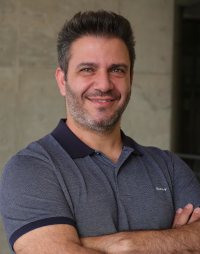
Professor Palle Dahlstedt is affiliated with the University of Gothenburg's Interaction Design department. His work bridges music technology, live coding, and interdisciplinary performance. He specializes in gestural interactions, algorithmic creativity, and systems for collaborative improvisation. Key projects include the Bucket System, OtoKin, and research on live coding frameworks. Research interests focus on creative technologies in music and performance, with emphasis on real-time systems, human-computer interaction, and artistic collaboration. Dahlstedt has published extensively in venues like NIME, ICLC, and Evolutionary Intelligence, addressing topics ranging from hybrid piano design to generative storytelling. Notable contributions include the Biosphere Code Manifesto (2015), exploring algorithms in environmental contexts, and the Electroacoustic Modular Ecosystem (2020). His work often involves cross-disciplinary collaborations with dancers, musicians, and technologists. Performance highlights include jury-selected NIME performances (2015) and collaborations with artists like Gino Robair and Tim Perkis. Dahlstedt actively participates in international festivals and conferences, advancing the field of computational creativity and artistic research.
Connor McCann is an Assistant Professor in the Robotics Engineering department at Worcester Polytechnic Institute (WPI). He leads the PRiSM Lab, which focuses on hybrid-stiffness mechanisms blending rigid and soft robotics to enhance robotic capabilities. His work integrates first-principles modeling with application-driven design for areas like robotic grasping, wearable robotics, and bioinspired systems. Education: Ph.D. and M.S. in Mechanical Engineering from Harvard University (2025, 2021), and B.S. in Mechanical Engineering from Yale University (2018). Research interests include the mechanics of rigid-soft material interactions, soft wearable robotics, bioinspired systems, and robotic manipulation. His lab emphasizes translating mechanical principles into functional prototypes for real-world applications. Key research trends in his articles include advancements in wearable robotics for industrial/medical use, aerodynamic control via textile metamaterials, and autonomous robotic exploration using low-cost hardware. His work bridges material science and robotics to create adaptive, high-performance systems. Labs/Teams: Director of the PRiSM Lab at WPI, focused on rigid-soft robotics innovation.
Dr. Aamna AlShehhi serves as an Assistant Professor in the Department of Biomedical Engineering and Biotechnology at Khalifa University, where she has pioneered AI-driven healthcare solutions since joining in 2020. Her interdisciplinary expertise bridges electrical engineering, computer science, and clinical medicine through innovative research collaborations with MIT, Imperial College London, and Novartis. Her educational foundation includes: Bachelor's in Software Engineering, United Arab Emirates University (2009) Master's in Computing and Information Science, Masdar Institute (MIT collaboration) (2013) PhD in Interdisciplinary Engineering, Masdar Institute (MIT collaboration) (2017) Dr. AlShehhi's research centers on artificial intelligence for healthcare transformation , with emphasis on neurodegenerative disease prediction, rare disease diagnostics, and wearable-based gait analysis. She develops constrained deep learning models for Alzheimer's biomarker discovery, self-supervised frameworks for emotion recognition using smartphone data, and physics-informed neural networks for biomechanical analysis. Her work integrates multimodal data including fMRI, genomic sequences, and real-world behavioral metrics to address critical gaps in dementia screening, cancer detection, and mental health monitoring. Analysis of her 2023-2025 publications reveals three dominant trends: (1) Explainable AI architectures for clinical decision support, particularly constrained graph neural networks analyzing comorbidity networks in Alzheimer's; (2) Multimodal sensor fusion systems combining wearables, keystroke dynamics, and fMRI for neurological assessment; (3) Self-supervised learning approaches enabling robust performance with limited medical data. Her work consistently targets real-world clinical deployment through portable systems like smart gait analyzers and remote depression screening tools. Dr. AlShehhi actively mentors the next generation of biomedical engineers: Ferial J. Abuhantash (Ph.D. candidate) Khalid Ahmed Abdulla (Master's student) Her research is supported through strategic partnerships with Novartis Institute for Biomedical Research and collaborative grants enabling AI-driven drug repurposing for dementia and genomic cancer detection. She leads projects analyzing skin lesions for melanoma screening and developing deep learning models for early-stage cancer detection using genomic data. As a core member of Khalifa University's Healthcare Engineering Innovation Group , she directs a multidisciplinary team including Postdoctoral Fellow Dr. Sherlyn Jemimah and Research Assistant Chahd Maher Musthafa Chabib. Current initiatives focus on creating deployable AI systems for clinical settings, with ongoing work on portable gait assessment tools for rehabilitation centers and real-time emotion recognition platforms for mental health monitoring.
Professor Vasileios Chatziioannou serves as Faculty Member and PhD Supervisor within the Department of Music Acoustics at the University of Music and Performing Arts Vienna. His academic leadership spans the Faculty of Music, where he guides doctoral candidates through the Structured Doctoral Program Performing Matters. His institutional role encompasses supervision across Ethnomusicology, Music in Society, and Musicology programs. His research focuses on the physics of musical instruments, with particular expertise in wind instrument aerodynamics and string-bow interaction mechanics. He employs advanced experimental techniques including particle image velocimetry (PIV) and high-speed motion capture alongside computational modeling. His work bridges theoretical acoustics with practical instrument design considerations, examining phenomena from tone hole geometry effects to friction dynamics in bowed strings. Analysis of his recent publications reveals a strong emphasis on energy-stable numerical methods for real-time simulation of musical instrument physics. His work consistently addresses the challenge of balancing computational efficiency with physical accuracy, particularly in modeling nonlinear phenomena like stick-slip friction and collision dynamics. The research trajectory shows increasing integration of experimental validation with computational models. While no specific scientific awards are documented in the provided materials, his sustained publication record in high-impact acoustics journals demonstrates significant scholarly contribution. His work regularly appears in specialized forums like the Journal of the Acoustical Society of America, particularly within special issues on musical instrument modeling. Professor Chatziioannou's supervision activities focus on computational and experimental approaches to musical instrument physics. His research program involves interdisciplinary collaboration between acousticians, instrument makers, and performers. Current projects include robotic replication of bowing techniques and 3D-printed instrument component optimization, reflecting his commitment to translating theoretical findings into practical applications for musicians and instrument designers.
Xu Chen is a doctoral researcher at ETH Zurich specializing in 3D generative models and neural implicit shape animation . His work focuses on creating photo-realistic simulations of human activity for applications in human-centric perception tasks .
Andrew Phillips is a Professor in Structural Biomechanics at Imperial College London's Department of Civil and Environmental Engineering within the Faculty of Engineering. He leads the Structural Biomechanics Group and coordinates the MEng Civil Engineering degree program. His research focuses on musculoskeletal modeling, finite element analysis, and bioinspired structures. Phillips holds a PhD from the University of Edinburgh (2005) and an MEd from Imperial College (2014). Key affiliations include the Additive Manufacturing Network, Centre for Blast Injury Studies, and Musculoskeletal Medical Engineering Centre. His work integrates computational methods with biomechanical principles, addressing topics like bone adaptation, trauma injury effects, and wearable sensor technologies. Notable contributions include developing motoneuron-driven muscle models and synthetic motion capture datasets via generative adversarial networks (GANs). Phillips also organizes the Parametric Engineering Course with Arup and SimplyRhino. Recent publications emphasize bone health in amputees, neural drive estimation, and energy-absorbing metamaterials. His 2018 European Society of Biomechanics SM Perren Award recognizes outstanding contributions to hip dysplasia biomechanics. Research trends highlight interdisciplinary approaches merging machine learning with traditional biomechanics to solve clinical and engineering challenges.
Dr. Aidan Doyle is a Reader in Industrial Chemistry at Manchester Metropolitan University, specializing in nanoporous materials and heterogeneous catalysis. His research focuses on emissions control technologies, low carbon fuels, and additive manufacturing applications in chemical engineering. Expertise in zeolite synthesis from unconventional sources Active researcher in methane oxidation and CO2 adsorption Contributor to aircraft cabin air quality studies Academic Background PhD in Chemistry (University of Limerick, 2000) BSc Industrial Chemistry (University of Limerick, 1995) Diploma in Chemistry (Waterford Institute of Technology, 1993) Research Highlights demonstrate his work across multiple disciplines including environmental engineering, materials science, and chemical processing. Recent publications focus on 3D-printed catalytic substrates, hybrid photocatalysts, and industrial-scale pollutant removal systems. Scientific Contributions include significant findings in: CO2 capture using waste-derived composites Methane abatement in dual-fuel engines Multi-metal adsorption from aqueous systems Aircraft cabin chemical contamination studies Awards and Distinctions include the Max-Planck-Society Research Fellowship, multiple university-level teaching and research accolades, and active roles in professional associations like the Royal Society of Chemistry. Professional Service involves external examiner duties at major universities and editorial review for funding bodies including EPSRC and RSC.
Cumhur Erkut is an Associate Professor in the Sound and Music Computing group within the Department of Architecture, Design and Media Technology at Aalborg University, Copenhagen, Denmark. With a publication record spanning over two decades from 2000 to present, his research bridges computer science, audio engineering, and creative arts. His primary research interests include Sound Synthesis, Physical Modeling of musical instruments, Virtual Reality Audio, Sonic Interaction Design, and Embodied Interaction. His work demonstrates a consistent focus on the intersection of technology and human experience, particularly in how sound and movement interact in digital environments. His recent publications show a strong shift toward AI-driven audio processing, voice conversion, and differentiable digital signal processing techniques. Dr. Erkut's publication trends reveal an evolution from traditional physical modeling of musical instruments (particularly string instruments like tanbur, clavichord, and guitar) toward more contemporary applications in virtual reality, embodied interaction, and AI-powered audio processing. His work consistently emphasizes real-time performance considerations and human-centered design principles. He has served in significant academic roles, including organizing the 17th International Conference on New Interfaces for Musical Expression (NIME 2017) at Aalborg University, demonstrating his leadership within the international research community. His collaborative network is extensive, with frequent co-authorship with Stefania Serafin, Vesa Välimäki, Antti Jylhä, Rolf Nordahl, and other prominent researchers in the sound and music computing field. These collaborations span multiple institutions across Europe, reflecting the international nature of his research.
Aristidou Andreas is an Associate Professor at the Department of Informatics, University of Cyprus. His academic journey includes a BSc from National and Kapodistrian University of Athens (2005), MSc from King's College London (2006), and a PhD from the University of Cambridge (2011). He has held postdoctoral positions at multiple institutions and served as a visiting professor at the University of Nicosia. His research focuses on human motion analysis, computer graphics, cultural heritage digitization, and geometric algebra applications. He is a senior member of IEEE, ACM, and Eurographics, and serves on editorial boards for journals like The Visual Computer. Research highlights include the FABRIK algorithm (widely used in game engines) and motion capture innovations for cultural heritage preservation. Awards include the DIDAKTOR scholarship, Erasmus Mundus Grant, and NVIDIA GPU grant. He leads projects funded by EU initiatives (e.g., ITN-DCH, SCHEDAR) and collaborates internationally on digital twins, virtual museums, and AI-driven motion synthesis. Key contributions span 3D motion analysis, motion reconstruction from sparse data, and emotion recognition in theater performances. His work bridges computational methods with cultural preservation, biomedical applications, and interactive VR systems.
Nuno Correia is an Associate Professor in Digital Transformation at Tallinn University , with affiliations including Aalto University (visiting lecturer) and ITI/LARSyS (associated researcher). He holds a PhD in Art and Design in New Media from Aalto University (2013) and has taught at multiple institutions globally since 2000. Research Interests : Human-Computer Interaction (HCI), Sound and Music Computing, Multisensory User Experience, Media Art and Design. His work bridges interactive technology with dance, digital art, and AI applications, focusing on performance ecologies, screen scores, and VR environments. Scientific Awards : Best paper award at ACM DIS 2022 Tallinn University best article in exact sciences 2022 Recent Trends in Articles : 2024 papers on AI-driven dance interaction; 2023 work on multisensory feedback systems; 2022 studies on body mapping and composite animation; 2021 contributions to hackathons, screen scores, and VR design; 2020 projects on live motion capture and glitch workflows. Creative Contributions : Co-founder of SIIDS symposium; organizes art-science residencies (e.g., Bio Elektron, MODINA project); collaborates with Eesti Kontsert on brain-wave visualization performances.
James Nabity is an Associate Professor and Associate Chair for Undergraduate Operations at the University of Colorado's College of Engineering and Applied Science, affiliated with BIOSERVE Space Technologies. His research focuses on Environmental Control & Life Support Systems (ECLSS), space habitat design, propulsion, and power systems for human spaceflight. He earned a Ph.D. in Mechanical Engineering from the University of Colorado (2007), an M.S. in Aeronautics & Astronautics from the Naval Postgraduate School (1989), and a B.S. in Mechanical Engineering from the University of Nebraska (1983). Professional experience includes roles as Principal Engineer at TDA Research (2007-2013) and Mechanical Engineer at the Naval Air Warfare Center Weapons Division (1983-1999). His work emphasizes advanced materials, thermal systems, and bioregenerative life support solutions. Research interests span CO2 capture technologies, ionic liquid membranes, and thermal control architectures. Notable achievements include the 2017 Outstanding Faculty Advisor Award and selection as a NASA astronaut candidate in 2009. His contributions bridge academic research with practical aerospace engineering challenges. Publications highlight innovations in ECLSS design, space habitat systems, and propulsion architectures for Mars missions. Labs/teams include BIOSERVE’s collaborative initiatives in space biotechnology and environmental control systems.
Shuchi Deb is an Associate Professor of Industrial, Manufacturing, and Systems Engineering at the University of Texas at Arlington, where she has served since 2019 and was promoted to Associate Professor in September 2024. She directs an active, grant-funded research program that blends human-factors engineering, virtual & augmented reality, and transportation safety to improve human-system interaction across manufacturing, education, and public-safety domains. Education: Ph.D. in Industrial & Systems Engineering, Mississippi State University, 2017 M.S. in Industrial and Management Engineering, Montana State University, 2014 B.Sc. in Industrial and Production Engineering, Shahjalal University of Science & Technology (Bangladesh), 2006 Research & Innovation: Deb’s scholarship focuses on human-centred design of complex socio-technical systems. She exploits immersive technologies—virtual, augmented and mixed reality—to study and enhance safety, training transfer, and user experience in contexts ranging from automated-vehicle interactions and cyclist–infrastructure compatibility to additive-manufacturing education and police reality-based training. Her work repeatedly integrates psychophysiological sensing (EEG, eye-tracking, facial-expression analysis) with usability engineering to create adaptive, trustworthy human-machine interfaces. Recent federally supported projects include an NSF grant to build a bilingual VR platform for additive-manufacturing education ($837 k), a USDOT project developing a driver-readiness monitor for prolonged automated driving, and a Department of Justice award with the Fort Worth Police Department to create VR-based reality training scenarios ($269 k). These grants exemplify her translational approach: coupling rigorous human-factors experimentation with deployable technological solutions. Scientific Recognition: Outstanding Contribution & Mentorship Award, UT Arlington (2024) Best Graduate Student Paper, Mississippi State University (2017) IIE/FlexSim Simulation Competition Winner (2016) SEMS Best Student Paper, IISE (2016) Annual Ergonomics Design Competition, Auburn University (2015) Advising & Grant Leadership: Deb has chaired or served on more than a dozen Ph.D. and M.S. thesis committees and mentored over twenty undergraduate researchers. Since 2019 she has attracted > US $2.3 million in external funding as PI or Co-PI, supporting a broad cohort of graduate researchers who disseminate their work annually at ASEE, IISE, HFES, TRB, and AHFE conferences. Labs & Teams: She founded and advises the Human Factors Lab at UT Arlington, a shared facility equipped with VR headsets, motion-capture systems, driving and cycling simulators, and psychophysiological recording suites. The lab collaborates with industry (Fort Worth Police, local manufacturers) and across campus (Computer Science, Mechanical & Aerospace Engineering) to provide interdisciplinary training to students.
John Warmenhoven is a Lecturer at the University of Technology Sydney's School of Sport, Exercise and Rehabilitation within the Faculty of Health. His research intersects applied analytics, movement science, and meta-research, focusing on translating data science—especially functional data analysis—into real-world applications in high-performance sport, health, and defense. He co-leads national grants in the CSIRO Sports AI Consortium and has authored over 40 peer-reviewed publications. His research interests include AI-driven skill acquisition, biomechanics-informed performance optimization, and data science capability-building for defense. Dr. Warmenhoven supervises PhD students working on innovative projects ranging from sports AI to biomechanical analysis. Recent publications demonstrate trends in advanced biomechanical modeling, athlete performance diagnostics, and meta-research methodologies. He engages extensively with elite sports industries to develop practical, problem-centered research solutions.
Marco Volino is a Senior Lecturer in Computer Vision and Graphics at the University of Surrey's Centre for Vision, Speech and Signal Processing (CVSSP). He holds a PhD and MEng in Electronic Engineering from the University of Surrey. His research focuses on advancing visual media production through interdisciplinary work in computer vision, graphics, and machine learning, with applications in film, broadcast, gaming, and immersive technologies like AR/VR. He has led projects such as the Polymersive and ALIVE initiatives, and developed hardware/software systems for volumetric video and photogrammetry. Volino has secured funding including an Epic MegaGrant and InnovateUK projects, and serves on the editorial boards of multiple conferences. Education: PhD Computer Vision and Graphics (2016, University of Surrey), MEng Electronic Engineering (2011, University of Surrey), BTec National Diploma in Electrical/Electronic Engineering (2006). Professional experience includes roles at BBC R&D, USC Institute for Creative Technologies, and Sony Broadcast Labs. He teaches modules like AR/VR and the Metaverse, and supervises MSc and PhD students in topics such as volumetric capture and digital humans. Research Highlights: Volumetric video compression, 3D human reconstruction, real-time motion capture, and immersive media production. Key Contributions: Developed 64-camera photogrammetry systems, WebGL-based renderers, and tools for Unreal Engine integration. Leadership: Co-chair of European Conference on Visual Media Production (CVMP) 2023-2024 and Area Chair for BMVC 2021-2024.
Univ.-Prof. Dr. Bettina Wollesen serves as a full Professor in the Department of Movement-Oriented Prevention and Rehabilitation Sciences at the German Sport University Cologne. Her work integrates movement therapy, gerontology, and rehabilitation science with a focus on vulnerable populations including nursing home residents and older adults. Her research interests center on physical activity psychology (100% fingerprint match), gait analysis (50%), and resistance training (42%), with significant contributions to dual-task training, ergonomic interventions, and mobility promotion in aging populations. Key areas include cognitive-motor interference in gait, virtual reality exergaming, and health services research in nursing contexts. Recent publications reveal strong trends in interdisciplinary geriatric rehabilitation (87% of 2025 articles), with emphasis on nursing home settings (62%), technological interventions (48%), and dual-task paradigms (35%). Her work bridges clinical practice, policy development (notably the DNVF Position Paper), and methodological innovation in gait analysis. As Editor for Springer Nature publication series since 2017, she advances scholarly communication in sports science. Her collaborative network includes 11 prominent researchers across movement gerontology, with extensive work through the PROCARE-project on nursing home mobility. Dr. Wollesen leads significant health policy initiatives including the DNVF Memorandum on physical activity-related health services research and coordinates ergonomic workplace interventions targeting nursing personnel. Her lab focuses on mobile brain/body imaging applications and develops evidence-based protocols for cognitive-motor training in hearing-impaired older adults.