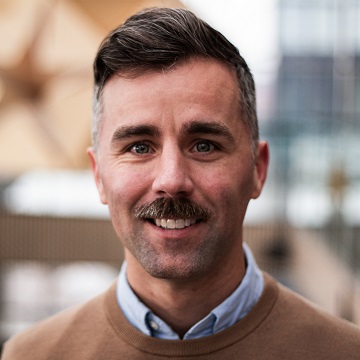
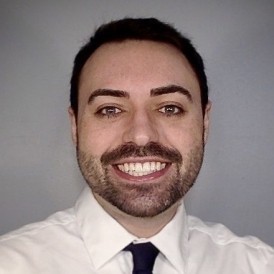
Dr Shahedur Rahman is a Senior Lecturer in Computer Science at Middlesex University , with extensive contributions to telecommunications engineering, image processing, and bioinformatics. His research focuses on wireless network optimization, perceptual distortion metrics for video coding, and molecular biology database integration. Research Interests : Interference management in LTE/5G networks Perceptual quality assessment in multimedia systems Computer vision for accessibility and mobility aids Integration of biological and medical databases Wavelet-based image compression Genomic data analysis Selected Scientific Publications highlight trends in: Dynamic channel allocation techniques for LTE networks SSIM/SATD hybrid distortion metrics Gene mutation data modeling Image processing for visual impairment assistance Database interoperability in medical systems Optimization algorithms for hardware systems
Dr. Jamie Whitfield is a Senior Lecturer at the Exercise and Nutrition Research Program, Mary MacKillop Institute for Health Research, Australian Catholic University (ACU), Melbourne. He is an active researcher and HDR supervisor with expertise in skeletal muscle physiology, exercise metabolism, and nutritional interventions in athletic performance. Research Interests: His research focuses on understanding how nutrient availability regulates skeletal muscle metabolism during exercise and how this influences training adaptation and human performance. Utilizing cell, rodent, and human models, he investigates ergogenic aids such as dietary nitrates, ketogenic diets, and energy restriction strategies. His work is particularly impactful in elite endurance sports, where he conducts controlled 'research camp' studies. The recent publications highlight a strong trend in nutrition-exercise interactions , especially concerning low-carbohydrate diets , energy availability , mitochondrial health , and glucose monitoring in sport . His studies often involve elite athletes and aim to translate physiological findings into practical performance insights. Scientific Awards: Natural Sciences and Engineering Research Council of Canada (NSERC) Postdoctoral Fellowship (2020–2022) Editor’s Choice, Medicine & Science in Sports & Exercise (2021) Editor’s Choice, The Journal of Physiology (2020) Advising and Grants: As a fully accredited HDR supervisor, Dr. Whitfield mentors postgraduate researchers. He leads major projects including Unravelling the energy issues underpinning Low Energy Availability in high performance athletes (Wu Tsai Human Performance Alliance, 2025–2027) and Effects of Mitopure (Urolithin A) on skeletal muscle function and endurance performance (Amazentis, Inc., 2020–2024). Labs and Teams: He works within the Exercise and Nutrition Research Program at ACU, collaborating closely with Professors John Hawley and Louise Burke. His research integrates multidisciplinary teams involving physiologists, nutritionists, and sports scientists, particularly in large-scale human intervention studies.
Dr. Kai Wheeler is a Senior Lecturer at the School of Human Movement and Nutrition Sciences , The University of Queensland . A proud Ngarabal person and Accredited Exercise Scientist, he specializes in implementation science and trauma-informed practices through co-design partnerships with Aboriginal and Torres Strait Islander communities. Director of Aboriginal and Torres Strait Islander Strategy Program Convenor for Bachelor of Exercise and Sport Sciences Chair of ESSA Aboriginal and Torres Strait Islander Strategy Working Group His research focuses on: Co-designing physical movement programs for Indigenous communities Biomechanics and sport performance analysis Indigenous health and wellbeing through sport and exercise Workforce development for addressing Indigenous health challenges Recent research trends highlight interdisciplinary work across education , public health , and sports science , particularly in culturally responsive frameworks and Indigenous-led health interventions . Awards include: 2022 Australian Academy of Science Aboriginal and Torres Strait Islander Scientist Award 2021 National Science Week Outreach Award 2017 NAIDOC Award from Fraser Coast Dr. Wheeler supervises multiple PhD projects on topics like trauma-informed education , Deadly Fit Mums program , and Indigenous physical literacy , with collaborations across medical research , sports organizations , and Indigenous governance bodies .
Dr. Ryan E.R. Reid is an Assistant Professor in the Department of Human Kinetics and Computer Science at St. Francis Xavier University. He leads the Wearable Movement Sensors Lab, focusing on integrating wearable technology into primary healthcare and studying physical activity in clinical populations. Post-doctoral Fellowship: Université de Montréal and Saint Justine University Hospital Center (2017-2019) PhD in Kinesiology (Exercise Physiology), McGill University (2012-2017) BSc in Kinesiology (Honours), McGill University (2009-2012) His research specializes in objective physical activity measurement using accelerometers (ActiGraph, ActivPal, Fitbit), with key applications in bariatric surgery outcomes, spinal cord injury, multiple sclerosis, and elite sports (ice hockey, football). Current projects emphasize healthcare equity through technology and chrono-exercise patterns in children. Recent publications analyze wearable monitor accuracy, post-surgical activity trends, and the intersection of timing, exercise, and obesity management. He also investigates workplace active workstation efficacy and pandemic-era virtual interventions for lymphoma survivors. Dr. Reid's work bridges computer science and human kinetics, aiming to improve health outcomes through data-driven approaches. His lab focuses on sensor validation, algorithm development, and translating findings to clinical and community settings.
Gideon Maas is an Adjunct Professor and Executive Director of the International Centre for Transformational Entrepreneurship (ICTE) at Coventry University. He holds additional roles as an Extraordinary Professor at the University of Stellenbosch Business School and Adjunct Scientific Fellow at Münster University of Applied Sciences. With extensive international experience across Africa, Europe, and Asia, his career spans academia, consultancy, and institutional leadership in entrepreneurship education and innovation. Maas holds a Doctorate in Entrepreneurship from Stellenbosch University (1996) and an MBA in Strategic Planning (1989). His research focuses on systemic entrepreneurship, entrepreneurial ecosystems, family business governance, and the role of universities in fostering innovation. He has secured over £3.16 million in external research funding, emphasizing applied projects in entrepreneurship policy and education. His work bridges academic and practical domains, with contributions to entrepreneurship education models, business incubator effectiveness, and regional development strategies. Key thematic areas include transformational entrepreneurship frameworks, socioenvironmental sustainability through enterprise, and global-local dynamics in industries like digital gaming. Research Highlights: Entrepreneurial ecosystems, innovation systems, family business sustainability, and university-enterprise collaboration Leadership Roles: Directorships at multiple entrepreneurship centers, ISBE President (2017-2019) Grants: Over £3M in externally funded research projects Maas has pioneered initiatives like the Transformational Incubation Programme in Ghana and contributed to policy frameworks for entrepreneurship education globally. His work emphasizes actionable insights for both academic and practitioner audiences.
Hello Tamas is an Associate Professor at the Department of Constitutional Law within the Faculty of Political Science and Law at the University of Miskolc, Hungary. He has served in this faculty since 2004, progressing from university assistant professor to associate professor in 2014, with continuous contributions to research and education. Education: Ságvári Endre High School (1995) Lawyer degree from University of Miskolc (2001) Ph.D. in Political Science and Law (2004) Research Focus: His work spans logistics optimization, Industry 4.0 integration, and sustainable operations management. Key areas include vehicle routing problems, milkrun supply systems, and cyber-physical logistics frameworks. Technological Specialties: Real-time maintenance optimization IoT applications in logistics Drone-based delivery systems Mathematical modeling for supply chains Sustainability in manufacturing Human-machine resource assignment Methodological Approach: Combines algorithmic optimization (Weiszfeld, Wagner-Whitin, Silver-Meal) with practical implementations across automotive manufacturing, food industry, and healthcare logistics.
Mila Koeva is a Vice Dean Research and senior Associate Professor at the University of Twente, Faculty of Geo-Information Science and Earth Observation (ITC), Netherlands. Her research focuses on 3D city digital twins, geospatial technologies, and their applications in land management and urban planning. She leads the Digital Twin Geohub and contributes to international initiatives like the Digital Twin City Centre (DTCC) and Open&Agile Smart Cities (OASC). Her expertise spans geospatial data processing, digital twin development, and fit-for-purpose land administration, particularly in peri-urban areas of Africa and Asia. She has coordinated the Horizon 2020 project its4land , which won the Geospatial World Innovation Award (2021), and is active in organizations like ISPRS and FIG. Recent research highlights include: Developing 3D hedonic price models for urban planning using machine learning. Advancing cadastral boundary extraction via deep learning and UAV technology. Creating digital twin simulations to address urban heat islands and solid waste management. Scientific Awards: Geospatial World Innovation Award (2021) Inclusive Earth Observation (EO4all) (2022) Copernicus Masters Competition (3rd Place, 2016) Best Research Paper, Journal of Spatial Science (2018) She supervises PhD and MSc students, with recent student achievements including the 2nd-best MSc thesis award in the Netherlands (2023) and Best 3D GeoInfo paper (2021).
Dale Cannavan is a Professor of Exercise Science and Chair of the HHP Department at Seattle Pacific University (SPU). With a PhD in biomechanics/exercise physiology from Brunel University (UK), he joined SPU in 2010 after seven years at Brunel University and a career as a physical training instructor in the British Army. Dr. Cannavan holds affiliations with the National Strength and Conditioning Association (NSCA), American College of Sports Medicine (ACSM), and European College of Sports Science (ECSS). BSc, University of Surry, UK (2001) MSc, Brunel University, UK (2004) PhD, Brunel University, UK (2008) Dr. Cannavan’s research focuses on neuromuscular plasticity in response to diverse training modalities, with a particular emphasis on plantar flexors, leg stiffness during running, and muscle architecture adaptations. His work bridges biomechanics, exercise physiology, and rehabilitation, exploring mechanisms of range of motion improvement, reciprocal inhibition, and force production dynamics. At SPU, he teaches courses in Exercise Physiology, Biomechanics, and Applied Exercise Science. His publications reveal a strong focus on stretching protocols, muscle-tendon interactions, and neuromuscular adaptations. Recurring themes include the effects of static and PNF stretching on flexibility, leg stiffness modeling in running economy, and the interplay between contraction modes (concentric/eccentric) and muscle architecture changes. He has also co-authored a book chapter on strength-testing for the British Association of Sport and Exercise Sciences. Dr. Cannavan applies his expertise through affiliations with organizations like the British Olympic Medical Center, Washington State Patrol SWAT, and UK Real-Tennis Elite Squad. His practical experience includes owning a personal training business in London and serving as a Washington state director for the NSCA.
Jun-Seok Oh is a Professor in the Department of Civil and Construction Engineering at Western Michigan University. He holds a Ph.D. in Civil Engineering from the University of California, Irvine, and degrees in Urban and Transportation Engineering from Hanyang University in Seoul, South Korea. He is a licensed Professional Engineer and Professional Traffic Operations Engineer®. His research focuses on transportation safety, smart mobility systems, and the integration of advanced technologies like machine learning and AI into transportation infrastructure. Dr. Oh's work emphasizes pedestrian and bicycle safety, smart city initiatives, and data-driven solutions for traffic management. He has conducted extensive studies on crash analysis using NLP and deep learning, safety performance functions for non-motorized users, and the impact of autonomous vehicles on urban infrastructure. His research also addresses equity in transportation access, particularly for older adults and vulnerable populations, and explores the effectiveness of traffic control systems like countdown signals and roundabouts. Key projects include developing decision support tools for livable communities, assessing the safety of mini-roundabouts, and evaluating the influence of smart devices on traffic signage utility. His studies frequently involve collaborations with local governments and agencies, producing actionable insights for policy and infrastructure design. Dr. Oh has led research projects funded by state and federal agencies, including studies on bicycle passing laws, adaptive traffic control systems, and the safety implications of raised freeway speed limits. His contributions span over 50 peer-reviewed articles and technical reports, reflecting a strong commitment to advancing transportation engineering through interdisciplinary innovation.
Oktay KAYA is an Associate Professor of Physiology at Trakya University Faculty of Medicine, where he was promoted from Assistant Professor in 2017 to Associate Professor in 2022. His research spans multiple areas of physiological science with a particular focus on ischemic conditioning mechanisms, renal physiology, and exercise physiology. His research interests include Ischemic preconditioning and postconditioning mechanisms Acute kidney injury and renal protection Exercise physiology and body composition in athletes Burn wound healing and tissue protection Sleep physiology and autonomic regulation Metabolic disorders and cannabinoid system interactions Analysis of his recent publications (2021-2024) reveals a strong focus on ischemic conditioning techniques applied to multiple organ systems, particularly examining how these interventions affect lung injury, kidney injury, and neuropathic pain. His work increasingly incorporates molecular mechanisms including ferroptosis, necroptosis, and cannabinoid receptor pathways. His research consistently employs rodent models with a translational approach to human conditions. His collaborative work spans multiple institutions, with frequent co-authorship with researchers at Trakya University including Özgür Güngüz, Metin Melike Sapmaz, and Ruhan Deniz Topuz. His research has practical applications in critical care medicine, sports science, and pain management. Dr. KAYA has also contributed to education through teaching physiology using active learning methods, as indicated in his conference presentations.
Dr. Matthew Morrison is a Research Fellow at the Centre for Human Factors and Systems Science (CHFSS) at the University of the Sunshine Coast in Queensland, Australia. His current research involves active collaborations with the US Navy and the Understanding and Preventing Led Outdoor Accidents Data System (UPLOADS), focusing on human performance optimization, sleep-exercise interactions, and systems ergonomics applications in sport and safety contexts. He earned his PhD in 'Examining the Interplay of Sleep, Exercise, and Nutrition' from Australian Catholic University in 2024, complemented by a Bachelor of Exercise and Sport Science (BExSSc) from the same institution. His academic foundation bridges rigorous scientific training with practical sport science applications. Dr. Morrison's research spans four interconnected domains: sleep and exercise physiology, quantitative human performance optimization, sport science methodology, and systems ergonomics frameworks. His work systematically addresses real-world challenges in athletic performance enhancement, injury prevention, and risk mitigation through interdisciplinary approaches that integrate physiological monitoring with complex systems analysis. His recent publications reveal a clear trajectory toward high-impact sports medicine and anti-doping research. The 2025 systematic review on powerlifting establishes foundational knowledge for para-athlete support, while the 2024 complex systems analysis of supplement-related doping demonstrates innovative methodologies for identifying systemic vulnerabilities in anti-doping frameworks, highlighting his capacity for translating theoretical models into practical safety solutions. Dr. Morrison has taught undergraduate exercise and sport science courses and postgraduate high-performance sport programs, while maintaining active involvement with professional basketball organizations. His teaching directly informs his applied research through continuous practitioner engagement and real-world validation of performance optimization techniques. Based at the Centre for Human Factors and Systems Science, he leads projects examining high-risk traffic offending patterns, international doping control systems, and supplement-related risk assessment. His current US Navy collaboration and UPLOADS initiative extend these methodologies to military and outdoor safety applications, demonstrating the scalability of his human factors research across diverse operational environments.
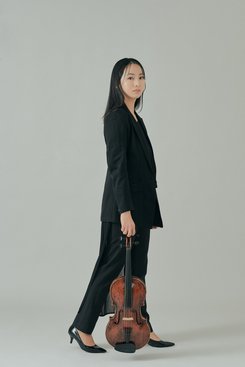
Sara Kim serves as Professor of Viola and Chamber Music at Bremen University of the Arts (HfK Bremen) since April 1, 2025. Her role encompasses teaching orchestral repertoire, viola performance, and chamber music within the university's music division. Her academic background includes: Gnessin Special School in Moscow Hanns Eisler Academy of Music in Berlin (violin/viola) Berlin University of the Arts (top marks in Instrumental Soloist Program) Chamber music training with Artemis Quartet Master classes at Munich University of Music and Performing Arts Kim's artistic practice centers on the viola's expressive capacity for profound emotional articulation—exploring nostalgia, loss, uncertainty, and human connection through works by Ligeti, Hindemith, and Reger. Her pedagogical approach integrates decades of orchestral experience as principal violist with Braunschweig State Orchestra and Leipzig Gewandhaus Orchestra. She maintains active performance commitments including major festivals (Mecklenburg-Vorpommern, Gstaad Menuhin) and orchestras (Konzerthausorchester Berlin, Janáček Philharmonic). Her inaugural concert "Voice of the Viola" is scheduled for January 9, 2026, marking the opening of HfK Bremen's Viola Festival.
Kan Shindo is an Assistant Professor (non-tenure-track) at Waseda University's Faculty of Science and Engineering, School of Creative Science and Engineering, Department of Architecture. He has held this position since April 2024, continuing through the present (2025). Prior to his faculty appointment, he was a JSPS Research Fellow for Young Scientists (2021-2024) and a Guest PhD student at the Technical University of Denmark (2022-2023). His educational background includes: Doctor of Engineering (2024.03, Waseda University) Master of Engineering (2021.03, Waseda University) Bachelor's degree in Architecture (2015.04-2019.03, Waseda University) Dr. Shindo's research focuses on architectural environment and building equipment, with particular expertise in Carbon Neutral technologies, Net Zero Energy Buildings, Energy Efficiency, and Thermal Comfort. His work bridges theoretical building performance models with practical implementation, examining how building systems interact with occupant comfort and environmental sustainability goals. He has made significant contributions to understanding radiant heating and cooling systems, especially their capacity to handle solar radiation while maintaining daylight harvesting benefits. His publication record demonstrates a clear progression from fundamental studies of radiant cooling systems to comprehensive analyses of building decarbonization pathways and whole life carbon accounting. Recent work (2025) examines energy simulations for multi-family residences with photovoltaic systems, while his 2024-2023 publications focus on radiant systems, whole life carbon analysis, and building resilience to heat waves. His research increasingly addresses the intersection of building technology, environmental performance, and human comfort in the context of carbon neutrality goals. His notable achievements include: Young Researcher Presentation Award (2022.11, Architectural Institute of Japan) JIA Environmental Architecture Award, Excellence Award (2021.12, The Japan Institute of Architects) Dr. Shindo currently leads the JSPS-funded research project 'Development of Cohort-Based Thermal Comfort Evaluation Methodology' (2024-2028) and serves on the Academic Committee of the Japan Sustainable Building Consortium. He teaches multiple courses at Waseda University including Architectural Design, Building Environment, and Environmental Aspects of Buildings and Cities, reflecting his integrated approach to architectural education that combines design, technology, and environmental performance.
Andrés Esteban Acero López serves as an Adjunct Professor in the Department of Industrial Engineering at Tecnológico de Monterrey's School of Engineering and Sciences, with appointments spanning Campus Puebla and Campus Monterrey. His academic profile integrates industrial engineering expertise with sustainability leadership across Latin American contexts. His educational foundation includes: Industrial Engineer, Universidad de los Andes Master's in Industrial Engineering, Universidad de los Andes PhD in Engineering, Universidad de los Andes Research focuses on industrial ecology and systems science applications for emerging economies, emphasizing natural resources governance, sustainable production systems, and waste management innovation. His work actively advances UN Sustainable Development Goals including Quality Education (SDG4), Industry Innovation (SDG9), and Reduced Inequalities (SDG10) through community-engaged engineering projects. Recent publications reveal strong trajectory in engineering education transformation and sustainability implementation, featuring virtual reality for manufacturing pedagogy, diversity initiatives in Latin American STEM, and systemic approaches to sustainable engineering practices. This scholarship bridges theoretical modeling with real-world social impact. Key recognitions include: Excellence on Teaching Sustainability Award (IISE, 2022) Best Paper Award ISIE Americas (2016) Academic Club Award Finalist (University of St. Gallen, 2015) Mexican Researcher Certification Level 1 As an educator, he supervises research through Business Innovation Projects and Research Proposal courses while co-founding the INTERACT research group. His advising extends to Ingenieros sin Fronteras Colombia projects addressing infrastructure challenges in underserved communities since 2012. Leadership manifests through INTERACT's complex adaptive systems research and ongoing collaborations with Ingenieros sin Fronteras Colombia, developing engineering solutions for social impact across Latin America through participatory design and sustainable technology deployment.
Umi Hsu (pronouns: they/them) is an Adjunct Assistant Professor in Media Design Practices at ArtCenter College of Design and teaches digital analytics strategy at USC Marshall School of Business. They also serve as a digital strategist and senior project coordinator at the City of Los Angeles Department of Cultural Affairs, leading design strategy and digital initiatives that bridge arts, technology, and civic engagement. Hsu holds a PhD in Critical and Comparative Studies in Music from the University of Virginia, with an ethnographic dissertation examining identity articulation and community formation among Asian American musicians in indie rock music scenes. Their academic journey includes a Mellon Digital Scholarship Postdoctoral Fellowship at Occidental College's Center of Digital Learning + Research and an ACLS Public Fellowship, establishing their foundation in public humanities and digital scholarship. As a strategic designer and public humanist, Hsu's research spans digital ethnography, sound-based community practices, public humanities, and open access publishing. Their work explores the intersection of technology, arts, and civic life with a focus on equity and inclusion. Notable projects include the civic sound data initiative LA Listens, which examines sensory, social, and ecological aspects of Los Angeles streets, and Movable Karaoke, a Metro-funded project exploring collective mobility experiences in LA. Hsu has also produced the queer history podcast Periodically Queer for One Institute and developed the Days of Rage Web Exhibit, which received an Awwwards honorable mention. Hsu's academic contributions reflect a consistent engagement with digital methodologies and community-centered approaches, with publications spanning gender studies, urban sound cultures, and digital public humanities. Their work demonstrates how digital tools can enhance community engagement and cultural preservation while addressing issues of accessibility and representation. ACLS Public Fellowship National Endowment for the Arts Fellowship Shuttleworth Foundation Fellowship GovTech Award LA Metro Funding Awwwards Honorable Mention for Days of Rage Web Exhibit Government Technology Outstanding IT Award for Neighborhood Arts Profile IDC SmartCities North America Award Finalist As an educator, Hsu has taught undergraduate courses in music, gender studies, and media practice since 2007 at institutions including University of Virginia and Occidental College. At ArtCenter, they lead graduate workshops on design research and advise MFA students in Media Design Practices. Hsu founded Lab at DCA, a digital literacy incubator for city staff, demonstrating their commitment to building digital capacity within municipal government. Their leadership extends to advising organizations including Arts for LA, LA Counts, Cultural Research Network, Center for Cultural Innovation, and Society of Ethnomusicology.