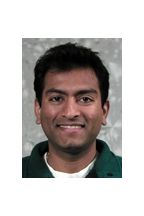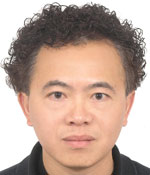
Ming-Hsuan Yang is a Professor in the Department of Computer Science & Engineering at the University of California, Merced , where he also serves as the Graduate Chair for the Electrical Engineering and Computer Science (EECS) graduate group. His research spans computer vision , machine learning , and pattern recognition , with a focus on image and video restoration, object tracking, and 3D scene understanding. Ph.D., University of Illinois at Urbana-Champaign (2000) M.S., University of Texas at Austin (1994) M.S., University of Southern California (1992) B.S., National Tsing-Hua University, Taiwan (1991) His research interests include computer vision (object tracking, image deblurring, saliency detection), machine learning (transfer learning, sparse representation), and 3D reconstruction (Gaussian splatting, scene generation). He has pioneered methods in diffusion models , transformer architectures , and multi-modal vision-language systems . Recent publication trends show leadership in 3D mesh generation (ICCV 2025), video diffusion (CVPR 2025), and image restoration (PAMI 2025), with interdisciplinary applications in medical imaging (TMI 2024) and human motion analysis (WACV 2025). Scientific awards include Nvidia Fellowships and EECS Rising Stars recognitions for advisees, with Meta , Google DeepMind , and Adobe alumni placements. He has advised 18 PhD students and 13 MS students since 2009, with notable fellowships including Chancellor's Graduate Fellowship and GSOP Fellowship . His Visual Tracking and Learning Lab produces high-impact work in object tracking , image enhancement , and semantic segmentation , supported by NSF grants and industry collaborations . Lab alumni now lead R&D at top tech companies like Stability AI and Meta .