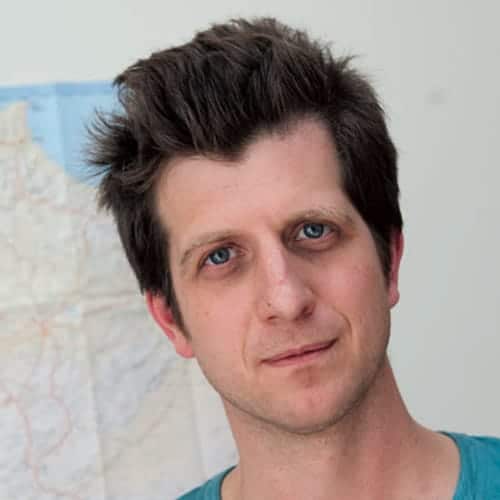
Mikael B. Skov is a Vice Dean and Professor at the Technical Faculty of IT and Design of Aalborg University , Denmark. His research spans human-AI interaction, robotics, and user experience, with a focus on trust signaling in clinical AI, swarm robotics, and sound zones for domestic environments. Role: Vice Dean for Research Department: Computer Science Research Interests: Skov investigates how humans interact with AI and robots in healthcare and domestic settings, emphasizing trust calibration, alert design, and acoustic comfort. His work includes developing frameworks for UX maturity in robotics organizations and studying long-term adoption of sound zone systems. Recent Projects: As principal/co-investigator, he leads the HERD project on human-AI collaboration in robot swarms (2021–2025) and supervises Data og Bæredygtig Mad (2020–2023), an HCI perspective on sustainable food systems. Publications: His 2024 work includes studies on AI explanations in clinical training, music applications with intermittent interactions, and multi-robot supervision. Earlier projects (2001–2020) focused on mobile device usability, UX practices, and context-aware computing.
Hasti Seifi is an Affiliated Associate Professor at the Department of Computer Science (DIKU), University of Copenhagen, specializing in Human-Centred Computing. Her research focuses on haptics, augmented reality, and human-robot interaction. Institution: University of Copenhagen Department: Department of Computer Science Section: Human-Centred Computing Research interests include: Designing innovative haptic feedback systems Exploring tactile experiences in augmented reality Developing human-robot interaction frameworks Creating generative models for haptic design Investigating social touch technologies Advancing mid-air and ultrasound haptic interfaces Recent publications demonstrate a strong focus on: Generative haptic modeling for AR/XR systems Human-robot interaction dynamics Text input in extended reality environments Visual-haptic multisensory integration Ultrasound mid-air haptic design tools Social touch technologies
Morten Søndergaard is an Associate Professor at Aalborg University’s Department of Communication and Psychology, affiliated with the Faculty of Social Sciences and Humanities. He is part of the Art, Aesthetics & Health Research Laboratory and the MASSHINE initiative. His research focuses on sound art, media art curation, and transdisciplinary practices, emphasizing the exclusion mechanisms in 20th-century art systems and unarchived avant-garde movements. Søndergaard has curated exhibitions globally, including at Kiasma and ZKM, and co-founded the POM conference series and ISACS symposia. He leads the Erasmus Master of Excellence in Media Arts Cultures, collaborating with institutions in Austria, Poland, and Hong Kong. His work bridges art, science, and technology, with recent projects exploring sonic archives and participatory curatorial frameworks. Key collaborations include roles with the European NeMe network, SUNY College New York, and the Momentum Biennial. He has organized over 20 projects since 2008, including the 2025 Momentum Biennial as head curator. His teaching spans media art theory, sound art practices, and curatorial methodologies at both bachelor and master levels. Søndergaard’s research outputs include over 145 publications, with a focus on sound art’s theoretical and practical dimensions. His current projects emphasize ‘uncurating’ methodologies and the reactivation of marginalized avant-garde practices. Notable activities include editorial roles, international conference organization, and advisory roles in art and science networks. His work has been featured in media outlets like Artdaily and the Biennial Foundation, highlighting his contributions to contemporary art discourse and curatorial innovation.
Serge Belongie is a Professor at the Department of Computer Science (DIKU) at the University of Copenhagen, where he holds dual affiliations with the Pioneer AI research section and the Image Analysis, Computational Modelling, and Geometry section. His academic position places him at the forefront of interdisciplinary research connecting computer vision with language models, geospatial analysis, and cultural understanding. Professor Belongie's research program encompasses several critical domains in modern artificial intelligence: Advanced computer vision and image analysis techniques Vision-language model integration and multimodal systems 3D point cloud processing and semantic segmentation Geospatial representation learning for environmental applications Fine-grained object recognition and detection Cultural context understanding in AI systems His recent publication record reveals a sophisticated trajectory toward developing precise control mechanisms for vision-language models, with applications spanning forensic analysis, cultural heritage preservation, and social media understanding. The research demonstrates increasing sophistication in handling cultural context and enabling fine-grained manipulation of visual content through natural language interfaces. Professor Belongie maintains an active research group producing significant scholarly output, with over 280 research publications documented in his academic profile. His work is supported by research funding that enables cutting-edge exploration in multimodal AI systems with practical societal impact. He plays a key role in the Pioneer AI center at the University of Copenhagen, which focuses on advancing artificial intelligence through interdisciplinary collaboration and innovative research approaches that bridge theoretical computer science with real-world applications.
Teresa Hirzle is a Tenure Track Assistant Professor at the Department of Computer Science , University of Copenhagen , specializing in Human-Centred Computing . Her research focuses on Human-Computer Interaction (HCI) , Virtual Reality (VR) , Extended Reality (XR) , and Gaze-Based Interaction . Research Interests: Designing interaction techniques for immersive environments Eye movement analysis for educational applications Addressing digital eye strain in interactive systems Evaluating user experience in VR/AR Recent Research Trends: Her recent publications examine AI representation in VR co-creation, VR sickness in locomotion, eye strain in gaze-driven systems, and hybrid applications of comics/AR. She also explores pedagogical implications of eye tracking in remote learning. Contact: Email: tehi@di.ku.dk Office: Sigurdsgade 41, 2200 København N.
Jens Honore Walther is a Professor in the Department of Civil and Mechanical Engineering at the Technical University of Denmark (DTU). His research focuses on fluid mechanics, coastal and maritime engineering, and computational fluid dynamics (CFD). He leads projects on wave energy converters, multiphase flow systems, and thermal energy applications. His work contributes to sustainable development goals related to clean energy and climate action. External Roles: Research associate at ETH Zurich (2003–present) Postdoctoral fellow at ETH Zurich (2000–2003) Project manager at Danish Maritime Institute (1996–1997) Research scientist at Danish Meteorological Institute (1994–1996) Research Interests: Walther’s expertise spans CFD modeling, granular flow dynamics, and nanofluidics. His recent projects include optimizing wave energy converters, analyzing gap resonances in marine structures, and developing multiphase ejector geometries for heat pumps. His work integrates high-performance computing and experimental validation to address challenges in marine engineering and energy systems. Advising & Projects: He supervises PhD students in areas such as elite sport aerodynamics, gas lubrication, and alternative fuel combustion. Notable projects include: Elite sport aerodynamics (2024–2026) Alternative fuel injection in marine engines (2023–2026) Multi-physical gas bearing modeling (2024–2027) Labs & Collaborations: Walther collaborates with institutions like ETH Zurich and engages in experimental facilities at DTU. His group focuses on advanced CFD simulations and fluid-structure interaction studies.
Raghavendra Selvan, an Assistant Professor (Tenure Track) at the University of Copenhagen, holds joint appointments in the Machine Learning Section (Department of Computer Science), Kiehn Lab (Department of Neuroscience), and the Data Science Laboratory. His academic journey includes a PhD in Medical Image Analysis (2018), MSc in Communication Engineering (2015), and BSc in Electronics and Communication Engineering (2009). PhD - Medical Image Analysis, University of Copenhagen (2018) MSc - Communication Engineering, Chalmers University (2015) BSc - Electronics and Communication Engineering, BMS Institute of Technology, India (2009) His research focuses on Bayesian Machine Learning with emphasis on Medical Image Analysis, Graph-based Learning, Tensor Networks, Approximate Inference, and Multi-Object Tracking Theory. Recent publications highlight his contributions to environmentally sustainable AI practices, efficient deep learning in medical imaging, and novel applications of tensor networks. Key research areas: Green AI and Environmental Sustainability Medical Image Analysis Graph Neural Networks Crystal Structure Prediction Model Compression Materials Science Applications
Mostafa Mohammadi is an Assistant Professor at the Department of Health Science and Technology, Aalborg University, affiliated with the Faculty of Medicine and Center for Rehabilitation Robotics. His research focuses on neurorehabilitation robotics, human-computer interaction, and telerehabilitation technologies for individuals with disabilities. Ph.D. in Biomedical Engineering (Aalborg University, 2018-2022) M.Sc. in Biomedical Engineering (Polytechnic University of Milan, 2015-2017) B.Sc. in Mechanical Engineering (Sharif University of Technology, 2011-2015) His work spans exoskeleton design, assistive robotics, and innovative interfaces like tongue-computer interfacing. Recent projects include the eMotivo digital health solution funded by Innovation Fund Denmark and intelligent tendon-driven exoskeletons for severe disabilities. Research outputs (33 total) emphasize adaptive robotics, motor impairment solutions, and wearable technologies. Collaborations span robotics, biomedical engineering, and clinical disciplines. Teaching includes courses in rehabilitation robotics, human-computer interaction, and digital systems for biomedical engineering. Scientific activities align with UN Sustainable Development Goals for quality education and reduced inequalities. Notable contributions include advancements in myoelectric interfaces and neurorehabilitation technologies.
Renaud Lambiotte is Professor of Networks and Nonlinear Systems at the Mathematical Institute, University of Oxford. He holds a PhD in Physics from Université libre de Bruxelles and has held research and faculty positions at ENS Lyon, Université de Liège, UCLouvain, Imperial College London, and the University of Namur. He is currently an active academic in applied mathematics and network science. His research focuses on complex systems, particularly dynamics on networks, temporal networks, and stochastic processes. He applies these to social and brain networks, data mining, and urban systems. His work bridges theoretical modeling and real-world data, emphasizing the structure and evolution of complex systems. His recent publications demonstrate strong trends in network theory, including hypergraphs, community detection, multidimensional dynamics, and data quality in network interventions. He also explores applications in urban air quality and gentrification, showing a commitment to socially relevant complex systems research. Scientific Awards: Prix Wernaers 2013 Prix Wernaers 2016 Prix Wernaers 2020 Verdickt-Rijdams 2016 de l'Académie royale de langue et de littérature françaises He is the co-founder of L’Arbre de Diane, a publishing initiative at the science-literature interface, which received multiple awards. He teaches advanced courses such as Differential Equations II and Networks. He is affiliated with the Machine Learning and Data Science and the Oxford Centre for Industrial and Applied Mathematics research groups. He has authored or co-edited key texts in the field, including A Guide to Temporal Networks and Modularity and Dynamics on Complex Networks , and has published around 130 peer-reviewed articles. His research is supported by ongoing collaborations and active publication output, indicating sustained academic leadership.
Anders Haug serves as Associate Professor at the Department of Business and Sustainability (DBS) within the University of Southern Denmark's Kolding campus. Having joined the university in 2008 as Assistant Professor in the Department of Entrepreneurship and Relationship Management before transitioning to his current role in 2010, his academic career spans over 15 years of research and teaching in operations, supply chain, and digital transformation contexts. His work bridges theoretical rigor with practical industry applications, particularly in engineer-to-order manufacturing and logistics sectors. Education: PhD in communication, representation and automation of design knowledge (2005-2007) Haug's research centers on information and knowledge management systems, with deep expertise in data quality frameworks, knowledge-based configuration, and digitalization of business processes. His fingerprint reveals distinctive contributions to product configuration systems, digital twin applications, and supply chain resilience—particularly examining how configurators transform warehouse services, manufacturing processes, and product-service ecosystems. Recent work increasingly addresses sustainability through green dynamic capabilities frameworks and life cycle assessment tools, maintaining strong empirical grounding via case studies in Danish manufacturing. Analysis of his 2024-2025 publications shows converging trends: digital technologies (configurators, digital twins) are examined through operational performance lenses while addressing sustainability imperatives. These works span operations management, information systems, and strategic management disciplines but consistently prioritize practical implementation frameworks for manufacturing SMEs. The research demonstrates methodological diversity—from conceptual modeling to empirical case studies—with strong industry relevance in logistics, engineering-to-order contexts, and manufacturing digitization. Scientific Awards: Top read paper in Business 2017/18 (Wiley) (2019) Haug has supervised 34 teaching courses between 2018-2024 covering business information systems, digitalization projects, and supply chain management. His academic service includes extensive peer reviewing for conferences like NOFOMA and DRS, plus organizational roles in Nordic business research networks. While specific grant details aren't provided, his 175+ research outputs and industry collaborations (evidenced by consultant work since 2006) indicate substantial research funding engagement. Media contributions on 3D printing and business process efficiency demonstrate effective knowledge transfer to practitioners. Though no dedicated research lab is specified, Haug's extensive co-authorship network—including collaborations on projects like digital twin implementation and configurator development—reveals embeddedness in multiple research collectives. His industry-facing approach manifests through case studies with logistics providers, manufacturer partnerships, and practical frameworks for warehouse service design and supply chain resilience.
Tuukka Ruotsalo serves as Associate Professor in the Machine Learning Section at the Department of Computer Science, University of Copenhagen. His research bridges human cognition with computational systems through brain-computer interfaces and physiological computing. As Academy Research Fellow at University of Helsinki (2019-2024), he maintained dual institutional affiliations while leading cutting-edge work in neuro-linguistic modeling and affective relevance. His research focuses on brain-computer interfaces for information retrieval , where he pioneers methods to decode cognitive states from neural signals to improve search systems. Key areas include affective relevance modeling that integrates emotional states into search algorithms, and neuro-linguistic reconstruction that translates brain activity into language. His work on fairness-relevance tradeoffs in recommender systems established Pareto frontier evaluation frameworks now widely adopted in ethical AI research. Recent publications demonstrate how physiological signals like EEG and galvanic skin response can create more adaptive human-information interaction systems. Ruotsalo's scientific recognition includes the prestigious Academy Research Fellow position. His publications in IEEE Transactions on Human-Machine Systems , Journal of the Association for Information Science and Technology , and Communications Biology reveal growing interdisciplinary impact. His advising spans cognitive neuroscience and machine learning students, with notable collaborations across the SCIENCE AI Centre. Current projects include the TreeSense initiative for remote sensing of global tree resources and development of quantum-inspired neural architectures. His lab leverages the department's powerful compute cluster for large-scale physiological data analysis.
Per Bækgaard is an Associate Professor at the Department of Applied Mathematics and Computer Science, Technical University of Denmark (DTU), specializing in Cognitive Systems. He serves as Head of Study for Human-Centered Artificial Intelligence, leading research in human-computer interaction, user experience, eye tracking, and cognitive neuroscience. His work bridges AI and human cognition to create systems that enhance daily life and support meaningful tasks. PhD, MSc EE, Technical University of Denmark His research interests center on Human-Computer Interaction (HCI) , User Experience , and Human-Centered Artificial Intelligence , with strong emphasis on Eye Tracking , Cognitive Neuroscience , and Digital Media . He explores how digital systems can adapt to users’ cognitive states using physiological signals like pupil dilation and gaze patterns, aiming to improve learning, health, and decision-making. His work aligns with UN Sustainable Development Goals in health and education. The recent publications reflect a strong trend in integrating eye tracking and pupillometry with AI-driven adaptive systems , particularly in education and healthcare. Themes include generative AI in learning , trustworthy AI in supply chains , and digital micro-interventions for mental health . The interdisciplinary nature spans computer science, psychology, and biomedical engineering, showcasing a cohesive focus on human-centered technology evaluation. Scientific Awards: Best Paper Award, 26 Jun 2020 – for contributions to gaze interaction research Per Bækgaard actively supervises PhD students and leads multiple research projects, including those involving generative AI in education , digital phenotyping , and AI in nursing and mental health . He is the main supervisor for several PhD projects and a co-supervisor or examiner in others, demonstrating a strong commitment to academic mentoring. His grant involvement includes projects funded by DTU and collaborative research initiatives in digital health and AI. He is part of the Cognitive Systems group at DTU, contributing to interdisciplinary research in AI, neuroscience, and human factors. His team collaborates on projects involving real-time physiological monitoring, adaptive interfaces, and AI-mediated learning systems, positioning him at the forefront of human-centered AI research in Scandinavia.
Sophia Natasha Wilson is a Research Fellow in the Department of Computer Science (DIKU) at the University of Copenhagen, specializing in machine learning applications across interdisciplinary domains. She is affiliated with the SCIENCE AI Centre and holds a cross-departmental position at the Niels Bohr Institute . Her research bridges theoretical machine learning with practical implementations in healthcare, quantum computing, and environmental sustainability. University of Copenhagen Department of Computer Science (DIKU) Niels Bohr Institute SCIENCE AI Centre Her research focuses include: Quantum-enhanced machine learning algorithms Explainable AI for healthcare applications Environmental sustainability in computing Emotion-aware language models Quantum computing hardware optimization Public health risk modeling Her recent publications demonstrate cross-disciplinary work in quantum machine learning (hybrid optical processors, qubit stabilization), health informatics (hypothyroidism analysis, nursing values evaluation), and ethical AI (sustainable AI, fairness in recommender systems). Technical work also appears in non-Euclidean generative models and real-time adaptive systems . Current projects include quantum dot array simulation (QDarts platform) and federated learning for personalized medicine . She contributes to the TreeSense center for remote sensing of global tree resources and works on climate-aware AI frameworks.
Chenjuan Guo is an Associate Professor at the Department of Computer Science, Aalborg University, within The Technical Faculty of IT and Design. She is affiliated with the Data Engineering, Science and Systems group and the AI for the People initiative, and is part of the Daisy - Center for Data-intensive Systems. Her research focuses on machine learning, data engineering, spatio-temporal data analysis, and time series forecasting. Key projects include the Villum Foundation-funded 'Explainable AI for Complex Microbial Community Interactions and Predictions' (2021-2024) and the Astra project on time series analytics in spatial networks (2018-2021). Her research interests span representation learning, autoencoders, path representation, outlier detection, trajectory data analysis, and time series modeling. She has supervised 3 PhD students and contributed to over 60 publications, with a recent emphasis on transformer-based forecasting, neural architecture search, and continuous learning frameworks for spatio-temporal data. Her work bridges theoretical advancements with practical applications in environmental science, cloud computing, and urban mobility systems. Key achievements include developing frameworks like AutoCTS++ for automated time series forecasting and LightGTS for lightweight models. She actively collaborates internationally, contributing to conferences like ECML PKDD and CVPR. Her research is supported by grants from the Villum Foundation and other institutions.
Daniel Hardt serves as Associate Professor in the Department of Management, Society and Communication at Copenhagen Business School. His interdisciplinary research bridges computational linguistics, artificial intelligence, and social analysis, with particular focus on natural language processing applications and theoretical linguistic phenomena. His primary research domains include Computational Linguistics (specializing in ellipsis resolution and sluicing phenomena), Natural Language Processing (developing methods for psychographic classification and sentiment analysis), and Artificial Intelligence (examining large language model capabilities and limitations). Recent work analyzes travel behavior during crises, gender effects in evaluations, and GDPR policy comprehension through NLP techniques. His publications span top venues including Linguistic Inquiry , Tourism Management , and ACL proceedings. Hardt actively engages with practical business applications through 27 media contributions discussing AI implementation, ChatGPT transparency, and data-driven leadership strategies. His academic service includes organizing events like the 2019 "Fake News" conference at CBS and presenting at international venues including JSAI 2024. With 28 supervised academic works documented, he maintains substantial mentoring activity while contributing to public discourse on digital transformation challenges.