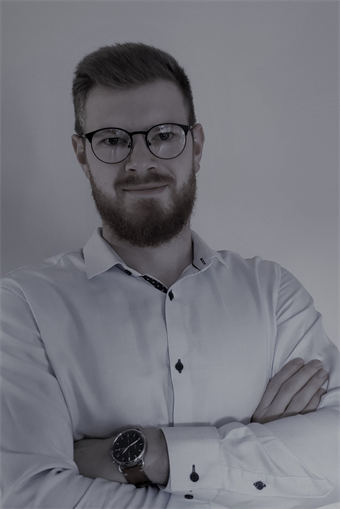
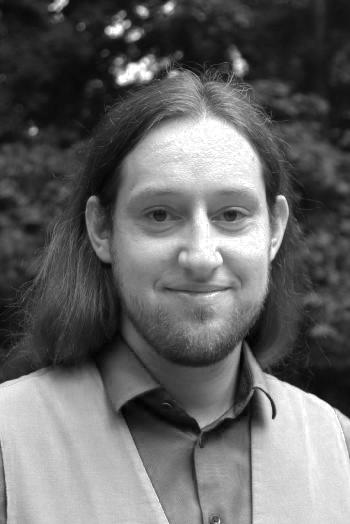
Jens Volker Rüppel is a doctoral researcher at the Perception for Intelligent Systems chair within the Munich Institute of Robotics and Machine Intelligence at the Technical University of Munich. His work bridges interdisciplinary research between human-robot interaction , intent recognition , and multimodal communication interfaces . Joined TUM in April 2025 Focus areas: robotics, AI, and human factors His research explores how humans and robots can collaborate more effectively through advanced perception and communication systems. Team Members : Achim J. Lilienthal, Valeria Salazar, Thomas Wiedemann, Han Fan, Tim Schreiter, Maximilian Hilger, Marius Schaab, Parviz Asghari. The chair is based at: Headquarters: Georg-Brauchle-Ring 60-62, 80992 Munich Lab Space: Siemens Technology Center, Friedrich-Ludwig-Bauer-Str. 3, 85748 Garching
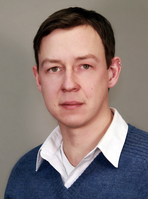
Michael Stecher is a Researcher at the Department of Ergonomics, Technical University of Munich, where he has been working since July 2014. His role focuses on human-machine interaction research for commercial vehicles, including experimental evaluation of control systems and gesture interfaces. His educational background includes: Master of Science in Vehicle and Engine Technology with specialization in Ergonomics from Technical University of Munich Stecher's research centers on automotive ergonomics, particularly gesture-based interaction systems for trucks and buses. He investigates how driving tasks impact human movement dynamics and designs intuitive touchless interfaces to enhance safety and usability. His work bridges theoretical human factors principles with practical vehicle interface development, emphasizing empirical validation in real-world contexts. His publication record (2013-2018) reveals consistent focus on gesture control applications in commercial vehicles, demonstrating expertise in touchless interaction evaluation, use case identification, and intuitiveness measurement. The research spans human factors engineering, automotive HCI, and transportation ergonomics, with strong industry collaboration evident through projects with MAN Truck & Bus AG. Stecher leads the MANTUM research project "Gesture Control in Commercial Vehicles," exploring gestural interaction potentials in trucks and buses. His work includes developing ergonomic rotary-push control concepts validated through experimental studies, contributing to safer and more efficient vehicle interfaces. Research is conducted within TUM's Ergonomics Lab facilities including Dynamical Mock-Up systems, Modular Ergonomic Mockups, Robotics platforms, and Static Driving Simulators.
Veronika Weinbeer (M.Sc. Human Factors Engineering) is a doctoral researcher affiliated with the Chair of Ergonomics at Technische Universität München (TUM) and employed at AUDI AG. Her work focuses on automated driving systems, specifically examining the interplay between driver drowsiness, non-driving-related tasks, and take-over performance in conditionally automated vehicles. Research interests include: Human factors in automated driving Ergonomic design for driver-vehicle interaction Cognitive load and performance in automated systems Sociotechnical modeling of transportation systems AI-based modeling for human behavior analysis Her publications highlight collaborations with the Chair of Ergonomics at TUM, particularly in prototyping automated vehicles using the Wizard of Oz paradigm and developing frameworks for fatigue management in automated driving contexts.
Leonhard Feiner is a researcher at the Chair of Materials Handling, Material Flow, and Logistics at Technische Universität München . His work focuses on intuitive control systems for industrial vehicles, sensor data fusion for safety enhancements, and virtual reality applications in logistics. He has contributed to projects like "Intuitive Mast Control" under the Mittelstand 4.0 initiative and collaborates with the Mittelstand-Digital Center Augsburg . Research Emphasis: Ergonomics of operating concepts, sensor data fusion, virtual reality applications Publications: 15+ peer-reviewed works on forklift teleoperation, load center detection, and real-time safety monitoring Contact: leonhard.feiner@tum.de
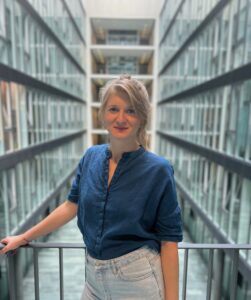
Dr. Romy Lorenz is a Max Planck Research Group Leader at the Max Planck Institute for Biological Cybernetics in Tübingen, Germany, where she leads the Cognitive Neuroscience & Neurotechnology research group. She previously held postdoctoral positions at the University of Cambridge, Stanford University, and the Max Planck Institute for Human Cognitive & Brain Sciences from 2018 to 2023 as a Sir Henry Wellcome Postdoctoral Fellow. Dr. Lorenz's educational background includes: BSc in Psychology from Leuphana University (2009) MSc in Human-Machine Interaction from TU Berlin (2012) PhD in Neurotechnology from Imperial College London (2017) Her research focuses on understanding the frontoparietal brain network mechanisms that underpin high-level cognition and adaptive behavior. She employs an interdisciplinary approach combining subject-specific brain-computer interface technology, fMRI at standard and ultrahigh magnetic field strengths (3T, 7T, and 9.4T), EEG, non-invasive brain stimulation, computational modeling, and machine learning techniques. A key innovation in her work is the development of neuroadaptive Bayesian optimization methods that allow for real-time, closed-loop experimental design in cognitive neuroscience. Dr. Lorenz's recent publications demonstrate a clear trend toward investigating brain function at increasingly fine-grained spatial scales, particularly exploring layer-specific processing in the prefrontal cortex using ultrahigh-field fMRI. Her work bridges computational neuroscience, cognitive psychology, and neurotechnology, with applications ranging from basic cognitive science to clinical rehabilitation. A significant portion of her research focuses on closed-loop systems that integrate real-time brain imaging with adaptive experimental design and stimulation protocols. Her notable scientific achievements include: Outstanding Contributions in AI Innovation Award Sir Henry Wellcome Postdoctoral Fellowship Funding from the German Scholar Organisation Fellowships from the Wellcome Trust and Engineering and Physical Sciences Research Council Dr. Lorenz has secured significant research funding for her work, including support from the Wellcome Trust and German funding agencies. She has mentored several students, including Master's students like Pedro who has presented their collaborative work at conferences. Her research group actively recruits postdoctoral researchers and students interested in cognitive neuroscience and neurotechnology. Dr. Lorenz leads the Cognitive Neuroscience & Neurotechnology research group at the Max Planck Institute for Biological Cybernetics, which focuses on developing and applying advanced neuroimaging and computational methods to understand high-level cognitive functions. She has also co-initiated interest groups such as CoCoNUT (Computational Cognitive Neuroscience at the Max Planck Institute) to foster interdisciplinary collaboration. Her lab utilizes cutting-edge technologies including real-time fMRI at ultrahigh field strengths, EEG, and non-invasive brain stimulation to investigate frontoparietal network function.
Benedikt Ehinger is a computational neuroscientist at the University of Stuttgart, leading an Emmy Noether research group on "EEG in motion" funded by DFG. He specializes in integrating EEG with eye-tracking, developing statistical methods for neuroimaging and creating open-source tools. DDFG Emmy Noether grant recipient (2019) Director of Computational Cognitive Science lab Co-developer of open-source tools: Unfold toolbox, ClusterDepth algorithm His research focuses on three main areas: 1. Methodological foundations of EEG/MEG analysis, particularly cluster-based statistics and deconvolution methods; 2. Eye-tracking methodology and visualization techniques; 3. Statistical modeling of human perception using linear mixed models and Bayesian approaches. Key trends in his recent publications include: Advancing EEG methodology with linear deconvolution and cluster permutation tests Developing open-source neuroscience tools in Julia/MATLAB Investigating perceptual inference and reliability estimation Creating art-science interfaces through "thesis art" projects Scientific contributions: Emmy Noether research group leadership Over 10 thesis supervisions (Master's/Bachelor's) Co-development of multiple open-source toolboxes Methodological innovations in ERP analysis and statistical testing As an educator, he creates interactive tutorials on statistical concepts and provides thesis art for each supervised student. His lab maintains strong software engineering practices with GitHub-hosted code repositories.
Dr. Luciano Andres Abriata is a Scientist at the École Polytechnique Fédérale de Lausanne (EPFL) in the School of Life Sciences , affiliated with both the Institute of Bioengineering (UPDALPE group) and the Protein Production and Structure Core Facility . His research spans structural biology, computational biophysics, and bioinformatics with a focus on protein design, membrane dynamics, and educational technology. Employment since 2012 in EPFL's bioengineering units Lecturer for advanced NMR and protein expression courses Key research areas include protein structure prediction , membrane protein biophysics , and augmented reality in science education . He has contributed to improving AlphaFold applications and WebXR platforms for collaborative molecular modeling. Recent publications highlight his work on nanopore engineering , mitochondrial membrane remodeling , and thermostable enzyme design . He co-developed tools like MoleculARweb for accessible molecular visualization and MultiProtScale for physicochemical sequence analysis. His methodological interests combine experimental data with computational modeling , particularly in membrane protein dynamics and metal center characterization . He also serves as a Lecturer for structural biology programs and contributes to science education during the pandemic through digital platforms.
Yu-Wei Wu is a Professor at the Graduate Institute of Biomedical Informatics, Taipei Medical University, Taiwan. Previously, he served as an Associate Professor (February 2020 - July 2023) and Assistant Professor (October 2016 - January 2020) at the same institution. His academic career also includes a postdoctoral position at Academia Sinica Biodiversity Research Center in Taiwan (August 2016 - September 2016). Dr. Wu received his PhD in Bioinformatics from Indiana University Bloomington (2007-2012) and a Master's degree in Computer Science from National Tsing Hua University (1998-2000). Dr. Wu specializes in metagenomics and computational biology , with particular expertise in deciphering microbiomes using computational methods. His research interests span bioinformatics , genomics , sequence analysis , machine learning applications in biological problems , and NGS data analysis . His work bridges computational approaches with biological applications, developing algorithms for analyzing complex biological data, particularly in microbiome research and medical informatics. Recent projects include developing prediction models for obstetric complications using medical history data and creating computational tools for antimicrobial resistance prediction. His extensive publication record (151 publications with over 6,000 citations) demonstrates expertise across multiple domains, with recent work focusing on metagenome analysis , chromosome-level genome assembly , predictive modeling in obstetrics , and antibiotic resistance prediction . Dr. Wu's interdisciplinary approach combines computational methodology development with practical biomedical applications, particularly in understanding bacterial communities and their clinical implications. Best Oral Presentation Award, 20th Asia Pacific Bioinformatics Conference (2022) Best Teaching Award, Taipei Medical University (2021) Best Paper Award (Gold), 16th International Conference on Bioinformatics (2017) Outstanding Research Contribution Award, Joint BioEnergy Institute (2016) Young Scientist Travel Grant, 6th Soil Metagenomics Annual Meeting (2014) Dr. Wu leads research in biomedical informatics with a focus on developing computational methods for metagenome analysis, antibiotic resistance prediction, and medical prognosis. His work involves applying machine learning techniques to solve biological problems, with particular emphasis on creating accessible medical prediction models that don't require specialized equipment like ultrasound. While specific grant information isn't detailed in the provided text, his extensive publication record suggests successful funding for his research endeavors. Dr. Wu maintains an active research laboratory at Taipei Medical University, collaborating with researchers across multiple disciplines including microbiology, genomics, and clinical medicine. His research group focuses on developing computational approaches for analyzing complex biological data, particularly in the areas of metagenomics and medical informatics, with applications spanning from understanding fish genome evolution to predicting pregnancy complications.
Martin Hebart is a Professor at the Department of Medicine, Justus Liebig University Giessen, and affiliated with the Max Planck Institute for Human Cognitive and Brain Sciences. He leads an interdisciplinary lab integrating psychology, neuroscience, and computer science to decode visual perception mechanisms. Research focus on visual object recognition Developing computational models (deep learning, semantic embeddings) Utilizing neuroimaging (fMRI, MEG) and behavioral datasets Recent work explores: Core dimensions of material perception Alignment of AI models with human vision Distributed neural representations of object features Improving fMRI methodology His lab has produced software tools like THINGSvision and SPoSE for neural network analysis and semantic embedding. Former team members include researchers recognized with Marie Curie Fellowships.
Simon Geerkens serves as a Researcher and PhD candidate at Hochschule Düsseldorf's Faculty of Electrical Engineering & Information Technology under Prof. Dr. Braun. Currently embedded in the EU-funded safe.trAIn. consortium, he works on developing safety architectures for driverless regional trains through AI integration. His research focuses on explainability and trustworthiness of AI systems , data quality assurance , and practical AI applications in safety-critical railway environments. With expertise spanning artificial intelligence, deep learning, and data security, his work bridges theoretical machine learning with industrial railway automation requirements. Analysis of his recent publications reveals a strong emphasis on data quality tools (QI², ECS) and safety assurance pipelines for ML systems in rail transport. His research consistently addresses the challenge of implementing verifiable AI in safety-critical infrastructure, particularly through dataset validation methods and complexity assessment frameworks. Professional activities include active participation in the safe.trAIn. project consortium comprising railway industry leaders, technology suppliers, and standardization organizations working toward GoA4 automation standards.
Prof. Dr. Sven-Hendrik Voß is a Professor at the Berlin University of Applied Sciences (BHT Berlin) since 2011. His academic role includes mentoring first-year students, representing practical phase programs, and leading the Digital Laboratory (Department VI). He has extensive experience in high-speed hardware architectures, FPGA design, and optical communication systems. Doctorate in Electrical Engineering (Microelectronics) from TU Berlin Diploma in Electrical Engineering (Communications) from TU Berlin Research Interests span digital signal/image processing, FPGA-accelerated data processing, high-speed communication systems, embedded vision systems, and methods for image synthesis. He has contributed to light field imaging, real-time processing, and optical interconnects for maskless lithography. Publications focus on FPGA-based solutions for high-speed data processing, optical communication systems, and hardware implementations in fields like 3D media and industrial applications. His work often combines digital circuit design with optical technologies. Teaching includes digital systems design, computer architecture, machine-oriented programming, and image processing. He offers thesis topics involving FPGA development for audio/video applications and communication systems. Professional Background includes leadership roles at Fraunhofer HHI, where he headed the High-Speed Hardware Architectures department (2010-2014) and led hardware groups in earlier roles. He has industry experience in VHDL implementation and PCB design.
Prof. Dr. RyLee Hühne (Department of Computer Science + Natural Sciences, Fachhochschule Südwestfalen) specializes in gender- and diversity-aware IT design , with focus areas including equitable AI systems , digital sovereignty , and participatory software development . Their work bridges technical implementation with feminist theory and queer praxis. Key research themes: Non-binary gender compliance in university IT systems, algorithmic bias mitigation, and intersectional data collection frameworks Recent publications: 15+ works spanning feminist AI ethics, legal implications of non-binary recognition, and inclusive educational technology Notable collaborations include Helene Götschel on digital pedagogy and Aurelija Novelskaitė on trans* awareness in communication studies. Supervised 40+ Diplom theses across diverse IT topics, including security protocols, virtualization, and visualization techniques. Recipient of teaching awards for dialogue-based courses and student-centered learning innovations.
Penghe Chen is an active researcher in the field of educational technology and artificial intelligence applications in learning systems. His work focuses on knowledge tracing, cognitive diagnosis, intelligent tutoring systems, and adaptive learning technologies. He has contributed extensively to conferences like AIED, ICCE, and AAAI, as well as journals such as IEEE Transactions on Learning Technology. Co-author in 37+ peer-reviewed publications Collaborator with Yu Lu, Yang Pian, Qinggang Meng, and other leading researchers Research Trends: Penghe Chen's work integrates machine learning, reinforcement learning, and large language models to enhance educational systems. Key areas include: Knowledge Tracing Model Interpretation Problem Behavior Diagnosis Social Robotics in Education Context-Aware Learning Technologies Personalized Learning Pathways His recent publications (2024-2025) emphasize explainable AI for educational counseling, response time integration in cognitive models, and LLM-enhanced tutoring systems. No explicit information about awards, students, or institutional affiliations was found in the provided data.
Justus Fries is a researcher at the Chair of Connected Mobility (I11) , Department of Informatics, Technical University of Munich. He focuses on Internet measurements, architecture, and decentralization , with specific interests in transport protocols (QUIC, TCP+TLS, WebRTC), congestion control, and low-end network performance. University: Technical University of Munich School: Department of Informatics Department: Chair of Connected Mobility (I11) Email: fries@in.tum.de His research examines cross-layer interactions in encrypted protocols ( QUIC, DNS, HTTP/3 ), network security, and web performance. Recent work explores Web of Things (WoT) systems and edge-to-cloud continuum architectures. Key contributions include datasets and analysis tools for broadband infrastructure evaluation (FCC Measuring Broadband America), with publications in top networking conferences like IFIP Networking.
Daniel Franzen is an affiliated researcher at the Human-Centered Computing group within the Department of Mathematics and Computer Science . His work bridges technology functionality with privacy concerns, focusing on parameters that influence whether users perceive digital systems as intrusive or beneficial. University of Edinburgh PhD in Computer Science (2016) Master of Science in Computer Science (2012) and Media Informatics (2012) from RWTH-Aachen Bachelor of Science in Computer Science (2010) and Mathematics (2011) from RWTH-Aachen His research explores privacy-preserving data donation , human-AI collaboration, and the design of systems that balance utility with ethical considerations. Key projects include delirium prevention in clinical settings, reflective practice in data science, and adversarial interface design patterns. Recent publications highlight trends in privacy visualization , LLM-based conversational interfaces , and hybrid intelligence systems . He investigates how thresholds in machine learning, user onboarding libraries, and visual storytelling impact decision-making and data interpretation. Daniel contributes to educational initiatives through courses like Human-Centered Data Science and Interactive Intelligent Systems , emphasizing critical thinking and visualization literacy. The HCC lab focuses on designing technologies that prioritize user sovereignty and ethical frameworks, such as the Meta-Consent System for health data sharing.